

8 Crucial Signs of Poor Ventilation in House to Watch for in 2026
Have you ever wondered if the air inside your home is as clean as it should be? The quality of your indoor environment depends heavily on proper ventilation, a critical process that continuously replaces stale, polluted indoor air with fresh outdoor air. When this system fails, the consequences aren't just about comfort; they can impact your health, your home's structural integrity, and your wallet. Identifying the signs of poor ventilation in house is the first crucial step toward creating a healthier living space.
Many homeowners overlook subtle clues, attributing them to normal household wear and tear. However, issues like persistent dust, lingering odors, or unexplained allergy flare-ups are often direct symptoms of an underperforming ventilation system. Stagnant air traps pollutants like dust, allergens, pet dander, and volatile organic compounds (VOCs), concentrating them to levels far higher than those found outdoors.
This guide provides a comprehensive roundup of the eight most common indicators that your home is struggling to breathe. We will explore what each sign means, its potential health and energy impacts, and provide actionable steps you can take. You will learn how to diagnose and address ventilation problems effectively, ensuring your home is a safe and healthy sanctuary.
1. Persistent Dust Accumulation on Surfaces
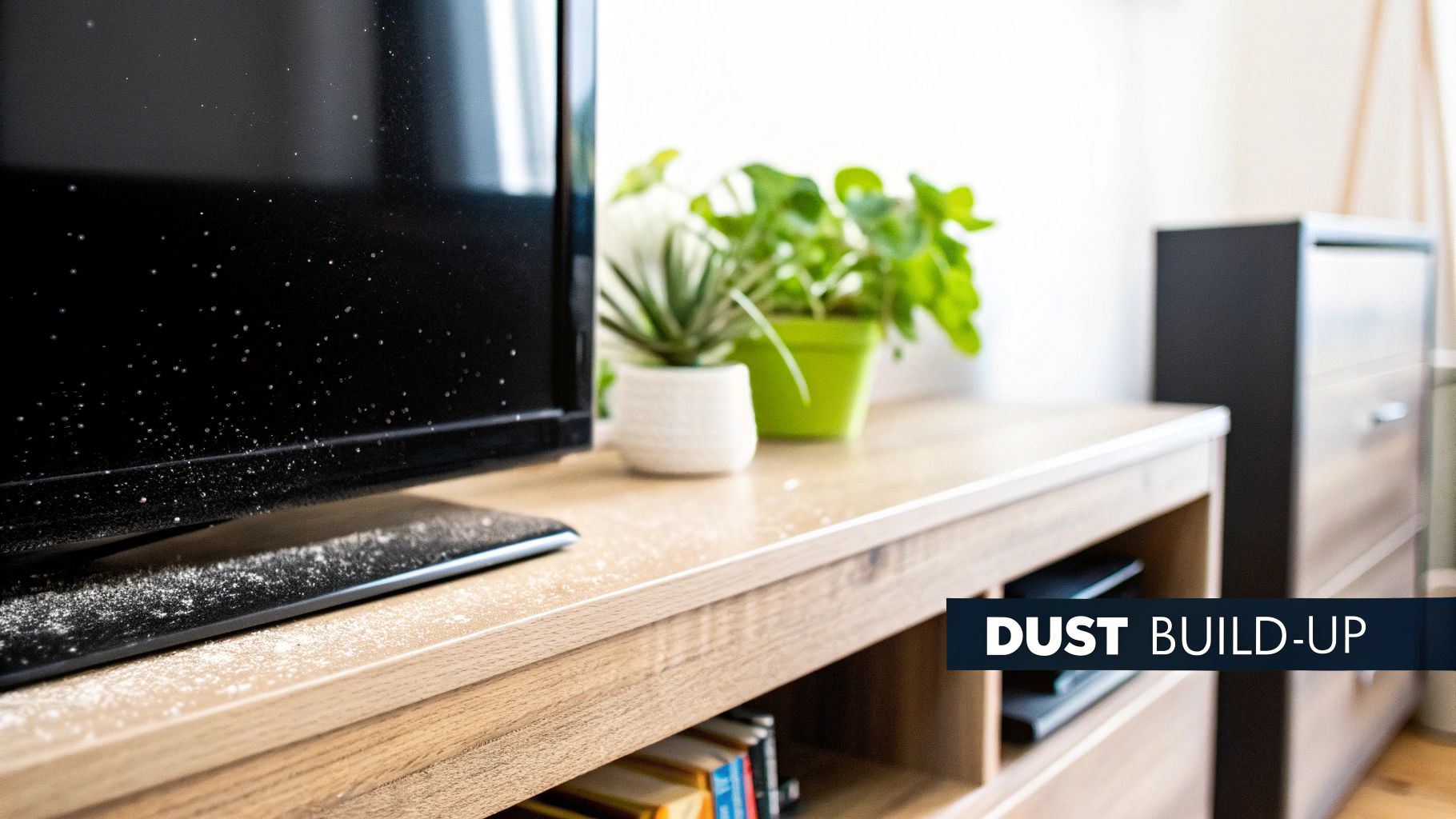
If you feel like you’re constantly battling dust bunnies just days after cleaning, you’re likely dealing with one of the most visible signs of poor ventilation in house. When your home's air circulation system isn’t functioning correctly, it cannot effectively filter and remove airborne particles. Instead, stagnant air allows dust, pet dander, pollen, and other pollutants to settle on every available surface, from furniture and electronics to floors and shelves.
This isn't just an aesthetic nuisance; it's a clear indicator that your indoor air quality is compromised. The air isn't being exchanged with fresh, clean air from outside or properly filtered through your HVAC system. Consequently, allergens and irritants become trapped indoors, continuously recirculating and settling.
Why It Happens and What to Do
The root cause often lies within your HVAC system. Clogged air filters or dirty, obstructed ductwork severely limit airflow, preventing the system from capturing dust before it takes over your living space. For instance, a commercial office in a high-dust environment like Phoenix might see a dramatic increase in surface dust if its HVAC system hasn't been serviced in over two years, as the system loses its ability to manage particulate matter.
To combat this, consider these actionable steps:
Inspect and Upgrade Filters: Check your HVAC air filter monthly. If it's dirty, replace it. Consider upgrading to a high-efficiency HEPA filter, which can capture a much higher percentage of microscopic particles.
Check Your Vents: A quick visual check can be telling. If you see a noticeable layer of dust coating your air return vents just a few days after cleaning, it's a strong signal that your ducts are overloaded.
Professional Duct Cleaning: When dust becomes relentless, the problem is often deep within the ductwork. Professional services like Purified Air Duct Cleaning can thoroughly remove years of accumulated debris, restoring proper airflow and filtration.
Advanced Air Purification: For superior particle removal, an ActivePure system can be installed. This technology actively seeks and neutralizes airborne particles, including dust, before they have a chance to settle.
If you want to dive deeper into the sources of household dust and find more solutions, you can learn more about why your house is so dusty on purifiedairductcleaning.com.
2. Musty or Stale Odors
If you walk into your home and are greeted by a persistent musty, damp, or generally stale smell, you're smelling one of the most common signs of poor ventilation in house. When air doesn't circulate properly, it becomes stagnant. This allows moisture, mold spores, and odor-causing bacteria to accumulate and thrive, creating unpleasant and unhealthy indoor conditions.
These odors are more than just a minor annoyance; they signal that your home's air isn't being exchanged with fresh, clean air. Instead, the same stale, moisture-laden air is trapped and recirculated, creating an ideal breeding ground for mold and mildew. This is particularly problematic in humid climates or during specific weather events, like Arizona's monsoon season, when trapped humidity can quickly lead to bigger issues.
Why It Happens and What to Do
The primary cause of these smells is trapped moisture combined with a lack of airflow. Blocked dryer vents can pump warm, moist air into wall cavities, while dirty HVAC coils can become a breeding ground for mold that spreads odors throughout your home via the ductwork. For example, a Phoenix-area home with an unnoticed blockage in its dryer vent can quickly develop a musty smell in the laundry room that eventually permeates the entire house.
To address these odors at their source, avoid masking them with air fresheners and instead take these steps:
Clean HVAC Coils: Mold and bacteria often grow on damp evaporator coils. Professional HVAC coil cleaning removes this biological growth, eliminating the source of musty smells being circulated by your system.
Inspect and Clean Vents: Ensure all vents, especially exhaust vents for bathrooms and dryers, are clear and functional. Professional dryer vent cleaning is crucial for removing lint blockages that trap moisture.
Professional Duct Cleaning: Odors can become trapped deep within your ductwork. A thorough duct cleaning by a service like Purified Air Duct Cleaning removes the accumulated dust, debris, and microbial growth that cause persistent smells.
Install Air Purification Technology: To proactively eliminate odors, an ActivePure system can be installed. This advanced technology neutralizes odor-causing pathogens and VOCs in the air and on surfaces, purifying your home's environment.
To better understand the root causes and find more detailed solutions, you can learn more about what causes a musty smell in a house on purifiedairductcleaning.com.
3. Uneven Heating or Cooling Throughout the Home
If you find yourself adjusting the thermostat only to discover that one room is an icebox while another feels like a sauna, you are experiencing a classic sign of poor ventilation in house. These temperature imbalances are rarely a problem with the thermostat itself; instead, they point directly to an issue with how conditioned air is being distributed, or not distributed, throughout your property. When airflow is compromised, some areas get too much conditioned air while others are starved of it, creating uncomfortable and inefficient hot and cold spots.
This problem is more than just a minor annoyance. It indicates that your HVAC system is working harder than it should, driving up energy bills as it struggles to achieve a consistent temperature. In multi-story Avondale homes, for example, it's common for the upper floors to become unbearably hot in the summer because blocked or leaking ducts prevent cool air from reaching them effectively. The system runs continuously, but the air simply isn’t getting where it needs to go.
Why It Happens and What to Do
The primary cause of uneven temperatures is often hidden within your air ducts. Blockages from debris, crushed or kinked flex ducts, or disconnected segments can completely halt airflow to specific rooms. Dirty evaporator or condenser coils on the HVAC unit can also restrict system-wide airflow, reducing its ability to heat or cool the entire space properly. This is a frequent issue in both older homes with aging ductwork and commercial properties where certain offices become unusable due to poor climate control.
To restore balance and comfort, consider these targeted solutions:
Professional Duct Inspection: The first step is to identify the exact problem. A professional inspection can pinpoint blockages, leaks, or damage within the ductwork that a visual check would miss.
Comprehensive Duct Cleaning: If debris is the culprit, a thorough cleaning by a service like Purified Air Duct Cleaning will remove the obstructions and restore balanced airflow to all vents.
Ensure Coils Are Clean: Your HVAC unit's indoor and outdoor coils must be clean to function efficiently. Restricted airflow over dirty coils is a common cause of reduced heating and cooling capacity.
Air Duct Sealing: Leaks in the duct system allow conditioned air to escape into attics or crawlspaces. Professional sealing ensures that the air you pay to heat and cool is delivered directly to your living areas.
4. Visible Mold Growth or Moisture Problems
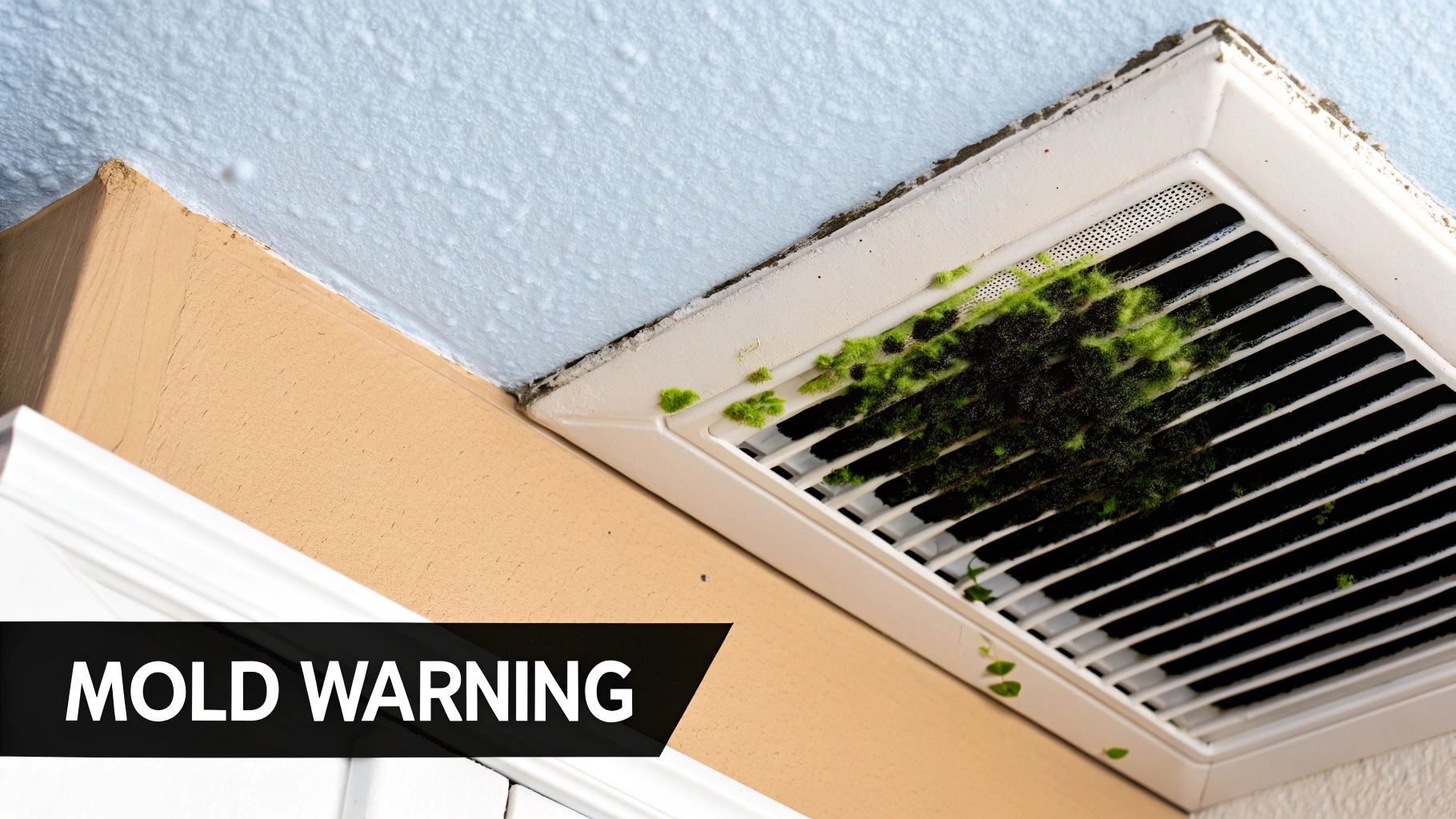
Discovering mold or mildew on walls, ceilings, or around vents is one of the most serious signs of poor ventilation in house. When your home’s air cannot circulate properly, moisture from daily activities like showering, cooking, and even breathing becomes trapped. This stagnant, damp environment creates the perfect breeding ground for mold spores to colonize and spread, compromising both your property and your health.
This isn't just a surface-level issue; it indicates a deep-seated failure in your home's ability to manage humidity. In climates like Arizona's, especially during the monsoon season, efficient air exchange is critical to prevent moisture buildup. The presence of mold suggests that this fundamental process is broken.
Why It Happens and What to Do
The primary cause is air that remains saturated with moisture for too long, allowing condensation to form on cool surfaces. Your HVAC system plays a crucial role here; for example, a Phoenix home with clogged HVAC coils can become a source of contamination, growing mold that is then distributed throughout the house with the conditioned air. If you detect visible mold growth, understanding mold damage and its implications for your home's structure and air quality is a vital next step.
To address mold and moisture, immediate action is required:
Do Not Attempt DIY Removal: For your safety, contact a professional service like Purified Air Duct Cleaning immediately. Disturbing mold can release a high concentration of spores into the air.
Target the Source: Schedule professional HVAC coil and duct cleaning to eliminate mold from the system. This ensures you are not circulating contaminated air.
Control Indoor Humidity: Address underlying moisture sources, such as leaks or condensation. Aim to maintain indoor humidity levels between 30% and 50% through improved ventilation or a dehumidifier.
Prevent Future Growth: Installing an ActivePure air purification system is a proactive measure. This technology neutralizes mold spores in the air and on surfaces, stopping new growth before it starts.
To protect your home from future issues, you can learn more about how to avoid mold in your home and damp buildings on purifiedairductcleaning.com.
5. Allergy and Respiratory Issues Worsening Indoors
If you or your family members notice that sneezing, coughing, or asthma symptoms flare up specifically when inside, it's a significant warning sign. These heightened reactions are often one of the most concerning signs of poor ventilation in house. When a home’s air isn’t properly exchanged or filtered, it traps a high concentration of allergens like dust mites, pet dander, mold spores, and pollen, creating an environment that aggravates respiratory conditions.
Instead of your home being a sanctuary, it becomes a reservoir for irritants. Stagnant air allows these contaminants to continuously recirculate, meaning you’re breathing them in with every breath. This is particularly problematic for individuals with pre-existing allergies or asthma, as the very air in their home is actively working against their health and comfort.
Why It Happens and What to Do
The primary cause is an HVAC system that fails to remove airborne contaminants, either due to dirty ductwork or inadequate filtration. Allergens accumulate within the ducts and are then distributed throughout every room each time the system runs. For instance, many allergy sufferers in Phoenix homes have reported significant relief and reduced symptoms only after a professional air duct cleaning removed years of built-up dander and dust from their ventilation system.
To create a healthier indoor environment, focus on these targeted actions:
Schedule Professional Duct Cleaning: The most effective way to remove the source of recirculating allergens is to have your air ducts professionally cleaned. This process eliminates the hidden buildup that standard cleaning can't reach.
Install an ActivePure System: For proactive, continuous air and surface purification, an ActivePure system is unparalleled. This NASA-certified technology actively seeks and neutralizes contaminants, including 99.98% of airborne pathogens, providing immense relief for those with respiratory sensitivities.
Prioritize Filter Changes: During high allergy seasons, change your HVAC filter monthly. A clean, high-efficiency filter is your first line of defense against capturing allergens before they enter your living space.
Maintain Clean HVAC Coils: Dirty evaporator and condenser coils can become breeding grounds for mold and bacteria, which are then circulated through your home. Regular professional maintenance is crucial.
6. Excessive Dust in or Around Vents and Registers
When you notice a visible buildup of dust, lint, or other debris caked directly on or around your air vents, you are seeing one of the most direct signs of poor ventilation in house. This isn't just surface dust; it's a clear signal that your ductwork is overloaded with contaminants that the system can no longer manage effectively. Instead of being filtered, these particles are pushed out and accumulate at the last point of contact: your supply and return registers.
This symptom indicates that the problem lies deeper within your ventilation system. The air being circulated is already heavy with particulates, and as it tries to pass through the vent grilles, the debris gets trapped and builds up. This is particularly common in homes that have not had professional air duct cleaning in several years, allowing for significant accumulation throughout the duct system.
Why It Happens and What to Do
The primary cause is dirty, clogged ductwork that acts as a reservoir for dust, pet dander, and other allergens. When the HVAC system operates, it picks up these particles and forces them toward the vents. In some cases, like commercial buildings in Glendale, you might see distinct dust rings forming around every supply vent, a telltale sign of long-term duct contamination. Similarly, residential homes in Avondale often show return vents completely clogged with lint and hair.
To address the root of the problem, consider these solutions:
Professional Duct Cleaning: Simply wiping the vents clean is a temporary fix. Professional services from Purified Air Duct Cleaning remove the source of the debris from deep within your ductwork, preventing it from re-accumulating at the registers.
Clean Registers Regularly: While waiting for professional service, clean your vent registers weekly with a vacuum brush attachment. This helps reduce how much of that settled dust gets recirculated back into your living space.
Inspect and Upgrade Filters: A clogged filter can worsen the problem. Replace dirty filters and consider upgrading to a high-efficiency HEPA filter, which is more effective at trapping fine particles before they can enter your ductwork.
Schedule a Professional Inspection: If you're unsure about the level of contamination, a professional inspection can assess your entire duct system and recommend the most effective cleaning and purification strategy.
7. High Energy Bills Without Corresponding Usage Increase
If your monthly energy bills are climbing but your heating and cooling habits haven't changed, you may be looking at one of the costliest signs of poor ventilation in house. An inefficient HVAC system has to work much harder and run longer to maintain your desired temperature, directly increasing its energy consumption. Restricted airflow from dirty ducts or clogged filters is a primary cause of this inefficiency, forcing your system to fight against itself.
This issue is especially pronounced in climates like Arizona's, where air conditioners run nearly nonstop during peak summer months. When ventilation is compromised, the system cannot distribute conditioned air effectively, leading to extended run times and a significant spike in electricity usage. What you see as a higher bill is actually your HVAC system signaling a deeper problem within its network.
Why It Happens and What to Do
The core issue is wasted energy. Blocked or leaking ductwork forces your HVAC unit to consume more power to push air through restrictions and make up for lost conditioned air. For example, many Phoenix-area homeowners have reported a 20% or more reduction in their cooling costs after a professional air duct cleaning service restored their system's efficiency. The system no longer has to overcompensate for blockages, leading to shorter, more effective cycles.
To address this financial drain, take these practical steps:
Schedule an Energy Audit: A professional energy audit that includes an HVAC system inspection can pinpoint exact sources of inefficiency, from duct leaks to dirty coils.
Professional Duct Cleaning: Restoring clear, unobstructed pathways for air is the most direct way to improve efficiency. Services like Purified Air Duct Cleaning remove the buildup that forces your system to overwork, often leading to immediate energy savings.
Clean HVAC Coils: Dirty evaporator and condenser coils hinder the heat exchange process, making your AC or furnace less effective and more costly to run.
Seal Ductwork: Have a professional inspect and seal any leaks in your ductwork to ensure the conditioned air you’re paying for reaches its intended rooms instead of escaping into walls or attics.
Compare and Quantify: After servicing your system, compare your energy bills for the next 2-3 months against the same period from the previous year to see the tangible financial benefits.
For more in-depth strategies to lower your utility costs, you can explore these 7 advanced HVAC energy-saving tips for 2025 on purifiedairductcleaning.com.
8. Weak Airflow from Supply Vents
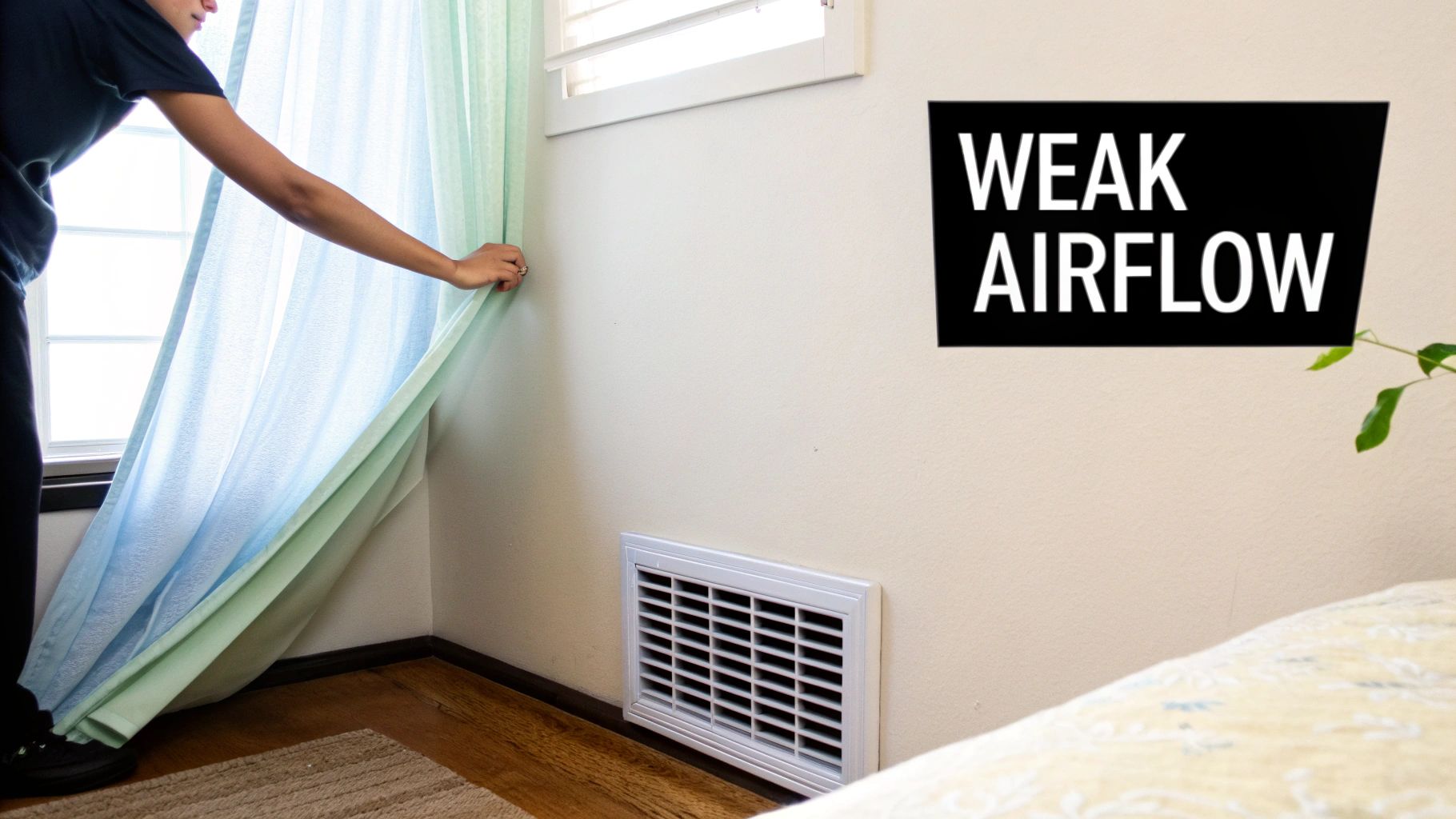
If you hold your hand up to a supply vent and feel only a faint whisper of air, you're experiencing one of the most direct signs of poor ventilation in house. Proper airflow is the backbone of your HVAC system; it's how conditioned, filtered air gets distributed throughout your home. When that flow is weak or nonexistent in certain areas, it signals a significant blockage or restriction that is choking your system and preventing effective air circulation.
This isn't just about comfort; it's a critical system failure. Weak airflow means your HVAC system has to work much harder to try and heat or cool your home, leading to higher energy bills and increased strain on expensive components. More importantly, it means stale, polluted air isn't being effectively replaced with fresh, clean air, leaving contaminants to build up in your living spaces.
Why It Happens and What to Do
The culprit is often an obstruction somewhere between your HVAC unit and the vent. This could be anything from severely clogged air filters and deep-seated dust in the ductwork to kinked flexible ducts or dampers that are stuck in a closed position. For example, homeowners in Avondale often report dramatic improvements in room temperature and air quality after a professional duct cleaning clears out years of accumulated debris that was restricting airflow.
To diagnose and resolve this issue, follow these steps:
Check Filters and Vents First: Start with the simplest fix. Replace your HVAC filter if it's dirty and ensure all your supply and return vents are open and not blocked by furniture or rugs.
Test Airflow Systematically: Walk through your home and test the airflow from each individual vent. If only one or two vents are weak, the issue is likely isolated to a specific duct run.
Inspect Dampers: Some duct systems have manual dampers to control airflow. Check that these levers are in the fully open position.
Professional Duct and System Cleaning: If the problem persists, the blockage is likely deep inside the ductwork or even on the HVAC coils. Services from Purified Air Duct Cleaning can remove these stubborn obstructions, restoring balanced airflow to your entire home.
For a more comprehensive look at troubleshooting and solutions, you can fix your clogged air duct with a homeowner's practical guide on purifiedairductcleaning.com.
Comparison of 8 Signs of Poor Home Ventilation
Item | 🔄 Implementation Complexity | ⚡ Resource & Time Requirements | ⭐ Expected Outcomes | 📊 Ideal Use Cases | 💡 Key Advantages |
|---|---|---|---|---|---|
Persistent Dust Accumulation on Surfaces | Low detection; moderate remediation (duct cleaning) | Low for routine cleaning; moderate if professional services required | ⭐⭐⭐ Improved cleanliness; partial AQ gains until ducts cleaned | Homes with visible rapid dust, allergy households | Easy to identify; motivates targeted cleaning; low-cost initial fixes |
Musty or Stale Odors | Low to detect; potentially high remediation complexity (mold) | Moderate–high: coil/dryer vent cleaning, mold remediation, purification | ⭐⭐⭐⭐ Effective odor removal when underlying moisture/mold addressed | Post-monsoon/humid homes; vents/returns smelling musty | Direct health indicator; prompts urgent remediation |
Uneven Heating or Cooling Throughout the Home | Moderate, a diagnostic is required to find blockages or zoning issues | Moderate: inspection, duct cleaning, sealing, possible zoning dampers | ⭐⭐⭐⭐ Restored comfort balance; measurable energy improvements | Older/multi-story homes, rooms with 5+° variance | Quantifiable impact on comfort and bills; targeted fixes available |
Visible Mold Growth or Moisture Problems | High, immediate professional remediation often necessary | High: specialized mold removal, moisture source repair, possible structural work | ⭐⭐⭐⭐⭐ Eliminates serious health hazards and contamination when remediated | Homes with visible mold, water damage, persistent condensation | Clear urgent hazard; remediation prevents health/property damage |
Allergy and Respiratory Issues Worsening Indoors | Moderate, may require assessment and multiple interventions | Moderate: duct cleaning, ActivePure/filtration, ongoing maintenance | ⭐⭐⭐⭐ Significant reduction in symptoms after IAQ improvements | Households with allergy/asthma sufferers noticing worse indoor symptoms | Health-driven ROI; measurable symptom improvements over time |
Excessive Dust in or Around Vents and Registers | Low detection; moderate remediation (full duct cleaning recommended) | Low for surface/vent cleaning; moderate for complete duct service | ⭐⭐⭐⭐ Visible improvement at vents; indicates deeper contamination | Properties with dust rings at registers or long intervals since servicing | Highly visible before/after indicator; highlights lint fire risk |
High Energy Bills Without Corresponding Usage Increase | Moderate, requires energy audit to confirm HVAC/duct cause | Moderate: audit, duct/coil cleaning, sealing, thermostat upgrades | ⭐⭐⭐⭐⭐ Potential 15–30% energy savings; strong measurable ROI | Homes with unexplained bill increases, high-AC climates | Quantifiable cost savings; strong financial justification for work |
Weak Airflow from Supply Vents | Moderate, simple manual test but may need detailed inspection | Moderate: filter change, duct cleaning, inspection, possible repairs | ⭐⭐⭐⭐ Restored airflow and comfort after clearing restrictions | Rooms with minimal/no air at vents; occupants noticing weak flow | Easy to detect manually; directly improves comfort and efficiency |
Take Action for a Healthier Home: Your Next Steps
Recognizing the subtle and overt signs of poor ventilation in house is the crucial first step toward creating a healthier, more comfortable, and energy-efficient living space. As we've explored, the indicators are often hiding in plain sight: from the relentless layer of dust on your furniture to the persistent musty odors that linger in certain rooms. These are not just minor annoyances; they are your home's way of signaling that its respiratory system is struggling.
The eight signs detailed in this article, including uneven temperatures, visible mold, and worsening allergy symptoms, all point toward a common issue: a compromised HVAC and ductwork system. Stale, contaminated air is being recirculated, while fresh air is being blocked. This imbalance not only impacts your family’s respiratory health but also forces your heating and cooling systems to work harder, leading to higher energy consumption and premature equipment failure. While DIY checks like changing your air filter or visually inspecting vents are excellent maintenance habits, they are surface-level solutions. They cannot address the deep-seated problems of accumulated debris, microbial growth within the ductwork, or significant airflow blockages.
From Recognition to Resolution
Moving from awareness to action is paramount. Ignoring these signs can lead to more significant problems, such as widespread mold remediation or costly HVAC repairs. The health of your home is directly linked to the health of its occupants. Here are your definitive next steps:
Conduct a Thorough Home Assessment: Walk through your home with this list in mind. Document your findings, noting which rooms exhibit the strongest signs of poor ventilation. Check the airflow from each vent and inspect for visible dust or mold.
Implement Simple Fixes: Ensure all vents are unblocked by furniture or curtains. Replace your HVAC filter if it has been more than three months. Regularly dust and vacuum to manage surface-level contaminants.
Seek Professional Expertise: For a definitive diagnosis and comprehensive solution, professional intervention is necessary. Certified technicians have the tools and training to inspect the internal state of your ductwork and HVAC system, identifying the root cause of your ventilation problems.
To gain a deeper understanding of your home's air composition and identify potential issues, you might consider investigating an industrial indoor air quality monitor. This advanced tool can provide precise data on pollutants that are invisible to the naked eye, offering a scientific basis for your air quality improvement strategy.
Ultimately, investing in your home’s ventilation is an investment in your family's well-being. A well-ventilated home is not a luxury; it is a fundamental component of a healthy living environment. By taking these signs seriously and acting decisively, you can restore clean airflow, enhance comfort, and protect your most valuable asset: your home and the people within it.
Ready to transform your home's air quality and eliminate the frustrating signs of poor ventilation in house? The certified professionals at Purified Air Duct Cleaning specialize in comprehensive air duct cleaning, HVAC restoration, and ActivePure® air purification systems for residents in Avondale, Phoenix, and beyond. Schedule your free quote today and breathe easier knowing your home is in expert hands.