

A Guide to Air Duct Air Purifier Systems
Think of an air duct air purifier as your home’s built-in immune system. It’s a dedicated unit that integrates directly into your HVAC system, filtering and neutralizing contaminants before they ever get a chance to circulate through your rooms. It catches dust, allergens, and microbes on the fly, ensuring only clean, fresh air gets delivered to you.
How an Air Duct Air Purifier Works

It’s all about layers of defense. As your HVAC system pulls air in, it passes through a multi-stage purification process designed to tackle everything from large debris to microscopic threats.
Each layer has a specific job to do, working in harmony to scrub the air clean:
Pre-Filter: This is the first line of defense, grabbing the big stuff like pet fur, hair, and larger dust bunnies.
HEPA or Fine Filter: Next, the air hits a much finer filter that traps an incredible 99.97% of tiny particles, down to 0.3 microns in size.
ActivePure Module: This is where the magic really happens. This component actively generates safe, natural oxidizers that go on the hunt, destroying viruses, bacteria, and mold in the air and on surfaces.
It’s a comprehensive approach that stops different intruders at each stage.
Integration Into Ductwork
You won’t see these units sitting in the corner of a room. An air duct purifier is installed right inside your ductwork, usually in the return plenum or main supply trunk. This strategic placement guarantees that every bit of air circulating through your home gets pushed through the full purification cycle.
The unit is powered by your HVAC’s control board, keeping it completely out of sight. When it's time for maintenance, there's typically a simple access panel or filter slot, making upkeep a breeze.
Feature Comparison Table
To really understand the difference, it helps to see these systems side-by-side. A stand-alone unit is great for a single room, but an in-duct system offers a whole different level of protection.
Air Duct Air Purifier Feature Overview
Feature | Stand-Alone Purifier | Air Duct Air Purifier | ActivePure Tech |
|---|---|---|---|
Coverage | Single room | Whole-home | Whole-home with ongoing surface treatment |
Installation | Plug-and-play on floor or table | Integrated into ductwork | Integrated with catalytic oxidation |
Maintenance Frequency | Filter change every 3-6 months | Filter and module inspection every 6-12 months | Module check plus filter swap |
Contaminant Defense | Particulates and some odors | Particulates, odors, microbes | Particulates, odors, microbes plus surface cleaning |
This table shows the progression from basic room coverage to a proactive, whole-home solution that cleans both the air and surfaces.
The difference is like comparing a first-aid kit to a hospital ward. One treats problems where you see them, the other stops illness at its source.
This seamless integration makes sure every breath you take at home is scrubbed clean. If you're curious about the nitty-gritty of the installation process, check out our guide to the air scrubber in duct system.
By understanding how these components work together, you can see why duct purification is such an efficient and durable solution for long-term air quality.
Understanding the Core Technology
To really get what an air duct air purifier does, you have to look under the hood. Think of it like a high-tech security system for your home's air, with different layers designed to stop different kinds of intruders. It's built to catch everything from the dust bunnies you can see to the microscopic viruses you can't.
This kind of technology has gotten popular as more people realize just how much indoor air quality affects our health. That growing awareness is fueling some serious market growth. The global air purifier market, which includes these in-duct systems, was valued at USD 24.15 billion and is on track to hit USD 52.38 billion by 2035. You can dig into more of the projections on vmr.biz. It just goes to show how much of a priority clean air has become for homeowners.
The Foundation: Your Filters
At the core of almost any air purification setup, you'll find filters. These are the workhorses, the first line of defense, physically trapping the particles floating around your house. Knowing what they do is the first step to understanding how the whole system works.
There are two main types that do the heavy lifting:
HEPA Filters: This is the gold standard. A High-Efficiency Particulate Air (HEPA) filter is engineered to capture a staggering 99.97% of airborne particles as small as 0.3 microns. For a little perspective, a single human hair is about 50-70 microns thick. So yeah, these filters are trapping things you'll never, ever see.
Activated Carbon Filters: While HEPA filters are particle ninjas, activated carbon filters go after gases, funky odors, and volatile organic compounds (VOCs). The carbon is treated with oxygen, creating millions of tiny pores that act like a sponge, soaking up nasty smells from cooking, pets, or household chemicals.
These two work as a team: one catches the physical stuff, and the other absorbs the gassy, smelly stuff. But here’s the key distinction: filters trap contaminants, they don't necessarily destroy them. To get a better handle on this, check out our guide on the air purifier vs air filter debate. This is where the next level of technology comes in.
This diagram shows how these different layers typically work together inside a unit to scrub the air clean.
You can see the multi-stage approach, starting with basic pre-filters for bigger debris and then moving on to the specialized HEPA and carbon filters for the finer, more difficult contaminants.
The Game-Changer: The ActivePure® Module
Beyond just trapping things, the next generation of air purification gets proactive. It doesn't just sit there and wait; it actively hunts down and destroys pollutants. The ActivePure® module is the perfect example of this leap forward. This technology was actually developed in partnership with NASA to keep astronauts safe and healthy up in space.
Instead of just waiting for germs and dust to pass through a filter, ActivePure® uses a process called photocatalytic oxidation.
Basically, it uses a special UV light and a catalyst to create powerful, yet completely safe, oxidizing molecules. Your HVAC system then sends these molecules out into your home, where they neutralize pathogens both in the air and on any surface they touch.
This is what makes an advanced air duct air purifier so different. It’s not just cleaning the air that happens to get pulled into your ductwork; it turns your entire HVAC system into a machine that purifies the air and surfaces throughout your whole home.
Comparing the Technologies
When you put it all together, you can see how each piece of the puzzle plays a critical role. One is a barrier, the other is a hunter-seeker.
Technology | Primary Target | Method of Action |
|---|---|---|
HEPA Filter | Particulates (dust, pollen, dander) | Traps particles in a fine mesh |
Activated Carbon | Gases, Odors, VOCs | Adsorbs gaseous pollutants |
ActivePure® Module | Viruses, Bacteria, Mold, Fungi | Actively destroys pathogens on surfaces and in the air |
This powerful combination gives you a rock-solid defense against a whole spectrum of indoor air threats, from everyday allergens to nasty microorganisms. Each component covers a different vulnerability, creating a system that’s far more powerful than any single technology could be on its own.
A Closer Look at ActivePure Technology
While your standard HVAC filter does a great job of trapping particles that pass through it, ActivePure technology plays a completely different game. It's proactive. Instead of waiting for contaminants to come to it, this system actively hunts them down and neutralizes them in the air and on surfaces throughout your home. This is what turns a good air duct air purifier into a whole-home purification solution.
The magic happens in a special module that we install right inside your ductwork. This unit houses a UV-C lamp and a honeycomb-like matrix coated with a unique catalyst. As air from your home flows over it, a powerful, and completely safe, reaction kicks off.
How ActivePure Creates Its Purifying Molecules
Think of it like a self-cleaning process that’s activated by light. The UV light hits the catalyst, causing it to react with the water vapor and oxygen that are already in your air. This process, called photocatalytic oxidation, generates a steady stream of powerful oxidizing molecules.
These molecules, which include things like hydroxyls and hydrogen peroxide ions, are the very same agents that nature uses to clean the air outside. Your HVAC system then becomes a distribution network, sending these tiny purifiers into every single room. They travel with the air, eventually settling on countertops, doorknobs, and furniture.
This is the real game-changer: ActivePure technology doesn't just clean the air. It actively sanitizes the surfaces in your home, destroying contaminants on contact for a level of clean that filters alone could never hope to achieve.
This infographic gives you a good visual breakdown of the whole process, showing how ActivePure fits into a multi-stage purification system.
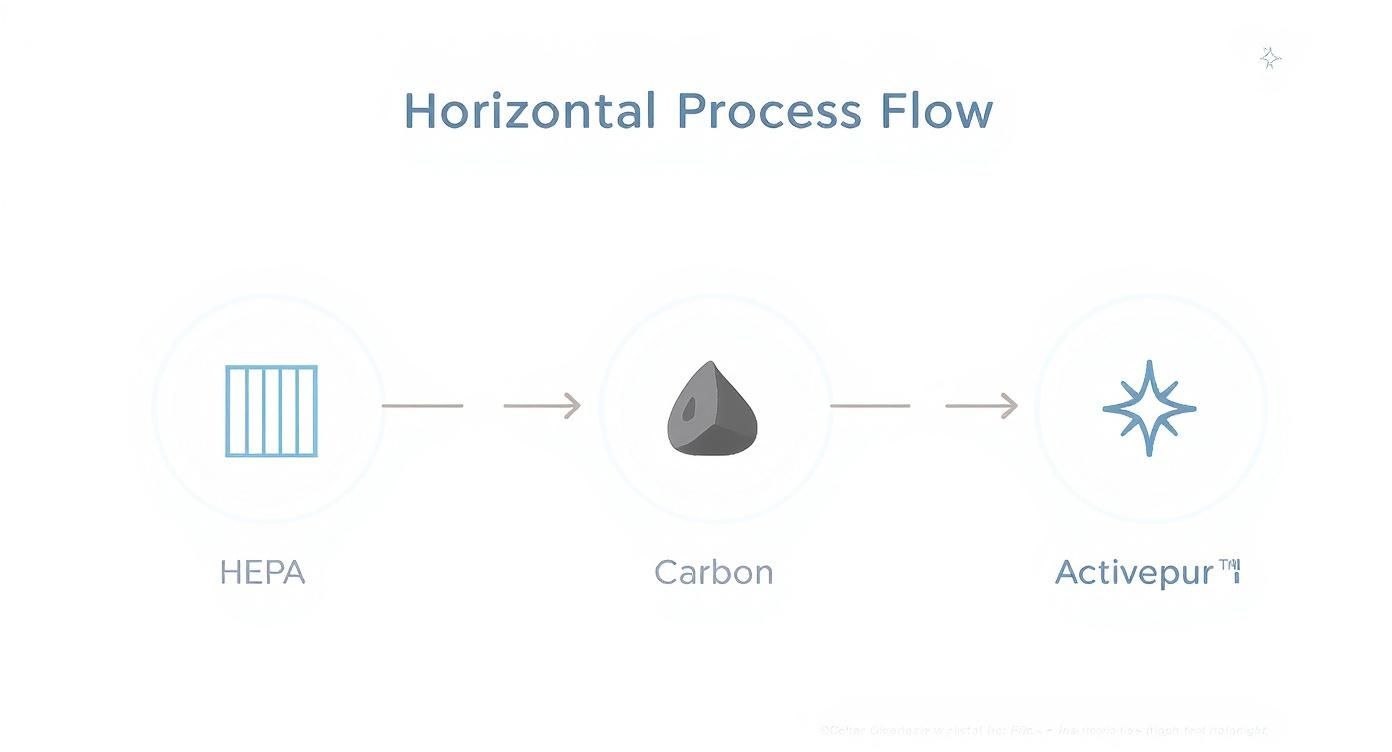
As you can see, after initial filters grab the bigger particles, ActivePure takes over for the final, active purification stage.
Actively Destroying Contaminants
Once these purifying molecules are released into your home, they don't just drift aimlessly. They are drawn to contaminants like a magnet, whether they're floating in the air or sitting on a surface. This includes:
Viruses and Bacteria: The oxidizers dismantle the cellular structure of these microbes, rendering them completely harmless.
Mold Spores: They get destroyed before they even have a chance to land and start growing on a surface.
Volatile Organic Compounds (VOCs): Nasty chemical pollutants from things like cleaning products and new furniture are broken down into simple, harmless water and carbon dioxide.
This aggressive approach is incredibly effective. In fact, some systems have been shown to neutralize over 99% of contaminants in both the air and on surfaces. If you want to get into the nitty-gritty, you can learn more about what an ActivePure air purifier is in our detailed article.
A Proven Technology
This isn't some new, untested gadget. The technology was first developed in partnership with NASA to keep the air and surfaces clean for astronauts aboard the International Space Station, a sealed environment where air quality is mission-critical. That's a pretty serious endorsement.
This technology is designed to do more than just filter; it actively sends out a solution to find and eliminate contaminants wherever they hide. It's no wonder that more and more people are looking for this level of clean. The US air purifier market is on track to hit USD 6,823.4 million by 2030, with a steady growth rate of 7.2%. This clearly shows that homeowners and businesses are shifting their focus to more powerful and proactive purification methods.
Real-World Benefits and Applications
Let's move past the technical specs. What does installing an air duct air purifier actually do for your home or business? The real magic is in the day-to-day changes you can feel. It’s all about creating a space that’s healthier, cleaner, and just plain more comfortable for everyone inside.
These systems do so much more than a standard furnace filter ever could. They're not just passive barriers; they're active soldiers, creating a cleaner home and impacting everything from your family's health to the longevity of your HVAC system.
Creating a Healthier Living Space
The first thing most people notice is a huge improvement in their indoor air quality. For any family, especially one with young kids, elderly parents, or anyone with respiratory issues, this is a game-changer. An in-duct purifier goes after the microscopic gunk that triggers health problems.
Just picture it: an allergy season that doesn't involve a constant symphony of sneezing and watery eyes. Imagine a home where someone with asthma can take a deep, easy breath because the air isn't thick with dust mites, pet dander, and pollen. That's exactly what these systems deliver.
An air duct air purifier acts as a constant guardian for your home's air. It addresses pollutants at the source, preventing them from circulating and causing irritation or illness, which is a fundamental step toward a healthier indoor life.
For anyone who dreads allergy season, stopping contaminants before they even get a chance to circulate is everything. When you pair a powerful purification system with routine upkeep, you essentially build a sanctuary from outdoor allergens. To really maximize these benefits, it helps to understand how to improve air quality with duct cleaning for allergies, as a clean system gives your purifier a clean slate to work with.
Odor and VOC Neutralization
Ever struggled with those stubborn, lingering smells from last night's dinner, the dog, or even cleaning supplies? An air duct air purifier, especially one with activated carbon and active technologies, doesn't just cover up those smells; it flat-out neutralizes them. It finds and breaks down the very molecules causing the odor.
This is also true for Volatile Organic Compounds (VOCs), which are nasty chemicals that "off-gas" from new furniture, fresh paint, and tons of household products. These purifiers are designed to capture and dismantle these potentially harmful compounds, leaving your air smelling genuinely fresh and clean. This is a huge plus for businesses, too, helping create a pleasant and professional atmosphere.
Extending HVAC System Lifespan
Here’s a benefit that often flies under the radar: an in-duct purifier actually protects your expensive HVAC equipment. By grabbing dust, dirt, and other debris before it can get sucked into your system, it keeps vital parts like the evaporator coils and blower motor from getting gunked up.
A cleaner system is an efficient system. It doesn’t have to work nearly as hard to heat or cool your home. Industry studies have shown this can slash fan energy use anywhere from 41% to 60% in clean systems. That means lower utility bills and less wear and tear, which can add years to the life of your entire HVAC unit.
Here are just a few real-world scenarios where these systems truly shine:
Residential Homes: A family with pets can finally get rid of that persistent dander and "wet dog" smell, making the house fresher for everyone.
Medical and Dental Clinics: Sterility is non-negotiable. In-duct purifiers help neutralize airborne pathogens, adding a crucial layer of protection for patients and staff.
Office Buildings: By cutting down on the circulation of viruses and bacteria, businesses can see a real drop in sick days and a boost in employee wellness.
Schools and Daycares: Keeping kids safe from circulating germs is always a top priority. These systems work around the clock to create healthier learning spaces.
A truly healthy home requires a holistic approach, looking at everything from the air you breathe to the surfaces you touch. To take it a step further, it's worth learning how things like regular carpet cleaning can also improve overall indoor air quality and prevent allergies by removing trapped irritants.
When you see these practical applications, it becomes obvious that an air duct air purifier is more than just another gadget. It's a foundational investment in the health, comfort, and safety of your indoor world.
Planning Your Installation and Budget
So, you're ready to move forward with an air duct air purifier. Great choice. But before you pull the trigger, let's walk through the practical steps. Getting a handle on the installation process, making sure it works with your current setup, and understanding the costs will help you make a decision you feel good about.
This isn't like buying a portable room filter; you're integrating a permanent solution right into your home's HVAC system. The first thing to look at is your existing furnace and ductwork. For an in-duct unit to do its job properly, it has to be installed in the right place, usually the main supply or return plenum. This is the sweet spot that guarantees all the air your system pushes through your home gets treated.
The good news is that most modern HVAC systems are compatible with these purifiers. Still, things like the age of your system, how much space is available around the ductwork, and your home's electrical wiring can affect how the installation goes.
Professional Installation Versus DIY
I get it, the temptation to DIY is strong, especially if you're handy. But when it comes to an air duct air purifier, I almost always recommend calling in a pro. This isn't a simple plug-and-play gadget; it requires real knowledge of HVAC systems and electrical work.
A certified technician knows exactly where to place the unit for the best airflow and purification. They’ll handle the wiring safely and make sure the purifier talks to your HVAC controls without a hitch. A botched installation can mean the unit doesn't work as well as it should, or worse, it could damage your HVAC system or create a safety risk.
Hiring a certified professional is really an investment in your peace of mind. You’re guaranteeing the system is set up for top efficiency and a long life, which protects your equipment and its warranty from day one.
Going with a professional ensures the job is done right, saving you from costly mistakes and making sure your system performs exactly like it's supposed to.
Breaking Down the Costs
The total cost for an in-duct air purifier isn't just the price of the unit itself. It's a package deal that includes the hardware and the skilled labor needed to install it correctly and safely.
Here’s a quick look at what shapes the final price tag:
Unit Price: This is the cost of the purifier module. It can vary quite a bit based on the brand, the specific technology (like ActivePure), and its capacity to handle your home's airflow.
Labor Costs: Professional installation fees will depend on how complex your HVAC system is and the going rates for skilled technicians in your area.
Home Size: A larger home might need a more powerful unit or even multiple units to get full coverage, which naturally affects the total investment.
All in, homeowners can generally expect the total cost for a professionally installed system to land somewhere between $800 and over $2,000. While that’s a significant upfront cost, it's important to think about the long-term value and the health benefits for your family. This investment also plugs you into a growing trend; the air duct system market is projected to hit $7.6 billion by 2035 as more people focus on efficient HVAC solutions. You can dive deeper by checking out the full report on future market insights.
Finding and Vetting Certified Installers
Choosing the right installer is just as critical as picking the right purifier. You want someone who’s experienced, properly certified, and has a solid reputation.
A good place to start is by looking for local HVAC companies that specialize in indoor air quality. Don't just take their word for it: check their online reviews, ask for proof of certification (like from the National Air Duct Cleaners Association, or NADCA), and make sure they’ve installed the specific type of purifier you’re considering.
A trustworthy installer will give you a clear, itemized quote and will be happy to answer any and all of your questions. The goal is to feel comfortable and completely in the loop from start to finish.
Keeping Your System Running Smoothly
Think of your air duct air purifier as a long-term investment in your home’s health. And like any important piece of equipment, it needs a little TLC to keep doing its job right. A bit of consistent maintenance goes a long way, ensuring your system runs efficiently for years to come and protecting both your air quality and your investment.
The good news? It's not complicated. Most of the upkeep involves simple checks and component swaps you can easily manage. But skipping these simple tasks can hamstring your purifier's performance and even put unnecessary strain on your entire HVAC system.
Your Routine Maintenance Checklist
Regular upkeep is the secret to stopping small issues before they become big, expensive problems. It's like a quick tune-up for your home's lungs. Following a simple schedule guarantees the air your family breathes is as clean as possible, day in and day out.
Here’s what to focus on:
Filter Replacements: The filters are your first line of defense, catching all the dust and bigger particles. When a filter gets clogged, it forces your entire HVAC system to work overtime, which just wastes energy and money. You’ll want to inspect the filters monthly and plan on replacing them every 3-6 months, though you might need to do it more often if you have pets or live in an area with poor air quality.
UV Bulb and Cell Inspection: For systems running on technology like ActivePure, the UV bulb and catalyst cell are the real workhorses. These parts generally last about 1-2 years. A quick visual check every six months will tell you if the bulb is still glowing, but it's best to stick to the manufacturer's replacement schedule to maintain peak performance.
It’s surprisingly helpful to keep a simple log of when you do these things. Just a quick note on a calendar or in your phone saves you from guessing later on and ensures nothing gets overlooked. For a more comprehensive game plan, you can learn how to optimize your home with our HVAC maintenance schedule, which covers your entire system.
Troubleshooting Common Issues
Even with the best maintenance routine, you might hit a snag every now and then. Don't worry, most issues are minor and can be sorted out with a little troubleshooting before you need to pick up the phone and call a pro.
If you notice the air quality dipping or hear a strange noise, here are a few things to check first:
Check the Power Supply: I know it sounds obvious, but you'd be surprised how often this is the culprit. Make sure the unit is plugged in correctly and that a circuit breaker hasn't been tripped.
Inspect for Blockages: Take a look at the purifier unit inside your ductwork. Is there any debris or buildup blocking the airflow? A simple obstruction can cause a lot of headaches.
Confirm Your HVAC Fan is Running: Most in-duct purifiers only kick on when the HVAC fan is actually moving air. If your thermostat is set to "Auto," the purifier will only run when your furnace or AC is active. For continuous air cleaning, you’ll want to switch the fan setting to "On."
A well-maintained air duct air purifier is more than just a machine; it's an ongoing commitment to a healthier indoor environment. Simple, consistent care is all it takes to protect that commitment and ensure your system delivers clean air reliably every day.
Common Questions Answered
Even after understanding all the benefits, it's totally normal to have a few questions before committing to an air duct air purifier. Let's tackle some of the most common ones head-on so you can feel confident about choosing the right solution for your home.
How Is an Air Duct Purifier Different From a Portable Unit?
The biggest difference comes down to coverage. A portable air purifier is great for a single room, like your bedroom or a home office. An air duct air purifier, on the other hand, is a whole-home solution. It plugs right into your HVAC system to clean the air everywhere, every single time your system kicks on.
There's also a huge difference in how they clean. Most portable units just passively filter particles that happen to get sucked into them. But advanced in-duct systems, especially those with ActivePure technology, are proactive. They actually send out purifying agents to hunt down and neutralize contaminants in the air and on surfaces all over your house, giving you a much deeper clean.
Do These Systems Create Ozone?
This is a really important question, and a valid concern. Some older air cleaning technologies, like certain ionizers, were known for producing ozone as a byproduct, which is a known lung irritant.
However, modern, certified systems like those using ActivePure technology are specifically designed to be ozone-free. They rely on a photocatalytic process that creates safe, natural oxidizers to do the cleaning, without generating any harmful byproducts. You get cleaner air without any compromises to your health.
What Does Installation Involve?
Getting one of these systems installed is surprisingly straightforward. A professional installation is usually done in just a few hours. A certified technician will check out your HVAC system to find the best spot for the unit, typically in the main plenum, where it can treat the most air.
The process itself involves cutting a small, precise opening in your ductwork, mounting the purifier securely, and then wiring it into your HVAC's power source. A pro makes sure everything is perfectly sealed and integrated with your existing setup.
What Is the Typical Maintenance Routine?
One of the best parts about these systems is how low-maintenance they are. Keeping them running at peak performance is simple.
Filters: If your unit has a pre-filter, you'll want to check and replace it just like you would your furnace filter, usually every 3 to 6 months.
UV Bulb/Cell: The core of the purifier, like the UV lamp in an ActivePure unit, has a much longer lifespan. It typically needs to be replaced every 1 to 2 years to stay effective.
Just jotting down the replacement dates on a calendar is all it takes to make sure your system is always protecting your home's air.
Ready to transform your home's air quality with a professionally installed air duct air purifier? The team at Purified Air Duct Cleaning offers expert installation of NASA-certified ActivePure systems across the Phoenix area. Contact us today for a free quote and breathe easier tomorrow.