

Does air duct cleaning really work? Here's what the science says
So, does air duct cleaning really work? The short answer is yes, but it’s not the magic bullet for every home that some companies claim it is. Its true value shines in very specific situations, like tackling a visible mold problem, clearing out a pest infestation, or removing a huge amount of debris after a messy renovation.
The Honest Verdict On Air Duct Cleaning

It helps to think of air duct cleaning like deep cleaning your car's engine. It's absolutely crucial if there's a clear problem, but you probably wouldn't do it just for routine maintenance on a car that's running perfectly. A lot of the debate around its effectiveness comes from a mismatch between expectations and the over-the-top marketing claims you see online.
Many homeowners hope that a cleaning will dramatically improve their home's air quality, but the science on that is a bit more complicated. The truth is, most of the dust and debris inside your ducts just sits there, clinging to the metal. It doesn't usually get kicked up into the air you breathe during normal HVAC operation. That's a big reason why its impact on general air quality is still a hot topic.
Balancing The Pros And Cons
Even after decades of study, the scientific community is still pretty skeptical about the routine health benefits of duct cleaning. In fact, a 2010 review highlighted by the US EPA found no solid proof that it provides widespread health benefits. Some studies even found that pollutant levels can temporarily increase right after a cleaning because the process stirs up settled dust.
This doesn't mean the service is worthless; far from it. It just means you need to weigh the pros and cons carefully and view it as a targeted solution for a specific problem, not a regular chore. While there are some potential drawbacks of duct cleaning to keep in mind, knowing when to call in the pros is what makes it a smart investment.
To help you see the full picture, here’s a quick breakdown of the main benefits and limitations we’ll explore in this guide.
Air Duct Cleaning At A Glance
This table sums up the key trade-offs to consider when you're deciding if a professional cleaning is right for your home.
Potential Benefit | Potential Limitation |
|---|---|
Removes visible mold growth from duct surfaces. | Little scientific proof of improving overall air quality. |
Eliminates pest infestations and their droppings. | Improper cleaning can release more dust into the air. |
Clears excessive debris after home renovations. | May not provide noticeable health benefits for everyone. |
Can improve HVAC system airflow and efficiency. | Unnecessary expense if no specific problem exists. |
Ultimately, air duct cleaning is a powerful tool when used correctly. The key is identifying a real need for it rather than booking a service based on marketing hype alone.
What Professionals Actually Remove From Your Ducts
When you imagine an air duct cleaning, it’s easy to picture a vacuum sucking up clouds of fine, floaty dust. The reality is a bit different. Understanding what professionals actually pull out of your ductwork is key to setting the right expectations and seeing why the service is so valuable in specific situations.
Truth be told, most of what gets removed isn't the light dust you see dancing in a sunbeam. It's the heavier gunk that has settled over years.
Think of your ductwork like a slow-moving river. Over time, heavy sediment settles at the bottom and pretty much stays put. Your ducts work the same way, collecting all sorts of stuff that clings to the metal surfaces and doesn't get kicked up during normal HVAC use.
The Common Culprits Lurking Inside
A professional cleaning service doesn't just use a shop vac; they use powerful, specialized vacuums and agitation tools to break this stubborn buildup free. What they pull out is often a surprising mix of materials that have been hiding in there since the house was built or last cleaned.
Here’s a look at what’s commonly found inside ductwork:
Construction Debris: It's amazing how much gets left behind. We frequently find drywall dust, sawdust, and even small scraps from the original construction or a recent renovation.
Pet Dander and Hair: If you have pets, their dander and hair inevitably get pulled into the system. Over time, it can combine with dust to create thick, gross mats inside the vents.
Pollen and Outdoor Allergens: Small amounts of pollen and other irritants from outside always find their way in and settle down in the ductwork for the long haul.
Dust Mites: While they prefer your mattress and carpets, their waste products can become part of the settled dust cocktail inside your vents.
This collection of debris generally stays put unless something significant disturbs it. An amateur or overly aggressive cleaning job, for instance, could stir these particles up and blast them into your home’s air. This is exactly why a certified, methodical approach is so critical.
Uncovering More Serious Contaminants
Sometimes, the "sediment" in your ducts is much more concerning than just dust and dander. These are the situations where duct cleaning goes from a simple maintenance task to a necessary health intervention.
A professional inspection might uncover issues that pose a more direct risk, such as pest infestations. Evidence like droppings, nests, or insect remains indicates that your ductwork has become a highway for vermin, and cleaning is essential to remove the contamination they leave behind.
Additionally, if your HVAC system has had any moisture issues, technicians might find mold or mildew spores. These fungi can take root on duct surfaces and, unlike heavy dust, can easily become airborne and circulate throughout your home. In these specific cases, the value of a thorough cleaning becomes undeniable. Removing these specific, problematic materials is where professional duct cleaning truly proves its worth.
Analyzing The Scientific Evidence On Duct Cleaning
When you’re trying to figure out if air duct cleaning really works, it helps to look at the data. The scientific community has been poking at this for years, but honestly, the results can feel a bit all over the place, leaving most homeowners scratching their heads. The secret to making sense of it all is knowing the difference between a pristine, controlled lab experiment and a real, lived-in home.
In a lab, researchers can create the perfect scenario to test cleaning methods, and the results often look amazing. But our homes are messy and complicated. Variables like humidity, the age of the house, and the type of HVAC system you have can completely change the outcome. This is why there’s often a huge gap between what’s possible in a lab and what actually happens in your living room.
This infographic gives you a snapshot of what's typically building up in your ductwork over time.
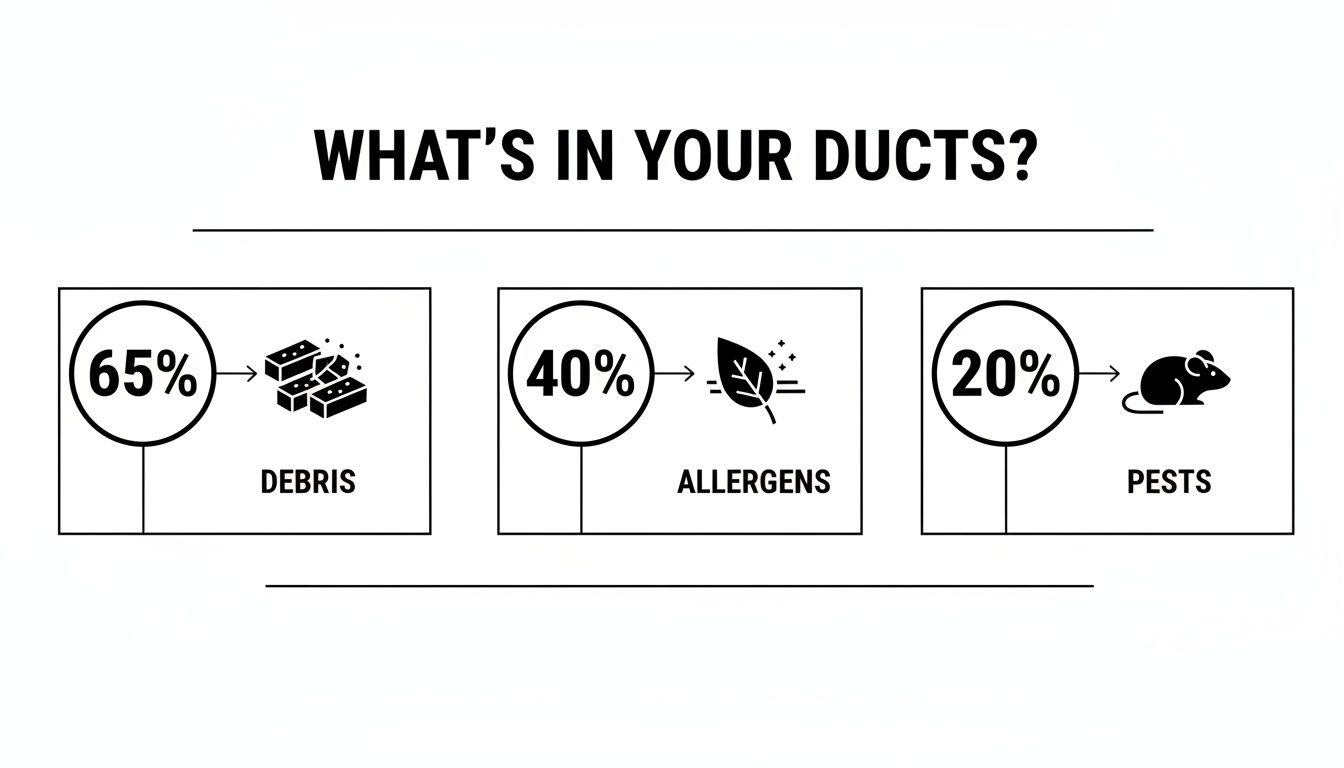
As you can see, it's not just dust. Your ducts can be a hiding place for everything from leftover construction debris and common allergens to pests you’d rather not think about.
The Lab Versus The Living Room
That "lab vs. living room" difference is at the heart of the debate. A major review by the National Research Council Canada nailed this point perfectly. They found that while lab tests could show dust reduction as high as 99%, studies in 33 actual homes painted a different picture, with results usually falling between 50% and 80%.
Even more concerning was the data on fungi and bacteria. The effectiveness was wildly unpredictable, ranging from a 103% increase to a 99% reduction. This shows that a botched job can actually make your air quality worse.
This inconsistency is a big reason why many homeowners say they don't notice a huge difference in air quality after a cleaning. The dust that was removed was likely heavy stuff that had settled and wasn't airborne to begin with.
The biggest takeaway from the research is that simply removing dust from duct surfaces does not automatically translate to healthier air. The connection is still a topic of scientific debate, as most contaminants stay put unless disturbed.
This is why it makes far more sense to invest in duct cleaning for a specific reason, like visible mold or a pest problem, rather than just hoping for fresher air.
Why The Results Are So Inconsistent
So, what causes such a wide range of results in the studies? It really boils down to the skill of the technician, the quality of the equipment, and the condition of the HVAC system itself.
Cleaning Method: A cheap "blow-and-go" service with a glorified shop vac isn't going to accomplish much. A proper cleaning requires powerful negative air pressure machines to create a vacuum and specialized agitation tools to knock stubborn debris loose.
System Complexity: A home with a sprawling, complex web of ductwork is naturally harder to clean than one with a simple, direct layout. Older systems might also have leaks or damage that throw a wrench in the works.
Contaminant Type: Cleaning is incredibly effective for getting rid of bulky debris, like drywall dust after a renovation. It's much less predictable for microscopic particles like mold spores, which can get stirred up and redistributed if the job isn't done right.
Because of all these moving parts, science can’t really give a simple "yes" or "no" answer. The outcome truly depends on the situation.
To dig deeper into the numbers, you can explore the scientific proof behind duct cleaning and see the nuances for yourself. The evidence strongly suggests that when it's done for the right reasons and by a true professional, duct cleaning is an incredibly valuable tool.
Improving HVAC Efficiency Through Duct Cleaning
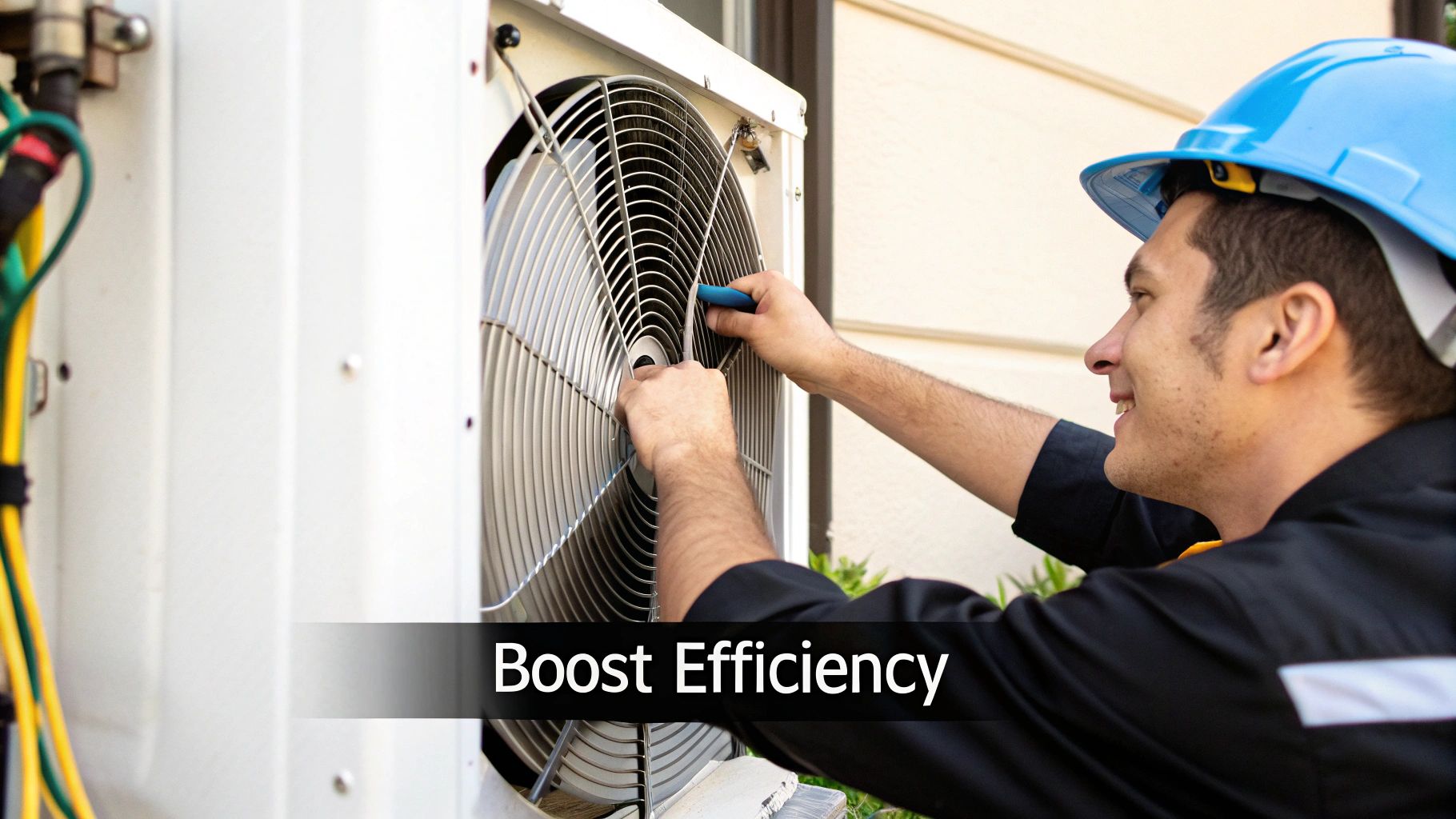
While the debate around air quality benefits can get complicated, one of the most straightforward advantages of air duct cleaning is its impact on your HVAC system's performance.
Think of your HVAC unit like a marathon runner. When its airways, the ducts, are clogged with debris, it’s like trying to run while breathing through a straw. The system has to work much, much harder to do its job. That extra effort isn't free; it shows up in higher energy bills and causes more wear and tear on critical, expensive parts.
By removing all that built-up dust, dander, and grime from the ducts, coils, and fans, you're literally clearing the path for air to move freely. This helps your furnace and air conditioner reach the temperature you set on the thermostat faster and with a lot less strain. This isn't just a theory; you can see the results in your energy bills.
The Connection Between Clean Ducts and Energy Savings
It’s a simple concept: a clean HVAC system just runs better. When essential components like the blower wheel or the cooling coils are caked in a thick layer of grime, they simply can't function the way they were designed to. Your system has to compensate by running longer and harder, and that inefficiency is directly reflected in your monthly utility costs.
The data backs this up, showing significant efficiency gains after a proper, thorough cleaning. Research from the National Air Duct Cleaners Association (NADCA) revealed that professional cleaning could slash fan energy use by a staggering 41% to 60% in moderately aged buildings.
Even systems that were only lightly dirty saw an 11% energy saving, proving that you don’t have to wait for a major problem to see a return on your investment. You can read more about these research findings to dig into the full study.
This makes duct cleaning a form of proactive maintenance, not unlike changing the oil in your car. It’s an investment in the health and longevity of your equipment, helping to prevent costly breakdowns and extend its operational lifespan.
A Whole-System Approach to Efficiency
To get the absolute best results, you need to think about the entire system, not just the ducts. Cleaning the ductwork is a huge step, but other components play a critical role in keeping things running smoothly.
Your air filters, for example, are the first line of defense, stopping debris before it ever gets into the system. It’s also important to consider what happens at the other end of the cleaning process. Knowing about the proper cleaning of HEPA vacuum filters used by professionals can give you a better appreciation for what a thorough job entails.
At the end of the day, a cleaner system is a more efficient system. Our detailed guide on how to improve HVAC efficiency offers even more tips that go hand-in-hand with a professional cleaning. By getting rid of blockages and buildup, you’re allowing your HVAC unit to do its job without fighting unnecessary resistance, saving you energy and money along the way.
When Air Duct Cleaning Is Genuinely Recommended
While some services are great for regular upkeep, air duct cleaning doesn't really fall into that category. It’s not something most households need on a fixed schedule. Instead, it's best to think of it as a targeted solution for a specific problem.
Even major organizations like the Environmental Protection Agency (EPA) don't push for routine cleaning. Their advice is simple: take action when you’ve identified a clear-cut issue lurking inside your HVAC system.
The Problem-Solving Checklist
So, how do you know if your home has one of those issues? You don't need to be an HVAC pro to spot the big red flags. Often, a quick visual check and just paying attention to what's happening in your home can tell you everything.
Here are the three primary scenarios where calling in a professional is the right move:
Visible Mold Growth: If you or an HVAC technician spots significant mold growing inside your metal ductwork or on other parts of the system, that needs to be handled. Ignoring it just gives those spores a free ride to circulate throughout your home.
Evidence of a Pest Infestation: Your ductwork should never double as a highway for rodents or insects. If you find droppings, nesting materials, or the unfortunate discovery of dead pests, cleaning is non-negotiable to get those contaminants out and sanitize the system.
Excessive Debris Clogging Ducts: We're not talking about a light dusting here. This is when your ducts are so clogged with dust and debris that you can literally see a puff of it shoot out of your supply vents when the system kicks on. That’s a clear sign the buildup is out of control.
The real goal of duct cleaning in these situations is to remove a known source of contamination. It’s a direct response to a tangible problem, making sure mold, pest waste, or heavy debris is gone for good.
Real-World Examples and Next Steps
Think about what happens after a major home renovation. It’s incredibly common for fine drywall dust and sawdust to get sucked into the return vents, creating a real mess. That situation falls squarely into the "excessive debris" category and is a perfect reason to schedule a cleaning.
Another example is if someone in your family with asthma or bad allergies suddenly has their symptoms flare up. It’s a smart move to investigate the ducts for mold or other triggers. Digging into how to improve air quality for allergies can show just how much a clean system can help in these specific health situations.
Ultimately, instead of asking, "does air duct cleaning really work?" the better question is, "Do I have a problem that duct cleaning is designed to solve?" If your answer is yes based on the checklist above, then it is absolutely an effective and recommended service.
Finding A Reputable Service And Avoiding Scams
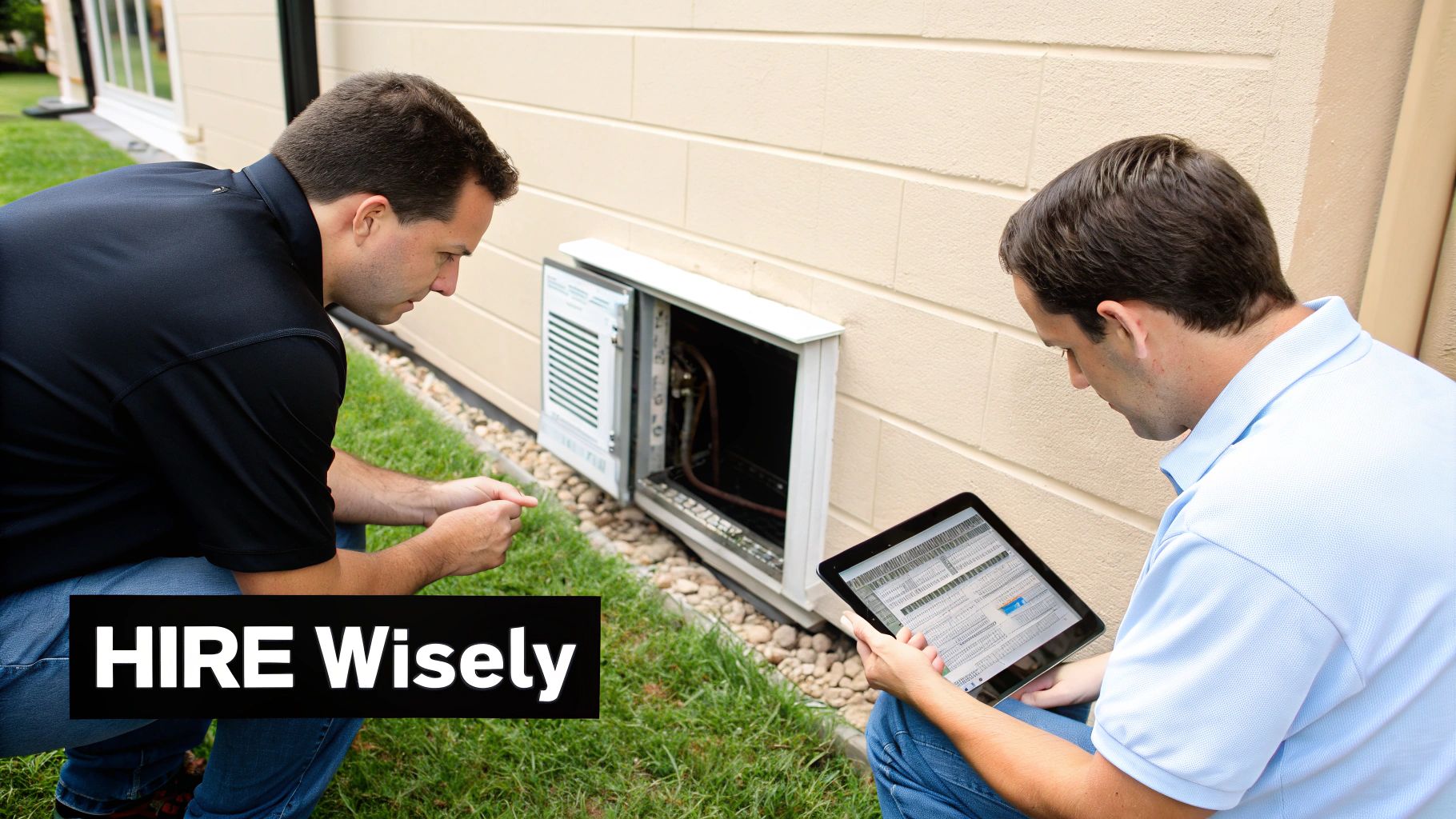
So, you’ve decided duct cleaning is the right move for your home. Now comes the hard part: finding a trustworthy professional who will actually do the job right. The industry, unfortunately, has its share of "blow-and-go" operators who rely on deceptive ads and do a rushed, superficial job. Knowing what to look for is your best defense against getting ripped off.
A legitimate, thorough cleaning is a methodical process. It takes several hours, not 45 minutes. Be extremely wary of companies advertising rock-bottom prices, like a $99 whole-house special. These are almost always bait-and-switch tactics where the final bill balloons with hidden fees for "extra" services that should have been included from the start.
Verifying Credentials And Asking The Right Questions
The single most reliable way to vet a provider is to look for their certification from the National Air Duct Cleaners Association (NADCA). This is the gold standard, ensuring the company follows strict practices and a code of ethics. When you start calling around, have a list of questions ready to go.
Before you even think about hiring someone, make sure you ask:
Are you NADCA certified? This should be your first question. If the answer is no, move on.
Can you provide proof of liability insurance? This protects your home and property from any accidental damage during the service.
Will you give me a written estimate detailing the scope of work? A clear, itemized quote prevents surprise charges down the line.
What kind of equipment do you use? A pro will talk about high-powered vacuums and agitation tools, not just a glorified shop vac.
A trustworthy contractor will be happy to answer these questions and will provide clear, direct information. If a company gets defensive, is evasive, or pressures you to make a decision on the spot, that's a huge red flag. Just walk away.
To get a better idea of what a comprehensive service looks like, it's worth researching companies that offer professional HVAC system cleaning services. After you’ve picked a winner, you’ll want to get your home ready for their arrival. Our guide on how to prepare for duct cleaning walks you through the simple steps to make the whole process go smoothly. A little bit of homework upfront ensures you hire a professional who delivers real, lasting results.
Answering Your Duct Cleaning Questions
Still on the fence about whether air duct cleaning is the right move for your home? Let's tackle some of the most common questions we hear from homeowners.
How Often Should I Get My Ducts Cleaned?
Honestly, for most homes, routine duct cleaning isn't something you need to schedule like clockwork. A good rule of thumb is to have your system inspected every 3 to 5 years, and then only clean it if there's a specific reason.
You should definitely schedule a cleaning if you notice clear red flags, such as:
Visible mold growing on any part of your ductwork.
Signs that pests have made a home in your vents.
A noticeable amount of dust and debris blowing out of your registers, especially after a home renovation.
What’s the Real Cost of Professional Duct Cleaning?
The price tag can vary quite a bit depending on your home's size and how complex your HVAC system is. Generally, you can expect to invest between $450 and $1,000 for a thorough job from a reputable company.
Be extremely wary of those "too good to be true" deals, like a $99 special. These are almost always a bait-and-switch tactic that leaves you with a half-done job and a list of surprise upcharges for the work that should have been included in the first place.
Is There a Better Way to Keep My Air Clean?
Yes, and it starts with prevention. The single most effective thing you can do for cleaner ducts is to stay on top of changing your HVAC air filters. For most homes, that means swapping them out every 1-3 months.
Beyond that, scheduling annual HVAC maintenance is key. A technician who cleans the system's coils and blower fan will do more to improve your air quality and efficiency over the long run than a one-off duct cleaning. Focusing on these simple, preventative steps is often the smarter investment.
Ready to tackle a specific issue with your HVAC system or just want an expert to take a look? The certified technicians at Purified Air Duct Cleaning deliver professional, in-depth services to make sure your system is running as cleanly and efficiently as possible. Schedule your free quote today.