

A Definitive Guide to Reduce Dust in House for Cleaner Air
If you want to get a real handle on the dust in your home, you first have to understand what it actually is. That gray film coating your furniture isn't just one thing; it's a complex cocktail of dead skin cells, loose fabric fibers, and all sorts of microscopic particles that sneak in from both inside and outside your house.
Honestly, tackling dust at its source is way more effective than just wiping it up after it’s already settled.
Understanding Where Household Dust Comes From
Before you can win the war against dust, you need to know your enemy. It’s a unique blend of particles generated by your home, your lifestyle, and even you. Once you can spot the sources, you're on your way to a cleaner, healthier space.
A huge chunk of household dust actually comes from right inside your own home. In fact, a good 80% of it is made up of dead skin cells that we and our pets shed every single day. This is why you'll always find the most dust in bedrooms and living rooms: it's simply where you spend the most time.
Those little skin flakes become a feast for dust mites, microscopic critters that love to burrow into bedding, carpets, and upholstery. It’s their waste that's a major allergen, causing the sniffles and sneezes so many of us blame on a "dusty" house.
Below is a quick breakdown of the usual suspects that make up the dust you see around your home.
Common Sources of Household Dust
Dust Source | Description | How It Enters Your Home |
|---|---|---|
Dead Skin Cells | Microscopic flakes of skin shed by humans and pets. | Generated continuously by occupants living in the home. |
Fabric Fibers | Tiny threads from clothing, bedding, carpets, and furniture. | Released into the air through daily activities like walking or making the bed. |
Dust Mite Waste | Fecal matter from microscopic dust mites that feed on skin cells. | Thrives in warm, humid environments like mattresses and sofas. |
Pollen & Soil | Outdoor allergens and fine dirt particles. | Tracked in on shoes, clothing, and pets, or blown in through windows. |
Pollutants | Soot, exhaust, and other industrial particles from outside. | Enters through open windows, doors, and cracks in the home's structure. |
Knowing these sources helps you see that dust isn't just a sign of a dirty house, but a natural byproduct of daily life.
The Role of Fabrics and Fibers
Another major contributor is the constant shedding from everyday textiles. Just think about all the fabric in your home:
Clothing and Linens: Every time you get dressed or toss your sheets in the wash, tiny fibers break off and float into the air.
Upholstered Furniture: Your comfy sofa, chairs, and even fabric headboards are always releasing small particles.
Carpets and Rugs: Simply walking across a carpet grinds down its fibers, kicking them up into your indoor environment.
These particles are so lightweight they can hang in the air for hours before they finally land on a surface.
External Intruders and Local Factors
Of course, dust doesn't just come from inside. A surprising amount gets tracked in from the great outdoors. Pollen, soil, and pollutants hitch a ride on your shoes, clothes, and pets every time you come inside. If you're in a drier climate like we see here in Avondale, AZ, fine sand and dirt find their way in through any open window or tiny crack they can.
Key Takeaway: Your home is a dynamic system. The number of people and pets, your local climate, and even how old your house is will directly impact how much dust you're dealing with.
Understanding these factors is crucial. A busy household with two dogs and three kids is naturally going to generate more dust than a quiet, single-person apartment. If you want to dig deeper into what makes some homes dustier than others, check out our guide on the top causes of a dusty house and easy fixes.
Ultimately, when you realize that dust is a mix of indoor and outdoor particles, you can build a smarter cleaning plan. By hitting the sources, from washing bedding more often to simply using doormats, you can drastically cut down on dust buildup, making your cleaning efforts count for a whole lot more.
Your Actionable Cleaning Checklists for Dust Reduction
Knowing where dust comes from is half the battle. The other half? Stopping it before it takes over your home. If you only clean when you see a visible layer of grime, you’re stuck in a never-ending cycle. A structured, proactive plan is the only way to really get ahead of the dust.
Instead of staring at an overwhelming list of chores, the trick is to break them down. By creating manageable daily, weekly, and monthly routines, you build a sustainable system that keeps dust levels low. You'll find yourself spending less time on major cleaning projects and more time actually enjoying your home.
This diagram shows how dust from all sorts of places, people, pets, fabrics, and the outdoors, makes its way through your home before settling on every available surface.
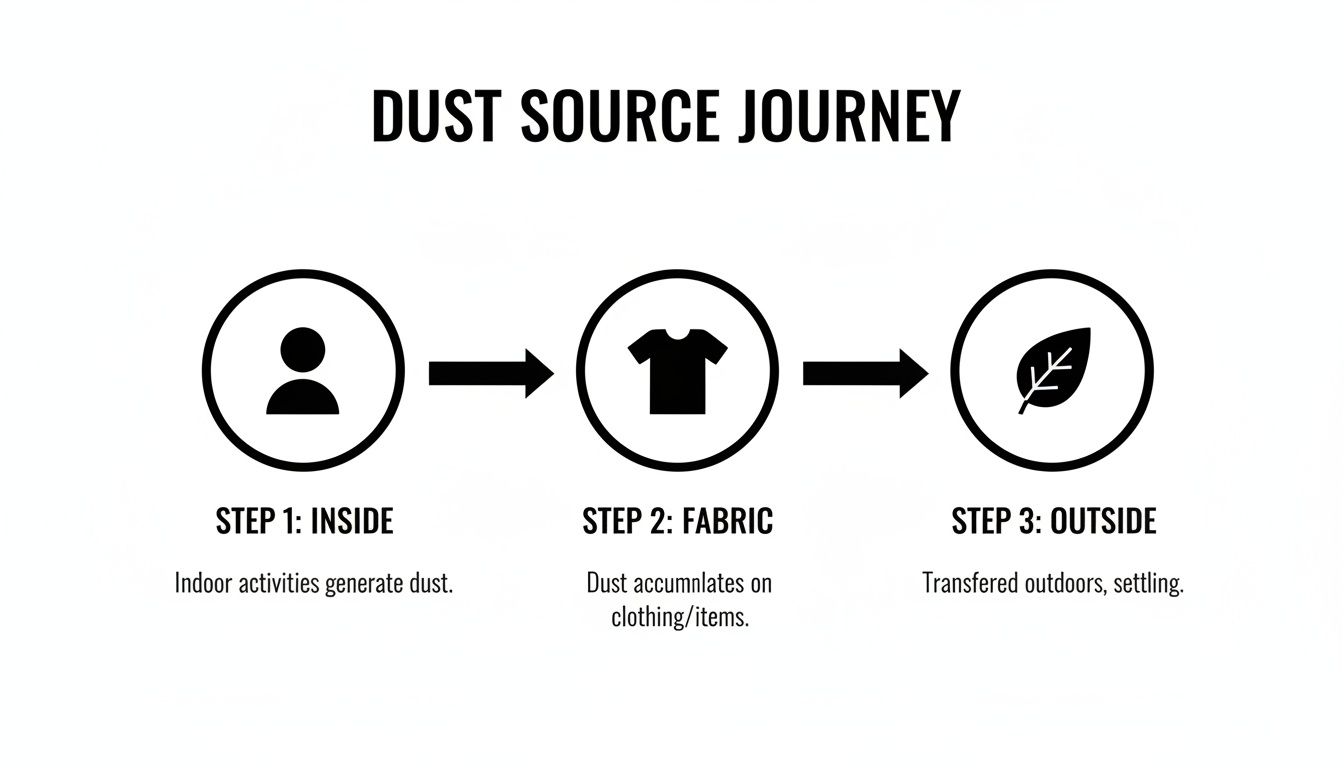
It’s a clear reminder that dust isn't just one thing; it's a mix of particles that all contribute to what you see on your furniture.
Your Daily Dust Control Habits
It’s the small, consistent actions that make the biggest difference in the long run. These quick tasks take just a few minutes but stop the daily buildup that turns weekly cleaning into a massive chore.
Wipe High-Traffic Surfaces: Grab a damp microfiber cloth and give your kitchen counters, coffee table, and end tables a quick wipe. Microfiber is key here; it traps dust instead of just flinging it into the air.
Shake Out Doormats: Seriously, give your entryway mats a good, hard shake outside. You'd be shocked at how much dirt and dust gets trapped there, and getting it out daily stops it from being tracked all over your house.
Squeegee Shower Walls: After you shower, take 30 seconds to squeegee the walls. This simple move helps keep humidity down, making your bathroom a much less friendly place for dust mites to thrive.
Your Weekly Dusting Checklist
This is where you go after the dust that's settled in less-obvious spots. I recommend picking one day of the week for these tasks so it becomes second nature.
Your main goal is to capture dust, not just shuffle it around. Always work from the top of a room down. Dust the ceiling fans and high shelves first, so any dust that falls lands on floors you haven't vacuumed yet.
Pro Tip: Ditch the feather duster. Always use a damp microfiber cloth for dusting. A dry cloth just pushes dust into the air, where it will happily resettle on another surface a few hours later.
Here’s a solid weekly game plan:
Wash All Bedding: Strip the beds and wash your sheets, pillowcases, and duvet covers in hot water. This gets rid of the skin cells and dust mites that have built up over the week.
Vacuum with a HEPA Filter: This is non-negotiable. A vacuum with a HEPA (High-Efficiency Particulate Air) filter will trap at least 99.97% of microscopic particles. Without one, you're just spewing dust, pollen, and dander right back into the air.
Dust Overlooked Spots: Don’t forget about the blinds, lampshades, picture frames, and the tops of door frames. These are prime real estate for dust.
Clean Floors Thoroughly: Once everything else is dusted, it's time for the floors. Vacuum all your carpets and rugs. For hard floors, vacuuming first and then mopping is the best one-two punch to capture any remaining dust. For a deeper dive into floor care, check out this guide on deep cleaning hardwood floors.
Your Monthly Deep-Cleaning Plan
Monthly tasks hit the areas that don't need constant attention but can become major dust contributors if you let them go. These deeper cleans are focused on textiles and hidden spots where dust loves to hide.
Clean Upholstery: Use your vacuum’s upholstery attachment to give your sofas and chairs a thorough cleaning. Don't forget to get deep into the crevices where crumbs and dust settle.
Wash or Clean Curtains: Think of your curtains as giant dust traps. Check the care label; many can be tossed in the washing machine, while others just need a good vacuuming with a brush attachment.
Dust and Wipe Down Vents: Your HVAC vents are dust highways. Wipe the grilles down with a damp cloth and use your vacuum's hose to clean just inside the duct opening. If you’re seeing a constant puff of dust, it might be a sign of a bigger issue. You can learn more about how to clean air ducts at home with our easy DIY guide.
Clean Light Fixtures and Ceiling Fans: Carefully wipe down those ceiling fan blades and light fixtures. All that dust sitting up there gets circulated every single time you turn them on.
The Critical Role of Your HVAC System in Dust Control
Your HVAC system is the lungs of your home, constantly breathing air in and out to keep you comfortable. But it's also a superhighway for dust, moving microscopic particles from room to room with every single cycle. If you ignore it, your HVAC system becomes a primary source of dust. If you maintain it, it becomes your single most powerful tool for winning the war on dust.
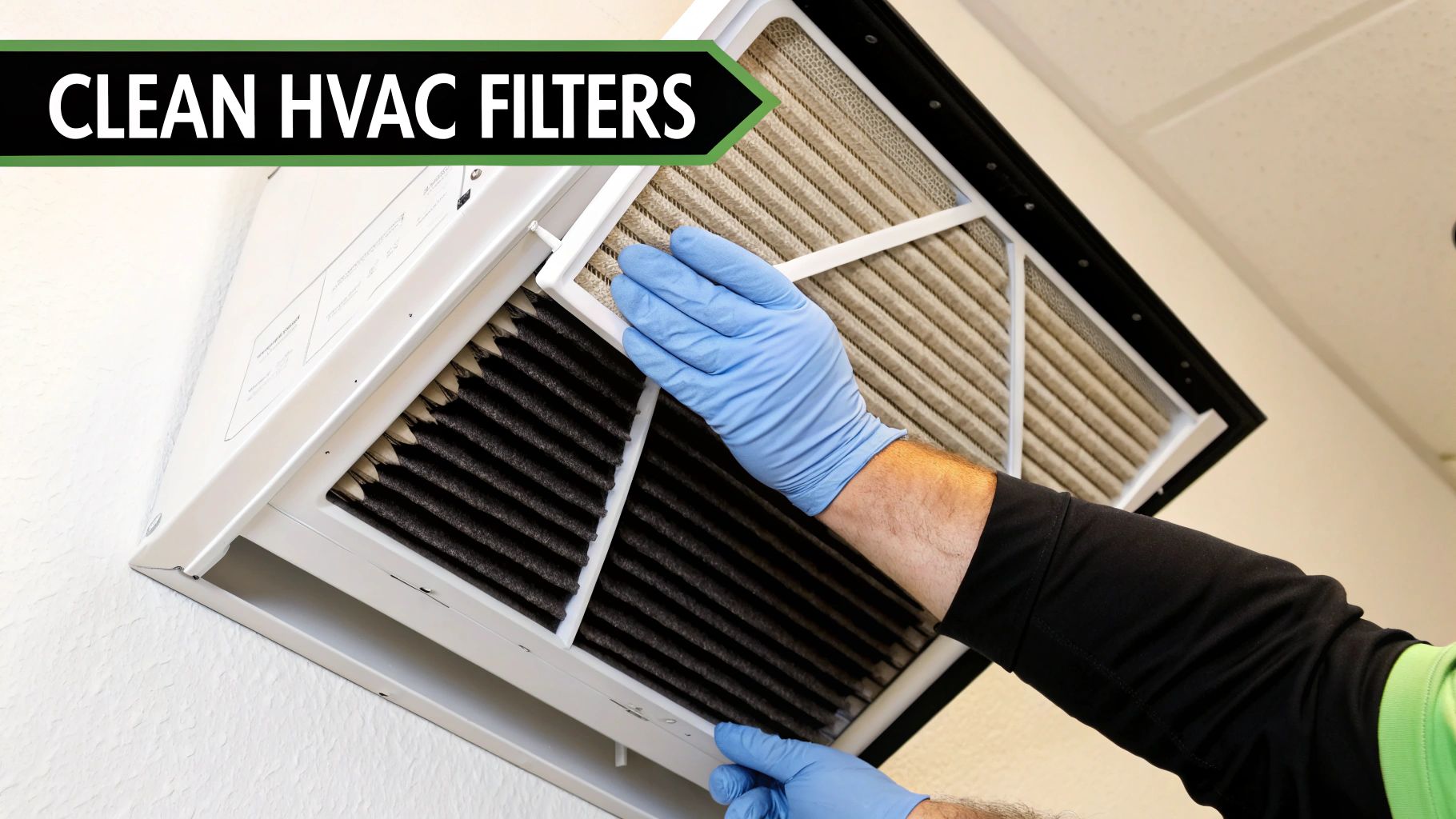
Think about it: the system pulls air from your living spaces, conditions it, and pushes it right back out. Every speck of dust, dander, and pollen in that air gets a free ride. Your first line of defense in this whole operation is the air filter.
Choosing the Right HVAC Filter
Not all filters are created equal. Picking the right one is a careful balance between trapping the maximum amount of dust and allowing your system to breathe easily. Filters are rated on the MERV (Minimum Efficiency Reporting Value) scale, which usually goes from 1 to 16 for home systems. A higher MERV rating means it can snag smaller particles.
MERV 1-4: These are your basic, cheap fiberglass filters. They’re really just there to protect your HVAC unit from big stuff like hair and lint, but they do almost nothing for dust and air quality.
MERV 6-8: This is the sweet spot for most households. These pleated filters do a great job of capturing common household dust, pollen, and mold spores without choking your system's airflow.
MERV 11-13: If you’ve got pets or allergy sufferers in the house, this is where you want to be. These filters are fantastic at grabbing pet dander, dust mite debris, and even some bacteria.
MERV 14+: While these offer incredible filtration, they can be too much for many residential HVAC systems. The dense material restricts airflow, forcing your unit to work harder and driving up your energy bills. Always check your system's manual or ask a pro before jumping to this level.
Of course, the best filter in the world is useless if it's clogged. A dirty filter can't trap anything new and makes your system struggle, circulating dusty air and wasting electricity. Make it a habit to check your filter every month and replace it every 30-90 days, depending on how dusty your home gets.
The Hidden World Inside Your Air Ducts
While your filter acts as the gatekeeper, it can't catch everything. Over the years, a surprising amount of dust, pet hair, construction debris, and other junk builds up deep inside your air ducts. This creates a hidden reservoir of dust that gets blasted back into your rooms every time the heat or AC kicks on.
Ever feel like your house gets dusty again almost immediately after you've cleaned? Your ductwork is a likely culprit. The air blowing through those dirty ducts is just re-coating all your freshly cleaned surfaces with old dust.
Key Insight: Dirty air ducts don't just make your house dusty; they also cripple your HVAC system's efficiency. The buildup makes the fan motor work much harder to push air through, leading to more wear and tear and higher energy bills.
This is exactly why a professional cleaning can be so transformative. Certified technicians use specialized tools, like high-powered vacuums and rotating brushes, to safely dislodge and remove years of grime that you could never reach on your own.
Why Professional Duct Cleaning Is a Game Changer
A professional duct cleaning is like a deep detox for your home's respiratory system. The amount of gunk they can pull out is often shocking: a typical single-family home can have 5 to 15 pounds of dust lurking in its ductwork. And the results speak for themselves. Controlled studies have shown that a thorough HVAC cleaning can reduce airborne particulate matter inside a home by 20–60%.
The benefits go way beyond just seeing less dust on your furniture.
Improved Indoor Air Quality: When you remove pounds of dust, dander, and allergens from the ductwork, there's simply less of it to circulate into the air you breathe. This is a huge relief for anyone with asthma, allergies, or other respiratory issues.
Enhanced HVAC Efficiency: With clean ducts and coils, air flows freely. Your system doesn't have to strain, which can lead to lower energy bills and a longer life for your expensive equipment.
A Cleaner Home Environment: With less dust being blown out of your vents 24/7, you'll quickly notice that surfaces stay clean for much longer. That means less time and effort spent on your daily and weekly cleaning routine.
For any homeowner serious about air quality and system performance, professional maintenance is a must. If you're interested, you can dive deeper into our guide on how to maintain your HVAC system for peak performance. Taking control of your HVAC system is truly one of the most effective things you can do to slash the dust in your house and create a healthier place to live.
Use Technology to Win the War on Dust
Even with the most disciplined cleaning routine, you're only fighting half the battle. Microscopic dust particles love to hang out in the air, just waiting for you to finish cleaning before they settle right back down on your freshly wiped surfaces. This is where modern technology completely changes the game. Instead of just cleaning up dust, you can start preventing it from accumulating in the first place.
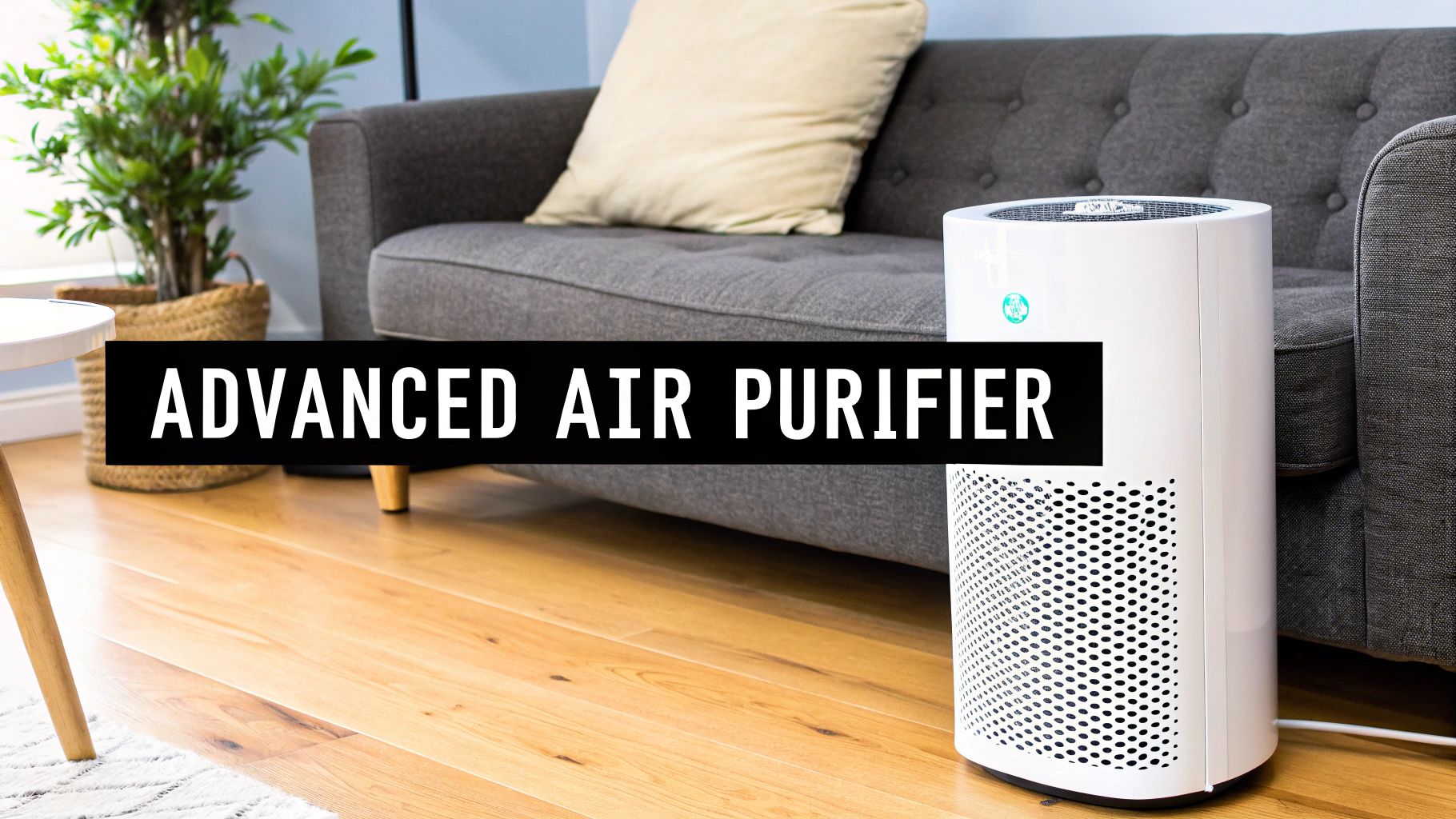
Think of advanced air purification systems as your 24/7 dust defense. They work quietly in the background, constantly cycling and scrubbing your home's air. These systems are far more powerful than a standard HVAC filter, grabbing the tiniest particles that trigger the worst allergy and asthma symptoms. It’s a powerful extra layer in your fight for a dust-free home.
Understanding Air Purification Systems
When you start looking into air purifiers, you'll see they generally fall into two camps. The right choice for you really depends on your home’s layout, what kind of HVAC system you have, and what you’re trying to achieve with your air quality.
Standalone Air Purifiers: These are the portable units you can plug in anywhere. They’re fantastic for targeting specific trouble spots, like the bedroom to help you sleep better, or the living room where your family and pets hang out the most. They simply pull in air from the room, run it through their filters, and push clean air back out.
In-Duct Air Purification Systems: Often called whole-home purifiers, these are installed directly inside your HVAC ductwork. Instead of tackling one room at a time, they clean all the air that moves through your heating and cooling system. This means you get consistent air quality throughout the entire house whenever your system is running.
Both are effective, but they serve slightly different purposes. If you're weighing the options, our guide on the air cleaner vs. an air purifier breaks it down even further.
Going Beyond Filtering to Active Decontamination
Some of the most impressive systems today don't just filter particles; they actively hunt down and destroy contaminants. A perfect example is ActivePure® technology, a system that has its roots in a partnership with NASA to keep the air clean for astronauts aboard the International Space Station.
Unlike a traditional filter that just sits there waiting for pollutants to pass through it, ActivePure® systems are proactive. They send out special energized particles called "hydroperoxides" that travel through the air. These particles actively seek and destroy contaminants like viruses, bacteria, mold spores, and VOCs (volatile organic compounds) in the air and on surfaces.
Key Takeaway: Active purification is a game-changer. It doesn't just trap pollutants inside a machine. This technology neutralizes them on contact, reducing pathogens and allergens everywhere the air touches, not just inside the unit itself.
This idea of capturing contaminants at the source is key. For example, during home renovations, professionals often use specialized dustless floor sanding equipment to prevent dust from ever becoming airborne in the first place.
Real, Data-Backed Relief for Allergy Sufferers
This isn't just marketing hype; the results are measurable. Independent studies have shown that when you combine a professional duct cleaning with these kinds of advanced purification systems, the improvement in air quality is dramatic. For example, ActivePure® technology has proven decontamination rates hitting over 99.98% for certain airborne pathogens in controlled testing.
For you, this translates into real health benefits. Market research shows that pairing mechanical HVAC cleaning with both better filters and an active purification system can lead to a cumulative reduction in breathable particles in the 70–95% range. That's a level of clean you simply can't achieve with any single method alone, and it can bring profound relief to anyone with respiratory issues.
By adding an advanced air purification system to your home, you’re not just cleaning, you’re creating a healthier environment that works for you around the clock.
Is Paying for a Professional Service Actually Worth It?
Let's be honest, when you're looking at your home maintenance budget, adding another expense like professional duct cleaning can feel like a tough pill to swallow. The big question is always: is the cost really worth it?
While it’s definitely an investment, looking at it through the lens of long-term value changes the picture entirely. This isn't just about paying someone to clean; it's an investment in your home's efficiency, your family's health, and frankly, your own time.
The Tangible Financial Returns
One of the quickest paybacks you'll see from a professional HVAC cleaning is in your system's performance. Think about it: when your system's coils and blower are caked in dust and debris, your furnace and AC have to fight just to move air. That struggle shows up directly on your monthly energy bill.
Industry studies have consistently shown that a thorough, professional cleaning can boost HVAC efficiency by 5% to 15%. For homeowners, especially in hot climates like Phoenix, restoring that designed airflow isn't a small thing. It means real, noticeable savings every month. You can dig into some of the industry-wide efficiency improvements online if you're a numbers person.
Then there’s dryer vent cleaning, which offers a return that's harder to price: safety. Lint buildup is a top cause of home dryer fires, and a professional clean-out can slash that risk by over 90%. That's not just protecting your property; it’s buying priceless peace of mind.
Beyond the Numbers: Health and Time Savings
Saving money is great, but some of the biggest benefits are the ones that don't come with a price tag. If anyone in your house deals with allergies, asthma, or other respiratory issues, a professional duct cleaning can be an absolute game-changer.
When you have pounds of dust, pet dander, and hidden allergens removed from your ductwork, you're literally taking them out of the air you breathe every single day. The result is a healthier home where symptoms can be reduced, and everyone can just feel better. The air feels lighter and fresher, a benefit the whole family will notice.
Key Takeaway: The value of professional services isn't just in what they remove from your home, like dust and lint. It's also about what they add, including better health, improved safety, and more free time.
And let's not forget the time you get back. When your vents aren't constantly pumping out a fresh layer of dust, your home stays cleaner, longer. That means less time spent on the endless cycle of dusting and more time for everything else. If you’re still weighing the pros and cons, our guide explores in detail whether air duct cleaning is worth it for your home.
Calculating the Long-Term Value
It’s easy to get stuck on the upfront cost, but when you look at the whole picture, DIY versus professional services, the value proposition becomes much clearer.
DIY Dusting vs. Professional Air Quality Services
Feature | DIY Cleaning | Professional Services (e.g., Duct Cleaning) |
|---|---|---|
Scope | Surface-level cleaning of visible areas (floors, furniture, blinds). | Deep, systemic cleaning of hidden areas like HVAC ductwork and vents. |
Equipment | Standard household tools (dusters, vacuums, cloths). | Industrial-grade equipment (high-powered vacuums, compressed air tools). |
Effectiveness | Temporarily removes existing dust from surfaces. | Removes the source of circulating dust, allergens, and contaminants. |
Health Impact | Minor, temporary improvement. | Significant reduction in airborne irritants, benefiting allergy sufferers. |
Long-Term Result | Dust quickly resettles, requiring constant repetition. | Creates a baseline of clean air, reducing overall household dust for months. |
Time Investment | Ongoing, requires frequent effort (daily/weekly). | A single service provides lasting benefits, saving you time in the long run. |
When you add it all up, lower energy bills, a safer home, better health, and less time spent cleaning, the initial cost transforms into a smart, logical investment. For property managers in places like Mesa, these services are a no-brainer, protecting the asset while creating a healthier space for tenants.
Ultimately, hiring a professional to help reduce dust in your house is a proactive move. You're shifting from just reacting to dust to addressing the root cause, which pays dividends in efficiency, safety, and air quality for years to come.
Your Top Questions About Dust Reduction, Answered
Even with the best cleaning plan in place, you’re bound to have a few questions as you start your war on dust. I hear these all the time from homeowners, so let's clear up some of the most common ones to get you on the right track.
How Often Should I Get My Air Ducts Professionally Cleaned?
This is a great question, and the answer really isn't the same for everyone. As a general guideline, most homes do well with a professional air duct cleaning every 3 to 5 years.
That said, you’ll want to consider a more frequent schedule if your situation is a little different. Think about calling in the pros sooner if:
You have furry friends who shed a lot of hair and dander.
Someone in your house struggles with serious allergies or asthma.
You've just wrapped up a major home renovation that kicked up a ton of fine dust.
You’re noticing a weird dusty or musty smell blowing out of your vents.
Getting them cleaned regularly stops your ductwork from becoming a superhighway for circulating dust and allergens right back into your rooms.
Can an Air Purifier Just Get Rid of All the Dust for Me?
If only it were that simple! While air purifiers are fantastic tools in this fight, they can't completely eliminate dust by themselves. It's best to think of an air purifier as a powerful teammate for your regular cleaning routine, not a substitute for it.
A quality air purifier with a HEPA filter is a champ at grabbing airborne particles, think dust, pollen, and pet dander, before they even have a chance to land on your furniture. They work wonders in high-traffic spots like your living room or, even better, your bedroom.
Expert Insight: An air purifier is working for you 24/7, constantly cleaning the air you breathe and seriously cutting down on how much new dust settles. But it can't do anything about the dust that's already made itself at home on your shelves and floors. That's why dusting and vacuuming are still a must.
When you combine the non-stop effort of an air purifier with a consistent cleaning schedule, you’ll see a dramatic drop in the overall amount of dust in your home.
What’s the Best Kind of Vacuum for Dust and Allergies?
When you’re serious about getting rid of dust and allergens, not just crumbs, the vacuum you choose makes a huge difference. The absolute most important feature to look for is a sealed system with a HEPA filter.
Let's break down why that combination is the gold standard:
HEPA Filter: This is non-negotiable. A true HEPA (High-Efficiency Particulate Air) filter is certified to capture a whopping 99.97% of particles as tiny as 0.3 microns. We're talking about the worst offenders like dust mite allergens, pollen, and dander that cheaper filters just puff right back out.
Sealed System: This is the unsung hero. A sealed system guarantees that every bit of air sucked into the vacuum is forced through the HEPA filter before it's released back into your room. Without this, dusty air can just leak out of the vacuum's casing, completely defeating the purpose of that fancy filter.
For the best results, look for canister or upright vacuums that specifically call out their sealed HEPA filtration. These models are designed to actually trap and remove dust from your home for good, not just stir it up.
Ready to take control of your home's air quality at the source? The certified professionals at Purified Air Duct Cleaning use advanced equipment to remove years of built-up dust, dander, and allergens from your HVAC system. Schedule your free quote today and breathe cleaner, healthier air.