

Can You Vent a Dryer Through the Roof? A Homeowner's Guide
Yes, you can vent a dryer through the roof, but just because you can doesn't always mean you should. While most building codes technically allow it, think of it as a last resort: something you only do when a straight shot through an outside wall just isn't in the cards. This vertical route is simply more prone to problems down the line.
Why Roof Venting Is a Compromise
A dryer's main job is to blast hot, wet, lint-filled air out of your house. The best way to do that is through the shortest, straightest path possible. Imagine a waterslide: a quick, direct slide is fast and fun. A long one that goes uphill in spots? That’s just asking for a backup. A roof vent is that uphill slide, creating a whole set of headaches that a simple wall vent neatly avoids.
This vertical climb forces your dryer to work against gravity, pushing heavy, moist air upward. As that hot air travels up the pipe, it starts to cool down, causing condensation. That moisture is bad news. It acts like glue, trapping flammable lint inside the duct and creating a serious fire risk. In fact, the Consumer Product Safety Commission points to dryer vent issues as a contributor in thousands of house fires every year.
Key Performance and Safety Differences
Before you cut a hole in your roof, it's critical to understand the trade-offs. There's a reason wall venting is the industry standard; it’s safer, more efficient, and a lot easier to take care of.
A dryer vent on the roof demands constant attention to keep it safe and working properly. The vertical path is a magnet for blockages that kill your dryer's efficiency and dramatically increase the risk of a lint fire.
To put it in perspective, let's break down how these two methods stack up against each other.
Roof Venting vs Wall Venting At a Glance
This quick comparison table lays out the key decision-making factors for homeowners trying to choose the best venting path for their dryer.
Factor | Roof Venting | Wall Venting (Recommended) |
|---|---|---|
Installation Cost | Higher due to complexity and roof work | Lower and more straightforward |
Fire Risk | Higher risk of lint buildup and clogging | Lower risk due to shorter, direct path |
Energy Efficiency | Lower efficiency; dryer runs longer | Higher efficiency; dryer works less |
Maintenance Needs | Requires frequent, difficult cleaning | Easier and less frequent cleaning |
Moisture Issues | Prone to condensation and leaks | Minimal risk of moisture problems |
As you can see, the recommended wall vent option comes out ahead in almost every category, making it the smarter choice for most homes.
Why Roof Vents Create Hidden Dangers
While you can technically vent a dryer through the roof, it's a solution that comes with some serious hidden dangers: the kind people often don't notice until it's too late. The main problem comes down to the simple physics of forcing exhaust air to travel straight up. Just picture your dryer duct as a small chimney, designed to push hot, moist, and lint-filled air out of your home.
When that chimney goes vertical, it's constantly fighting against gravity. Hot, humid air naturally wants to rise, but as it travels up a long duct and hits the cooler air in your attic or near the roof, it starts to lose heat. This temperature drop causes condensation to form inside the duct, creating a damp, sticky surface.
The Lint and Moisture Problem
This sticky residue inside the duct is the perfect trap for flammable dryer lint. Instead of getting blown cleanly outside, lint clings to the damp walls of the vent. Over time, this gunk builds up layer by layer, creating a thick blockage that chokes off airflow and can easily catch fire.
This exact scenario is a leading cause of house fires. In fact, the Consumer Product Safety Commission (CPSC) reports that faulty dryer vent installations ignite over 24,000 house fires in the U.S. every single year. These fires rack up nearly $100 million in property damage annually. Experts agree that a vertical vent path dramatically accelerates lint buildup, turning the duct into a ticking time bomb.
A vertical dryer vent creates a dangerous cycle: moisture traps lint, and the trapped lint holds even more moisture. This nasty combo not only elevates your fire risk but also creates the perfect breeding ground for mold and mildew inside your walls and attic.
If you aren't extremely diligent with your maintenance, you could be setting yourself up for serious trouble. That's why it's so critical to recognize the early dryer fire warning signs you can't ignore; a little awareness can prevent a total disaster.
Inefficiency and Appliance Strain
A clogged or even partially blocked vent forces your dryer to work way harder than it should. It's constantly struggling to push air through the obstruction, which leads to a few problems that hit you right in the wallet.
Longer Drying Times: You'll notice your clothes are still damp after one cycle. Soon, it'll take two, three, or even more cycles to get them fully dry because the moisture has nowhere to escape.
Increased Energy Bills: A dryer that runs longer for every load is a dryer that's guzzling electricity or gas. Your utility costs will creep up, and that clogged vent is the culprit.
Premature Wear and Tear: This constant strain on the dryer's motor, heating element, and other parts can lead to expensive breakdowns and ultimately shorten the life of your appliance.
The Risk of Roof Leaks
Beyond the fire and efficiency problems inside, poking a hole in your roof creates an obvious entry point for water. If the vent cap is installed incorrectly or the sealant fails over time, you've just invited rain and melting snow right into your attic and ceiling. If you start seeing signs of moisture, you'll need an ultimate guide to repairing roof leakage to address it quickly.
This moisture can cause wood rot, ruin your insulation, and lead to expensive structural repairs down the road. What might seem like a simple venting solution can easily become a major roofing headache if it's not installed perfectly and maintained meticulously.
Understanding Building Codes and Installation Rules
Thinking about venting your dryer through the roof? It's not just a question of what's convenient; it's about safety, and that's where building codes come in. These aren't just suggestions; they are strict, non-negotiable rules designed to prevent serious issues like house fires and moisture damage.
Most local rules are based on the International Residential Code (IRC), which lays out a clear blueprint for safe dryer vent installations. Getting familiar with these standards is the first step to ensuring your system is safe, effective, and up to code.
Duct Length and Bend Calculations
One of the biggest rules of thumb involves the total length of your ductwork. The IRC is very clear: the maximum length for a dryer exhaust duct is 35 feet, measured from where it connects to the dryer all the way to the vent opening on your roof or wall.
But here’s the catch: that 35-foot limit starts to shrink the moment you add turns. Every bend creates resistance, making it harder for air to flow. Think of it like a kink in a garden hose.
For every 90-degree bend, you have to subtract 5 feet from your total allowable length.
For every 45-degree bend, you knock off 2.5 feet.
This math is especially important for roof vents because you'll almost always need at least one 90-degree turn to go vertical. A route that looks short can quickly get "too long" once you factor in the bends, leading to a system that's both inefficient and a fire hazard. To get a better handle on these details, check out this straightforward https://www.purifiedairductcleaning.com/post/a-homeowner-s-guide-to-dryer-vent-code-requirements.
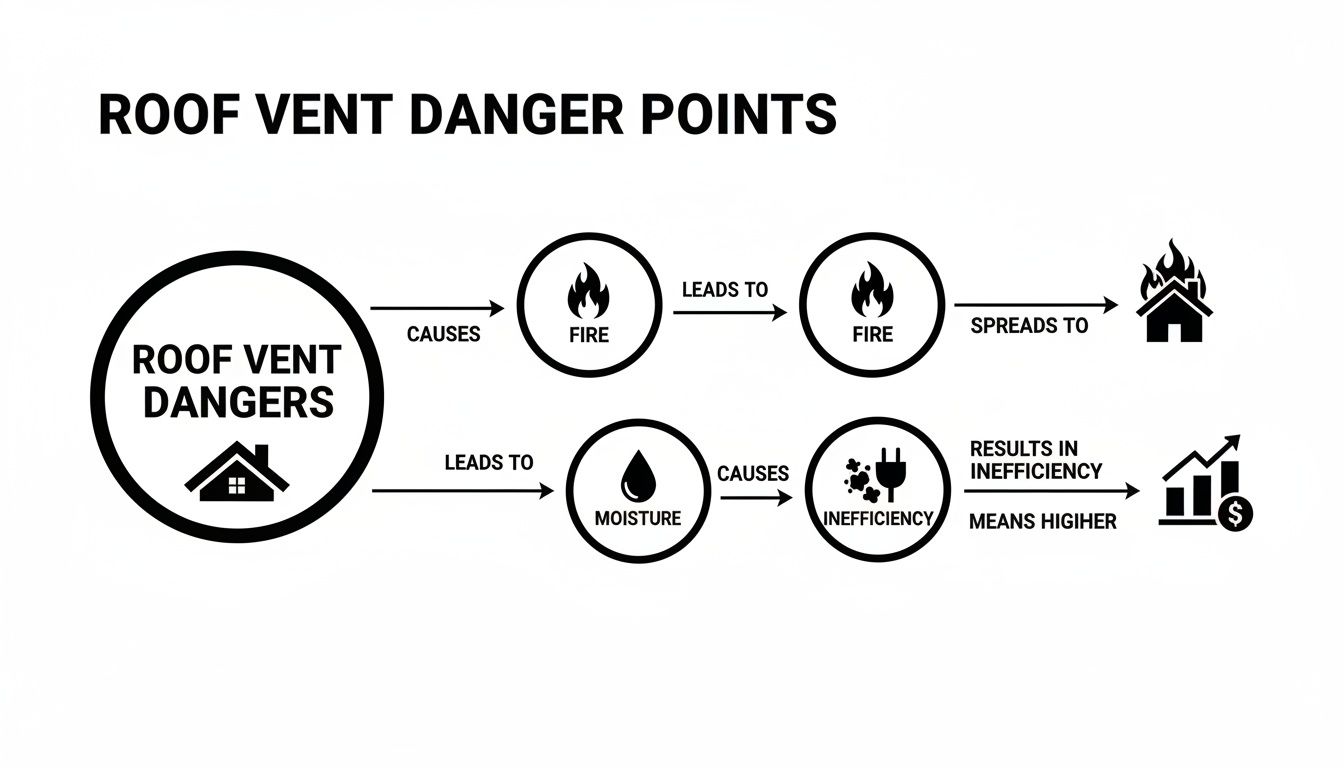
As you can see, the dangers of doing this wrong are all connected. Moisture buildup leads to more lint getting trapped, which not only raises the risk of fire but also makes your dryer work harder and wear out faster.
Mandatory Materials and Components
Building codes don't just tell you how to install a vent; they're also very specific about what you can use. Cutting corners on materials is a direct gamble with your home's safety.
You might see those flexible, foil-style ducts at the hardware store, but they are strictly forbidden by code for dryer venting. Why? They are incredibly flammable, crush easily, and their ribbed design is a perfect trap for lint, basically creating a fire hazard waiting to happen.
For a safe and compliant installation, you must use rigid, smooth-walled metal ducting. This is typically made from aluminum or galvanized steel. The smooth interior is key because it lets lint and air pass through easily without getting snagged.
The roof cap itself also has to meet certain criteria. It needs a backdraft damper to keep critters, rain, and cold air out. However, it absolutely cannot have a screen. Screens are a major no-go on dryer vents because they clog with lint in no time, blocking airflow and creating an immediate fire risk. The same principles apply to other exhaust systems in your home, and you can learn more by exploring these proper home ventilation techniques for bathrooms.
Weighing the Pros and Cons of a Roof Vent
So, can you vent a dryer through the roof? The short answer is yes, but it's rarely the first choice. Think of it as a necessary compromise, a solution you turn to when your home's layout leaves you with no other good options. It comes with one big advantage and a much longer list of potential headaches.
The main reason anyone chooses a roof vent is simple logistics. If your laundry room is stuck in the middle of your house, far from any outside walls, going straight up might be the shortest and most direct route. This is a common fix for townhouses, condos, or homes with quirky floor plans where a typical wall vent would mean a ridiculously long and winding duct run.
But that’s pretty much where the good news ends. The downsides are significant and touch on everything from safety and cost to the constant maintenance you’ll need to be ready for.
The Major Downsides of Vertical Venting
The moment you opt to vent your dryer vertically through the roof, you're signing up for a higher level of risk and responsibility. That upward path works against your dryer's natural ability to push out lint and moisture, creating a perfect storm for problems if you don't stay on top of it. This is definitely not a "set it and forget it" system.
The drawbacks are serious, affecting fire safety, your home's structural integrity, and your wallet.
A roof vent shifts the balance of maintenance significantly. What is a simple, occasional task for a wall vent becomes a frequent, difficult, and essential safety procedure for a vertical system.
Let's break down the specific pros and cons to give you a clearer picture. And while some people consider indoor venting kits, they bring their own set of moisture and air quality issues. For a full comparison, you can check out our detailed guide on how to vent a dryer indoors the right way.
Detailed Pros and Cons of Roof Dryer Vents
This table lays out the good, the bad, and the ugly of choosing a vertical roof vent for your clothes dryer.
Aspect | Pros (Advantages) | Cons (Disadvantages) |
|---|---|---|
Installation | Solves venting for central laundry rooms without access to exterior walls. | Higher cost due to roof penetration, flashing, and sealing. Requires a skilled professional. |
Fire Safety | None. | Increased fire hazard due to gravity causing lint and moisture to accumulate easily. |
Maintenance | None. | Difficult and dangerous to access for inspection and cleaning. Requires professional service annually. |
Home Integrity | Provides an exit path for moisture that would otherwise be trapped indoors. | Creates a potential entry point for roof leaks if the seal fails over time. |
Performance | Can offer a shorter path than a complex, multi-bend wall route in some layouts. | Reduced dryer efficiency and increased energy bills due to the effort of pushing air vertically. |
Ultimately, the decision to vent a dryer through the roof is a serious one. Its primary benefit is providing an essential exhaust path for landlocked laundry rooms, but this solution comes at the price of heightened risks and demanding, ongoing upkeep.
Your Essential Maintenance and Safety Checklist
When your home's layout means venting your dryer through the roof, staying on top of maintenance isn't just a good idea; it's your best line of defense against some serious risks. A vertical vent is constantly fighting gravity, which makes it the perfect trap for both lint and moisture to build up. This kind of setup requires a much more watchful eye than a simple vent going through a wall.
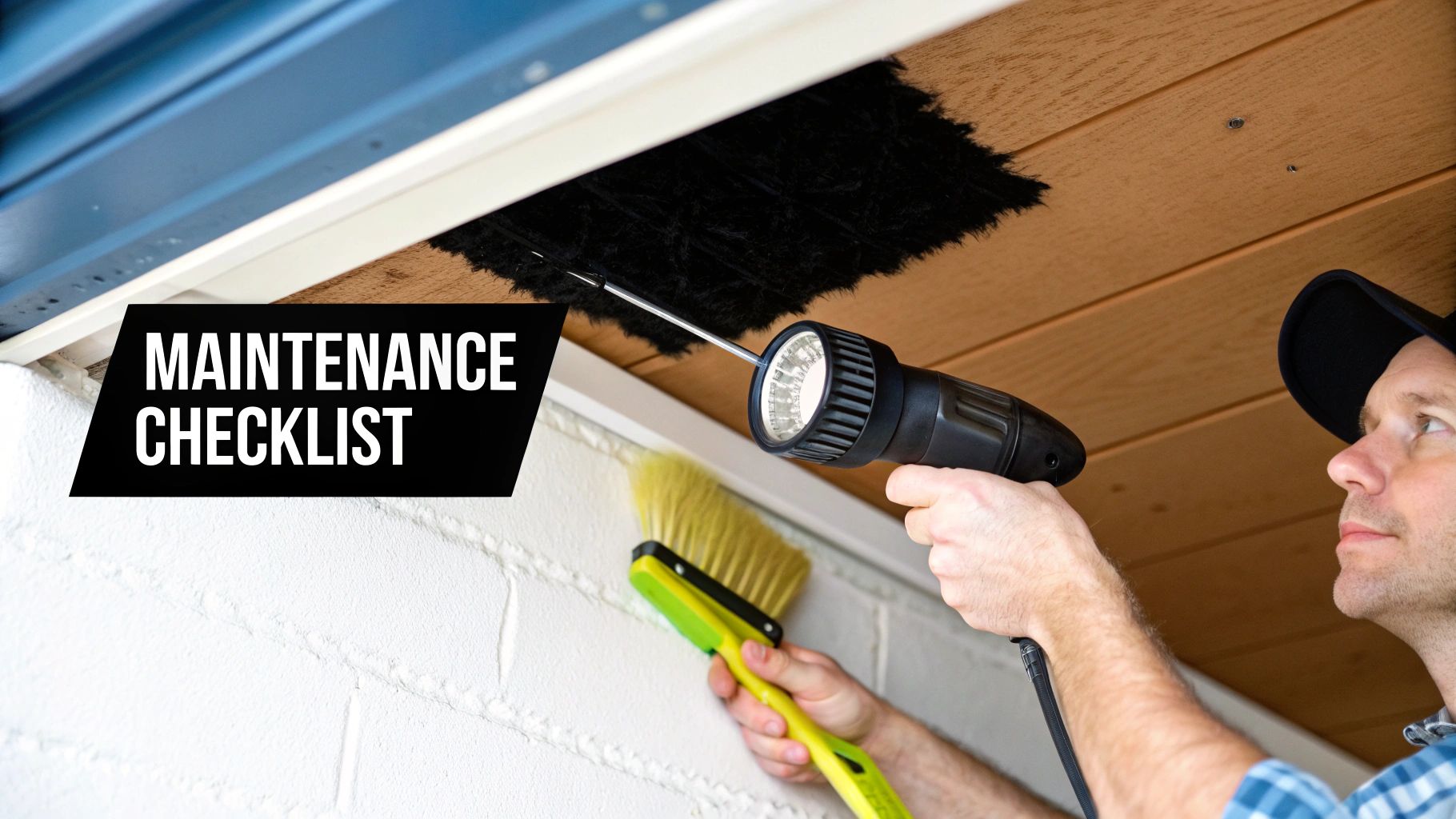
Because of these inherent risks, you absolutely should schedule a professional inspection and cleaning at least once a year. Unlike wall vents where you might spot a problem, roof vents hide potential blockages out of sight and out of mind, making a pro's assessment essential for your safety.
What Professionals Look For
During an annual service, a certified technician does more than just clean. They're performing a critical safety check, and their trained eyes are looking for specific issues that most homeowners would easily miss.
Hidden Blockages: They use special tools to find and clear out dense lint clogs that have settled deep inside the ductwork.
Faulty Backdraft Damper: They’ll make sure the damper on your roof cap is opening and closing correctly, which is key to keeping pests, rain, and snow out.
Leaking Roof Seal: A technician will check the flashing and sealant around the vent where it penetrates the roof to head off any water damage to your attic and ceilings.
Your DIY Inspection Checklist
Between those professional visits, you can keep an eye out for the early warning signs of a clog. Catching these red flags early can stop a dangerous situation before it even starts. Run through this simple checklist every month or so.
Check Drying Times: Are your clothes still damp after a full cycle? This is the number one sign of restricted airflow.
Feel the Dryer: Does the top or side of the machine feel unusually hot while it's running? Overheating is a serious symptom you can't ignore.
Sniff for Odors: Do you ever smell a faint burning odor in your laundry room? That could be lint scorching inside the hot duct.
While building codes like the International Residential Code do allow for roof venting, they also acknowledge its drawbacks. As the hot, moist exhaust travels upward, it cools and condensation forms, creating a sticky trap for lint. This design flaw is a major reason why the U.S. Consumer Product Safety Commission links improper venting to 24,000 dryer-related fires every year.
Staying on top of this maintenance is truly non-negotiable. For a deeper dive into the cleaning process itself, check out our expert and homeowner tips on how to clean a dryer vent pipe. A little regular care ensures your system runs safely and efficiently, giving you valuable peace of mind.
When to Call a Professional for Dryer Venting
Look, some home maintenance is perfect for a weekend DIY project. Tackling a leaky faucet or painting a room can be incredibly satisfying. But dryer vent work? That's a different animal entirely, especially if you're looking to vent a dryer straight through the roof.
This isn't just about getting the job done; it's about the safety and efficiency of your home. When the stakes are this high, bringing in a professional isn't a luxury; it's a crucial investment in your peace of mind. Trying to handle certain tasks without the right training or equipment can quickly spiral into dangerous and expensive mistakes.
Scenarios That Require an Expert
It's important to know when to put down the tools and pick up the phone. Here are a few crystal-clear situations where calling in a certified technician is non-negotiable.
Brand New Dryer Vent Installations: Any new installation is complex, but one that involves a vertical run through the roof is on another level. A pro understands building codes inside and out, knows which materials to use, and, most importantly, can create a watertight seal on your roof that won't leak.
Repairs to Damaged Ducts: If you have a hunch your ductwork is crushed behind a wall, has come disconnected somewhere you can't see, or is riddled with holes, a professional has the tools to access, diagnose, and fix it properly and safely.
Essential Annual Cleaning for Vertical Vents: This one's critical. Because of their vertical design, roof vents are magnets for lint buildup. They absolutely require professional cleaning at least once a year to prevent a serious fire hazard and keep your dryer running efficiently.
A certified technician doesn’t just show up with a fancy vacuum. They bring an expert understanding of local codes, specialized equipment designed to clear the toughest blockages, and a trained eye that can spot hidden issues that could put your home and family at risk.
Ultimately, this is about keeping your family safe. Choosing professional dryer vent cleaning services for fire prevention and safety is one of the smartest calls a homeowner can make. When you weigh the potential consequences of a fire or water damage, relying on an expert for this critical task provides a sense of security that is truly priceless.
Common Questions About Roof Dryer Vents
Even after weighing the pros and cons, most homeowners still have a few lingering questions about venting a dryer through the roof. Let's tackle the most common ones head-on.
How Much Does It Cost to Vent a Dryer Through the Roof?
You can definitely expect a roof vent installation to cost more than a simple exit through a nearby wall. While the final price depends on your specific roof type and how complex the duct run is, plan on spending at least several hundred dollars more.
This extra cost isn't just for the materials; it covers the specialized labor needed to safely cut through your roof, install leak-proof flashing, and properly run the required rigid metal ductwork. Always get a detailed, itemized quote from a certified technician before work begins.
Can I Use a Flexible Duct for a Roof Vent?
Absolutely not. This is one area where you can't cut corners. Building codes are crystal clear for a very good reason: you must use rigid, smooth-walled metal ducting for your dryer vent.
Flexible foil or vinyl ducts are a disaster waiting to happen. They are flammable, they crush easily behind the dryer (restricting airflow), and their accordion-like interior is the perfect trap for lint. This dramatically increases the risk of a dryer fire. Choosing the right duct material isn't a suggestion; it's a critical safety measure.
A clogged dryer vent is one of the leading causes of house fires. The type of duct you use is a non-negotiable safety requirement that protects your home and your family from a completely preventable disaster.
How Do I Know If My Roof Dryer Vent Is Clogged?
Your home will give you some pretty clear warning signs if your roof vent is clogged and airflow is compromised. If you notice any of the following, stop using your dryer immediately and call a professional for an inspection.
Clothes are still damp after a full cycle: This is the number one sign of poor airflow. Your dryer can't push the moist air out effectively.
The top of the dryer is hot to the touch: An overheating machine is working overtime and struggling to vent that hot, damp exhaust.
You notice a burning smell: That's likely lint scorching inside the hot ductwork, which is an immediate fire hazard.
You see lint building up on the exterior vent cap: If lint is visible on your roof, it means the system is already backing up.
For a professional inspection and cleaning of your roof dryer vent, you can trust the certified technicians at Purified Air Duct Cleaning. Keep your home safe and your dryer running efficiently by scheduling your service today. Find out more at https://www.purifiedairductcleaning.com.