

How Often to Clean Dryer Vent: Safety and Efficiency Tips
When it comes to home maintenance, one of the most common questions I hear is about how often to clean a dryer vent. The short and sweet answer for most homes is pretty simple: get it done thoroughly at least once per year. Think of this as your absolute baseline, it’s the minimum for keeping your dryer running efficiently, saving energy, and most importantly, protecting your family.
Your Guide to an Ideal Dryer Vent Cleaning Schedule
While that annual cleaning is a solid rule of thumb, it's definitely not a one-size-fits-all situation. I like to compare a dryer vent to a highway: a single car doesn't cause much of a jam, but a whole fleet of trucks will clog things up fast. Your laundry habits have the same effect, directly impacting how quickly lint, which is highly flammable, builds up inside that vent.
Paying attention to these details is what allows you to create a maintenance plan that actually works for your home. If you want a deeper dive into how this system works, you can check out our guide on https://www.purifiedairductcleaning.com/post/what-is-dryer-vent-and-why-it-matters.
Why Your Household Habits Matter
Every single load of laundry you do adds a little more lint to the vent, but some situations really put that buildup into overdrive. If you ignore these factors, you might get a false sense of security, thinking you're safe for another year when a clog is forming much faster.
Regular cleaning of dryer vents is crucial to prevent house fires, improve dryer efficiency, and lower utility costs. Experts universally recommend cleaning dryer vents at least once per year under typical household use. However, this frequency increases with usage intensity and household factors.
If you have a large family doing tons of laundry, own pets, or are constantly drying heavy items like towels and bedding, you’ll want to be more proactive. For you, cleaning every 3 to 6 months is a much safer bet to keep that airflow clear. For anyone new to homeownership, this is one of those non-negotiable tasks; you can find more essential home maintenance tips for new homeowners to keep your property safe and sound.
Recommended Dryer Vent Cleaning Frequency
To make things easier, here’s a quick reference guide based on common household scenarios. Use this table as a starting point to adjust the standard annual recommendation to fit what’s actually happening in your laundry room.
Household Scenario | Recommended Cleaning Frequency |
|---|---|
Single Person or Couple | Every 12-18 months |
Average Family (3-4 members) | At least once a year |
Large Family (5+ members) | Every 6 months |
Households with Pets | Every 6-9 months |
Frequent Heavy Loads (towels, bedding) | Every 3-6 months |
Sticking to the right schedule for your home isn't just about checking a box, it's about fire prevention, energy savings, and extending the life of your dryer.
Key Factors That Influence Your Cleaning Frequency
That once-a-year cleaning rule is a solid starting point, but let's be honest, it's a bit like a "one size fits all" t-shirt. It doesn't quite fit everyone perfectly. To really dial in how often your dryer vent needs attention, you have to look at what's happening inside your own home. Several factors can kick lint buildup into overdrive, turning a yearly chore into something you need to handle much more often.
Just picture your dryer vent as a small highway. Every time you run a load of laundry, you're sending a fresh wave of lint-filled traffic down that road. A little traffic flows just fine, but heavy, constant use? That’s how you get major backups.
Your Household's Laundry Volume
The number one thing that dictates your cleaning schedule is simply how much laundry you do. A large family running the dryer every single day is going to produce a mountain of lint compared to someone living alone who does laundry once a week. More clothes just means more lint; it's that simple.
If you have a household of five or more people, you should seriously consider cleaning your dryer vent every six months. Think of it as proactive maintenance to stay ahead of the rapid buildup of flammable fluff that comes with a busy laundry room.
The Impact of Pets
Anyone with a furry friend knows that pet hair has a magical ability to get everywhere, and the dryer vent is no exception. Pet hair and dander are particularly nasty culprits. When they mix with regular lint, they create these dense, heavy clumps that can clog up your ductwork way faster than lint on its own.
This sticky combination acts like a net, catching even more debris and quickly choking off airflow. If you have pets, it’s a smart move to inspect and clean your vent more frequently, typically every six to nine months, to keep things clear and safe.
The length and complexity of a dryer vent system significantly influence how often it should be cleaned. Longer vent runs with multiple bends trap more lint and reduce airflow more rapidly than shorter, straighter vents, often requiring more frequent cleaning. Discover more insights about dryer vent length from the experts at Dryer Vent Wizard.
Your Home's Vent Configuration
Not all dryer vents are designed the same. The actual path the vent takes from your laundry room to the outside wall plays a huge part in how easily it gets clogged. A short, straight shot to the outdoors lets lint and moist air escape without a problem.
Unfortunately, many homes have more complicated setups that are practically designed to trap lint:
Long Vent Runs: Vents that have to travel a long way to reach an exterior wall.
Multiple Bends: Systems with several sharp turns or elbows that slow down airflow.
Flexible Ducting: The crinkled, foil-style ducts have ridges that are perfect for snagging lint.
If your laundry room is buried in the middle of your house or located on an upper floor, chances are you have a longer, more complex vent run. These types of systems demand more frequent cleanings, sometimes twice a year, to prevent a dangerous blockage from forming. A long vent also makes it easier for moisture to get trapped, which can cause a whole other set of issues. To learn more, check out our guide to dryer vent moisture build up.
The Type of Dryer You Own
Last but not least, you need to know if your dryer is gas or electric. Both types produce lint, of course, but a clogged vent in a gas dryer brings an extra, more immediate danger. A blockage can stop toxic combustion fumes, like carbon monoxide, from venting properly.
For anyone with a gas dryer, staying on top of vent cleaning isn't just about preventing fires. It's a critical safety step to protect your family from colorless, odorless gas leaking back into your home.
Warning Signs Your Dryer Vent Is Clogged
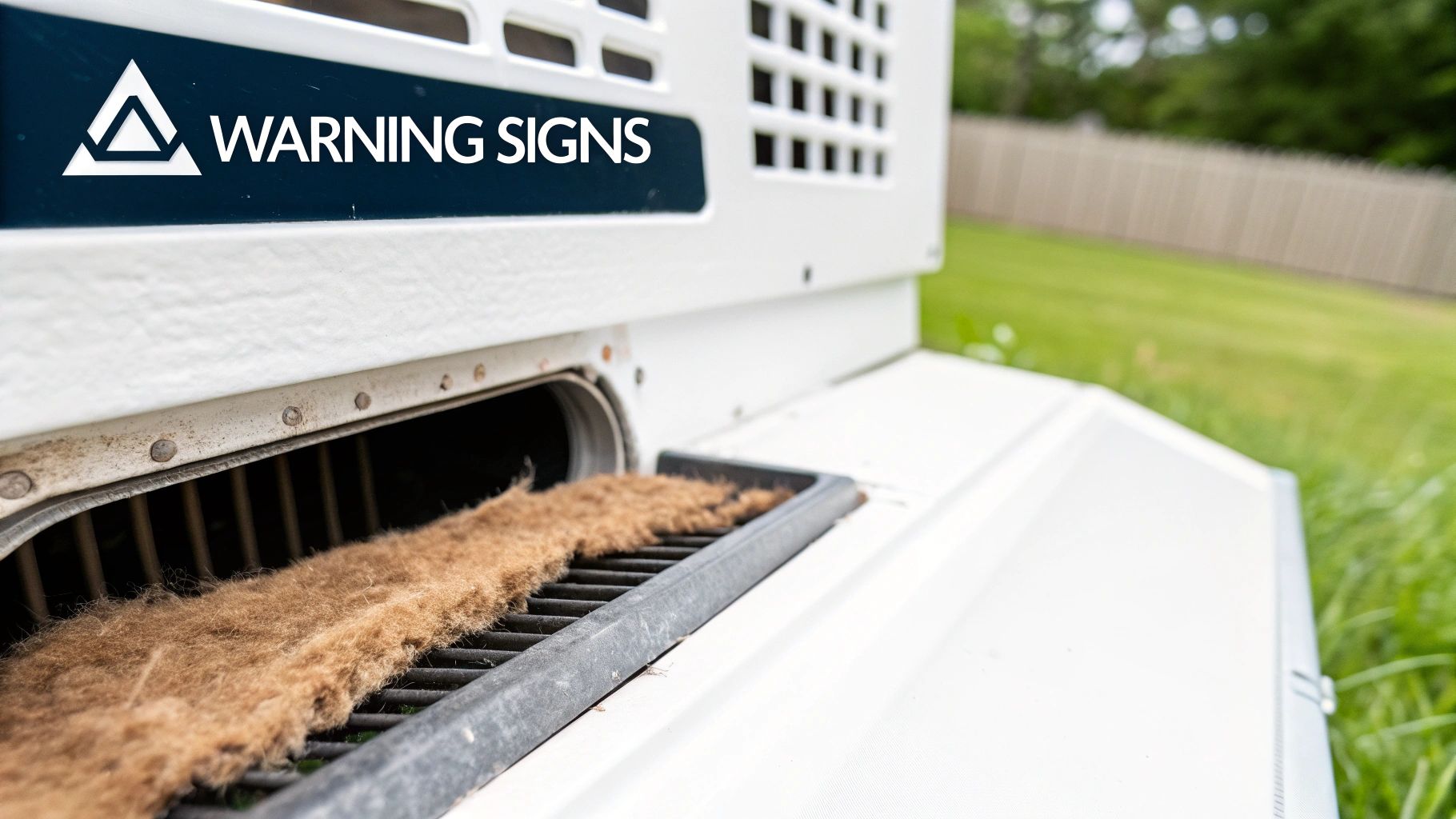
While sticking to a regular cleaning schedule is a great habit, your dryer will often give you some pretty clear hints when trouble is brewing. Think of these signs as your dryer's way of crying for help, and ignoring them can lead to wasted energy, a busted appliance, or much, much worse.
The most obvious red flag is when your dryer just doesn't seem to be drying anymore. Do you find yourself running the same load of towels two or even three times just to get them dry? That's a classic symptom. It happens because trapped lint is blocking the moist air from escaping, so you're essentially just steaming your clothes instead of drying them.
Performance and Sensory Clues
Your own senses are often the best tools for diagnosing a clogged dryer vent. From strange smells to a machine that's way too hot, these are the first signals that airflow is dangerously restricted. Paying attention to these subtle changes in your laundry room can alert you to a problem long before it becomes an emergency.
If you start noticing any of the following, it’s a strong sign your vent is blocked:
Excessively Hot Clothes: When laundry feels scorching hot at the end of a cycle, it means all that heat isn't venting out like it should.
A Hot Dryer Exterior: The top and sides of your dryer should stay relatively cool. If the machine itself is hot to the touch, it's overheating.
A Burning Smell: Lint is extremely flammable. If you smell something burning, it could be lint getting scorched inside the vent, a massive fire risk.
Humid Laundry Room: A clogged vent has nowhere to send the hot, moist air except back into the room, leaving you with a swampy, humid mess.
The U.S. Fire Administration reports that failure to clean is the leading cause of roughly 2,900 home dryer fires each year. Recognizing these warning signs is your first line of defense.
Physical and Visual Evidence
Beyond how your dryer is running, you can often find hard physical evidence of a clog just by taking a look around. A quick inspection in your laundry area and outside your home can reveal obvious signs of a blockage that are impossible to miss.
Start by checking the exterior vent opening on the outside of your house. If you see lint and gunk collected on or around the vent cover, that's a dead giveaway the pathway is obstructed. Also, watch the vent hood itself while the dryer is on; if the little flaps don't open, air isn't getting out.
For a complete checklist of what to watch for, check out our detailed guide on the key symptoms of a clogged dryer vent.
The Hidden Dangers of a Neglected Dryer Vent
Forgetting to clean your dryer vent might seem like a minor slip-up, but it's a gamble with serious consequences for your home and family. This isn't just about getting clothes dry efficiently; it's about actively preventing a significant and surprisingly common household danger. Each time you run your dryer, it sheds tiny, flammable fibers, what we call lint.
When the vent is clear, this lint is harmlessly pushed outside. But when a blockage forms, the vent transforms into something far more sinister. Think of it like a blocked chimney: highly combustible material builds up inside a narrow passage that’s designed to handle intense heat. This creates the perfect, dangerous recipe for a fire, turning a routine laundry day into a potential disaster.
The Slow Burn Financial Costs
Beyond the immediate and terrifying risk of fire, a clogged vent sets off a chain reaction of costly, slow-burn problems. A blocked airway forces your dryer to work much harder and run longer just to do its job, which means your energy bills will start to creep up, then skyrocket. That extra effort also puts a ton of strain on the dryer’s heating element, motor, and other critical parts, leading to premature breakdowns and expensive repair bills.
This constant overwork means you’ll likely be replacing your appliance years sooner than you should have to. And the financial drain doesn't stop there. For a deep dive into how these issues start, you can explore the primary causes of dryer fires and learn key prevention tips.
According to the U.S. Fire Administration, failure to clean is the leading cause of the 2,900 home dryer fires reported each year, leading to an estimated $35 million in property loss.
Moisture Damage and Your Home's Health
The danger isn't just limited to heat and fire. A clogged vent also traps hot, moist air with nowhere to go but back into your home. This excess humidity can easily seep into the drywall behind your appliance, creating a hidden, damp breeding ground for mold and mildew.
This can lead to serious structural damage and poor indoor air quality, posing very real health risks to your family. It's time to reframe the answer to "how often to clean dryer vent" from a simple chore to a critical investment in your home's safety and financial health. A regularly maintained dryer is a safe dryer; for a comprehensive approach, it’s worth consulting an ultimate dryer maintenance checklist to keep your entire system in top shape.
Deciding Between DIY and Professional Vent Cleaning
Once you've spotted the signs that your dryer vent is clogged, the next big question is: should you tackle the job yourself or call in a pro? The right answer really depends on your comfort level with home maintenance, the layout of your vent system, and just how thoroughly you want the cleaning done.
Ultimately, this decision is a classic trade-off. You're weighing the immediate cost savings of a DIY project against the guaranteed safety and deep-cleaning power of a professional service.
The Do-It-Yourself Approach
If your home has a short, straight, and easily accessible dryer vent, going the DIY route can be a perfectly fine choice. The main draw, of course, is saving money. For a small investment in a couple of tools, you can handle the job on your own schedule.
To clean it yourself, you'll generally need a few key items:
A Dryer Vent Cleaning Kit: You can find these at most hardware stores. They usually come with a flexible rod and a brush attachment that you can hook up to a power drill.
A Powerful Vacuum: A shop vac is your best friend here for sucking up all the lint you dislodge.
Basic Hand Tools: A screwdriver or pliers will likely be necessary to disconnect the ductwork from the back of the dryer and the wall.
But be warned, the DIY approach isn't without its risks. It's surprisingly easy to puncture a flexible foil duct if you're not careful. Even worse, you could get the cleaning brush stuck deep inside the vent, creating a much bigger problem than you started with. A quick DIY job might also leave behind compacted lint, giving you a false sense of security.
This decision tree can help you visualize the best path forward for your situation.It walks you through factors like your vent's length and your own confidence level to help you land on the right choice.
When To Hire A Professional Service
If your vent run is long, has several sharp turns, or exits through the roof, calling a professional is hands-down the safest and most effective option. Pros show up with specialized equipment that a basic DIY kit can't compete with. Think high-powered vacuums and compressed air systems designed to blast out years of stubborn, caked-on buildup.
Professional cleaning techniques use special tools to remove lint and debris well past the lint trap, reducing fire risk and improving performance.
A trained technician can also use tools like an airflow meter to measure your dryer's performance before and after the cleaning, giving you concrete proof that the job was done right. They're also trained to spot potential hazards you might miss, like damaged ductwork or an improper installation. This level of expertise is exactly why so many homeowners rely on professional dryer vent cleaning services for fire prevention and safety.
A Side-By-Side Comparison
To make the decision even clearer, let's break down the key differences between cleaning the vent yourself and bringing in a professional. This comparison should help you figure out which option is the best fit for your home and peace of mind.
DIY vs Professional Dryer Vent Cleaning
Factor | DIY Cleaning | Professional Service |
|---|---|---|
Cost | Lower initial cost; a one-time purchase of a cleaning kit. | Higher upfront cost, typically between $100 and $200. |
Effectiveness | Good for light maintenance on simple, short vents. | Highly effective for all vent types, removing deep blockages. |
Safety | Risk of damaging the vent or incomplete cleaning. | Safe and thorough; professionals are trained and insured. |
Time Commitment | Can take several hours, especially for first-timers. | Typically completed in about an hour by an expert. |
At the end of the day, while a DIY cleaning can work for straightforward jobs, a professional service delivers peace of mind, guaranteed results, and an expert eye for keeping your home safe.
Simple Habits to Keep Your Dryer Vent Clearer Longer

While a professional deep cleaning is a must, the little things you do week in and week out can have a massive impact on your dryer's health and safety. Think of it as preventative care: these small habits slow down that inevitable lint buildup and buy you more time between those major cleanings.
The single most important habit? Cleaning the lint filter after every single load. This isn't just a friendly suggestion; it’s the golden rule for fire prevention. When that filter gets full, the lint has nowhere to go but straight into the vent, fast-tracking the formation of a dangerous blockage.
Proactive Maintenance in Minutes
Beyond the lint screen, a couple of quick checks can help your whole system breathe easier. These steps literally take a few minutes but go a long way in maintaining good airflow and nipping potential problems in the bud.
You can build a simple yet powerful maintenance routine with these two steps:
Inspect the Outdoor Vent Cover: Every so often, take a peek at the exterior vent opening. You'll want to clear away any leaves, snow, or other debris that might be blocking the flaps and stopping air from getting out.
Vacuum Around Your Dryer: Lint doesn't just stay inside the vent. Pull out your vacuum every few months and clean behind and under your dryer to suck up any accumulated fluff that could pose a fire risk.
A clean lint screen can boost your dryer's efficiency by up to 30%. That's not just better performance, it's real money saved on your energy bills and less wear and tear on the machine itself.
Rethink Your Laundry Additives
What you put in the dryer with your clothes matters, too. Some common laundry products can actually make lint buildup worse by creating a sticky residue inside your vent.
Many dryer sheets and liquid fabric softeners, for example, are notorious for leaving behind a waxy film. This coating doesn't just get on your clothes; it builds up on the lint screen and the inside walls of the vent duct. That sticky surface acts like a magnet for lint, helping create stubborn clogs over time. Cutting back on these products can help keep your vent clearer for much longer.
Frequently Asked Questions About Dryer Vent Cleaning
To wrap things up, let's go over a few common questions homeowners ask about keeping their dryer vents in good shape. Getting solid answers here will help you make smarter, safer choices for your home.
Does Dryer Vent Material Matter?
Yes, it absolutely matters, a lot. The best material you can have is rigid or semi-rigid metal ducting. Its smooth interior walls don't give lint much to grab onto, which is exactly what you want.
On the other hand, those flexible foil or plastic accordion-style ducts are a real problem. Their ribbed surfaces are like a lint magnet, causing clogs to form much faster and creating a serious fire risk.
Can I Use a Leaf Blower to Clean My Vent?
It might sound like a clever shortcut, but please don't do this. A leaf blower just doesn't have the right kind of power. It's more likely to shove loose lint deeper into the vent, compacting it into a dense, dangerous blockage that's even harder to remove.
What a leaf blower lacks is the physical scrubbing action you get from a proper dryer vent brush, which is what you need to scrape that caked-on lint off the duct walls.
Professionals use a combination of high-powered vacuums and rotating brushes that agitate and dislodge every last bit of lint from the entire length of the vent. A leaf blower can't even come close to that level of clean, which is why a professional job lasts so much longer.
How Much Does Professional Cleaning Cost?
You can generally expect to pay somewhere between $100 and $200 for a professional dryer vent cleaning service. Of course, that price can shift based on a few things:
Your Location: Costs can vary quite a bit from one city to another.
Vent Complexity: Is your vent extra long? Does it have a lot of twists and turns, or exit through the roof? These factors can add to the cost.
Severity of the Clog: If the vent is packed solid with lint, it's going to take more time and effort to clear, which will likely put the price on the higher end.
Your best bet is to get a few quotes from reputable local companies. That way, you can compare and find the best service for the money.
Making sure your dryer vent is professionally cleaned is a small investment that pays off big in home safety and efficiency. The certified technicians at Purified Air Duct Cleaning use specialized equipment to get rid of hazardous lint buildup, protecting your property and the people in it. Ready for peace of mind? Schedule your service with us today at https://www.purifiedairductcleaning.com.