

What is dryer vent and why it matters
Your dryer vent is simply the exhaust system for your clothes dryer. Its job is to move all the hot, damp, lint-filled air created during a drying cycle out of the appliance and safely outside your home.
You can think of it as the lungs of your laundry room: it has to breathe out everything your dryer needs to get rid of.
The Unsung Hero of Your Laundry Routine
Most of us never give a second thought to where all that hot air from our dryer goes. We toss in a wet load, push a button, and a little while later, our clothes are warm and dry. The real magic behind that simple process is the dryer vent, a straightforward but absolutely essential pathway that protects both your dryer's performance and your home's safety.
Without a clear vent, all that hot, moist air would just get pumped right back into your laundry room. That's a recipe for a whole host of problems.
The system itself is more than just that flexible tube you see scrunched up behind the machine. It’s actually a complete network of parts all working in sync. When you know what those parts are, it's easier to see why keeping them clean is so important.
The Key Components of Your Dryer Vent System
A standard dryer vent system has a few distinct parts that work together to create a clear path for air to escape. Here’s a quick look at the main players and what they do.
Component | Function | Typical Material |
|---|---|---|
Transition Duct | The flexible tube connecting the dryer to the wall duct. | Flexible foil or semi-rigid aluminum |
Ductwork | The main piping that runs through walls, floors, or an attic. | Rigid aluminum or galvanized steel |
Exterior Vent Cap | The termination point on the outside of your home. | Plastic or metal |
Each piece plays a specific role in getting the exhaust from point A to point B safely.
This diagram shows the simple, direct path your dryer vent should ideally follow, from the back of the appliance straight to the outdoors.
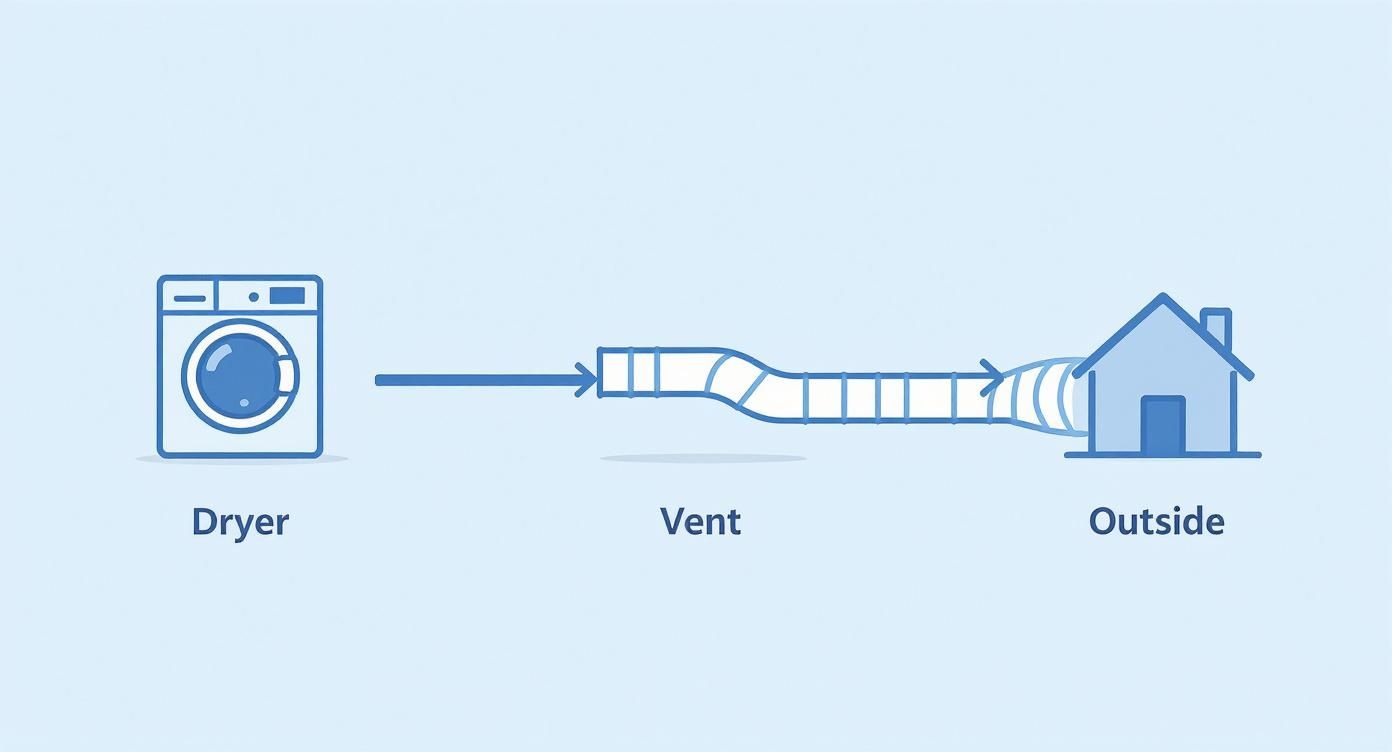
As you can see, the whole point is to create an unobstructed exit for air, moisture, and especially lint.
The core principle is straightforward: a dryer can't dry clothes efficiently if the humid air has nowhere to go. A clear vent gives that air an escape route, allowing your dryer to do its job effectively and safely.
So, Why Does It Matter So Much?
You really can't overstate the importance of a properly working dryer vent. When that pathway gets clogged, the results range from merely inconvenient to downright dangerous.
Trapped lint is incredibly flammable, and when a dryer starts overheating because of poor airflow, it creates a serious fire risk. In fact, failure to clean dryer vents is one of the leading causes of home fires.
For a deeper dive into the technical requirements, you can learn about proper clothes dryer venting made simple in our guide. Understanding these basics is the first real step toward preventing common household hazards and keeping your laundry system running the way it should.
How Vent Technology Evolved to Keep Homes Safer
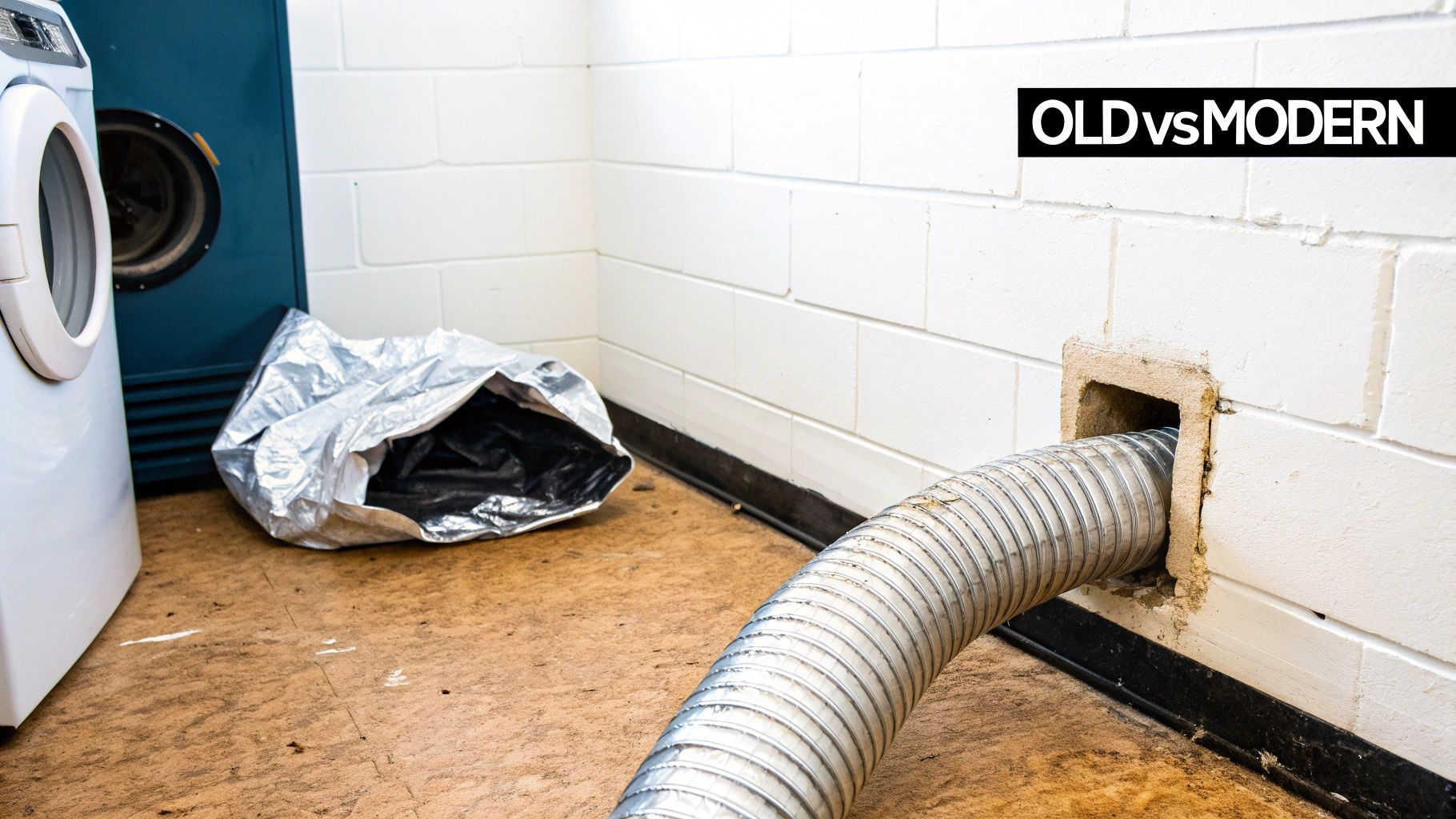
To really appreciate the safety of a modern dryer vent, it helps to look back at what used to be standard. The story of dryer vent technology is really a story about learning from past mistakes, where preventable house fires pushed the industry toward much-needed safety innovations.
Decades ago, the main goal was just getting the hot, moist air out of the house, plain and simple. Materials were often chosen because they were cheap and easy to install, not because they were durable or fire-resistant. This shortcut approach created a hidden and dangerous problem in countless homes.
These early systems often relied on flimsy, white plastic vents or those crinkly, accordion-style foil ducts. While they did move air, their design was fundamentally flawed. They crushed easily behind the dryer, creating sharp kinks and bends that were perfect traps for lint.
The Problem with Outdated Materials
The weaknesses of these old materials created a perfect storm for disaster. Once crushed or bent, the restricted airflow meant lint built up incredibly fast. You had a pile of highly flammable debris right next to the high heat of a struggling dryer, a serious fire risk.
And it wasn't just the lint. The materials themselves were a huge liability. The thin plastic and foil could tear, leaking hot, moist air into your walls. Worse, they could actually melt or catch fire when exposed to the high temperatures of a dryer fire.
The core issue with early venting materials was their inability to withstand heat and resist lint accumulation. This combination turned a simple household appliance into a potential fire hazard, a problem that modern building codes directly address.
The Shift to Modern Safety Standards
Driven by these serious safety concerns, building codes and manufacturing standards went through a major overhaul. The industry finally moved away from hazardous plastics and foil, shifting toward much safer and more durable alternatives. This was a critical moment for home safety, as it directly tackled the root causes of many dryer-related fires.
Dryer vent technology has come a long way since the 1920s and 30s, when homes often used those simple plastic or foil ducts. By the mid-to-late 20th century, rigid and semi-rigid metal ducts, like aluminum and galvanized steel, became the standard. Industry data shows that switching to metal ducts cut dryer-related fires by up to 70% compared to the older plastic and vinyl systems.
Today's standards demand smooth-walled metal ducting for the main vent run, and for good reason. This material provides several key benefits:
Fire Resistance: Metal doesn’t burn. It contains a potential fire and helps stop it from spreading into your walls.
Durability: It holds its shape and resists being crushed, ensuring a clear and open path for airflow.
Improved Airflow: The smooth interior surface doesn't snag lint as easily, allowing it to pass through to the outside.
This transition from flimsy plastic to sturdy metal is exactly why you need to know what kind of dryer vent you have. If you peek behind your dryer and see an old white plastic or slinky-foil duct, you're looking at an outdated and unsafe system that needs to be replaced immediately. Our guide on safe and efficient dryer venting dives deeper into modern requirements.
The Hidden Dangers of a Clogged Dryer Vent
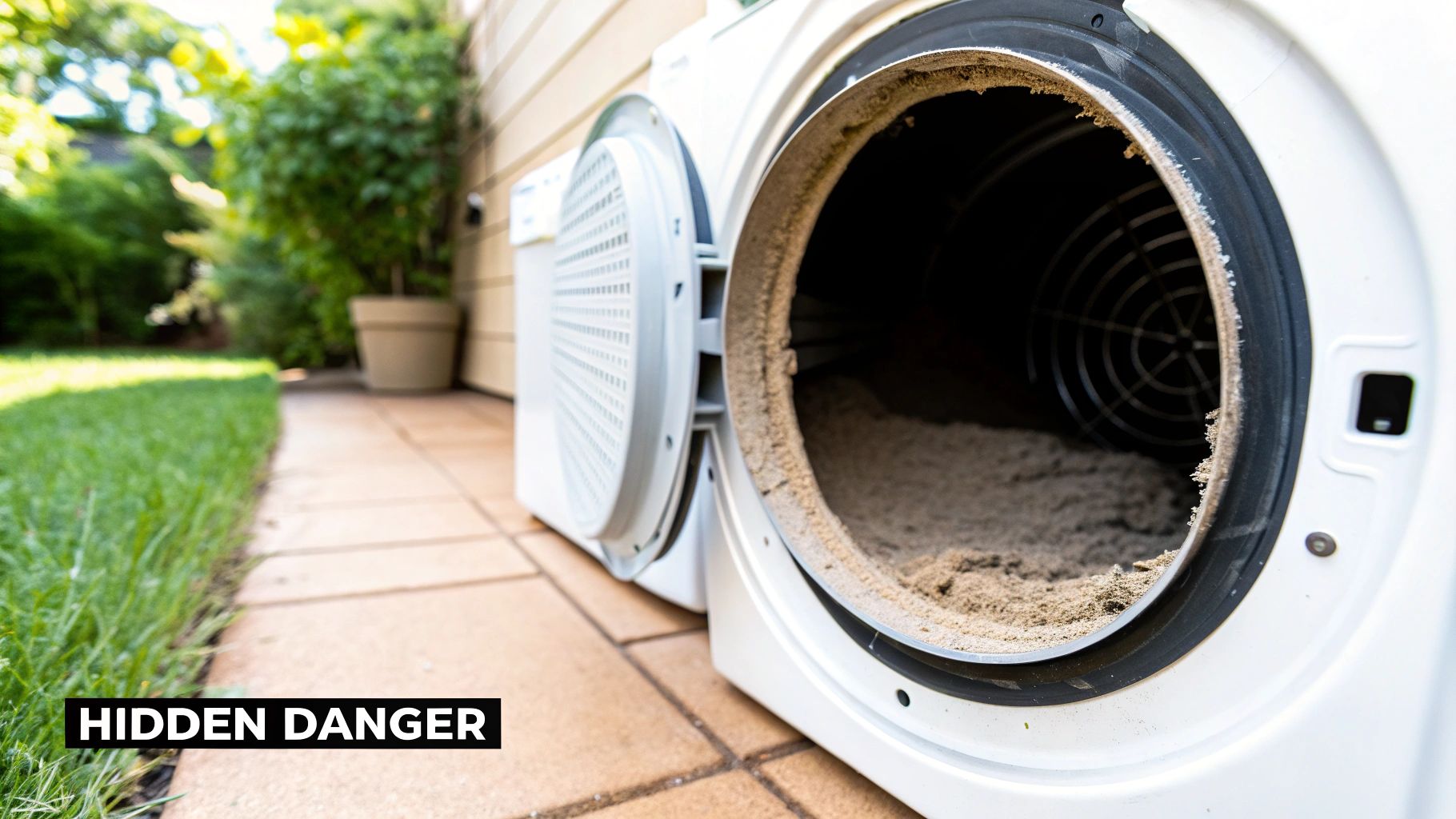
A neglected dryer vent is more than just an inconvenience that slows down your laundry; it’s a genuine hazard quietly building up inside your walls. While the system seems straightforward, the consequences of letting it go can be severe. The main culprit here is lint, those tiny fibers that break away from your clothes with every single drying cycle.
Each time you dry a load of laundry, you’re sending a bit more of this material into the vent system. Slowly but surely, this lint accumulates, creating a thick, dense blockage inside the ductwork. This buildup acts like a chokehold, cutting off the airflow your dryer desperately needs to work safely and correctly.
The Overheating and Fire Connection
When that airflow is blocked, hot, moist air gets trapped with nowhere to go. This forces your dryer's internal temperature to climb to dangerous levels. The problem is, that compacted lint is incredibly flammable: think of it as kindling packed inside a metal tube. Combine that with a superheated appliance, and you have the perfect recipe for a fire.
According to the U.S. Fire Administration, failure to clean dryers is a leading cause of residential fires, and clogged vents are a primary factor. These fires often ignite where you can't see them, deep inside the ductwork, and can spread alarmingly fast through your home’s walls.
The combination of highly combustible lint and the high heat from an overworked dryer creates a substantial fire risk. A clean dryer vent isn't just about efficiency; it's a critical fire prevention measure for every household.
To get a better handle on the specific risks, our guide on the causes of dryer fires and prevention tips breaks down the ignition points in more detail. It really connects the dots between routine cleaning and keeping your home safe.
Beyond the Fire Risk
While a house fire is the most terrifying outcome, a clogged dryer vent brings other serious risks that can damage your home and even affect your family’s health. These problems tend to creep up slowly, often going unnoticed until the damage is already done.
Two other major hazards to be aware of include:
Carbon Monoxide Exposure: If you own a gas dryer, a blocked vent is especially dangerous. It can stop toxic fumes, including deadly carbon monoxide (CO), from being safely vented outside. This odorless, colorless gas can then seep back into your home, creating a life-threatening situation.
Moisture Damage and Mold: A clogged vent also traps all that humid air from your wet clothes. This moisture gets forced into the spaces inside your walls and attic, where it can saturate drywall, rot wooden framing, and create the perfect damp environment for mold and mildew to thrive. This leads not only to costly repairs but also to poor indoor air quality.
Keeping that dryer vent pathway clear is absolutely essential for stopping these hidden dangers in their tracks.
Telltale Signs Your Dryer Vent Needs Cleaning
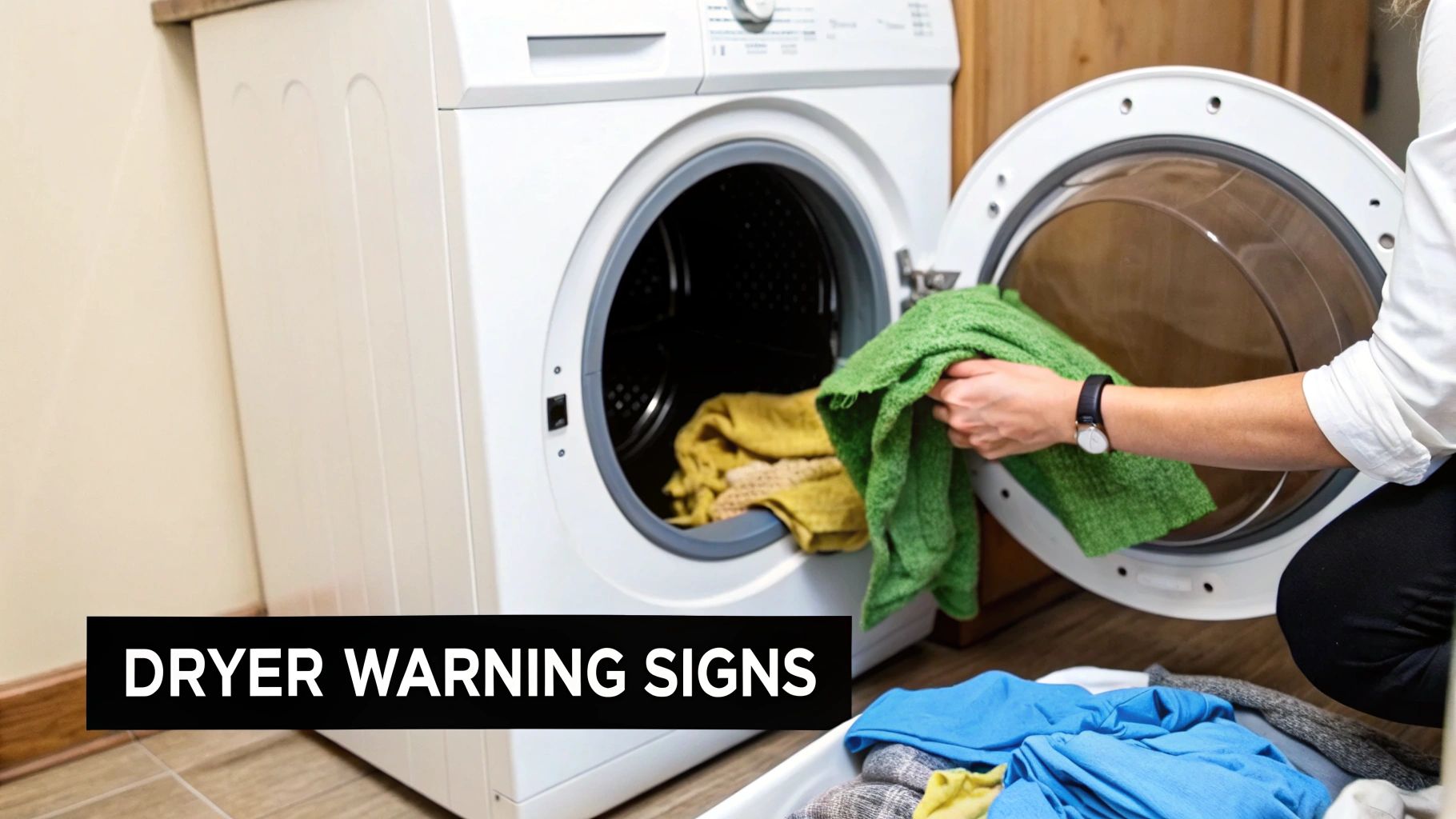
Long before a clogged dryer vent turns into a major hazard, your home will start sending you some pretty clear signals. Learning to spot these clues early is the key to preventing a much bigger headache down the road.
One of the first things you'll probably notice is that your clothes are taking forever to dry. If you're suddenly running a second or even third cycle just to get a load of towels dry, that's a huge red flag. It's a strong indicator that the hot, moist air has nowhere to go and is just tumbling around with your laundry.
Go ahead and feel the dryer itself. If the top or sides of the machine feel unusually hot to the touch while it's running, it's working way too hard. That trapped heat is a classic sign of a blockage, which puts a ton of strain on the appliance and is a serious fire risk.
Sensory Clues You Cannot Ignore
It's not just about how the dryer is performing; your own senses can pick up on trouble. A clogged vent creates noticeable smells and visual cues that are hard to miss once you know what to look for. Think of them as direct messages that it’s time for a cleanout.
A musty, mildew smell lingering in the laundry room is a dead giveaway. That odor is caused by all the damp air that can't escape, creating the perfect breeding ground for mold inside your vent line.
Even more alarming is a faint burning smell. This could mean the dryer's motor is overheating from the strain, or that tiny bits of lint are actually starting to scorch inside the vent. This is a critical warning that needs immediate attention. To get a better handle on what's going on, you can learn more about the top dryer vent clogged symptoms to watch for.
Key Takeaway: If your laundry day has gotten longer, or you're noticing strange smells and a lot of heat, your dryer vent is telling you it's clogged. These aren't just minor annoyances, they're clear signs of poor airflow and potential danger.
What to Look For Outside
The clues aren't just inside your house. Take a quick walk outside to where your dryer vent exits. A quick peek at this exterior opening can tell you everything you need to know.
Here's what to check for:
Visible Lint or Debris: Is the vent opening covered in lint, leaves, or even a bird's nest? Any visible obstruction is a problem.
No Airflow: With the dryer running, you should feel a strong, steady puff of warm air coming out. If you feel very little or nothing at all, the line is definitely blocked.
Damaged Vent Flap: The little flap on the vent cover should open easily when the dryer is on and close when it's off. If it’s stuck shut, it's trapping everything inside the vent.
Choosing Between DIY Cleaning and Professional Service
So, you've noticed the signs of a clogged dryer vent. What's next? The big decision is whether to tackle it yourself or call in a professional. The right choice really comes down to a few things: your vent's layout, how comfortable you are with this kind of project, and just how deep of a clean you're after. Both paths have their merits, but they lead to very different outcomes.
Most homeowners start by considering the DIY route. It seems simple enough, right? This usually covers basic upkeep that anyone can handle. Cleaning the lint screen after every single load is a must, but a deeper DIY clean typically involves buying a special kit from a hardware store.
These kits usually come with a flexible brush that you attach to a drill, letting you reach a few feet into the ductwork. For a short, straight vent run, this can do a decent job of pulling out some of the loose lint. The problem is, these tools just don't have the muscle or the reach for the longer, more complex vent systems found in many homes today, especially those that snake up to the roof.
When to Call a Professional
Hiring a professional for dryer vent cleaning is a completely different ballgame. Technicians show up with specialized, commercial-grade equipment built to handle any vent setup, no matter how tricky. They aren't just cleaning the parts you can see; their goal is to clear the entire path, from the back of your dryer all the way to the exterior vent cap.
This is absolutely crucial for vents that travel through attics, crawl spaces, or straight up to the roof. Professionals use a combination of high-powered vacuums and powerful rotating brushes that can break up and remove years of compacted, heavy lint, the kind of blockage a simple DIY kit would never budge.
The biggest advantage of calling a pro is the guarantee of a thorough job. While a DIY attempt might clear out some surface-level lint, a professional service ensures the entire system is free of hidden blockages that pose the greatest safety risks.
Modern safety standards also play a role in this decision. Dryer vent materials have evolved significantly, guided by standards like UL 2158A for transition ducts. This was a game-changer, as it was the first standard to approve a flexible duct for both gas and electric dryers because of its high-temperature resistance.
DIY Cleaning vs Professional Service
Making the final call really depends on your home's specific situation. A quick, straight vent might be manageable on your own, but for anything more complicated, the limitations of DIY tools become clear.
Here's a straightforward comparison of what you can expect from each approach:
Task | DIY Approach (Limitations) | Professional Service (Benefits) |
|---|---|---|
Lint Removal | Clears accessible lint near the dryer and exterior opening. | Removes all lint, including deep, compacted blockages. |
Tool Capability | Consumer kits may break or get stuck in long or bent ducts. | Uses powerful, commercial-grade tools for any vent length. |
Inspections | Limited to what you can see at both ends of the vent. | Includes a full inspection to identify crushed ducts or other damage. |
Cost | Lower upfront cost for a cleaning kit. | Higher initial cost but ensures safety and efficiency. |
Ultimately, a professional cleaning gives you something a DIY kit can't: total peace of mind. If you've tried cleaning the vent yourself and your dryer is still struggling, it might be time to look into professional dryer repair services to make sure the appliance itself is in good shape.
And if you're wondering about the investment, we've put together a full guide on understanding dryer vent cleaning cost to help you know what to expect.
Putting Dryer Vent Safety into Practice
Knowing the risks is one thing, but taking action is what actually keeps your home safe. The good news is that the secret to dryer vent safety isn't some complicated formula; it all comes down to being proactive and consistent with maintenance.
For most homes, the rule of thumb is to get a professional cleaning at least once a year. This simple habit clears out all that flammable lint that’s been building up, making sure your dryer runs efficiently and, more importantly, safely. Just think of it as an annual safety check-up for a critical, and often forgotten, part of your house.
When to Clean More Often
That said, the "once a year" rule isn't one-size-fits-all. Some situations create lint much faster, and you’ll want to bump up that cleaning schedule. It's a good idea to clean more frequently if your home has:
Pets that shed a lot, because all that fur mixes with lint to create clogs much quicker.
A large family, which naturally means more laundry and a faster accumulation of lint.
A long or complex vent run with lots of turns, as these designs are notorious for trapping debris.
Being proactive is what separates a minor cleaning task from a major disaster. When you make vent care a regular habit, you're actively shutting down the hidden dangers of lint buildup, potential carbon monoxide leaks, and moisture damage before they even get a chance to start.
This mindset of proactive care is smart for your whole home, not just the dryer vent. Working with a professional home maintenance service can offer that peace of mind, ensuring your entire property is kept in top condition.
Your Dryer Vent Questions, Answered
Let's clear the air on some of the most common questions we hear from homeowners about their dryer vents. Getting straight answers helps you feel more confident about keeping your laundry room safe and your dryer running smoothly. We’ll cover everything from how often you need a cleaning to the materials that matter most.
How Often Should I Clean My Dryer Vent?
For a typical family, our professional recommendation is to have your dryer vent cleaned at least once per year. Think of it as essential annual maintenance. This simple service clears out all the flammable lint that builds up from normal use, making sure your system is safe and efficient.
That said, some homes need more frequent attention. You might want to schedule a cleaning every six months if you have:
A large household that's constantly running the dryer.
Pets that shed a lot, as that fur loves to mix with lint and create stubborn clogs.
A particularly long vent run or one with several twists and turns.
Is My Old White Plastic or Foil Duct Dangerous?
Yes, without a doubt. If you pull your dryer out and see one of those flimsy, crinkly foil ducts or an old white plastic one, it's a major red flag. Modern safety standards consider these a significant fire hazard because they crush easily, kink up, and their accordion-like ridges are a magnet for lint.
Finding one of these behind your dryer means it's time for an immediate replacement with a proper semi-rigid or rigid metal duct. This is honestly one of the most critical safety upgrades you can make in your home.
Swapping out an old plastic or foil duct for a modern metal one isn't just a good idea, it's a critical safety measure. Metal ducts are built to resist fire and have a smooth interior that dramatically cuts down on lint buildup, tackling the number one cause of dryer fires head-on.
My Dryer Vents Through the Roof, Is That a Problem?
Venting through the roof is pretty common, especially in newer homes, but it definitely comes with its own set of challenges. The vertical climb makes it much tougher for your dryer to push hot air and heavy, moist lint all the way out. This means blockages can happen much faster.
It also makes the vent nearly impossible for a homeowner to inspect or clean safely. Because these rooftop systems are so prone to clogging, they demand consistent professional maintenance. If your vent goes through the roof, staying on a strict annual cleaning schedule is non-negotiable for preventing fire risks and keeping your dryer from working itself to death.
Keeping your dryer vent clean isn't just another chore; it's a vital part of maintaining a safe home. If you can't remember the last time your vent was cleaned, or if it's been more than a year, don't wait for a problem to pop up.
The experienced technicians at Purified Air Duct Cleaning are here to give your system a thorough, professional cleaning and inspection. We'll make sure your home is safe and your dryer is running at peak efficiency. Ready to get it done right? Schedule your service today by visiting us at https://www.purifiedairductcleaning.com.