

How to Get Rid of Indoor Allergens: Quick Guide to Clean Air
Fed up with the constant sneezing, itchy eyes, and that perpetually stuffy feeling you get in your own home? The secret to winning the war against indoor allergens isn't just one magic bullet. It's about creating a systematic, multi-layered defense. We're talking about combining smart, deep cleaning routines, practical humidity control, and effective air filtration to finally reclaim your space from these invisible intruders.
Your Action Plan for an Allergen-Free Home
If you're constantly battling allergy symptoms at home, trust me, you're not alone. It’s a surprisingly common problem. So many homes are filled with hidden triggers like dust mites, pet dander, and mold spores that make daily life miserable for countless people.
This guide is your battle plan. We're moving beyond the temporary fixes that just mask the problem. Instead, we'll focus on lasting relief by understanding exactly where allergens hide, how they spread, and how to eliminate them at the source.
The Real Scope of the Allergen Problem
Here’s a hard truth: the air inside your home can be far more polluted than the air outside. The problem is massive. Research shows that about 40% of the global population has antibodies against common environmental allergens.
Even more concerning, of those people, 20% go on to develop clinical allergic diseases, and a staggering 10% end up with serious conditions like asthma. This makes allergies a more prevalent health issue than hypertension for a significant number of people. You can dig into the full research on indoor allergens from the National Center for Biotechnology Information if you want to see the data for yourself.
We’re going to walk through practical strategies, starting with how to pinpoint the specific culprits lurking in your home. From there, we'll cover everything from room-by-room checklists to the critical, and often overlooked, role your HVAC system plays in spreading these microscopic irritants.
A truly effective approach goes far beyond just surface cleaning. It means tackling the hidden pathways, like your air ducts, where allergens build up and get recirculated over and over, essentially turning your HVAC system into an allergen superhighway.
Building a Comprehensive Defense
Creating a home that doesn't make you miserable involves a few key pillars of action. Each one targets a different part of the problem, and when they work together, they can drastically reduce your overall allergen exposure.
Here’s a quick look at some of the most common places allergens love to hang out and what you can do about them right now.
Top 5 Indoor Allergen Hotspots and Quick Fixes
Allergen Hotspot | Primary Culprits | Immediate Action |
|---|---|---|
Bedding & Mattresses | Dust Mites, Pet Dander | Wash all bedding in hot water (130°F) weekly. Use allergen-proof mattress and pillow covers. |
Carpets & Rugs | Dust Mites, Pollen, Pet Dander | Vacuum at least twice a week with a HEPA filter vacuum. Consider professional steam cleaning seasonally. |
Upholstered Furniture | Dust Mites, Pet Dander | Vacuum couches and chairs weekly, including under cushions. If possible, opt for leather or vinyl furniture. |
Bathrooms | Mold, Mildew | Run the exhaust fan during and after every shower. Regularly scrub tiles and grout with a mold-killing cleaner. |
Windowsills & Blinds | Pollen, Dust, Mold | Wipe down windowsills and blinds with a damp cloth weekly to trap dust instead of sending it airborne. |
This table is just the starting point. A complete strategy integrates these actions into a larger, more consistent plan.
To truly build a strong defense, we need to focus on three core areas:
Targeted Cleaning: This is all about focusing your energy on the biggest hotspots. Think bedding, carpets, and that cozy armchair where dust mites and pet dander have a party.
Humidity Management: This is huge. Keeping your indoor humidity below 50% makes your home a much less inviting place for mold and dust mites to thrive. It’s a simple change with a big impact.
Air Filtration and Purification: Upgrading your HVAC filter and placing portable air purifiers in key rooms can trap a lot of airborne particles. For the most robust protection, though, a whole-home solution is the way to go.
By putting these strategies into practice, you can make a real difference in your home's air quality. For an even deeper look, check out our guide on improving home air quality, which perfectly complements the steps we'll cover here.
Identifying the Invisible Intruders in Your Home
To really win the war against indoor allergens, you first have to know what you’re up against. It’s easy to just blame "dust," but the stuff actually causing your sneezing, itchy eyes, and congestion is a cocktail of microscopic culprits. Each one has its own habits and favorite hiding spots.
Knowing your enemy is the first real step. When you can pinpoint the source of your misery, you can stop guessing with your cleaning and start targeting your efforts where they'll actually make a difference.
The Microscopic World of Dust Mites
Ever feel like your allergies hit hardest at night or the moment you wake up? You can probably thank dust mites for that. These tiny, spider-like creatures are completely invisible to the naked eye and they absolutely love warm, humid environments.
Their favorite food is the dead skin cells that we and our pets shed constantly. This makes your bed a five-star resort for them. Mattresses, pillows, and bedding are prime real estate for dust mite colonies. It’s actually their waste particles that are the allergen, and they become airborne with the slightest movement, like fluffing a pillow or rolling over in bed.
The Stubborn Nature of Pet Dander
For those of us with pets, dander is a relentless battle. It’s not the hair itself, but the tiny flecks of skin shed by any animal with fur or feathers. Dander is incredibly lightweight and has jagged edges, which means it clings stubbornly to just about every surface imaginable.
You’ll find it stuck to furniture, carpets, curtains, and even walls. It also floats in the air for hours, getting pulled into your HVAC system and circulated through the entire house. This is exactly why you can have an allergic reaction in one room even if the pet is clear across the house.
The key takeaway is that different allergens require different strategies. Dust mites are best fought in the bedroom with hot water and barrier covers, while pet dander requires a whole-home approach that includes surface cleaning and air filtration.
The Stealthy Spread of Mold Spores
If your symptoms seem to flare up on damp, rainy days or in certain rooms like the basement or bathroom, mold might be your problem. Mold reproduces by releasing tiny, lightweight spores into the air, and these are what trigger allergic reactions when inhaled.
Mold will grow anywhere there's moisture. Leaky pipes, bathrooms with poor ventilation, and damp basements are all common hotspots. The real problem is that it can grow completely unseen behind walls or under flooring, making it a particularly sneaky intruder. Keeping your home's humidity below 50% is absolutely critical to stop it from growing in the first place. You can learn more about how these factors create poor air quality by reading about what indoor air pollution is and how it affects your home.
Pollen and Other Outdoor Invaders
Finally, it's important to remember that allergens don't always start inside. Pollen, the main culprit for seasonal allergies, hitches a ride indoors with ease. It comes through open windows and doors, and even gets carried in on your clothes, hair, and pets.
Specialized window screens, like a Pollen Mesh, can make a huge difference in stopping these airborne particles at the source. Once inside, pollen settles on surfaces just like dust and dander, joining the mix of indoor allergens that gets kicked up and recirculated. This is why "seasonal" allergies can feel like a year-round problem. Now that you can recognize these distinct intruders, you're ready to tackle them with a targeted, room-by-room strategy.
A Room-by-Room Allergen Reduction Strategy
To really get a handle on allergens, you have to go on the offensive right where they live. The most effective way I've found is a targeted, room-by-room approach. This lets you focus your energy for the biggest impact, turning what feels like a massive, overwhelming cleaning list into a strategic plan to reclaim your home one space at a time.
This isn't just about tidying up; it's a critical health measure. Globally, asthma triggered by indoor exposures affects a staggering 262 million people and is responsible for 455,000 deaths each year. In the U.S., childhood asthma, the most common chronic disease among kids, is often directly linked to hidden allergens clustering in our homes. In fact, landmark studies have shown that dust mite and pet allergens can increase a child's risk of developing asthma by a shocking four to six times.
The Bedroom: Your Allergen Ground Zero
You spend about a third of your life in the bedroom, which makes it the most important battleground in your fight against indoor allergens. Dust mites, in particular, absolutely thrive there, feeding on the skin cells you naturally shed while you sleep. It's time to make your sleep sanctuary an unwelcoming place for these microscopic pests.
The single most powerful move you can make is to wash all your bedding, including sheets, pillowcases, and blankets, weekly in hot water (at least 130°F). I can't stress this enough: cold water simply won't kill dust mites. This one habit is non-negotiable if you're serious about getting rid of indoor allergens.
Next, create a physical barrier. Encase your mattress, box spring, and pillows in allergen-proof covers. These zippered protectors use a tightly woven fabric that dust mites and their waste particles literally can't get through. For a deeper dive into creating an allergen-free sleep zone, check out this ultimate guide to hypoallergenic bedding care.
Living Room and Common Areas
Your living room is another hot spot where allergens, especially pet dander and dust, build up fast. Soft surfaces like carpets, area rugs, and upholstered furniture are basically allergen magnets. The key here isn't just cleaning, but cleaning in a way that actually removes allergens instead of just kicking them up into the air.
Your vacuum is your best weapon here, but only if it's the right kind. A vacuum equipped with a HEPA (High-Efficiency Particulate Air) filter is essential. Standard vacuums often spit the smallest, most irritating particles right back out, making your allergies even worse.
Vacuuming Schedule: Aim to vacuum carpets and rugs at least twice a week. If you have pets, you might need to do it more often.
Furniture Focus: Don’t forget your sofas and chairs. Use the brush attachment to get into all the crevices and clean underneath the cushions where dander loves to hide.
Hard Surfaces: For floors like hardwood, tile, or laminate, skip the dry broom. Instead, use a damp mop or a microfiber duster to trap and remove dust. You can learn more by checking out our guide on how to reduce dust in your house.
Pro Tip: When you're dusting, always use a damp cloth or an electrostatic duster. A dry feather duster is one of the worst tools for an allergy sufferer: it does little more than fling dust and dander into the air you're trying to breathe.
Kitchen and Bathrooms: The Moisture Zones
In kitchens and bathrooms, the main enemy is mold. Mold thrives in damp, humid environments, so your entire strategy here should revolve around moisture control. It doesn't take much; even a small, unchecked leak can lead to a significant mold problem down the line.
Your most critical tool is proper ventilation. Always run the exhaust fan in your bathroom during a shower or bath and for 15-20 minutes after. In the kitchen, use the range hood fan whenever you're cooking to pull steam and moisture outside.
Here’s a quick checklist for these moisture-prone areas:
Check for Leaks: Routinely inspect under sinks and around toilets and tubs for any signs of water. Fix leaks immediately.
Clean Surfaces: After showering, wipe down the walls and door to get rid of excess water.
Tackle Grout: Scrub tile grout regularly with a stiff brush and a vinegar-water solution or a commercial mold cleaner to stop mildew in its tracks.
Wash Rugs: Don't forget to wash bath mats and any kitchen rugs in hot water frequently.
By adopting this room-by-room strategy, you transform a daunting task into a manageable plan. Each step you take methodically reduces the allergen load in your home, leading to cleaner air and, hopefully, significant relief from your symptoms.
How Your HVAC System Spreads Allergens
If you're constantly cleaning surfaces but still sniffling and sneezing, it's time to look up. Your home's HVAC system is essentially its respiratory system, and if it's dirty, it becomes a superhighway for allergens. It tirelessly circulates dust, pet dander, and mold spores into every single room.
Think about it: your HVAC system pulls in air from all over the house to heat or cool it. Along with that air comes every tiny particle floating around, like dander from the living room rug, dust mites from the bedroom, you name it. Without proper filtration and maintenance, the system just blasts those same irritants right back out through your vents.
This creates a frustrating loop. You can dust every surface in a room, but minutes later, the vents deliver a fresh coating of allergens. It can feel like a battle you can't win. Understanding how your HVAC contributes to the problem is the first step in turning it from an allergy aggravator into a powerful air quality solution.
Your First Line of Defense is the HVAC Filter
The single most impactful thing you can do yourself is to check and change your HVAC filter regularly. This filter is the gatekeeper for your home’s air, designed to trap particles before they ever enter the ductwork and get spread around. When it gets clogged, it can't do its job, forcing your entire system to work harder and risking expensive breakdowns.
Those cheap, flimsy fiberglass filters you can see through? They only catch the largest dust bunnies. Smaller, more potent allergens like pet dander and mold spores sail right through. This is where understanding MERV ratings becomes a game-changer.
MERV stands for Minimum Efficiency Reporting Value, and it's a simple scale (1-16 for residential use) that tells you how effective a filter is at capturing airborne particles.
MERV 1-4: Basic filtration for things like pollen and dust mites.
MERV 5-8: A good middle-ground that traps mold spores and pet dander.
MERV 9-12: Now you're capturing much smaller particles, like lead dust or auto emissions.
MERV 13+: Hospital-grade filtration that can trap bacteria and some virus carriers.
For most homes, especially if allergies are a concern, a filter with a MERV rating between 9 and 12 hits the sweet spot. It offers fantastic filtration without choking your system's airflow, which could cause unnecessary strain.
When Filters Are Not Enough Professional Duct Cleaning
Even the best filters can't stop everything, and over the years, your air ducts can become a hidden reservoir for allergens. We're talking about pounds of accumulated dust, dander, construction debris, and even mold growth hiding deep inside the ductwork. No amount of surface cleaning will ever touch it.
This is where professional air duct cleaning is no longer a luxury but a necessity. Certified technicians use specialized equipment, like high-powered vacuums and powerful rotating brushes, to scrub and extract years of gunk from your vents. It's a comprehensive cleaning of the entire system, not just the ducts but also the coils and blower fan where contaminants love to hide.
The infographic below shows how to tackle allergens room by room, but these strategies are only truly effective if the air being delivered to those rooms is clean to begin with.
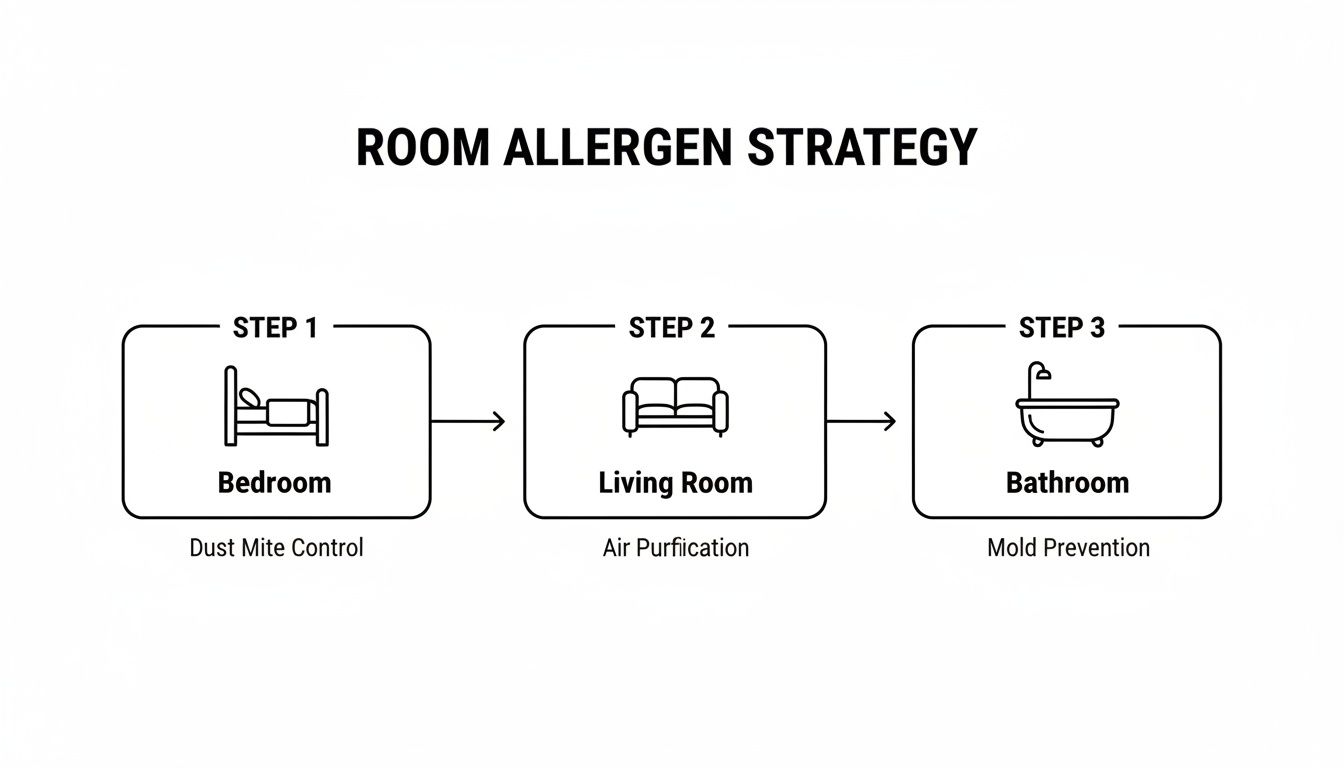
Think of it this way: room-specific tactics are crucial, but a clean HVAC system prevents cross-contamination and ensures you're not just moving allergens from one area to another.
The Benefits of a Clean HVAC System
Getting your air ducts professionally cleaned does more than just help with allergies; it’s a smart investment in your home’s overall health and efficiency.
When your system isn't struggling to push air through clogged passages, it runs more efficiently. That often translates directly to lower energy bills. More importantly, it removes the organic material that serves as a food source for mold and bacteria, creating a healthier living space for everyone inside. If you’re curious about what could be lurking in your vents, you can learn more about dust in air ducts in our detailed article.
By pairing consistent filter changes with periodic professional duct cleaning, you effectively shut down the primary distribution network for allergens in your home. This is the foundational step that makes all your other cleaning efforts worthwhile, ensuring the air you breathe is finally as clean as the surfaces you see.
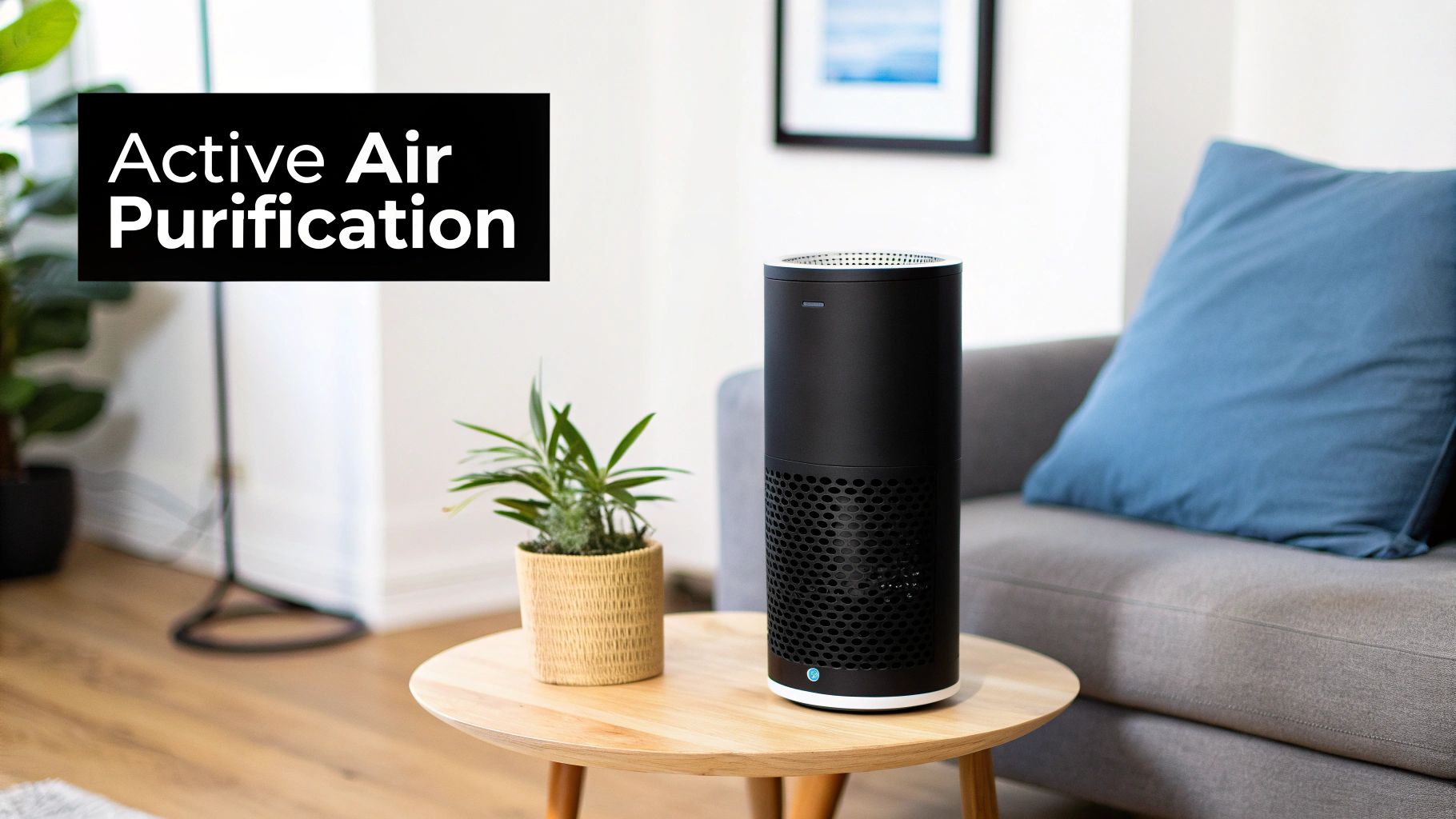
Upgrading from Passive Filters to Active Air Purification
Putting a better filter in your HVAC system is a solid move, but it's fundamentally a passive strategy. Think about it: even the best high-MERV filters can only catch what gets pulled through them. That means all the dust mites, pet dander, and pollen floating around the far corner of your bedroom or settled on your kitchen counter are just… sitting there.
This approach is entirely reactive. It’s waiting for the problem to come to it. If you're serious about getting rid of indoor allergens, it's time to shift from playing defense to going on offense. This is where active air purification completely changes the game.
Active purification doesn't just sit back and wait. It sends out purifying agents to actively hunt down and neutralize contaminants throughout your home, tackling them both in the air and on surfaces.
Understanding the Technology Behind Active Purification
One of the most impressive examples of this is ActivePure® technology, which was originally developed with NASA to be used on the International Space Station. It doesn't use a dense physical filter that can choke your HVAC system's airflow. Instead, it creates and sends out harmless but powerful "scrubbing" molecules.
These molecules flood your rooms, traveling at an incredible 1,200 feet per second, and neutralize pathogens right on contact.
Think of a standard filter as a spider's web. It’s great at catching whatever flies into it, but it does absolutely nothing about the other bugs buzzing around the room. ActivePure, on the other hand, is like sending out an army of microscopic cleaners to proactively hunt down and eliminate threats wherever they're hiding.
This proactive mission is what makes all the difference. The system is constantly working to decontaminate your entire home, getting to places a passive filter could never reach. If you want to dive deeper into the technical differences, we break it all down in our comparison of an air purifier vs. an air filter to see which is right for you.
The In-Duct Advantage: Whole Home Coverage
While a portable purifier is a decent option for a single room, an in-duct ActivePure system is the ultimate whole-home solution. It integrates right into your existing HVAC system, so every time your heat or AC kicks on, it's not just moving air, it's actively distributing these sanitizing molecules to every single room.
This provides a powerful shield against a whole host of contaminants, going far beyond just your typical allergens.
Viruses and Bacteria: ActivePure technology has been proven to reduce over 99.9% of airborne and surface contaminants, which includes many common viruses and bacteria.
Volatile Organic Compounds (VOCs): It actively breaks down those nasty chemical gases that off-gas from new furniture, paint, and even cleaning supplies.
Odors: Instead of just masking odors from pets, cooking, or smoke with sprays, this technology neutralizes them at the source.
By treating both the air and surfaces at the same time, an active system crushes the total allergen load in your home way more effectively than filtration ever could. For anyone with significant allergies or asthma, this isn't just an upgrade; it's the next critical step in how to get rid of indoor allergens for good.
Common Questions About Eliminating Indoor Allergens
Even with a solid game plan, questions pop up. It's only natural when you're digging into how to really get rid of indoor allergens for good. Getting clear answers helps you sharpen your strategy, feel confident you're on the right track, and make sure you haven't missed anything important. Here are some of the most common questions we hear from homeowners.
How Often Should I Have My Air Ducts Professionally Cleaned?
This is a big one, and the honest answer is: it depends. The National Air Duct Cleaners Association (NADCA) gives a general guideline of every 3 to 5 years, but that's just a starting point. Your home’s specific situation is what really matters.
You should seriously consider getting them cleaned more often if any of these sound familiar:
You have heavy-shedding pets. Pet dander is a sticky, potent allergen that loves to build up in your ductwork.
Someone in the house has severe allergies or asthma. For anyone highly sensitive, clean ducts can make a world of difference in their daily comfort.
You’ve recently done renovations. All that construction dust doesn't just disappear; a huge amount of it gets pulled right into your HVAC system.
You see mold or smell musty odors. If you spot mold growing around your vents or get a whiff of a musty, damp smell when the system kicks on, that’s a red flag. It’s time to call in a professional for an inspection and cleaning, period.
Here in Arizona, where dust is a fact of life, having your ducts inspected every couple of years is just a smart, proactive move to stay ahead of the buildup.
Will an Air Purifier Alone Solve My Indoor Allergen Problem?
A good portable air purifier is a fantastic tool, but it's a room-specific one. It’s crucial to understand its limits, as it's not a silver bullet for your entire house. A portable unit can only clean the air that happens to pass through its filter. It does absolutely nothing for the allergens that have already settled on your floors, furniture, or are hiding deep inside your HVAC system.
A truly effective strategy is layered. It’s a combination of consistent cleaning, controlling humidity, and professional duct maintenance. An air purifier is an excellent addition to this strategy, but it can't replace the foundational work of removing allergens where they originate.
This is exactly why an in-duct system like ActivePure provides a much more thorough solution. It actively treats every bit of air your HVAC system circulates, decontaminating the entire home instead of just one small zone.
Are There Natural Ways to Reduce Indoor Allergens?
Absolutely. In fact, some of the most effective strategies are completely natural.
Controlling your home’s humidity might be the most powerful one of all. By keeping your indoor humidity below 50% using dehumidifiers or your AC, you make your home an inhospitable place for mold and dust mites. They simply can't thrive in a drier environment.
Other simple, natural methods include:
Using non-toxic cleaners. Simple solutions like vinegar and water get the job done without introducing other chemical irritants into your air.
Choosing the right houseplants. Certain plants are well-known for their ability to help filter airborne toxins.
Washing bedding in hot water. A laundry cycle of at least 130°F is a proven, natural way to kill off dust mites hiding in your sheets and blankets.
But for deep-seated allergen issues or severe sensitivities, these methods are best used in tandem with more powerful solutions. They complement things like HEPA vacuuming and professional services that can remove the heavy, years-long buildup of allergens from your ductwork.
What Is the Difference Between MERV, HEPA, and ActivePure?
It's easy to get these terms mixed up, but they represent very different ways of cleaning your air. Think of it as a progression from basic trapping to active destruction.
Technology | What It Does | Best For |
|---|---|---|
MERV | Rates how well a filter traps airborne particles. | Upgrading standard HVAC filters. A MERV 9-12 rating is a great sweet spot for homes with allergy concerns. |
HEPA | A filtration standard that traps 99.97% of tiny 0.3-micron particles. | Fantastic for portable room air purifiers, but too restrictive for most residential HVAC systems. |
ActivePure® | An active technology that sends out oxidizing molecules to seek and destroy contaminants. | The most comprehensive whole-home solution. It decontaminates both the air and surfaces throughout your house. |
Basically, MERV and HEPA are passive nets that wait for particles to get caught. ActivePure is an active technology that goes on the offense, seeking out and neutralizing contaminants everywhere the air goes. It offers a much more complete and proactive way to get rid of indoor allergens.
Ready to take the next step towards a healthier, allergen-free home? The certified technicians at Purified Air Duct Cleaning are experts in removing the hidden contaminants from your HVAC system and installing advanced ActivePure® technology. Get your free quote today and start breathing cleaner air.