

What's Inside Your Air Ducts? Dust in Air Ducts Explained
You've probably heard the term dust in air ducts, but what is it, really? It's the gunk that builds up inside your HVAC system, a complex cocktail of particles that gets circulated through your home up to seven times every single day. This buildup isn't just unsightly; it's a hidden reservoir of allergens and pollutants that can seriously affect your home's air quality and your family's health.
The Hidden World Inside Your HVAC System

Think of your HVAC system as your home's lungs. It breathes in air through return vents, heats or cools it, and then exhales it back into every room. Just like our own lungs, the health of your home's "respiratory system" depends entirely on the quality of the air it's forced to handle.
Over time, this constant breathing cycle leaves behind a surprising variety of particles inside the ductwork. What we just call "dust" is actually a mix of many different, and often unpleasant, substances.
What Is Duct Dust Really Made Of?
The stuff lining your ducts is a cocktail of everything happening inside and outside your home. When you break it down, you start to see why it can become such a problem.
Here’s a quick look at the usual suspects:
Human and Pet Sources: We're constantly shedding dead skin cells, and our pets contribute plenty of dander. This is a primary ingredient.
Fabric and Carpet Fibers: Tiny fibers from clothes, furniture, and carpets break free, become airborne, and eventually settle in your ducts.
Outdoor Pollutants: Pollen, dirt, and other pollutants from outside easily find their way into your home's ventilation system.
Microscopic Organisms: The dark, undisturbed environment of your ductwork is a perfect breeding ground for mold spores, bacteria, and dust mites.
This nasty mixture doesn't just sit there. Every single time your furnace or AC kicks on, it gets picked up and blown right back into the air you breathe.
The average six-room house can accumulate up to 40 pounds of dust in its air ducts each year. This buildup effectively turns your HVAC system from a source of comfort into a source of indoor air pollution.
The Respiratory System Analogy
To really get a feel for the impact, picture your ducts as your home's arteries. When arteries are clean, blood flows easily. But when plaque builds up, circulation gets restricted, and the heart has to strain.
It's the same idea with your HVAC system. A thick blanket of dust in air ducts narrows the passageway, forcing your system to work much harder to push air through. This extra effort means less efficiency and higher utility bills.
More importantly, the air that does get through scrapes across these contaminated surfaces, picking up particles and delivering them straight into your living space. Your ductwork goes from being a simple pathway for air to an active contamination source, degrading the quality of the air you breathe day in and day out. Addressing this is a vital part of keeping your home healthy. For more tips, check out our practical guide to improve home air quality. This is why we see duct dust not just as a cleaning chore, but as a critical component of your home's health and efficiency.
Where Does All The Duct Dust Come From?
That mysterious layer of grime coating your air ducts doesn't just appear out of thin air. It’s a slow, steady accumulation from a few key sources, each adding its own unique blend of particles to the mix. Getting a handle on where this dust comes from is the first real step in controlling it.
Think of the dust in your ducts as a timeline of everything that's happened in and around your home. We can break it down into three main categories: stuff from inside the house, intruders from the outside world, and issues with the HVAC system itself. Each one plays a big part in the quality of the air you end up breathing.
Sources from Inside Your Home
Believe it or not, most of the dust cycling through your HVAC system is homegrown. It's a natural byproduct of daily life, created by the very people and activities that make your house a home. This constant generation of particles creates a never-ending supply for your ductwork.
Everyday living is the main culprit. Just think about it:
People and Pets: We are constantly shedding dead skin cells, which are a major ingredient in household dust. If you've got pets, their dander, hair, and fur add a whole other layer to this biological cocktail.
Fibers and Fabrics: Your carpets, rugs, couches, and even your clothes are always releasing tiny fibers into the air. These particles are so lightweight they get pulled right into your return vents with ease.
Cooking and Aerosols: Kitchen activities, especially frying, release tiny grease particles that float around. On top of that, using aerosol sprays for cleaning or personal care adds chemical residues into the air.
Every time your system kicks on, these particles get drawn into the return vents. A decent filter will catch a lot of them, but the smaller particles always find a way through. Over months and years, they settle and build up inside the ductwork.
Intruders from the Outside World
Your home isn't a sealed bubble; the outside world always finds a way in. Every time a door or window opens, you're inviting in a fresh batch of airborne pollutants. These contaminants mix with your indoor air and start their journey into your duct system.
What kind of gunk gets in really depends on where you live. A home in the country will have different challenges than one in the middle of a busy city.
Common outdoor sources include things like:
Pollen and Allergens: During allergy season, pollen is everywhere. Those microscopic grains drift right into your home and can get concentrated inside your ducts.
Pollution and Soot: If you live near a busy road or industrial area, vehicle exhaust and soot are bound to infiltrate your home's air supply.
Construction and Yard Debris: Nearby construction projects kick up huge amounts of dust and dirt. Even just doing yard work can send soil, dried leaves, and other organic bits into your system.
Dust from a recent renovation is a huge contributor. If you've just gone through a remodel, this guide on after construction cleaning is a great resource for tackling that specific kind of mess. It just goes to show how a single event can dramatically overload your ducts with dust.
An inefficient or clogged HVAC filter can allow up to 15% of airborne particles to bypass it and enter the ductwork. Over a year, this small percentage adds up to a substantial accumulation of dust and debris.
When Your HVAC System Is the Problem
Sometimes, the very system designed to keep you comfortable is actually making things worse. Flaws or failures within the HVAC system can actively pull dirty air into your ducts, completely bypassing the filter. This can make dust build up incredibly fast.
System-related issues often fly under the radar until a professional takes a look. The two most common culprits are leaky ductwork and poor filtration. Leaky ducts, especially those running through attics, crawlspaces, or basements, can create a vacuum effect. They literally suck in dusty, unfiltered, and potentially moldy air from these unconditioned spaces.
On top of that, using cheap, flimsy fiberglass filters is a classic case of false economy. Those filters are really just there to protect the HVAC equipment from big debris, not to improve your air quality. They let finer particles like dust mite droppings, pollen, and bacteria sail right on through, letting them settle and multiply in your ductwork. If you're constantly battling buildup, you'll find some great insights in our article on the top causes for a dusty house and easy fixes.
How Duct Dust Affects Your Health and Home

That dust hiding in your air ducts isn't just an out-of-sight mess. It has real, direct consequences for your family's health and even your wallet. Every time your HVAC system kicks on, it blasts those trapped particles throughout your home, creating a cycle of contamination that affects everything from your breathing to your monthly bills.
Let's be clear about the connection: your HVAC system recirculates the same indoor air over and over, multiple times a day. If that air is constantly passing through dirty ductwork, it's picking up a fresh batch of allergens and irritants on every pass. You end up breathing a concentrated dose of whatever is lurking in there.
The Impact on Respiratory Health
For anyone with allergies, asthma, or other respiratory sensitivities, contaminated ductwork can turn your home from a sanctuary into a source of constant misery. The tiny particles blown from dirty ducts are notorious for triggering or worsening a whole range of health issues.
This nonstop exposure keeps your immune system on high alert, making it almost impossible to find lasting relief. Here’s what we see most often:
Persistent Allergies: Dust, pet dander, pollen, and dust mite droppings are potent allergens. When they're constantly floating in the air, they cause sneezing, itchy eyes, and a stuffy nose that just won't quit.
Asthma Triggers: If someone in your home has asthma, airborne particles like mold spores and fine dust can trigger serious attacks, often making them more frequent and severe.
General Irritation: Even if you don't have a specific condition, breathing polluted air can lead to a nagging dry throat, a persistent cough, and sinus irritation that just makes you feel unwell at home.
Getting your indoor air quality under control is a huge step toward managing these symptoms. We dive deeper into this in our guide on air duct cleaning for allergies and the relief it can bring.
The Hidden Dangers of Heavy Metals
Beyond the usual suspects, dust in your ducts can hide more sinister threats, especially in older homes. Heavy metals like lead, often from old paint or outside sources, can settle in your ductwork over the years. When your system runs, these toxic particles get distributed everywhere.
This is a major concern for families with young children, whose developing bodies are far more vulnerable to the damaging effects of lead exposure. Studies have shown a direct link here. Research confirms that duct dust can be a major reservoir for lead: in some homes, it accounted for over 50% of the total dust lead found. This contaminated dust is a direct contributor to elevated blood-lead levels in kids, making clean ducts a critical part of a safe home.
Financial Costs of Dirty Ductwork
The impact of duct dust isn’t just on your health; it hits you right in the bank account. A thick blanket of dust on critical HVAC components, like the evaporator coil and blower fan, acts as an insulator. This makes your system work much harder to heat or cool your home.
Think of it like trying to run a marathon while breathing through a coffee stirrer. Your system is struggling, burning way more energy just to do its job. This strain leads to several expensive problems.
A buildup of just 0.042 inches of dust on an HVAC coil can slash its efficiency by a staggering 21%. That inefficiency translates directly to higher energy bills as your system runs longer and harder.
This drop in efficiency creates a domino effect of costly issues:
Higher Energy Bills: A struggling HVAC system is an energy hog. A thorough cleaning can result in real, noticeable savings on your utility costs.
Reduced Equipment Lifespan: The constant strain causes premature wear and tear on expensive parts like the compressor and fan motor, shortening the life of your entire system.
Costly Repairs: An overworked system is far more likely to break down, leaving you with an unexpected and often expensive repair bill.
Ultimately, the dust in your ducts is quietly chipping away at your family's health and your household budget. When you understand these effects, it becomes clear that keeping your ducts clean isn't just about tidiness, it's a vital investment in a healthier, more efficient home.
How to Inspect Your Air Ducts for Dust
So, you suspect your air ducts might be the source of all that extra dust in your home. Before you can decide if you've got a problem, you need to know what you're looking for. The good news is, you don't need a pro's toolkit to do a basic inspection. By keeping an eye out for a few clear signs, you can get a pretty good idea of what's going on inside your ductwork.
Think of it this way: your HVAC system will often drop hints when it's getting overloaded with dust and gunk. These clues are easy to catch if you know what they mean.
Start with a Visual Check of Your Vents
The simplest place to begin is right at the supply and return vents scattered throughout your house. These grilles are the doorways to your duct system, and their condition is very telling. If you see heavy dust caked around them, that's a dead giveaway the system is pushing a lot of particles around.
Pay attention right when your furnace or AC kicks on. See a little puff of dust shoot out of the vents? That's a classic sign that loose debris is just sitting in the ducts, waiting for a gust of air to send it flying.
This chart breaks down some of the most common things homeowners spot when they suspect their ducts are dirty.
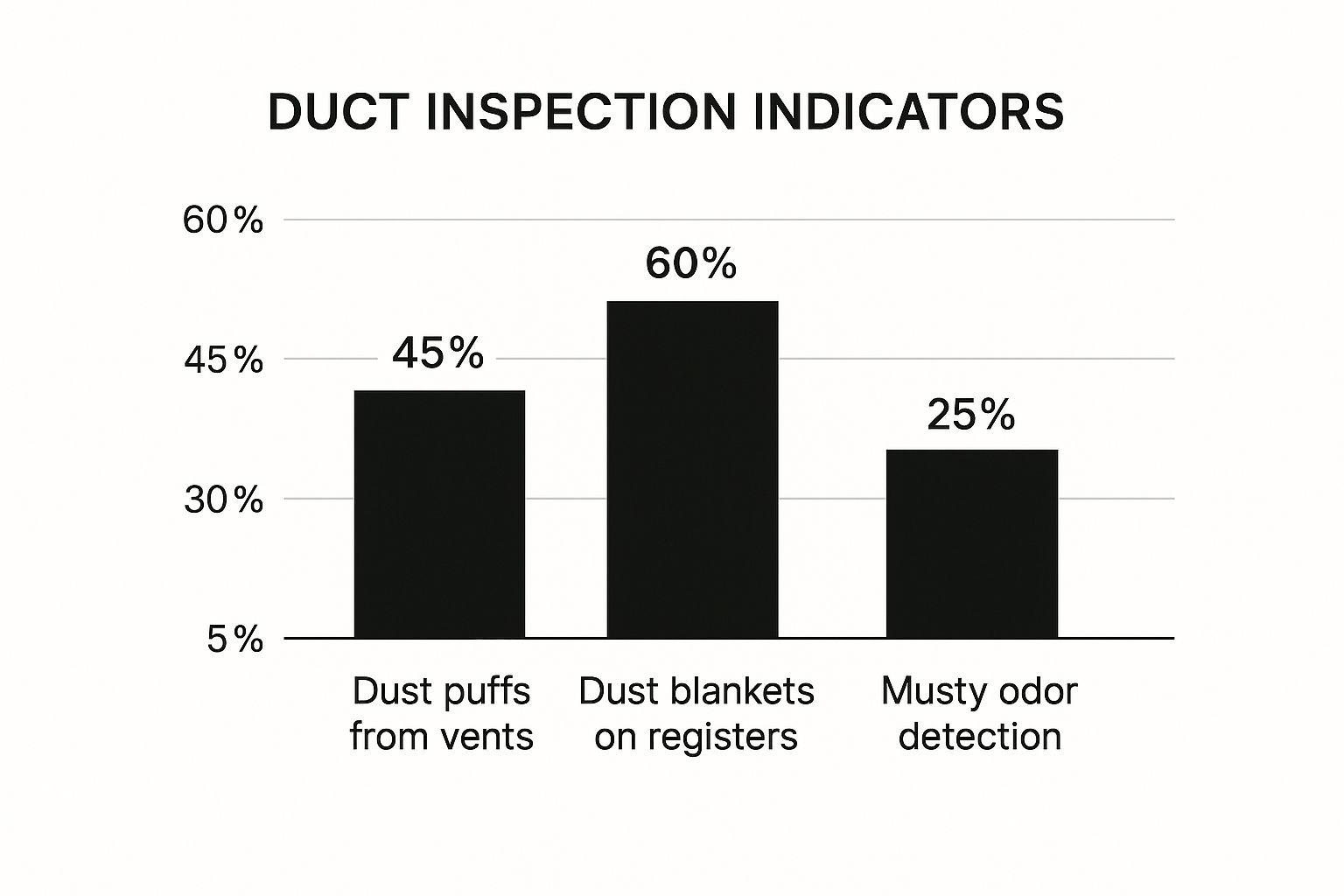
As you can see, a visible blanket of dust on the registers is the most common red flag, with 60% of homeowners noticing it first. It’s a reliable first clue that something’s up.
A Closer Look Inside the Ductwork
If you want to get a better view, you can safely take a peek inside yourself. All it really takes is a screwdriver and your smartphone. Just follow these simple steps:
Turn Off Your HVAC System: This is non-negotiable. Go to your thermostat and shut the system off. For good measure, flip the corresponding breaker in your electrical panel, too. Safety first.
Unscrew a Vent Cover: Pick a vent that's easy to get to. Carefully remove the screws and set the grille aside.
Use Your Smartphone: Fire up your phone's camera and flashlight. Reach your arm into the duct as far as you can without straining and snap a few pictures or a quick video.
Now, take a look at what you captured. A thin, light coating of dust is perfectly normal for just about any home. But if you're seeing thick, matted blankets of dust, clumps of pet hair, or anything that looks suspiciously like mold, you've got a bigger issue on your hands. If you're thinking about tackling a minor buildup on your own, it helps to know what you're getting into. You can learn more in our DIY homeowner's guide to cleaning air ducts.
The key is telling the difference between normal dust and a real problem. If the layer of grime inside the duct is thick enough to write your initials in or it completely hides the metal surface, that's your sign of excessive buildup.
When to Call a Professional
A DIY inspection is a great starting point, but some discoveries are immediate red flags that mean you should put the screwdriver down and call an expert.
These signs point to problems that go way beyond simple dust and need a professional's eye:
Persistent Musty Odors: If a stale, musty smell wafts from your vents every time the system runs, that’s a huge indicator of mold or mildew growth somewhere in the ductwork.
Visible Mold Growth: If your phone's camera reveals anything that looks like mold, don't touch it. Disturbing it can send spores airborne, spreading the problem throughout your entire home.
Evidence of Pests: Finding droppings, nesting materials, or dead insects is a clear sign you've had some unwelcome guests. This requires professional removal and sanitation.
These are issues that require specialized equipment and training to fix safely and correctly. A smart decision always starts with a good look, and now you know exactly how to get one.
Choosing the Right Duct Cleaning Method
So, you've spotted dust in your air ducts and now you're wondering what to do about it. You're at a fork in the road with two main paths: you can either tackle some light maintenance yourself or call in the pros for a serious deep clean. The best choice really boils down to how bad the buildup is, how comfortable you are with home projects, and what you're trying to achieve for your home's air quality.
For minor dust issues, a Do-It-Yourself approach can be a great place to start. This isn't a full-blown deep clean, but more of a maintenance task focused on the parts of your HVAC system you can actually see and reach. It can definitely help keep surface-level dust under control.
The Scope of DIY Duct Maintenance
As a homeowner, there are a few simple things you can do safely and effectively to keep dust from getting out of hand. Think of this as tidying up the entry and exit points of your system, not cleaning out the entire maze of ductwork hidden in your walls and ceilings.
Here’s what you can realistically handle on your own:
Cleaning Grilles and Registers: Pop off your vent covers every so often and give them a good wash with soap and water. While they're off, use your vacuum hose to clean as far into the vent opening as you can comfortably reach.
Changing Your HVAC Filter: This is, without a doubt, the most important DIY task. A clean, high-quality filter is your number one defense against dust ever getting into your system in the first place.
Wiping Down Return Vents: Those return vents are magnets for a fuzzy layer of dust. Wiping them down regularly stops that gunk from being sucked right back into the system.
These are all great habits for upkeep, but they won't solve the problem of dust that's been building up for years deep inside the ductwork. If your own inspection showed heavy buildup, a DIY job just isn't going to cut it.
Be careful, though. An improper cleaning can easily backfire. Using tools that are too harsh or failing to contain the dust can stir up years of settled gunk, blasting a concentrated cloud of allergens and debris straight into your living space.
Professional Source Removal Methods
When you need a true deep clean, professionals turn to a technique called source removal. This is the industry gold standard for clearing out duct dust, and it requires powerful, specialized equipment that you just can't rent at the local hardware store. It’s a whole lot more involved than just sticking a vacuum hose in your vents.
A professional service starts by hooking up a massive, high-powered vacuum to your duct system. This creates intense negative pressure, basically turning your entire duct network into a giant vacuum cleaner. This ensures that every speck of dust, dander, or debris that gets knocked loose is sucked directly out of your home into a containment unit.
With the vacuum running, technicians use a variety of agitation tools to scrub the inside surfaces of the ducts, including:
Rotating Brushes: These tools spin through the ductwork, physically scrubbing away stubborn, caked-on dust from the metal surfaces.
Air Whips: Technicians snake high-pressure air hoses through the ducts, which whip around violently to dislodge debris from every nook and cranny.
Contact Vacuums: For really tough spots with heavy buildup, they'll use direct, powerful vacuuming to clear it out.
This one-two punch of agitation and powerful suction is the only way to guarantee the entire system gets a thorough cleaning from top to bottom. You can learn more about the whole process in this guide to residential air duct cleaning services.
Comparing Your Duct Cleaning Options
Making the right call really comes down to understanding the differences in scope, effectiveness, and risk between doing it yourself and hiring a pro. To help you weigh your options, here's a quick comparison.
Comparing DIY Vs Professional Duct Cleaning
Aspect | DIY Approach | Professional Service |
|---|---|---|
Scope | Limited to visible and accessible areas like vent covers and register openings. | Comprehensive cleaning of the entire ductwork system, including main trunk lines. |
Cost | Low. Primarily the cost of cleaning supplies and new filters. | Higher initial investment, typically priced based on home size and system complexity. |
Effectiveness | Good for routine maintenance and managing surface-level dust. | Highly effective at removing deep, accumulated debris and contaminants. |
Risks | Low risk of damage, but high risk of stirring up dust and making air quality worse if done improperly. | Minimal risk when performed by a certified technician; potential for damage if an inexperienced company is hired. |
Ultimately, while a bit of DIY upkeep is always a good idea, it can't replace the thoroughness of a professional job.
It’s also helpful to know that some professional services offer additional treatments. For instance, understanding the key difference between sanitizing and disinfecting can help you decide if you need an extra step to tackle things like mold or bacteria.
For significant contamination, a professional service is really the only way to safely and effectively get rid of that deep-seated dust in your air ducts without accidentally making your home's air quality worse in the process.
How to Keep Your Air Ducts Clean for Good
While a deep, professional cleaning can hit the reset button on your ductwork, the best offense is a good defense. Preventing dust in air ducts from piling up in the first place is always smarter, and easier, than dealing with a major buildup down the road. Just a few simple, consistent habits can make a huge difference in your home's air quality for years to come.
Think of it like brushing your teeth. You do it every day to stop cavities before they start, not just when you have a toothache. The same proactive approach works wonders for your home’s respiratory system.
Upgrade Your First Line of Defense
Your HVAC filter is your single most powerful weapon against duct dust. A cheap, flimsy filter is basically a screen door trying to stop fine sand; it only catches the big stuff. Stepping up to a high-quality pleated filter with the right MERV rating is a game-changer.
MERV, which stands for Minimum Efficiency Reporting Value, is just a fancy way of rating how well a filter can trap airborne particles. A higher MERV number means it can grab smaller particles, but you need to pick one that your HVAC system can handle without struggling. For most homes, a filter in the MERV 8 to 13 range hits the sweet spot between powerful filtration and healthy airflow.
A proactive maintenance plan is your best defense. Simple, ongoing actions like using high-quality filters and regular cleaning are far more effective at keeping your air clean than occasional, reactive duct cleanings.
Adopt a Proactive Cleaning Routine
It's simple math: the less dust you have floating around your living space, the less there is to get sucked into your ductwork. Getting into a consistent cleaning rhythm attacks dust right at the source, taking a huge load off your HVAC system.
Here’s a practical checklist you can start using today:
Regular Vacuuming: Use a vacuum with a HEPA filter at least twice a week. This will trap fine dust from carpets and floors before it even has a chance to go airborne.
Frequent Dusting: Grab some microfiber cloths to trap dust on furniture, shelves, and electronics. Regular cloths often just push the dust around.
Wash Bedding Weekly: Sheets, blankets, and comforters are magnets for skin cells and dust mites. Washing them weekly in hot water is a must.
Control Humidity and Seal Leaks
Moisture is like a secret fertilizer for bad air quality. It creates the perfect breeding ground for mold and mildew right inside your ducts. A key preventive step is keeping your home’s humidity level between 30% and 50%. A dehumidifier in damp spots like basements can help you maintain that balance.
On top of that, leaky ducts can actually suck dirty, unfiltered air from places like attics and crawlspaces directly into your system. Sealing up any gaps with mastic sealant or proper metal tape puts a stop to this. Well-sealed ducts not only keep your air cleaner but also make your HVAC system run more efficiently. Indoor air pollution is a serious global health issue, and good maintenance really matters. In fact, studies show that clean, properly maintained air ducts can slash indoor fine particle concentrations by up to 97%. You can discover more insights about indoor air quality facts here.
Frequently Asked Questions About Duct Cleaning
Even after seeing what dust in air ducts is and the headaches it can cause, you probably still have a few questions. Let's tackle the most common things homeowners ask when they're thinking about a professional duct cleaning.
How Often Should Air Ducts Be Cleaned
Honestly, there’s no magic number or rigid schedule for cleaning your ducts. The National Air Duct Cleaners Association (NADCA) recommends a professional inspection every three to five years, and you should only clean them when they actually need it. If they’re not dirty, there’s no reason to clean them on a fixed timetable.
That said, some situations call for a closer look sooner rather than later. You might want to get them checked out more frequently if:
You have furry family members who shed a lot of hair and dander.
Someone in your house deals with allergies, asthma, or other respiratory issues.
You’ve just finished a big home renovation that kicked up a ton of dust.
You can see mold, signs of pests, or a blanket of dust around your vents.
Can Cleaning My Air Ducts Lower Energy Bills
Yes, it absolutely can. Think of all that built-up dust and debris in your ductwork as a thick, unwanted blanket. It coats critical parts of your HVAC system and chokes off the airflow, forcing your system to work overtime just to keep your home comfortable. That extra effort burns a lot more energy.
When a professional cleaning clears out all those blockages, air can finally move the way it's supposed to. Your system runs more efficiently, which often translates into real savings on your monthly utility bills. It's also a great way to reduce the long-term strain on your expensive equipment.
Choosing the right company is key to getting a safe, effective cleaning. A pro you can trust will always inspect your system before giving you a price. They'll use specialized gear to create negative pressure, which guarantees all the gunk they knock loose is captured and removed, not just blown around your house.
What Should I Look For in a Duct Cleaning Service
Picking the right company is the single most important decision you'll make. First and foremost, check if they are certified by NADCA. This certification is your assurance that they know what they're doing and follow a strict code of ethics.
Always ask for proof of liability insurance, this protects you and your home. It’s also smart to get written estimates from at least three different companies so you can compare. Be wary of anyone offering rock-bottom prices or making wild health claims. Those are usually big red flags for a scam.
Ready to clear the air and boost your HVAC system's performance? The certified pros at Purified Air Duct Cleaning have the experience and the right equipment to get rid of dust, allergens, and debris hiding in your system. Contact us today for a free quote and start breathing easier in your Avondale or Phoenix-area home.