

A Practical Guide to Improve Home Air Quality
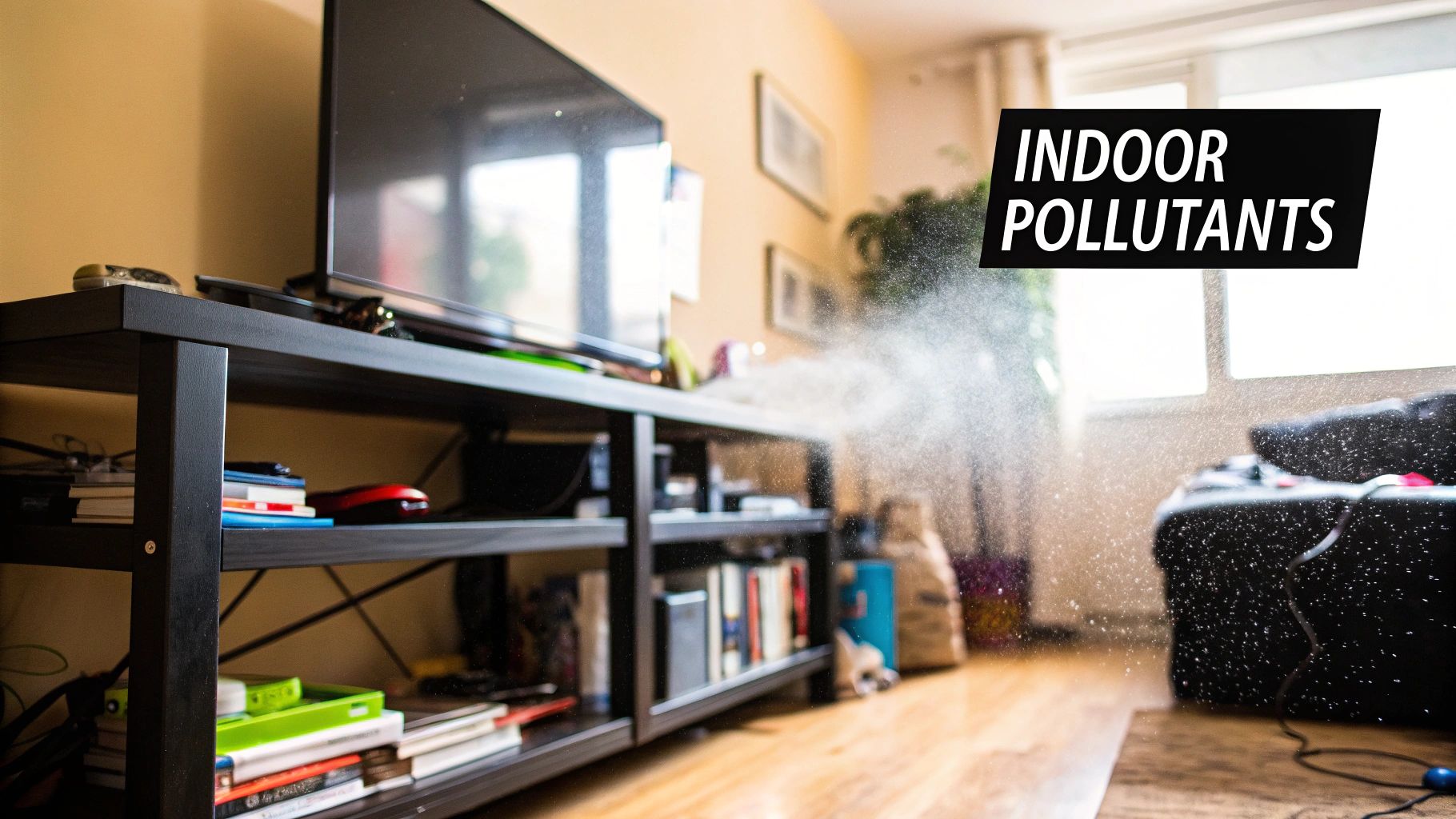
Before you can start clearing the air in your home, you have to know what you’re up against. The first step is always to identify and understand the invisible threats floating around you. We're talking about everything from common allergens like dust and pet dander to chemical pollutants silently released from everyday items. It's a sobering thought, but this knowledge is what empowers you to create a truly healthier living space.
The Hidden Dangers Lurking in Your Home's Air
It’s natural to think of your home as a sanctuary, but the reality is that the air inside can be a cocktail of invisible pollutants. We spend most of our lives indoors, yet we rarely stop to think about the quality of the air we're breathing day in and day out. The truth is, the air inside our homes can be significantly more polluted than the air outside.
Modern homes are built to be incredibly energy-efficient. That’s fantastic for keeping heating and cooling bills down, but it’s not always great for air circulation. Tightly sealed windows and doors are excellent at keeping the elements out, but they're also great at trapping airborne contaminants in. This creates a stagnant environment where pollutants can build up to unhealthy levels, a problem made worse by the sheer number of everyday items that release harmful substances into the air.
Common Contaminants to Watch For
The sources of indoor air pollution are surprisingly varied, ranging from tiny biological particles to synthetic chemicals, each carrying its own set of health risks.
Some of the most common culprits I see in homes include:
Volatile Organic Compounds (VOCs): These are gases that "off-gas" from a huge range of products: think paints, cleaning supplies, new furniture, and even those plug-in air fresheners. Exposure is often linked to headaches, dizziness, and general irritation.
Biological Pollutants: This is a broad category that covers dust mites, pet dander, mold spores, and bacteria. For many people, these are the primary triggers for nagging allergies and even serious asthma attacks.
Combustion Pollutants: If you have gas stoves, furnaces, or fireplaces that aren't properly ventilated, they can release dangerous gases like carbon monoxide and nitrogen dioxide. These are serious health hazards that should not be ignored.
Even seemingly harmless items can contribute to the problem. It's worth looking into alternatives, like learning how to determine if soy candles are non-toxic compared to traditional paraffin-based ones that can release unwanted chemicals when burned.
To help you get a clearer picture of what might be in your home, here’s a quick breakdown of common pollutants and where they come from.
Common Indoor Air Pollutants and Their Sources
This table summarizes some of the primary contaminants found in most homes and where they typically originate. Use it to help identify potential problem areas in your own space.
Pollutant Type | Common Sources | Potential Health Effects |
|---|---|---|
Volatile Organic Compounds (VOCs) | Paints, varnishes, cleaning products, new furniture, carpets, air fresheners | Headaches, nausea, dizziness, eye, nose, and throat irritation, long-term organ damage |
Biological Pollutants | Dust mites, pet dander, mold, mildew, bacteria, pollen | Allergic reactions, asthma attacks, respiratory infections, sinus congestion |
Combustion Pollutants | Gas stoves, furnaces, water heaters, fireplaces, tobacco smoke | Headaches, fatigue, dizziness, respiratory irritation; high levels of Carbon Monoxide can be fatal |
Radon | Naturally occurring radioactive gas from soil and rock that seeps into homes | Lung cancer (leading cause for non-smokers) |
Particulate Matter (PM2.5) | Cooking (especially frying), burning candles, smoking, outdoor pollution | Respiratory irritation, reduced lung function, heart and lung diseases |
Understanding these sources is the first step. By recognizing where potential issues lie, you can start taking targeted action to reduce your family's exposure.
The cumulative effect of these pollutants can turn your home into a reservoir of contaminants. Taking proactive steps is not just about comfort; it is a crucial investment in your family's long-term health and well-being. A great first step is understanding exactly what's in your air, and you can explore more with your guide to a home air quality test.
Don't forget that outdoor conditions play a huge role, too. The American Lung Association's 2025 “State of the Air” report found that nearly 47% of the U.S. population lives in areas with unhealthy levels of outdoor air pollution. Those pollutants don't just stay outside; they find their way indoors through doors, windows, and ventilation systems, making a bad situation even worse.
Mastering Your Home's Ventilation System
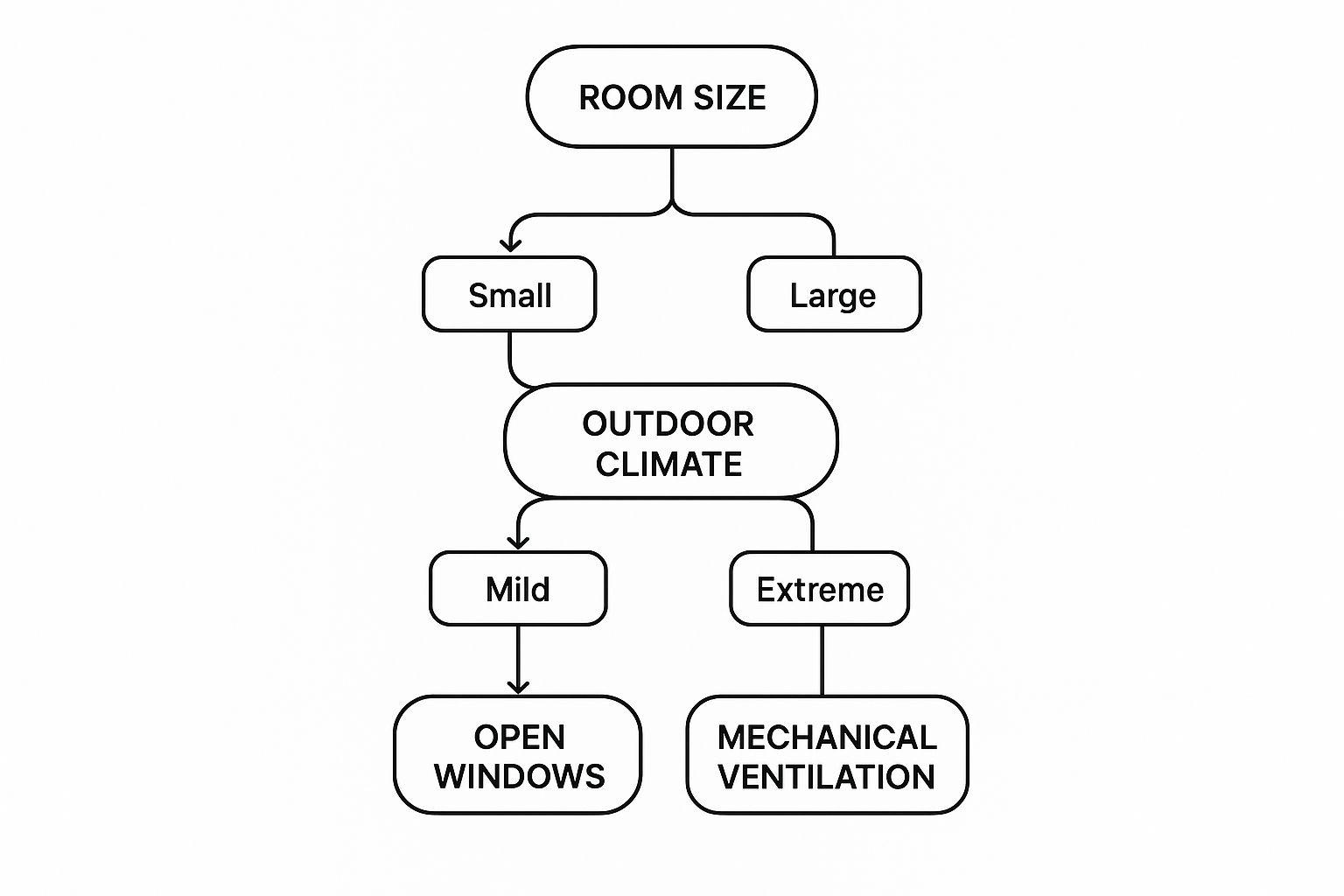
Think of ventilation as your home's own respiratory system. It's constantly working to breathe out stale, polluted air and breathe in fresh, clean air. Just cracking a window is a decent start, but a more strategic approach is what really moves the needle to improve home air quality.
It all comes down to creating intentional airflow that pulls contaminants out right at their source. Your home is essentially a big box that traps pollutants, and if they have no way to escape, they just build up. Ventilation is how you deliberately swap that trapped indoor air for cleaner outdoor air, diluting everything from cooking fumes to chemical off-gassing.
Strategic Use of Exhaust Fans
You know those exhaust fans in your kitchen and bathroom? They're incredibly powerful tools for clearing the air, but most people don't use them to their full potential. They're designed to grab moisture, odors, and pollutants right where they start, stopping them from spreading through the rest of the house.
Let's make it a habit to use them correctly:
Kitchen Ventilation: Flip on that range hood before you even start cooking. Don't wait until smoke is filling the room. Let it run for at least 10-15 minutes after you're done to make sure all those lingering grease particles and combustion gases are gone.
Bathroom Ventilation: The fan should be on during every single shower or bath, and for about 20 minutes afterward. This is your number one defense against high humidity, which is the primary cause of mold and mildew growth.
Proper ventilation is not a passive activity; it requires conscious effort. Actively using your fans to target specific pollution sources is one of the most effective, low-cost ways to maintain healthier indoor air.
If you really want to get a handle on your home's specific needs, a professional evaluation can pinpoint any weak spots in your ventilation. You can get a better idea of what's involved with an indoor air quality assessment to improve your home's air now.
Advanced Whole-House Ventilation
For those who want a more set-it-and-forget-it solution, whole-house ventilation systems provide a continuous, controlled exchange of air without cranking up your energy bills. These systems are tied directly into your HVAC infrastructure, feeding a constant supply of fresh, filtered air throughout your home.
The two most common types you'll see are:
Heat Recovery Ventilators (HRVs): These are perfect for colder climates. In the winter, an HRV uses the heat from the stale air it's pushing out to warm up the fresh air it's pulling in.
Energy Recovery Ventilators (ERVs): Better suited for humid climates, ERVs transfer both heat and a bit of moisture. This helps keep your indoor humidity levels in a comfortable range during both summer and winter.
These systems are a game-changer because they ensure your home is always ventilated, even with the windows shut tight. This is ideal during allergy season or on days when the outdoor air quality just isn't great. They are a major step up from basic strategies, creating a truly managed and healthy indoor ecosystem.
Choosing the Right Air Filters for Your HVAC System

Your HVAC system's air filter is one of those out-of-sight, out-of-mind components, but it’s a real powerhouse when it comes to your home's air quality. Think of it as a gatekeeper, snatching up dust, pollen, and other gunk before it has a chance to circulate through your living space.
But here’s the thing: not all filters are made the same. Picking the right one is a surprisingly critical decision for both your health and your HVAC system's longevity.
Decoding MERV Ratings
To understand a filter's effectiveness, you need to look at its MERV rating, which stands for Minimum Efficiency Reporting Value. This is a simple scale from 1 to 20 that tells you how well a filter can trap airborne particles. The higher the number, the smaller the particles it can catch.
It's a lot like the thread count in bedsheets. A basic, cheap fiberglass filter with a MERV 1-4 rating is like a loose weave, it only stops the big stuff. Step up to a pleated filter with a MERV 8-13 rating, and you’re trapping much finer contaminants like pet dander, mold spores, and even some bacteria.
This matters more than you might think. Modern, well-insulated homes are great for energy efficiency, but they can also trap pollutants. In fact, indoor air can be two to twelve times more polluted than the air outside.
Finding the Right Balance
It's tempting to just grab the filter with the highest MERV rating off the shelf, but that can backfire. A super high-efficiency filter (think MERV 14+) has a very dense weave. This can restrict airflow, essentially making your HVAC system struggle to breathe.
That extra strain forces the system to work harder, which can hike up your energy bills and even damage the fan motor over time.
The goal is to find the sweet spot: a filter that’s strong enough to capture the particles that bother you most, without suffocating your HVAC system. For most homes, a filter in the MERV 8 to 11 range is the perfect balance of solid filtration and healthy airflow.
Now, if you have pets, or if someone in your family struggles with allergies or asthma, bumping up to a MERV 11 or even a MERV 13 filter can make a world of difference. These are designed specifically to catch those finer irritants. To dive deeper into what's best for your setup, check out this essential guide to filters for air vents.
The Non-Negotiable Task of Regular Changes
Even the most expensive, highest-rated filter is worthless if it's clogged with dirt. A dirty filter doesn't just stop cleaning the air; it actively harms your system by blocking airflow and making it run inefficiently. Sticking to a simple replacement schedule is one of the easiest and most important things you can do.
Here are some good rules of thumb to follow:
Standard 1-inch filters: Plan to change these every 1-3 months.
Homes with pets or smokers: You'll want to check them monthly. Don't be surprised if they need a swap that often.
Larger pleated filters (4-5 inches): These have more surface area and typically last 6-12 months.
Don't just rely on the calendar, though. Do a quick visual check. If you hold the filter up to a light and you can’t see the light through it, it's toast. Time for a new one. This simple habit is hands-down one of the most cost-effective ways to keep your air clean and your HVAC system happy.
The Critical Role of HVAC Maintenance and Duct Cleaning
Think of your HVAC system as the lungs of your home. It breathes air in, conditions it, and exhales it into every single room through a network of ducts. It can be your best friend when it comes to improving home air quality… or, if you neglect it, it can become your worst enemy and a major source of contamination.
Regular professional maintenance isn't just about making sure your AC doesn't quit on the hottest day of the year. It's a critical health measure. Over time, key parts like the evaporator coils get caked with dirt and moisture, creating the perfect five-star resort for mold and bacteria. The moment your system kicks on, it blasts those microscopic squatters straight into your living space.
It’s not just the coils, either. A clogged condensate drain line is another sneaky problem. When it backs up, water can overflow, causing serious damage to your home and encouraging even more mold growth right inside the unit. These issues often fly under the radar until they’re big, expensive problems, all while quietly trashing the air you breathe every day.
Is Duct Cleaning Really Necessary?
The debate around duct cleaning comes up a lot, but from my experience, there are absolutely times when it’s not just beneficial, it's essential. While not every single home needs it on a routine schedule, certain situations pretty much demand a professional cleaning to protect your air.
Just finished a big home renovation? Think about all that drywall dust, sawdust, and fine debris. It all gets sucked into your return vents and settles deep inside your ductwork. If you don't get that cleaned out, your HVAC system will just keep circulating those irritating particles for months on end.
Here are a few other dead giveaways that it's time to call in the pros for a duct cleaning:
Visible Mold Growth: If you spot mold on or around your vents, you can bet there's more hiding where you can't see.
Weird, Persistent Odors: That musty, "off" smell coming from your vents that you can't quite place? It often points to mold, mildew, or even decomposing pests trapped inside.
Recent Pest Infestations: If you've had to deal with rodents or insects, their droppings and nesting materials have definitely contaminated your ductwork.
Homes with Smokers: Smoke particles are sticky. They cling to every surface, including the inside of your air ducts, and get recirculated over and over.
If you’re the handy type and curious about what’s involved, this guide on how to clean air ducts from a DIY perspective does a great job of showing just how complex the job is. It really drives home why professional equipment and expertise make all the difference.
DIY Maintenance vs. Professional HVAC Service
Many homeowners want to be proactive about their HVAC system, which is fantastic. But it's important to know which tasks are safe for a DIY approach and when it's time to put down the tools and call a certified technician. Handling certain components without proper training can be ineffective at best and dangerous at worst.
To clear things up, here’s a breakdown of common maintenance tasks:
Maintenance Task | DIY Feasibility | Recommended Frequency | Why It Matters |
|---|---|---|---|
Changing Air Filters | High | Every 1-3 months | The single most important task for airflow and system efficiency. |
Cleaning Vents & Registers | High | As needed | Removes surface dust and debris, preventing it from entering ducts. |
Clearing Condensate Drain Line | Medium | Annually | Prevents water backups, clogs, and potential mold growth. |
Inspecting Electrical Connections | Low | Annually (Professional) | Ensures safe operation and prevents system failure from loose wires. |
Cleaning Evaporator & Condenser Coils | Low | Annually (Professional) | Crucial for efficient cooling and preventing microbial growth. |
Checking Refrigerant Levels | None | As needed (Professional) | Requires certified technicians and specialized tools for safe handling. |
While DIY efforts are a great start, they can't replace the comprehensive tune-up a professional provides. A trained technician has the tools and expertise to service the complex inner workings of your system, ensuring it runs safely, efficiently, and cleanly for years to come.
Choosing a Reputable Service
When you do decide it’s time to hire a professional, doing your homework is key to avoiding scams and getting a service that’s actually worth the money. A legitimate, thorough duct cleaning is a meticulous process; it's not a quick, cheap job.
Be extremely wary of companies advertising suspiciously low prices, like a "$99 whole-house special." A proper cleaning requires expensive, specialized equipment and takes hours. Those rock-bottom offers are almost always a bait-and-switch tactic leading to aggressive upsells or a job that’s barely done.
Before you let anyone start work, make sure you ask these questions:
What is your cleaning process? A real pro will describe using high-powered, truck-mounted vacuums to create negative pressure and specialized tools like whips and brushes to agitate and dislodge debris from the entire system, supply ducts, return ducts, and the air handler.
Are you NADCA certified? The National Air Duct Cleaners Association (NADCA) is the gold standard in the industry. Certification means they adhere to a high standard of practice.
Can you provide proof of insurance? This is non-negotiable. It protects you and your property in the unlikely event of accidental damage.
Will you inspect the system before cleaning? Any reputable technician will want to do a preliminary inspection, often with a camera, to assess the condition of your ducts and show you what they're seeing before they even quote the job.
Upgrading to Active Air Purification Technologies
While a high-quality HVAC filter is a great start for trapping particles, it's ultimately a passive system. It just sits there, waiting for pollutants to float by and get caught. Active air purification, on the other hand, is a whole different ballgame. It goes on the offensive, actively hunting down and neutralizing pollutants in the air and, this is the incredible part, even on the surfaces throughout your home.
This is a huge leap from simply trapping contaminants to actually destroying them. Instead of just snagging dust and dander, these systems are built to break down microscopic threats like viruses, bacteria, mold spores, and nasty volatile organic compounds (VOCs) at a molecular level. For any homeowner serious about achieving the best possible indoor air, that distinction is everything.
How ActivePure Technology Works
One of the most impressive examples of this is ActivePure technology. It's not some fly-by-night invention; this tech was originally developed alongside NASA to keep astronauts safe in the confined environment of space. It doesn't use a screen or filter at all. Instead, an ActivePure system uses a special catalyst and UV light to generate powerful, yet completely safe, oxidizing molecules.
Your HVAC system's fan then pushes these molecules out into every room of your house. They ride the air currents, actively searching for and colliding with contaminants. When they make contact, they obliterate the pollutants, rendering them harmless.
The real game-changer here is that these purifying agents don't just hang out in the air. They settle on countertops, doorknobs, light switches, you name it, providing a continuous sanitizing effect that a passive filter could never dream of.
This constant, proactive process is what truly helps to improve home air quality far beyond what traditional filtration can do on its own. It gets the contaminants right at the source, no matter where they're lurking.
Benefits Beyond Simple Filtration
Adding an active purification system to your home gives you some serious advantages that filters just can't match.
Whole-Home Coverage: Because the purifying agents travel with the airflow, they treat the air and surfaces in every single room connected to your HVAC system.
Surface Decontamination: This is the big one. The technology actively reduces germs like bacteria and viruses on surfaces, something a filter tucked away in your air handler is physically incapable of doing.
Odor Reduction: It doesn't just cover up smells from pets, cooking, or smoke. It breaks down the actual molecules causing the odor.
VOC Neutralization: ActivePure is incredibly effective against VOCs and other chemical pollutants that are often too tiny for even good filters to catch.
This aggressive approach is becoming more recognized as a critical strategy, especially as health organizations worldwide put a greater focus on clean indoor spaces. The World Health Organization now reports that around 140 countries have standards for major airborne pollutants, showing just how connected our indoor and outdoor air really is. You can read more about these global air quality standards on who.int.
It's crucial to understand the difference. A filter cleans the air that happens to pass through it. An active purifier sanitizes the air and surfaces throughout your entire home. For a deeper dive, check out our guide on the differences between an air cleaner and an air purifier. Moving up to an active system is how you get a truly comprehensive solution for a healthier home.
Frequently Asked Questions About Home Air Quality
Even after mapping out a plan to improve home air quality, some questions always pop up. It's totally normal. Let's tackle a few of the most common ones I hear from homeowners so you can feel confident in your next steps.
Getting these details sorted out helps clarify your priorities and ensures the effort you put in pays off right from the start.
How Long Does It Take to Notice a Difference?
This is a great question, and the honest answer is: it depends on what you do. Some changes give you that instant gratification.
For example, when you flip on the kitchen exhaust fan while searing a steak, you prevent that smoke from drifting through the house. The air feels clearer immediately. The same thing happens when you open the windows for a cross-breeze, that fresh air feeling is instant.
On the other hand, bigger changes require a little patience. If you upgrade your HVAC filter or have an ActivePure system installed, it might take a few days to a week to really notice a difference. The system needs time to cycle all the air in your home, gradually pulling out dust, allergens, and odors.
The key is consistency. Keep up with filter changes and ventilation, and that improved air quality will become your new, healthier normal.
Which Change Makes the Biggest Impact?
If you're looking for the single biggest bang for your buck, my money is on upgrading and regularly replacing your HVAC air filter. Your HVAC system is the lungs of your home, constantly circulating air, which makes the filter your first line of defense.
Just moving from a cheap, see-through fiberglass filter to a pleated one with a MERV 8-11 rating captures a ton more particles. This one simple swap can make a huge difference in cutting down on common irritants like:
Dust and dust mites
Pollen and pet dander
Mold spores
While more advanced solutions like ActivePure technology offer a more complete, active purification process, a better filter is the best starting point for any homeowner.
How Often Should I Really Clean My Air Ducts?
The duct cleaning schedule is a huge point of confusion for a lot of people. The truth is, for most homes, this isn't an annual chore. It's something you do when it's specifically needed.
A good rule of thumb is to get them inspected every three to five years. However, some situations call for an immediate cleaning, no matter how long it's been. If you've just finished a major renovation, dealt with a pest problem, or see visible mold growing on or near your vents, it's time to call a pro. Knowing how often to clean air ducts based on your home's specific needs is key.
Can I Have Air That Is Too Clean?
It’s a fair question: can you overdo it? In a typical home environment, creating air that is "too clean" really isn't a concern. The goal isn't to turn your living room into a sterile, hospital-grade cleanroom.
The whole point is to reduce the concentration of harmful pollutants to a level that supports your family's health. We spend about 90% of our lives indoors, where pollutant levels can be much, much higher than outside. Bringing those levels down simply helps your body operate without the constant stress of fighting off airborne gunk. It’s all about creating a healthier balance, not achieving total sterility.
Ready to take the next step toward a healthier home environment? The team at Purified Air Duct Cleaning offers professional air duct cleaning and ActivePure installation to ensure you and your family breathe the cleanest air possible. Visit us at https://www.purifiedairductcleaning.com to get your free quote today.