

Top 10 Hidden Indoor Air Pollution Sources to Address in 2026
The air inside your home can be significantly more polluted than the air outdoors, a surprising fact for many property owners. This is because countless invisible contaminants, collectively known as indoor air pollution sources, circulate through our living and working spaces daily. These pollutants often originate from everyday items, appliances, and systems we frequently overlook, creating an unseen hazard that can affect our health and comfort. From the chemical vapors released by new furniture to the fine dust accumulating deep within your air ducts, these contaminants pose a variety of risks, impacting everything from respiratory wellness to your HVAC system's overall efficiency and energy consumption.
Understanding these hidden threats is the first step toward creating a healthier indoor environment. This guide is designed to be your comprehensive roadmap, uncovering the 10 most common culprits hiding in plain sight. For each source, we will provide a detailed breakdown, helping you to identify its telltale signs, understand the specific health and safety risks involved, and implement practical, actionable steps for mitigation. Whether you are a homeowner, property manager, or simply focused on improving your family's well-being, this list will equip you with the knowledge to clear the air and breathe easier.
1. Dust and Particulate Matter in Air Ducts
Your home’s HVAC system acts as its respiratory system, but over time, the ductwork can become a significant source of indoor air pollution. Dust, one of the most common pollutants, is a complex mixture of dead skin cells, pet dander, dirt, pollen, and textile fibers. When this debris accumulates in your air ducts, your HVAC system continuously circulates these particles throughout your living space every time it runs.
This buildup not only degrades air quality but also forces your HVAC unit to work harder, reducing its efficiency and increasing energy costs. For individuals with allergies, asthma, or other respiratory conditions, this constant circulation of contaminants can trigger or worsen symptoms.
Actionable Mitigation Steps
To combat this hidden pollutant source, consider these practical steps:
Regular Filter Changes: Replace your HVAC filters every 1-3 months. For homes with pets or allergy sufferers, monthly changes are ideal. Upgrading to a high-efficiency filter with a MERV rating of 11-13 can capture smaller particles before they enter your ductwork.
Professional Duct Inspection: Before committing to a cleaning, have a professional from Purified Air Duct Cleaning perform a camera inspection. This allows you to see the actual level of contamination inside your ducts and make an informed decision.
Scheduled Cleaning: For most residential properties, a professional duct cleaning every 3-5 years is recommended. However, consider it sooner if you've recently completed a home renovation, notice excessive dust, or have persistent allergy symptoms. If you need help managing household dust, you can explore this definitive guide to reduce dust in your house for cleaner air for more tips.
2. Mold and Mildew Growth
One of the most concerning indoor air pollution sources, mold thrives in dark, damp environments. Your HVAC system can become an ideal breeding ground, especially in cooling coils, drain pans, and insulated ductwork where moisture from condensation accumulates. As mold grows, it releases spores into the air, which are then distributed throughout your home or business every time the system operates.
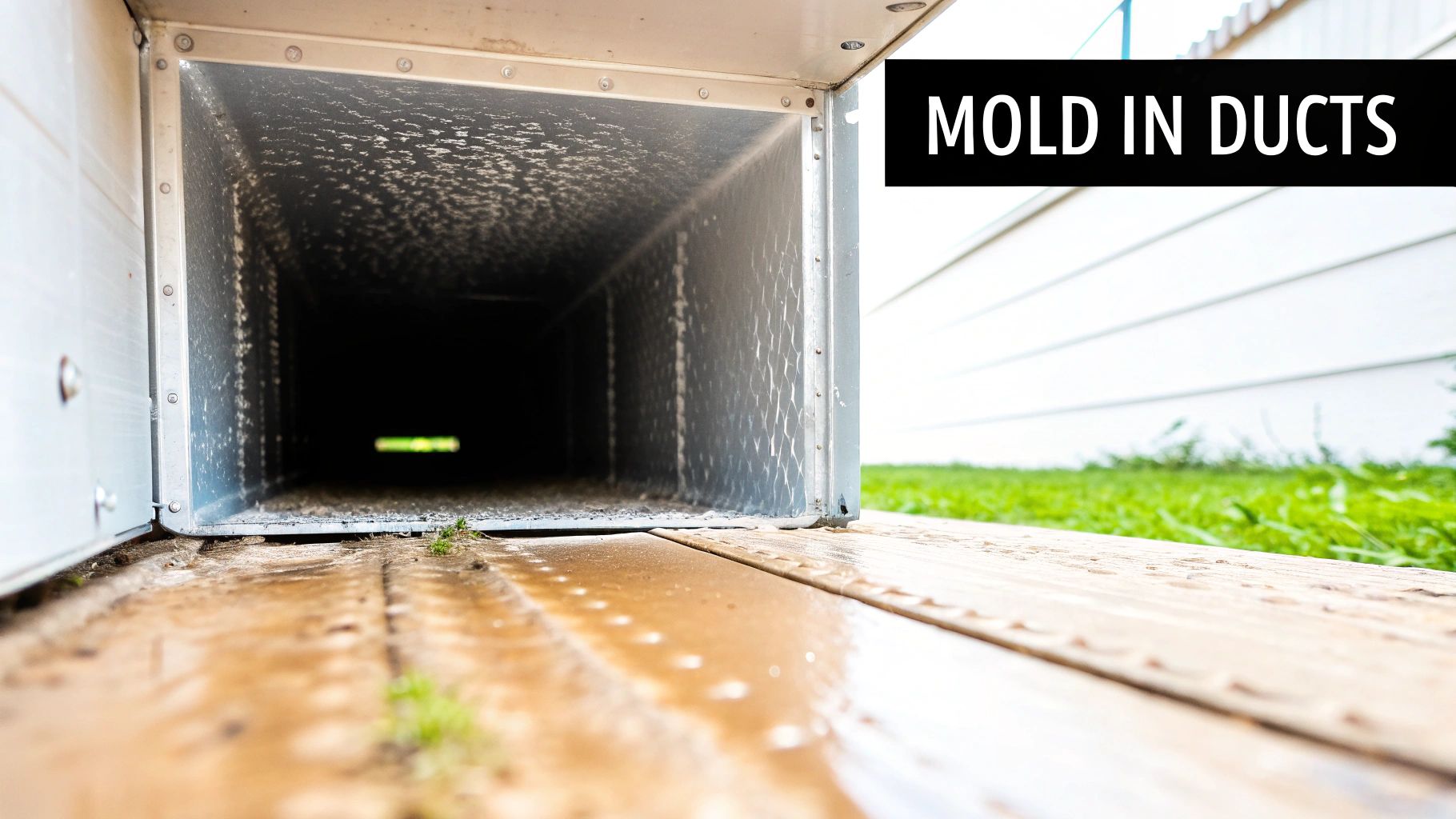
These spores are potent allergens and respiratory irritants that can cause a range of health issues, from persistent allergy symptoms and musty odors to severe respiratory distress. Individuals with asthma, allergies, or compromised immune systems are particularly vulnerable to the effects of airborne mold. For effective management of this common indoor air pollutant, a proactive approach involves understanding mold prevention and mitigating risks for healthier homes.
Actionable Mitigation Steps
Controlling moisture is the key to preventing mold. Implement these strategies to protect your air quality:
Control Humidity Levels: Maintain indoor humidity between 30-50% using dehumidifiers, especially in basements and crawl spaces. Ensure high-moisture areas like bathrooms and kitchens have properly functioning exhaust fans.
Annual HVAC Maintenance: Schedule an annual HVAC inspection and cleaning before the cooling season. A professional can clean evaporator coils and ensure condensation drain lines are clear and functioning correctly to prevent water buildup.
Professional Mold Inspection and Remediation: If you detect a musty smell or suspect mold growth, a professional inspection is crucial. Purified Air Duct Cleaning offers specialized services to identify and safely remove mold from your ductwork. You can learn more with this guide to air duct cleaning and mold removal to understand the process.
3. Pet Dander and Hair
Pets bring joy to our lives, but they are also a significant source of indoor air pollution. Pet dander consists of microscopic flecks of skin shed by cats, dogs, birds, and other animals with fur or feathers. These tiny particles, along with shed hair, easily become airborne and circulate throughout your home via the HVAC system, settling on furniture, bedding, and deep within carpets.
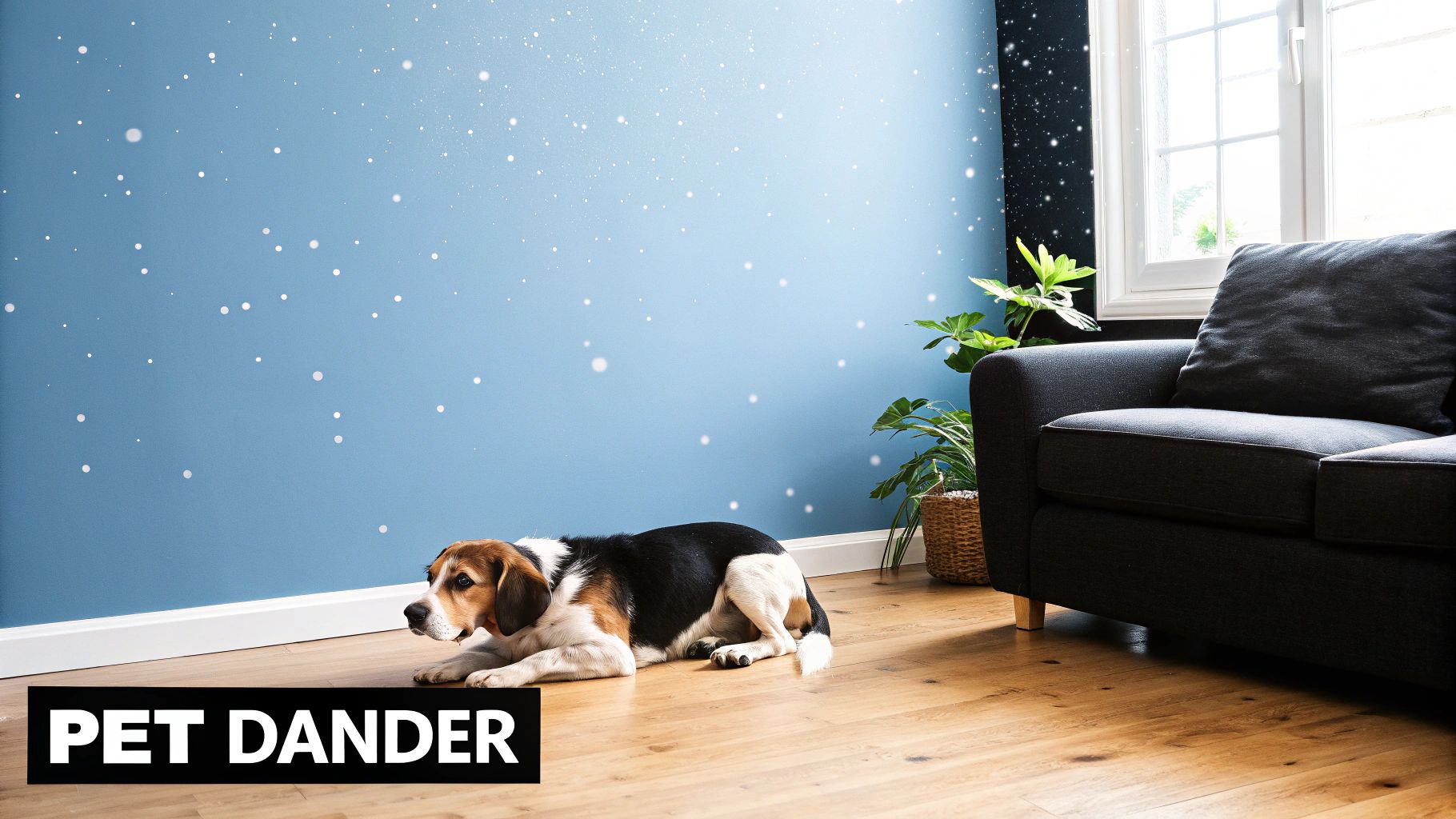
This accumulation can be a major problem for anyone with pet allergies, triggering reactions like sneezing, watery eyes, and respiratory distress. Even for those without allergies, the buildup of dander and hair in air ducts can lead to unpleasant odors and a general decline in air quality, forcing your HVAC unit to work harder to push air through clogged filters and pathways. To effectively manage pet dander and hair, it's essential to understand methods for reduction, such as learning how to stop dog shedding and maintain a cleaner indoor environment.
Actionable Mitigation Steps
To minimize pet-related pollutants and breathe easier, implement these targeted strategies:
Upgrade and Maintain HVAC Filters: Switch to a high-efficiency HEPA filter with a MERV 13 rating to capture fine dander particles. In homes with two or more pets, it is crucial to replace these filters monthly to prevent clogs and ensure optimal airflow.
Annual Professional Duct Cleaning: Pet-owning households, especially those with multiple animals, should schedule a professional duct cleaning with Purified Air Duct Cleaning annually. This removes the deep accumulation of dander and hair that regular cleaning cannot reach.
Consider Advanced Air Purification: For continuous, active allergen neutralization, installing an in-duct air purifier like an ActivePure system can be highly effective. You can also use portable HEPA air purifiers in high-traffic areas like bedrooms and living rooms to supplement your main HVAC system. If you want to dive deeper into managing pet allergies, explore our guide on the causes and treatments of pet dander allergies.
4. Volatile Organic Compounds (VOCs)
Volatile Organic Compounds, or VOCs, are one of the most widespread sources of indoor air pollution. These are gaseous chemicals emitted from a vast array of common household products, building materials, and furnishings such as paints, adhesives, cleaning solutions, air fresheners, and new furniture. These compounds "off-gas" into your indoor air, often becoming unnoticeable by smell after their initial use or installation, yet continuing to pollute the environment.
This constant, low-level chemical exposure contributes significantly to poor indoor air quality. For many people, prolonged exposure can lead to health issues ranging from headaches, dizziness, and eye, nose, and throat irritation to more severe long-term effects. Homes that have recently been painted, renovated, or furnished with new carpeting are prime environments for high concentrations of these invisible pollutants.
Actionable Mitigation Steps
To effectively reduce VOC levels and protect your indoor air, implement these targeted strategies:
Choose Low-VOC Products: When painting or renovating, actively select paints, finishes, adhesives, and building materials labeled as "low-VOC" or "zero-VOC." This simple choice drastically reduces the introduction of harmful chemicals from the start.
Ventilate and Air Out: Increase ventilation by opening windows and using fans, especially when using products that release VOCs or after bringing new furniture home. If possible, allow new items like mattresses or couches to air out in a garage or well-ventilated space before placing them in your living areas.
Reconsider Air Fresheners: Many commercial air fresheners and aerosol sprays are major sources of VOCs. Opt for natural alternatives like essential oil diffusers, simmering spices on the stove, or placing houseplants known for their air-purifying qualities.
Install Advanced Air Purification: For continuous, whole-home protection against VOCs that are difficult to control through ventilation alone, consider an advanced air purification system. The experts at Purified Air Duct Cleaning can install systems that actively neutralize these chemical pollutants, ensuring cleaner, healthier air throughout your property.
5. Dryer Vent Lint Accumulation
Often overlooked, your clothes dryer vent system is a significant and potentially dangerous source of indoor air pollution. As your dryer runs, it expels hot, moist air laden with tiny lint fibers. When the vent line becomes clogged with this flammable material, the dryer's efficiency plummets, and lint particles can be forced back into your living space, contributing to dust and aggravating allergies.
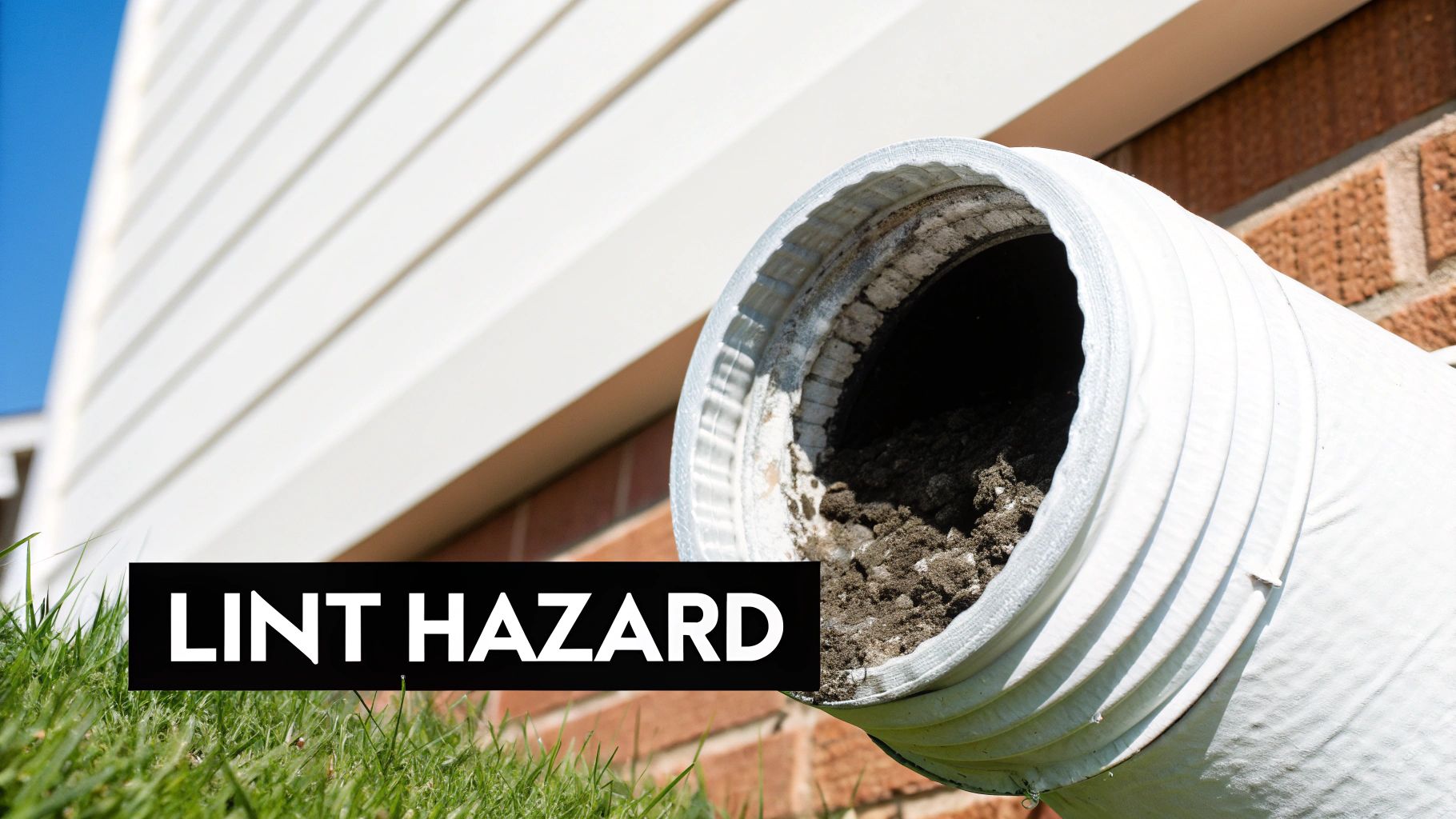
This accumulation creates more than just an air quality issue; it poses a serious fire hazard. Restricted airflow causes the dryer to overheat, which can ignite the highly combustible lint trapped in the vent. Furthermore, a blocked vent forces excess moisture back into your home, which can promote the growth of mold and mildew, another key indoor air pollutant.
Actionable Mitigation Steps
To manage this hazard and maintain healthy air quality, implement a routine maintenance schedule:
Clean the Lint Trap: Make it a habit to clean the lint screen after every single load. This simple step is your first line of defense against lint buildup in the vent line itself.
Annual Professional Cleaning: Schedule a professional dryer vent cleaning with a certified technician from Purified Air Duct Cleaning at least once a year. For households with large families or commercial facilities like laundromats, a more frequent cleaning schedule may be necessary.
Regular Inspections: Monthly, check the exterior vent opening to ensure the damper is functioning correctly and is clear of obstructions like bird nests or debris. For a deeper understanding of the risks, you can read our guide to preventing a dryer lint fire hazard.
6. Carbon Monoxide and Gas Appliance Emissions
Gas-powered appliances like furnaces, water heaters, stoves, and fireplaces are common in many homes, but they can become significant indoor air pollution sources if not properly maintained. During combustion, these appliances can release harmful pollutants, most notably carbon monoxide (CO) and nitrogen dioxide (NO2). Carbon monoxide is a colorless, odorless gas that is highly toxic and can be fatal at high concentrations, while even low-level exposure contributes to poor air quality.
Improper ventilation, malfunctioning equipment, or blocked flues can cause these gases to build up inside your home instead of being safely vented outdoors. This risk is especially high for older appliances or those that have not been serviced regularly. Exposure to these emissions can cause symptoms ranging from headaches and dizziness to more severe respiratory issues and, in the case of CO, poisoning.
Actionable Mitigation Steps
To protect your home and family from the dangers of gas appliance emissions, implement the following safety measures:
Install CO Detectors: Place carbon monoxide detectors on every level of your home, especially near sleeping areas. Test them monthly and replace the batteries according to the manufacturer’s instructions.
Schedule Annual Inspections: Have a qualified technician inspect all your gas appliances, including your furnace, water heater, and fireplace, at least once a year. This ensures they are operating efficiently and venting correctly.
Ensure Proper Ventilation: Always use the exhaust fan or range hood when cooking with a gas stove to vent pollutants outside. Never use a gas stove or oven to heat your home, as this is a major fire and CO hazard.
Maintain Chimneys and Flues: If you have a gas fireplace, schedule regular professional inspections to ensure the chimney and flue are clear of obstructions and functioning properly. For comprehensive system maintenance that includes checking your furnace's combustion and ventilation, contact the experts at Purified Air Duct Cleaning.
7. Household Cleaning Products and Chemical Residues
The quest for a sparkling clean home can paradoxically introduce a significant number of indoor air pollution sources. Many common household cleaning products release volatile organic compounds (VOCs) and other harsh chemicals like ammonia, chlorine, and formaldehyde into the air during and after use. These substances don't just disappear; they linger, contributing to poor indoor air quality and potential health issues.
This chemical residue can irritate the respiratory system, eyes, and skin, and is a known trigger for asthma attacks and allergy symptoms. Furthermore, certain chemicals can react with other particles in the air, like ozone, to create secondary pollutants, compounding the problem. Proper ventilation is crucial, but the consistent use of these products often means a constant, low-level chemical presence in your living environment.
Actionable Mitigation Steps
To maintain a clean home without compromising air quality, consider these strategies:
Switch to Green Alternatives: Opt for cleaning products labeled non-toxic, biodegradable, or fragrance-free. Natural alternatives like vinegar, baking soda, and lemon juice are effective for many routine cleaning tasks and do not release harmful VOCs.
Ventilate Aggressively: Always open windows or use exhaust fans when cleaning to dilute and remove chemical fumes. Continue to ventilate the area for a period after you've finished to clear any lingering residues from the air.
Store Chemicals Safely: Keep all cleaning products in tightly sealed containers and store them in a well-ventilated area outside of your primary living spaces, such as a garage or utility closet, to minimize off-gassing.
Consider Air Purification: For persistent chemical sensitivities or to address airborne residues, an active air purifier can be highly effective. Purified Air Duct Cleaning can install systems that actively neutralize chemical pollutants in the air, providing a healthier breathing environment.
8. Tobacco Smoke and Secondhand Smoke
Tobacco smoke is one of the most hazardous indoor air pollution sources, releasing over 4,000 chemical compounds into the air with every cigarette. This includes potent carcinogens like formaldehyde, benzene, and polonium-210. Secondhand smoke doesn't just dissipate; its toxic particles linger in the air and settle on surfaces like walls, furniture, and carpets, creating what is known as "thirdhand smoke."
This residue is incredibly persistent and can become embedded within your home's HVAC system. When the system operates, it recirculates these harmful particles, continuously exposing all occupants, including children, pets, and non-smokers, to significant health risks. This is especially problematic in multi-unit buildings where smoke can easily migrate between apartments through shared ventilation, creating a building-wide air quality issue.
Actionable Mitigation Steps
Eradicating smoke residue requires a more aggressive approach than many other pollutants:
Enforce a Strict No-Smoking Policy: The most effective step is to prohibit smoking indoors entirely. Designate a smoking area far from windows, doors, and HVAC air intakes to prevent smoke from being drawn back inside.
Professional Duct and HVAC Cleaning: Smoke particles and tar-like residue cling to the inside of ductwork. A professional cleaning by Purified Air Duct Cleaning is essential to physically remove this toxic buildup from the system.
Upgrade Air Filtration: Use high-efficiency HEPA filters to capture fine smoke particles. For ongoing neutralization, consider installing an ActivePure system, which actively seeks out and destroys airborne contaminants, including smoke molecules.
Deep Surface Cleaning: Beyond the air, you must address the residue on surfaces. If you are struggling with a lingering odor, you can learn how to remove smoke smell for good with specialized techniques.
9. Allergens from Outdoor Air Infiltration
Your home's defenses against the outdoors are not always perfect. Allergens like pollen, outdoor dust, and other contaminants can easily infiltrate your living space through unsealed cracks, gaps around windows and doors, and even your HVAC system's fresh air intake. In the Phoenix area, this is especially problematic during haboob dust storms or high pollen seasons, turning your home into a reservoir for outdoor pollutants.
This constant infiltration introduces some of the most potent indoor air pollution sources, compromising air quality and creating a challenging environment for allergy and asthma sufferers. When these outdoor particles settle inside your air ducts, the HVAC system circulates them repeatedly, ensuring they remain airborne and aggravating respiratory symptoms long after an outdoor event has passed.
Actionable Mitigation Steps
To effectively block and remove outdoor allergens, adopt a multi-layered defense strategy:
Upgrade and Maintain Filters: Use high-efficiency air filters with a MERV rating of 13 or higher, as they are designed to capture fine particles like pollen and dust. During peak seasons, such as spring or monsoon, check and replace your filters monthly to maintain optimal performance.
Seal Your Home's Envelope: Meticulously inspect for and seal air leaks around windows, door frames, electrical outlets, and areas where pipes or ducts penetrate walls. Using weatherstripping and caulk is a cost-effective way to significantly reduce allergen entry.
Schedule Professional Duct Cleaning: Over time, outdoor allergens will inevitably accumulate inside your ductwork. A professional cleaning from Purified Air Duct Cleaning thoroughly removes this buildup, preventing your HVAC system from re-circulating pollen and dust throughout your home.
Use Air Purification Technology: For continuous, active protection, consider adding an in-duct air purifier like ActivePure technology to neutralize airborne allergens on contact. A portable HEPA purifier can also provide extra defense in highly sensitive areas like bedrooms.
10. Bacteria, Viruses, and Pathogens in HVAC Systems
While often overlooked, your HVAC system can become a breeding ground for harmful microorganisms. The dark, damp environment inside components like evaporator coils and drain pans provides ideal conditions for bacteria, viruses, and mold to thrive. When the system operates, it circulates these pathogens throughout your home or business, turning your HVAC into a distribution network for illness.
This form of contamination is a significant source of indoor air pollution that can lead to respiratory infections, allergic reactions, and the spread of contagious diseases. High-risk environments like medical facilities, schools, and commercial offices are particularly vulnerable, but any property can be affected. Neutralizing these airborne threats at the source is crucial for maintaining a healthy indoor environment for occupants.
Actionable Mitigation Steps
To effectively eliminate pathogens from your air system, consider these advanced solutions:
Annual System Disinfection: Schedule an annual professional HVAC cleaning that includes disinfecting the coils and internal components. This process kills existing microbial colonies and prevents them from spreading.
Install ActivePure Technology: For continuous, 24/7 protection, install an in-duct air and surface purifier featuring NASA-certified ActivePure technology. This system actively seeks and destroys pathogens in the air and on surfaces throughout your space.
Maintain Optimal Humidity: Keep your home’s relative humidity between 30% and 50%. This range is less conducive to the growth of bacteria and mold, making your HVAC system a less hospitable environment for them.
Consider UV-C Light Systems: Installing a UV-C light system inside your HVAC unit can provide an additional layer of defense, as the ultraviolet light sterilizes airborne microorganisms as they pass through. For a comprehensive assessment of your system's contamination risk, a professional inspection from Purified Air Duct Cleaning is the best first step.
Comparison of 10 Indoor Air Pollution Sources
Issue | 🔄 Implementation Complexity | ⚡ Resource Requirements | ⭐ Expected Outcomes / 📊 Impact | 💡 Ideal Use Cases & Key Advantages |
|---|---|---|---|---|
Dust and Particulate Matter in Air Ducts | 🔄 Moderate: professional cleaning + periodic repeats | ⚡ Moderate: vacuums, inspection cameras, MERV 11–13 filters | ⭐⭐⭐: noticeably improved IAQ; 📊 HVAC efficiency +15–25% when cleaned | 💡 Homes with pets, high-traffic offices; advantage: removes allergens, extends HVAC life |
Mold and Mildew Growth | 🔄 High: detection + moisture control and remediation | ⚡ High: coil/coil pan cleaning, dehumidifiers, ActivePure | ⭐⭐⭐⭐: significant health risk reduction; 📊 prevents mold recurrence if humidity controlled | 💡 Damp climates, aging systems; advantage: eliminates mycotoxin sources when treated |
Pet Dander and Hair | 🔄 Moderate: recurring maintenance due to continuous shedding | ⚡ Moderate: HEPA/MERV13 filters, ActivePure, annual duct cleaning | ⭐⭐⭐: reduces allergy triggers but not elimination; 📊 measurable surface/air allergen drop | 💡 Multi-pet households; advantage: HEPA + grooming reduce symptoms and spread |
Volatile Organic Compounds (VOCs) | 🔄 Moderate: source control + ventilation strategy | ⚡ Low–Moderate: ventilation upgrades, low‑VOC products, ActivePure | ⭐⭐⭐: lowers exposure; 📊 fastest gains after source removal and airing | 💡 New builds/renovations; advantage: controllable via product choice and ventilation |
Dryer Vent Lint Accumulation | 🔄 Low: straightforward but safety-critical service | ⚡ Low: annual professional cleaning, lint-trap maintenance | ⭐⭐⭐⭐: major safety improvement; 📊 reduces dryer time and energy ~20–30% | 💡 Homes with heavy laundry/commercial laundries; advantage: prevents fires and moisture issues |
Carbon Monoxide & Gas Appliance Emissions | 🔄 High: requires specialist inspection and venting fixes | ⚡ Moderate: CO detectors, professional appliance servicing | ⭐⭐⭐⭐: critical life-safety improvement; 📊 prevents CO poisoning incidents | 💡 Homes with gas appliances and commercial kitchens; advantage: early detection and prevention |
Household Cleaning Products & Chemical Residues | 🔄 Low: behavioral/product substitution and ventilation | ⚡ Low: non-toxic cleaners, ventilation, ActivePure optional | ⭐⭐: reduces irritation and residues; 📊 immediate exposure reduction during/after cleaning | 💡 Sensitive occupants, schools; advantage: inexpensive, quick risk reduction via substitutions |
Tobacco Smoke & Secondhand Smoke | 🔄 High: requires behavioral change and remediation | ⚡ Moderate–High: duct cleaning, HEPA/ActivePure, furnishings remediation | ⭐⭐: reduces exposure but persistent thirdhand residues; 📊 odor & contaminant reduction after remediation | 💡 Rental/real-estate remediation and multi-unit housing; advantage: smoke-free policies eliminate source |
Allergens from Outdoor Air Infiltration | 🔄 Moderate: sealing + filtration strategy | ⚡ Moderate: high‑MERV/HEPA filters, air sealing, ActivePure | ⭐⭐⭐: effective seasonal control; 📊 large reductions during pollen/dust events | 💡 Areas with seasonal dust/pollen (e.g., Phoenix); advantage: filtration + sealing markedly reduce ingress |
Bacteria, Viruses & Pathogens in HVAC Systems | 🔄 High: multi-pronged cleaning and continuous control | ⚡ High: professional HVAC cleaning, ActivePure/UV‑C, humidity control | ⭐⭐⭐⭐: substantial reduction in transmission; 📊 measurable pathogen kill rates with ActivePure | 💡 Medical, schools, high-traffic offices; advantage: lowers disease spread when combined with maintenance |
Your Next Step Toward a Healthier Home Environment
Throughout this guide, we have navigated the complex landscape of your home's interior, identifying the ten most common indoor air pollution sources that often go unnoticed. From the microscopic dust particles and pet dander circulating through your air ducts to the silent threat of VOCs off-gassing from new furniture, the sources of contamination are both diverse and pervasive. We have explored how everyday activities, such as cleaning, cooking, and even running your dryer, can contribute to a buildup of pollutants that may impact your family's health and comfort.
The journey to cleaner air begins with awareness. Recognizing the signs of poor air quality, like persistent allergies, unusual odors, or excessive dust, empowers you to take decisive action. Many of the solutions discussed, such as switching to low-VOC products, improving ventilation, and regularly changing HVAC filters, are powerful first-line defenses that you can implement immediately. These proactive habits form the foundation of a healthier indoor ecosystem.
Bridging the Gap Between DIY and Professional Solutions
While individual efforts are crucial, it is equally important to acknowledge their limitations. Some of the most significant indoor air pollution sources are hidden deep within your home's infrastructure, far beyond the reach of standard household tools. This is where the true value of professional intervention becomes clear.
Comprehensive Contaminant Removal: Your HVAC system is the respiratory system of your home. Over time, its network of ducts can become a reservoir for years of accumulated dust, mold spores, bacteria, and allergens. A professional cleaning service uses specialized, high-powered equipment to dislodge and safely remove these contaminants, something a simple vacuum attachment cannot achieve.
Addressing Hidden Dangers: Issues like mold growth on evaporator coils or significant lint blockages in dryer vents are not just air quality concerns; they are potential safety hazards. Certified technicians can safely remediate mold and clear vents, restoring system efficiency and reducing the risk of fire or mechanical failure.
Long-Term Purity and Prevention: Beyond just cleaning, professionals can offer advanced solutions to maintain air quality. Systems like ActivePure technology actively neutralize pathogens and pollutants in the air and on surfaces, providing a continuous layer of protection that passive filters alone cannot offer.
Ultimately, creating a truly purified indoor environment is a partnership between your daily habits and expert-level maintenance. By understanding which tasks you can manage and when to call for professional support, you create a robust, multi-layered strategy to protect your home and loved ones from the diverse indoor air pollution sources that challenge modern living. Your commitment to clean air is an investment in long-term health, comfort, and peace of mind.
Ready to address the hidden sources of pollution in your home’s HVAC system? The certified experts at Purified Air Duct Cleaning use state-of-the-art equipment to thoroughly clean your air ducts, dryer vents, and coils, ensuring the air you breathe is clean and safe. Contact us today for a professional assessment and take the definitive step toward a healthier home environment.