

How to Remove Smoke Smell for Good
Trying to get rid of a smoke smell with an air freshener is like putting a band-aid on a broken leg. It might cover things up for a minute, but it does nothing to fix the real problem. To truly eliminate that stubborn odor, you have to go deeper and tackle the microscopic, oily particles that have latched onto every single surface.
Why Smoke Smell Is So Hard to Remove
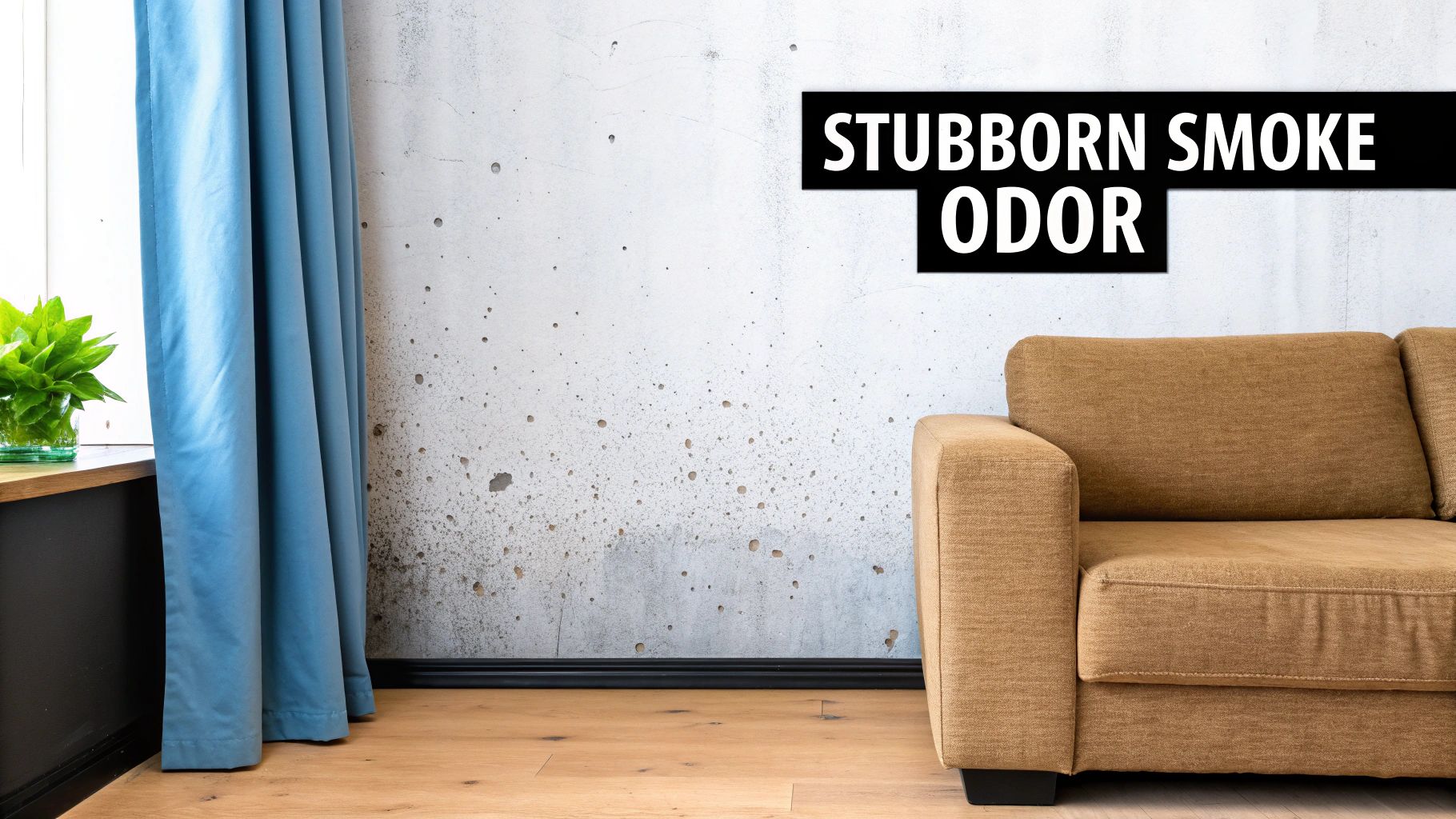
Have you ever walked into a room and instantly known a smoker used to live there? Or maybe a small kitchen mishap left a burnt smell that just won't go away, no matter how much you air out the house. That lingering odor from old cigarette smoke, a nearby wildfire, or even a burnt dinner isn't just in your head; there's a reason it's so incredibly persistent.
The problem is the smoke itself. It isn't just a bad smell floating around; it's a massive collection of tiny, greasy particles mixed with a cocktail of chemical compounds. These particles are so small they can work their way into materials you'd never expect.
The real challenge with smoke odor lies in its physical properties. The fine particulate matter, often less than 2.5 micrometers in diameter, can easily penetrate deep into drywall, wood, and fabric fibers. This makes it impossible to get rid of with a simple surface wipe-down.
Where Smoke Particles Hide
Think about what happens when a pan of oil gets too hot on the stove. Smoke billows out and fills the kitchen in seconds. Those tiny, sticky particles don't just hang in the air, they land and embed themselves everywhere.
Soft Surfaces: Your carpets, couch, curtains, and bedding are like giant sponges. They soak up these odor-causing particles, trapping them deep within their fibers.
Hard Surfaces: It's easy to forget that walls, ceilings, and even wooden furniture are porous. Smoke particles settle into these microscopic openings, creating an invisible, smelly film that you can't see but can definitely smell.
Hidden Spaces: The number one place people forget to check is their HVAC system. Air ducts become a massive reservoir for smoke particles. Every time your furnace or AC kicks on, it blasts that stale, smoky air right back into every room of your house.
This is exactly why a can of air freshener is a losing battle. It only masks the smells in the air for a short time, doing nothing about the millions of particles clinging to surfaces and hiding in your ductwork. Understanding what is indoor air pollution and how it affects your home can shed more light on how these particles compromise your air quality.
At the end of the day, learning how to remove smoke smell for good requires a full-scale attack. You have to clean every affected surface and, critically, deal with the hidden source of recirculation: your air ducts.
First Actions to Take for Smoke Odor
When you're dealing with a fresh smoke problem, that first hour is everything. Acting fast can be the difference between a quick cleanup and a lingering nightmare, stopping those tiny, oily smoke particles from permanently settling into every surface of your home. Your gut might tell you to start scrubbing, but hold off, the real priority is ventilation, ventilation, ventilation.
The idea isn't just to move the bad air around; you need to actively force it out while pulling fresh air in. A good old-fashioned cross-breeze is your best friend here, so open windows on opposite sides of the house. To really get things moving, stick a box fan in one window facing outward. This creates a vacuum effect, pulling the smoky air right outside. It's a simple move, but it's the foundation of any effective smoke removal strategy.
Preliminary Surface Wipe Down
While the air is clearing out, you can start tackling the hard surfaces. Smoke residue is greasy and sticky, so plain water isn't going to do much. A simple but powerful solution is a 50/50 mix of white vinegar and water in a spray bottle.
Give a light mist and then wipe down any non-porous surfaces you see. Think about places like:
Countertops and tables
Light fixtures and the blades of your ceiling fans
Window blinds and their frames
Any furniture with a painted or sealed wood finish
This first pass lifts the top layer of soot and greasy residue, preventing it from getting ground deeper into surfaces or kicked back up into the air. Just be sure to grab a stack of clean cloths and switch them out often. The last thing you want to do is smear that oily film from one spot to another.
Crucial Warning: Whatever you do, do not turn on your HVAC system. It's tempting to think it will help circulate the air, but firing up your furnace or AC at this stage is the fastest way to contaminate your entire home. The system's return vents will suck those smoke particles right in and blast them through every inch of your ductwork, turning a single-room issue into a whole-house disaster.
The Scope of the Odor Problem
The immediate urge to get rid of bad smells has created a huge market. Globally, odor eliminators were a $5.4 billion business in 2021, and that's expected to climb to $6.6 billion by 2025. But when smoke particles get inside an HVAC system, a simple spray can't touch them.
In fact, a completely separate equipment market for these hidden issues is projected to more than double from $1.5 billion to $3.2 billion by 2034. That growth is fueled by a startling fact: nearly 40% of U.S. homes have some level of smoke damage in their HVAC systems from cooking accidents or fires. You can get more odor eliminator market insights from this report.
Getting your space properly ventilated is just the first step. To really bring long-term freshness back into your home, you'll also want to learn how to improve air circulation in your house. These initial actions set the stage for the deeper cleaning required to get rid of that smoke smell for good.
Deep Cleaning Your Home Room by Room
Alright, you've aired the place out and given everything a quick wipe-down. Now for the real work: tackling the smoke particles that have worked their way deep into every nook and cranny. This is where you'll put in some elbow grease, but it's also where you’ll see the biggest results. Going room by room is the best way to make sure you don't miss anything.
It helps to know what you're up against. Smoke odor isn't just a surface-level problem; it embeds itself into fabrics, drywall, and even your ductwork. It's such a persistent issue that North America's odor remover spray market hit a staggering $400 million in 2023 and is expected to climb to $780 million by 2032. The catch? Most of those sprays only cover up about 30-40% of the smell, and only for a little while.
Before you dive into the deep clean, let's quickly review the first crucial steps you should have already taken.
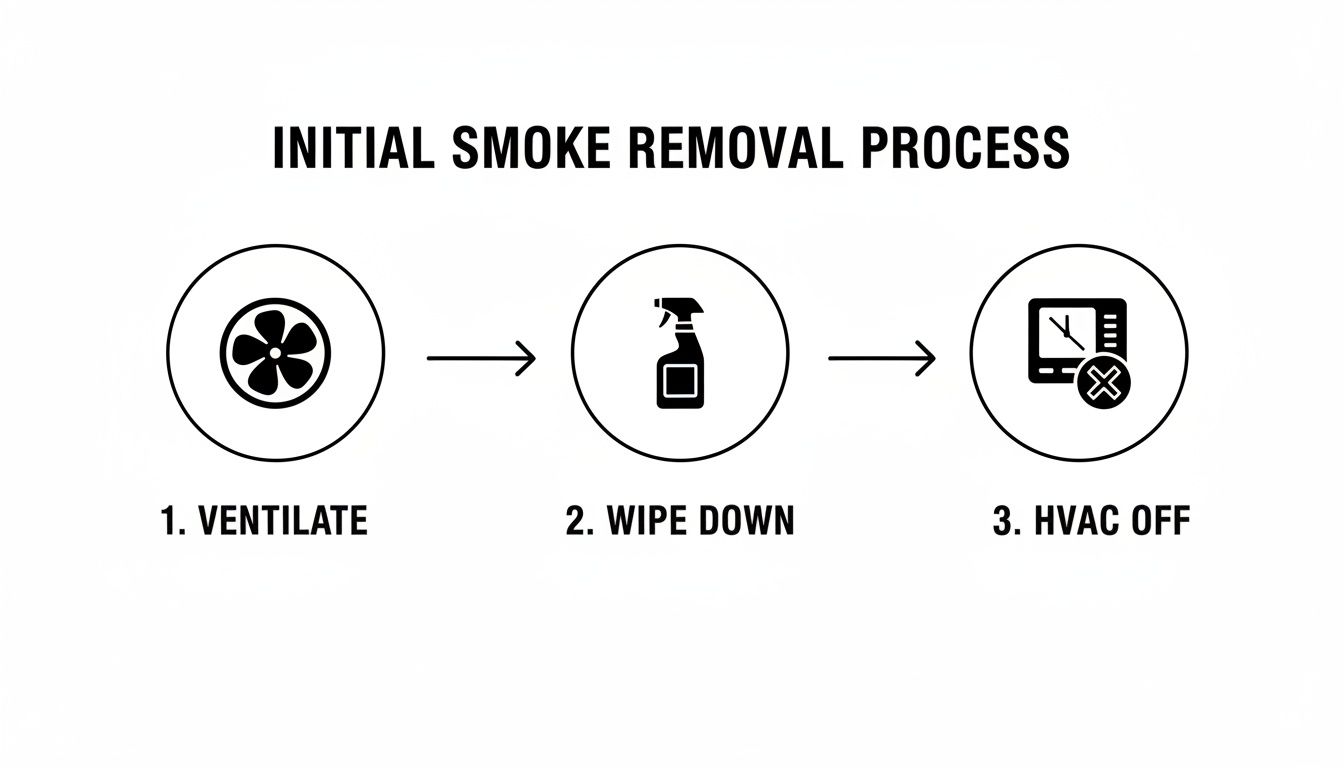
These initial actions, ventilating the space, wiping down surfaces, and shutting off the HVAC to stop the smell from spreading, are non-negotiable. If you haven't done them, stop and do them now.
Tackling Soft, Porous Surfaces
Upholstery, carpets, curtains: these are the real smoke sponges in your home. They soak up those oily smoke particles deep into their fibers, which is why a simple surface spray just won't cut it.
Your first move should be to gather anything that can go into the washing machine. Strip the curtains, pillow covers, blankets, and any small rugs. Wash them like you normally would, but add a cup of white vinegar or a good enzyme cleaner to the cycle. This helps to chemically break down the smoke molecules, not just rinse them away.
For the big stuff like carpets and couches, you'll have to get more hands-on.
Baking Soda Is Your Friend: Don't be shy with it. Sprinkle a thick layer of baking soda over your carpets and upholstered furniture. Let it sit for at least a few hours (overnight is even better) to draw out the odors before you vacuum it all up.
Bring in the Steam: A steam cleaner is a game-changer. You can rent one if you don't own one. The combination of hot water and a cleaning solution gets deep into the fibers to loosen and extract those trapped smoke particles.
Use an Enzyme Cleaner: These cleaners are designed to biologically destroy the compounds causing the odor. Think of them as Pac-Man for smells; they eat the source instead of just masking it.
For furniture, knowing the best way to clean a fabric sofa is key to getting those deep-seated smells out without damaging the material.
Many homeowners turn to common household items to absorb odors before moving on to deeper cleaning. Here’s a quick rundown of some popular DIY methods.
DIY Smoke Odor Removal Methods
Method | How It Works | Best For | Limitations |
|---|---|---|---|
Baking Soda | Absorbs odors and moisture. Sprinkle on surfaces and vacuum. | Carpets, upholstery, and small enclosed spaces. | Can be messy; requires long dwell times. |
White Vinegar | The acetic acid neutralizes alkaline smoke molecules. | Wiping hard surfaces; bowls left out to absorb airborne odors. | Strong initial smell; not suitable for all materials. |
Activated Charcoal | Highly porous, it traps odor molecules from the air. | Placing in bowls around a room or in sachets. | Works slowly; less effective for embedded odors. |
Coffee Grounds | Fresh grounds can absorb and mask smoke smells. | Small areas like cars or closets. | Primarily masks odors; can stain light-colored fabrics. |
While these methods are great starting points, they often aren't enough to completely eliminate severe smoke odor on their own.
Cleaning Hard Surfaces Thoroughly
Hard surfaces might not absorb odors like fabrics do, but they get coated in a nasty, sticky film of smoke residue. This film is on your walls, ceilings, floors, and even your light fixtures.
For a light cleaning, a simple mix of vinegar and water can do the trick. But for that stubborn, yellowing smoke residue, you might need to bring out the big guns. Trisodium phosphate (TSP) is what the pros often use. It's a powerful chemical, so be sure to wear gloves, protect your eyes, and get some fresh air flowing before you start mixing.
Pro Tip: Always, always test your cleaning solution on a small, hidden spot first. A quick test behind a piece of furniture can save you from ruining an entire wall of paint or a wood floor. After you're done cleaning, wipe everything down one last time with a cloth and plain water to get rid of any leftover chemical residue.
Don't sweat the small stuff, clean it! Wipe down every light switch, doorknob, window frame, and baseboard. These are the spots everyone forgets, and they can hold onto enough residue to keep that stale smoke smell around. If you’ve done all this and the smell still lingers, it’s probably time to look at your HVAC system. A good next step would be learning more about air duct deep cleaning.
Your HVAC System Is the Hidden Odor Source
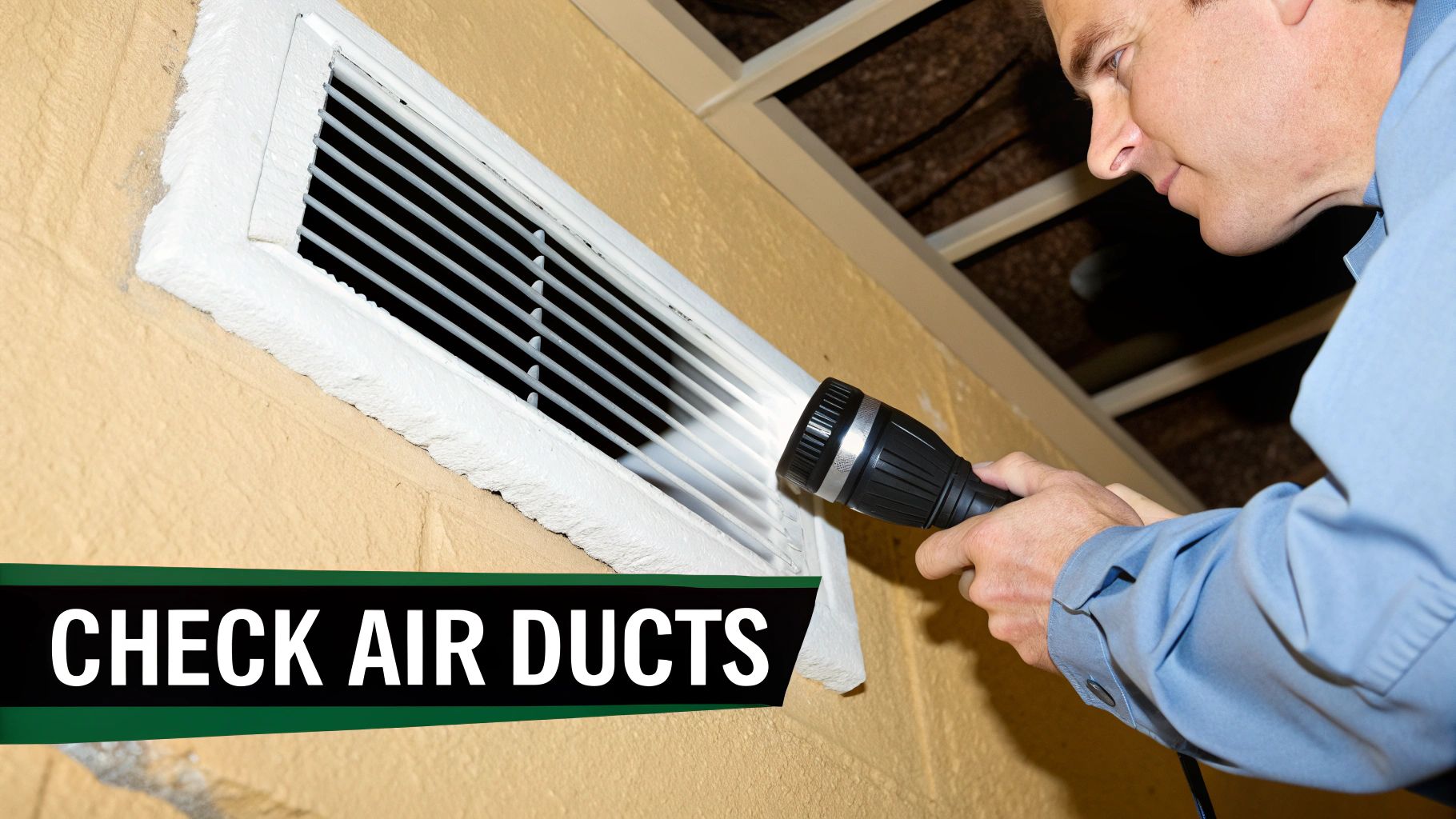
If you've scrubbed every surface and washed every fabric but a stubborn smoke smell keeps returning, it's time to look up. Your home’s heating, ventilation, and air conditioning (HVAC) system is often the forgotten culprit, acting as a superhighway for smoke particles. When smoke enters your home, the HVAC system dutifully circulates it everywhere.
These microscopic, oily particles settle inside the vast network of air ducts, coating the interior surfaces. Every time your furnace or air conditioner kicks on, it re-releases this stale, smoky air, pushing it back into every single room. This is why you can clean the living room spotless, only to have it smell like smoke again an hour later.
Why Air Duct Cleaning Is Essential
Simply spraying deodorizers into your vents won't solve the problem; it’s like trying to wash a dish that’s still covered in grease. The only permanent solution is to remove the source of the odor. Professional air duct cleaning is designed to do exactly that, addressing the entire system where smoke particles hide.
Specialists use high-powered vacuums and specialized brushes to dislodge and extract the buildup from your ductwork. This isn't just a surface-level cleaning. It's a thorough process that targets the entire circulatory system of your home.
The process removes years of accumulated dust, allergens, and, most importantly, the embedded smoke residue. By cleaning the ducts, you’re not masking the smell, you are physically removing the particles causing it. This ensures the odor is gone for good, not just temporarily hidden.
This level of cleaning goes beyond what a homeowner can typically achieve. Professionals have the right equipment to access the full length of the ducts and clean other critical components. For those interested in system maintenance, you can learn more about how to clean HVAC coils for peak system performance in one of our other guides.
Beyond Odor Removal The Added Benefits
Cleaning your ducts to get rid of a smoke smell also brings several other significant advantages for your home and health. A clean HVAC system is an efficient one.
Improved Air Quality: Removing smoke residue, dust, and other contaminants from your ducts means the air circulating through your home is cleaner and healthier to breathe.
Enhanced HVAC Efficiency: Layers of dust and debris force your system to work harder to push air through. Clean ducts allow for better airflow, which can reduce strain on your system and potentially lower your energy bills.
Reduced Allergens: Ductwork can be a breeding ground for allergens like dust mites and mold. A professional cleaning removes these irritants, providing relief for allergy and asthma sufferers.
The demand for these deep-cleaning solutions reflects a growing awareness among homeowners that sprays are not enough. The global odor removal services market, valued at $5,500 million in 2025, is expected to reach $8,900 million by 2033. This growth is driven by the understanding that neglected ducts with smoke residue can slash HVAC efficiency by 20-30%.
For persistent smoke smells, cleaning your air ducts isn't just a suggestion; it is the essential final step.
Knowing When to Call a Professional
Sometimes, no matter how much vinegar and baking soda you use, that stubborn smoke smell just won't quit. You’ve scrubbed, steamed, and aired the place out, but the odor lingers. While DIY methods are fantastic for tackling minor or recent smoke issues, it's important to know when you're fighting a losing battle. Recognizing the limits of home remedies is the first step toward actually solving the problem for good.
You're likely looking at a job for the pros if the odor is deeply embedded from years of exposure. Think about a house where a heavy smoker lived; those smoke particles have had years to seep into drywall, creep under the subflooring, and settle deep into the insulation. Another dead giveaway is damage from a house fire. The residue and soot left behind are far more complex and hazardous than anything from a burnt dinner.
The Limitations of DIY Methods
Let's be real: store-bought cleaners and rental steam cleaners can only do so much. They're great for surface-level grime but just don't have the muscle to get to the microscopic smoke particles trapped deep inside porous materials or circulating endlessly through your HVAC system.
Here are a few scenarios where it's almost always time to bring in professional help:
The Smell Keeps Coming Back: You’ve deep-cleaned everything, but the moment you close the windows for a day, the stale smoke odor returns.
You Can See Yellowish, Greasy Stains: If there's a visible film on your walls and ceilings that regular cleaners can't cut through, you're dealing with heavy contamination.
Decades of Thirdhand Smoke: The chemical residue left behind from long-term tobacco use is notoriously stubborn and requires specialized equipment to remove.
Any Kind of House Fire: Fire damage isn't just about the smell. It involves professional remediation to handle the odor and the potentially toxic materials left behind.
Professionals have access to powerful tools like ozone generators or thermal foggers. This equipment is designed to find and neutralize odor molecules right at the source, reaching particles that simple cleaning could never touch. It's a whole different level of clean.
Advanced Solutions for a Permanent Fix
When you call in the experts, they’re bringing more than just stronger cleaning solutions. They come with advanced technology designed to decontaminate your entire home environment. One of the most effective tools in the arsenal today is ActivePure, an air purification system that goes way beyond traditional filters.
Originally developed in partnership with NASA, ActivePure technology doesn't just sit back and wait for pollutants to drift into a filter. It proactively sends out "scrubbing" molecules into your air and onto surfaces. These molecules actively seek out and destroy contaminants like smoke particles, viruses, and bacteria.
Installing a system with ActivePure technology is a definitive move to ensure that any last, lingering odor-causing particles are completely neutralized. It's how you get back to a truly clean and healthy home, knowing the smoke smell is finally gone for good.
Common Questions About Smoke Odor Removal
When you're dealing with smoke remediation, a lot of questions pop up. Getting clear, straightforward answers is the key to fixing the problem right the first time and avoiding common mistakes that can actually make things worse.
One of the first things people always ask is how long it takes for the smell to finally go away. The honest answer? It really depends on how bad it is. A small kitchen mishap might clear out in a few hours if you open the windows. But for deeply embedded odors from years of tobacco use or a house fire, that smell can linger for years if the source particles aren't completely removed from materials and the HVAC system.
Can I Just Paint Over a Smoky Wall?
It’s a tempting shortcut, I get it. But just painting directly over smoke-stained walls is a classic mistake. That oily, sticky residue from smoke will eventually bleed right through the new paint, and the nasty smell will come back with a vengeance.
To do the job correctly, you absolutely have to prep the surface first.
Thorough Cleaning: Start by washing the walls with a powerful degreasing cleaner specifically made to cut through smoke residue.
Odor-Blocking Primer: Once the wall is clean and completely dry, you need to apply a specialized stain-blocking and odor-sealing primer. This creates a crucial barrier that traps any remaining particles and smells.
Final Paint Coats: Only after you've primed the surface should you apply your final coats of paint. This is the only way to get a lasting, truly odor-free finish.
It's not just smoke, either. Many homeowners run into issues with other stubborn smells after a project. For example, knowing How to Get Rid of Paint Odors is a common concern, and many of the same principles of deep cleaning and priming apply there, too.
Are Air Purifiers Effective Against Smoke?
High-quality air purifiers can be a huge help, especially models that have both a HEPA filter and an activated carbon filter. They do an excellent job of capturing the smoke particles that are floating around in the air, which can significantly cut down on the immediate smell in a room.
But here’s the catch: they can't do anything about the odor-causing particles that have already settled and worked their way into your walls, furniture, carpet, or air ducts. Think of them as a great tool for managing ongoing air quality, not a complete solution for a smell that’s already there.
Ultimately, knowing the right steps makes all the difference. If you're still scratching your head about your home's ventilation system, it’s worth finding out if cleaning air ducts really makes a difference for your home's air. For stubborn smoke odor, it's often the missing piece of the puzzle.
For a definitive solution that removes smoke particles at the source, trust the experts at Purified Air Duct Cleaning. We offer comprehensive air duct cleaning and ActivePure installation to ensure your home's air is fresh, clean, and healthy. Contact us for a free quote today at https://www.purifiedairductcleaning.com.