

Air Duct Deep Cleaning: Your Complete Guide
An air duct deep cleaning is a much more intensive process than a standard service. It's designed to completely clear out years of caked-on dust, stubborn allergens, and all the other debris that gets trapped deep inside your HVAC system. The goal isn't just to clean, but to restore airflow and make a real, noticeable improvement in your home's air quality.
Is Air Duct Deep Cleaning Really Worth It

This is a question that goes beyond simple tidiness; it's about the health of your home and the efficiency of your HVAC system. A deep clean isn't just a more powerful vacuuming. It targets the ground-in contaminants that a routine cleaning might not touch. For many homeowners, this service is the turning point for finally getting control over their indoor environment.
Think about a family that’s constantly dealing with allergies, no matter how much they clean the house. A deep air duct cleaning can be the solution that finally removes those hidden pockets of pollen, pet dander, and dust mites that are constantly being circulated. This isn't just marketing, it's about getting to the root of the problem.
Key Benefits of a Deep Cleaning
A proper deep cleaning offers some major advantages over a quick, surface-level job. It's a true investment in your family's health and the longevity of your expensive HVAC equipment.
Here are the main benefits you can expect:
Significant Allergen Reduction: By dislodging and removing deeply embedded allergens, a deep clean can dramatically reduce the triggers that cause asthma and allergy attacks. A light cleaning can sometimes just stir these particles up, making things worse temporarily.
Neutralization of Persistent Odors: Lingering smells from pets, smoke, or last night's fish dinner can get trapped in the gunk lining your ductwork. A deep clean scrubs the system clean, eliminating these stubborn odors at their source.
Improved HVAC Efficiency: When your ducts are choked with debris, your furnace and air conditioner have to work much harder to push air through. Cleaning out these blockages allows your system to run the way it was designed to, which can help lower your energy bills.
The value of this is becoming more widely understood. The air duct cleaning market was valued at USD 4.9 billion back in 2020 and is only expected to grow as more people realize how much indoor air quality affects their well-being.
Think of your home’s ductwork as its respiratory system. When it gets clogged or contaminated, it doesn’t just affect one room. It impacts the health of the entire home, from the air you breathe to the efficiency of your heating and cooling.
When Is a Deep Clean Necessary
So, how do you know if you really need this level of service? For routine upkeep, a standard cleaning is often perfectly fine. However, an air duct deep cleaning becomes a necessity in certain situations.
For instance, if you've just finished a major home renovation, all that construction dust has to go somewhere, and a lot of it ends up deep inside your HVAC system. The same goes for if you've discovered signs of a mold or pest infestation; a simple vacuum just isn't going to cut it.
If you're on the fence, you can explore our guide that dives into whether cleaning air ducts really makes a difference for different situations. For people facing these more serious contamination issues, the answer is almost always a resounding yes.
Choosing Your DIY Cleaning Toolkit
Trying to deep-clean your air ducts without the right equipment is a bit like trying to wash your car with a toothbrush. You might make a small dent, but you're not going to get the job done right. Your regular household vacuum just doesn't have the muscle to pull out the heavy, caked-on gunk hiding deep inside your ductwork. To tackle this job effectively, you need a specific set of tools.
The absolute cornerstone of any serious DIY duct cleaning project is a high-powered shop vacuum. You'll want to look for one with a strong horsepower rating, at least 5-6 peak HP, and make sure you have long, flexible hose extensions to reach all the way down your ducts. Without that kind of power, you're just kicking up dust, not actually removing it from your home.
Must-Have Equipment for a DIY Deep Clean
Simply sucking up loose debris isn't enough. To really dislodge and pull out the stubborn contaminants, you need a few more things. This is the bare-minimum toolkit for a clean that actually makes a difference.
High-Powered Shop Vacuum: This is your main collection tool. Its job is to create powerful negative pressure to pull all the dislodged dirt out of the system for good.
Specialized Duct Cleaning Brushes: You'll need a set of rotating or agitating brushes that you can attach to a drill. These are what scrub the inside walls of the ducts, breaking free the buildup that suction alone will never touch.
Safety Gear: Do not skip this part. Goggles and a quality dust mask or respirator are non-negotiable. You’re going to be kicking up a lot of fine particles, and you don't want them in your eyes or lungs.
Remember, the goal isn't just to suck out loose dust. The real work of an air duct deep cleaning is using mechanical agitation from brushes to scrub the duct walls clean before the vacuum removes the debris.
Nice-to-Have Tools for an Easier Job
While the essentials will get you through it, a couple of extra items can make the whole process smoother and give you better results. If you’re really committed to doing a thorough job, think about adding these to your setup.
Inspection Camera: A small borescope camera that hooks up to your phone is invaluable. It lets you see inside the ducts to find problem spots before you start and, just as importantly, to check your work when you're done.
Air Compressor with Blower Nozzle: This can be a huge help for blasting debris out of tight corners and pushing it toward your shop vac's hose.
Before you go all-in and buy everything, it’s smart to weigh the costs. For a deeper dive, our comprehensive air duct cleaning and sanitizing guide for homeowners offers much more detail on what’s involved in both DIY and professional cleaning.
The financial side of things is a major consideration. Let's break down what you might spend on tools compared to hiring a pro.
DIY Tool Costs vs. Professional Service Fees
Item / Service | DIY Estimated Cost | Professional Service Estimated Cost |
|---|---|---|
High-Powered Shop Vacuum (Purchase) | $150 - $300 | N/A |
Duct Cleaning Brush Kit (Drill Attachment) | $50 - $100 | Included in Service |
Borescope Inspection Camera | $40 - $80 | Included in Service |
Safety Gear (Goggles, Respirator) | $30 - $60 | Included in Service |
Equipment Rental (Pro-Grade Vacuum/Brushes) | $100 - $250 per day | N/A |
Total DIY Outlay (Purchase) | $270 - $540+ | N/A |
Professional Service Fee | N/A | $450 - $1,000+ |
As you can see, purchasing all the necessary equipment can easily run you several hundred dollars. Renting might seem cheaper, but you're often getting less powerful gear and are under a time crunch. When you compare these figures to professional service fees, the DIY route isn't always the budget-friendly option, especially when you factor in your own time and the superior results from professional-grade equipment.
A Practical Guide to Cleaning Your Ducts
Taking on an air duct deep cleaning project is more about a careful, methodical approach than brute force. It’s a hands-on job, and when you do it right, you can really feel a difference in your home's air quality. This guide will walk you through the whole process, from the critical prep work to the final system check, making sure your hard work pays off safely and effectively.
The first thing you do, before anything else, is kill the power. This is non-negotiable. Head to your circuit breaker and flip the switches for both your furnace and air conditioner to the "off" position. This simple step prevents the system from kicking on unexpectedly while you're working, which could cause serious injury or blast a cloud of dust through your house.
Once you’re sure the power is off, the next goal is to create what's called negative pressure. This is a key concept in professional duct cleaning. You're basically setting up a powerful shop vacuum to constantly pull air out of the ductwork. Why? Because it ensures all the gunk you loosen gets sucked straight into the vacuum instead of blowing back into your rooms.
Setting Up for Success
To get that negative pressure, you need to seal off every supply and return register in your home. Painter's tape is your best friend here. For a really tight seal, you can stuff some paper towels or cardboard into the vent opening before taping it over. The only register you leave open is the one you're actively cleaning.
Now, head to your basement or attic and find the main trunk lines. These are the big, central ducts that branch off to the individual rooms. You’ll need to carefully cut a small access hole into these lines, just big enough to insert your shop vacuum hose. Connect the hose, then seal up the area around it with more tape to maximize suction.
It might feel like a lot of setup, but this is the foundation for a clean job. A common mistake DIYers make is skipping these steps, which usually ends with a bigger mess than they started with.
This infographic gives you a quick rundown of the essential tools you’ll want to have on hand.
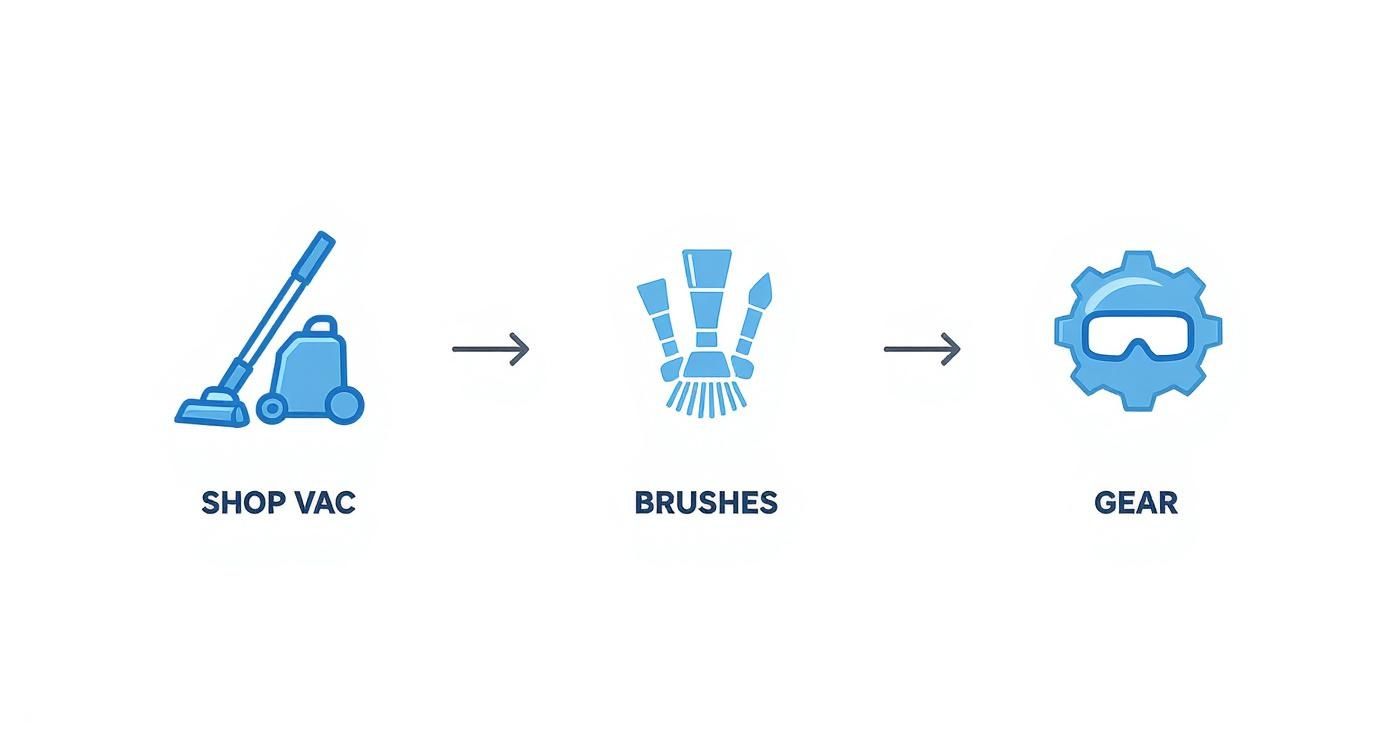
As you can see, it's all about having a powerful vacuum, the right kind of brushes, and the proper safety gear to do the job right.
Cleaning Individual Ducts and Main Lines
With your shop vac running and pulling air through the system, it's time to get to work. Start in the room farthest from your furnace. Peel the tape off one supply register, this is where the real cleaning begins.
Here’s the process for each branch duct:
Loosen the Gunk: Attach your specialized rotating brush to a drill and feed it into the duct. Push it as far as you can, letting the spinning bristles scrub the inside walls and break loose all that caked-on dust and debris.
Pull it Back: While the brush is still spinning, slowly pull it back out. The negative pressure from your shop vac will whisk away all the loosened particles, pulling them down toward the main line and into your vacuum.
Rinse and Repeat: After you've cleaned that duct, seal the register back up with tape. Then, move on to the next one. You'll need to work your way through every single supply and return vent in your house, one by one.
Once you've tackled all the smaller branches, you'll focus on the main supply and return trunk lines. Use your brush and the vacuum hose to clean out these larger ducts as much as possible.
Pro Tip: Keep an eye on your shop vacuum's filter and canister. A clogged filter kills your suction power, making your job much less effective. Empty the canister whenever it gets full to keep the vacuum running at peak performance.
Addressing Overlooked Components
A true air duct deep cleaning goes beyond just the ductwork. To really finish the job, you have to clean the key components of the air handler unit itself.
Blower Motor and Compartment: Carefully vacuum the blower motor, the fan blades, and the entire compartment. This area tends to get covered in a fine, sticky dust that hurts the system's efficiency.
Evaporator Coils: If you can get to them, gently clean the evaporator coils. Use a soft brush and a no-rinse coil cleaner spray, and make sure to follow the product's directions. These coils have delicate fins, so be gentle.
The demand for cleaning the entire system, not just the ducts, is growing. In fact, the global HVAC cleaning services market was valued at US$ 12.41 billion in 2024 and is expected to hit US$ 18.91 billion by 2034. This trend shows that more people are understanding that every part of the HVAC system needs to be maintained for better performance and air quality. You can find more industry insights about this on factmr.com.
After every part is clean, you can remove your shop vacuum hose. Patch the access hole you made with a piece of sheet metal and some foil tape to create a permanent seal. Finally, pull the tape off all your registers, pop in a new furnace filter, and turn the power back on.
Common Duct Cleaning Mistakes to Sidestep
Taking on an air duct deep cleaning project yourself can be really satisfying. But a few common missteps can easily turn all that hard work into wasted effort, or worse, a costly repair bill. Knowing what not to do is just as important as knowing the right steps.
Let's be honest, the goal is to improve your home's air, not just stir up a decade's worth of dust and spread it around.
One of the biggest mistakes we see is underestimating the sheer power needed for this job. Many homeowners think their regular household vacuum will do the trick. Unfortunately, it doesn't have nearly enough suction to create the negative pressure required to pull heavy, caked-on debris out of a long stretch of ductwork.
When you use a weak vacuum, you're not actually removing the gunk. You're just dislodging the fine dust, pushing it deeper into the system, or kicking it right back into your living space. This can actually make your indoor air quality worse than before you started. A powerful shop vacuum with a high horsepower rating is the absolute minimum you should be using.
Forgetting Key HVAC Components
Another major oversight is tunnel vision on the ducts themselves while ignoring the heart of the system: the air handler. The blower motor, fan blades, and evaporator coils are magnets for the exact same dust and allergens you're trying to get rid of.
If you scrub the pathways but leave the source dirty, the system will just blast new contaminants through your freshly cleaned ducts the second you turn it back on.
It’s like mopping your kitchen floor but never wiping your muddy boots before you walk inside. You’re undoing your hard work almost immediately. A true air duct deep cleaning has to include a careful, thorough cleaning of these central components to be effective.
The most successful DIY cleanings are comprehensive. Neglecting the air handler or using improper tools can not only lead to a failed cleaning but can also cause significant system strain or damage over time.
Being Too Aggressive with Ductwork
It’s easy to think that more force equals a better clean, but that mindset can be destructive, especially with flexible ductwork. These pliable ducts, which you’ll often find in attics and crawlspaces, are basically a thin layer of plastic supported by a wire coil. They are incredibly easy to tear or puncture with aggressive brushing or sharp tools.
A small tear might not seem like a big deal, but it can cause major headaches down the road.
Massive energy loss occurs as your heated or cooled air leaks into unconditioned spaces like the attic.
Introduction of new contaminants happens when the tear pulls in insulation fibers, dust, and even pest droppings from outside the duct system.
Reduced airflow to certain rooms creates those annoying hot or cold spots in your home.
Getting too rough can quickly turn a simple cleaning project into a complicated and expensive repair. It's vital to use the right brushes and a gentle touch.
If you're worried about this part, our article on whether air duct cleaning can cause damage offers great insights into how to tackle the job safely. By avoiding these common pitfalls, you can ensure your efforts lead to genuinely cleaner air and a more efficient HVAC system.
Deciding When to Call a Professional
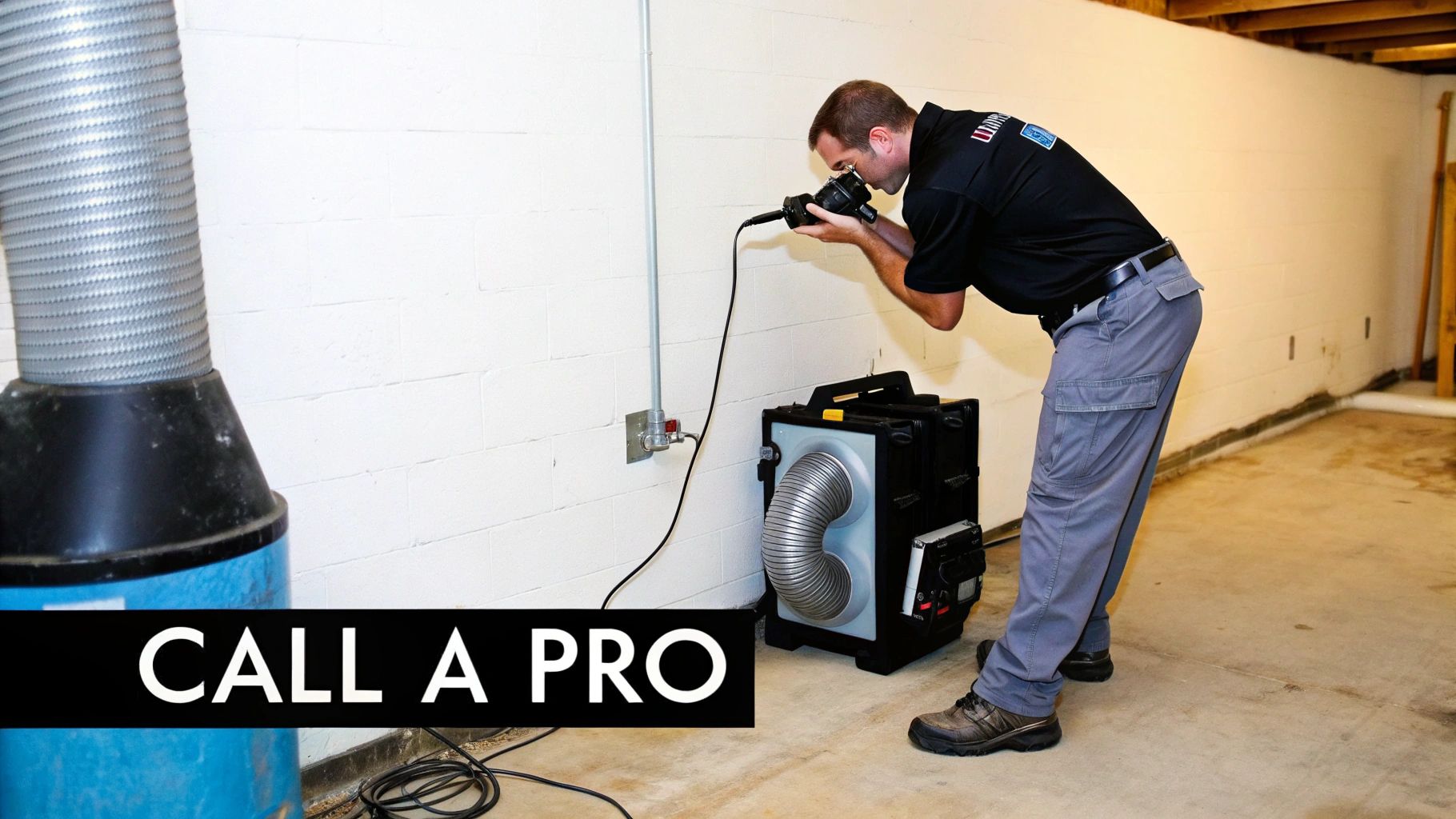
While you can definitely handle light maintenance with a DIY approach, a true air duct deep cleaning is a different beast. It often requires expertise and equipment that most homeowners just don't have lying around in the garage. Knowing your limits is key, not just for getting the job done right, but for protecting your health and avoiding accidental damage to your HVAC system.
There are some situations where it's crystal clear that it's time to put down the shop vac and pick up the phone. These aren't minor cleaning tasks; they are complex problems that need a professional eye and specialized tools to fix safely and effectively.
Red Flags That Demand an Expert
If you come across any of these scenarios during your inspection, take it as a sign that the job is bigger than a weekend project. Trying to tackle these issues without the right training can easily make a bad situation much, much worse.
Here are the definite signs it's time to call in the pros:
Significant Mold Growth: If you see visible mold or catch that distinct musty smell coming from your vents, this is a serious health hazard. Professionals are trained in containment and use antimicrobial treatments to remove mold without spreading spores all over your house.
Pest Infestations: Finding droppings, nests, or even dead rodents in your ductwork is more than just gross, it's a biohazard. An expert can safely clear out the infestation, sanitize the entire system to kill pathogens, and help you figure out how the critters got in.
Older Homes with Potential Asbestos: If your home was built before the 1980s, there's a chance your ductwork could contain asbestos. Disturbing these materials is incredibly dangerous, and only a certified professional is equipped to handle them safely.
A professional service isn't just about a bigger vacuum. It’s about having the right diagnostic tools, like video inspection cameras, to see every inch of the system and the expertise to handle hazardous materials correctly.
The Professional Equipment Advantage
The biggest difference between a DIY job and a professional air duct deep cleaning really boils down to the machinery. Reputable companies use powerful, truck-mounted negative air machines that create suction far beyond anything a consumer-grade shop vacuum can produce.
This incredible power ensures that every bit of loosened debris, from fine dust to chunky buildup, is pulled completely out of your home and contained. Pros also use specialized tools like high-powered air whips and rotating brushes that can snake through the entire length of your ductwork, scrubbing corners and surfaces that a DIY setup could never hope to reach.
To learn more about what prompts a cleaning, check out our definitive guide on when to clean your air ducts.
Thinking about the value of professional services is common for many home maintenance tasks, and it's helpful to see parallels, like understanding the value of professional cleaning services for solar panels. People are clearly catching on to its importance. The air duct cleaning market, valued at USD 3.77 million in 2025, is expected to jump to USD 6.31 million by 2033. This growth shows a rising awareness of just how critical clean air ducts are for a healthy home. You can find out more about these market trends on marketreportsworld.com.
Have More Questions About Duct Cleaning?
It's completely normal to have a few questions, even after walking through the entire process. An air duct deep cleaning is a serious investment in your home's health, whether you go the DIY route or bring in a pro. Getting the right answers helps you feel confident you're making the best call for your family and your wallet.
We've gathered some of the most common questions we hear from homeowners right here. Think of this as the last little bit of info you need to move forward.
How Often Should I Clean My Air Ducts?
For the typical home, scheduling a professional deep clean every 3 to 5 years is a great rule of thumb. That's usually frequent enough to keep significant buildup from hurting your air quality or making your HVAC system work overtime.
Of course, "typical" isn't everyone. You might want to consider cleaning them more often if you:
Live with family members who have bad allergies or asthma.
Have furry friends who shed a lot of hair and dander.
Just finished a big home renovation that kicked up a ton of dust.
Notice dust settling on your furniture almost immediately after you've cleaned.
Any of these situations will speed up the accumulation of gunk in your system, meaning you'll need to clean it out sooner.
Can Duct Cleaning Actually Improve My Health?
For many people, the answer is a resounding yes. Your air ducts can become a hidden reservoir for all sorts of irritants, think dust mites, pollen, pet dander, and even mold spores. Every time your HVAC system kicks on, it blasts those particles throughout your home for you to breathe in.
By getting rid of these contaminants at the source, an air duct deep cleaning can dramatically cut down on the triggers for allergy and asthma flare-ups. Many people find they breathe easier and feel more comfortable indoors, especially if they're sensitive to airborne junk.
The real magic of a deep cleaning is what we call "source removal." You're not just filtering the air; you're eliminating the years of accumulated allergens and pollutants hiding in your ductwork. That's a game-changer for true indoor air quality.
What Should I Look for in a Professional Service?
Picking the right company is just as crucial as deciding to get the cleaning done in the first place. A legitimate, high-quality service will show up with powerful, truck-mounted equipment and be completely transparent about their process from start to finish.
Make sure any company you consider is certified by the National Air Duct Cleaners Association (NADCA). This certification is your assurance that they follow strict industry standards. Always ask for proof of insurance and get a few detailed, written estimates to compare. Pricing can vary, so it's smart to understand the real cost of air duct cleaning to spot any red flags. A pro you can trust will be upfront about everything.
Ready to feel the difference a truly clean HVAC system can make? The certified technicians at Purified Air Duct Cleaning have the experience and the professional-grade equipment to bring your home’s air quality back to life. We offer thorough services across the Phoenix area, ensuring your family breathes nothing but clean, healthy air.