

Your Essential Guide to Preventing Dryer Fires at Home
Preventing a dryer fire really boils down to one simple habit: cleaning the lint filter after every single load. It sounds almost too basic, but this small action, paired with regular vent maintenance, is the most powerful way to stop the dangerous lint buildup that fuels these all-too-common house fires.
Think of it as your first and best line of defense.
The Overlooked Danger in Your Laundry Room
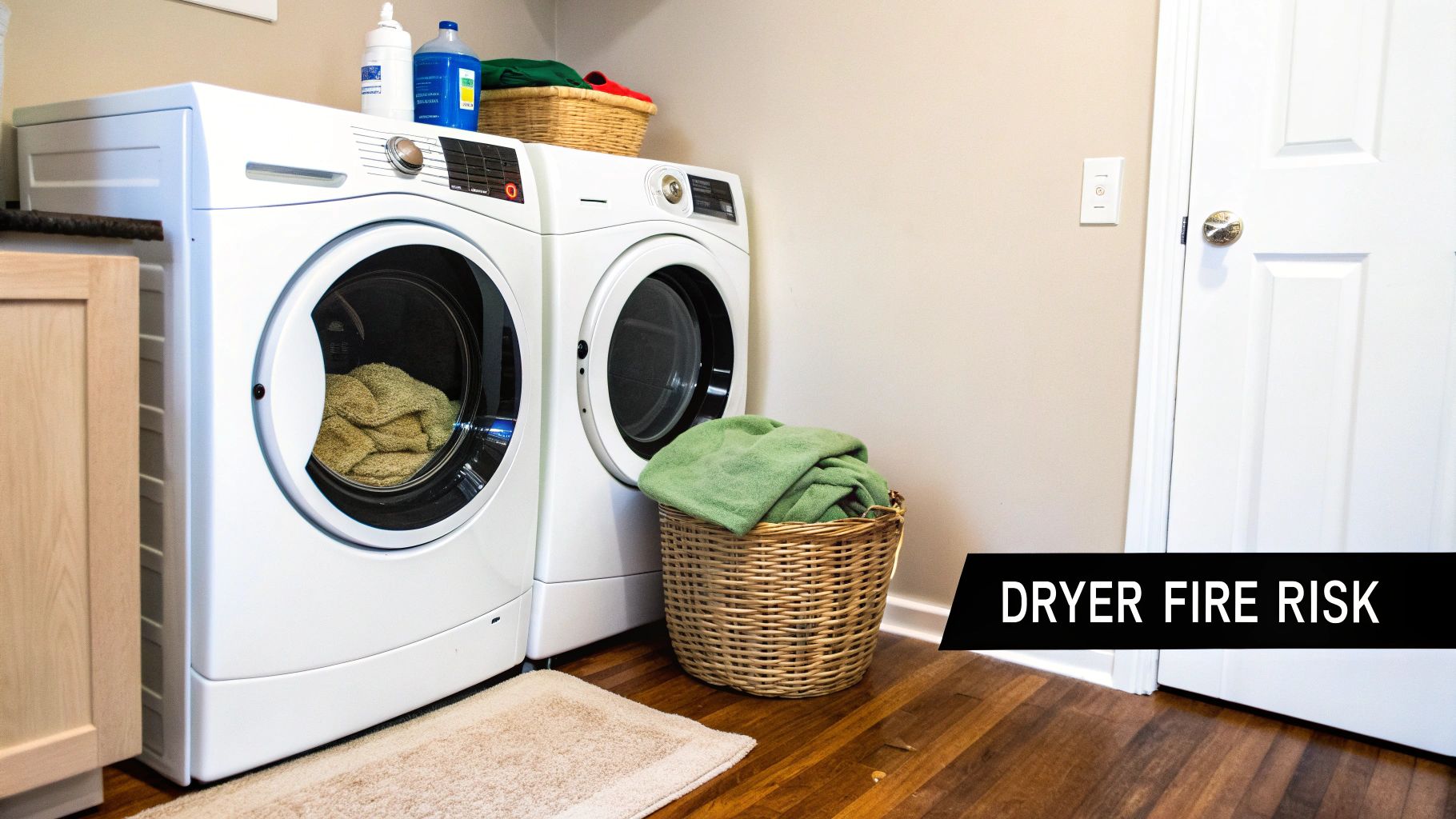
That gentle hum from the laundry room is one of the most comforting sounds of home, a sign that a chore is almost done. But lurking inside that everyday appliance is a serious risk we often ignore. A clothes dryer combines intense heat, powerful electrical components, and highly flammable lint, creating the perfect storm for a fire.
Many homeowners feel safe because they diligently clean the lint trap after each use. The real danger, however, is often hidden from view. Lint is made of tiny, combustible fibers from your clothes, and it’s incredibly good at getting past the filter. It works its way deep into the dryer’s mechanical parts and packs itself tightly throughout the entire exhaust vent system.
The Real Cost of Neglect
The statistics are pretty jarring. In the U.S., clothes dryers are linked to 92% of the nearly 16,000 structure fires that involve laundry appliances every year. These aren't just minor flare-ups; they lead to an estimated 15 deaths, 400 injuries, and a staggering $233 million in property damage annually.
Looking at these numbers, it’s clear this isn’t some freak accident. It’s a common, and thankfully, preventable problem.
To put it in perspective, here are the key takeaways.
Dryer Fire Risk at a Glance
Statistic or Factor | Impact |
|---|---|
Leading Cause | Failure to clean lint from the dryer and vents. |
Annual Fires | Responsible for nearly 16,000 home structure fires each year. |
Human Cost | Results in an estimated 15 deaths and 400 injuries annually. |
Financial Damage | Causes around $233 million in property loss every year. |
These figures highlight just how critical simple maintenance is. A few minutes of prevention can save you from becoming part of these statistics.
The number one cause of clothes dryer fires is a failure to clean them. It's a simple oversight that allows flammable lint to build up in hot areas, just waiting for a spark.
Creating a Safer Laundry Environment
The best way to protect your home is to be proactive. True dryer safety goes beyond just the machine itself and includes the entire space around it. A clean, organized laundry room is a much safer laundry room.
Clear the Clutter: Don't let piles of clothes, boxes of detergent, or other flammable items crowd the area around your dryer. Give it space.
Check Your Airflow: Avoid jamming the dryer right up against the wall. This can crush the flexible vent hose, severely restricting airflow and creating a serious fire hazard.
Get Organized: A well-organized space isn't just about looks; it's about safety. Smart options like custom laundry room cabinets and storage solutions can help you eliminate clutter, which in turn ensures your dryer has the proper ventilation it needs to run safely.
When you shift your mindset from worrying about a fire to actively preventing one, it becomes a simple part of your home maintenance routine. To build on this, take a look at our guide for creating a complete home fire safety checklist to keep your entire household protected.
Decoding the True Causes of Dryer Fires
While cleaning out that little mesh screen is a great habit, it’s really just the tip of the iceberg. Preventing a dryer fire means looking deeper into what actually turns this everyday appliance into a serious household hazard. The real culprits are often hiding in plain sight, deep inside the machine’s venting system and the way it was installed.
It all boils down to a simple concept: heat needs a way out. When airflow gets choked off, your dryer's high-limit thermostat, the safety switch that prevents overheating, is forced to work overtime. Eventually, this critical failsafe can burn out, letting temperatures soar high enough to ignite the highly flammable lint that's trapped inside.
The Problem with Restricted Airflow
Think of your dryer vent like the machine's lungs; it has to breathe. When that vent gets clogged up with lint, all that hot, moist air has nowhere to go. This blockage creates a dangerous feedback loop where intense heat builds up inside the dryer drum and the exhaust duct, dramatically increasing the risk of a fire.
Several things can contribute to this restricted airflow, and each one is a critical link in the chain of events that can lead to disaster.
Lint Accumulation: This is the primary fuel. Over time, tiny fibers slip right past the filter and get packed into every nook and cranny of the vent system, especially in sharp bends and long, hidden runs.
Crushed Hoses: It’s easy to do. Pushing the dryer too close to the wall can squash the flexible transition hose, creating an instant and severe blockage.
Improper Vent Materials: The kind of ductwork connecting your dryer to the outside world makes a huge difference in fire prevention.
Understanding these specific points of failure is key. We’ve put together a detailed guide exploring the seven key reasons that cause dryer fires which can help you spot the risks in your own laundry room.
Why Your Dryer Vent Material Matters
Not all dryer ducts are created equal, and believe me, choosing the wrong one can be a costly mistake. Some materials aren't just inefficient; they're an outright danger.
The absolute worst offender is the flimsy, white plastic flexible duct. This material is highly flammable and can easily catch fire itself. In fact, its use is banned by most modern building codes for this very reason. If you spot one of these behind your dryer, replacing it should be your top priority.
Another common but problematic choice is the flexible foil duct: the one that looks like a crinkled Slinky. Its ribbed design creates countless tiny ridges that are perfect for snagging and trapping lint. It also gets crushed easily, which obstructs airflow and creates another serious fire hazard.
The safest choice is always a rigid or semi-rigid metal duct. Its smooth interior surface lets lint pass through much more easily, significantly cutting down on dangerous buildup and even improving your dryer's efficiency.
The Hidden Risks of Modern Home Design
The way we build homes today has, believe it or not, made preventing dryer fires more complicated. Where a dryer is installed can dramatically influence its fire risk. A federal analysis of U.S. residential dryer fires found that about 80% of all clothes dryer fires in structures happen in homes. Newer houses often tuck laundry rooms into central locations like second‑floor hallways or closets. This means dryer ducts are often much longer and have more twists and turns.
This complex geometry is a recipe for lint buildup and reduced airflow, which in turn drives up the dryer's operating temperatures. To see the full details of this analysis, you can learn more about these residential fire findings.
Picture a common scenario: a second-floor laundry room. The vent has to travel a long way, often with several sharp 90-degree turns, just to reach an outside wall. Each one of those bends acts like a speed bump for airflow and a magnet for lint. A long, winding path like this is far more likely to clog than the short, straight vents often found in older homes with basement laundry rooms. This common design feature makes professional cleaning not just a good idea, but an essential safety measure for many modern families.
Your Actionable Dryer Maintenance Routine
Knowing what causes dryer fires is one thing, but turning that knowledge into a consistent habit is what actually keeps your home safe. Preventing a dryer fire isn't a one-and-done job. It's about building a simple, repeatable maintenance routine that becomes second nature. This guide breaks it all down into a practical schedule you can actually stick to.
The scary thing about a dryer fire is that it rarely happens out of the blue. It’s a slow creep: heat builds up, a blockage traps that heat, and eventually, something ignites.
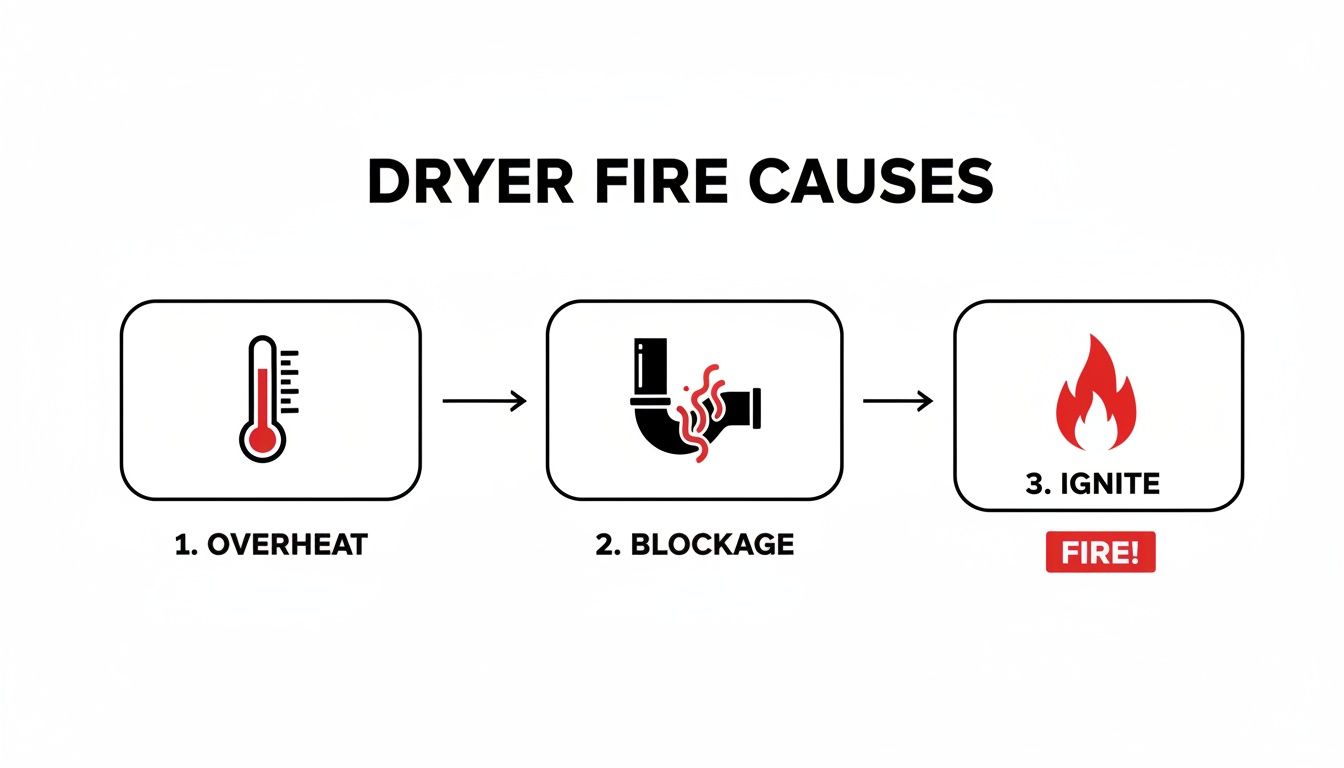
That blockage is the critical link in the chain. If you can prevent the blockage, the heat has a clear path to escape, and the risk of a fire plummets. That’s the entire goal of this maintenance plan.
After Every Single Load
This is it. The single most important habit you can form for dryer safety. It takes all of 15 seconds, but its impact is massive.
Make it a non-negotiable rule: clean the lint filter before every load. Don't just pull off the big gray fuzzball. Run your fingers over the screen to get all the little fibers, too. A clean screen means maximum airflow, which not only prevents overheating but also helps your clothes dry faster.
A clogged lint screen can force the dryer to work harder and run hotter, putting a ton of stress on the heating element and internal safety components. This simple step is your absolute first line of defense.
Think of it like trying to breathe through a dusty mask; the whole system has to struggle, leading to wear-and-tear and creating the perfect conditions for a dangerous lint backup.
Your Monthly Dryer Safety Check
Once a month, carve out about 15 minutes to give the area a little more attention. These quick checks tackle the hidden spots right around your dryer where flammable lint loves to hide.
Vacuum Around and Under the Dryer: Lint is sneaky. It escapes the dryer and settles on the floor, behind the machine, and underneath it. Use your vacuum's crevice tool to get all of it. This isn't just about cleaning; it's about removing fuel from a high-heat area.
Inspect the Lint Filter Housing: Pop out the lint screen and peer down into the slot. You'll likely see lint that slipped past the filter. A long, flexible brush or a vacuum hose attachment is perfect for reaching down and clearing out that hidden buildup.
Wipe Down the Drum: Grab a damp cloth and give the inside of the drum a quick wipe. This removes the sticky residue left behind by dryer sheets and fabric softeners, which can act like glue, trapping even more lint.
This little monthly routine is your best bet for stopping the slow, dangerous accumulation of lint right next to your dryer's heat source.
The Annual Deep Dive Inspection
At least once a year, it's time to inspect the entire system, from the back of your dryer all the way to the outside of your house. This is where you can catch the serious blockages before they become a real threat.
Your main focus is the transition duct, that's the flexible tube connecting your dryer to the wall. Carefully pull your dryer out a bit to get a good look. Is it kinked, crushed, or full of holes? Any of these things can choke off airflow.
Next, head outside and find your exterior vent cap. The little flap should move freely. Clear away any lint, leaves, grass clippings, or even bird nests that might be blocking the opening.
A Real-World Scenario
I once worked with a family who had two big golden retrievers. Pet hair is a nightmare for dryer vents; it’s fine, and it mixes with lint to create dense, heavy clogs. During their annual check, we found their transition duct was so badly kinked and packed with fur that it was almost 50% blocked. That's a fire just waiting for a spark. Simply replacing that crushed duct restored proper airflow instantly.
For many homeowners, this annual check is pretty straightforward. But if you have a long vent run with lots of twists and turns, a DIY approach might not cut it. If you're looking for guidance, our post on how to clean a dryer vent pipe has some great homeowner tips.
DIY Maintenance vs Professional Cleaning Tasks
While regular DIY checks are essential, it's just as important to know when to call in the pros. Some jobs just can't be done with a household vacuum and require specialized tools to be done safely and effectively.
Here's a breakdown of what you can handle versus when it's time to call a certified technician.
Task | DIY Action | When to Call a Pro |
|---|---|---|
Lint Screen | Clean it after every single load. | Never needed for this task. |
Dryer Surroundings | Vacuum behind and under the dryer monthly. | If you can't move the appliance safely on your own. |
Transition Duct | Inspect for kinks/damage. Clean or replace if it's short and accessible. | If the duct is torn, crushed, or you're unsure how to replace it correctly. |
In-Wall Ductwork | Inspect the exterior vent cap annually and clear visible debris. | Annually for a full-system cleaning, or immediately if you notice warning signs. |
Professional services, like ours at Purified Air Duct Cleaning, use high-powered vacuums and rotating brushes that scrub the entire length of the ductwork hidden inside your walls. It's a place you simply can't reach, and cleaning it is the only way to guarantee your entire system is clear, safe, and working at its best.
Warning Signs You Need a Professional Cleaning
Even if you’re great about keeping up with maintenance, your dryer vent can still develop deep, hidden clogs that a regular household vacuum just can't touch. These blockages are a serious fire hazard, but thankfully, your dryer will almost always give you a heads-up that trouble is brewing.
Learning to spot these subtle red flags is a huge part of preventing a disaster. Think of these signs as your dryer’s way of crying for help: it’s struggling to breathe. Ignoring them is like letting a small problem fester until it becomes a genuine danger, with the risk of a fire growing with every single load of laundry.
Extended Drying Times
This is usually the first thing people notice. A normal load of towels that used to take 45 minutes is now taking 70, 80, or even needs a second full cycle to get completely dry. Sound familiar? It’s a classic symptom of poor airflow.
Your dryer is working overtime, but the hot, moist air has nowhere to go. Instead of drying, your clothes are just tumbling around in a steamy, humid drum. This doesn't just waste a ton of energy and spike your utility bills; it also puts constant, unnecessary strain on the dryer’s heating element.
The Dryer Is Hot to the Touch
It's one thing for a dryer to feel warm during a cycle, but it should never be alarmingly hot. If the top or sides of your machine are too hot to comfortably keep your hand on, that’s a major warning sign.
This kind of excessive heat means the appliance is overheating because it can't ventilate properly. All that heat that should be getting pushed outside is trapped, building up inside the dryer’s casing and creating a dangerous situation for its internal electrical parts.
When a dryer's exterior gets that hot, it’s a sign that internal safety parts, like the high-limit thermostat, are being pushed to their absolute limits. If they fail from being overworked, you lose your last line of defense against a fire.
A Persistent Burning Smell
You should never smell something burning when you do laundry. Period. If you catch a whiff of a hot, scorched, or even musty odor coming from the laundry room, stop the dryer immediately and figure out what’s going on.
That smell is often the scent of lint starting to scorch from the intense heat trapped in the blocked vent. It’s a direct warning that lint has piled up dangerously close to the heating element and is getting close to its ignition point.
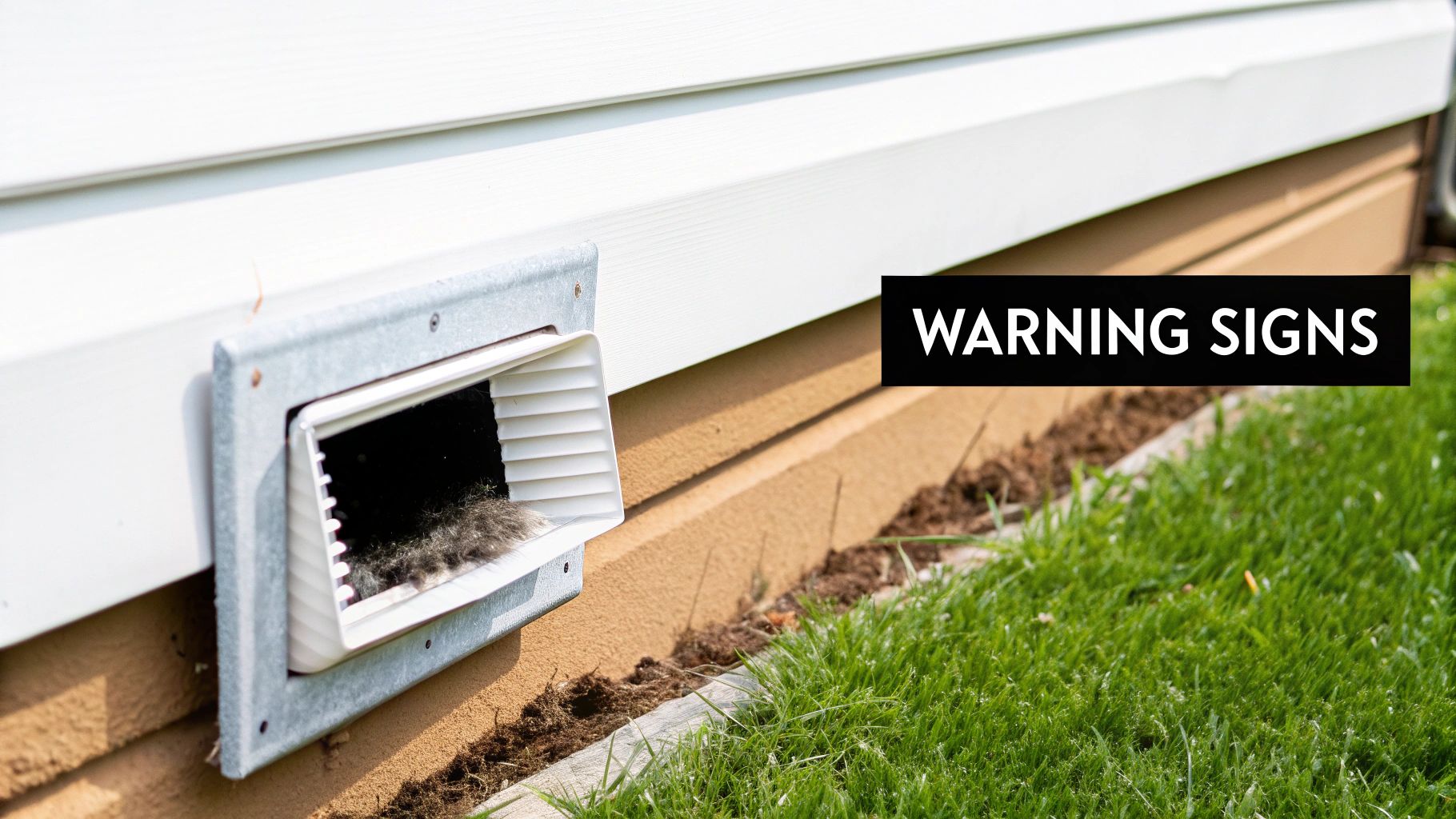
Visible Lint Around the Exterior Vent
Go outside and take a quick look at the vent flap where your dryer exhausts air. On a healthy system, you’ll see a clean exit point with a flap that opens and closes easily when the dryer is running.
If you see lint and fuzz caked on the grille or scattered on the ground right below it, that’s a clear sign of a problem. The blockage inside is so bad that it’s literally pushing lint back out the opening. It means the airflow is too weak to shoot the lint away from the house like it's supposed to.
For a deeper dive, our guide on the top 7 clogged dryer vent symptoms to watch for offers a more detailed checklist.
Why DIY Cleaning Isn't Always Enough
Look, monthly and yearly DIY checks are absolutely vital. But they mostly cover the parts you can see and reach: the lint trap, the flexible hose behind the dryer, and the vent opening outside. The real trouble often lurks in the long, unseen stretch of duct running through your walls, attic, or crawlspace.
Think about these common situations where a pro cleaning becomes non-negotiable:
Long or Complex Vent Runs: In many homes, laundry rooms aren't on an exterior wall. This means the vent has to travel a long way, often with several 90-degree bends. Every single turn is a perfect spot for lint to get trapped and build up, and your shop vac just isn’t going to get through them.
Bird Nests or Other Obstructions: It happens more than you'd think. Birds and rodents love to build nests inside exterior vent openings, creating a solid blockage almost overnight.
Compacted Lint: Over the years, that fluffy lint can become so tightly packed that it’s almost like a solid plug. Breaking that kind of clog apart requires specialized tools, like powerful vacuums and spinning brushes designed for ductwork.
Trying to clear these deep clogs yourself can actually make things worse. You might just compact the lint further down the line or, even worse, accidentally disconnect the ductwork inside the wall. A professional service like Purified Air Duct Cleaning has the right gear and know-how to clean the entire system, from the back of your dryer all the way to the outside, ensuring a completely clear and safe path for heat to escape.
Creating Your Dryer Fire Emergency Plan
Even with the best preventive maintenance, you can’t eliminate the risk of a dryer fire entirely. That’s why a solid, rehearsed emergency plan is just as vital as cleaning out your lint trap. When a fire breaks out, there's no time to think, only to react.
A plan that everyone knows by heart is what turns chaos and panic into focused, life-saving action. The goal is straightforward: get everyone out safely and let the professionals do their job.
Immediate Actions to Take
The second you suspect a dryer fire, whether you see smoke, smell something burning, or hear odd noises, your priorities have to shift instantly. This isn't the time to investigate or grab your wallet. Your one and only job is getting everyone to safety.
Those first few seconds are absolutely critical.
Evacuate Immediately: Yell "Fire!" to make sure everyone in the house hears you. Get out of the home right away. Don't waste precious seconds trying to find phones or pets if it causes any delay.
Close Doors Behind You: It’s a simple action, but closing doors as you leave can dramatically slow the spread of flames and smoke by cutting off the fire's oxygen.
Call 911 from a Safe Location: Once you’re outside and a safe distance from the house, call 911. Give the operator your address and tell them you have a dryer fire. Don't hang up until they tell you to.
Never, ever assume someone else has already called for help. Make the call yourself to ensure firefighters are on their way.
What You Must Never Do
In the heat of the moment, your instinct might be to fight the fire yourself, especially if it seems small. This is a dangerous, often tragic mistake. A seemingly minor fire can become an uncontrollable inferno in the blink of an eye.
Never open the dryer door to see what's going on. Opening that door gives the fire a sudden rush of oxygen, which can cause an explosive flare-up. You’re risking severe burns and turning a contained fire into a fast-moving disaster.
Creating and Practicing Your Family Plan
An emergency plan is useless if it only exists on paper. You have to sit down with your family and walk through a clear, simple procedure that even the youngest kids can remember and follow.
Here’s a basic framework to get you started:
Establish Two Exits: For every room in your house, figure out two different ways to get out.
Choose a Safe Meeting Spot: Pick a specific, permanent landmark outside and a safe distance from your home. A neighbor’s mailbox, a big tree across the street, or the end of the driveway are all good options.
Practice the Plan: You need to run fire drills at least twice a year. Actually practice getting out from different rooms and meeting up at your designated spot. These drills build the muscle memory that takes over when a real emergency hits.
Making this a routine part of your home safety talks reinforces just how serious fire prevention is and prepares everyone to act without hesitation.
Answering Your Dryer Safety Questions
Even with a great maintenance routine, it's natural to have questions. Real-world situations can be tricky, and getting straight answers is the best way to feel confident you're keeping your home safe. Here, we’ll tackle some of the most common, and critical, questions we get from homeowners just like you.
Think of this as your quick-reference guide for those moments in the laundry room when you need a clear, expert opinion.
How Often Should I Get a Professional Vent Cleaning?
The standard advice is every one to two years, but honestly, that's just a starting point. A one-size-fits-all answer doesn't really work here because your ideal schedule completely depends on your home and lifestyle.
For instance, a large family doing several loads of laundry a day is going to generate a lot more lint than someone living alone. If you have pets that shed, their fur mixes with lint to create dense, heavy clogs that can form surprisingly fast.
The biggest factor we see is the dryer vent's path. If your vent run is long and has a lot of twists and turns through walls or an attic, an annual professional cleaning is a smart investment. The only way to know for sure is to have a pro take a look and recommend a schedule based on your specific setup.
Do Dryer Sheets and Fabric Softeners Pose a Fire Risk?
This is a great question. While dryer sheets won't spontaneously catch fire, they absolutely contribute to the problem in a sneaky way. Both sheets and liquid softeners work by coating fabrics with a soft, waxy film.
That same residue builds up on your lint screen over time, creating a nearly invisible layer that clogs the mesh. This film severely restricts airflow and makes the screen much harder to clean properly. The result? More lint gets forced into the duct system, speeding up the creation of a dangerous blockage.
Can I Use a Flexible Foil Duct Behind My Dryer?
We need to be really clear on this one. You should never, ever use a white plastic or vinyl vent. It's a massive fire hazard and goes against building codes because the material itself is flammable.
Now, about those silver, accordion-style foil ducts; while they're sold everywhere, they aren't your best option. Their ribbed design is a perfect trap for lint, and they get crushed easily behind the dryer, which chokes off airflow almost completely.
Your safest and most efficient choice is a rigid or semi-rigid metal duct. The smooth interior makes it much harder for lint to build up, ensuring good airflow and dramatically lowering your fire risk.
What Is the Best Way to Clean the Vent Inside My Wall?
Honestly, this is a job best left to the professionals. Cleaning the ductwork that runs through your walls, attic, or crawlspace is not a simple DIY task. We've seen homeowners try those kits from the hardware store, and they often cause more harm than good.
It's easy to accidentally puncture the ducting, disconnect a section inside the wall where you can't see it, or just push the lint into a more compacted, dangerous clog. For a deeper look at why professional service is so critical, our guide asking is dryer vent cleaning necessary breaks it all down.
Professionals come equipped with specialized tools like high-powered vacuums and flexible, rotating brushes that can navigate the entire length of your vent system. This is the only way to guarantee every elbow and straight run is cleared out, ensuring your dryer can operate safely and efficiently.
At Purified Air Duct Cleaning, we believe true home safety starts with proactive, expert care. If you've spotted any of the warning signs or just want the peace of mind that your dryer vent is clean and safe, our certified technicians are here to help. Don't wait for a problem: protect your home and family by ensuring your dryer can breathe. Schedule your service today by visiting us at https://www.purifiedairductcleaning.com.