

What Is Indoor Air Pollution and How It Affects Your Home
When we talk about indoor air pollution, we're talking about the contamination of the air inside our buildings. And here's the kicker: it can often be far more harmful than the air outside. This happens when all sorts of pollutants get trapped due to poor ventilation, creating a personal pollution bubble right where we live and work.
The Invisible Risk Inside Your Home
Picture the air in your home as a calm, still lake. Unlike a river that’s constantly flowing and cleansing itself, the air inside our homes just... sits there. This stagnation is the perfect recipe for invisible contaminants to build up over time.
This buildup is the heart of what is indoor air pollution. It’s a cocktail of microscopic particles and gases from everyday items that get stuck within our walls. While we tend to fixate on outdoor smog and industrial fumes, the real threat might be brewing right under our noses.
Why Modern Homes Can Trap Pollutants
Today’s homes are engineered for incredible energy efficiency. They're sealed up tight with advanced insulation and windows to keep that precious heated or cooled air from leaking out. This is fantastic for our utility bills, but it has an unintended side effect: it slashes natural ventilation.
This airtight construction means that once pollutants are released inside, they have nowhere to go. They just keep circulating through the same air you breathe, day in and day out.
Some of the most common trapped pollutants include:
Biological Contaminants: Think dust mites, pet dander, mold spores, and bacteria that absolutely thrive in cozy indoor settings.
Chemical Gases: Many of our favorite household products release chemicals called Volatile Organic Compounds (VOCs).
Particulate Matter: These are the tiny, airborne particles from cooking, burning candles, or even outdoor dust that sneaks its way inside.
We've created a strange paradox where our comfortable, energy-saving homes have become unintentional containers for harmful gunk. The first step to fixing this is simply understanding the basics of indoor environmental quality. You can dive deeper in our guide to indoor environmental quality standards.
The Environmental Protection Agency (EPA) has consistently ranked indoor air pollution among the top environmental risks to public health, noting that concentrations of some pollutants are often two to five times higher indoors than outdoors.
The global scale of this issue is staggering. We spend the vast majority of our time indoors, so the quality of that air has a direct line to our health. Imagine spending 90% of your day breathing air that's dirtier than what's outside; that's the reality for billions worldwide. According to the World Health Organization, household air pollution led to 2.9 million deaths globally in 2021, including a devastating 309,000 children under five. You can learn more about these global health findings to fully grasp the seriousness of the problem.
Identifying Common Sources of Indoor Pollutants
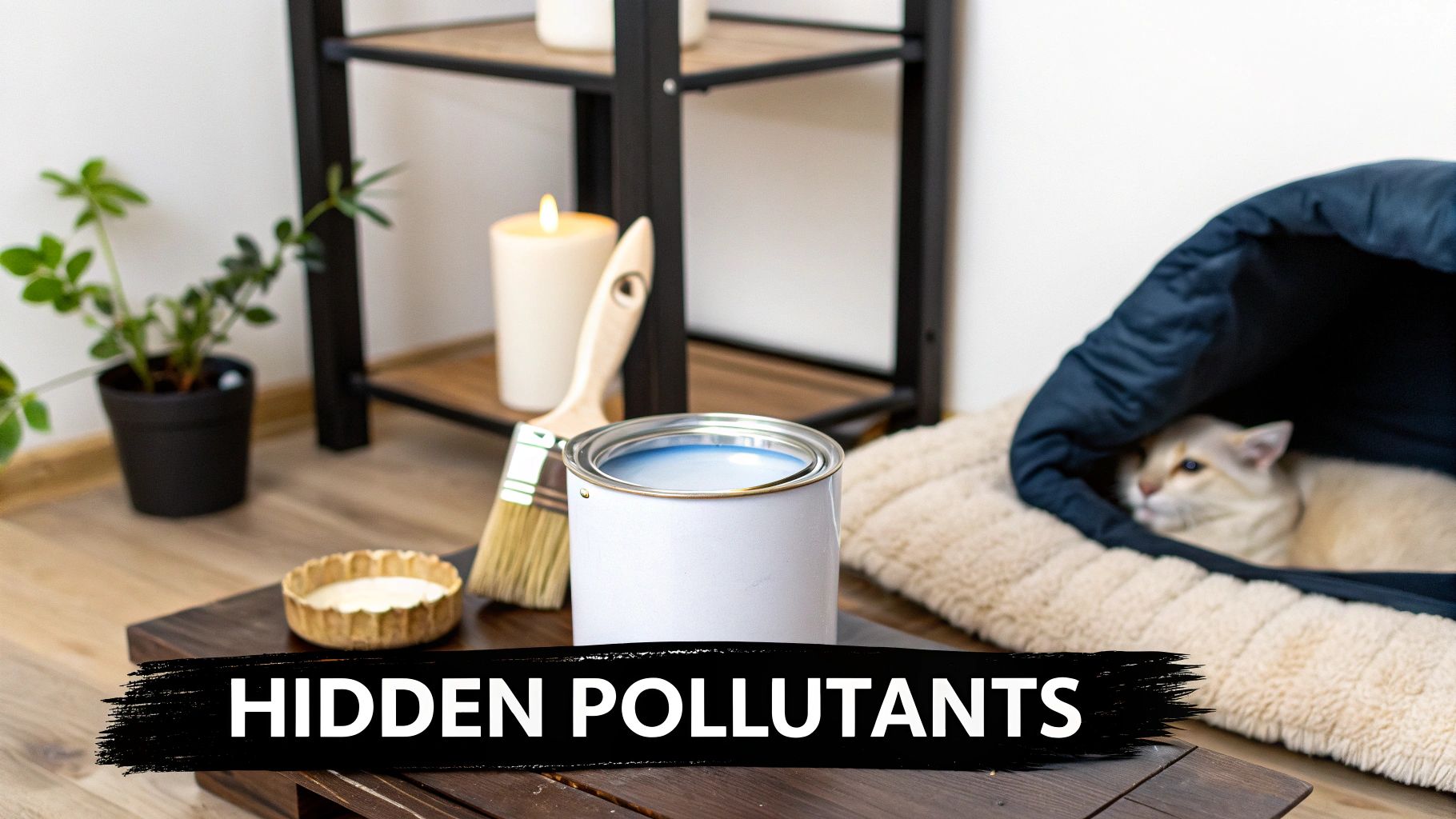
To really get a handle on indoor air pollution, you have to know where it’s coming from. The best way to start is to think like a detective. The culprits are often hiding in plain sight, disguised as everyday items we barely think twice about.
We can break these sources down into three main categories to make them much easier to spot. Knowing these groups helps turn the abstract question of what is indoor air pollution into a practical checklist you can use to walk through your home and pinpoint what might be tanking your air quality.
Biological Pollutants: The Unseen Inhabitants
The first group is made up of biological contaminants. These are living (or once-living) organisms that absolutely thrive in our homes, often going completely unnoticed until they start causing health problems. For anyone with allergies or asthma, these are public enemy number one.
Common biological pollutants include:
Dust Mites: Microscopic critters that feast on dead skin cells and love to set up shop in our bedding, carpets, and comfy furniture.
Pet Dander: Those tiny, invisible flecks of skin shed by cats, dogs, and any other furry or feathered friends.
Pollen: An outdoor invader that easily hitches a ride inside through open windows, doors, and even on our clothes.
Mold and Mildew: Fungi that grow wherever it’s damp and poorly ventilated, like bathrooms, basements, and under the kitchen sink.
These organisms release tiny particles and spores into the air that we end up breathing. Their best friend is high humidity, which creates the perfect breeding ground. For example, a slow leak under a sink can quickly explode into a major mold problem, pumping millions of spores into your air. If you want to get ahead of this, our guide on how to avoid mold in your home and damp buildings is a great resource.
Chemical Pollutants: The Off-Gassing Effect
Next up are chemical pollutants, with Volatile Organic Compounds (VOCs) being the most notorious. These are gases that are released from all sorts of solids and liquids you have around the house. You're already familiar with them: that "new car smell" or the sharp scent of fresh paint are prime examples of VOCs being released in a process called off-gassing.
The tricky thing is that this off-gassing can quietly continue for months, or even years, after you bring an item home. And the sources are everywhere, often in things we use every single day.
A typical American home can have hundreds of different VOCs floating around in the air. All these chemicals mix together, contributing to poor air quality and causing a whole range of symptoms, from headaches to more serious long-term health issues.
Many common household products release these chemicals, so understanding which cleaning chemicals to avoid is a smart move. Other frequent offenders include:
Paints, Varnishes, and Solvents: These are huge sources, especially while you're using them and right after they dry.
Furniture and Building Materials: Things like pressed-wood products, new carpeting, and vinyl flooring often contain formaldehyde and other VOCs.
Cleaning Supplies and Air Fresheners: Aerosol sprays, detergents, and those plug-in scented products are constantly releasing chemicals.
Personal Care Products: Your cosmetics, hairspray, and deodorant can also add to the chemical load in your air.
Combustion Pollutants: The Byproducts of Burning
The final category covers combustion pollutants. These are gases and particles created anytime we burn fuel, whether it's for cooking, heating, or just creating a cozy atmosphere. Without proper ventilation, these byproducts can build up to dangerous levels in no time.
The most common combustion pollutants are carbon monoxide (CO), an invisible, odorless gas that can be fatal, and nitrogen dioxide (NO2), which can seriously irritate your respiratory system. Soot, or particulate matter, is another major byproduct you have to watch out for.
To help you quickly spot potential pollution sources in your own space, here’s a quick-reference table.
Common Indoor Pollutants and Their Sources
Pollutant Type | Common Examples | Typical Sources |
|---|---|---|
Biological | Dust Mites, Mold, Pet Dander | Bedding, Damp Areas, Pets |
Chemical | Formaldehyde, Benzene, Acetone | Paint, New Furniture, Cleaners |
Combustion | Carbon Monoxide, Nitrogen Dioxide | Gas Stoves, Fireplaces, Candles |
Knowing what to look for is the first step toward safer air. Be on the lookout for these common sources in your home:
Gas Stoves and Ovens: Cooking with gas releases CO, NO2, and fine particles right into your kitchen.
Wood-Burning Fireplaces and Stoves: They’re cozy, but they're also major producers of smoke and soot if they aren't vented perfectly.
Tobacco Smoke: Secondhand smoke contains over 7,000 chemicals, and many of them are known carcinogens.
Scented Candles and Incense: Burning these releases particulates and VOCs, adding to the pollution mix.
Attached Garages: Exhaust from your car can easily seep into your living areas, bringing harmful gases with it.
By recognizing these three types of pollutants and where they come from, you can start taking back control of your indoor environment. It really comes down to being mindful of what you bring into your home and how your daily habits affect the air you and your family breathe.
Understanding the Health Risks of Poor Air Quality
Those invisible particles floating around your home aren't just harmless dust. They’re active troublemakers that can have a direct and serious impact on your health. Being exposed to poor indoor air quality can cause everything from minor daily annoyances to severe, life-altering illnesses.
Knowing the risks is the first step toward protecting yourself and your family.
Immediate and Short-Term Health Effects
Ever just feel "a little off" at home for no good reason? Your body might be sending you a warning sign about the air you're breathing. When you inhale contaminated air, your body can react almost instantly, almost like it's trying to fight off a low-grade invader day after day.
This constant battle can show up in frustratingly vague ways:
Persistent Headaches and Dizziness: It's easy to blame stress or a bad night's sleep, but these can be a direct result of chemical pollutants like VOCs.
Irritation of the Eyes, Nose, and Throat: That constant scratchy throat, runny nose, or watery eyes could be an allergic reaction to mold spores, pet dander, or dust.
Fatigue and Difficulty Concentrating: Breathing air high in carbon dioxide or other contaminants can reduce your oxygen intake, leaving you with mental fog and exhaustion.
These symptoms are tricky because they're so common. We often brush them aside, but they could be directly tied to the very air in our homes. What starts as a minor nuisance can eventually pave the way for much bigger health problems. The link between your HVAC system and your well-being is undeniable, which is why it's critical to understand the health problems dirty air ducts can cause.
Serious Long-Term Health Risks
When your body is constantly exposed to indoor air pollution, it's forced into a state of continuous stress and inflammation. This prolonged assault doesn't just make you feel bad day-to-day; it can contribute to the development or worsening of major long-term health conditions.
The consequences of ignoring poor air quality over time are far more severe:
Respiratory Diseases: Constant irritation of your airways can trigger or worsen conditions like asthma and chronic obstructive pulmonary disease (COPD). Tiny particles can lodge deep in the lungs, causing permanent damage.
Cardiovascular Issues: Research has drawn a strong line between fine particulate matter (PM2.5) and heart problems. These microscopic particles can actually enter your bloodstream, leading to inflammation that jacks up the risk of heart attacks and strokes.
Cognitive Decline: New studies are even suggesting that long-term exposure to airborne toxins can impact brain health and contribute to cognitive issues down the road.
Indoor air pollution strikes hardest at the vulnerable, claiming 3.2 million lives yearly worldwide. It’s a crisis often ignored even in wealthy nations where people assume their homes are safe. The State of Global Air reports show that 95% of air pollution deaths in adults over 60 stem from noncommunicable diseases like COPD, heart disease, dementia, diabetes, and lung cancer, all fueled by indoor toxins.
Why Some Populations Are More Vulnerable
While poor air quality is bad for everyone, it doesn't affect us all equally. Certain groups are far more susceptible to its harmful effects because of their age, stage of development, or existing health conditions.
Children: Their respiratory systems are still growing, and they breathe more air relative to their body weight than adults. This means they get a higher dose of any pollutants in the air, making them especially vulnerable to developing asthma.
The Elderly: As we get older, our body's natural defense systems just aren't as strong. Older adults are more likely to have pre-existing heart or lung conditions, which can be made dramatically worse by indoor pollutants.
Individuals with Pre-existing Conditions: For someone already living with asthma, allergies, or a compromised immune system, a home with poor air quality is a minefield of triggers, leading to more frequent and severe symptoms.
Picture a child with asthma living in a home with hidden mold. Every breath becomes a struggle, leading to more asthma attacks, missed school days, and a lower quality of life. For an elderly person with heart disease, even small amounts of pollutants from a faulty gas stove could be enough to trigger a major cardiovascular event. These aren't extreme scenarios; they're real-life examples of why clean air isn't just a matter of comfort, it's a critical part of keeping people healthy.
How to Measure and Detect Indoor Air Pollution
Knowing about the risks of indoor air pollution is one thing, but figuring out if it's a problem in your home is a whole different ballgame. The good news is, you don’t need a fancy science lab to get started. Your own senses are your first line of defense, like a built-in alarm system for invisible threats.
Often, the first sign is a smell you just can’t shake. That persistent musty or damp odor? It’s a classic red flag for mold or mildew, even if you can't see a single spot. That smell is a dead giveaway that moisture is trapped somewhere, creating the perfect breeding ground for these nasty biological pollutants.
Using Your Senses as Initial Detectors
Your eyes can give you some powerful clues, too. Take a good look around. Do you notice an excessive amount of dust settling on everything just a day or two after you’ve cleaned? That’s a strong hint that a high level of particulate matter is constantly circulating through your HVAC system.
Another big visual cue is condensation on your windows. If you frequently see moisture, fog, or little water droplets on the inside of the glass, it points directly to poor ventilation and high humidity. This trapped moisture doesn't just invite mold; it also lets other pollutants hang around in the air much longer.
Think of these signs as your home's early warning system. While they don't give you specific data, a musty smell or constant dust buildup is your home’s way of telling you that the air isn't as clean as it should be.
Advanced Tools for Precise Measurement
While your senses can tell you there's a problem, technology can give you the hard data. Indoor air quality (IAQ) monitors are becoming a go-to for homeowners who want a crystal-clear picture of what they’re actually breathing. These handy devices measure specific pollutants and give you real-time readings right on your phone or a display.
Most of the monitors you can buy today will track a few key things:
PM2.5: This measures the really nasty stuff: fine particulate matter. These are microscopic particles from dust, smoke, and pollen that can get deep into your lungs and cause trouble.
Volatile Organic Compounds (VOCs): The monitor detects the total concentration of chemical gases being released from your furniture, cleaners, and paint. It’s a great way to know if your home is "off-gassing."
Carbon Dioxide (CO2): High CO2 levels are the best indicator of stale air and poor ventilation. When the CO2 from our own breath starts to build up, it means fresh air isn't getting in to replace it.
For a deeper dive into using these devices, check out our practical guide on how to test the air quality in your home for step-by-step advice.
When to Call a Professional
Sometimes, what you can do on your own just isn't enough. If you’re dealing with persistent symptoms or just can't seem to find the source of the problem, calling in a pro for an air quality assessment is the smartest move.
You should seriously consider bringing in an expert if:
You suspect a serious mold issue. Professionals have specialized gear to find hidden mold behind walls or lurking deep inside your HVAC system where you’d never see it.
Symptoms get worse at home but better when you leave. If your family’s allergies, asthma, or headaches magically disappear when you’re out of the house, that’s a massive clue that the problem is indoors.
After a major event. Following a big renovation, a water damage incident like a flood or burst pipe, or a fire, a professional test can confirm if the air is truly safe again.
A professional assessment takes you from guessing to knowing. It gives you a definitive analysis and a clear, actionable plan to make sure your home is the healthy sanctuary it’s supposed to be.
Practical Steps For Cleaner And Healthier Air
Knowing the sources and risks of indoor air pollution is one thing, but now it's time to take action. The good news is that reclaiming your home’s air doesn’t require a massive overhaul. It’s all about a layered strategy that combines simple daily habits with targeted professional support when you need it.
Let's walk through an action plan that makes sense. We’ll start with the easy, no-cost fixes, then get into the essential maintenance for your home’s core systems, and finally, look at some powerful purification tech.
Simple Habits And DIY Fixes
Often, the most powerful changes start small. These foundational steps can seriously cut down on the buildup of common pollutants without costing you a dime. It boils down to two key ideas: let fresh air in, and be smarter about what you bring into your home in the first place.
Start by just opening your windows. Even 15-20 minutes a day is enough to flush out stale, polluted air and swap it with fresh outdoor air. This simple act can significantly lower the concentration of things like CO2 and VOCs lingering inside.
Get in the habit of using your exhaust fans, too. Flip on the kitchen fan every time you cook to pull out combustion fumes and grease particles. In the bathroom, run the fan during and after showers to vent moisture and stop mold before it can start.
One of the smartest moves you can make for cleaner indoor air is being mindful of the materials you bring into your home, like when choosing the best interior paint for your home. Choosing low-VOC or zero-VOC products means fewer chemicals will be off-gassing into your environment from day one.
This flowchart breaks down how you can start identifying problems, using your own senses as the first line of defense before you even think about complex tools.
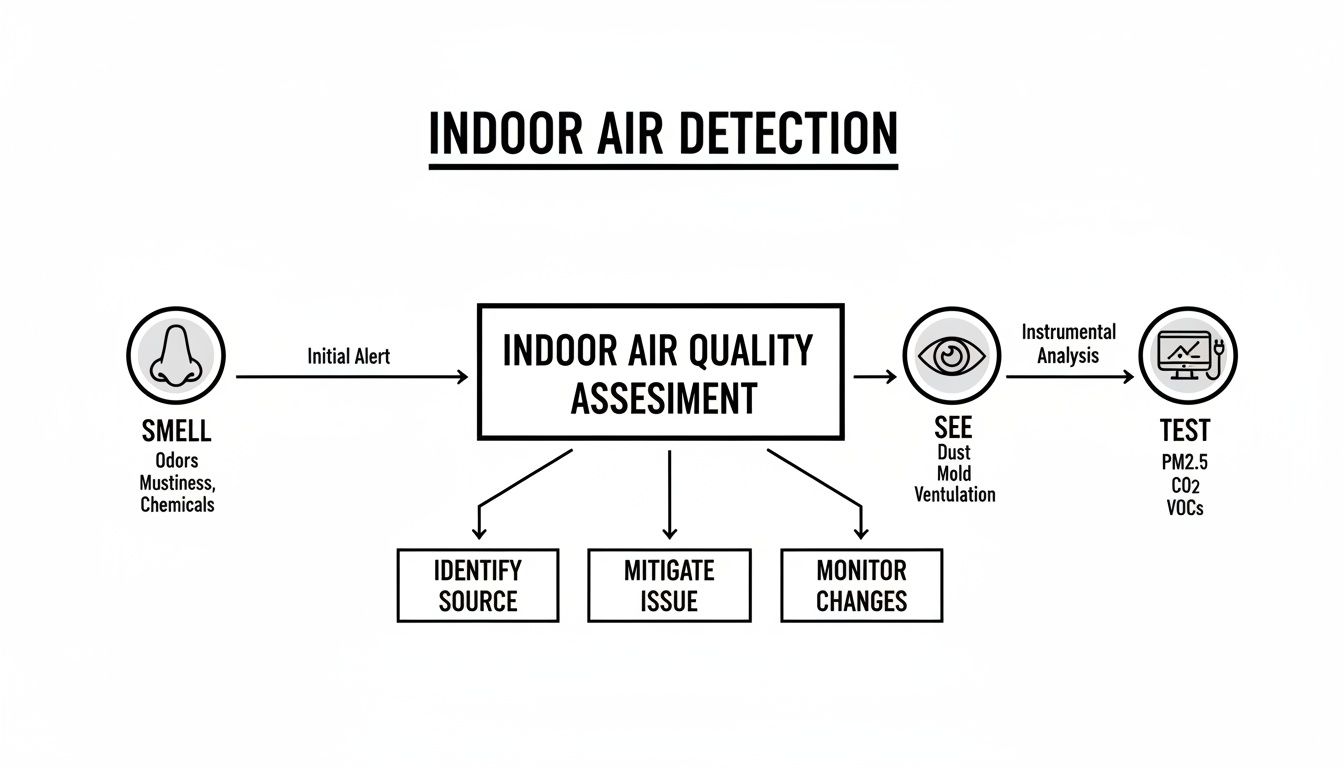
As you can see, the process can start with something as simple as noticing a musty smell or seeing more dust than usual, which can then point you toward more precise testing if the problem persists.
Professional HVAC And Duct Maintenance
While your daily habits make a big difference, they can’t touch the pollutants already hiding deep inside your home’s circulatory system, the HVAC network. Over the years, your air ducts can collect a shocking amount of dust, pet dander, mold spores, and other gunk. This buildup essentially becomes a pollutant reservoir, getting blasted back into your rooms every time the heat or AC kicks on.
This is where calling in the pros becomes a non-negotiable.
Air Duct Cleaning: Certified technicians use high-powered, specialized equipment to safely dislodge and vacuum out all that accumulated grime from your ductwork. This isn't just cleaning; it's removing the source of ongoing contamination so the air coming through your vents is actually clean.
HVAC Coil Cleaning: Your system’s evaporator and condenser coils are damp by nature, making them a perfect breeding ground for mold and bacteria. A professional cleaning scrubs away this biological growth, which not only improves your air quality but makes your system run more efficiently.
Dryer Vent Cleaning: A clogged dryer vent isn’t just an energy hog; it’s a serious fire hazard that can also leak carbon monoxide into your home. Regular professional cleaning is a crucial safety measure for your family and your property.
For more hands-on ways to tackle your home's air, be sure to explore our practical guide to improve home air quality.
Advanced Air Purification Solutions
For the highest level of protection, you need to go beyond what simple filters can do. Standard HVAC filters are passive; they just sit there and trap particles that happen to float by. Active air purification systems, on the other hand, take the fight directly to the pollutants.
Instead of waiting, these systems generate and send out sanitizing agents, like hydroperoxides, that spread throughout your entire home. They actively hunt down and neutralize contaminants both in the air and on surfaces like doorknobs and countertops.
This proactive approach gives you a much more complete solution by tackling a wider range of threats:
It neutralizes pathogens, deactivating over 99.9% of airborne and surface viruses, bacteria, and mold spores.
It breaks down VOCs and odors, eliminating harmful chemical gases and stubborn smells from pets, smoke, or cooking instead of just covering them up.
It reduces allergens by causing particles like dust, dander, and pollen to clump together. They become heavy, fall out of the air, and are more easily swept or vacuumed up.
When you combine these three layers: simple daily habits, professional HVAC maintenance, and advanced purification technology, you create a truly robust defense. This strategy ensures your home is more than just a shelter; it’s a genuine sanctuary with clean, healthy air.
Your Top Questions About Indoor Air Pollution
Once you start digging into what indoor air pollution is, you'll probably find yourself with even more questions. That's a good thing! Getting clear, direct answers is the first step toward making smarter choices for your home and family. Let's tackle some of the most common questions we get, clear the air (pun intended), and help you feel confident about what to do next.
A lot of homeowners aren't sure where to begin. The road to cleaner air starts with understanding the basics, from simple maintenance routines to how today's technology really works.
How Often Should I Get My Air Ducts Cleaned?
We usually recommend a professional air duct cleaning every 3 to 5 years, but that’s just a starting point. It's definitely not a one-size-fits-all situation. The reality is, every home is different. A quiet house with two adults has completely different needs than a busy home with kids and pets running around.
You’ll want to consider cleaning them more often if you have:
Pets that shed a lot, because dander and fur build up fast in your ductwork.
Anyone in the house with allergies or asthma, since they're far more sensitive to what's floating in the air.
Smokers in the home, as those sticky smoke particles cling to every surface inside your ducts and get recirculated.
Just finished a big renovation project, which always kicks up a massive amount of dust and construction debris.
A professional duct cleaning is so important because it clears out that entire hidden reservoir of gunk from your HVAC system. This stops all those pollutants from being blasted back into your rooms every single time the heat or AC kicks on.
Are Air Purifiers Really Effective?
The real answer is: it completely depends on the technology. Most of us are familiar with the standard HEPA filters. They're fantastic at what they do, which is physically trapping particles that get sucked through them. Think of them as a net for things like dust, pollen, and pet dander.
But here’s their big limitation: they’re passive. A HEPA filter just sits there and waits for pollutants to float into it. It can't do anything about gases like VOCs, it can't neutralize germs like viruses and bacteria, and it won't get rid of odors. That's a huge piece of the puzzle when you're trying to solve the whole indoor air pollution problem.
It's a common myth that the air inside our homes is cleaner than the air outside. The truth is, because modern homes are sealed so tightly for energy efficiency, they become traps. Pollutants from cooking, cleaning sprays, and even furniture get stuck, with nowhere to go. This often makes indoor air two to five times more polluted than outdoor air, which is why we have to be proactive about managing it.
This is where more advanced systems come in. Instead of just passively filtering, they take an active approach. They send out technology that sanitizes the air and even the surfaces throughout your entire home. They actually hunt down and destroy a much wider range of contaminants, giving you a complete solution and some real peace of mind.
Can Improving Air Quality Lower My Energy Bills?
Yes, absolutely. There's a direct and surprisingly strong connection between a clean HVAC system and your home's energy efficiency. When your air ducts, vents, and coils are caked with dust and debris, your system has to fight to push air through all that obstruction.
This extra strain forces your furnace and air conditioner to run harder and longer just to maintain the temperature you set. The result? You're using more power and paying higher utility bills month after month.
When you invest in professional cleaning services, you’re basically hitting the reset button on your HVAC system's performance. With the blockages gone, it can breathe easy again. That reduced workload translates directly into lower energy use, meaning you’ll see real, tangible savings. It makes improving your air quality a smart investment in both your family's health and your wallet.
At Purified Air Duct Cleaning, we believe every family deserves to breathe clean, healthy air. Our certified technicians combine expert service with advanced technology to create a safer indoor environment for you. Take the next step toward a healthier home by visiting us at https://www.purifiedairductcleaning.com to get your free quote today.