

Dirty Air Ducts Health Problems You Can't Ignore
Dirty air ducts are a major, often overlooked, source of health issues in a home. They circulate a nasty mix of pollutants like dust, mold, and pet dander through every room, tanking your indoor air quality. With every cycle of your HVAC system, these contaminants can trigger or worsen allergies, asthma, and other respiratory problems.
The Hidden Dangers Lurking in Your HVAC System
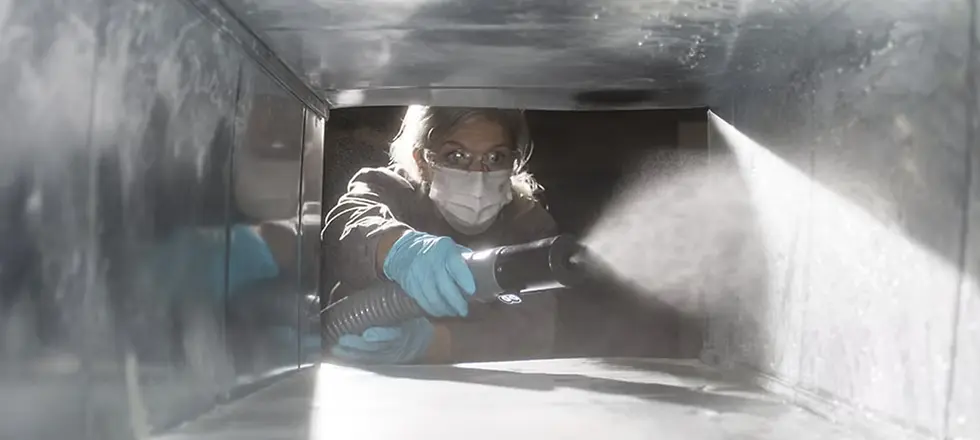
Think of your home’s HVAC system as its lungs. It breathes air in and pushes it back out to keep you comfortable, and the ducts are the airways that carry that air. Just like our own lungs, they work best when they're clean. But over time, these hidden passages can collect a shocking amount of gunk.
When your ducts get dirty, they essentially become reservoirs for dust, fibers, mold spores, and other nasty particles. Each time the heat or AC kicks on, it blasts these contaminants directly into your living space, degrading the very air you and your family breathe. It's a widespread problem; research indicates that an astonishing 95% of the global population is exposed to unsafe indoor air, a situation made much worse by contaminated HVAC systems.
What Is Really In Your Air
The first step to protecting your family's health is understanding exactly what's hiding in your ductwork. Most homeowners would be horrified to know about the cocktail of contaminants circulating through their vents every day.
These airborne irritants are often the real culprit behind those nagging health symptoms you might blame on seasonal allergies or a persistent cold. For example, a constant supply of mold spores can be a massive problem, especially for sensitive individuals. To learn more about this specific threat, check out our guide on air duct cleaning and mold removal.
The air ducts in your home act like your HVAC system’s lungs, circulating air throughout each room. When they’re clean, they improve indoor air quality, allowing for a fresher and healthier environment. But when they’re dirty, it's another story.
This constant circulation of pollutants can lead to a whole range of dirty air ducts health problems, from minor irritations to more severe conditions. Beyond just allergens, being aware of other HVAC-related risks is crucial, which is why we also advocate for carbon monoxide awareness, as malfunctions can have deadly consequences.
How Contaminated Ducts Affect Your Breathing
When your HVAC system kicks on, it does more than just heat or cool your home: it moves air through a whole network of ducts. If those passages are clean, you get fresh, temperature-controlled air. But if they're caked with contaminants, your system becomes a delivery service for allergens and irritants, sending them straight into every room.
Think about it from a microscopic perspective. A tiny mold spore, a dust mite, or a flake of pet dander breaks loose from the gunk inside your ductwork. It gets swept up in the airflow, shot out of a vent, and suddenly it's floating in the air you're about to breathe. This is where the most direct dirty air ducts health problems really start, setting off a chain reaction in your respiratory system.
This constant stream of irritants puts your body's defenses on a treadmill they can never get off of. Over time, health problems caused by dirty air ducts can go beyond a simple sniffle and contribute to more chronic respiratory conditions. Pollutants like mold, dust, pet dander, and even bacterial colonies get a free ride through your home every time the system runs, leading to nagging issues like congestion, sneezing, and a persistent cough. For a deeper dive, you can find more facts on how dirty ducts affect your health on thehealthyhome.me.
Tracing Symptoms Back to Your Vents
The first step to feeling better is connecting the dots between how you feel and the air you're breathing. If you or someone in your family is dealing with respiratory issues that seem to flare up indoors, your ductwork could be the culprit.
Keep an eye out for these common red flags:
Persistent Sneezing or a Stuffy Nose: If you're always reaching for a tissue at home, it might not just be a lingering cold. It could be your body reacting to the particles coming from your vents.
Chronic Coughing and Sore Throat: A nagging dry cough or a scratchy throat that never seems to go away often points to an irritant in your environment.
Watery, Itchy Eyes: Allergens like dust and dander are notorious for causing eye irritation, a classic sign that your indoor air isn't as clean as it should be.
Often, these symptoms feel worse at night after you've spent hours in one room, or right after the heat or AC turns on and pushes a fresh cloud of contaminants into the air. If allergy symptoms are a constant battle, it's a clear sign you need to improve air quality with professional duct cleaning for allergies.
This infographic breaks down exactly how the pollutants in your ducts can lead to common health issues.
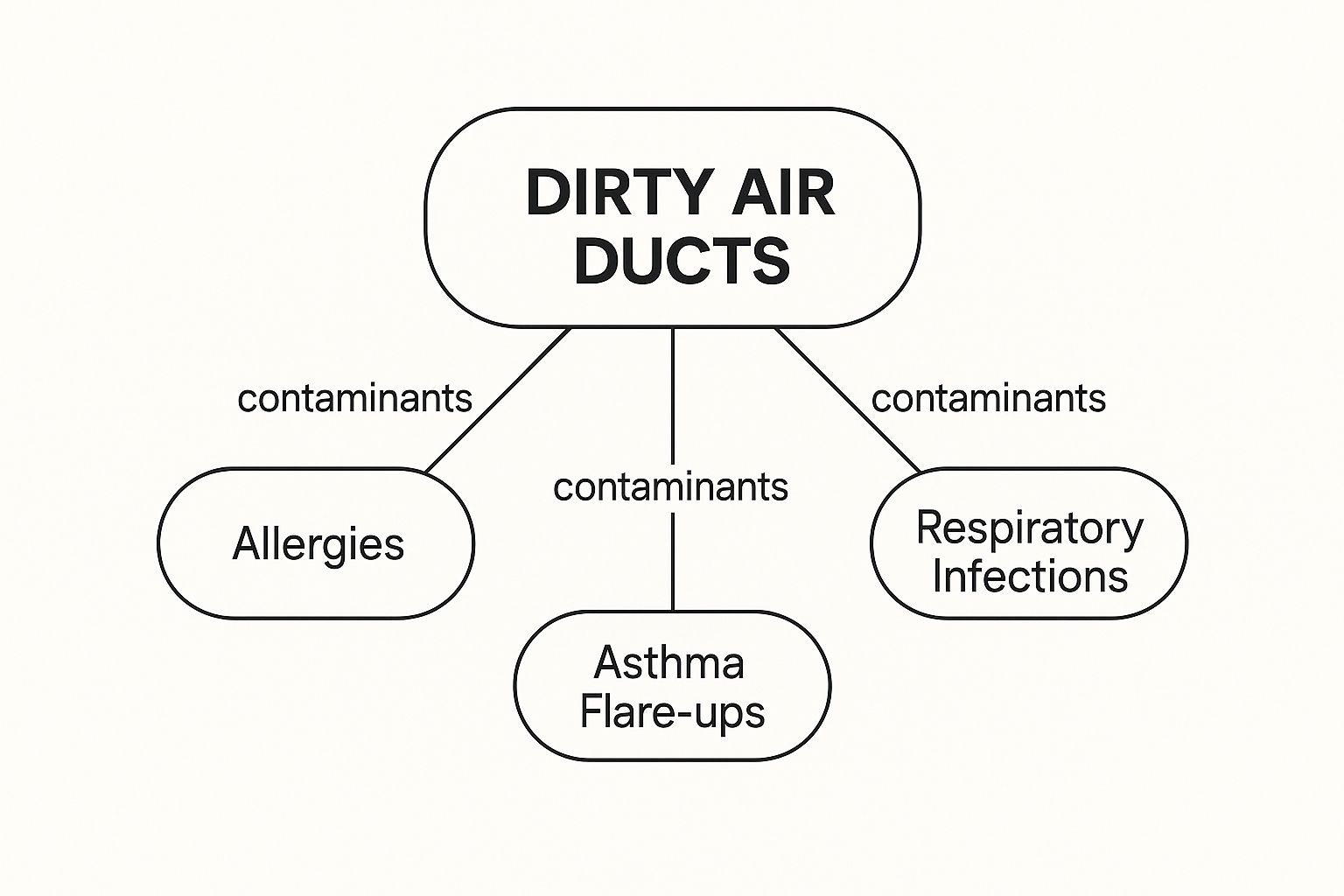
As you can see, it's a direct line from contaminated ducts to major respiratory triggers like allergies and asthma flare-ups.
Vulnerable Populations at Greater Risk
While dirty air can affect anyone, some people are far more susceptible to the health problems it causes. Their bodies simply have a tougher time fending off the nonstop assault of airborne irritants.
For children, the elderly, and anyone with a pre-existing condition like asthma or COPD, contaminated indoor air isn't just an inconvenience; it's a serious health threat. Their immune systems are either still developing or potentially compromised, making them especially vulnerable.
For these groups, constant exposure can mean more frequent and severe asthma attacks, bronchitis, and other nasty respiratory infections. Keeping your home's air clean isn't just about comfort; it's a crucial part of protecting their health.
The Surprising Link Between Air Ducts and Skin Health
When we think of dirty air ducts, coughing, sneezing, and other respiratory troubles usually come to mind first. But the reach of those airborne pollutants extends far beyond your lungs; it can show up right on your skin.
Those same allergens and contaminants don’t just hang in the air forever. Eventually, they settle on every surface in your home, and that includes you. This means your skin, the body's largest organ, is in a constant battle with irritants you can't even see. Microscopic particles like mold spores, dust mites, and pet dander land directly on you, disrupting your skin's natural barrier and leading to some serious irritation.
How Airborne Irritants Trigger Skin Conditions
Think of your skin as a finely tuned ecosystem. When it’s healthy, it has a strong natural barrier that keeps moisture locked in and irritants locked out. But when it's constantly bombarded by pollutants being pumped out of your HVAC system, that barrier can break down, leading to a whole host of frustrating skin issues.
It's a classic cause-and-effect situation, but one where the cause is often completely hidden. Many people overlook the connection between dirty air ducts health problems and chronic skin conditions. Instead, they find themselves stuck in a cycle of using creams and medications that only mask the symptoms, never addressing the root environmental trigger.
Here are a few ways those airborne contaminants can wreak havoc on your skin:
Eczema Flare-Ups: Dust mites are a huge and well-known trigger for atopic dermatitis, more commonly known as eczema. When your ducts are circulating dust mite debris, it can lead to more frequent and much more severe flare-ups.
Mysterious Rashes: A constant, invisible stream of mold spores or other allergens can cause contact dermatitis, which often shows up as unexplained red, itchy rashes that seem to come out of nowhere.
Persistent Itching: Even if you don't have a visible rash, these microscopic particles can irritate the nerve endings in your skin, causing a chronic, nagging itchiness.
If you've been dealing with skin problems that get worse indoors or just don't have a clear cause, it’s time to take a hard look at the air you're breathing at home.
Your skin is a frontline defense against environmental threats. When the air itself is filled with microscopic attackers from dirty ductwork, your skin is under constant siege, which can lead to chronic inflammation and irritation.
Connecting Indoor Air to Chronic Discomfort
The link between the air we breathe indoors and the health of our skin is becoming impossible to ignore. Considering that many of us spend up to 90% of our time indoors, our exposure to these airborne irritants is both prolonged and consistent. This continuous contact can easily turn what might be a minor sensitivity into a full-blown chronic condition.
Getting to the source of these pollutants is the only way to find lasting relief. While a good skincare routine can help manage the symptoms, it can't do anything to stop the endless supply of irritants flowing out of your vents.
That's where professional air duct cleaning comes in. It physically removes that reservoir of contaminants, breaking the cycle of exposure and finally giving your skin a real chance to heal. It’s a shift from just managing skin irritation to actually eliminating its underlying environmental cause.
What to Know About Sick Building Syndrome
Have you ever walked into your house feeling fine, only to develop a nagging headache or stuffy nose a few hours later? And then, just as mysteriously, those symptoms vanish once you leave? If that sounds familiar, you might be dealing with more than just a common cold; it could be your home itself.
This strange phenomenon is known as Sick Building Syndrome (SBS). It’s a term for when occupants of a specific building experience health issues that are directly tied to the time they spend inside. The idea isn't new; it first gained attention back in the 1970s and 1980s when office workers started reporting clusters of symptoms like fatigue, skin irritation, and respiratory problems that all pointed back to their indoor environment. You can explore this connection further by checking out these insights about SBS on safeair.com.au.
So, what’s the culprit? More often than not, it's the hidden network of air ducts snaking through your walls. These ducts can become a breeding ground for a nasty mix of pollutants, which then get blasted into every room each time your HVAC system kicks on.
Identifying the Symptoms of SBS
Recognizing Sick Building Syndrome is all about connecting the dots between how you feel and where you are. The symptoms are often tricky because they mimic everyday ailments like allergies or a cold. The key difference, however, is that they consistently flare up in one location and ease up when you're elsewhere.
Keep an eye out for these common signs:
Persistent Headaches: Not just any headache, but a dull, nagging one that seems to appear at home and fade when you're out.
Unexplained Fatigue: Feeling constantly drained or lethargic, even after a full night's sleep.
Dizziness and Nausea: A sense of lightheadedness or queasiness that doesn't have a clear cause.
Respiratory Irritation: A stuffy nose, scratchy throat, or a dry cough that only acts up indoors.
These issues are classic examples of dirty air ducts health problems. Your HVAC system becomes a delivery service for irritants, and your body is simply reacting to the constant exposure.
When the air inside a building is more polluted than the air outside, it creates the perfect conditions for Sick Building Syndrome. Your HVAC system, if not properly maintained, becomes the primary delivery mechanism for the contaminants causing these health issues.
The Role of Ductwork in Creating Unhealthy Spaces
Think of your home's ductwork as its respiratory system. When it gets clogged, the whole house suffers. Dust, mold spores, bacteria, and even volatile organic compounds (VOCs) find the dark, undisturbed environment of your ducts to be the perfect place to settle down and multiply.
Every time your heat or air conditioning turns on, it forces air through these passages, picking up those accumulated particles and spraying them into the air you breathe. It's like a fine mist of irritants settling into every room.
This constant bombardment puts a heavy strain on your body. Your immune system has to work overtime to fend off these invaders, which can eventually lead to the chronic, nagging symptoms of SBS. Giving your air ducts a thorough cleaning is one of the most direct ways to break this cycle. To learn more about tackling the problem, read our in-depth guide on Sick Building Syndrome symptoms and how to solve them.
The Hidden Costs of Neglecting Your Air Ducts

While the health risks of dirty air ducts are a major concern, the consequences of neglect don't stop there. Clogged ductwork creates a ripple effect, hitting you squarely in the wallet and adding to a wider environmental strain. These costs often fly under the radar, popping up in places you might not expect.
Think of your HVAC system like a car engine. If you never change the air filter, the engine has to fight for every breath, burning more gas and wearing out faster. It’s the exact same story with your air ducts. When they're packed with dust, debris, and other junk, they create resistance, forcing your furnace or AC to run longer and harder just to hit the temperature on your thermostat.
That extra effort isn't free. It translates directly into higher utility bills, sometimes causing a noticeable spike in your monthly expenses.
Financial and Environmental Burdens
The financial strain of an inefficient HVAC system is a double-whammy. First, there's the immediate and ongoing cost of higher energy bills month after month. Second, all that extra wear and tear on crucial components, like the blower motor, can lead to premature breakdowns and shockingly expensive repairs. To protect against these unforeseen costs, businesses often look into equipment breakdown insurance for your HVAC system.
But the impact goes beyond your bank account. Dirty air ducts have a bigger footprint, driving up energy use and contributing to environmental pollution. Globally, air conditioning systems already account for about 7% of electricity consumption and 3% of carbon emissions. When ducts are clogged, the system guzzles even more energy, pumping out more greenhouse gases.
By addressing dirty ductwork, you're not just investing in your family's health. You're also making a financially sound decision that reduces your carbon footprint and promotes a healthier planet.
This reframes duct cleaning from a simple chore to a financial and environmental responsibility. Regular maintenance is a proactive step that pays for itself over time. To get a better handle on the right schedule, you can check out our guide on how often to get air ducts cleaned. A clean system runs the way it was designed to, saving you money and making your home more sustainable.
Your Action Plan for Cleaner Air and Better Health
Knowing the link between dirty air ducts and your health is one thing; doing something about it is another. Thankfully, taking back control of your home’s air quality isn't some complicated mystery. With a clear plan, you can seriously cut down on indoor pollutants and create a much healthier space for you and your family.
The trick is knowing what to look for and when to step in. A lot of homeowners just learn to live with things like constant dust or a faint musty smell, never realizing these are huge red flags. Ignoring them just lets the gunk build up, making potential health issues worse over time.
Identifying When Your Ducts Need Cleaning
Some signs are impossible to ignore: they’re clear signals that your HVAC system is pushing more than just air through your home. Keeping an eye out for these clues can help you tackle dirty air ducts health problems before they get out of hand.
You should seriously consider a professional cleaning if you spot any of these:
Visible Dust and Debris: If you can actually see little puffs of dust shooting out of your vents when the system kicks on, you can bet the inside is caked with it.
Persistent Musty Odors: That stale, mildewy smell that seems to get stronger when the heat or AC is running? That’s a classic sign of mold or mildew hiding in your ductwork.
Increased Allergy Symptoms Indoors: If your family’s allergies or asthma suddenly seem to act up more at home than anywhere else, your air quality is the most likely suspect.
Sometimes, knowing when to call in the pros is the hardest part. The signs can be subtle at first, but they add up. This checklist can help you decide if it's time for a professional cleaning.
When to Get Your Air Ducts Cleaned: A Checklist
Symptom or Situation | Recommended Action | Frequency |
|---|---|---|
Visible Mold Growth | Immediate professional inspection and cleaning. | As needed, immediately. |
Recent Home Renovations | Schedule a post-renovation cleaning to remove construction dust. | Once, after work is complete. |
Unexplained Allergy Flare-Ups | Consider cleaning after ruling out other causes. | Every 3-5 years or as symptoms dictate. |
New Home Purchase | Clean the ducts to remove previous occupants' debris. | Once, upon moving in. |
Dust Puffs from Vents | Schedule a professional cleaning soon. | Every 3-5 years. |
Persistent Musty Odors | Investigate and clean to address potential mold/mildew. | As needed, when odor appears. |
Rodent or Insect Infestation | Clean ducts after extermination to remove nests and droppings. | Once, after pest removal. |
This checklist isn't exhaustive, but it covers the most common reasons homeowners need their ducts cleaned. Think of it as a guide to help you stay proactive about your home's air quality.
Simple Habits for a Healthier Home
While a deep, professional cleaning is the only way to get rid of heavy buildup, your day-to-day habits make a massive difference in keeping the air clean long-term.
Your HVAC system's air filter is the first line of defense against airborne contaminants. A clean filter captures dust, dander, and other particles before they ever enter your ductwork.
Making small tweaks to your routine can have a surprisingly big impact. The single most effective thing you can do is change your air filters regularly, typically every 1 to 3 months. On top of that, frequent dusting and vacuuming mean less particulate matter is floating around to get sucked into your system in the first place. These simple, proactive steps are your best bet for maintaining a healthy indoor ecosystem and making sure your home stays a true safe haven.
Common Questions About Air Ducts and Health
When it comes to home maintenance, it's easy to focus on what you can see. But what about the things you can't, like the inside of your ductwork? Understanding the link between your HVAC system and your family's health is the first step toward a healthier home.
We get a lot of questions about dirty air ducts health problems, so we've put together some straight answers to help you make the best decisions for your home.
How Often Should Air Ducts Be Cleaned?
There’s no single magic number, but a solid rule of thumb is to have your air ducts professionally cleaned every 3 to 5 years.
That said, you'll want to think about cleaning them more often if you're dealing with specific situations:
You have pets that shed a lot, sending dander and fur straight into your system.
Someone in your house struggles with bad allergies or asthma.
You've just wrapped up a major home renovation that kicked up a ton of dust.
You keep smelling musty odors or can see mold growing around your vents.
Regular cleanings are all about preventing the gunk from building up in the first place and keeping your indoor air quality high.
Think of duct cleaning as a deep, restorative reset for your home's respiratory system. While regular filter changes are like daily hygiene, a professional cleaning is the thorough check-up needed to keep everything functioning optimally for years to come.
Is DIY Air Duct Cleaning a Good Idea?
We love the DIY spirit, but this is one job where calling in the pros is the only way to go. The tools you can buy at a hardware store just don't have the muscle to do the job right.
A professional service brings in high-powered, truck-mounted vacuums and specialized brushes that can reach deep into your system. They dislodge and completely remove contaminants without just blowing them back into your living space.
Trying to clean ducts yourself usually just stirs everything up, which can actually make your indoor air quality worse. If you're really curious about what's in your air, our practical guide on how to test air quality in your home is a great place to start.
Does the Cleaning Process Pose Any Risks?
When you hire a reputable, certified company, the air duct cleaning process is incredibly safe. True professionals follow strict industry standards to contain every bit of dust and debris, making sure it all gets pulled out of your home, not just moved around.
They use sealed vacuum systems that either vent directly outside or push the air through heavy-duty HEPA filtration units.
The real risk comes from hiring an uncertified or inexperienced outfit. A botched job can damage your ductwork or, even worse, release a cloud of contaminants into your home. Always, always check a company's credentials and read their reviews before you let them touch your HVAC system.
Ready to breathe cleaner, healthier air and put a stop to health problems caused by dirty air ducts? The certified technicians at Purified Air Duct Cleaning are here to help. We use advanced equipment to restore your home’s air quality and improve your HVAC system’s efficiency. Schedule your free quote today by visiting us at purifiedairductcleaning.com.