

How to Improve Air Circulation in House for a Fresher Home
Updated: Jan 28
Before you spend a dime on fancy gadgets, some of the most effective ways to improve your home's air circulation are completely free. Simple strategies like opening windows on opposite sides of your home to create a cross-breeze can instantly flush out stale air. You can also use the 'stack effect,' a neat trick of physics, by opening upper and lower windows to let warm air escape and cool air enter. These immediate actions tap into natural airflow to quickly refresh your space.
Your First Steps to Better Home Air Circulation

Does your home feel perpetually stuffy? Do smells from last night’s dinner hang around until morning? These are classic signs of poor air circulation. But this is more than just a comfort issue; it directly impacts your health by trapping pollutants indoors. Before you jump to complex solutions, a few quick observations can make a huge difference.
Take a quick walk-through of your home. Are there tell-tale signs of stagnant air, like certain rooms feeling much warmer or more humid than others? Do you notice condensation gathering on the inside of your windows? These are clear red flags that air isn't moving the way it should be.
Harnessing Natural Airflow
One of the most powerful and immediate fixes costs nothing at all: creating a cross-breeze. By opening windows on opposite sides of your house, even just a few inches, you create a natural pathway for fresh air to sweep in and push stale air out. You can feel the difference in minutes.
Another great strategy is to use the stack effect, which is just a fancy term for the natural tendency of warm air to rise. Here’s how to put it to work for you:
Open lower-level windows on the cooler, shaded side of your house to let fresh, cool air in.
Simultaneously open upper-level windows on the warmer, sunnier side to let hot, stale air escape.
This simple action creates an upward current that pulls fresh air right through your home.
The Overlooked Impact of Indoor Air
Stagnant air doesn't just feel gross; it concentrates dust, allergens, and other nasty pollutants. Did you know that a shocking 70% of homes fail to meet basic ventilation requirements, leaving families breathing polluted air day in and day out?
Even worse, a massive analysis of nearly 50,000 indoor air quality tests found that over 91% of homes had elevated levels of particle allergens directly linked to poor circulation. Getting your home's air moving is one of the most important things you can do for a healthier environment.
Here are a few easy, no-cost actions you can take right now to see an immediate improvement.
Quick Wins for Immediate Airflow Improvement
Strategy | How It Works | Best For |
|---|---|---|
Cross-Ventilation | Opens a direct path for air to move through a room or entire floor. | Mild weather days when you want a quick, full-home refresh. |
Stack Effect | Uses natural convection; warm air rises and exits high, pulling cool air in low. | Multi-story homes, especially during warmer months to vent heat. |
"Airing Out" | Opening all windows for 10-15 minutes to completely replace indoor air. | Getting rid of cooking odors, stuffiness, or post-cleaning fumes. |
Using Interior Doors | Opening doors between rooms to connect airflow pathways created by open windows. | Homes with complex layouts to ensure air moves through all spaces. |
These simple habits can dramatically change how your home feels without touching your thermostat or buying any new equipment.
Want to go deeper? For a more comprehensive look at enhancing your home's atmosphere, check out our guide on how to improve home air quality. It’s packed with actionable advice that builds on these initial steps.
Beyond just opening windows, you can also bring nature inside. Adding certain air-purifying indoor plants for offices (which work just as well at home!) can contribute to a fresher, cleaner environment. Think of these strategies as your starting point for breathing easier and creating a more comfortable living space.
Mastering Your Home's Built-In Ventilation System
Your home's HVAC system is easily the most powerful tool you have for circulating air, but most of us don't use it to its full potential. We tend to think of it as just a heater or an air conditioner, only flipping it on when we get too hot or cold. But with one simple change, you can turn it into a full-time air circulation powerhouse.
Take a look at your thermostat. You'll likely see a fan switch with two settings: "Auto" and "On." Most homes run on "Auto" by default, which means the fan only kicks in when the system is actively heating or cooling. It's energy-efficient, sure, but it also means the air in your home is sitting stagnant for long stretches of time.
Frolling that switch to "On" is a game-changer. This keeps the fan running continuously, even when the furnace or AC isn't. This one tweak constantly pulls stale air out of your rooms, pushes it through the system's filter, and sends it back out, creating a steady, whole-house airflow.
This constant movement does wonders for evening out temperatures, finally getting rid of those stubborn hot and cold spots. More importantly, it means your air is always being filtered, a huge win for anyone with allergies or concerns about indoor air quality.
Unleash the Power of Your Vents and Registers
Even the best HVAC system is useless if the air can't get where it needs to go. Think of your supply and return vents as the lungs of your home's circulatory system, yet they're often accidentally smothered by everyday items. If you want to boost airflow, this is the first place you should look.
Take a quick walk through your house and do a visual inspection of every single vent. You're looking for the common culprits that choke off airflow.
Furniture Placement: Is a heavy couch or bookshelf shoved right up against a wall vent?
Rugs and Curtains: Have your favorite area rugs slid over floor registers? Are long drapes blocking the flow?
Dust and Debris: Are the vent grilles caked with a thick blanket of dust, pet hair, or other gunk?
When you block a vent, you're essentially cutting that room off from your entire ventilation system. No wonder it feels stuffy.
A Practical Approach to Unblocking Airflow
Once you've spotted the blockages, the fixes are usually straightforward. Just rearrange your furniture to leave at least a few inches of breathing room around all vents. Secure rugs with non-slip pads so they stay put, and consider tying back or hemming curtains that cover wall-mounted registers.
For the dusty vents, a vacuum with a brush attachment is all you need. Cleaning them thoroughly every few months prevents the kind of buildup that can seriously restrict air movement. This simple bit of maintenance helps ensure the filtered, conditioned air your system is working so hard to produce can actually reach you. Plus, keeping these pathways clear is great for the long-term health and efficiency of your HVAC system. To learn more about how a well-maintained system operates, check out our article on the importance of duct sealing and how it can save you money.
Proper ventilation is fundamental to a healthy home. Often, issues like window condensation are just a symptom of poor airflow. Learning how to prevent window condensation is another practical step toward improving your home's overall circulation. By simply mastering the equipment you already own, you can make a huge and immediate difference in your home's comfort and air quality.
Optimizing Fans for Maximum Airflow
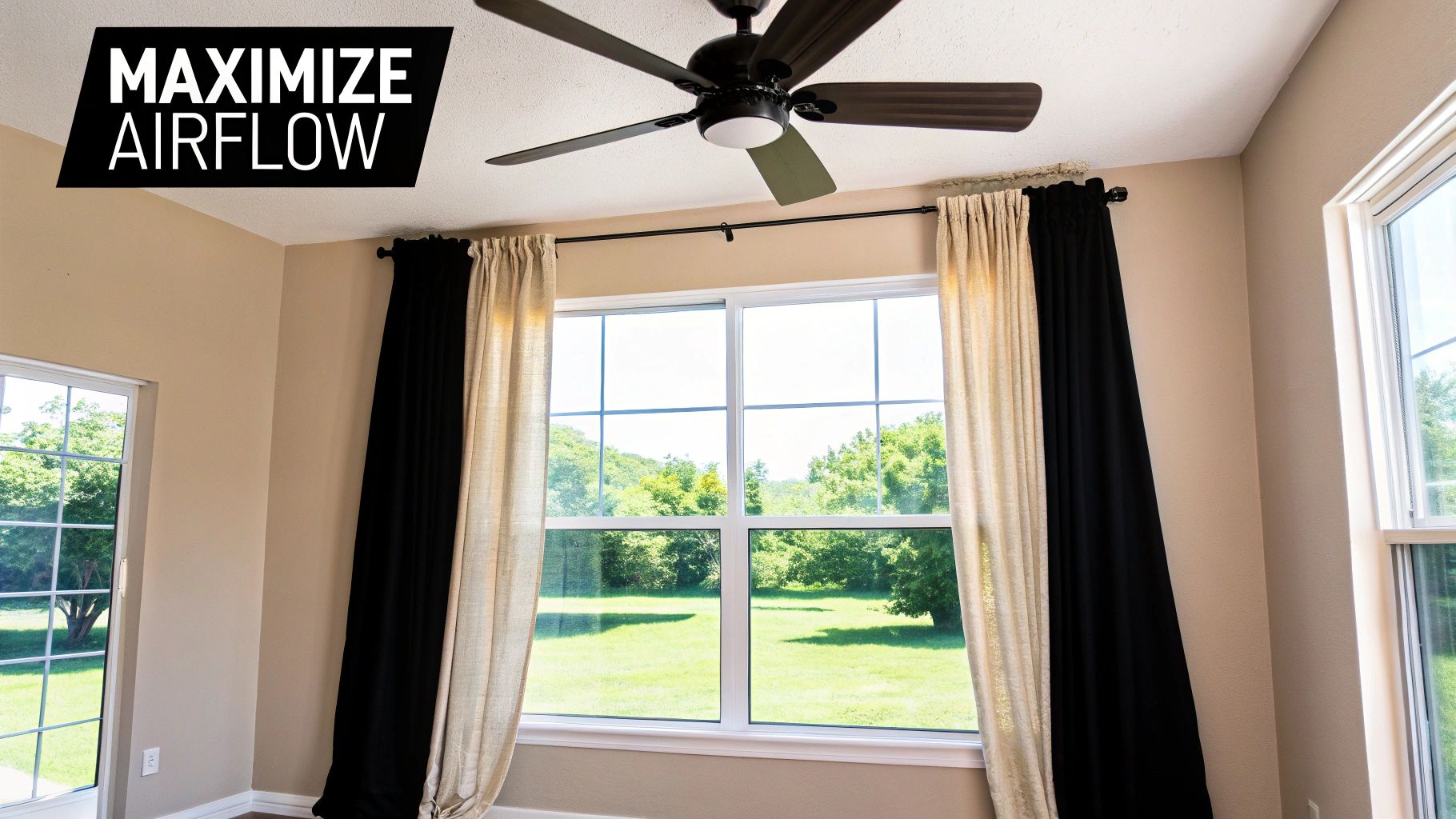
Sure, flipping on a fan brings a little relief, but there's a real art to it. Strategic placement can turn that simple fan into a powerful tool for circulating air throughout your entire home. Most people miss the small details in settings and positioning that make all the difference. Let's get beyond just turning them on and start using fans like a pro.
From ceiling fans to those trusty old box fans, each type has a specific job. When you know how to use them correctly, you’ll not only feel more comfortable but you’ll probably see a nice dip in your energy bills, too.
The Seasonal Secret of Ceiling Fans
That ceiling fan hanging up there isn't just for summer. It has a crucial, and often completely ignored, function for the winter months. Take a look at the fan's motor housing and you'll find a small switch. That little switch changes the direction the blades spin, and that one tiny adjustment has a massive impact on your home's airflow.
Summer Setting (Counter-Clockwise): For hot weather, the blades need to spin counter-clockwise. This pushes cool air straight down, creating a breeze that makes you feel cooler without actually changing the room's temperature. It's the setting we all know.
Winter Setting (Clockwise): When it gets cold, flip the switch so the blades turn clockwise on a low speed. Instead of pushing air down, this pulls the colder air up. That movement displaces the warm air that's naturally risen and collected at the ceiling, gently pushing it down along the walls to circulate throughout the room, all without creating a chilly draft.
Making this simple switch twice a year helps your HVAC system run more efficiently, keeping you comfortable while trimming down your energy costs. Just remember to give the blades a good dusting before you change their direction!
Creating a Whole-House Wind Tunnel with Box Fans
Box fans are cheap, effective, and incredibly versatile, especially when you use a couple of them together. You can actually set up a powerful cross-ventilation circuit that actively pulls fresh air in and shoves stale, hot air out. It's worlds better than just sticking a fan in the middle of a room to blow the same warm air around.
Here’s how to create that push-pull system. The idea is to create a clear path for air to travel across your home.
Find Your Intake Window: Pick a window on the coolest, shadiest side of your house. Set a box fan on the windowsill facing in to pull that cooler, fresher air inside.
Set Up Your Exhaust Window: Now go to the opposite side of your house, ideally where it’s sunnier and warmer. Place a second fan in a window facing out. This one will act as your exhaust, pushing all the warm, stuffy indoor air outside.
For multi-story homes, place the intake fan on a lower level and the exhaust fan upstairs. This works with the natural "stack effect," where hot air rises.
Pro Tip: To make this work like a charm, close any other nearby windows. This funnels the airflow directly between your intake and exhaust fans, creating a much stronger and more focused current.
Modern, tightly sealed homes are great for energy bills, but they can be terrible for fresh air. Natural air exchange rates in typical homes can be as low as 32 to 116 cubic feet per minute (ft³/min), which often isn't enough. Poor ventilation can even lead to a 14% drop in HVAC efficiency. Sometimes, even with clever fan tricks, you need professional help to get your airflow right.
If you want to get a better handle on how airflow is actually measured, our guide that explains what CFM is in HVAC and why it is critical for your home is a great place to start. Getting your fans placed correctly is a huge first step toward a more comfortable and healthier home.
Uncovering the Hidden Culprits Clogging Your Airflow
Even if you’ve mastered the art of opening windows and placing fans just right, your home's airflow can still be quietly sabotaged by hidden blockages. These overlooked culprits often lie within the very systems designed to keep your air moving. To really improve air circulation, you have to look beyond the obvious and hunt down these unseen chokepoints.
Two of the most common offenders are your HVAC air filter and your home’s dryer vent. One is designed to clean the air and the other to exhaust it, but when they get neglected, both can bring your home’s air circulation to a grinding halt.
If you're dealing with a stuffy room, this simple chart can help you quickly figure out where to start looking: your filter or your vents.
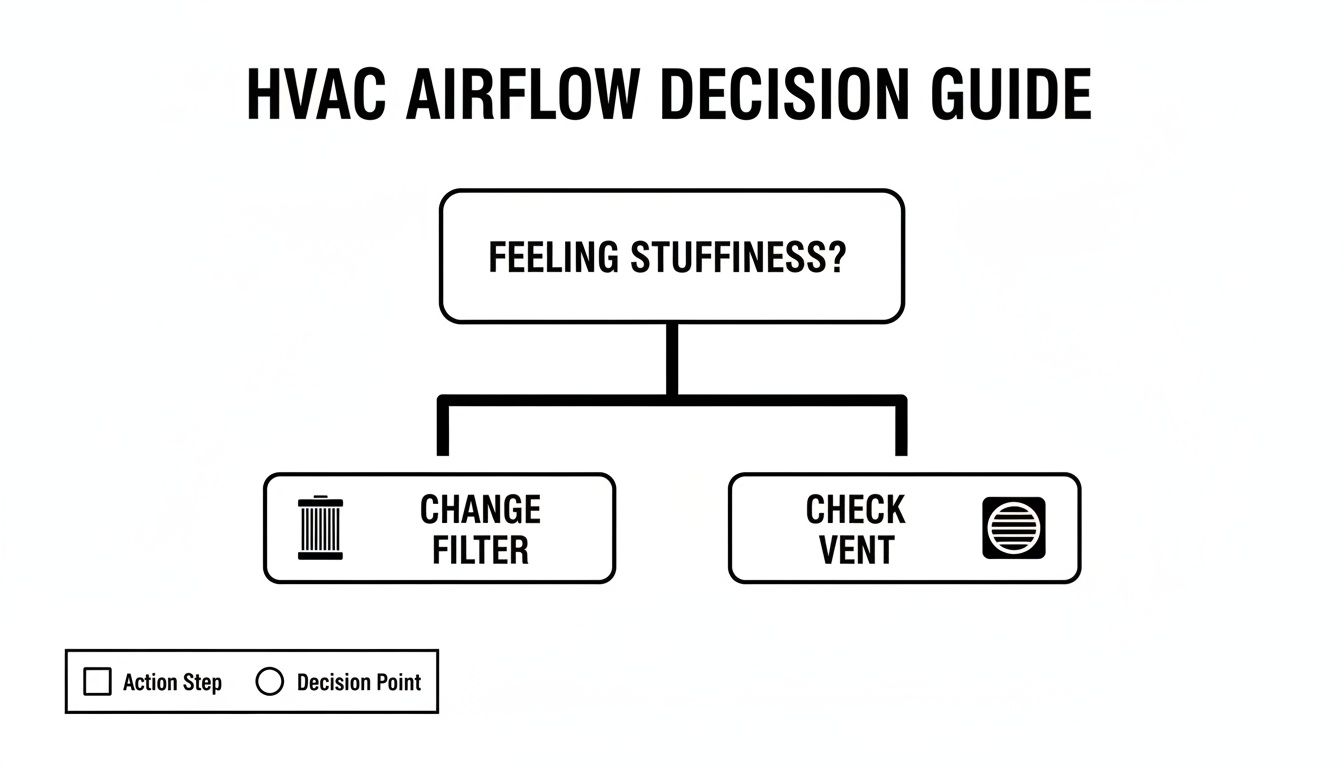
As the guide shows, your first line of defense is often the easiest to check. A clogged filter or a blocked vent is a frequent and fixable problem.
Choosing the Right HVAC Filter
Think of your HVAC filter as the gatekeeper for your entire system. Its job is to trap dust, pollen, and other gunk before it circulates through your ductwork. But here’s the thing: it’s a delicate balance. A filter that’s too good at its job can choke your system, kind of like trying to breathe through a thick blanket.
This is where the MERV rating (Minimum Efficiency Reporting Value) comes into play. It’s a scale from 1 to 20 that grades how well a filter traps airborne particles.
A higher MERV rating means the filter catches smaller particles, which is fantastic for air quality.
But, a filter with a very high MERV rating can also severely restrict airflow, forcing your HVAC system to work much harder. This extra strain can spike your energy bills and even damage the equipment over time.
For most residential homes, a filter in the MERV 8 to 11 range is the sweet spot. This rating is effective enough to capture common irritants like pollen, dust mites, and pet dander without making your system gasp for air.
A dirty, clogged filter is just as bad as one that’s too restrictive. The table below breaks down the MERV ratings to help you find that perfect balance between filtration and airflow.
Choosing the Right HVAC Filter MERV Rating
MERV Rating | Particles Captured | Impact on Airflow | Ideal For |
|---|---|---|---|
1-4 | Pollen, dust mites, carpet fibers, sanding dust. | Minimal restriction. | Basic residential use, not ideal for allergies. |
5-8 | Mold spores, hair spray, fabric protector. | Low restriction. | Standard residential use, good balance. |
9-12 | Legionella, lead dust, auto emissions. | Moderate restriction. | Homes with pets, allergies, or smokers. |
13-16 | Bacteria, tobacco smoke, droplet nuclei (sneezes). | High restriction. | May require system modification; hospitals. |
No matter which filter you choose, the key is to change it regularly. A standard one-inch filter should be replaced every 1-3 months to keep air moving freely.
The Overlooked Danger of a Clogged Dryer Vent
While your HVAC filter manages incoming air, your dryer vent is a critical exhaust pathway. Every time you dry a load of laundry, lint slips past the trap and gets pushed into the vent hose. Over time, this lint accumulates and can create a dense, stubborn blockage.
A clogged dryer vent does more than just make your clothes take forever to dry. It restricts a major air exhaust point in your home, which can worsen overall circulation and crank up indoor humidity.
Even more alarming, it’s a serious fire hazard. The U.S. Fire Administration reports that clothes dryer fires cause an estimated $238 million in property loss each year, with failure to clean being the leading factor. This isn't just about airflow; it's about keeping your home safe.
Here's a quick checklist to keep this crucial pathway clear:
Clean the Lint Trap After Every Use: This is non-negotiable. It's the simplest and most effective habit.
Inspect the Vent Hose Quarterly: Pull your dryer out and check the flexible hose for any kinks or visible lint buildup.
Clear the Exterior Vent Annually: Find the vent on the outside of your house. Make sure the flap opens easily and isn’t blocked by lint, leaves, or even birds' nests.
When these hidden passages get clogged, the problems can ripple through your entire home. If you're dealing with stubborn blockages that feel like more than a simple DIY fix, our guide on fixing a clogged air duct provides more detailed solutions. Taking care of both your HVAC filter and dryer vent is a fundamental step toward a healthy, efficient, and safe home.
When to Call a Professional for a Healthy Home
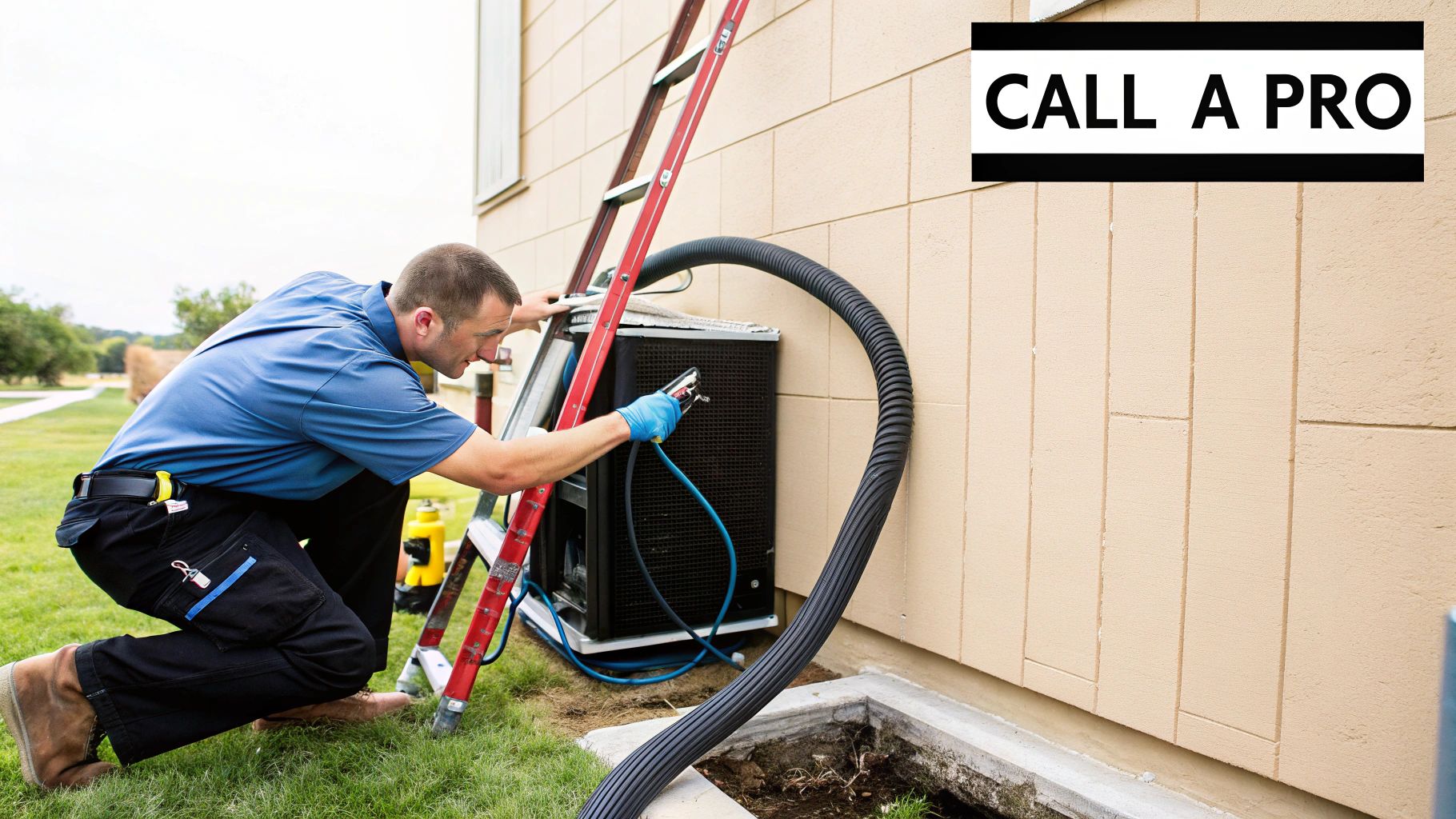
While DIY strategies are powerful first steps, some circulation problems are buried too deep within your home's systems for a simple fix. Have you done everything you can, but the air still feels heavy, stale, or just plain wrong? That’s a clear signal the real issue is hiding in your ductwork or the HVAC unit itself.
This is the point where calling in a professional isn't just a good idea, it's essential for a healthy home. Ignoring these persistent signs can lead to worsening air quality, creeping energy bills, and even long-term damage to your expensive equipment. Knowing when to hand the reins over to an expert ensures the problem gets solved correctly and safely.
Telltale Signs You Need an Expert
If you're nodding along to any of the following issues, it's time to stop guessing and get a professional assessment. These aren't problems that better fan placement or an open window can solve; they point to deeper blockages or contamination that require specialized tools and knowledge.
Persistent Musty Odors: If a damp, mildewy smell wafts from your vents whenever the system kicks on, that’s a major red flag. It often means moisture has gotten into your ductwork, creating a breeding ground for mold and bacteria that you are now circulating throughout your home.
Visible Mold or Dust Around Vents: Take a close look at your supply and return vents. Seeing black or greenish specks, or noticing puffs of dust blow out when the air starts flowing, means the inside of your ducts are likely coated in contaminants.
Excessive Household Dust: Are you constantly wiping down surfaces, only to find a fresh layer of dust a day later? When your HVAC system is dirty, it can do more harm than good, essentially becoming a dust-spreading machine instead of a filter.
Stubborn Hot and Cold Spots: If one room is always an icebox while another is an oven, it could be a sign of a significant blockage, leak, or collapsed section in the ductwork leading to that area. No amount of fiddling with the thermostat will fix a physical airflow problem.
These symptoms suggest that the core pathways of your home’s circulatory system are compromised. A professional service like Purified Air Duct Cleaning has the diagnostic tools to pinpoint the exact location and cause of the problem, something a homeowner simply cannot do.
The Real Benefits of Professional Cleaning Services
Calling a professional is about more than just convenience; it’s about thoroughness and safety. Certified technicians bring industrial-grade equipment and proven methods to restore your home's air circulation from the inside out, tackling the hidden culprits you can't reach.
One of the most impactful services is professional air duct cleaning. Over the years, your ducts accumulate a shocking amount of dust, pet dander, construction debris, and even pests. Technicians use powerful vacuums and agitation tools to scrub the entire length of your ductwork, removing years of buildup so the air pushed through them is truly fresh.
Additionally, HVAC coil cleaning is a critical but often overlooked service. The evaporator and condenser coils can become caked with grime, which severely restricts airflow and forces your system to work much harder. A professional cleaning restores their function, improving both circulation and energy efficiency. Similarly, professional dryer vent cleaning removes deep, flammable lint blockages that DIY methods can miss, directly improving exhaust airflow and reducing a major fire risk. You can explore a full breakdown of these benefits in our guide to residential air duct cleaning services.
Advanced Solutions for Superior Air Quality
Beyond cleaning, professionals can offer advanced solutions to actively purify your air. This is especially crucial for families with allergies, asthma, or other respiratory sensitivities. These technologies go beyond simple filtration to neutralize pollutants on a microscopic level.
A prime example is ActivePure® technology. Originally developed in partnership with NASA, this system is a game-changer for indoor air quality. It works by creating and propelling oxidizing molecules into the air that actively seek out and destroy pathogens, like viruses, bacteria, and mold, both in the air and on surfaces.
This isn't a passive filter that just waits for pollutants to pass through it; it's an active purification system that decontaminates your entire home. ActivePure® is certified to eliminate over 99.98% of pathogens, providing a level of clean that standard HVAC systems simply can't match. A professional installation ensures the system is correctly integrated with your existing ductwork for maximum effectiveness.
Investing in these professional services transforms your home's environment. Research shows that continuous mechanical ventilation can slash indoor PM2.5 particulates by 20%, a significant health benefit. For homeowners in dusty regions like Phoenix, clearing ductwork and installing advanced systems like ActivePure® is critical. These upgrades can also boost your home's energy efficiency by up to 16%, making a professional service call a smart investment in both your health and your wallet. Discover more insights about these ventilation findings on enterprisecommunity.org.
Answering Your Top Questions About Home Air Circulation
Even with the best game plan, it's totally normal to have a few questions pop up when you start dialing in your home's airflow. Getting solid, no-nonsense answers is the key to making smart decisions for a healthier and more comfortable space. Let's dig into some of the most common things homeowners ask.
Once you start looking past the obvious fixes, you get into the real details of creating an optimized indoor environment. Below, we’re tackling the practical questions that come up when you begin paying closer attention to how your home breathes.
How Can I Tell If My House Has Poor Air Circulation?
Your house will give you some pretty clear hints when the air isn't moving like it should. The most obvious one is probably lingering odors. If you can still smell the salmon you cooked last night when you come down for coffee, that's a red flag. Your air just isn't moving enough to clear things out.
Another dead giveaway is condensation on the inside of your windows. This means there's too much moisture hanging around, which can quickly lead to bigger headaches like mold and mildew. Also, just pay attention to how different rooms feel. If certain spots are always stuffy or you have stubborn hot and cold zones that never seem to even out, that's a classic symptom of bad circulation.
Finally, think about dust and allergies. Are you dusting constantly, only to have a fresh layer appear the next day? Do your allergy symptoms get worse the minute you walk inside? That's a strong sign your HVAC system isn't doing its job of circulating and filtering out all those airborne irritants.
Will an Air Purifier Help with Air Circulation?
An air purifier is a champ at cleaning the air, but it won't fix a whole-house circulation issue by itself. Its job is to pull in air from its immediate area, trap pollutants like dust and pollen, and then push clean air right back into that same room. It purifies, but it doesn't really circulate air from one room to another.
It's best to think of an air purifier as a powerful ally, not a replacement for good airflow. To really get things moving, you need to focus on strategies that push air throughout the house: running your HVAC fan, creating cross-breezes, and ensuring your vents are unobstructed. An air purifier then becomes the perfect finishing touch for critical areas like bedrooms or your home office.
How Often Should I Have My Air Ducts Cleaned?
The National Air Duct Cleaners Association (NADCA) gives a general guideline of getting a professional cleaning every three to five years. But think of that as a starting point. Your home might need it more often depending on your situation.
You should definitely consider moving up that schedule if you have things that create more indoor gunk, like:
Pets that shed a lot of fur and dander.
Anyone in the family with significant allergies or asthma.
A recent home renovation that kicked up a ton of dust.
A sure-fire sign it's time to call for a cleaning is if you see little puffs of dust coming out of your vents when the system kicks on. A persistent musty smell coming from your HVAC is another clear signal that you shouldn't wait.
Is It Better to Leave My HVAC Fan on Auto or On?
This is a classic debate, and it really comes down to choosing between energy savings and air quality. The "Auto" setting is the penny-pincher's choice; the fan only kicks on when your system is actively heating or cooling. This saves electricity, but it also means long stretches where your air is just sitting still.
Flipping the switch to "On" keeps the air moving constantly. This does wonders for eliminating those annoying hot and cold spots, making your entire home feel more consistent. More importantly, it continuously pulls air through your HVAC filter, which can make a huge difference in your indoor air quality.
Sure, the "On" setting uses more electricity, but for allergy sufferers or in homes that just feel perpetually stuffy, it's often worth it. A great middle-ground approach is to run the fan on "On" when you're home and active, then switch it back to "Auto" when you leave or go to bed to save a little on your energy bill.
Ready to stop guessing and start breathing cleaner, fresher air? The certified technicians at Purified Air Duct Cleaning can provide a comprehensive assessment of your home's airflow and offer expert solutions, from deep duct cleaning to the installation of advanced ActivePure® systems. Visit us at https://www.purifiedairductcleaning.com to get your free quote today.