

What Is Duct Sealing and How It Can Save You Money
Duct sealing is simply the process of finding and sealing up all the tiny leaks, cracks, and bad connections in your home's air duct system. It’s a targeted repair designed to make sure the conditioned air your HVAC system works so hard to produce actually gets delivered to your rooms, not lost inside your walls, attic, or crawlspace. It's one of the most effective repairs you can make for your home's energy efficiency and overall comfort.
What Is Duct Sealing and Why It Matters
Think of your HVAC system like your body's circulatory system. The furnace and AC are the heart, and the ducts are the arteries carrying conditioned air where it needs to go. If those arteries are full of holes, you've got a serious problem. A huge portion of the air you're paying to heat or cool bleeds out before ever reaching its destination. This forces your entire system to work harder and run longer just to keep up.
Duct sealing is the specialized process of plugging those leaks. Professionals use rugged materials like mastic sealant or advanced aerosol-based seals to create a permanent, airtight barrier. This isn't a job for that silver duct tape you find at the hardware store; that stuff cracks and fails in no time. Real duct sealing restores the integrity of your entire system for the long haul.
The Core Purpose of Sealing Your Ducts
At its heart, the goal is to create a direct, uninterrupted path for air to travel from your furnace or air conditioner straight to your rooms. When ducts leak, they're not just wasting money on conditioned air; they can also suck nasty, unfiltered air from your attic or crawlspace right into your home.
A properly sealed duct system is one of the single most effective ways to boost your HVAC system's efficiency. In a typical home, leaky ducts can be responsible for up to 30% of total heating and cooling energy loss.
This constant loss of air and pressure has a direct impact on your home's performance in a few critical ways. Sealing those leaks is the foundation of an efficient system, and it all comes back to managing airflow and pressure. If you want to dive deeper, our guide on what is static pressure in ductwork and why it matters explains how these forces affect your HVAC's performance.
Ultimately, sealing your ducts tackles three major problems head-on:
Energy Waste: Stops conditioned air from bleeding into your walls, attic, or crawlspace.
Poor Air Quality: Prevents dust, allergens, and other gunk from being pulled into your ductwork and circulated through your home.
Inconsistent Comfort: Delivers strong, consistent airflow to every room, finally getting rid of those annoying hot and cold spots.
Duct Sealing at a Glance Key Problems and Solutions
To make it even clearer, here's a quick breakdown of the problems caused by leaky ducts and how sealing them provides a direct solution. This table shows the real-world impact on your comfort, wallet, and health.
Area of Impact | Problem from Leaky Ducts | Solution with Duct Sealing |
|---|---|---|
Energy Costs | HVAC runs longer to compensate for air loss, causing high utility bills. | Conditioned air is delivered directly to rooms, reducing runtime and energy use. |
Home Comfort | Certain rooms are too hot or cold due to inconsistent airflow. | Airflow is balanced and strong, leading to consistent temperatures everywhere. |
Air Quality | Dust, mold spores, and pollutants from attics are pulled into the system. | Prevents contaminants from entering the airstream, improving indoor air quality. |
HVAC Strain | The system works harder than necessary, leading to premature wear and tear. | Reduces workload on the HVAC unit, helping to extend its operational lifespan. |
As you can see, sealing your ducts isn't just a minor repair; it's a foundational fix that makes your entire home work better.
The Hidden Costs of Leaky Air Ducts
Leaky air ducts are one of those "out of sight, out of mind" problems that can silently wreak havoc on your finances, comfort, and even your family’s health. It’s more than a minor issue; it's a constant drain that translates abstract problems like "air loss" into very real consequences you can feel in your home and see on your bills.
Think of it like trying to fill a bucket with a dozen holes in it. To get water to the top, you’d have to crank the faucet wide open, wasting a ton of water just to get the job done. Your HVAC system faces the same struggle with leaky ductwork, forcing it to run overtime just to keep you comfortable.
This isn't a small amount of waste, either. In a typical Arizona home, up to 30% of the conditioned air traveling through the ducts can escape through leaks before it ever cools or heats your rooms. That means for every dollar you spend on your AC, as much as 30 cents could be going straight into your scorching hot attic or dusty crawlspace.
The Impact on Your Wallet and Equipment
The most immediate and painful cost of unsealed ducts is wasted energy. Plain and simple. Your air conditioner and furnace have to run longer and harder to make up for all that lost air, which drives up your APS or SRP bill month after month.
But it doesn't stop there. This constant extra workload puts a massive strain on your HVAC system's components, leading to premature wear and tear. The result? More frequent breakdowns and expensive repair calls. You end up paying more for energy while simultaneously shortening the lifespan of one of your home’s most expensive appliances. While there are many ways to improve HVAC efficiency and lower energy bills, sealing your ducts is one of the most fundamental fixes you can make.
Air Quality and Your Health
Beyond the financial hit, leaky ducts pose a genuine threat to your home's indoor air quality. Most ductwork runs through unconditioned, and let's be honest, pretty grimy spaces like attics, garages, and crawlspaces. When there are gaps and cracks, the return side of your HVAC system acts like a vacuum, sucking in whatever gunk is lurking in those areas.
This means your system can pull a whole host of nasty pollutants directly into your air supply, including:
Dust and debris from attics or inside walls.
Mold and mildew spores from damp, dark spaces.
Pollen and other allergens that have settled in those areas.
Insulation fibers and other construction particles.
When your ducts have holes, you are essentially breathing air from some of the dirtiest parts of your house. Sealing them ensures the air circulated comes directly from the intended, filtered source, not from dusty, contaminated spaces.
Circulating this poor-quality air can make life miserable for anyone with allergies, asthma, or other respiratory conditions. Fixing those leaks isn't just about saving money; it’s a critical step in creating a healthier home where you and your family can breathe clean, properly filtered air.
How to Spot the Warning Signs of Duct Leaks
You don’t need special equipment to figure out if your ductwork is leaking. Honestly, you just need to become a bit of a home detective. The clues are often hiding in plain sight, disguised as everyday annoyances you might have already learned to live with.
Paying attention to these subtle signs is the key to catching a problem before it gets out of hand.
One of the biggest red flags is having inconsistent temperatures throughout your home. Do you have a bedroom that’s always an icebox in the winter? Or maybe an office that feels like a sauna during those brutal Phoenix summers? That's a classic sign of poor airflow. When that precious cool air escapes through leaks, it never makes it to its destination, leaving some rooms uncomfortable no matter how much you fiddle with the thermostat.
Financial and Air Quality Clues
Another huge clue shows up right in your mailbox: your monthly utility bill. Have your energy costs suddenly shot up for no good reason? If you can’t blame it on a major heatwave or having family stay over, it often means your HVAC system is working overtime to compensate for all that lost air. That directly hits your wallet.
You should also pay close attention to the air inside your home. Finding yourself dusting furniture way more than usual? Leaky ducts could be the culprit.
When your return ducts have leaks, they can actually suck in dust, insulation fibers, and other debris from your attic, crawlspace, or behind your walls. All that gunk then gets blown right back into your living space.
This isn't just a cleaning headache; it's a real knock against your indoor air quality. If you've noticed more dust and other airborne junk, it's worth checking out the clear signs of dirty air ducts, which often go hand-in-hand with leaks.
Unusual Smells and Noises
Finally, just trust your nose and ears. Do you ever notice musty, moldy, or just plain weird odors coming from your vents when the AC or heat kicks on? That can happen when leaks pull in stagnant, contaminated air from those unconditioned spaces and pump it straight into your rooms.
Here are a few other subtle signs to keep an eye (and ear) out for:
Weak Airflow: Go hold your hand up to a vent. If the airflow feels wimpy or is noticeably different from room to room, leaks could be reducing the pressure in the system.
Visible Damage: If you can get into your attic or basement, take a look around. Keep an eye out for obvious signs like disconnected joints, crushed flex ducts, or sections that have just fallen apart.
Strange Noises: Sometimes, you might hear whistling or rattling sounds when your system is running. That can be air escaping through small holes at high pressure.
Recognizing these warning signs is the first real step toward a more efficient, comfortable, and healthier home. If a few of these sound a little too familiar, it’s probably time to have a professional come take a look at your ductwork.
The Professional Duct Sealing Process Explained
So, how does a professional duct sealing job actually work? It’s a whole lot more involved than just slapping some tape over the cracks you can see. The entire service is a systematic process designed to hunt down and permanently fix every single leak, no matter how big or small.
A professional appointment always kicks off with a thorough diagnostic phase, not with sealing. Think of it like a detective showing up to investigate a case; the technicians need to find exactly where the problems are before they can even think about solving them. They use specialized gear like a blower door to depressurize your home, which makes it much easier to feel and detect air leaks. They might even use a theatrical fog machine to pump a safe, non-toxic fog into your duct system. Any spot where you see that fog escaping is a leak. This method is incredibly good at pinpointing those tricky leaks hidden deep inside walls or crammed into tight attic spaces.
This infographic shows some of the most common red flags that lead homeowners to realize they need duct sealing in the first place.
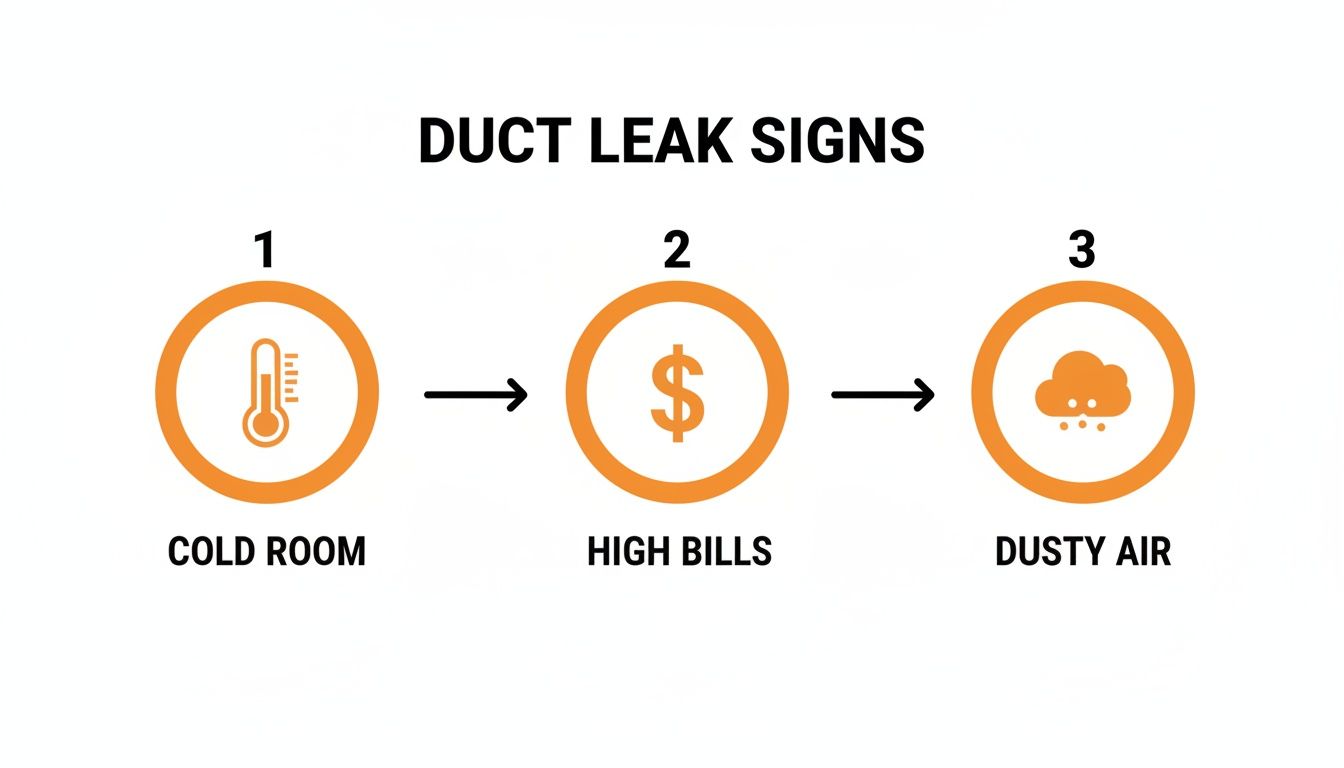
As you can see, problems like inconsistent room temperatures, spiking energy costs, and unusually dusty air are all direct results of a leaky duct system.
Sealing Techniques and Materials
Once every last leak has been mapped out, the real sealing work begins. This is where using professional-grade materials makes all the difference. Technicians use a thick, gooey substance called mastic sealant that gets painted directly onto the leaks. When it dries, it creates a tough, flexible, and permanent seal that can easily withstand the temperature swings and vibrations of your HVAC system for years to come. For certain types of joints or larger gaps, they’ll use specialized foil tapes along with the mastic.
It's absolutely critical to understand that the silver "duct tape" you buy at the hardware store is not suitable for sealing ducts. It just doesn't have the adhesive strength or durability. It will quickly dry out, crack, and peel away under the extreme conditions inside your ductwork.
The quality of the sealant and how it's applied are the keys to a repair that lasts. Using the right tool for the job is always important, whether it's for your roof or your ductwork. While it’s a different application, this guide to roof leak repair sealant really drives home the importance of using the right material. Of course, finding a qualified expert is just as crucial, and our article on who cleans air ducts and finding the right pro can help you make a smart choice.
Verification and Final Testing
The final step is arguably the most important one: verification. After all the sealant has been applied and has cured, the technicians will run the exact same diagnostic tests they started with. By re-testing with the blower door, they can measure the precise reduction in air leakage.
This isn’t guesswork; it’s immediate, tangible proof that the job was a success. This final test confirms that your system is now airtight and performing at peak efficiency, ready to deliver that precious cool air exactly where you paid for it to go.
DIY Duct Sealing vs. Professional Services
When you discover a leaky duct, the first thought for many handy homeowners in the Avondale area is, "Can I just fix this myself?" It's a tempting idea. You spot an obviously disconnected vent or a gap you can easily reach, and a quick run to the hardware store for some foil tape and mastic sealant seems like an easy win.
Sure, for a single, minor, visible leak, a DIY patch can feel like a solution. But here’s the thing: that visible gap is almost never the whole story. The vast majority of your ductwork is snaked through attics, crawlspaces, and behind walls, completely out of sight. The most significant leaks, the ones truly costing you money, are lurking at hidden joints and connections you'll never see. Tackling it yourself is like trying to fix a plumbing leak with only the drips you can see, ignoring the gushing pipe behind the drywall.
Why Professional Expertise Matters
The real difference between a weekend patch job and a professional service boils down to two things: diagnostics and materials. A certified technician doesn't just eyeball the problem. They bring in specialized equipment like blower doors and theatrical fog machines to pressurize your entire duct system. This process makes every single leak, from tiny pinholes to major cracks, visible, ensuring nothing gets missed.
Professionals also come armed with contractor-grade materials built to last. The mastic and tapes we use are designed to withstand the intense temperature swings and constant vibrations of an HVAC system year after year. Off-the-shelf products from big-box stores often can't handle that stress, eventually cracking and failing. A pro job is a permanent solution, not just a temporary fix. For other ways to improve your home's air system, check out our DIY homeowner's guide on how to clean air ducts to pair with your sealing efforts.
A professional service guarantees comprehensive results by testing the system both before and after the sealing process. This provides measurable proof of improvement in airflow and efficiency, something a DIY project simply cannot offer.
Comparing DIY vs. Professional Duct Sealing
So, should you grab the tape or call a pro? The choice really hinges on what you want to achieve. Are you looking for a quick band-aid on a visible issue, or do you want a comprehensive solution that truly boosts your home’s efficiency and air quality?
This table breaks down the key differences to help you decide which path is right for you.
Consideration | DIY Approach | Professional Service |
|---|---|---|
Effectiveness | Only addresses visible, accessible leaks; misses the majority of the problem. | Seals 100% of the duct system using diagnostic tools to find hidden leaks. |
Materials | Uses consumer-grade products that may degrade over time. | Applies professional-grade mastic and tapes for a durable, long-term seal. |
Cost | Lower upfront cost for materials but can lead to repeated efforts. | Higher initial investment but provides a permanent fix and maximizes energy savings. |
Verification | No way to measure the actual improvement in system performance. | Includes pre- and post-sealing tests to verify leakage reduction and efficiency gains. |
Ultimately, while a DIY approach might seem cheaper upfront for a minor fix, a professional service delivers a verifiable, long-term solution that pays for itself through energy savings and improved home comfort.
The Real-World Benefits of a Sealed Duct System

Once the job is done, the improvements you'll see aren't just theoretical numbers on a clipboard. They're real, tangible results you can feel in your home and see on your utility bills. Sealing your ducts essentially takes your HVAC system from a state of constant struggle and puts it into peak performance mode, delivering a powerful return on your investment.
The most immediate change you'll notice is a huge drop in energy waste. With a sealed system, nearly all the conditioned air your furnace or AC works so hard to produce actually gets delivered where you want it: your living spaces. This means your system doesn't have to run as long or as hard to keep your home at the temperature you set on the thermostat, which naturally leads to lower energy bills.
Consistent Comfort and Cleaner Air
Beyond just the savings, you’ll feel a dramatic improvement in your home’s overall comfort. You know those frustrating hot and cold spots that seem to plague certain rooms? Those will finally disappear. Airflow becomes balanced and strong throughout the house, creating a consistently comfortable environment no matter which room you're in.
A sealed system also acts as a powerful barrier against outside junk getting into your air. Leaks are notorious for pulling in dust, pollen, and even nasty insulation fibers from your attic or crawlspace. Sealing them off gives your indoor air quality a major boost, which is especially critical for anyone in your family dealing with allergies or asthma.
The financial impact is significant, as professional duct sealing can directly address major sources of HVAC energy loss. Airtight ducts mean your system operates more efficiently, turning wasted energy into real savings.
This is because sealing can eliminate substantial air leakage, a surprisingly common problem in many North American homes. Market analyses show that professional sealing often leads to energy savings of 10% to 20% on heating and cooling costs by drastically cutting down on wasted airflow. To get a better sense of how these savings add up, you can explore more insights on duct sealing systems market research.
A Healthier, More Efficient Home
Ultimately, the benefits of professional duct sealing create a domino effect that improves your entire home. You're getting more than just patched-up leaks; you're investing in a more efficient, comfortable, and healthier place to live. The combined advantages are pretty clear:
Lower Utility Bills: Your HVAC runs less, which directly translates to monthly savings.
Improved Air Quality: You stop contaminants from being pulled into the air you breathe.
Even Temperatures: Say goodbye to uneven heating and cooling for total comfort.
Reduced HVAC Strain: A system that doesn't have to overwork itself is a system that lasts longer.
Answers to Your Duct Sealing Questions
It's completely normal to have a few questions before you decide to get your ducts sealed. Making a smart decision for your home’s health and efficiency means knowing exactly what to expect. Here are the answers to some of the questions we hear most often from Phoenix homeowners.
How Long Does the Whole Process Take?
You’ll be happy to know that professional duct sealing is a pretty quick job. For a typical home here in the Valley, the entire appointment, from the first diagnostic test to the final check, usually takes somewhere between 3 to 6 hours.
Of course, the exact timing can shift a bit. A larger home with a more complicated duct system might take a little longer than a smaller house with easy-to-access ductwork. But either way, we're in and out in less than a day.
Is Duct Sealing Noisy or Messy?
Not at all. We know it's your home, and our certified technicians treat it with respect. The entire process is designed to be clean and cause as little disruption as possible. We use drop cloths and wear shoe covers to protect your floors and furniture.
The only time you'll hear much noise is during the testing phases when we use equipment like a blower door, and that’s only for a short time. The actual work of sealing the ducts is quiet, so you can go about your day without much interruption.
When a professional team uses top-notch materials like mastic sealant, duct sealing isn't just a temporary patch. It's a long-lasting repair that should hold up for many, many years, a permanent upgrade to your HVAC system, not just another maintenance task.
How Often Should I Get My Ducts Sealed?
Think of professional duct sealing as a one-and-done upgrade, not a recurring maintenance chore. It's nothing like changing your air filters every month. When it's done right, a proper seal is built to last.
Our technicians use durable, professional-grade materials that can handle the temperature swings and vibrations from your HVAC system for years to come. It’s a foundational fix that restores the integrity of your ductwork for the long haul.
Ready to improve your home's air quality and start seeing real savings on your energy bills? The certified experts at Purified Air Duct Cleaning have the tools and experience to seal your ductwork correctly the first time. Contact us today for a free quote and breathe easier in your Avondale or Phoenix-area home.