

7 Clear Signs of Dirty Air Ducts You Shouldn't Ignore in 2025
The air you breathe at home should be clean and refreshing, but often it's hiding a dirty secret. Your home's HVAC system, the very thing designed to keep you comfortable, can become a significant source of indoor air pollution if the air ducts are neglected. Over time, this extensive network of hidden pathways accumulates dust, pet dander, mold spores, and other microscopic contaminants. These particles then get circulated into every room, every time the furnace or air conditioner kicks on.
Many homeowners overlook the ductwork, attributing persistent allergy flare-ups, musty smells, or rising energy costs to other household issues. Recognizing the early signs of dirty air ducts is the first, most crucial step toward creating a healthier, more efficient living environment. Beyond the ducts, various elements contribute to the air you breathe; for instance, understanding how different bedding choices can impact your indoor air quality can be insightful for a holistic approach to a cleaner home.
This comprehensive guide will walk you through seven clear indicators that your ductwork needs immediate attention. We'll provide actionable steps to diagnose the problem and offer practical advice on when it's time to call in the professionals. Pay close attention; your home might be sending you signals you can't afford to ignore.
1. Visible Dust and Debris Around Air Vents
One of the most straightforward and unmistakable signs of dirty air ducts is the visible accumulation of dust, dirt, and debris around your home's air vents. When your HVAC system turns on, it forces air through the ductwork. If the ducts are laden with contaminants, this air movement can dislodge particles and blow them out, causing them to settle on and around the vent covers (also known as registers or grilles).
This isn't just ordinary household dust; it's a clear signal that the internal pathways of your ventilation system are compromised. Essentially, your air ducts are acting as a reservoir for pollutants, and every time the system runs, it distributes them into your living space.
Why Visible Dust is a Key Indicator
Dusty vents directly reflect the condition of the air circulating through your home. The buildup indicates that the volume of airborne particles is overwhelming your HVAC filter or that there are leaks in the ductwork pulling in dust from unconditioned spaces like attics or crawlspaces.
Key Insight: The dust you see on your vents is often just the "tip of the iceberg." It represents a much larger accumulation of dust, pet dander, pollen, and even mold spores hidden deep within the duct system.
Ignoring this sign means you are continuously breathing in this contaminated air, which can aggravate allergies and respiratory conditions. While some dust is normal, thick, fuzzy layers that reappear shortly after cleaning are a definitive warning sign that your ducts need attention. If you're constantly battling dust despite regular cleaning, it might be time to investigate the source. Learn more about the common culprits behind a dusty home and how to address them in our guide to a less dusty house.
How to Check Your Vents
Perform a quick DIY inspection to assess the situation:
Monthly Visual Check: Once a month, walk through your home and look at each supply and return air vent. Note any that have a visible coating of dust.
The Flashlight Test: Turn off your HVAC system. Remove a vent cover and use a bright flashlight to peer inside the duct opening. You may see clumps of dust, cobwebs, or other debris clinging to the interior surfaces.
Track Accumulation: Take photos of a few key vents after you clean them. Check back in a week or two and compare. Rapid re-accumulation points to a significant internal duct problem.
2. Increased Allergy and Respiratory Symptoms
If you or your family members find yourselves coughing, sneezing, or struggling with watery eyes more often inside your home, your air ducts could be the culprit. Dirty ductwork can become a breeding ground for allergens and irritants like dust mites, pet dander, mold spores, and bacteria. When your HVAC system activates, it blows these contaminants directly into your living spaces, circulating them for everyone to breathe.
This constant exposure can trigger or worsen symptoms for individuals with asthma, allergies, or other respiratory sensitivities. The very system meant to keep you comfortable could be actively degrading your indoor air quality and affecting your health, making this one of the most critical signs of dirty air ducts to recognize.
Why Health Symptoms Are a Key Indicator
An increase in respiratory issues that seem to improve when you leave the house is a strong signal that the problem is your indoor environment. While seasonal allergies are common, persistent indoor symptoms point to an internal source of pollutants being continuously circulated. Your home should be a safe haven, not a source of irritation.
Key Insight: Your HVAC system can circulate the air in your home five to seven times per day. If the ducts are contaminated, each cycle is another opportunity for allergens to enter your lungs and trigger a reaction.
Ignoring these health warnings can lead to chronic respiratory problems and a decreased quality of life. Understanding the link between your symptoms and your home's air system is the first step toward a healthier living space. To dive deeper into this topic, you can explore the various health problems linked to dirty air ducts.
How to Track Your Symptoms
Connect your health to your home's air quality with these simple steps:
Keep an Air Quality Diary: For a month, log when allergy or asthma symptoms flare up. Note whether you were indoors, if the HVAC system was running, and how you felt after spending time outdoors.
Monitor Vulnerable Family Members: Pay close attention to children, the elderly, or anyone with pre-existing conditions like asthma. A noticeable increase in their symptoms, especially after the heat or AC kicks on, is a significant red flag.
Note Post-Cleaning Relief: After a thorough house cleaning, do symptoms temporarily improve? If they quickly return, it suggests the source is airborne and likely originating from the ductwork.
3. Reduced Airflow and Weak Air Pressure from Vents
A noticeable drop in the force of air coming from your vents is a classic symptom of obstructed ductwork. If you find that some rooms are stuffy and difficult to heat or cool while others are comfortable, the problem might not be your HVAC unit itself, but rather the pathways it uses to deliver conditioned air. When ducts become clogged with thick layers of dust, debris, or even pests' nests, the volume of air that can pass through is significantly restricted.
This obstruction forces your HVAC system to work harder to push air through the narrowed passages, leading to weak pressure at the supply vents. The result is uneven temperature distribution, with rooms farther from the central unit often suffering the most. This is one of the more subtle yet critical signs of dirty air ducts because it directly impacts both your comfort and your system's efficiency.
Why Airflow is a Key Indicator
Proper airflow is the backbone of an efficient HVAC system. When it’s compromised, your system cannot perform its primary function of heating and cooling your home effectively. The weak pressure is a direct physical sign that something is blocking the path, and that "something" is usually a significant accumulation of contaminants that have built up over years.
Key Insight: Weak or uneven airflow isn't just a comfort issue; it's a clear signal that your HVAC system is under strain. This strain can lead to increased wear and tear, higher energy consumption, and a greater risk of premature system failure.
Ignoring this sign means you're paying more on utility bills for less comfort. The system runs longer cycles trying to reach the thermostat's set temperature, but the blockages prevent it from succeeding efficiently. Discover expert solutions for clogged air ducts and learn how to prevent further system damage.
How to Check Your Airflow
You can perform a simple check to gauge your system's airflow performance:
The Hand Test: Turn your HVAC system on and walk from room to room, placing your hand over each supply vent. Note any significant differences in air pressure. A vent that barely pushes air compared to others is a red flag.
Compare Rooms: Pay close attention to rooms that always seem too hot or too cold. Is the airflow in these rooms noticeably weaker than in more comfortable areas? This often points to a clog in that specific duct line.
Check Your Filter: A severely clogged air filter is a common cause of reduced airflow. Before assuming the ducts are the problem, check your filter and replace it if it's dirty. If airflow improves dramatically, the filter was the culprit; if not, the issue likely lies deeper within the ductwork.
4. Mold Growth and Musty Odors
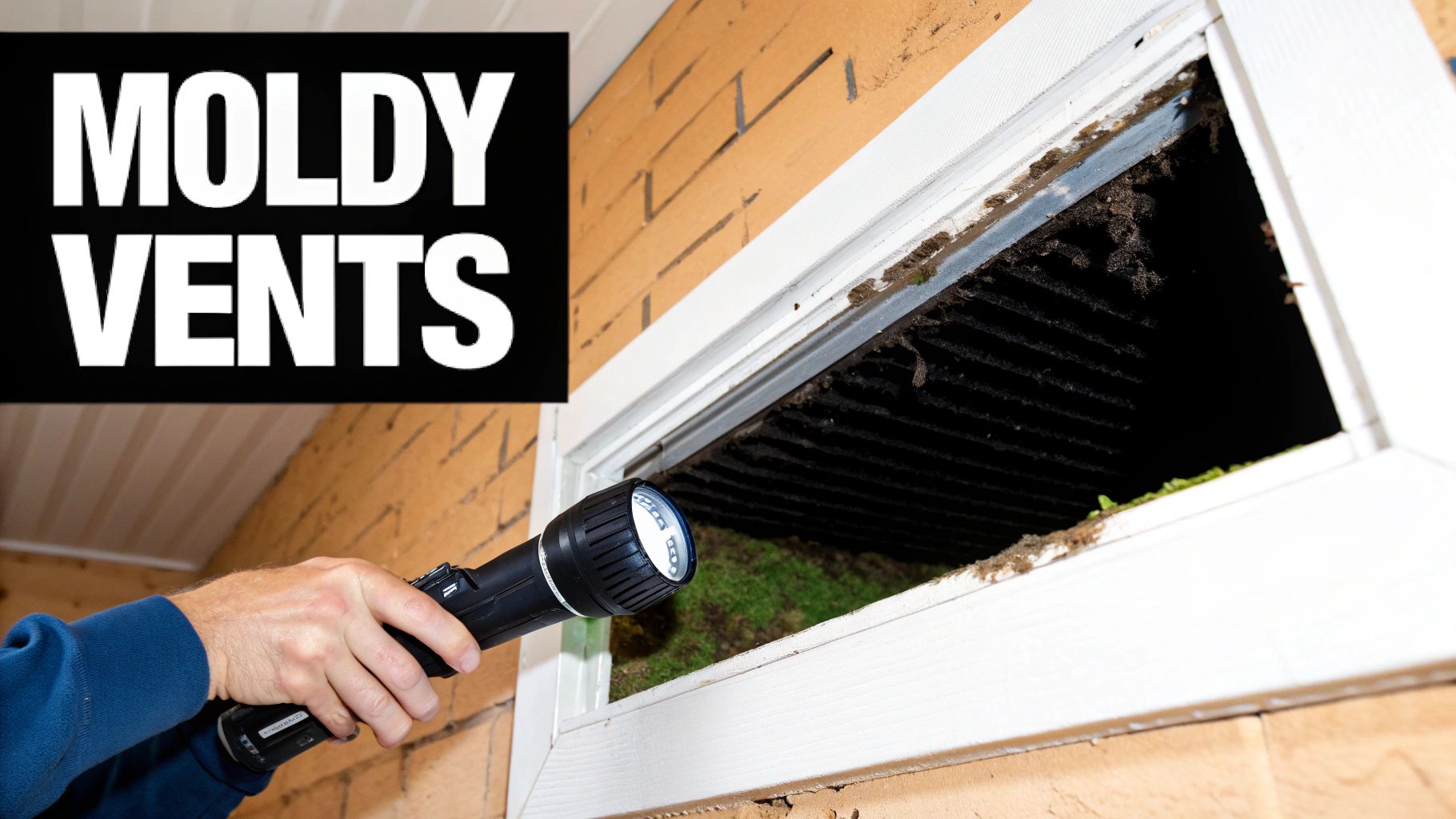
One of the most alarming and hazardous signs of dirty air ducts is the presence of mold or a persistent musty smell emanating from your vents. When moisture combines with the dust, dirt, and organic debris trapped inside your ductwork, it creates the perfect breeding ground for mold, mildew, and other microbial contaminants. As your HVAC system operates, it circulates these harmful spores throughout your entire home.
This isn't just an unpleasant odor; it's a direct indicator that your ventilation system is contaminated and actively spreading pollutants. A musty or damp smell is often the first and most obvious clue that mold has taken hold deep within the dark, hidden channels of your ductwork, posing a significant risk to both your property and your health.
Why Mold and Odors are a Key Indicator
A musty odor is a direct byproduct of microbial growth. If you only notice this smell when the HVAC system is running, it strongly suggests the source is within the ducts or the unit itself. Common causes include oversized AC units that don't dehumidify properly, leaks in the ductwork pulling in damp air from crawlspaces, or condensation buildup that wasn't properly drained.
Key Insight: Ignoring a musty smell allows mold to proliferate. This not only degrades your indoor air quality by releasing mycotoxins and allergens but can also lead to costly remediation and damage to the ductwork itself.
Visible mold around vents or registers is a late-stage sign that the internal problem is severe. Addressing the underlying moisture issue and removing the contamination is critical. For a comprehensive overview, explore our complete guide to air duct cleaning and mold removal.
How to Check for Mold
Perform a careful inspection to identify potential microbial growth:
The Smell Test: Turn on the fan setting of your HVAC system and walk from vent to vent. Try to pinpoint if the musty odor is stronger in certain rooms or coming from specific vents.
Visual Inspection: Using a powerful flashlight, carefully look inside the return and supply vents for any signs of black, green, or white speckled growth. Check the vent cover itself for any discoloration.
Monitor Humidity: Use a hygrometer to check your home's indoor humidity levels. Consistently high levels above 50-60% create an environment where mold can thrive.
5. Inconsistent or Uneven Room Temperatures
If you find yourself constantly adjusting the thermostat because some rooms feel like a sauna while others feel like a freezer, the problem might not be your HVAC unit but your ductwork. When ducts become clogged with dust, debris, or even pests' nests, they can severely restrict airflow. This blockage prevents conditioned air from reaching its intended destination, leading to noticeable and frustrating temperature imbalances throughout your home.
This sign of dirty air ducts is often overlooked, with homeowners blaming an aging furnace or a faulty thermostat. However, restricted airflow is a classic symptom of a compromised ventilation system. The heated or cooled air simply cannot travel efficiently through the obstructed pathways, leaving certain areas underserved and uncomfortable.
Why Temperature Imbalances are a Key Indicator
Properly functioning ductwork is designed to distribute air evenly, maintaining a consistent temperature as set by your thermostat. When blockages occur, the system has to work harder to push air through, yet it still fails to heat or cool certain rooms effectively. For example, a bedroom that is always 10°F warmer than the living room in the summer could be suffering from a blockage in the duct line that serves it.
Key Insight: Significant temperature differences between rooms are not normal. They are a strong indicator that your HVAC system's circulatory network, the ductwork, is clogged and needs to be cleared for proper airflow and comfort.
Ignoring this issue leads to more than just discomfort. It forces your HVAC system to run longer and harder, increasing wear and tear on expensive components and driving up your energy bills. Addressing the ductwork blockage restores balance and improves overall system efficiency.
How to Check for Uneven Temperatures
You can perform a simple diagnostic to see if clogged ducts are the culprit:
Create a Temperature Map: Use a reliable digital thermometer to measure the temperature in each room of your house. Record the readings and note any rooms that are more than a few degrees different from the thermostat's setting.
Check Vents and Dampers: Ensure all supply vents are open and not blocked by furniture, rugs, or curtains. Also, check your ductwork for dampers, which are small levers that control airflow; make sure they are in the open position for the rooms in question.
Feel the Airflow: With the HVAC system running, place your hand over each supply vent. The airflow should feel relatively strong and consistent from one room to the next. Weak or non-existent airflow from a specific vent is a clear sign of a blockage.
6. Higher Energy Bills and System Strain
A sudden or gradual increase in your monthly energy bills, without a corresponding change in your usage habits or a major rate hike, is a significant financial red flag. This unexplained cost spike is often one of the less obvious signs of dirty air ducts, directly impacting your wallet by forcing your HVAC system to work much harder to heat or cool your home.
When ducts are clogged with dust, debris, and other contaminants, airflow becomes restricted. Your furnace or air conditioner must run longer and more intensely to push air past these blockages and achieve the temperature set on your thermostat. This increased workload translates directly into higher energy consumption and, consequently, more expensive utility bills.
Why System Strain is a Key Indicator
An inefficient HVAC system is an expensive one. The buildup inside your ducts acts like a clog in an artery, forcing the heart of your home’s climate system to overexert itself. This not only inflates your energy costs by up to 30% but also puts significant wear and tear on expensive components like the blower motor and compressor, leading to a higher risk of premature breakdowns and costly repairs.
Key Insight: Dirty air ducts create a vicious cycle: restricted airflow makes the system work harder, which consumes more energy and increases component wear, further reducing overall efficiency.
Addressing clogged ducts is not just about air quality; it's a crucial step in maintaining your HVAC system's health and operational efficiency. For homeowners, this can mean saving hundreds of dollars annually, while for commercial properties, the savings can be thousands. You can explore more strategies for boosting system performance in our guide to improving HVAC efficiency.
How to Check for Inefficiency
Pinpointing dirty ducts as the cause of high bills requires a bit of detective work:
Compare Bills Year-Over-Year: Pull out your utility bills from the same month last year. If your usage patterns and thermostat settings are similar but the cost is noticeably higher, duct blockages could be the culprit.
Monitor System Runtime: If you have a smart thermostat, check its usage reports. Are your heating or cooling cycles running significantly longer than they used to? This indicates the system is struggling.
Listen for Strain: Pay attention to the sounds your HVAC system makes when it kicks on. Unusual straining noises or longer-than-normal run times before it shuts off are clear signs of an overtaxed system.
7. Visible Duct Damage, Leaks, or Disconnections
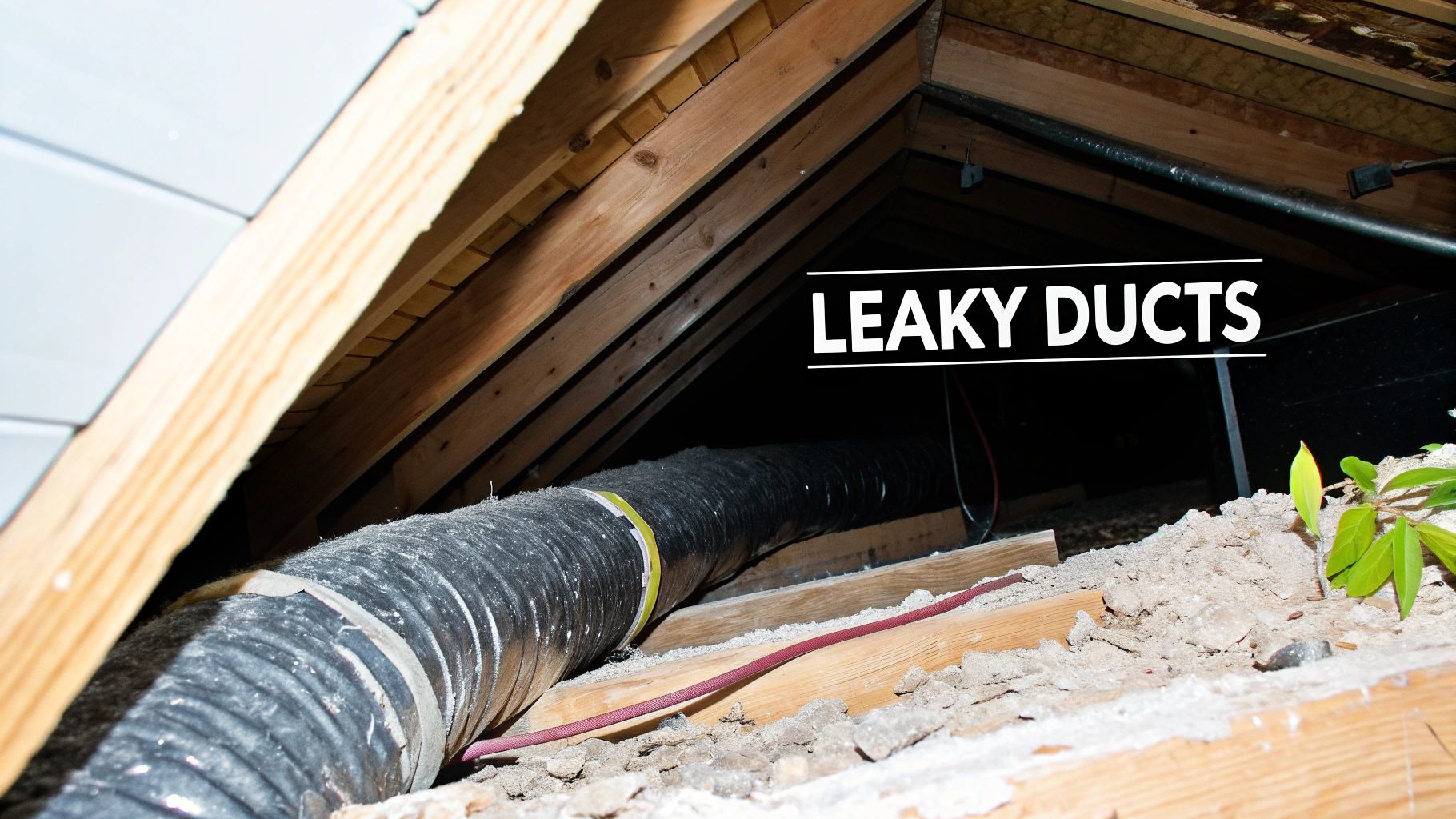
Beyond the dust and allergens accumulating inside, physical damage to the ductwork itself is a critical sign that your system needs professional attention. Issues like holes, tears, separated seams, or completely disconnected sections create major problems for both air quality and HVAC efficiency. These breaches act as gateways, allowing conditioned air to escape into unconditioned areas and, more importantly, pulling in dust, insulation fibers, and contaminants from attics, crawlspaces, and wall cavities.
This isn't just about a minor inefficiency; it's a direct compromise of your home's entire ventilation system. When ductwork is damaged, it can no longer deliver clean, filtered air as intended. Instead, it actively draws in and circulates unfiltered, dirty air throughout your living space, making it one of the most significant signs of dirty air ducts that homeowners can observe.
Why Structural Integrity is Crucial
Damaged ducts undermine the core function of your HVAC system. A well-sealed duct system is a closed loop, ensuring air from your home is pulled through the filter, conditioned, and returned. When there are leaks, this loop is broken. The system’s suction can pull in everything from fiberglass insulation and attic dust to pest droppings, circulating these hazardous materials directly into the air you breathe.
Key Insight: A small tear or disconnected joint can introduce more contaminants into your home than years of normal dust accumulation. It's an active breach that pollutes your air every time the system runs.
Addressing visible damage goes beyond a simple cleaning. It often requires professional duct sealing and repair to restore the system's integrity. Ignoring these physical flaws means any cleaning efforts will be temporary, as the ducts will quickly become contaminated again. Watch the video below to understand how professionals identify and resolve these hidden issues.
How to Inspect for Duct Damage
You can perform a basic inspection of accessible ductwork to look for obvious problems:
Check Accessible Areas: Carefully examine any ducts you can see in your attic, basement, or crawlspace. Look for tears in flexible ducts or gaps in the seams of metal ducts.
Look for Disconnections: Pay close attention to where ducts connect to the main plenum or to individual vents. These joints are common failure points.
Note Deterioration: Check for crumbling or peeling insulation tape, corrosion on metal ducts, or crushed sections of flexible ductwork that could restrict airflow.
Document with Photos: If you find any damage, take clear pictures. This will be invaluable when you call a professional for an assessment and repair.
Comparison of 7 Key Signs of Dirty Air Ducts
Item | 🔄 Implementation Complexity | ⚡ Resource Requirements | ⭐ Expected Outcomes | 💡 Ideal Use Cases | 📊 Key Advantages |
|---|---|---|---|---|---|
Visible Dust and Debris Around Air Vents | Low: visual inspection and surface cleaning; pro cleaning optional | Low: vacuum, flashlight; minimal cost for basic remediation | Moderate: quick cosmetic and local airflow improvement; may not remove internal buildup | Routine checks; homes with pets or nearby construction | Easy to detect; low-cost action; highlights affected rooms |
Increased Allergy and Respiratory Symptoms | Medium: requires symptom tracking and professional assessment | Medium: air quality tests, allergist consults, professional cleaning | High: meaningful health improvements when contamination is addressed | Households with asthma, allergies, young children, elderly | Health-driven justification for cleaning; noticeable symptom relief |
Reduced Airflow and Weak Air Pressure from Vents | Medium: diagnostic steps to locate blockages or leaks | Medium: hand tests, anemometer, professional inspection/cleaning | High: restores airflow and comfort after clearing obstructions | Rooms with poor cooling/heating, long HVAC runtimes | Direct comfort improvement; measurable airflow gains |
Mold Growth and Musty Odors | High: requires mold remediation and moisture control | High: mold remediation, repairs, dehumidification, professional labor | High: removes health hazards and persistent odors when fully remediated | Humid climates, prior water damage, persistent musty smells | Addresses serious health risks; prevents ongoing contamination |
Inconsistent or Uneven Room Temperatures | Medium: may require duct inspection plus design/insulation fixes | Medium: thermometers, duct sealing, insulation or damper adjustments | Moderate–High: improved temperature balance after fixes | Multi‑story homes, rooms with hot/cold spots | Improves comfort and can lower energy use when resolved |
Higher Energy Bills and System Strain | Medium: diagnosis plus cleaning/sealing and maintenance | Medium: energy audit, smart thermostat, sealing or cleaning costs | High: potential measurable energy savings and increased system life | Homes with rising bills or long HVAC cycles | Financial ROI from energy savings; reduces HVAC wear |
Visible Duct Damage, Leaks, or Disconnections | High: structural repair and professional sealing often required | High: repair materials, replacement sections, professional labor | High: restores efficiency and prevents contamination when repaired | Attics/basements, post-renovation damage, visible tears or gaps | Immediate efficiency gains; prevents ingress of dust/pests and further damage |
Breathe Easier with Professional Duct Cleaning
Recognizing the subtle and overt signs of dirty air ducts is the first critical step toward reclaiming a healthier, more efficient, and more comfortable indoor environment. Throughout this guide, we've explored the seven key indicators that demand your attention, from the visible dust collecting around your vents to the invisible strain placed on your HVAC system and your wallet. Each sign tells a story about the hidden world within your ductwork, a story of accumulated contaminants, potential health risks, and wasted energy.
Ignoring these warnings, such as persistent allergy symptoms, unexplained musty odors, or inconsistent room temperatures, means overlooking a core component of your home's respiratory system. Your air ducts are the lungs of your house, and when they are clogged with dust, debris, pet dander, or mold, the air you breathe every day suffers. The consequences are not just a matter of comfort; they are a matter of health for you and your family, especially for those with asthma, allergies, or other respiratory sensitivities.
From Recognition to Resolution: Your Actionable Next Steps
The journey from identifying a problem to implementing a solution is straightforward. You now have the knowledge to perform basic visual inspections and connect symptoms like high energy bills or poor airflow directly back to the health of your ductwork. The next move is to transition from DIY assessment to professional intervention. While a quick look can confirm a suspicion, only specialized equipment can reveal the full extent of the issue and provide a comprehensive clean.
Think of it this way: you can wipe dust off a vent cover, but you cannot reach deep into the complex network of ducts to remove years of buildup. Certified professionals use advanced tools like high-powered vacuums, rotating brushes, and video inspection cameras to ensure every inch of your system is thoroughly cleaned and sanitized. This is not just cleaning; it is a restoration of your home's air quality.
Key Takeaway: A professional duct cleaning service does more than just remove dust. It eliminates allergens, mold spores, and other pollutants, directly improving your indoor air quality, enhancing HVAC system efficiency, and potentially lowering your monthly energy costs.
By taking decisive action based on the signs of dirty air ducts you've learned to spot, you invest in long-term benefits. You are not just solving an immediate problem like a bad smell or a dusty room. You are creating a healthier living space, extending the lifespan of your expensive HVAC equipment, and ensuring your home runs as efficiently as possible. This proactive approach turns a maintenance task into a powerful upgrade for your family's well-being and your home's overall health.
Ready to transform your home's air quality and address the signs of dirty air ducts you’ve noticed? Contact Purified Air Duct Cleaning today for a comprehensive inspection and a free, no-obligation quote. Let our certified experts in Avondale, AZ, and the greater Phoenix area restore your system to peak performance and help your family breathe cleaner, healthier air.