

A Practical Guide to Improving Home Air Quality
To really get a handle on your home's air quality, you first need to understand what you're up against. It’s a surprising fact, but the air inside your home can be far more polluted than the air outside; often two to five times more, according to the EPA. Pinpointing these invisible troublemakers is the essential first step to creating a healthier space for your family.
What’s Lurking in Your Home's Air?
Most of us worry about outdoor pollution like smog or pollen drifting inside. While those are definitely concerns, the real issue is often what our homes trap and concentrate inside. We create our own little ecosystem of contaminants, many of which are completely invisible but can wreak havoc on our health, especially for anyone with allergies or asthma.
Think about it: many of us spend up to 90% of our time indoors, breathing this concentrated air. This realization is why the global air duct cleaning service market, currently valued at USD 3.89 billion, is projected to more than double to USD 8.04 billion by 2034. It's clear that homeowners are waking up to the critical importance of managing what they breathe every day.
Common Household Air Pollutants
So, what are these invisible invaders? More often than not, they come from everyday items and activities we barely give a second thought. Identifying them is the key.
Let's break down some of the most common sources of indoor air pollution you'll find in almost any home. The table below gives you a quick snapshot of what to look for and why it matters.
Common Indoor Air Pollutants and Their Sources
Pollutant Type | Common Sources | Potential Health Impact |
|---|---|---|
Biological Contaminants | Dust mites, pet dander, mold spores, cockroaches | Allergies, asthma attacks, respiratory infections |
Volatile Organic Compounds (VOCs) | Paints, cleaning supplies, air fresheners, new furniture, cosmetics | Headaches, nausea, dizziness, eye/nose/throat irritation |
Combustion Pollutants | Gas stoves, furnaces, wood-burning fireplaces, tobacco smoke | Carbon monoxide poisoning, respiratory issues, fatigue |
Recognizing these sources in your daily life is the first step toward clearing the air. The combined effect of these pollutants can easily turn your home into a reservoir of irritants.
Tackling each source one by one is always more effective than searching for a single magic bullet. A systematic approach will give you the best, longest-lasting results.
Conducting a Simple Home Audit
You don't need fancy equipment to get started. Just walk through your home, room by room, and use your senses.
Start by sniffing around for musty smells or looking for visible signs of moisture, especially in basements, bathrooms, and under sinks. These are dead giveaways for mold. To learn more about what to look for, check out these 8 Unmistakable Signs of Mold in House.
Next, take a look at the products you use. Are you a fan of heavily scented cleaners, candles, or plug-in air fresheners? They might smell nice, but they're often just pumping VOCs into your air. Finally, pay attention to where your pets hang out, that's where dander and hair will be most concentrated.
For a deeper dive, our guide on what indoor air pollution is and how it affects your home has even more detail. This quick audit will give you a solid foundation for building your action plan.
Simple Actions for Immediately Fresher Air
Improving the air quality in your home doesn't have to mean a huge project or a big investment right off the bat. You can actually make a noticeable difference with a few simple, intentional changes you can start today. These quick, DIY fixes are all about diluting the pollutants inside and cutting down on their sources, giving you a powerful first line of defense.
Sometimes the simplest strategy really is the best one: just open your windows. Creating a bit of cross-ventilation for even 10-15 minutes a day can do wonders, flushing out that stale, pollutant-filled air and swapping it for fresh outdoor air. It’s a surprisingly effective way to cut down on the VOCs and other contaminants that build up from everyday life.
On top of that, get into the habit of using your kitchen and bathroom exhaust fans every single time you cook or shower. These fans were put there for a reason: to pull moisture, grease, and pollutants directly out of your home before they have a chance to spread. Letting them run for a few extra minutes after you’re done helps make sure nothing is left lingering.
Adopt Smarter Cleaning Habits
How you clean can be a game-changer for your home's air quality, but only if you're doing it right. A few small tweaks to your routine can make a huge difference in cutting down on airborne particles like dust mites and pet dander, which are notorious triggers for allergies.
First things first, take a look at your vacuum. Using a model with a HEPA (High-Efficiency Particulate Air) filter is non-negotiable if you're serious about clean air. These filters are engineered to trap the microscopic particles that a standard vacuum just spits right back out into the room.
A few other pro tips:
Wash Bedding Weekly: Use hot water. It's the most effective way to kill off the dust mites that love to call your pillows and sheets home.
Declutter Surfaces: It’s simple math. Fewer things sitting around collecting dust means less dust floating in the air.
Damp Dusting: Ditch the feather duster. A damp microfiber cloth actually traps the dust instead of just pushing it around for someone to breathe in later.
Remember, the whole point of cleaning for air quality is removal, not just redistribution. Every single particle you can trap in a filter or a cloth is one less particle your family has to breathe.
Make Conscious Swaps for a Healthier Home
Beyond just cleaning, think about the products you bring into your house in the first place. So many conventional cleaning sprays, scented candles, air fresheners, and even furniture can release harmful VOCs into the air through a process called off-gassing. It's often what causes that stuffy, chemical smell.
Try switching to natural cleaning solutions like good old vinegar and water, or look for unscented, plant-based products at the store. Bringing in a few houseplants, like Snake Plants or Spider Plants, can help too. They aren't a magic bullet, but they are known to absorb certain toxins from the air.
For more hands-on advice, check out our guide to simple tips for a healthier home. It’s these small, consistent changes that add up over time to create a much fresher and healthier environment for everyone inside.
How Your HVAC System Impacts Air Quality
It's helpful to think of your HVAC system as your home's lungs. It pulls air in, conditions it, and then circulates it through every single room, day and night. When it’s clean and well-maintained, your HVAC is a powerful ally for better air quality. But a neglected system? It can quickly turn into the biggest source of indoor pollution you own.
This isn't just a small problem. Over time, that complex network of air ducts becomes a five-star resort for everything floating in your air, like dust, pet dander, pollen, and even nasty mold spores. Each time your furnace or AC kicks on, it blasts these trapped contaminants right back into your living spaces, directly affecting the air you and your family breathe.
The Hidden Costs of Dirty Ductwork
The trouble goes way beyond just circulating dirty air. All that built-up gunk forces your HVAC unit to work much harder just to push air through clogged pathways. This extra strain leads directly to higher energy use and, you guessed it, more expensive utility bills.
A dirty system doesn't just hit your wallet; it can also shorten the lifespan of your expensive HVAC equipment. The constant overwork causes premature wear and tear on crucial parts like the blower motor and coils. This makes professional duct cleaning much more than a simple chore; it's a critical piece of your home maintenance puzzle.
Key Takeaway: A clean HVAC system is the foundation of a healthy home. It not only reduces airborne contaminants but also boosts energy efficiency and protects your long-term investment in the system itself.
Telltale Signs Your Ducts Need Attention
So, when is it time to call in the pros? Your home will often give you some pretty clear signals that your ducts are overdue for a cleaning. If you pay attention to these clues, you can tackle the problem before it spirals.
Keep an eye out for these common red flags:
Visible Dust and Debris: If you see little puffs of dust shooting out of your vents when the system starts, that's a dead giveaway the ducts are loaded.
Persistent Musty Odors: A lingering stale or moldy smell that you just can't pinpoint often comes from microbial growth hiding inside the ductwork.
Increased Allergy Symptoms: Noticing a sudden spike in allergy or asthma flare-ups in your family? It could mean your HVAC is circulating a high concentration of allergens.
Poor Airflow: If some rooms feel stuffy or aren't getting the same airflow they used to, a blockage in the ducts is a likely culprit.
Many homeowners don't realize how closely linked their carpets and HVAC system are when it comes to air quality. You can learn more about the impact of carpets and HVAC on Indoor Air Quality. For proactive homeowners, our guide on how to maintain your HVAC system offers tips for peak performance and can help you stay ahead of these issues.
The energy savings alone are a major plus; clean systems improve airflow and can potentially slash utility costs by 15-30%. For Phoenix-area residents served by Purified Air Duct Cleaning, this also means getting access to NASA-certified ActivePure systems that are proven to neutralize over 99.98% of airborne pathogens. It’s no surprise that since the pandemic, service inquiries have jumped 47% globally, highlighting a clear shift toward making indoor air a top priority.
Using ActivePure for Advanced Air Purification
So, you've got your HVAC system and ducts sparkling clean. That's a fantastic first step. But what if you could stop pollutants in their tracks before they even get a chance to circulate? Traditional filters are great at trapping particles, but proactive purification is the real game-changer, especially if you have sensitive family members at home.
This is where we bring in the heavy hitter: ActivePure. This isn't your average filter. It's an advanced air and surface purification technology that actually got its start through a partnership with NASA for use on the International Space Station. Instead of just trapping contaminants, it's an active solution designed to seek them out and neutralize them everywhere in your home.
How ActivePure Transforms Your Home’s Air
Think of a standard HEPA filter like a spiderweb; it can only catch what flies into it. ActivePure works completely differently. It actively sends out powerful, yet harmless, purifying molecules into your living space. These molecules hunt down contaminants both in the air and, crucially, on surfaces like your kitchen counters, light switches, and doorknobs.
And it’s incredibly effective. Independent testing has shown it eliminates over 99.98% of airborne and surface pathogens. We're talking viruses, bacteria, and nasty mold spores. For anyone dealing with allergies, asthma, or a compromised immune system, that level of clean can make a world of difference.
By neutralizing pollutants on contact, ActivePure doesn't just clean the air; it creates a continuously sanitized environment. This proactive approach is the ultimate step toward building the healthiest possible home for your family.
If you want to dig deeper into the science, you can explore this detailed explanation of what an ActivePure air purifier is and see how it stacks up against other systems. A little research goes a long way in making a confident decision.
Choosing the Right ActivePure System
When it comes to bringing this technology home, you’ve got two great options. The best choice really just depends on your home’s layout and your specific goals.
In-Duct Systems for Whole-Home Coverage
An in-duct system is the ultimate "set it and forget it" solution. We install it directly into your existing HVAC unit, so every time your air conditioner or heater kicks on, it sends those purifying ActivePure molecules through your entire ductwork system.
Benefit: Delivers seamless, wall-to-wall purification to every single room connected to your HVAC.
Best For: Homeowners who want comprehensive, hands-off protection for their entire property.
Scenario: Imagine a family with a child who has severe asthma. They need consistent air quality not just in the bedroom but in the living room and playroom, too. An in-duct unit makes sure every corner of the house is a safe zone.
Portable Units for Targeted Purification
Portable units are powerful, standalone devices you can plug in wherever you need them most. They use the exact same technology as the in-duct systems but focus their power on a specific area.
Benefit: Gives you the flexibility to target purification in high-traffic or sensitive areas.
Best For: Renters who can't modify the HVAC system, or for homeowners wanting to target a specific space like a home office, a newborn's nursery, or a basement prone to musty smells.
Scenario: Someone who works from home all day wants to ensure their immediate workspace has the freshest, cleanest air possible. Placing a portable unit on their desk gives them that concentrated bubble of protection right where they need it.
Your Long-Term Home Air Quality Maintenance Plan
Getting your home's air quality to a great place is a fantastic start, but the real magic, and the lasting health benefits, happens with consistent upkeep. Think of it like maintaining a car or your own health; you can't just fix it once and expect it to stay perfect. A solid, long-term maintenance plan turns that initial effort into a sustainable, healthy habit.
This ongoing attention is what prevents that slow, sneaky buildup of contaminants that can tank your HVAC system's efficiency and pollute your air all over again. By breaking down the essential tasks into a simple, manageable schedule, you can keep your home feeling like a clean-air sanctuary year-round without it feeling like a chore.
Creating Your Maintenance Rhythm
The secret to a successful long-term plan is all about consistency and finding a rhythm that works for you. Some jobs need to be done weekly, while others are monthly or annual. Organizing them this way helps you stay on track and ensures nothing important slips through the cracks.
This simple timeline gives you a great visual for the essential tasks.
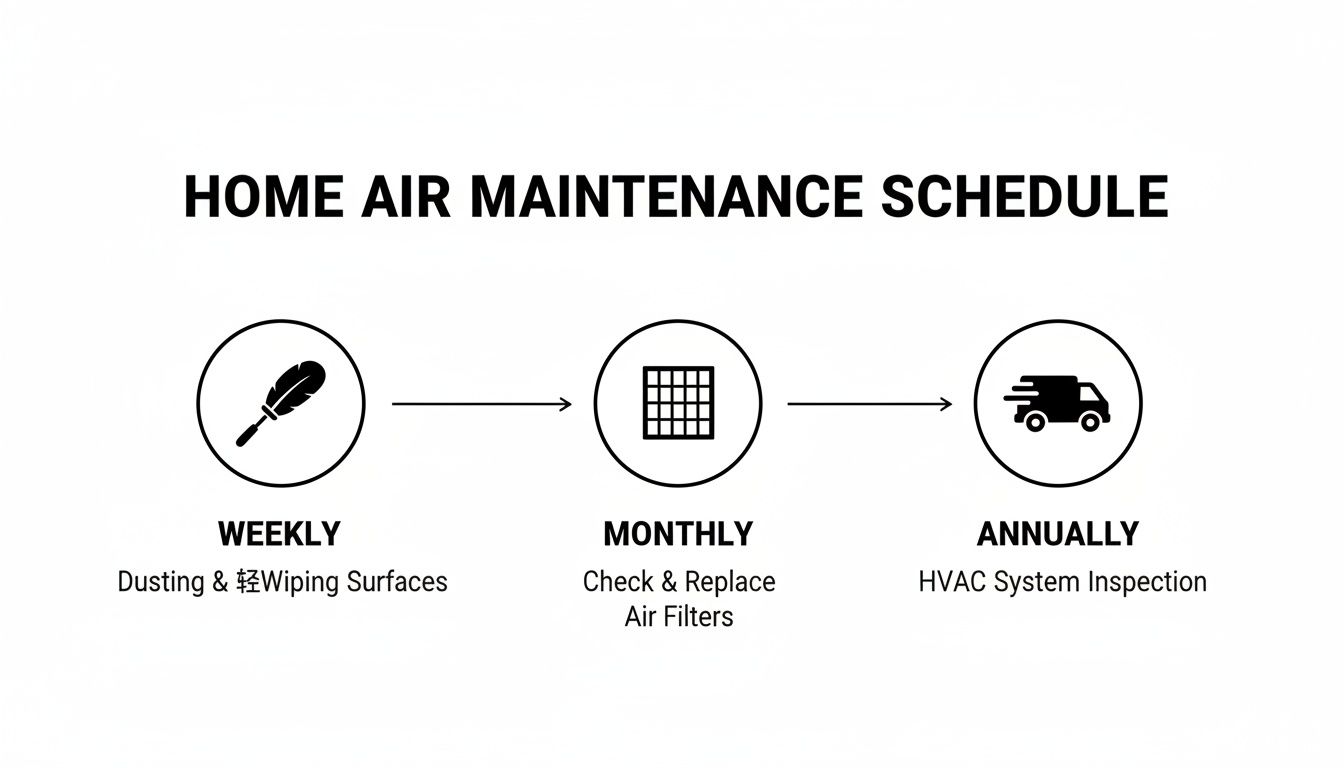
As you can see, it's the combination of small weekly actions, monthly check-ins, and an annual professional service that creates a powerful cycle of clean air.
Here’s a practical look at what that schedule involves:
Weekly Tasks: These are your quick wins that prevent dust and allergen buildup. Focus on damp-dusting surfaces with a microfiber cloth and vacuuming high-traffic zones. If you can, use a vacuum with a HEPA filter to really trap those tiny particles instead of just blowing them around.
Monthly Checks: Once a month, make a date with your HVAC filter. Give it a good look. If it's dirty, swap it out, but don't go longer than 90 days regardless. A clogged filter makes your system work way harder, drives up energy bills, and stops capturing pollutants.
Annual Professional Service: At least once a year, bring in a pro for a full HVAC system tune-up. This is also the perfect time to have them inspect and, if needed, clean out your dryer vents and air ducts.
Pro Tip: When you're buying HVAC filters, look for the MERV (Minimum Efficiency Reporting Value) rating. For most homes, a filter with a MERV rating between 8 and 13 is the sweet spot. It's strong enough to catch smaller particles like pollen and mold spores without choking your system's airflow.
The Cost and Benefit of Professional Services
It’s easy to see annual maintenance as just another bill, but it’s truly an investment that pays you back in both health and money. A skilled technician can spot small issues before they snowball into expensive breakdowns, all while making sure your system is running at peak efficiency. That optimized performance can translate directly into lower monthly energy bills.
Beyond savings, some of this maintenance is flat-out critical for safety. In the U.S. alone, dryer vent fires lead to over $100 million in damages from more than 15,000 incidents each year. The vast majority of these are preventable with simple, routine cleaning.
Getting your HVAC system professionally cleaned can boost its efficiency by a whopping 20-40%. When you consider that buildings gobble up 40% of all electricity globally, trimming your energy use makes a real difference.
To help you keep everything straight, here’s a simple checklist you can follow.
Annual Home Air Quality Maintenance Checklist
This schedule breaks down the essential tasks to help you stay on top of your home's air quality throughout the year.
Frequency | Task | Key Benefit |
|---|---|---|
Weekly | Dust surfaces with a damp cloth | Prevents the buildup of dust and allergens |
Weekly | Vacuum floors with a HEPA filter vacuum | Captures fine particles that trigger allergies |
Monthly | Inspect and replace HVAC air filter | Ensures efficient airflow and pollutant capture |
Seasonally | Clean air purifier filters/cells | Maintains the effectiveness of your air purifier |
Annually | Schedule professional HVAC inspection/tune-up | Catches potential issues and maximizes efficiency |
Annually | Have dryer vent professionally cleaned | Prevents fire hazards and improves dryer performance |
Every 3-5 Years | Get air ducts inspected and cleaned as needed | Removes built-up contaminants from your ductwork |
Sticking to a schedule like this turns maintenance from a reaction to a problem into a proactive investment in your home's value and your family's health.
For a more detailed, printable guide, check out our helpful preventive maintenance schedule template. It's a great tool to keep you organized and on track.
Answering Your Top Questions About Home Air Quality
When you start digging into how to improve your home's air, a few questions always seem to pop up. Getting straight, practical answers is the key to making smart decisions for your family's health and your home's efficiency. Let's tackle some of the most common ones we hear from homeowners.
Knowing what to maintain and when, and understanding the tech involved, helps you build a solid, long-term plan for cleaner air.
How Often Should I Get My Air Ducts Professionally Cleaned?
The official word from the National Air Duct Cleaners Association (NADCA) is to have your ducts professionally inspected and cleaned every three to five years. But let's be realistic, that's a guideline, not a hard-and-fast rule.
Your home might need it more often. You should definitely lean towards a more frequent schedule if:
You share your home with furry friends who shed hair and dander.
Someone in the family deals with serious allergies or asthma.
You've just wrapped up a major home renovation that kicked up a ton of dust.
You can literally see little puffs of dust shooting out of your vents when the system kicks on.
Especially in a dry, dusty climate like we have here in Phoenix, aiming for that three-year mark is a wise move to keep all that gunk from building up in your system.
Can Air Duct Cleaning Really Lower My Energy Bills?
Yes, and often the difference is something you'll actually notice on your monthly bill. Picture this: layers of dust, debris, and pet hair have built up inside your ductwork. This accumulation acts like a roadblock, choking off airflow.
Your HVAC system doesn't just give up; it works much, much harder to force conditioned air past those blockages. That extra effort burns a lot more energy.
A professional cleaning clears out those obstructions, allowing air to flow freely again. A clean system can see its efficiency jump by 20% or more, which means lower energy bills and less strain on your expensive equipment.
Think of it this way: over time, the money you save on energy can actually pay for the cleaning service. It’s a smart financial investment, not just a health one.
Is ActivePure Better Than a Standard HEPA Filter?
This is a great question, but it's less about one being "better" and more about them playing different, complementary roles on the same team. They tackle different problems.
A HEPA filter is a passive system. It’s fantastic at its job, which is to trap physical particles like dust, pollen, and pet dander that get pulled through it. Think of it as a super-fine net sitting in your HVAC system.
ActivePure, on the other hand, is an active technology. It doesn't sit back and wait for pollutants to drift by. Instead, its special technology creates and pushes purifying molecules out into your home, actively hunting down and neutralizing tiny pathogens like viruses and bacteria, both in the air and on surfaces.
For the most comprehensive protection, many homeowners find that using both is the ultimate solution. An in-duct ActivePure system provides active, whole-home sanitization, while your high-quality HVAC filters are there to grab the leftover physical debris.
Ready to take the next step toward a healthier home environment? The certified technicians at Purified Air Duct Cleaning are here to help. From professional duct cleaning to installing advanced ActivePure systems, we have the expertise to ensure your family breathes the cleanest air possible. Contact us today for a free quote and discover the difference we can make.