

8 Air Duct Cleaning Questions to Ask Before You Book
What would you learn if a crew arrived, ran a vacuum for ninety minutes, and left without showing you a single photo? You'd know they visited. You wouldn't know which ducts they reached, whether they cleaned the returns, or where the debris went.
That's why the right questions matter more than the lowest quote. A low price can mean a narrowly defined service, excluded components, or extra charges that appear after the equipment comes inside. An expensive quote isn't proof of quality either. You need a defined scope, a credible method, and evidence that the crew completed the work.
These air duct cleaning questions to ask work as screening tests. Use them on the phone, then compare the answers against the estimate and the crew's explanation at your door. You don't need to sound like an HVAC technician. You need the contractor to explain what they'll do in language you can verify.
Listen for specifics: Names, equipment, included components, and a clear sequence of work.
Request documents: Credentials, insurance, scope, product information, and completion records.
Reject pressure: A finding should come with evidence and time to decide, not an urgent demand to approve an unexplained treatment.
A good contractor can explain exclusions without becoming defensive. A weak provider keeps returning to the special price instead of answering the question.
1. Are You NADCA-Certified, and Do Your Technicians Hold ACR Certification?
Start with credentials, but make an important distinction: ACR is a standard, not an individual technician certification. If someone claims ACR certification, ask them to name the actual credential they hold and explain how their work follows the standard.
The National Air Duct Cleaners Association's 2025 ACR standard addresses HVAC inspection, engineering controls, containment, equipment, safety planning, and cleanliness verification. A contractor should connect those requirements to your job, not merely point to a logo.
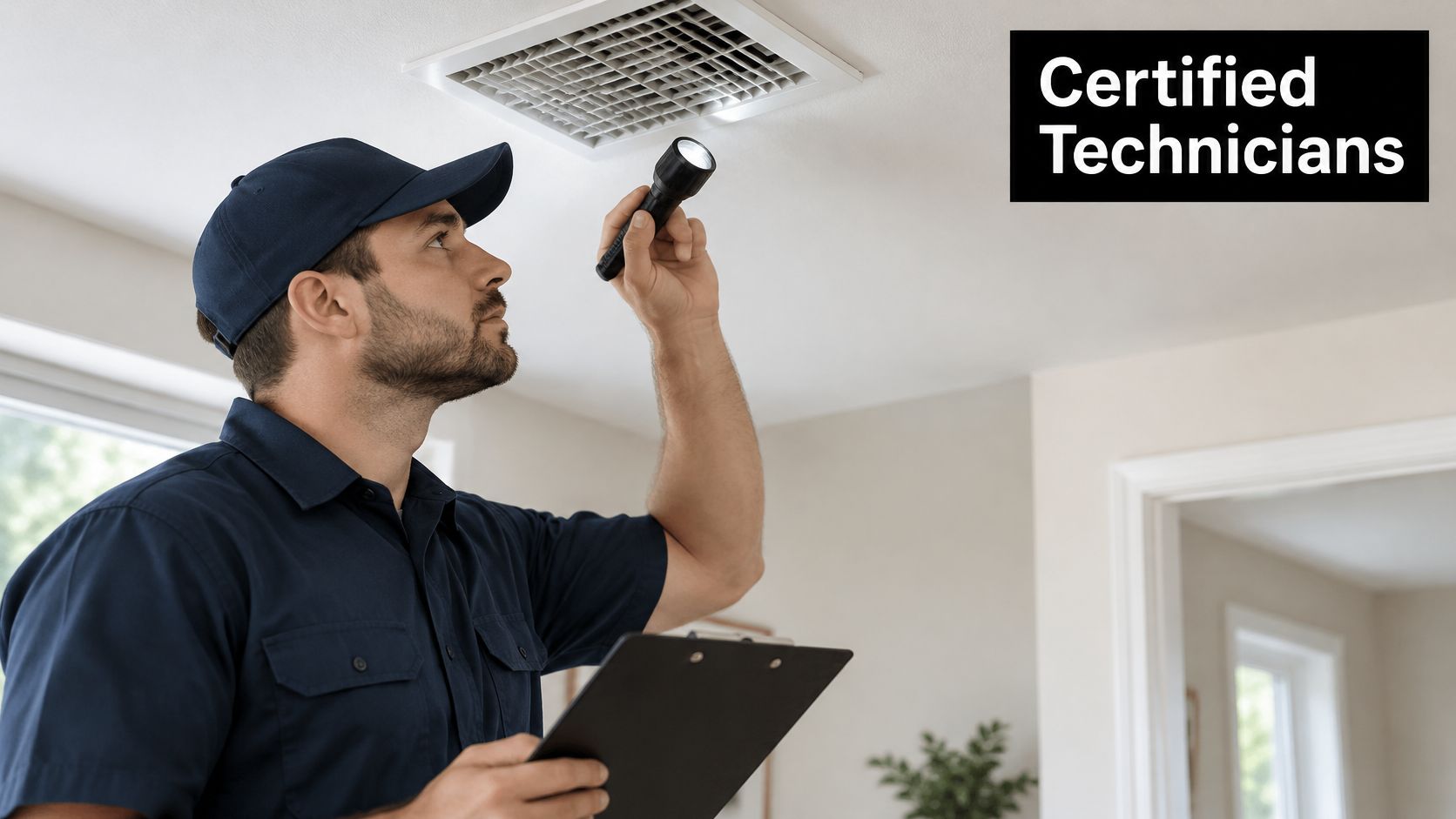
Verify the person and the process
Ask who will supervise your service and whether the arriving crew works for the company or a subcontractor. Request the credential holder's name, credential type, and verification details before booking.
Listen for: A named professional who can explain inspection, contamination control, cleaning, and final verification.
Request: Credential documentation and a written description of how the crew follows ACR.
Red flag: A claim that everyone is certified, followed by an inability to identify the certification program or credential holder.
Say you manage an apartment building with different duct materials across the property. A capable bidder should explain how the team identifies those materials and adjusts its tools, rather than prescribing the same brush for every run.
Use this explanation of NADCA duct cleaning standards to prepare follow-up questions. Certification also doesn't replace any license needed for separate heating repairs. If the inspection identifies equipment faults, find licensed heating contractors in Eastern Connecticut when that's your service area, or use the appropriate local licensing resource elsewhere.
2. Do You Carry General Liability and Workers' Compensation Insurance?
A hose dragged across hardwood can cause damage before cleaning even begins. Ladders, access openings, and work around HVAC equipment create other risks, so insurance deserves its own conversation.
Ask the company to send a current certificate of insurance, commonly called a COI, before the appointment. Check that the named insured matches the business taking your payment, and ask who covers any subcontracted crew.
Don't assume a certificate guarantees payment for every accident. Coverage depends on policy terms, exclusions, and the circumstances of a claim. Workers' compensation requirements also depend on the contractor's staffing and applicable rules, so ask the insurer or your property adviser about unclear answers.
Practical rule: Verify coverage before the crew arrives, not while someone is unloading equipment in your driveway.
What to verify before access
Listen for: A straightforward explanation of general liability and workers' compensation coverage, with an insurer or agent you can contact.
Request: A current COI showing policy dates and named insured. Commercial managers should ask whether additional-insured status is appropriate.
Red flag: A statement that insurance isn't necessary because the crew will only touch the vents.
For a commercial job, send your insurance requirements before accepting the bid. Being a certificate holder isn't the same as being an additional insured, and your insurance adviser should confirm which documentation your contract requires.
Suppose a hose scratches a finished floor. Photograph the damage, notify the contractor promptly, and follow the company's written claims procedure rather than accepting an undocumented promise to fix it later.
The cleaner vetting advice from Top Cleaners provides another screening reference. For duct work, keep the conversation specific to the people, equipment, and property involved.
3. What Exactly Is Included in the Price, and Is the Quote Itemized?
A quote for vents isn't necessarily a quote for the HVAC system. Ask the contractor to identify every included component and every exclusion, then explain which areas will only be inspected rather than cleaned.
The EPA's air duct cleaning guidance recommends checking access to system components such as ductwork, drain pans, humidifiers, cooling coils, fans, and heat exchangers. It also distinguishes the limited evidence for efficiency improvements from duct cleaning alone from the potential benefit of cleaning contaminated HVAC components.
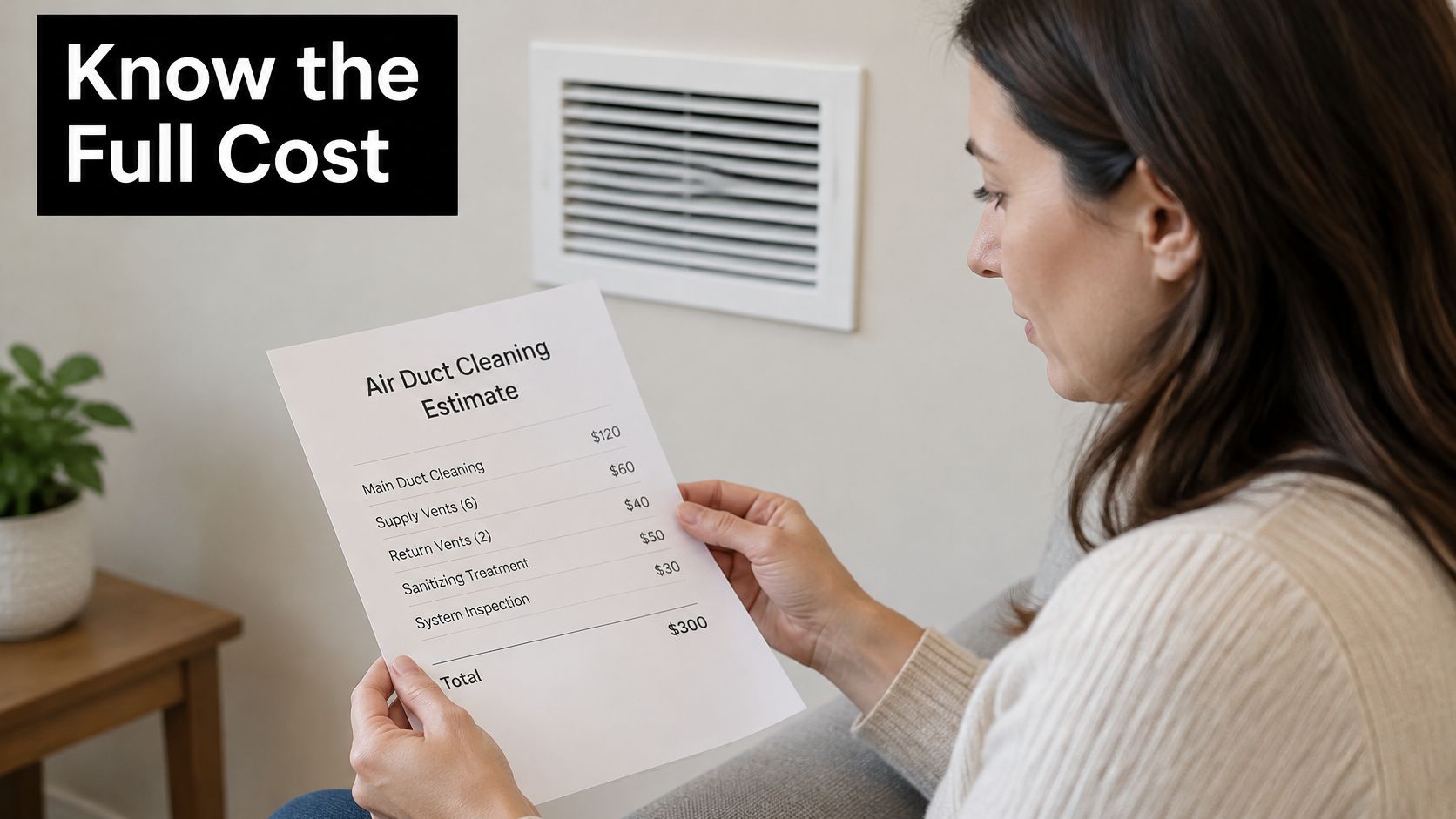
Compare matching scopes
Ask whether the proposal covers supply runs, return runs, trunk lines, registers, grilles, blower compartment, coils, and drain pans. Dryer vents and bathroom exhausts are separate systems, so don't assume they're included.
Listen for: A component-by-component explanation, including inaccessible areas and optional work.
Request: An itemized total showing service fees, applicable tax, exclusions, and how changes require your approval.
Red flag: An advertised whole-house price that excludes returns or leaves the final scope undefined.
Say an Avondale homeowner compares a lower quote with a higher one. If the lower bid covers register openings while the other includes supply and return ductwork, they're not competing prices for the same job.
Ask about access-opening creation and closure, furniture movement, and cleanup too. A contractor can reasonably exclude difficult access, but that exclusion belongs in the estimate.
Purified Air Duct Cleaning offers free quotes. Use its guide to duct cleaning quotes to prepare your scope questions, then judge the actual written proposal rather than assuming every service is bundled.
4. What Cleaning Method and Equipment Will You Use?
Ask the dispatcher to explain the path debris takes from the duct wall to the collection unit. That question is harder to dodge than asking whether the company uses professional equipment.
Agitation dislodges deposits; collection removes them. The crew should explain how brushes, air whips, or other tools work with its vacuum system, how it controls airflow, and how it keeps disturbed material out of occupied rooms.
A vacuum's size doesn't tell you whether the crew will reach each duct run. Ask how they'll clean the branches, not just where they'll park the machine.
Ask how the method fits your ducts
Rigid metal, flexible duct, and fiberglass-lined ductwork need different handling. A technician should inspect the material before selecting tools and avoid aggressive brushing that could damage a liner.
Listen for: A clear explanation of negative-pressure collection, agitation, register isolation, and exhaust filtration.
Request: A written method description covering collection equipment, indoor HEPA filtration where applicable, floor protection, and access closure.
Red flag: An answer that describes blowing dust through the system without explaining where it will be captured.
For example, a Mesa homeowner with older flexible duct should expect the technician to check its condition before inserting agitation tools. Torn or deteriorated material needs a repair discussion, not a more forceful cleaning pass.
Use this video to develop questions about the cleaning sequence.
This guide to air duct cleaning methods can help you compare explanations. Keep kitchen grease-exhaust work separate from ordinary HVAC cleaning, since those systems need their own assessment and service scope.
5. Will You Inspect the System First and Provide Before-and-After Documentation?
Before asking how clean the ducts will be, ask what evidence shows they need cleaning at all. A dusty register or a musty smell alone doesn't identify the condition inside the system.
The EPA's guidance on whether home air ducts need cleaning doesn't recommend routine cleaning for every home. It identifies substantial visible mold on hard surfaces, vermin infestation, and excessive debris released into living areas as reasons to consider cleaning, and notes that wet or mold-contaminated insulation generally needs replacement rather than cleaning.
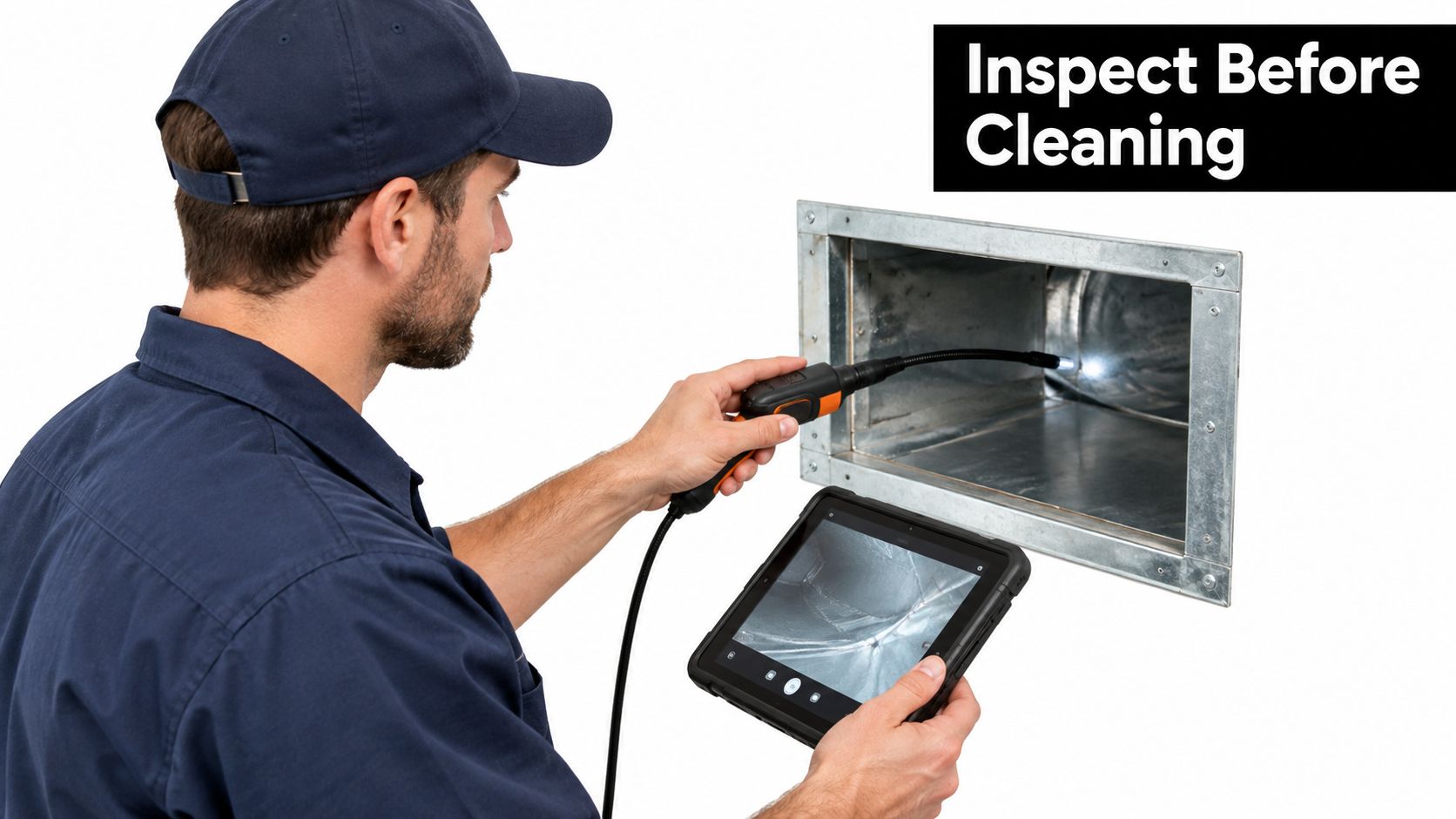
Make the photographs useful
Ask for matching views of identified locations, not unrelated close-ups with no labels. The completion record should also explain what the crew couldn't access.
Listen for: An inspection of accessible ducts, plenum, air handler, coil, and insulation before additional work is proposed.
Request: Location-labeled before-and-after photographs, findings, exclusions, and confirmation of whether inspection is included or separately charged.
Red flag: An immediate mold diagnosis without supporting evidence, followed by pressure to approve treatment.
Suppose a homeowner reports a musty smell and the inspection reveals moisture around the coil. The contractor should document the condition and explain what repair or remediation is needed, rather than promising that duct cleaning will cure the odor.
Pest contamination also requires more than cosmetic cleaning. These cleanup insights from Wildlife Control Services provide context for specialized animal-waste cleanup. Ask who will address the infestation and entry points before accepting a duct-only solution.
6. What Chemicals or Antimicrobial Treatments Do You Use, and Are They EPA-Registered?
A fresh smell isn't evidence of a clean system. Ask what each proposed product does, why your system needs it, and whether the label permits that use on your duct material.
The EPA's indoor air pollution guidance for health professionals advises scrutiny of chemicals used during duct cleaning and protection against pollutants disturbed during the work. Request product details before authorization, rather than accepting a general promise that the treatment is safe.
EPA registration isn't blanket approval for every application. A product must fit the intended use, surface, application method, and label precautions. A safety data sheet helps explain hazards and handling, but it doesn't replace the product label.
Approve the product, not the sales description
Listen for: A named product, a specific reason for using it, and an explanation of when treatment isn't necessary.
Request: The label, safety data sheet, EPA registration number where applicable, and written ventilation and re-entry directions.
Red flag: Claims that a secret or all-natural spray eliminates every germ and is harmless for every occupant.
Say a family has a child with asthma and pets at home. They can request a no-chemical cleaning scope while reviewing any proposed treatment with their healthcare professional. Fragrance-free doesn't automatically mean suitable for someone with respiratory sensitivity.
Approval boundary: Don't authorize spraying, fogging, deodorizing, or sealing until you know the product and the reason for using it.
Ask about moisture correction before antimicrobial treatment. Also distinguish chemical applications from installed devices: this discussion of air duct cleaning and UV light can help frame that separate conversation. Neither should become an automatic substitute for removing deposits or fixing the underlying problem.
7. Do You Offer a Satisfaction Guarantee, and How Are Payment and Scheduling Handled?
Ask what happens if a return duct is missed. That concrete question reveals more than asking whether the company stands behind its work.
A useful guarantee identifies what the company will correct, how you report a problem, and when you must report it. It should also distinguish incomplete cleaning from new dust caused by construction, filter problems, leaks, or everyday household activity.
For occupied commercial buildings, scheduling is part of protection, not just convenience. The EPA's mold-remediation guidance for schools and commercial buildings recommends off-hours remediation when occupants are less likely to be affected and calls for conservative precautions when airborne mold release or hidden contamination is a concern.
Put the remedy and schedule together
Listen for: A defined correction process, realistic work window, named contact, and explanation of occupant restrictions.
Request: Written guarantee terms, deposit and final-payment conditions, cancellation fees, change-order rules, and scheduling arrangements.
Red flag: A verbal lifetime guarantee with no written remedy, or pressure to pay before reviewing the completed scope.
Suppose a restaurant schedules HVAC duct work after closing. Its agreement should address building access, alarms, system shutdown, protected work zones, cleanup, and who confirms the space is ready to reopen.
A homeowner needs similar clarity on a smaller scale. Ask whether pets must be secured, whether particular rooms will be unavailable, and who will explain the finished work.
Don't use a promised completion time as a substitute for a scope. The contractor should estimate duration from access, system condition, and included components, then explain how unexpected conditions could affect the appointment without authorizing extra charges automatically.
8. Can You Provide References, Reviews, and Examples of Work on Homes or Facilities Like Mine?
A strong residential review doesn't establish that a crew can manage a multi-zone office building. Ask for examples that match your duct material, access conditions, occupancy, and system layout.
Check Google, the Better Business Bureau, and relevant local directories, but read beyond the rating. Look for specific accounts of cleanup, communication, pricing changes, and how the company handled a complaint.
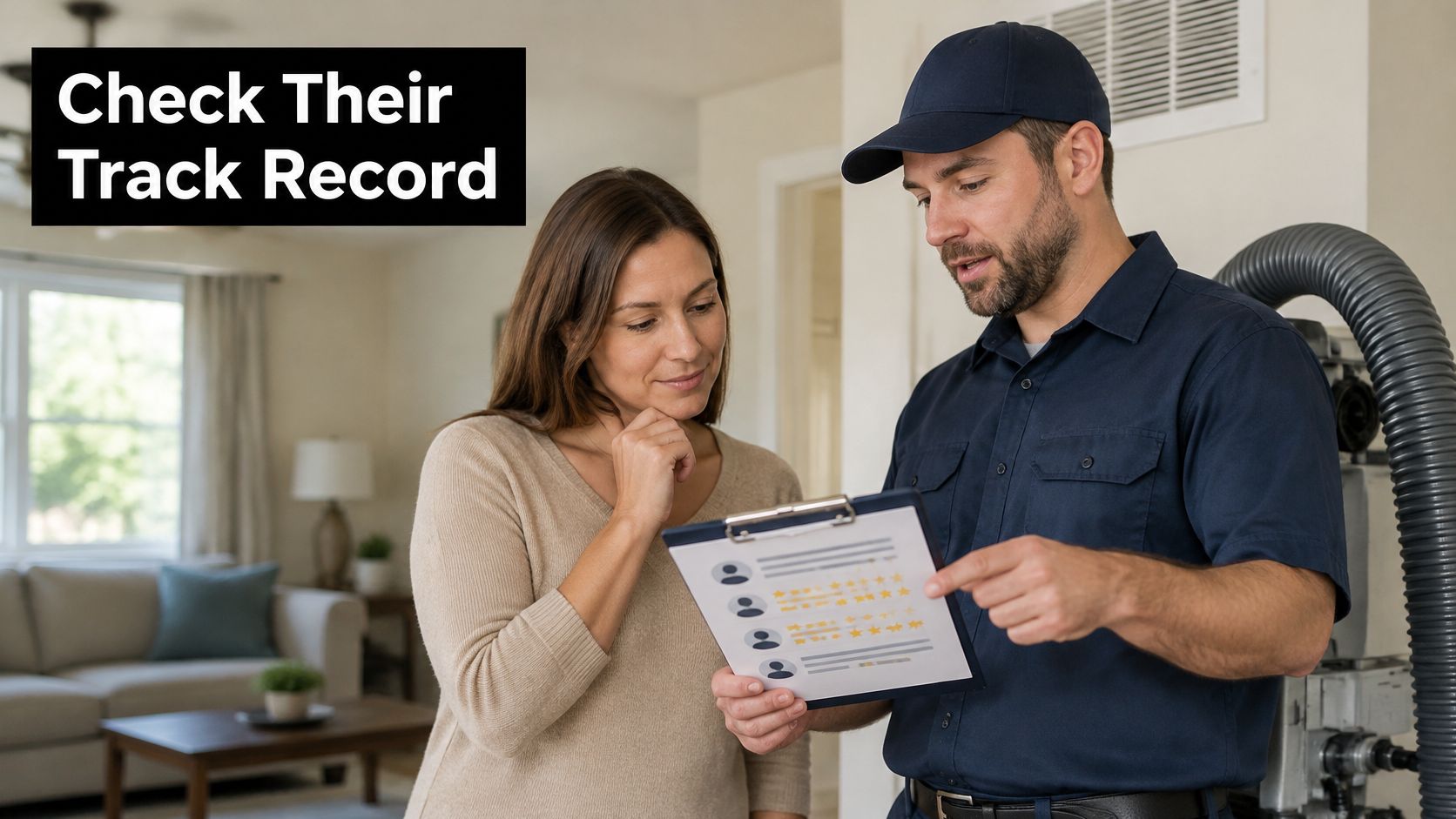
Ask references about execution
Request references from comparable properties, with permission to contact them. For a Phoenix-area job, ask whether the proposed crew works locally and whether the examples reflect that crew's work rather than another branch's portfolio.
Listen for: A clear explanation of comparable jobs, including access challenges and how the crew protected occupants.
Request: Contactable references and labeled project photographs that show more than a clean register cover.
Red flag: Only anonymous testimonials, stock-looking images, or references unrelated to your property type.
Say a Mesa property manager needs evening service in an occupied office. A useful reference can discuss whether the crew coordinated shutdowns, protected tenant areas, and delivered the agreed documentation, not merely whether the technicians were friendly.
A Glendale real estate agent may care more about tidy access repairs and records that accurately describe the work. Cleaning documentation shouldn't become a promise of allergy relief or a claim that the entire building is free of contamination.
Compare the provider's examples with these air duct cleaning pictures, then ask how your own project will be recorded. Treat photographs as evidence to examine, not proof that every unseen component received the same attention.
How each screening question separates a thorough provider from a basic one
Treat each answer as a screen. Ask for the document while you are still on the phone, then match what arrives against the red flag column.
Item | Proof to Request | Red Flag Answer | Best For |
|---|---|---|---|
Are You NADCA-Certified, and Do Your Technicians Hold ACR Certification? | Name and credential type of the supervising professional, plus a written explanation of how the crew follows the ACR standard | Vague claims without naming credentials | Anyone seeking trained technicians and standard procedures |
Do You Carry General Liability and Workers' Compensation Insurance? | Current certificate of insurance showing active coverage | Cannot provide current proof of insurance | Homeowners and commercial property managers |
What Exactly Is Included in the Price, and Is the Quote Itemized? | Written itemized quote detailing included services and fees | Unclear scope or surprise add-on charges | Anyone comparing bids or avoiding hidden fees |
What Cleaning Method and Equipment Will You Use? | Details on agitation tools, HEPA-filtered negative-pressure equipment, and containment | Air-only cleaning with no clear extraction or protection plan | Customers seeking thorough cleaning with less dust spread |
Will You Inspect the System First and Provide Before-and-After Documentation? | Inspection process and sample photos or video documentation | Plans to clean without inspecting or documenting results | Homeowners and facilities needing proof or condition records |
What Chemicals or Antimicrobial Treatments Do You Use, and Are They EPA-Registered? | Product name, EPA registration details, and safety data sheet | Vague product claims or pressure to buy unnecessary treatment | Households with sensitivities and customers considering chemical treatments |
Do You Offer a Satisfaction Guarantee, and How Are Payment and Scheduling Handled? | Written guarantee, service agreement, payment terms, and cancellation policy | Refusal to put terms in writing or unclear fees | Customers who value clear remedies and scheduling |
Can You Provide References, Reviews, and Examples of Work on Homes or Facilities Like Mine? | Independent reviews and references for similar properties | Only unverifiable testimonials or no relevant experience | Customers seeking a provider with a proven track record |
For the first row, remember ACR is a standard for the work. The useful answer names who is accountable and how the crew applies that standard on your job.
Turn Eight Answers Into One Confident Hiring Decision
Before signing, put every important answer in writing: credential details, the insurance certificate, the itemized scope, the inspection and photo plan, proposed product names and registration details, guarantee terms, and references from comparable properties. A provider that answers clearly has earned a serious look. I'd remove a company that repeatedly dodges these questions from the shortlist, regardless of its advertised price.
Keep a distinction between missing paperwork and a misleading answer. A dispatcher may need the project manager to explain containment or provide an equipment specification. Give the company a chance to supply that information before booking, but don't let an unresolved promise become your service agreement.
Hire the company whose scope you can explain back in plain English. If you can't tell what you're buying, the proposal needs more work.
At the door, confirm that the arriving crew has the same scope you approved. Ask who is responsible for the inspection, which components they'll clean, and how they'll document completion. If the crew proposes extra work, pause for evidence, a written price, and a clear explanation of whether the original service can proceed without it.
Keep cleaning separate from repair
A useful contractor knows when cleaning isn't the answer. Loose joints, damaged insulation, moisture problems, and equipment faults need their own decisions. Don't approve a cleaning package merely because the technician discovers a different problem.
Energy concerns deserve the same separation. The Department of Energy's air-distribution retrofit guidance treats duct leakage and sealing as distinct performance issues, so request a separate testing and repair proposal if the contractor suspects escaping conditioned air. Ask for the test method, findings, materials, and verification rather than accepting an energy-saving promise attached to cleaning.
Before final payment, walk through the completed scope with the technician. Review the labeled images, confirm registers and access panels are secure, and record any unfinished or inaccessible areas. Keep the estimate, approvals, invoice, and completion records together so a follow-up conversation starts with facts.
The best hiring decision isn't the company that gives the most confident sales pitch. It's the one that explains why cleaning is appropriate, defines its limits, protects the property, and lets you verify the result. Start with the questions, insist on usable answers, and approve only the work your system needs.
Purified Air Duct Cleaning offers residential and commercial air duct cleaning, dryer vent cleaning, and HVAC coil cleaning across the Phoenix metropolitan area. Visit Purified Air Duct Cleaning to request a free quote, then ask for the included components, inspection plan, and completion documentation before you book.