

A Practical Guide to Asthma Triggers in the Home
Common asthma triggers aren't always obvious. They often include microscopic culprits like dust mites, pet dander, and mold spores, but also chemical irritants from everyday things like smoke and cleaning products. These particles get into the air you breathe at home and can make respiratory symptoms much worse.
The Hidden Culprits Worsening Your Asthma at Home
It’s a frustrating feeling when your own home, the one place you should feel safest, seems to be the source of your asthma flare-ups. The truth is, modern homes are often sealed up tight for energy efficiency. While that's great for your utility bills, it also means allergens and irritants get trapped inside with you.
Figuring out exactly what's causing the problem is the first real step toward breathing easier and taking back control of your environment.
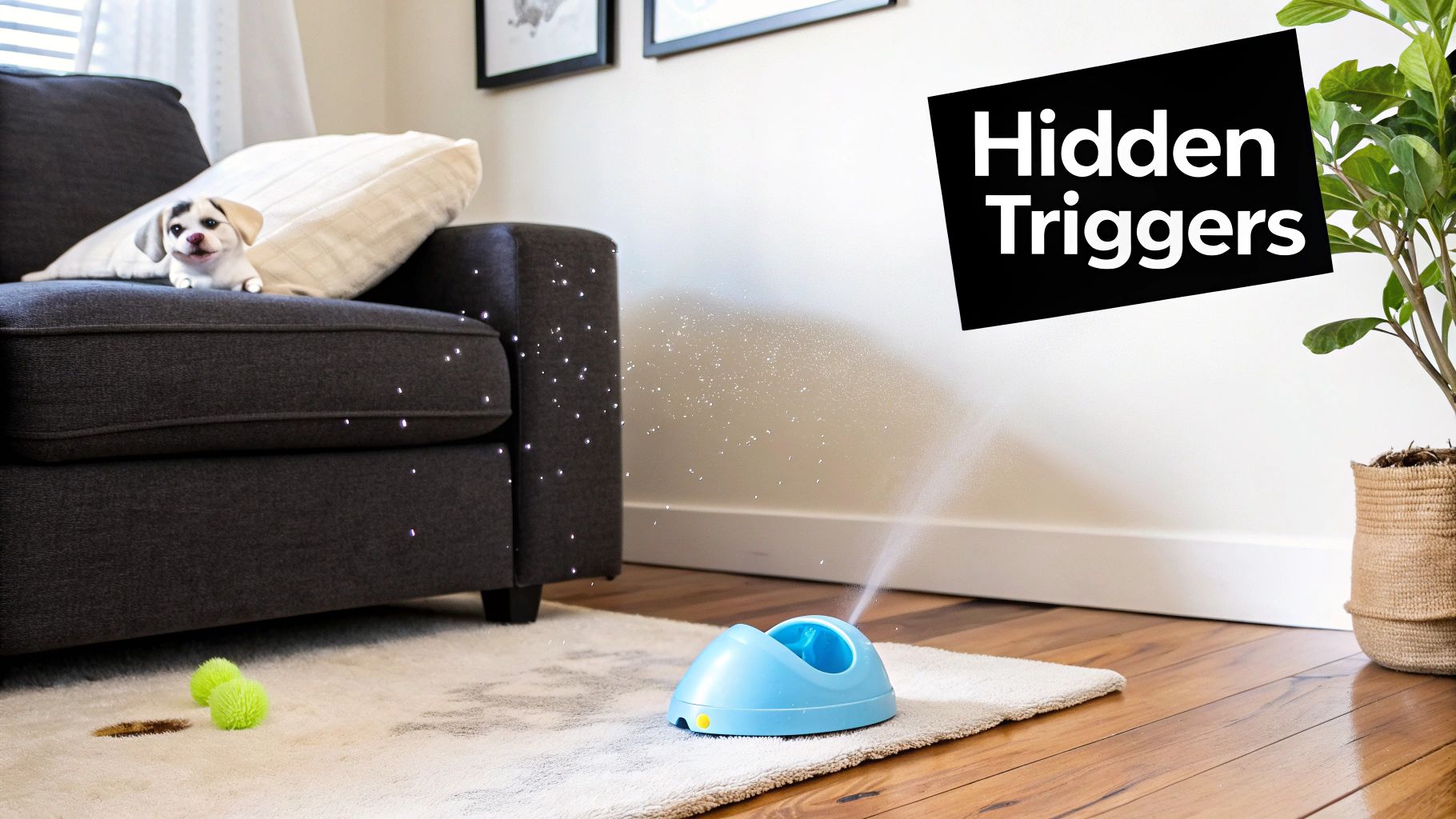
This isn't a rare issue. In fact, research shows that over 92% of homes have significant levels of at least one common allergen lurking in dust. Nearly half are dealing with three or more. These particles are usually invisible, but their impact is anything but small. You can learn more about these pollutants in our guide to indoor air pollution and how it affects your home.
Identifying Common Indoor Triggers
To get a handle on your asthma, you have to know what you’re up against. Some triggers are biological, like the dander from your dog, while others are chemical, like the fumes from a new coat of paint. They love to settle into soft surfaces, hide in damp corners, and get endlessly circulated by your ventilation system.
Here’s a quick breakdown of the usual suspects:
Biological Allergens: This group is full of tiny living things and their byproducts. We're talking about dust mites in your bedding, pet dander from your furry friends, mold spores from damp spots, and even droppings from pests like cockroaches.
Chemical Irritants: Volatile Organic Compounds (VOCs) are a big one here, released from things like paint, new furniture, air fresheners, and cleaning supplies. Smoke from tobacco, cooking, or even scented candles also falls squarely into this category.
Environmental Factors: The conditions in your home can make things worse. High humidity is a breeding ground for mold and dust mites, and poor ventilation just traps all these irritants inside. Dust and debris collected in your HVAC system then act like a delivery service, pushing pollutants into every room.
One of the most overlooked factors is the role of the HVAC system itself. Think of it as your home's lungs. If those lungs are dirty, they're just going to keep pumping allergens and irritants throughout your house.
To give you a clearer picture, this quick guide connects the most common asthma triggers in the home to where you'll usually find them and what to do about them.
Quick Guide to Common Indoor Asthma Triggers
Trigger | Common Location | Primary Solution |
|---|---|---|
Dust Mites | Bedding, carpets, upholstered furniture | Allergen-proof covers, hot water washing |
Pet Dander | Everywhere, especially in HVAC ducts and fabric | Regular grooming, HEPA filtration |
Mold Spores | Bathrooms, basements, under sinks | Humidity control, professional remediation |
Pests (Cockroaches) | Kitchens, bathrooms, hidden cracks | Sealing entry points, proper food storage |
Chemical Irritants (VOCs) | Paint, cleaning products, air fresheners | Low-VOC products, increased ventilation |
Smoke | Air, furniture, walls (thirdhand smoke) | Strict smoke-free policy, air purification |
Knowing what triggers your asthma is a huge step, but the next is creating a plan. While regular dusting and vacuuming are good habits, they often can't reach the pollutants embedded deep within your home's ductwork. For a true deep clean that gets to the root of the problem, a professional air duct cleaning is often the most effective solution.
Managing Dust Mites, Pet Dander, and Pests
Some of the most stubborn asthma triggers are the ones we can't even see. I'm talking about the microscopic allergens from dust mites, our beloved pets, and any unwelcome pests that might be hiding out. These tiny particles get kicked up into the air, circulate through the HVAC system, and settle deep into carpets and furniture, making it a real challenge to breathe easy without a solid game plan.
To get a handle on them, you first have to know where they hang out. Your bed, for example, is a five-star resort for dust mites. They feast on the skin cells we naturally shed and love the warm, humid environment of mattresses and pillows. And pet dander? Those tiny specks of skin from our furry friends don't just stay on the dog bed; they float around and cling to pretty much every surface in your home.
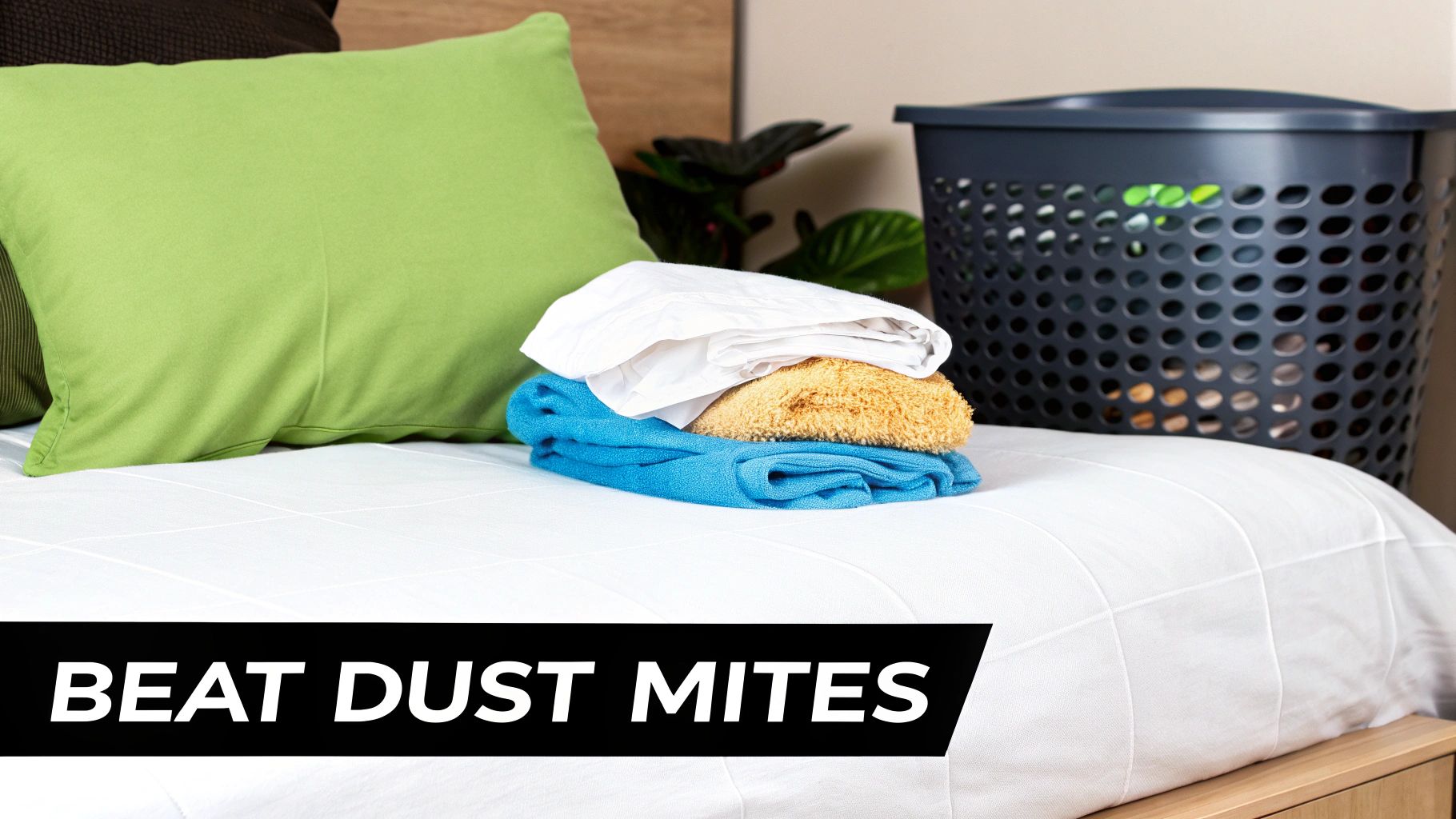
A Proactive Plan Against Dust Mites
For a lot of people with asthma, dust mites are public enemy number one. The good news is that a consistent cleaning routine can make a huge difference in their population and your exposure.
The trick is to be strategic and hit them where they live. Your bedroom should be ground zero.
Wash Bedding Weekly in Hot Water: Don't just wash your sheets; incinerate those mites. Use the hottest water setting, aiming for at least 130°F (54°C), to kill them off and wash away their allergens. This goes for sheets, pillowcases, and blankets.
Use Allergen-Proof Covers: Zip up your mattress, box spring, and pillows in allergen-impermeable covers. Think of it as creating a force field that keeps mites out of their favorite hiding spots.
Reduce Fabric Surfaces: Carpets, heavy drapes, and upholstered furniture are dust mite magnets. If you can, swap carpets for hard-surface flooring and curtains for blinds.
A lot of people think a quick vacuum is enough, but that often just scratches the surface. It won't get the allergens buried deep in the carpet fibers. For a deeper dive into controlling dust, check out our guide on how to reduce dust in your house for a cleaner home.
Loving Your Pet While Managing Dander
Our pets are family, but their dander can be a powerful asthma trigger. The proteins in their dander, saliva, and urine are incredibly lightweight and can hang in the air for hours. Once they get sucked into your HVAC system, they get a free ride to every room in the house.
But this doesn't mean you have to re-home your furry companion. It just means you need to be smart about dander control.
Establish Pet-Free Zones: Make certain areas off-limits, especially the bedroom of anyone with asthma. This creates an allergen-reduced sanctuary where they can breathe easier.
Grooming is Essential: Regular baths and brushing can cut down on the amount of dander your pet sheds. If you can, have someone without asthma do the grooming, preferably outdoors.
Invest in HEPA Filtration: A vacuum with a high-efficiency particulate air (HEPA) filter is a must. We also recommend running a standalone HEPA air purifier in the bedroom or main living space to snatch dander right out of the air.
Don't forget your HVAC system's role in all this. A dirty system will just keep blowing dander around, so for pet owners dealing with asthma, keeping those air ducts clean is absolutely vital.
Keeping Unwanted Pests at Bay
Cockroaches and rodents aren't just creepy; their droppings, saliva, and body parts contain proteins that are serious asthma triggers. In fact, for some people, cockroach allergens can trigger some of the most severe asthma attacks.
The best defense here is a good offense. Your goal is to make your home as uninviting as possible by cutting off their food, water, and shelter.
Seal All Entry Points: Go on a hunt for any cracks and holes in your walls, floors, and foundation. Use caulk to seal up every gap you find, paying special attention to the areas around pipes and utility lines.
Maintain a Spotless Kitchen: Pests are always on the lookout for a free meal. Clean up crumbs and spills right away, keep food in airtight containers, and never, ever leave dirty dishes in the sink overnight.
Eliminate Water Sources: Fix leaky faucets and pipes as soon as you spot them. Pests can't survive without water, so don't give them a drinking fountain. Make sure your trash cans have lids that seal tightly.
By staying on top of these biological triggers, you can drastically lower the allergen levels in your home and create a space that’s much healthier and easier to breathe in.
How to Control Mold and Humidity in Your Home
Mold and dampness are more than just a smelly nuisance; they're serious asthma triggers that absolutely love to grow in the unseen corners of our homes. The connection is simple: high indoor humidity creates the perfect breeding ground for mold. As it grows, mold releases microscopic spores into the air that, when inhaled, can irritate airways and lead to frustrating asthma flare-ups.
Your first line of defense is always moisture control. When your indoor humidity levels creep above 50%, you're basically rolling out the welcome mat for mold. Keeping your home's air drier makes it a much less friendly place for these allergens to take hold.
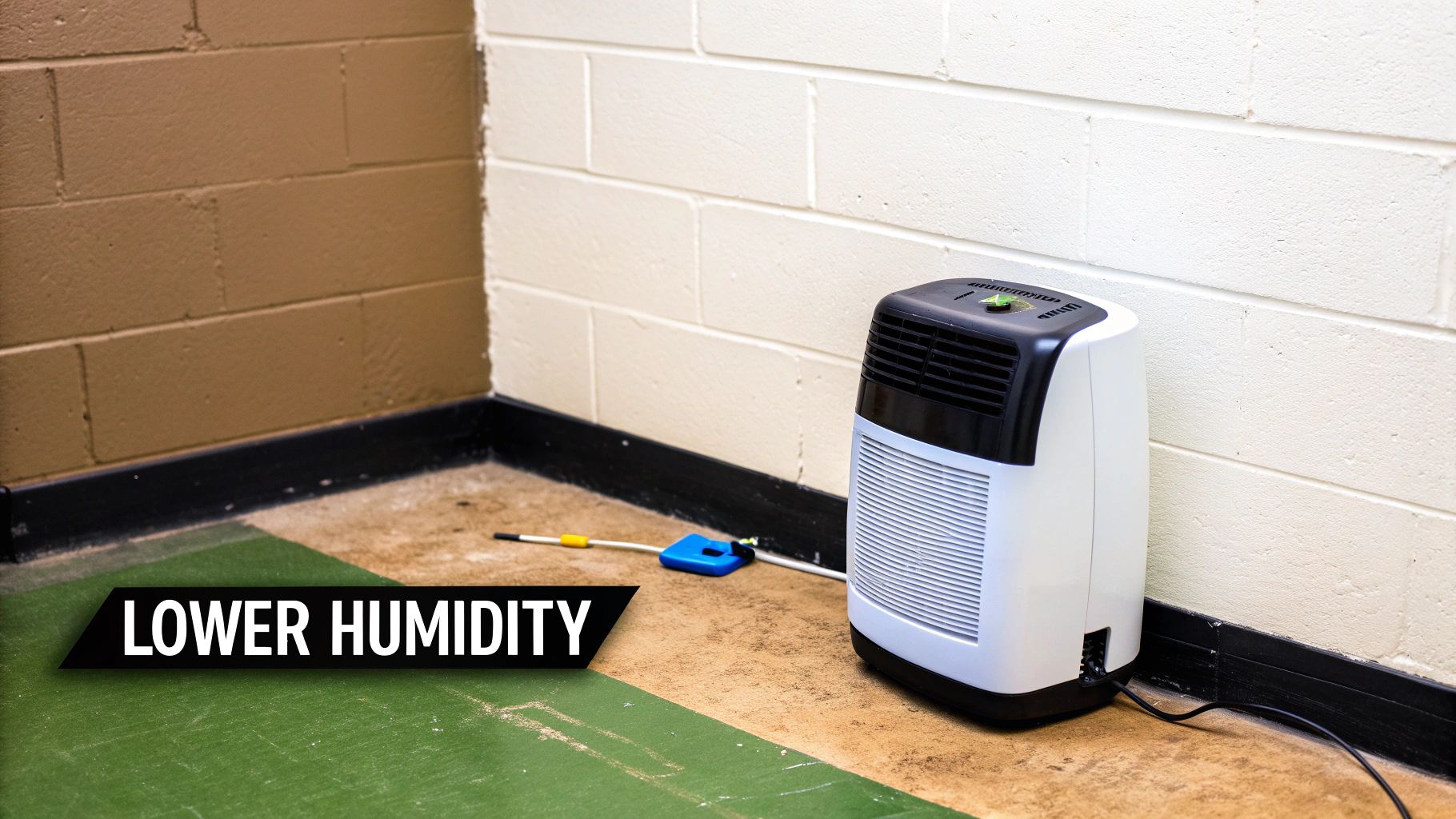
Spotting the Signs of Hidden Mold
The tricky thing about mold is that it isn't always obvious. You might spot some black or green stuff in a damp bathroom corner, but it often lurks where you'd least expect it. That persistent musty smell is a classic red flag that you have a moisture problem somewhere, even if you can't see the source.
Make a point to check these common hiding spots:
Under kitchen and bathroom sinks, especially around the plumbing.
Behind wallpaper that might be peeling or bubbling from moisture.
Inside walls near leaky pipes or in areas with poor insulation.
In basements and crawl spaces where ventilation is often poor.
Believe it or not, your air conditioner can sometimes be the culprit. If you notice a funky smell when it kicks on, it's worth understanding why your air conditioner smells and what you can do about it. Unaddressed moisture inside the unit can foster mold growth, which then gets blown all over your house through the ductwork.
A Practical Guide to Lowering Humidity
Actively managing your home's humidity is one of the single most effective ways to keep mold from becoming a major asthma trigger. This isn't complicated, it just involves a combination of good habits and the right equipment.
Here are a few straightforward things you can start doing today:
Use Exhaust Fans Consistently: Always run the fan in your bathroom during and after a shower. Do the same in the kitchen when you're cooking, especially if you're boiling water.
Fix Leaks Immediately: That tiny drip under the sink might seem harmless, but it’s creating a perfect micro-environment for mold. Repairing any plumbing or roof leaks right away is non-negotiable.
Place Dehumidifiers Strategically: In naturally damp areas like basements or laundry rooms, a dehumidifier is your best friend. Your goal should be to keep the humidity level between 30% and 50%.
The link between dampness and asthma is no joke. A study in Boston found a clear association between tenant reports of dampness and mold and the number of asthma-related emergency room visits. This just goes to show how critical proactive maintenance is for preventing serious health issues.
Tackling moisture is about more than just cleaning up a mess; it's about changing the very environment of your home. By taking away the water that mold needs to survive, you're getting straight to the root of the problem.
When to DIY and When to Call a Professional
Once you’ve found mold, the next step is getting rid of it safely. How you approach this depends entirely on the size of the problem. For small patches, usually less than 10 square feet, you can often handle it yourself.
If you’re going the DIY route, protect yourself. Wear an N95 mask, gloves, and goggles. A simple solution of soap and water is usually enough to clean mold off hard surfaces. The most important part is to dry the area completely afterward so it doesn’t come right back.
However, some situations are best left to the pros:
Widespread Mold Growth: If the mold covers a large area, you need a professional remediation service.
Mold in Your HVAC System: This is a serious problem. Mold in your ductwork means spores are being pumped into every single room of your house whenever the system is on.
Mold from Contaminated Water: If the moisture source was sewage or floodwater, it requires specialized cleaning protocols to handle safely.
Professional air duct cleaning is the only way to effectively remove mold spores from your ventilation system. Technicians use powerful, specialized equipment to dislodge and extract mold, stopping it from circulating through your home. This process is a key part of our guide on how to avoid mold in your home and damp buildings.
Reducing Smoke and Chemical Irritants
Beyond the microscopic allergens we can manage through cleaning, there are invisible irritants floating in your home’s air that can be just as problematic for asthma sufferers. Smoke, chemicals from everyday products, and fumes from appliances introduce a host of potent triggers that directly inflame sensitive airways. Addressing these requires a different approach, one focused on eliminating sources and improving ventilation.
The most critical first step is establishing a strict smoke-free policy in your home. This isn’t just about secondhand smoke from active smoking; thirdhand smoke is a real concern. These toxic particles cling to furniture, carpets, and walls long after the smoke has cleared, continuously releasing irritants into the air. If you're struggling to remove lingering smells, you can find helpful advice in our article about how to remove smoke smell for good.
Demystifying VOCs and Household Chemicals
Another major category of invisible asthma triggers is Volatile Organic Compounds, or VOCs. These are gases released from all sorts of solids and liquids, and they are surprisingly common in our homes.
Ever notice that "new car smell" or the distinct scent of fresh paint? Both are largely due to VOCs. Unfortunately, these compounds can cause short-term irritation and long-term health effects, especially for those with respiratory conditions.
Common sources of VOCs include:
Paints, varnishes, and sealants: Many traditional formulas release high levels of VOCs as they dry.
Cleaning supplies and air fresheners: Aerosol sprays, scented candles, and strong disinfectants are major contributors.
New furniture and carpeting: Materials like pressed wood and certain synthetic fibers "off-gas" chemicals for weeks or months.
Pesticides: Chemical-based pest control products can release harmful fumes that linger in the air.
To minimize these risks, it’s worth exploring sustainable and eco-friendly pest control methods that protect both your family and the environment. Making a conscious choice to buy low-VOC or zero-VOC products is one of the most powerful ways to reduce the chemical load in your air.
Practical Steps for Cleaner Air
You don't have to do a complete home overhaul to create healthier indoor air. Small, consistent changes can dramatically reduce the presence of these chemical irritants, and it all starts with being more mindful of what you bring into your space.
Ventilation is your best friend when dealing with VOCs. When you’re cleaning, painting, or even just unboxing new furniture, open up the windows. Letting fresh air circulate is the simplest way to carry those fumes outside and prevent them from building up.
A comprehensive study highlighted passive smoking, synthetic materials like bedding which can release VOCs, and gas heating as some of the most significant household asthma triggers. The combination of airway irritation from smoke and the accumulation of chemical fumes creates a dangerous indoor environment for anyone with sensitive lungs. You can read the full research about these critical asthma trigger findings.
Making smarter choices with your cleaning supplies can also make a huge difference. Look for fragrance-free products, or try making your own simple cleaners using ingredients like white vinegar and baking soda. These natural alternatives get the job done without releasing the harsh chemicals found in so many commercial products.
Finally, pay attention to your appliances. Gas stoves, for example, can release nitrogen dioxide, another common lung irritant. Always use your range hood when cooking to vent these fumes outdoors. This all ties back to your HVAC system, a clean, well-maintained system is essential for properly ventilating your home and preventing irritants from being endlessly recirculated.
Your Action Plan for a Healthier Home
Consistent cleaning and making smart choices about your home's environment can make a massive difference in controlling asthma triggers in the home. But let's be realistic, even the most dedicated cleaning routine has its limits.
Sometimes, the real problem is hiding where your vacuum cleaner and cleaning cloths just can't reach. I'm talking about what's lurking deep inside your home's HVAC system. Knowing when to switch from your DIY efforts to calling in professional backup is crucial for creating a truly healthy space for your family. Deep-seated dust, hidden mold, and years of built-up pet dander inside your air ducts require specialized tools and expertise to properly remove. If you don't address the source, fighting those persistent symptoms can feel like a frustrating, never-ending cycle.
When To Call For Professional Backup
So, you've followed all the advice. You're cleaning regularly and you've made changes to control triggers, but your family is still struggling with asthma or allergy symptoms. If that sounds familiar, it's time to look at your home's ventilation system.
Your air ducts are like the lungs of your house. If they're contaminated, they'll pump irritants into every single room, every time the heat or AC kicks on. Recognizing the red flags that you need professional help is the first step toward breaking that cycle.
Here are the big warning signs to watch for:
Persistent Musty Odors: If a damp, musty smell just won't go away, especially when the HVAC system is running, it could be a sign of mold or mildew growing deep inside the ductwork.
Visible Dust From Vents: Ever see little puffs of dust blow out of your supply registers when the air kicks on? That's a clear sign your ducts are overloaded with debris.
Symptoms Worsen Indoors: This is a classic tell. If you or your family members consistently feel better when you're away from home, the trigger is almost certainly inside your house.
Recent Renovations: Construction projects create a massive amount of fine dust that your HVAC system happily sucks up, creating a new reservoir of irritants.
Unexplained Increase in Symptoms: Have allergy or asthma flare-ups become more frequent or severe without any other obvious reason? Your HVAC system could easily be the culprit.
This flowchart is a great way to visualize how to track down home irritants based on what you can see or smell.
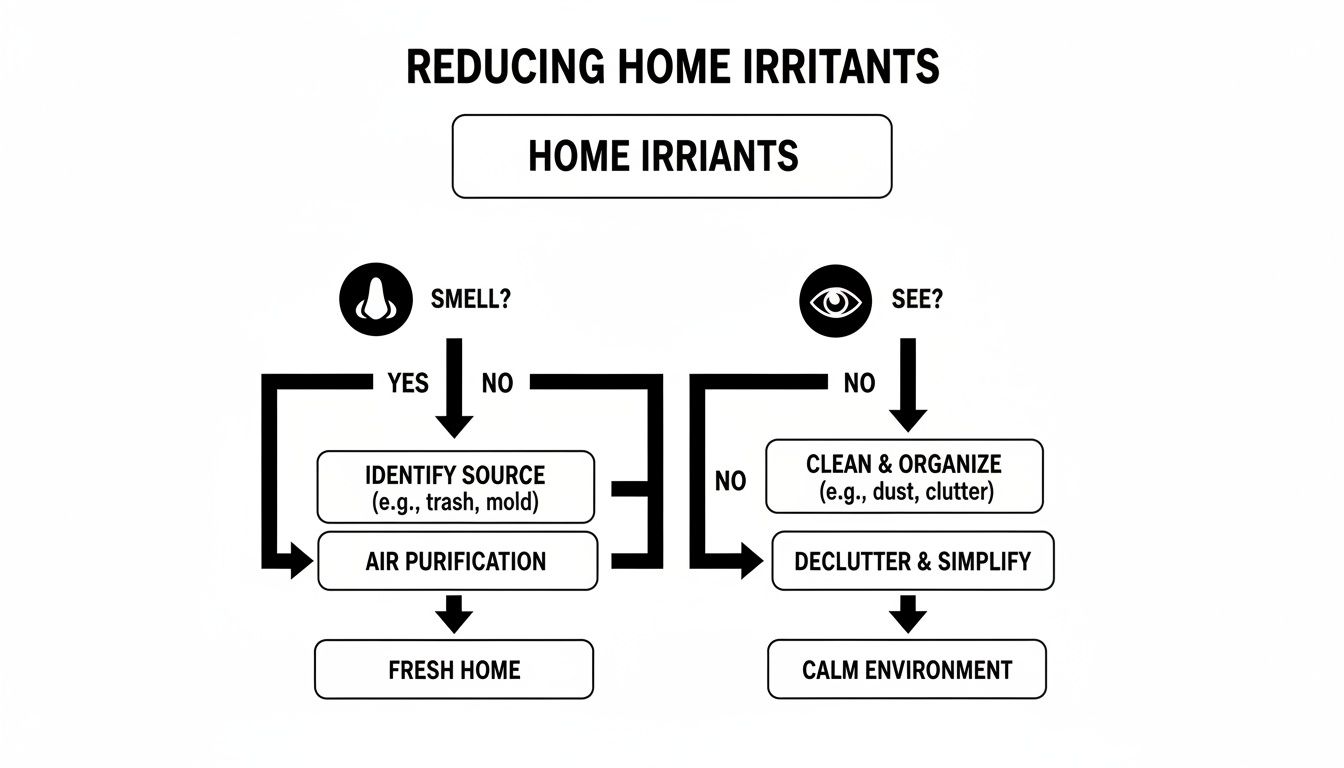
The key takeaway here is that our senses are often the first line of defense. They can guide us toward simple cleaning tasks or point to more complex, hidden issues that need a deeper look.
Deciding between your regular cleaning routine and calling in the pros can be tough. This table breaks down common situations to help you figure out the best course of action.
| DIY Maintenance vs Professional Services || :--- | :--- | :--- || Symptom or Task | DIY Action | When to Call a Professional || General Dusting | Wipe down surfaces, registers, and vents weekly. Vacuum with a HEPA filter. | Dust puffs out of vents when the system turns on; dust settles almost immediately after cleaning. || Mildew Smell | Clean damp areas (bathrooms, basements) with appropriate cleaners. Use a dehumidifier. | A persistent, musty odor that gets stronger when the HVAC runs points to mold in the ducts. || Seasonal Allergies | Change HVAC filter regularly (every 1-3 months). Keep windows closed on high-pollen days. | Symptoms don't improve or get worse inside, even with clean filters and closed windows. || New Home or Post-Renovation | Thoroughly clean all surfaces, sweep, and vacuum to remove construction dust. | You've just moved in or finished a major renovation and want to clear out all leftover debris from the ducts. || Maintaining Airflow | Visually inspect and clear any blockages from your vents and registers. | Some rooms feel stuffy or have weak airflow, indicating a potential blockage deep in the system. |
Ultimately, your DIY efforts are perfect for day-to-day upkeep. But when the problem is systemic, originating from inside the very system that circulates your air, it’s time to bring in someone with the right tools for the job.
What Professional Air Duct Cleaning Actually Involves
Calling for a professional air duct cleaning can feel like a big step, but it’s a lot more straightforward than you might think. This isn't just a souped-up vacuuming job; it's a systematic deep clean of your entire HVAC system.
Certified technicians use high-powered, truck-mounted vacuums and specialized tools like rotating brushes and air whips to dislodge and remove contaminants that have been caked on the inside of your ductwork for years. They seal your system to create negative pressure, which ensures all that dust and debris is pulled directly out of your home, not just blown around your living space.
The result? A system that circulates cleaner, healthier air. If you want to get a more detailed picture of what’s in your air, you might find your guide to a home air quality test helpful.
You'd be shocked at what we pull out of ductwork. We often find pounds of dust, pet hair, construction debris, and even old kids' toys. All of that stuff has been circulating allergens through the home for years. Removing it is one of the most impactful things you can do for your home's air quality.
Taking Air Quality To The Next Level with Advanced Purification
For families dealing with severe asthma or anyone who wants the absolute highest level of protection, advanced air purification adds another powerful layer of defense. Your standard HVAC filters are great for trapping larger particles, but they simply can't stop everything.
This is where modern systems like ActivePure change the game. This technology, which was originally developed in partnership with NASA, doesn't just passively filter the air. It goes on the offense.
Instead of waiting for pollutants to get trapped in a filter, ActivePure technology actively sends out "scrubbing" molecules into your home. These molecules hunt down and neutralize contaminants on contact, whether they're floating in the air or sitting on surfaces like your countertops and doorknobs.
This system is proven to decontaminate over 99.9% of airborne and surface pathogens, including the big ones:
Mold spores
Bacteria and viruses
Volatile Organic Compounds (VOCs)
For someone with asthma, this means triggers are often destroyed before they can even be inhaled. It creates a continuously sanitized environment, giving you incredible peace of mind and significantly cutting down the overall allergen load in your home. By understanding these options, you can make the best decision to create the healthiest possible environment for your family.
Common Questions About Managing Asthma at Home
Even with a solid plan, you're bound to have questions as you start tackling asthma triggers in your home. Getting clear answers on professional services and product choices is key to making the best decisions for your family. Here are some of the most common questions we get from homeowners just like you.
We want to clear up any lingering concerns and give you the confidence to create a healthier space.
How Often Should Air Ducts Be Cleaned For Asthma Sufferers?
As a general rule of thumb, most homes can go 3 to 5 years between professional duct cleanings. But that’s just a baseline.
If someone in your home has asthma, you really should tighten that schedule up to every 2 to 3 years. Other things can speed up the clock, too, like shedding pets, a recent renovation that kicked up tons of dust, or even just living in a dry, dusty climate. The best advice is to listen to your home. If you notice symptoms getting worse, see little puffs of dust coming from the vents, or can't shake a musty smell, it's probably time for a professional to come take a look.
Can An Air Purifier Really Make A Difference?
Absolutely. A high-quality air purifier can be a game-changer for someone with asthma. Your standard HVAC filter does a decent job with larger particles like dust and pet hair, but it simply can’t catch the microscopic stuff. That's where modern air purifiers come in.
Proactive systems like ActivePure don't just passively wait for pollutants to drift into a filter. They work by sending out special molecules that actively hunt down and destroy contaminants like mold spores, bacteria, and VOCs, both in the air and on surfaces.
This means many triggers get neutralized before they even have a chance to be inhaled. For an asthma sufferer, this constant reduction of the allergen load in your home can make a world of difference.
What Are Some Asthma-Safe Cleaning Products?
This is a big one. The cleaning aisle can be an overwhelming minefield of harsh chemicals and strong scents. The easiest path is to look for products with an "asthma & allergy friendly" certification from a trusted organization. These have been specifically tested to ensure they don't contain common airway irritants.
You can also go the DIY route with simple, effective cleaners made from household staples like white vinegar and baking soda. The most important rule? Avoid products with strong artificial fragrances, ammonia, or bleach. Their fumes are potent and common asthma triggers. And no matter what you're using to clean, always crack a window to keep the air moving.
Do New Homes Have Asthma Triggers, Too?
You'd think a brand-new home would be the cleanest slate, but they come with their own unique set of problems for asthma sufferers. While you won't find years of built-up dust, you will find other irritants.
Construction Dust: During the building process, fine drywall and sawdust get everywhere, including deep inside the new HVAC system. This can become a source of airborne particles for years to come.
High VOC Levels: New homes are packed with materials that "off-gas" Volatile Organic Compounds (VOCs). Think fresh paint, new carpets, cabinets, and flooring. These chemical fumes can be incredibly harsh on sensitive lungs.
This is why we strongly recommend a professional duct cleaning for any brand-new home before you move in. It clears out all that construction gunk and helps lower the initial chemical load, making sure your indoor air is healthy from day one.
Ready to take control of your home's air quality? The certified technicians at Purified Air Duct Cleaning offer comprehensive air duct cleaning and advanced ActivePure air purification installation to eliminate the hidden asthma triggers in your home. Get your free quote today and start breathing easier.