

Are Indoor Dryer Vents Safe? A Guide to Hidden Dangers
Let's get straight to the point: are indoor dryer vents safe? The answer is a firm and resounding no. Using an indoor dryer vent is like intentionally piping your car's exhaust directly into your living room. It's a bad idea, plain and simple.
You're not just dealing with warm, moist air; you're pumping fire hazards and harmful pollutants right into the space you and your family breathe every day.
The Hidden Dangers of Indoor Dryer Vents
Venting a clothes dryer indoors might seem like a clever workaround, especially in apartments or homes without easy outdoor access. But this convenience comes at a serious cost. The exhaust from your dryer is a nasty cocktail of moisture, highly flammable lint, and chemical vapors from your laundry detergents.
When you trap this mixture inside your home, you’re setting the stage for some pretty serious problems. Each of these poses a direct threat to your property and, more importantly, your family's health and safety.
The risks really boil down to three big issues:
Severe Fire Hazards: Lint is incredibly flammable. When you let it build up inside your home, right next to a heat-producing appliance, you are drastically increasing the risk of a fire.
Moisture and Mold Growth: A single dryer cycle can release a gallon of water into the air. Trapping this moisture indoors cranks up the humidity, causes condensation on walls, and creates the perfect breeding ground for toxic mold and mildew.
Poor Indoor Air Quality: That dryer exhaust is full of fine lint particles and chemical fumes, Volatile Organic Compounds (VOCs), from detergents and fabric softeners. Breathing this stuff in can trigger allergies, asthma, and a whole host of other respiratory problems.
The Alarming Statistics on Dryer Fires
The fire risk isn't just a hypothetical "what if." It's a real, documented danger backed by some sobering national data. This infographic lays out the stark reality of home clothes dryer fires each year.
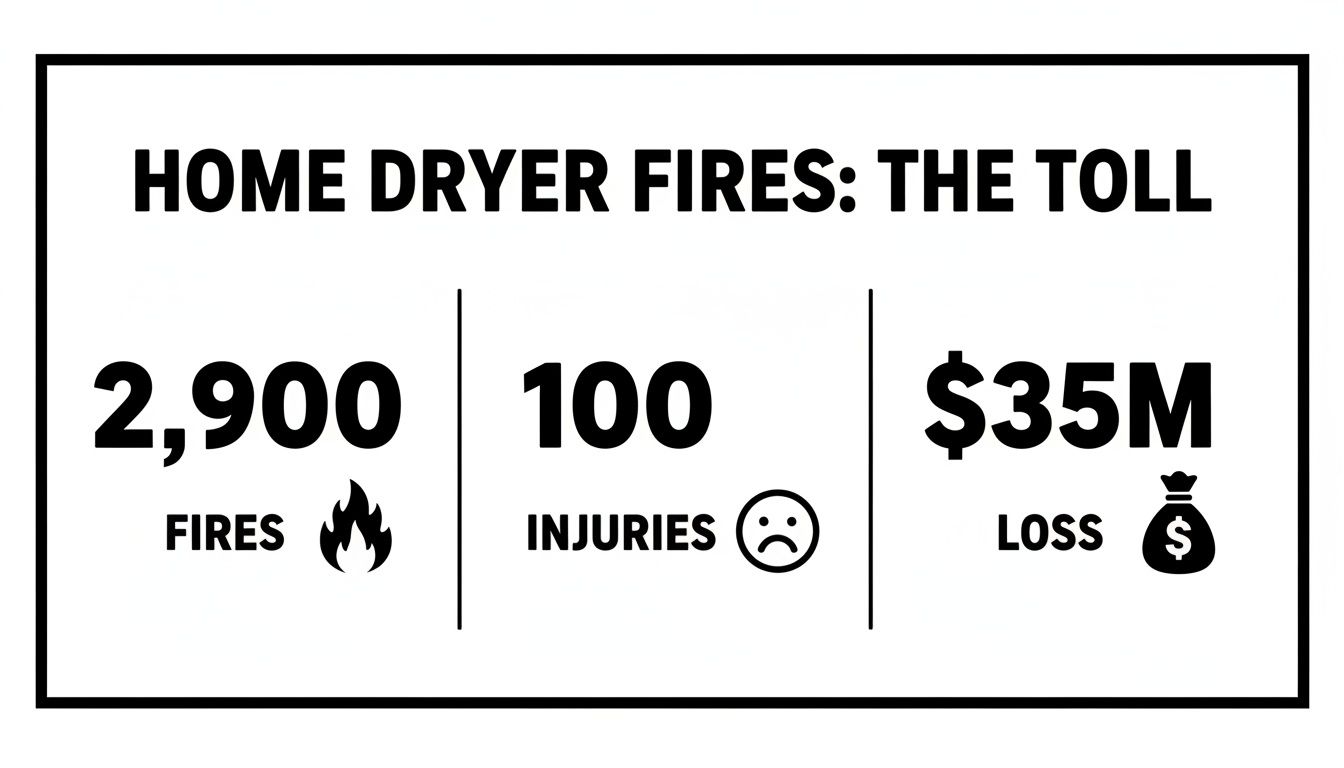
These aren't small numbers. According to the U.S. Fire Administration, roughly 2,900 home clothes dryer fires are reported annually, often with devastating results. The most frustrating part? The leading cause, responsible for 34% of these incidents, is simply a failure to clean the dryer and its vent system.
You can dig deeper into the data and learn more about these preventable fire risks and dryer vent safety.
Understanding the Fire Hazard from Dryer Lint
The number one reason to second-guess using an indoor dryer vent is the very real and immediate danger of fire. This isn't some abstract risk; it’s grounded in the simple fact that dryer lint is incredibly flammable. You have to stop thinking of lint as harmless fluff and start seeing it for what it is: perfect kindling for a fire.
Every time you dry a load of laundry, your clothes shed tiny fibers. This mix of cotton, synthetics, and other materials is basically a tinderbox waiting for a spark. When you use an indoor vent, all of this highly combustible material gets trapped in a confined space, often right next to your dryer’s heating element. It's a recipe for disaster.
The Predictable Chain Reaction
A dryer fire rarely happens out of the blue. It’s the final step in a predictable, and preventable, sequence of events. The process is straightforward and turns a simple household appliance into a major hazard.
Here’s how it typically unfolds:
Lint Accumulates: The small filter on an indoor vent clogs up fast. This causes lint to back up into the flexible dryer hose and even inside the machine itself.
Airflow is Restricted: This buildup acts like a dam, blocking the hot, moist air from escaping. Your dryer is forced to work much harder and run hotter just to get your clothes dry.
The Dryer Overheats: With nowhere for all that intense heat to go, the internal temperature inside the dryer can skyrocket to dangerous levels.
A Spark Ignites the Fuel: All it takes is a single spark from the heating element or motor to ignite the trapped, superheated lint. In an instant, you have a fire.
Being prepared for a fire goes beyond just your dryer. It’s also wise to brush up on essential home safety tips on smoke alarms, because a working alarm is your first line of defense against any fire, no matter the source.
Why Electric Dryers Pose a Higher Risk
While lint buildup is a problem for any dryer, it's especially dangerous in electric models. Studies have shown that electric dryers are over 2.5 times more likely to cause fires than their gas counterparts. The main reason is their higher heat discharge, which makes the lint accumulation problem even more volatile.
Shockingly, more than one-third of all clothes dryer fires are caused by a simple failure to clean them. This just goes to show how many of these devastating incidents could be avoided with basic maintenance.
This direct link between lint buildup and fire risk is why professional vent cleaning is not just a routine chore: it's a critical safety measure. An indoor vent dramatically accelerates this dangerous buildup.
The only safe approach is a proactive one. Getting a handle on the full scope of the danger is the first step, and you can learn even more in our complete guide to preventing a dryer lint fire hazard.
How Indoor Vents Pollute Your Home's Air
Beyond the immediate and obvious fire hazard, venting your dryer indoors introduces a sneakier, less visible threat: it tanks the air quality inside your home. It’s easy to think of dryer exhaust as just warm, moist air, but that’s not the whole story. It’s actually a complex cocktail of moisture, microscopic lint particles, and chemical fumes from your laundry products.
When you trap all that inside your house, you’re directly impacting the quality of the air your family breathes every single day.
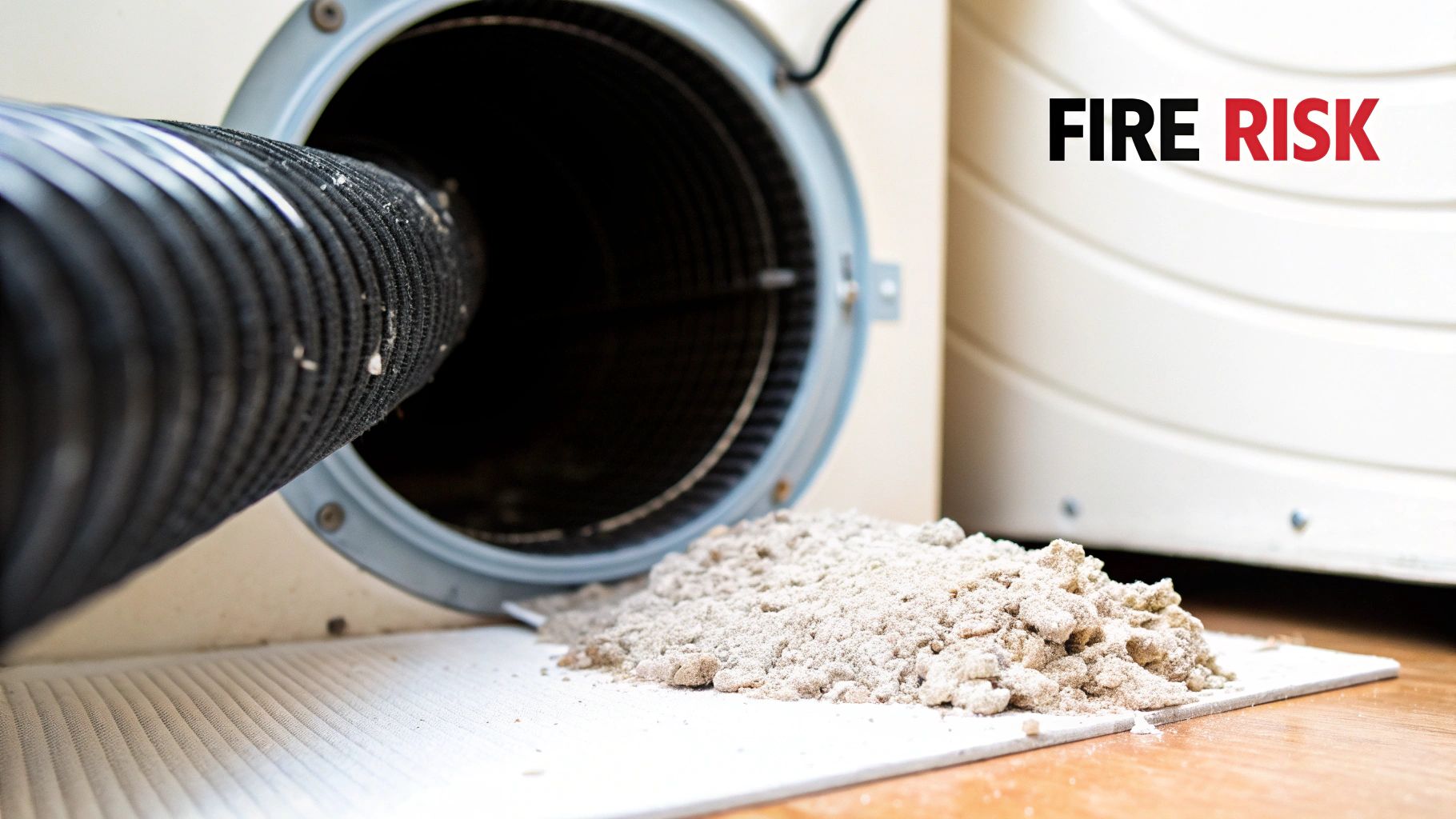
Each load of laundry can pump over a gallon of water into the air. This sudden spike in humidity creates the perfect breeding ground for mold and mildew. Before you know it, these fungi can take hold on walls, behind furniture, or in any corner without good airflow, releasing spores that can trigger allergies, asthma attacks, and other stubborn respiratory problems.
The Chemical Cocktail in Your Laundry Room
The issue goes way beyond just a little extra moisture and lint. Those pleasant scents from your favorite detergents and fabric softeners? They come from a mix of chemicals known as Volatile Organic Compounds (VOCs). When vented outside, these fumes disperse harmlessly into the atmosphere. But indoors, they get trapped and concentrated.
This isn't just about your laundry room smelling strongly of fresh linen. Serious research has identified dozens of hazardous chemicals in dryer emissions. One study uncovered a startling 29 unique VOCs in dryer vent exhaust. Of those, seven are classified by the U.S. Environmental Protection Agency as hazardous air pollutants, including known carcinogens like benzene and acetaldehyde. You can dig into the specific chemicals found in dryer emissions in the full study if you're curious.
What this really means is that every time you do a load of laundry, you could be pumping harmful substances directly into your living space, degrading your home's air quality with each cycle.
Long-Term Health Implications
Breathing in this mix of airborne pollutants day after day is a real concern for long-term health. The invisible threats from an indoor dryer vent are often far more insidious than the visible ones.
Here’s a quick rundown of what you’re actually releasing into your home's air:
Microscopic Lint Particles: These tiny fibers are small enough to be inhaled deep into your lungs, where they can cause irritation and make conditions like asthma much worse.
Mold Spores: The constant high humidity from the dryer is an open invitation for mold to grow, a notorious trigger for allergic reactions and respiratory infections.
Hazardous VOCs: Chemicals like acetaldehyde and benzene are linked to a whole range of issues, from sensory irritation in the short term to much more severe health risks with prolonged exposure.
The bottom line is crystal clear: An indoor dryer vent effectively turns your laundry room into a source of indoor air pollution. It creates an unhealthy environment that can quietly affect your family's well-being over time.
Venting your dryer properly to the outside is the only surefire way to get these harmful elements out of your home. It's crucial to understand the full picture, and you can learn more about why dryer exhaust is harmful and what the risks are in our detailed guide.
What Building Codes Say About Dryer Vents
It's not just about safety hazards; there’s a critical legal side to this that a lot of homeowners miss. When you ask, "are indoor dryer vents safe," the authorities have already given a clear and resounding "no." Building codes aren't just gentle suggestions. They're legally enforceable rules put in place to protect you, your family, and your home from disasters that are entirely preventable.
The main rulebook here is the International Residential Code (IRC), which is the blueprint for most local building codes all across the country. And the IRC is incredibly direct about dryer venting, there’s zero ambiguity on this crucial safety point.
The Mandate for Outdoor Venting
According to the IRC, every single clothes dryer must be vented directly to the outside of the building. This isn't a loose guideline; it's an explicit command. The code exists for all the reasons we've already covered: to stop flammable lint, damaging moisture, and harmful pollutants from building up inside your home.
The IRC specifically states that dryer exhaust systems "shall convey the moisture to the outdoors." That single sentence makes almost every indoor venting kit on the market a direct violation of standard building codes.
These national standards get adopted and enforced by your local city, county, or state. That means using an indoor dryer vent isn't just a bad idea, it’s often a compliance issue. This can create major headaches when you try to sell your home or, even worse, if you need to file an insurance claim after a fire.
Why Codes Prohibit Indoor Vents
Building codes are written based on lessons learned, often the hard way. Regulators know that venting a dryer inside creates a perfect storm for fire, mold, and poor air quality. Because of this, the rules are strict and designed to eliminate these risks at the source.
Here’s a quick look at the core safety ideas behind the law:
Fire Prevention: Codes demand smooth interior metal ducts specifically to minimize lint buildup, which is basically kindling. No indoor vent filter can ever promise to catch 100% of these tiny, flammable fibers.
Moisture Control: The rule to vent all that moisture outside directly tackles the risk of mold, mildew, and structural rot caused by trapped humidity.
Air Quality Protection: For gas dryers, venting outside is non-negotiable to prevent a deadly buildup of carbon monoxide. For electric models, it gets VOCs and other fine particles out of the air you breathe.
At the end of the day, the regulations just confirm what experts already know: the only truly safe dryer is one vented properly to the outdoors. To learn more about the specific rules in your area, take a look at this homeowner's guide to dryer vent code requirements.
Choosing Safer Alternatives and Solutions
Once you understand the serious risks of venting a dryer indoors, the next logical question is: what’s the right way to handle the exhaust? Thankfully, there are several safe and effective solutions out there. The best option for you will depend on your specific living situation, but the goal is always the same: protecting your home and your health from fire, moisture, and airborne contaminants.
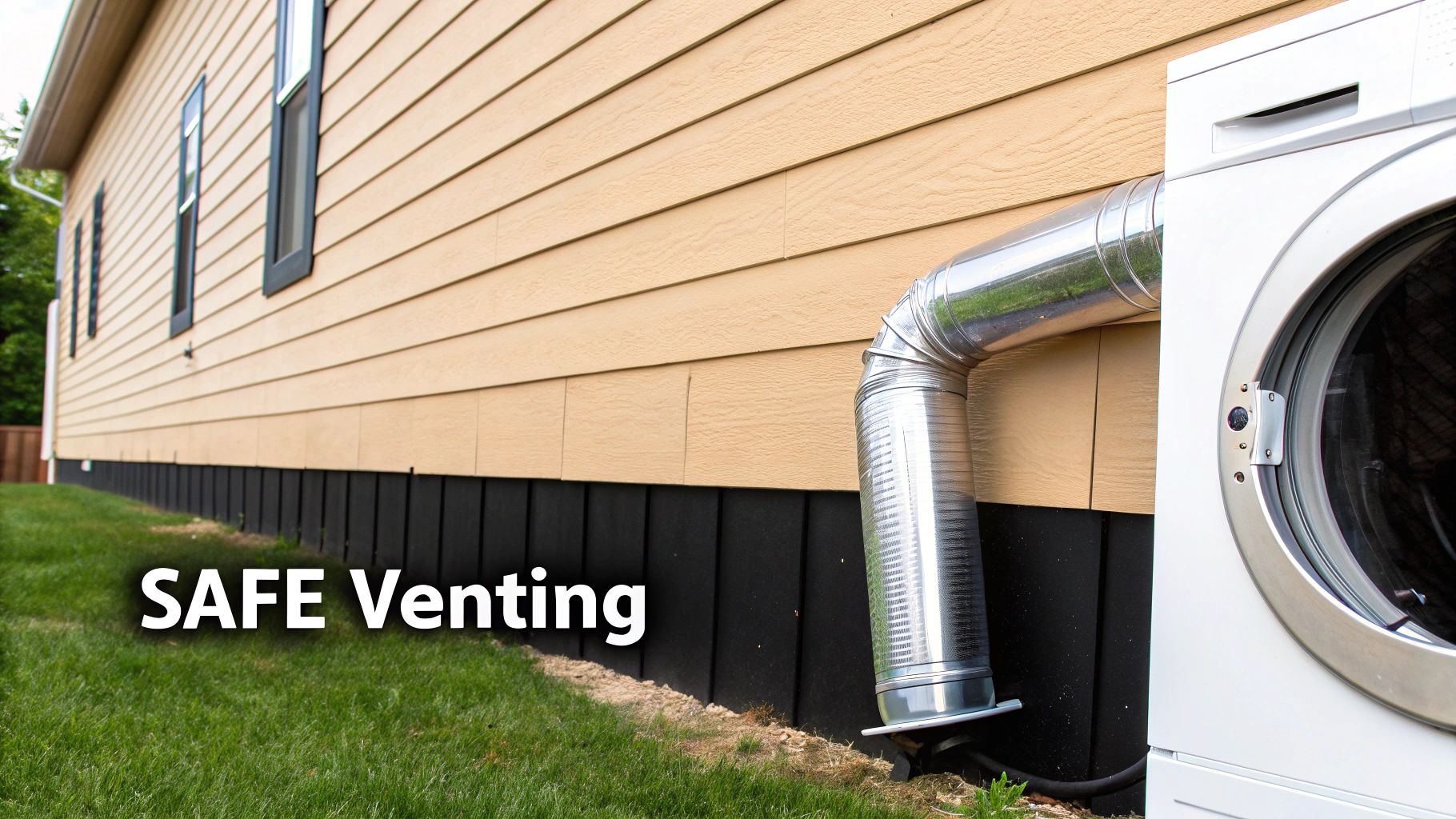
The undisputed gold standard for safety and performance is traditional outdoor venting. It's simple and effective. This method uses a rigid or semi-rigid metal duct to pipe all the lint, moisture, and chemical fumes from your dryer directly outside. This setup completely removes the hazards from your living space, making it the safest and most code-compliant option by a long shot.
Ventless Dryer Technologies
What if you're in an apartment, a basement, or any space where venting to the outside just isn't feasible? Modern technology has you covered. Ventless dryers are engineered to operate safely without needing an external exhaust duct, and they are worlds better than those risky indoor vent kits.
There are two main types you'll come across:
Condensing Dryers: These machines work a lot like a conventional dryer by tumbling clothes in heated air. But instead of blowing that hot, steamy air out, they cool it down in a heat exchanger. This causes the water vapor to condense back into liquid, which is then drained through a hose or collected in a reservoir that you simply empty after a cycle.
Heat Pump Dryers: This is the more energy-efficient cousin of the condensing dryer. It operates as a closed-loop system, constantly recycling and reheating the same air. It uses a refrigeration system to pull moisture out of the air, which is then collected. Because they run at lower temperatures, they're not only gentler on your clothes but can slash your energy use by up to 50% compared to a standard dryer.
While ventless dryers often come with a higher price tag upfront, they provide a safe, code-compliant solution for tricky installations. The long-term energy savings, especially with heat pump models, can really add up over time.
Making the Right Choice for Your Home
Picking the best solution means weighing the pros and cons of safety, your budget, and the layout of your home. If you can install an outdoor vent, that should always be your first choice. If it's not possible, a ventless dryer is the next best thing. And remember, improving your laundry setup is just one piece of the puzzle; you can boost your home's overall air quality by looking into other air purifier solutions for cleaner, healthier air everywhere.
For those still trying to figure out a complex venting situation, our guide on how to vent a dryer indoors the right way offers a deeper dive into code-compliant strategies. Ultimately, ditching unsafe indoor vent kits in favor of a proper, professional solution is one of the most important steps you can take for a safer laundry room.
Your Dryer Vent Maintenance Checklist
Let's be honest, staying on top of maintenance is the single best way to sidestep all the dangers we’ve talked about. It’s what keeps your dryer running safely and efficiently. The old saying about an ounce of prevention is spot-on here, especially when a fire hazard or crummy indoor air is the alternative.
Think of this simple checklist as your game plan for keeping the laundry room safe. It’s broken down by how often you need to do things, so it’s easy to follow.
This proactive approach helps you spot trouble long before it becomes a real threat. Making these tasks a habit is the most powerful way to cut down the risks from any dryer, particularly if you're in the process of fixing an unsafe indoor vent setup.
A Simple Maintenance Schedule
A consistent routine is your best defense against clogs and hazards. By tackling these small tasks regularly, you stay ahead of the game without feeling like it's a huge chore.
After Every Single Load:
Clean the Lint Trap: This is non-negotiable and the most important habit you can build. Before you start another load, pull out the screen and clean off 100% of the lint you see. A clogged filter chokes off airflow, forcing your dryer to work way harder and get dangerously hot.
Once a Month:
Check the Vent Hose: Take a quick peek behind your dryer. Make sure the flexible vent hose isn't squashed, kinked, or, even worse, disconnected. Any damage there can spew lint and exhaust right back into your house.
Inspect the Outdoor Vent Flap: Walk outside and find where your dryer vents. The flap should open and close without a fight. Make sure it isn't clogged with leaves, blocked by a snowdrift, or turned into a home by critters.
Knowing the early warning signs of a clogged vent is key. If your clothes suddenly take forever to dry, the top of the dryer is hot to the touch, or you smell something burning, it’s time to call in a pro for an inspection.
The Annual Professional Clean-Out
While your own checks are crucial, they can't do it all. You absolutely need to schedule a professional cleaning for the entire vent line once a year.
A certified technician has the specialized tools, like high-powered vacuums and spinning brushes, to clear out the dense, compacted lint that gets stuck deep inside the ductwork where you just can't reach.
Seriously, this service is a must-have for maintaining a safe system and is just part of being a responsible homeowner. To get a better idea of what's involved, check out the essential guide to dryer vent maintenance.
Frequently Asked Questions About Dryer Vents
When it comes to home maintenance, dryer vents bring up a lot of questions. Let's clear the air and give you some straightforward answers to the things homeowners ask us most.
Is It Ever Okay to Vent a Gas Dryer Indoors?
Let me be crystal clear: absolutely not. Venting a gas dryer indoors is extremely dangerous and something you should never, ever do.
Gas dryers produce carbon monoxide (CO) as a byproduct of combustion. It's an invisible, odorless gas that's lethal if it builds up inside your home. Proper outdoor venting is the only safe way to get that CO out of your living space and prevent a life-threatening hazard.
Can I Use an Indoor Dryer Vent Kit with a Filter?
You’ll see these kits on store shelves, often with little water traps or mesh filters, but they are not a safe substitute for proper venting. They simply can’t capture 100% of the microscopic lint particles that escape your dryer, and that fine lint is incredibly flammable.
Worse yet, they do nothing to remove the chemical fumes (VOCs) from your detergents and fabric softeners or control the massive amount of moisture being pumped into the air. This is a recipe for mold and mildew. It’s no surprise that using them often violates local building codes.
The bottom line is that you're just trapping pollutants inside your home. No indoor kit with a simple filter can truly solve the safety problem.
How Often Should I Have My Dryer Vent Professionally Cleaned?
For most families, we recommend a professional dryer vent cleaning at least once per year. This isn't just a quick vacuum of the lint trap; it's a comprehensive service that ensures the entire duct, from the back of your dryer all the way to the outside vent cap, is completely clear of packed-in lint and blockages.
Now, you might need to get it done more often if you check any of these boxes:
You have a large family and the laundry is running constantly.
You have pets that shed a lot. All that fur ends up in the vent.
Your dryer vent has a long, complicated path with several bends and turns.
Think of a regular professional cleaning as a small investment that pays huge dividends in fire prevention and keeping your dryer running efficiently.
Keeping your dryer vent system clear is one of the most important things you can do for a safe, healthy home. If you're noticing your dryer isn't working like it used to, or if it’s just been a while, Purified Air Duct Cleaning is here to help. Our certified technicians will make sure your system is clean, safe, and working at its best. Contact us today for a free quote.