

How to Improve Air Quality in Your Phoenix Home
To get a real handle on your home’s air quality, you need to think about it from three angles: controlling pollution at the source, making sure fresh air can get in, and keeping your HVAC system in top shape. A smart approach, especially here in dusty Phoenix, combines professional duct cleaning with modern air purification to really cut down on what you're breathing in every day.
Why Indoor Air Quality Matters in Phoenix
Living in the Valley brings its own set of challenges for the air inside our homes. We've got the fine desert dust that seems to coat everything, not to mention the monsoon storms that kick up a ton of allergens. And because we rely so heavily on our AC systems nearly year-round, whatever gets inside just gets circulated over and over again.
This isn't just about comfort, it's about your health. The link between air pollution and health problems is clearer than ever. In 2023 alone, air pollution was connected to a shocking 7.9 million deaths globally, and 86% of those were tied to things like heart disease and asthma. Here in Phoenix, we see it all the time: dirty, dusty ducts making allergies a nightmare for families. When you realize we spend about 90% of our time indoors, you see why taking action is so important. You can dig into the global stats yourself in the State of Global Air report.
The Foundation of Cleaner Indoor Air
Improving your home's air isn't about finding one magic bullet. It’s about a series of smart, consistent actions that add up over time. Think of this guide as your roadmap, breaking down the strategies that really work for Arizona homeowners. You don’t need to be an HVAC expert to make a huge difference, you just need a solid plan.
Your home's HVAC system is like its respiratory system. If the pathways are dirty, the air you breathe will be too. Regular maintenance isn't just a recommendation; it's essential for a healthy living environment.
We're going to walk through the practical steps you can take, starting with simple daily habits and moving up to more advanced solutions. A healthy indoor environment really boils down to three key pillars:
Source Control: This is about finding and minimizing pollutants where they start, whether it's cooking fumes in the kitchen or pet dander in the living room.
HVAC Maintenance: Keeping your air conditioner and ductwork clean and running efficiently is non-negotiable. A clean system moves clean air.
Filtration and Purification: This is where technology comes in. Using high-quality filters and modern purification systems can actively pull contaminants right out of the air.
Understanding these basics is the first step toward making your home a healthier place for your family. If you're a Phoenix resident wondering where to even begin, getting a professional assessment is a great starting point. Check out our Phoenix homeowner's guide to air duct cleaning to get an idea of what that process looks like.
To give you a quick overview, here are some of the most effective strategies we'll be covering.
Key Air Quality Improvement Methods
Strategy | Primary Benefit | Effort Level |
|---|---|---|
Regular Cleaning & Dusting | Reduces surface-level allergens like dust and dander. | Low (Weekly) |
Proper Ventilation | Dilutes indoor pollutants by bringing in fresh outdoor air. | Low (Daily) |
HVAC Filter Changes | Traps airborne particles before they circulate in your home. | Low (Monthly) |
Professional Duct Cleaning | Removes accumulated dust and contaminants from ductwork. | Medium (Every 3-5 Years) |
Whole-Home Air Purification | Actively neutralizes viruses, bacteria, and VOCs in the air. | Medium (One-Time Install) |
Each of these plays a part in the bigger picture of creating a healthier indoor environment. By layering these strategies, you can tackle air quality issues from multiple angles for the best results.
Simple Changes for Cleaner Air Today
You can start improving the air in your home right now, without a huge budget or calling in a pro. The best place to start? Going straight to the source. It’s all about stopping pollutants before they even get a chance to spread through your home’s air.
Think about it, many of the biggest culprits are just part of our daily routine. Cooking, especially on a gas stove, releases all sorts of particulate matter and nitrogen dioxide. A super simple habit is to flip on your kitchen’s range hood every single time you cook. It captures those pollutants on the spot, preventing them from hanging around.
Manage Indoor Pollutant Sources
Beyond the kitchen, take a look at your other daily habits. The cleaning products you use can be a major source of volatile organic compounds (VOCs), which are chemicals that easily turn into gases. Making a switch to fragrance-free or plant-based cleaners can seriously cut down on the chemical load in your air.
And of course, there are our furry family members. Pet dander is a huge source of indoor allergens. We love them, but their dander, saliva, and urine can become airborne. Getting into a routine of regular grooming, frequent vacuuming (with a HEPA filter vacuum!), and washing pet beds weekly makes a world of difference.
Stopping pollutants at the source is the lowest-hanging fruit when it comes to improving indoor air. It's far more efficient to capture cooking fumes with a vent than to try and filter them out of the entire house later.
Also, be mindful of what you bring into your home. New furniture, carpets, and some paints can "off-gas" chemicals for weeks. If you can, let new items air out in the garage or a well-ventilated room before moving them into your main living space. Even better, look for products certified as low-VOC to begin with.
Harness Smart Ventilation Strategies
Ventilation is just a fancy word for swapping stale, polluted indoor air with fresh outdoor air. Now, here in Phoenix, opening the windows when it's 110°F sounds crazy, I know. But it's all about timing.
During our cooler months, or even just in the early mornings in the summer, cracking open the windows for 15-20 minutes can do wonders. It flushes out all the accumulated indoor junk, from the CO2 we breathe out to chemicals from our cleaning supplies. It’s a totally free way to hit the reset button on your home's air.
Morning Flush: Before the heat cranks up, open windows on opposite sides of your house to create a nice cross-breeze.
Run Exhaust Fans: Always use the bathroom fan during and after showers. This pulls moisture out and helps prevent mold.
Use Ceiling Fans: A simple task like proper ceiling fan blade cleaning keeps dust and allergens from being constantly redistributed around the room every time you turn the fan on.
Taking this kind of proactive approach is huge. For a deeper dive into tackling dust specifically, check out our guide on how to reduce dust in your house for more hands-on tips.
Balance Indoor Humidity Levels
Our dry Arizona climate, combined with constant AC, means the air inside our homes can get incredibly dry. When air is too dry, it irritates your nose and throat, making you more vulnerable to respiratory problems. It also allows dust and allergens to float around in the air much longer.
The sweet spot for indoor humidity is between 30% and 50%. You can grab a cheap hygrometer online or at a hardware store to keep an eye on your levels. If you find your home is too dry, running a humidifier, especially in bedrooms at night, can add that much-needed moisture back into the air. This simple step helps soothe your airways and makes the air feel much more comfortable.
Why HVAC and Duct Maintenance Is Non-Negotiable
Think of your HVAC system as your home's lungs. It’s constantly breathing in, conditioning the air, and pushing it back out through a massive network of ducts. When it's clean and healthy, everyone breathes easy. But when it's ignored, it becomes a superhighway for dust, allergens, and even mold.
This isn't just about a bit of dust on your end tables. Here in Phoenix, our AC units run almost year-round. A dirty system doesn't just circulate air; it can become a primary source of indoor pollution. Over the years, those ducts collect a nasty mix of desert dust, pet dander, lingering construction debris, and sometimes moisture: the perfect breeding ground for contaminants that get blasted into your living room every time the AC kicks on.
The True Cost of Neglected Maintenance
Forgetting about your HVAC system doesn't just tank your air quality; it hits your wallet hard and shortens the system's life. A dirty, clogged unit has to fight to push air through choked filters and constricted ducts. This constant strain is a recipe for sky-high energy bills, especially during our brutal Avondale summers, and it can lead to an early death for expensive parts like the compressor or fan motor.
Regular maintenance is one of the smartest things you can do to improve air quality and protect your investment. A little bit of upkeep prevents small annoyances from becoming catastrophic failures and keeps your system running at peak efficiency right when you need it most.
A clean HVAC system isn't a luxury; it's the foundation of a healthy home. The air circulating through dirty ducts can be far more polluted than the air outside, directly impacting your family's health and well-being.
The link between big environmental cleanups and what we do in our own homes is surprisingly strong. We've seen how focused efforts, like China's 'war on pollution', lead to huge public health wins. You can achieve the same kind of impact indoors. Neglected HVAC systems can be responsible for 30-50% of the fine particulate matter (PM2.5) floating around your home. The good news? Professional air duct cleaning can boost airflow by 20-30% and has been shown to reduce allergy symptoms by 40-60%.
An Actionable HVAC Checklist for Phoenix Homes
Living in the desert means our HVAC systems are under constant assault from fine dust and a punishingly long cooling season. We simply have to be more on top of maintenance than folks in milder climates.
Here's a straightforward checklist designed specifically for the demands of our Arizona homes. It breaks down what you can tackle yourself and when it's time to call in the pros.
Task | Recommended Frequency (Phoenix) | Who Should Do It (DIY/Professional) |
|---|---|---|
Check & Change Air Filters | Monthly during peak summer; every 1-3 months otherwise. | DIY |
Clear Debris from Outdoor Unit | Monthly, especially after storms or high winds. | DIY |
Inspect Condensate Drain Line | Seasonally, before and after summer. | DIY/Professional |
Schedule Professional Tune-Up | Annually, ideally in the spring before summer hits. | Professional |
Get Professional Duct Cleaning | Every 3-5 years, or sooner if you notice signs of buildup. | Professional |
Following a schedule like this not only keeps your air cleaner but also extends the life of your unit and helps you avoid those dreaded mid-July breakdowns.
Signs It's Time to Call a Professional
Some tasks are easy weekend projects, but others need an expert eye. You can't see deep into your ductwork, but your home will give you some pretty clear clues when it's time for a professional cleaning.
Pay attention if you notice:
Visible Dust and Debris: Seeing little puffs of dust shoot out of your vents when the system kicks on? That's a red flag that your ducts are overloaded.
Unexplained Allergy Flare-Ups: If your family is suddenly sneezing and coughing more than usual, your ductwork could be circulating a constant stream of irritants.
Musty or Stale Odors: That persistent musty smell you can't seem to locate often points directly to mold or mildew hiding out in the dark, damp corners of your ducts.
Uneven Cooling or Weak Airflow: Are some rooms freezing while others feel like a sauna? Blockages in the ducts are a common cause, forcing your system to work harder for less comfort.
Ignoring these signals just makes the problem worse, impacting your air, your energy bills, and the health of your HVAC system. For a full breakdown of upkeep, you can check out our detailed guide on how to maintain your HVAC system for peak performance. Getting ahead of these issues with a professional inspection is always smarter than waiting for a complete breakdown.
Choosing the Right Air Filtration and Purification
Once you have a handle on basic HVAC maintenance, it's time to look at the technology designed to actively clean the air you breathe. This goes way beyond just trapping dust from the latest haboob; modern systems can neutralize microscopic threats that sneak into your home. The options can seem a little overwhelming, but a few key concepts will clear things up and help you pick the right solution for your home.
The most common starting point is the air filter in your HVAC system. These filters are definitely not all created equal, and their effectiveness is measured by a MERV (Minimum Efficiency Reporting Value) rating. Simply put, a higher MERV rating means the filter can capture smaller particles.
A basic fiberglass filter might be a MERV 4, which is okay for catching large dust particles and not much else. Stepping up to a MERV 8 filter will trap finer particles like pollen and mold spores. For even better protection, a MERV 13 filter is capable of capturing bacteria and some virus carriers.
Decoding Filter Types: MERV vs. HEPA
For homes with anyone suffering from severe allergies or for those who just want the highest level of protection, a HEPA (High-Efficiency Particulate Air) filter is often seen as the gold standard. By definition, a true HEPA filter must capture 99.97% of particles as small as 0.3 microns. To put that in perspective, a human hair is about 50 microns wide, so a HEPA filter traps particles over 150 times smaller.
There's a catch, though. HEPA filters are very dense and can restrict airflow, which can seriously strain some residential HVAC systems. It's critical to check your system's specs before slapping in a high-MERV or HEPA filter, or you could end up damaging your unit. Making the right choice is essential, and you can dive deeper into the differences in our guide on air purifiers vs. air filters to see which approach fits your needs.
Here's a simplified flowchart to help you visualize where filtration fits into the bigger picture of HVAC care.
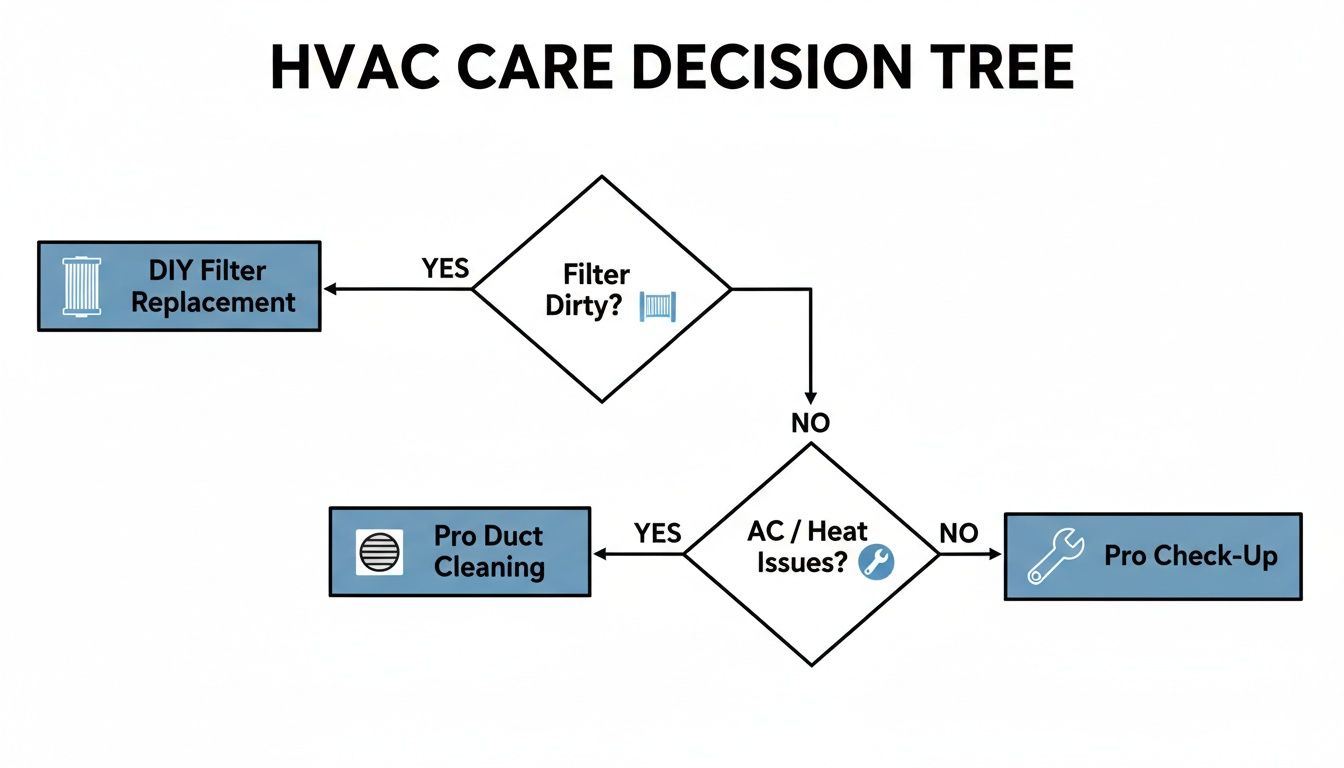
As you can see, great air quality starts with the simple things, like checking your filter, before you move on to professional services for deeper cleaning and system health.
Exploring Advanced Purification Technology
While filters are great at trapping particles that pass through them, some advanced purification systems take a more proactive approach. They don't just wait for contaminants to come to them; they actively seek them out. One of the most impressive examples of this is ActivePure® technology.
Originally developed in partnership with NASA for the International Space Station, ActivePure® works very differently from a passive filter. It uses a patented process to create and propel oxidizing molecules, known as ActivePure® Molecules, out into your home's air.
ActivePure® doesn’t just filter the air; it sanitizes the air and surfaces in your entire home. It actively seeks out and neutralizes contaminants on the spot, wherever they may be lurking.
These molecules rapidly neutralize pathogens both in the air and on the surfaces they touch. We're talking about viruses, bacteria, mold, and even those nasty volatile organic compounds (VOCs). The technology runs 24/7, continuously cleaning your indoor environment without using harsh chemicals or ozone.
The Benefits of Active Purification Systems
The biggest advantage of a system like ActivePure® is its wall-to-wall coverage. A filter only cleans the air that physically passes through the HVAC unit. An active system, on the other hand, fills the entire volume of your home, reaching nooks and crannies that filters could never touch.
Here are some of the key benefits:
Surface Decontamination: This is the only technology that also cleans surfaces, reducing the spread of germs on countertops, doorknobs, and other high-touch areas.
High Efficacy: It's proven to capture over 99.98% of viruses, bacteria, and mold, offering a level of protection far beyond standard filtration.
Odor Reduction: The technology also breaks down the molecules that cause odors from pets, cooking, and smoke, leaving the air smelling noticeably fresher.
Allergen Control: By neutralizing allergens like pet dander and mold spores, it can provide significant relief for family members with respiratory sensitivities.
For homeowners here in Phoenix and Avondale, where desert dust and allergens are a constant battle, integrating an active purification system offers a powerful, round-the-clock defense. It transforms your HVAC system from a simple air circulator into a whole-home purification machine, ensuring the air your family breathes is as clean and safe as possible.
Reducing Hidden Fire Hazards in Your Home
Improving the air your family breathes is about more than just health, it’s also about making your home safer. One of the most critical, and honestly, most overlooked, parts of home maintenance is the dryer vent. That simple tube running to the outside is a hidden danger zone if you don't keep an eye on it.
Every time you do a load of laundry, your dryer’s lint trap catches most of the fibers, but it doesn't get all of them. The tiny, highly flammable particles that slip past are pushed into the vent duct, where they can build up over months and years. This accumulation chokes off airflow, creating a serious fire hazard that’s responsible for thousands of preventable house fires every single year.
Spotting the Warning Signs of a Clogged Vent
The good news is, your home will usually give you clear signals that a dangerous clog is forming. You don't need to be an expert to spot them, just a little observant. Paying attention to these warning signs is the first step in preventing a disaster.
Here are the most common red flags I see in the field:
Clothes are still damp after a full cycle. If you find yourself constantly running the dryer for a second or even third time, poor airflow from a clogged vent is almost always the culprit.
The dryer feels unusually hot to the touch. When hot air can’t escape properly through the vent, it backs up into the appliance itself. This can make the exterior dangerously hot.
You notice a burning smell. This is a major one. A distinct burning odor while the dryer is running is a critical warning sign that lint inside the vent is overheating and could ignite. Don't ignore it.
It takes longer and longer to dry laundry. A gradual increase in drying times is a classic sign that a blockage is slowly getting worse, forcing your dryer to work harder and less efficiently.
A clean dryer vent isn't just about efficiency; it's a fundamental safety measure. Ignoring the signs of a clog is like ignoring a smoke alarm, a risk no family should take.
Recognizing these symptoms early helps you take action before the situation becomes critical. You can learn more about these risks in our essential guide to preventing dryer fires at home, which takes a deeper dive into home safety.
The Dual Benefits of Professional Cleaning
Scheduling a professional dryer vent cleaning is a straightforward fix with a huge payoff for both your safety and your wallet. Our technicians use specialized tools to thoroughly clear out all the accumulated lint from the entire length of the vent, completely eliminating the fire hazard.
But that’s not all. This process also dramatically improves your dryer’s performance. By clearing the pathway for hot, moist air to escape, your appliance can finally operate the way it was designed to. That means it runs more efficiently, uses less energy, and dries your clothes faster, saving you real money on your utility bills month after month.
This isn’t just a theory; the numbers back it up. Cleaning lint buildup from dryer vents directly addresses the cause of over 15,500 home fires in the U.S. each year. Beyond the massive safety benefit, this one service can also boost energy efficiency by up to 15-20%. It’s a simple action that leads to lower bills and a much safer home. You can explore similar findings on the power of clean air initiatives in this Climate Policy Initiative report.
Common Questions About Improving Air Quality
Even after you get the basics down, it’s normal to have more questions. Improving your home’s air quality is a process, not a one-and-done fix, and it pays to get the details right for your specific situation. Here are some of the most common questions we hear from Phoenix homeowners, answered in plain English.
How Often Do I Really Need to Clean My Air Ducts?
This is probably the number one question we get, and the honest answer is: it depends. The industry standard is every 3 to 5 years, but living here in the Phoenix and Avondale area changes the game. We almost always recommend leaning toward the shorter end of that timeline.
Why? The desert. That fine dust gets everywhere, and when you add our notorious pollen seasons to the mix, your HVAC system is fighting a constant battle. Debris just builds up faster here. There are also a few life events that should trigger an immediate call for a duct cleaning:
After a Major Renovation: All that drywall dust, sawdust, and who-knows-what-else doesn’t just disappear. It gets sucked right into your vents.
If You Have Pets: Fur and dander are notorious for creating clogs and feeding allergens directly into your air supply.
Moving into a New Home: You have no idea what the last owners left behind in the ductwork. It's always best to start with a completely clean slate.
Your ducts are the lungs of your home, hidden but vital. Keeping them clean is a fundamental part of breathing healthier air.
Are Air Purifiers Really Worth the Money?
Yes, but it's important to understand why. A high-quality air purifier, particularly a whole-home system like ActivePure®, isn't just another gadget, it's an investment in your family's health. Your standard HVAC filter is there to protect your equipment from big particles like dust and hair. An air purifier is designed to protect you from the microscopic stuff.
Imagine your kid's asthma flaring up every spring, or your concern about germs spreading like wildfire during flu season. A standard filter won't do much about that. This is where a real purification system makes all the difference.
A standard HVAC filter is a gatekeeper for your equipment. A high-quality air purification system is a bodyguard for your family's health, actively neutralizing threats that filters can't touch.
Systems using active technology don't just sit there and wait for pollutants to drift into them. They proactively send out sanitizing agents that destroy viruses, bacteria, mold spores, and VOCs, both in the air and on surfaces. For any family with health concerns, they are absolutely worth it.
Can Improving Air Quality Lower My Energy Bills?
Absolutely. It’s not just a possibility; it’s a direct result. The link between a clean air system and your energy efficiency is powerful, and the two services that make the biggest impact are professional air duct cleaning and dryer vent cleaning.
When your air ducts are caked with years of dust and debris, it's like trying to breathe through a clogged straw. Your HVAC system has to work overtime just to push air through those constricted pathways. That extra effort eats up a ton of electricity, and you see it right on your utility bill.
Duct Cleaning Benefit: By clearing out all those blockages, we restore clear, effortless airflow. Your system can finally breathe easy, which can lead to energy savings of 20% to 30%.
Dryer Vent Cleaning Benefit: It's the same story with your dryer. A vent packed with lint traps hot, moist air, forcing the machine to run longer and longer cycles. A professional cleaning lets it work efficiently, saving energy on every load.
Both of these services often pay for themselves through lower energy bills, and that’s not even counting the benefits of better air and improved home safety.
What Is the Biggest Air Quality Mistake Homeowners Make?
The single most common mistake we see is simply forgetting about the systems that manage the air. It’s a classic “out of sight, out of mind” problem. We all diligently clean our floors and countertops, but the ducts, filters, and vents circulating the very air we breathe get completely ignored.
Forgetting to change an HVAC filter is the perfect example. That one small oversight means your air isn't getting cleaned, and you're putting immense strain on your entire system. That leads to costly repairs and higher bills. Ignoring the signs of a clogged dryer vent is another big one, it’s not just inefficient, it’s a major fire hazard.
If you take one thing away from this guide, it should be the importance of proactive maintenance. Small, consistent habits, like swapping filters monthly and scheduling professional cleanings every few years, prevent tiny issues from snowballing into massive health, safety, or financial headaches. Thinking about how to improve air quality needs to be a regular part of your home maintenance checklist, just like mowing the lawn.
Ready to take control of your home's air quality and safety? The team at Purified Air Duct Cleaning is here to help. From comprehensive air duct cleaning to advanced ActivePure® installations, our certified technicians have the expertise to make your home a healthier, more comfortable place to live. Visit us at https://www.purifiedairductcleaning.com to get your free quote today.