

How to Prevent Dryer Fires: Simple Tips to Keep Your Home Safe
Keeping your dryer from becoming a fire hazard is simpler than you might think. It really boils down to two key habits: cleaning out the lint trap after every single load and making sure the entire vent system stays clear. These aren't just suggestions; they are the most direct ways to tackle the number one cause of these surprisingly common and dangerous house fires.
Why Dryer Fire Prevention Matters More Than You Think
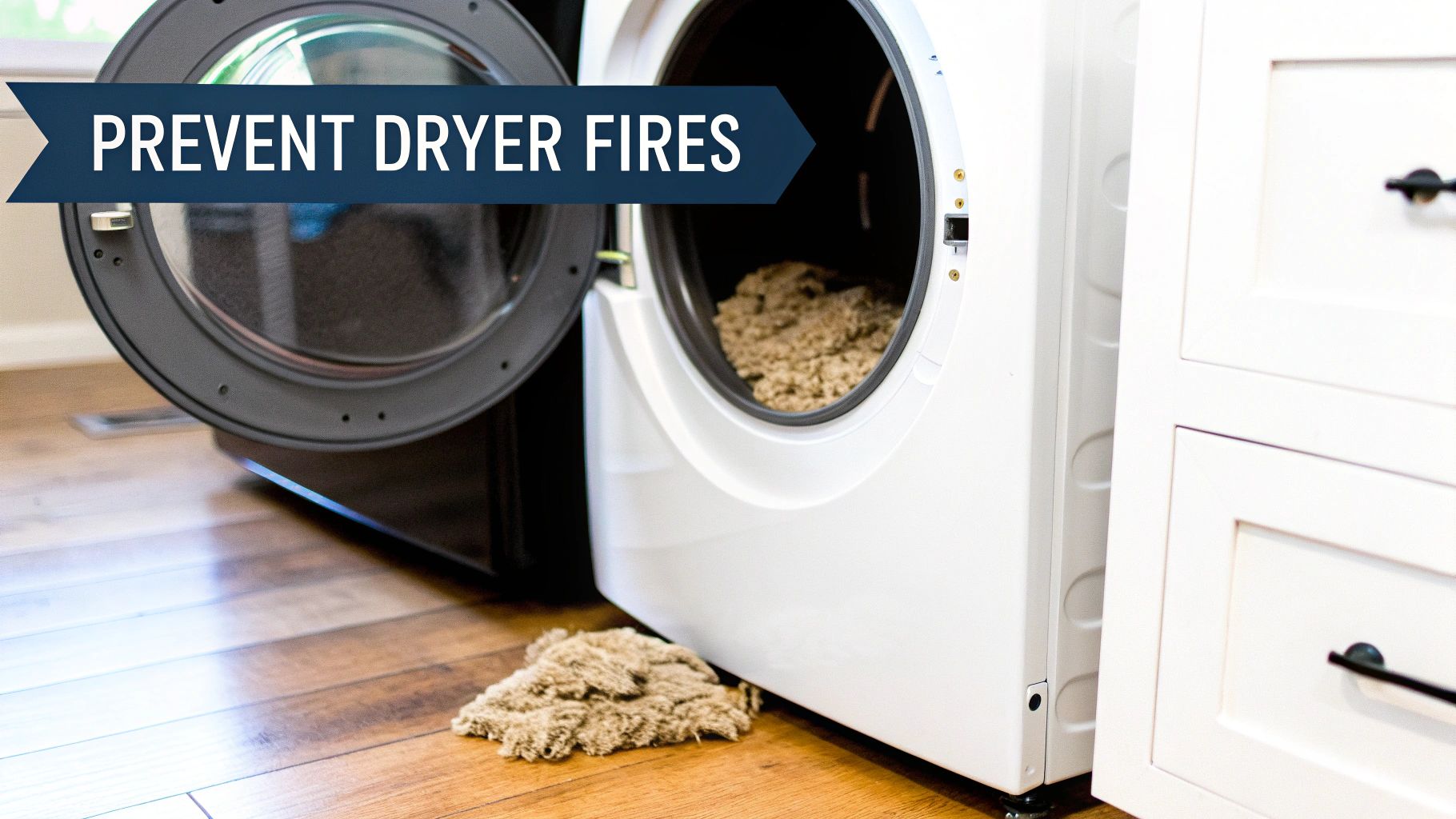
That workhorse in your laundry room is an incredible convenience, but if neglected, it can turn into a serious risk. The numbers don't lie. Clothes dryers are linked to an estimated 15,600 structure fires every year in the United States, leading to tragic deaths, injuries, and millions of dollars in property damage.
What’s most shocking about this statistic? The leading cause is simply a failure to clean the dryer. This means that, in most cases, the power to prevent a disaster is completely in your hands.
Understanding the Core Risk
Let's talk about lint. That soft, fuzzy stuff that collects in your dryer's trap is incredibly flammable. When it's allowed to build up, it creates a perfect storm for a fire by doing two things at once:
It blocks airflow. A clogged vent traps hot, moist air inside the dryer drum and ductwork, forcing the machine to run hotter and hotter to get the job done.
It provides the fuel. All that trapped heat is now surrounding a large amount of bone-dry, fluffy material that's just waiting for a spark to ignite.
This risk becomes even more pronounced when you consider factors like the seasonal increase in house fires, which reminds us to stay vigilant all year round. To get the full picture, you can learn more about the seven key https://www.purifiedairductcleaning.com/post/causes-of-dryer-fires-7-key-reasons-prevention-tips. This guide will walk you through the practical, actionable steps to keep your home safe.
Building Your Routine Dryer Safety Habits
When it comes to preventing dryer fires, the secret isn't some complicated, time-consuming task. It's about building simple, consistent habits. These small actions, when they become second nature, are your most powerful defense against dangerous lint buildup and potential mechanical problems.
You probably already pull that big, fuzzy layer of lint off the filter after every load, and that’s a fantastic start. But there's another hidden danger that most people miss.
After you peel off the main sheet of lint, hold that filter up to a light. See that fine, almost waxy film? That’s residue from fabric softeners and dryer sheets. This sneaky buildup can be just as hazardous as a thick blanket of lint, as it clogs the screen’s mesh and chokes off airflow. This forces your dryer to work harder and get much, much hotter.
Pro Tip: Once a month, give your lint filter a quick spa day. Just take it to the sink and gently scrub it with warm, soapy water and a soft brush. Rinse it well, let it dry completely, and pop it back in. This one simple step keeps your filter working like new.
Your Weekly Five-Minute Check
Beyond the daily lint screen cleaning, a quick weekly inspection is your best bet for catching trouble early. This isn't about pulling the machine apart; it's a simple walk-around that takes less time than folding a load of towels.
Here are a few things to keep an eye (and ear) out for:
Listen for odd noises. The next time you start a load, really listen. Do you hear any new rattling, squeaking, or grinding sounds? Strange noises can be an early warning sign of a problem with the drum or motor, parts that could create friction or sparks if they fail.
Check the surrounding area. Take a peek behind your dryer. Is there a collection of dust bunnies and lint on the floor or clinging to the wall? That’s often a sign that your vent hose has a small leak, letting flammable debris escape into the open.
Inspect the outside vent. While the dryer is running, take a quick trip outside. You should feel a strong, steady puff of warm, moist air coming from the exterior vent flap. If the airflow feels weak or the flap isn't opening much, you’ve likely got a clog forming in the duct.
These checks don’t require any special tools, just a few moments of your attention. By making them a non-negotiable part of your laundry routine, you're taking active, powerful steps to protect your home.
Your Deep Dive into Cleaning the Dryer Vent System
While keeping the lint trap clear is a great daily habit, the single most important job for preventing a dryer fire is the annual deep clean of the entire vent system. This is where you get to the hidden lint, the stuff that builds up over time and slowly strangles your dryer's airflow until it becomes a serious overheating risk. Think of it as essential spring cleaning for your laundry room.
First thing's first: safety. Before you even think about moving the dryer, unplug it from the wall outlet. If you have a gas dryer, you also need to shut off the gas supply valve, which you'll usually find on the pipe right behind the appliance.
With the power and gas off, you can carefully pull the dryer away from the wall. You’ll need to disconnect the flexible vent duct from the back of the dryer and from the wall. It’s a good idea to have a vacuum handy, you’ll probably be surprised by how much lint spills out.
Clearing the Path for Airflow
This is where a dedicated dryer vent cleaning brush kit is worth its weight in gold. These kits come with flexible rods that screw together, letting you reach deep into your ductwork to pull out years of compacted, highly flammable lint.
Here’s a breakdown of how to hit the main problem areas:
The Ductwork: Attach the brush to the rods and feed it into the vent pipe. A gentle back-and-forth motion is all you need to loosen the buildup. For the best results, attach the brush to a power drill on a low speed to really power through the clogs.
The Dryer Itself: Use a vacuum with a skinny attachment to clean out the port on the back of the dryer. This little opening is often where clogs begin to form.
The Exterior Vent: Head outside and find where your dryer vents. Remove the cover and clear out any lint, leaves, or even animal nests that have gathered. Make sure the little flaps can open and close without sticking.
Taking the time for this deep clean is more than just a chore; it’s a critical safety measure. Failure to clean the dryer vent is the leading cause of roughly 34% of home dryer fires. The U.S. Fire Administration reports that these entirely preventable fires lead to about $35 million in property loss each year. You can find more details on these fire prevention stats over at rotobrush.com.
Inspecting for Hidden Dangers
While you're cleaning, use the opportunity to give the duct itself a good look. Are there any spots that are crushed, kinked, or bent at a sharp angle? These spots act like bottlenecks, causing lint to build up much faster and creating a fire hazard even if the rest of the duct is clear.
A crushed or sagging vent hose is like a clogged artery for your dryer. Even a small restriction dramatically reduces airflow, forcing the machine to overheat and pushing flammable lint into contact with the heating element.
This simple infographic sums up the key routine for dryer safety: clean, check, and listen.
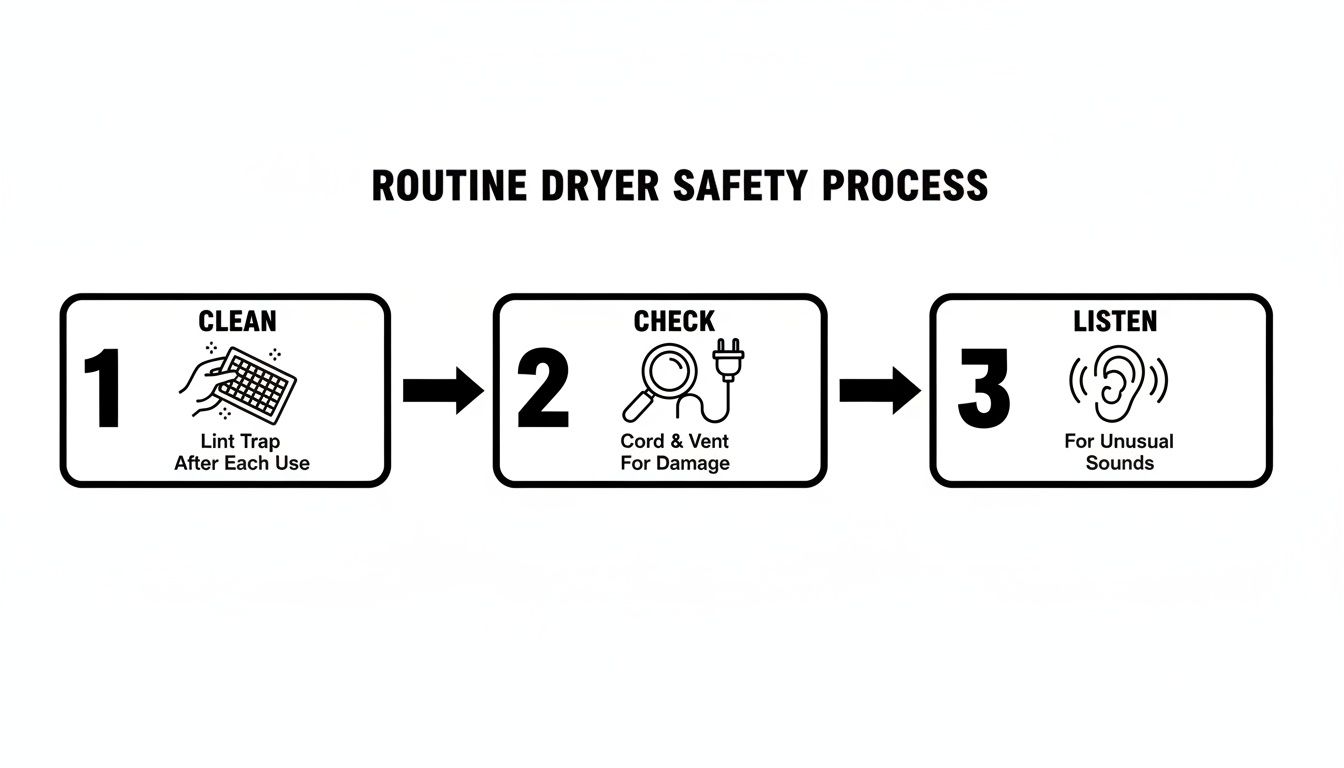
It’s a great visual reminder that safety isn't a one-and-done task. It’s a cycle of daily habits and deeper, periodic maintenance. If you spot any damage to your vent hose during your inspection, replace it immediately. For a more detailed guide on this process, check out our post on how to safely and effectively clean your dryer vent pipe.
Choosing Safer Materials for Your Dryer Vent
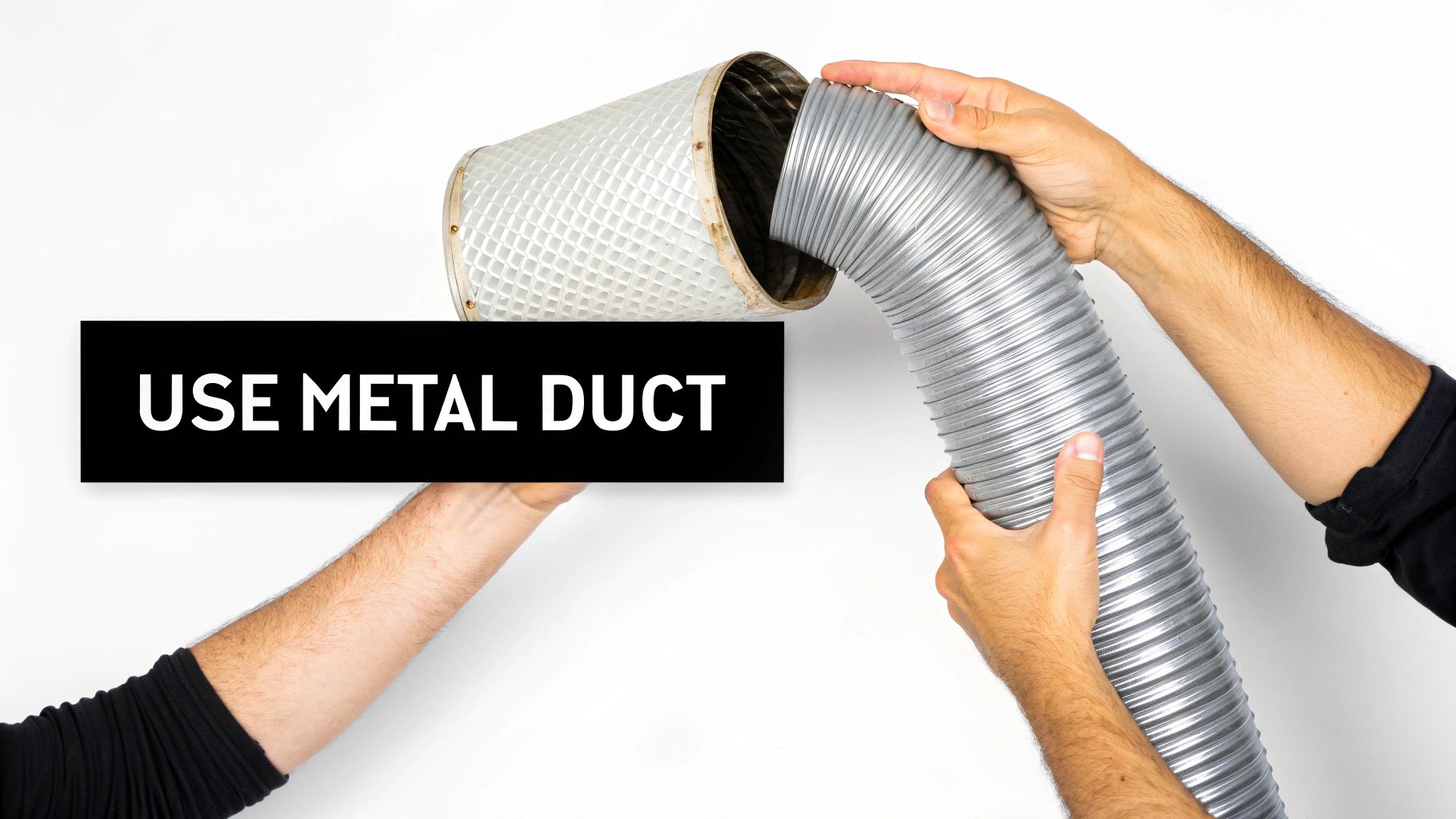
Beyond just cleaning out lint, the actual hose connecting your dryer to the outside world plays a huge role in fire safety. If you peek behind your dryer and see a flimsy, white plastic or vinyl accordion-style duct, you're looking at a serious fire hazard that needs to be addressed.
Those flexible plastic ducts are a problem for a few key reasons. First, their ribbed, accordion design is the perfect trap for lint, creating hidden blockages that are a nightmare to clear out. They also get crushed easily behind the dryer, which chokes off airflow and forces the machine to overheat.
Most importantly, that type of plastic just isn't fire-resistant. When temperatures inside the vent climb, which they will with a blockage, it can melt or even ignite.
Upgrading your vent duct is one of the single most impactful changes you can make to prevent a dryer fire. A quick look behind your dryer is all it takes to see if you have a dangerous plastic vent that needs immediate replacement.
Making the Switch to Metal Ducting
The gold standard for dryer venting, recommended by pretty much every fire safety expert, is rigid or semi-rigid metal ducting. The difference is night and day. The smooth interior walls of a metal duct let lint pass through freely, which dramatically cuts down on the chance of a dangerous clog forming.
This better airflow doesn't just improve safety; it makes your dryer run more efficiently, saving you a bit on energy bills while keeping temperatures in a safe range. And unlike plastic, metal won't catch fire. It’s built to handle the heat. When you're shopping for a replacement kit, make sure it's UL-listed, which is just an official way of saying it has passed rigorous safety testing.
Rigid Metal Ducts: These are your best bet for safety and airflow, especially for long, straight runs from the dryer to the exterior wall.
Semi-Rigid Metal Ducts: These offer more flexibility than the solid pipes, making them a great choice for navigating tight spaces and corners behind your dryer.
Choosing the right material is a fundamental step toward a safe laundry room. If you want to dive deeper into installation standards and best practices, check out our guide on proper clothes dryer venting made simple. Making this small upgrade is an easy win that provides lasting peace of mind.
Operating Your Dryer with Safety in Mind
Keeping your dryer safe isn't just about cleaning out lint traps and vent pipes. How you actually use the machine day-to-day plays a huge role in its performance and, more importantly, its safety. A few simple changes to your laundry routine can make all the difference in preventing overheating.
One of the most common mistakes I see is overloading the dryer. It's tempting to cram everything in at once to get the chore done faster, but it’s a dangerous habit. A drum that’s stuffed to the brim can't tumble properly, which severely restricts airflow. This forces the motor and heating element to work overtime, generating excessive heat and putting a massive strain on the appliance.
Mind What You Dry
What you put in the dryer is just as critical as how much you put in. Some items have no business being in there, no matter how thoroughly they've been washed.
The biggest culprits are fabrics that have come into contact with flammable liquids. Think about work rags or clothes stained with:
Gasoline or motor oil
Cooking oils
Paint thinners or solvents
Even a good wash cycle might not completely strip out these volatile chemicals. When that fabric gets hot, it can release flammable vapors. All it takes is a tiny spark from the heating element to ignite those fumes. Your best bet is to always air-dry these items, preferably outside.
By far the most dangerous thing you can do is run the dryer when you're not home or while you're asleep. An unattended dryer can turn a small, manageable problem into a full-blown emergency before anyone even knows something is wrong.
Ultimately, one of the easiest safety measures is simply being present. If you’re home and awake while the dryer is running, you'll be able to smell or hear if something is off. Catching a problem early is everything. To get familiar with what to look for, it’s worth reading up on the common dryer fire warning signs you can't ignore.
Recognizing When You Need a Professional
While your own regular maintenance is the best first line of defense against dryer fires, there are times when you absolutely need an expert’s eye. Some problems go way beyond a simple DIY cleaning, pointing to a serious blockage or even a mechanical failure inside the machine.
Ignoring these red flags isn't an option. Think of them as your dryer trying to tell you something is seriously wrong.
A persistent burning smell that you can’t trace to the lint trap is one of the biggest warnings you can get. This could mean lint has built up right next to the heating element or that you have an electrical issue brewing, both are immediate fire hazards that demand a professional.
When to Make the Call
Even if you’re diligent about cleaning, you might notice your dryer just isn’t working like it used to. If any of the following sound familiar, it’s time to call a qualified technician.
Excessive Drying Times: Are your clothes still damp after a full run? When a load suddenly takes twice as long to dry, it’s a classic sign that a deep clog is choking off the airflow.
Unusually Hot Clothes: Your laundry should come out warm, not scorching hot. If your clothes or the top of the dryer feel dangerously hot, it means the appliance can't vent properly and is overheating.
The Dryer Shuts Off: An appliance that constantly shuts off mid-cycle is waving a red flag. This often means its internal thermostat is tripping as a safety measure to prevent it from catching fire.
If you have a gas dryer, getting a professional in for inspections is even more critical. It’s important to understand the value of routine gas safety checks to ensure every connection is secure and there are no dangerous leaks.
A certified technician can spot these hazards and perform a deep cleaning that goes far beyond what any DIY kit can accomplish. To see what a real expert service involves, take a look at our guide on professional dryer vent cleaning services.
When you need a professional you can trust, call Purified Air Duct Cleaning for a comprehensive inspection and cleaning to keep your home safe. Visit us at https://www.purifiedairductcleaning.com to schedule your service.