

What Is a Dryer Vent and Why Is It So Important?
It might be the most overlooked part of your laundry room, but the dryer vent is a critical system that quietly does a very important job. In simple terms, it's the exhaust duct that carries all the hot, damp, lint-filled air from your clothes dryer and safely vents it outside your home.
Think of it as the lungs of your dryer; it's absolutely essential for breathing out all the hazardous stuff you don't want building up inside. Without a clear path to the outdoors, that exhaust has nowhere to go, leading to some serious safety issues and performance problems.
Your Dryer Vent: The Unsung Hero of Your Laundry Room
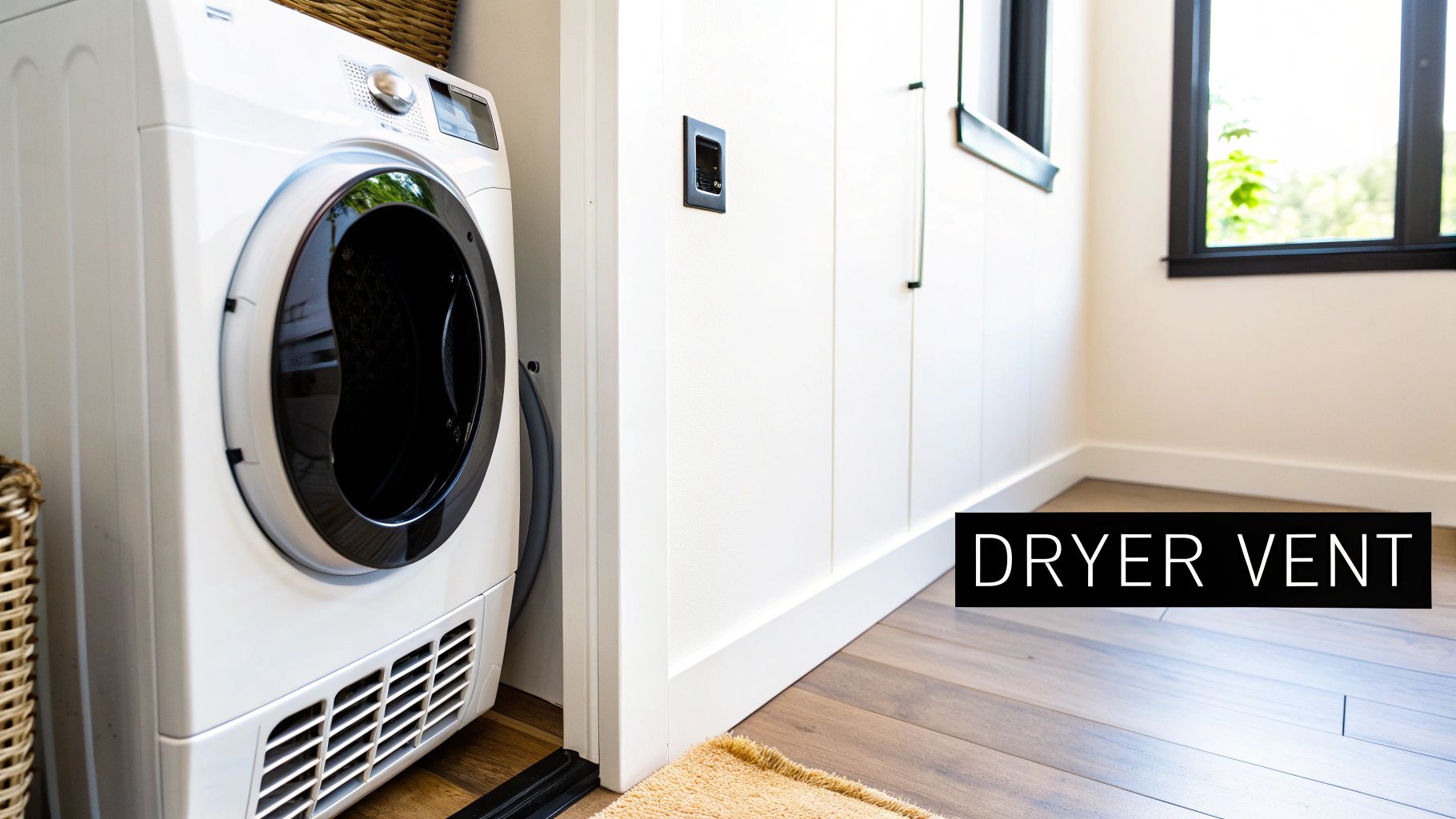
Most of us never give our dryer vent a second thought, yet it's working hard behind the scenes to protect our homes and keep our appliances running smoothly. A proper setup is non-negotiable when it comes to preventing fires, cutting down on energy use, and saving your dryer from an early breakdown.
A good analogy is to compare it to a car's exhaust pipe. Just as that pipe funnels toxic fumes away from the engine to keep it running safely, your dryer vent gets rid of super-hot air and flammable lint that could cause big trouble if trapped.
When that vent gets clogged with lint, it’s like a blocked artery. Airflow is choked off, forcing the dryer to work much harder and get dangerously hot. This creates the perfect conditions for a fire. On top of the danger, a blocked vent means your clothes take forever to dry, which hikes up your utility bills and puts unnecessary wear and tear on the machine. Getting familiar with the basics of proper clothes dryer venting is the first step toward a safer, more efficient laundry routine.
A well-maintained dryer vent system not only protects your family from a significant fire risk but also directly contributes to lower energy consumption and a longer lifespan for your appliance.
The entire system is actually made up of a few distinct parts that work in unison. Knowing what they are and what they do makes it much easier to spot a problem before it escalates.
Key Components of a Dryer Vent System
To help you understand how it all connects, here’s a quick breakdown of the parts that make up a typical dryer vent system. Each one has a specific job to do in getting that hot air from your dryer to the outside.
Component | Function |
|---|---|
Transition Duct | The flexible hose connecting the back of the dryer to the main vent ducting. |
Ductwork | The rigid or semi-rigid metal pipes that run through walls, ceilings, or crawlspaces. |
Elbows | The curved fittings used to navigate corners and change the direction of the ductwork. |
Vent Hood/Cap | The exterior termination point that allows air to exit while keeping pests and weather out. |
Having a basic grasp of these components will help you know what to look for if you ever suspect your vent isn't working as it should.
Why a Clogged Dryer Vent Is a Serious Fire Hazard
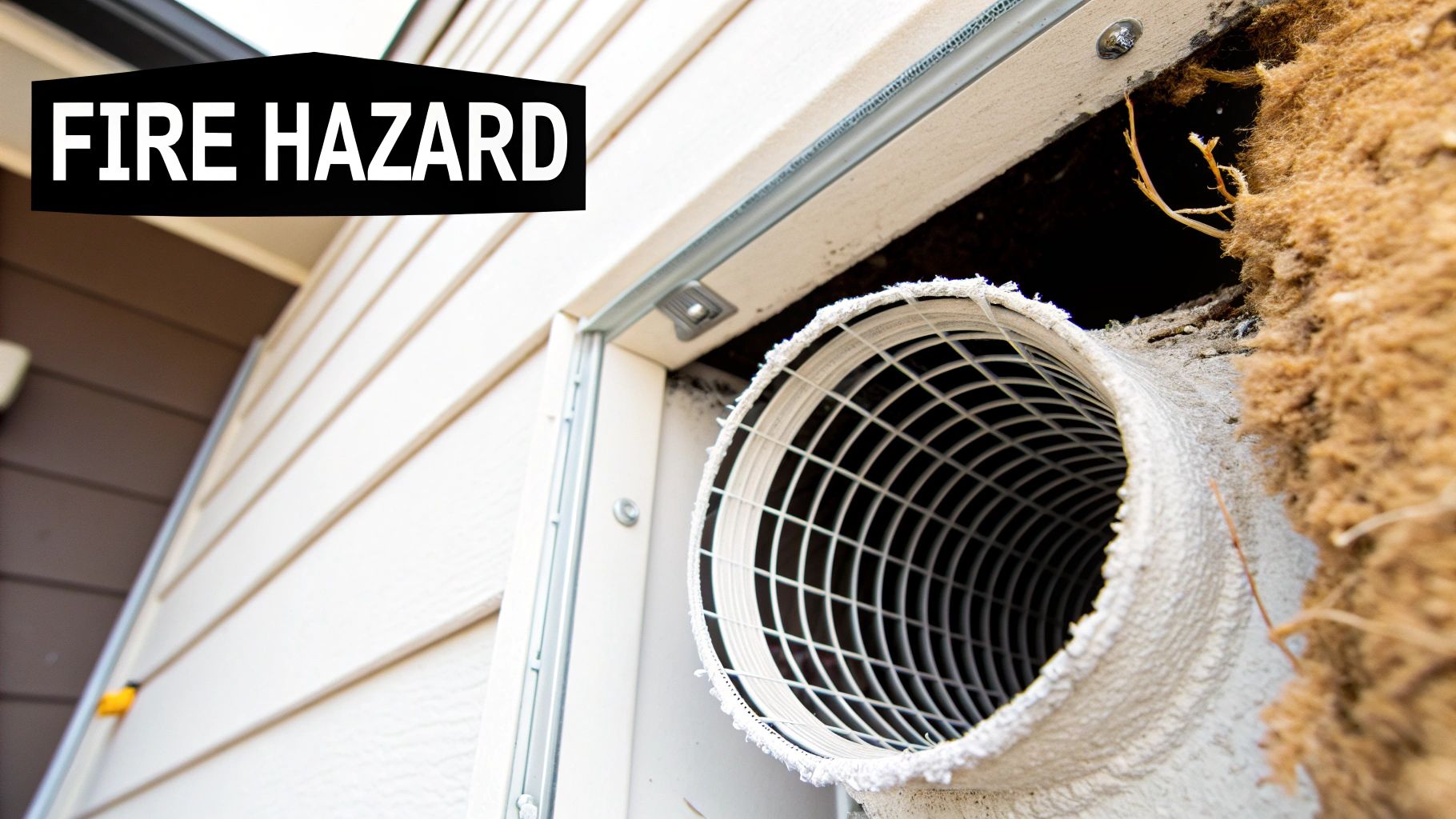
Most of us think about kitchen mishaps when we hear "house fire," but one of the most common culprits is hiding right in your laundry room. The single biggest reason to keep your dryer vent clean is to prevent a fire that could destroy your home. Every time you dry a load of laundry, your machine sheds countless tiny, flammable fibers we call lint.
This lint hitches a ride with hot, moist air through the dryer vent. Over time, it sticks to the inside of the ductwork, building up into a thick, dense blanket. This blockage essentially plugs up the system, trapping dangerous levels of heat inside your dryer and vent.
How Lint Buildup Sparks a Fire
With the hot air blocked, the dryer's internal temperature can skyrocket. The machine’s heating element is forced to work in extreme conditions it was never designed for, causing it to overheat. All it takes is for that intense heat to ignite the highly flammable lint clog, and you have the perfect fuel for a fire.
What starts as a small spark inside your wall can quickly race through your home’s structure. This isn't just a "what if" scenario; it's a real and present danger that plays out in thousands of homes every year.
The risk is so real that "failure to clean" is listed as the leading cause of residential dryer fires. Making sure your vent is clear is just as critical as checking your smoke detectors.
The statistics are sobering. In the U.S. alone, clothes dryers are responsible for nearly 17,000 fires each year. These incidents result in over 50 deaths, almost 400 injuries, and a staggering $236 million in property damage annually.
Understanding this risk is a key part of protecting your home. A practical guide on how to prevent house fires offers a wider look at home safety, and learning the specific causes of dryer fires can empower you to take the right preventive steps.
How a Clean Vent Boosts Efficiency and Lowers Utility Bills
Beyond the critical issue of fire safety, a clean dryer vent has a direct and immediate impact on your wallet. Your dryer's entire job depends on its ability to effectively expel hot, moist air. When that pathway is clogged, the machine is forced to work much harder and longer, constantly draining energy.
Think of it like trying to breathe out through a straw. When lint builds up, it creates a dam, blocking airflow. Your dryer, which was designed for quick, efficient cycles, now has to run significantly longer to get your clothes dry. An extra 20 or 30 minutes per load might not sound like a big deal, but it adds up fast.
A restricted dryer vent can easily turn a standard 45-minute cycle into a 75-minute marathon. This extra runtime translates directly into a higher gas or electric bill at the end of the month.
The Financial Drain of a Clogged Vent
This wasted energy isn't just a theory; it's a measurable drain on your finances. Industry data shows a restricted vent can easily add 10 to 30 minutes to every single load. For a family doing five to seven loads a week, that’s an extra four to six hours of dryer runtime every month, spiking your utility costs. Interestingly, some newer, eco-friendly cleaning methods have even been shown to cut the associated carbon emissions by around 30%.
This reframes how you should think about dryer vent cleaning. It's not just another chore or expense, it's an investment that pays for itself. The money you save on lower utility bills often covers the cost of the professional service over time.
Reduced Energy Consumption: Your dryer finishes its job faster, using less electricity or natural gas with every load.
Extended Appliance Lifespan: Putting less strain on the motor and heating element means fewer breakdowns and a much longer life for your machine.
Fewer Repair Costs: By preventing your dryer from constantly overheating and wearing itself out, you can avoid expensive service calls.
Ultimately, keeping your dryer vent clear is one of the easiest ways to boost your home’s overall efficiency. This same principle of clear airflow applies to other systems, too. For instance, you can check out our guide on improving HVAC efficiency to see how it benefits your entire home. A clean vent ensures your appliance operates at its best, saving you money and helping you avoid a premature replacement.
Understanding Different Dryer Vent Types And Materials
When you get down to it, not all dryer vents are created equal. The specific type of ducting snaking away from your dryer has a massive impact on both its efficiency and, more importantly, your family’s safety. Choosing the right material isn't just a small detail, it's one of the most critical decisions for a properly functioning exhaust system.
The best and safest options, hands down, are rigid or semi-rigid metal ducts. Think of them as a super-smooth highway for lint and hot air. Their slick interiors give lint almost nothing to grab onto, which drastically reduces the risk of a flammable buildup. Plus, their sturdy build means they won't get squished behind the dryer, keeping that crucial airflow wide open.
The Good, The Bad, and The Dangerous in Vent Materials
On the flip side, you’ll often find flexible ducts, sometimes made of foil or, even worse, white vinyl. While they might seem convenient, those flexible, accordion-style hoses are riddled with tiny ridges: perfect little traps for lint to accumulate.
That white plastic vinyl tubing is particularly hazardous. It’s not fire-resistant at all and is actually banned by most modern building codes for good reason. It’s a serious fire risk hiding behind your appliance.
The material your vent is made of directly impacts your home's safety. A rigid metal duct offers superior fire resistance and airflow, while a flimsy plastic one can become a dangerous liability.
To help homeowners pick the best option, we've put together a quick comparison of the most common dryer vent materials.
Comparison of Dryer Vent Materials
This table breaks down the pros and cons of common materials, focusing on what matters most: safety and performance.
Material Type | Safety Rating | Efficiency | Best For |
|---|---|---|---|
Rigid Aluminum | Excellent | High | Straight, simple vent runs where durability is key. |
Semi-Rigid Aluminum | Good | High | Installations requiring minor bends and flexibility. |
Flexible Foil (Accordion) | Poor | Low | Temporary or very short-run connections only; prone to lint traps. |
Flexible Vinyl (White Plastic) | Very Poor | Very Low | Not recommended; considered a major fire hazard and against code. |
Ultimately, rigid and semi-rigid metal options are always the superior choice for a safe, long-lasting, and efficient dryer vent system.
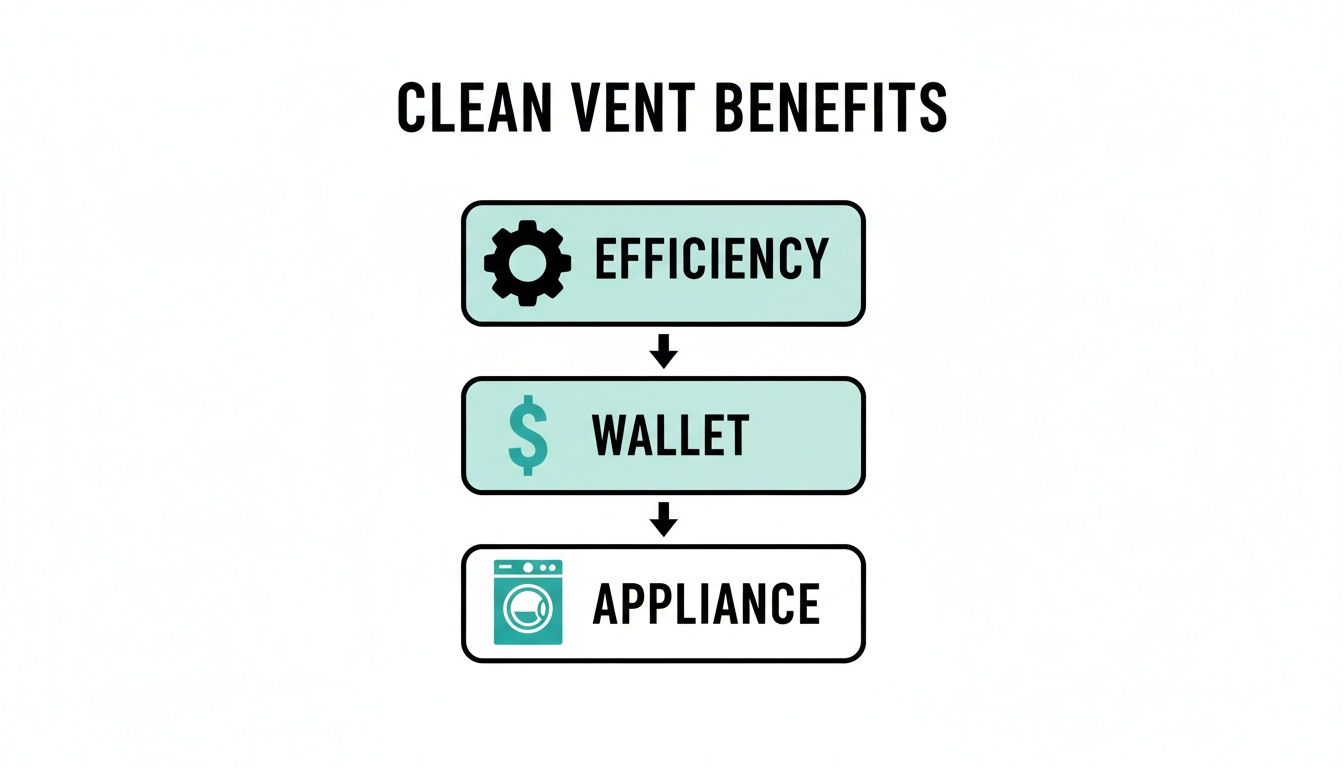
The image above perfectly illustrates why keeping any type of vent clean is so important, it boosts your dryer's efficiency, saves you money on energy bills, and helps your appliance last longer.
If you peek behind your dryer and find an outdated or unsafe plastic vent, making an upgrade should be a top priority. For a step-by-step walkthrough, check out our ultimate DIY safety guide on how to install dryer vents to make sure you get the job done right.
Clear Warning Signs Your Dryer Vent Needs Cleaning
Long before a clogged dryer vent becomes a serious hazard, your dryer will start sending out distress signals. Think of them as early warnings. Learning to spot these signs is one of the most important things you can do to keep your home safe and your appliances running smoothly.
The most common red flag? Your laundry is still damp after a full cycle. If you constantly find yourself running the dryer a second or even third time, a blocked vent is almost always the reason. All that hot, moist air has nowhere to go, so it stays right there in the drum with your clothes.
Telltale Symptoms of a Blocked Vent
Beyond just damp clothes, there are a few other clues you can look for. Catching them early can save you from a much bigger, and potentially dangerous, headache down the road.
One classic sign is a dryer that feels unusually hot to the touch while it's running. This means heat is trapped and backing up into the appliance itself, putting a ton of stress on its motor and heating element. You might also notice a strange musty or burning smell in the laundry room; that’s often the smell of trapped lint getting scorched by the high heat.
A dead giveaway of a blockage is when the exterior vent flap doesn’t open when the dryer is on. It’s a simple visual check, but if that flap isn’t moving, you can be sure the airflow is severely choked off inside the duct.
Take a quick walk outside and look at the vent cover. Is there lint and gunk building up around the opening? Are the little flaps (louvers) stuck shut even when the dryer is humming? If so, you've got a confirmed clog. For homeowners who like to tackle these things themselves, having tools like powerful wet/dry vacuum cleaners on hand can make a huge difference in clearing out the buildup.
If you want to dig a little deeper, our guide on the top seven signs of a clogged dryer vent offers a complete checklist to help you pinpoint exactly what’s going on.
When to Call a Professional for Dryer Vent Cleaning
Sure, cleaning your lint trap after every load is a non-negotiable DIY task. But when it comes to the entire vent system, that's a whole different ballgame. A full dryer vent cleaning really calls for specialized expertise, and trying to half-do it yourself often does more harm than good.
Let's be real, your shop vac just isn't going to cut it. Professionals show up with high-powered vacuums and flexible, rotating brushes designed specifically to navigate the entire length of your ductwork. They can handle those tricky bends deep inside the walls or long, complex runs through attics and crawlspaces where the most dangerous clogs love to hide.
If your vent system is longer than a few feet or you're already noticing your dryer is struggling, calling an expert is the only way to guarantee a truly thorough cleaning. It's about restoring both safety and efficiency to your appliance.
A genuine professional service is much more than just sucking out a bunch of lint. It’s a complete system check-up.
What a Professional Service Includes
A qualified technician won't just clean the vent; they'll inspect the entire system from end to end to make sure everything is working as it should. A complete professional service will always include:
Full System Cleaning: Using specialized tools to remove every last bit of lint and debris from the ductwork, no exceptions.
Airflow Measurement: They'll test the airflow before and after cleaning. This gives you concrete proof that performance has improved.
Code Compliance Checks: The technician will inspect the vent materials and the way it was installed to ensure it meets all current local safety codes.
Common Questions About Dryer Vents Answered
Let's wrap things up by tackling some of the most common questions homeowners have about their dryer vents. Getting clear, straightforward answers is the best way to keep your laundry room safe and your dryer running smoothly.
How Often Should a Dryer Vent Be Cleaned?
For a typical household, we recommend getting a professional cleaning every one to two years.
However, you'll want to bump that up to a yearly cleaning if you have a large family, pets that shed a lot, or you're running several loads of laundry each week. And of course, if you spot any of the warning signs we talked about earlier, don't wait, schedule an inspection right away.
Can I Clean the Entire Vent Myself?
While you absolutely should clean the lint trap after every single load, a full duct cleaning is a different beast entirely.
You can find DIY kits at the hardware store, but they often cause more problems than they solve. It's easy to accidentally push lint deeper into the system or even damage the ductwork. For a truly thorough and safe cleaning, especially for vents that snake through walls or ceilings, calling a professional is your best bet.
The length of your dryer vent significantly impacts performance. The longer the duct and the more bends it has, the harder your dryer must work, making it far more likely to develop dangerous clogs.
Those long, complex vent runs are exactly why pros use specialized tools. It’s the only way to ensure the entire vent is cleared out, keeping your home safe.
For a complete and professional dryer vent cleaning that guarantees safety and restores efficiency, trust the certified experts at Purified Air Duct Cleaning. Ensure your home is protected by scheduling your service today at https://www.purifiedairductcleaning.com.