

How to Reduce Dust in My House for Good
To really cut down on the dust in your house, you need a two-part strategy: consistent cleaning paired with smart filtration. This means actually capturing dust with damp cloths instead of just pushing it around with dry ones, vacuuming with a HEPA filter to trap even the tiniest particles, and keeping up with your HVAC filter changes. These simple habits are the bedrock of a cleaner, healthier home.
Your Quick Guide to Winning the War on Dust
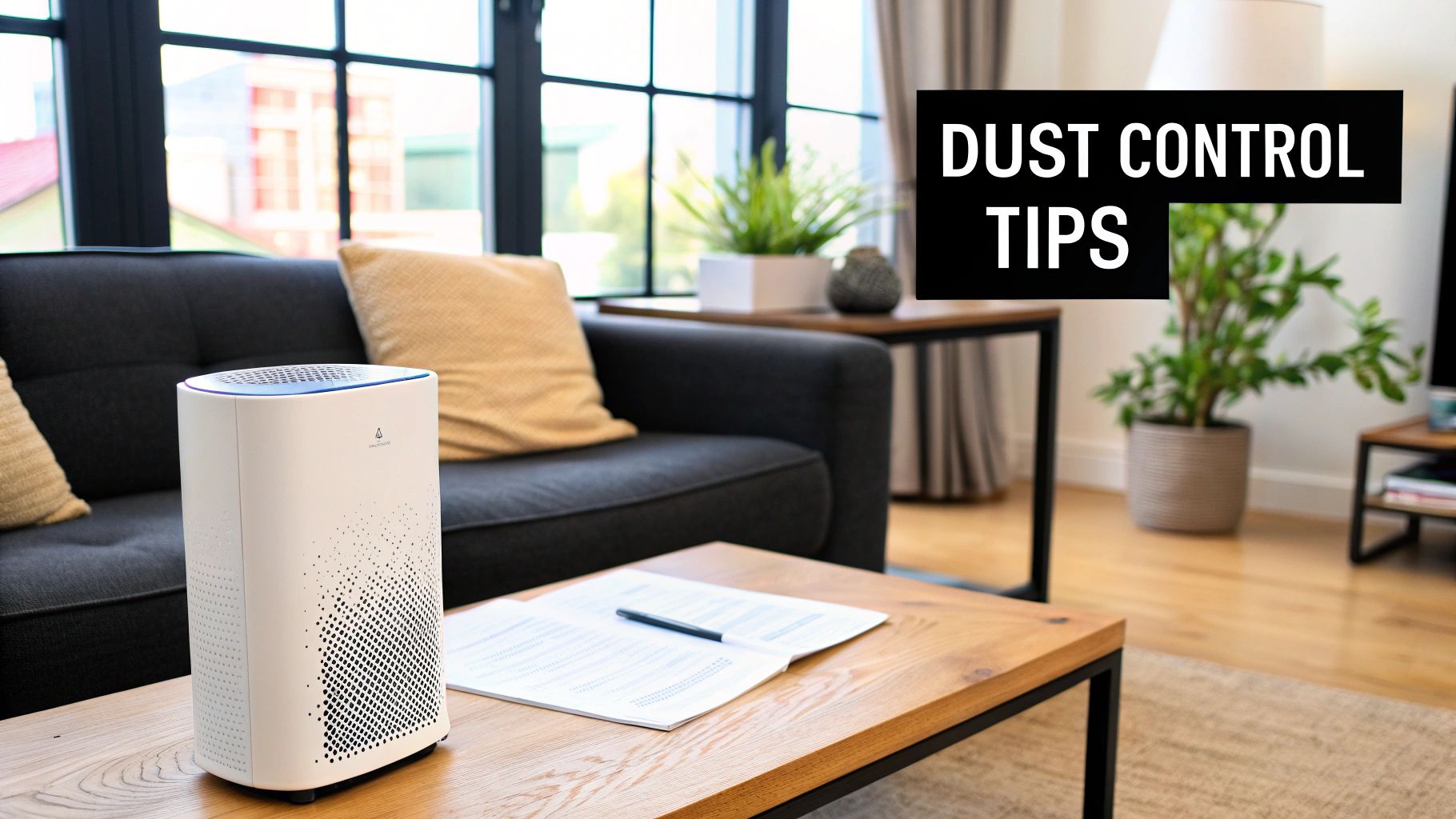
Before we jump into the nitty-gritty, it’s helpful to get the big picture. The goal isn't just to clean what you see right now; it’s to make your home an environment where dust has a harder time forming and settling in the first place.
This is a three-pronged attack: capture the dust that's already there, filter out airborne particles, and stop new dust from getting in.
Think about it, using a feather duster is like trying to catch smoke with a net. You’re just stirring things up. But when you switch to a damp microfiber cloth, you trap and remove those dust particles for good. That small change in technique makes a massive difference.
Foundational Dust-Busting Tactics
The biggest wins come from a few high-impact habits. If you focus on these first, you'll get the best return on your cleaning effort and notice an immediate improvement in your home.
Here are the key strategies:
Go with Wet Cleaning Methods: Wiping surfaces with damp cloths and mopping floors can slash settled dust by up to 80% compared to dry methods, which often just kick particles back into the air.
Upgrade Your Filtration Game: Your HVAC system is basically your home’s lungs. Using a higher-rated filter (think MERV 11 or higher) and running an air purifier with a true HEPA filter will constantly scrub the air, pulling out dust you can’t even see.
Make Maintenance a Routine: Consistency is everything. Simple weekly tasks, like washing your bedding in hot water and vacuuming with a quality machine, prevent the huge build-up that makes deep cleaning feel like such a monster task.
These foundational steps are crucial for anyone looking for simple tips for a healthier home. It’s no surprise the global market for dust control is expected to hit $15.6 billion, largely because we now understand the health risks of dust exposure. Studies have shown that homes cleaned with wet methods at least twice a week have up to 50% less dust than those cleaned less often, proof that a solid routine works.
Top 5 Dust Reduction Actions at a Glance
For a quick and easy roadmap, this table lays out the most effective things you can start doing right away. Honing in on these five areas will make a noticeable difference in how clean your home feels and smells.
Action | Frequency | Primary Benefit |
|---|---|---|
Use Damp Microfiber Cloths | Weekly | Traps dust particles instead of making them airborne. |
Vacuum with a HEPA Filter | 1-2 times per week | Removes microscopic allergens and dust from carpets and floors. |
Change HVAC Air Filter | Every 1-3 months | Captures airborne dust before it circulates throughout the home. |
Wash Bedding in Hot Water | Weekly | Eliminates dust mites and removes shed skin cells. |
Place Doormats at Entrances | Always | Prevents outdoor dirt and pollen from being tracked inside. |
By integrating these actions into your regular cleaning schedule, you're not just cleaning, you're actively building a defense against dust accumulation.
Finding and Eliminating Hidden Dust Sources
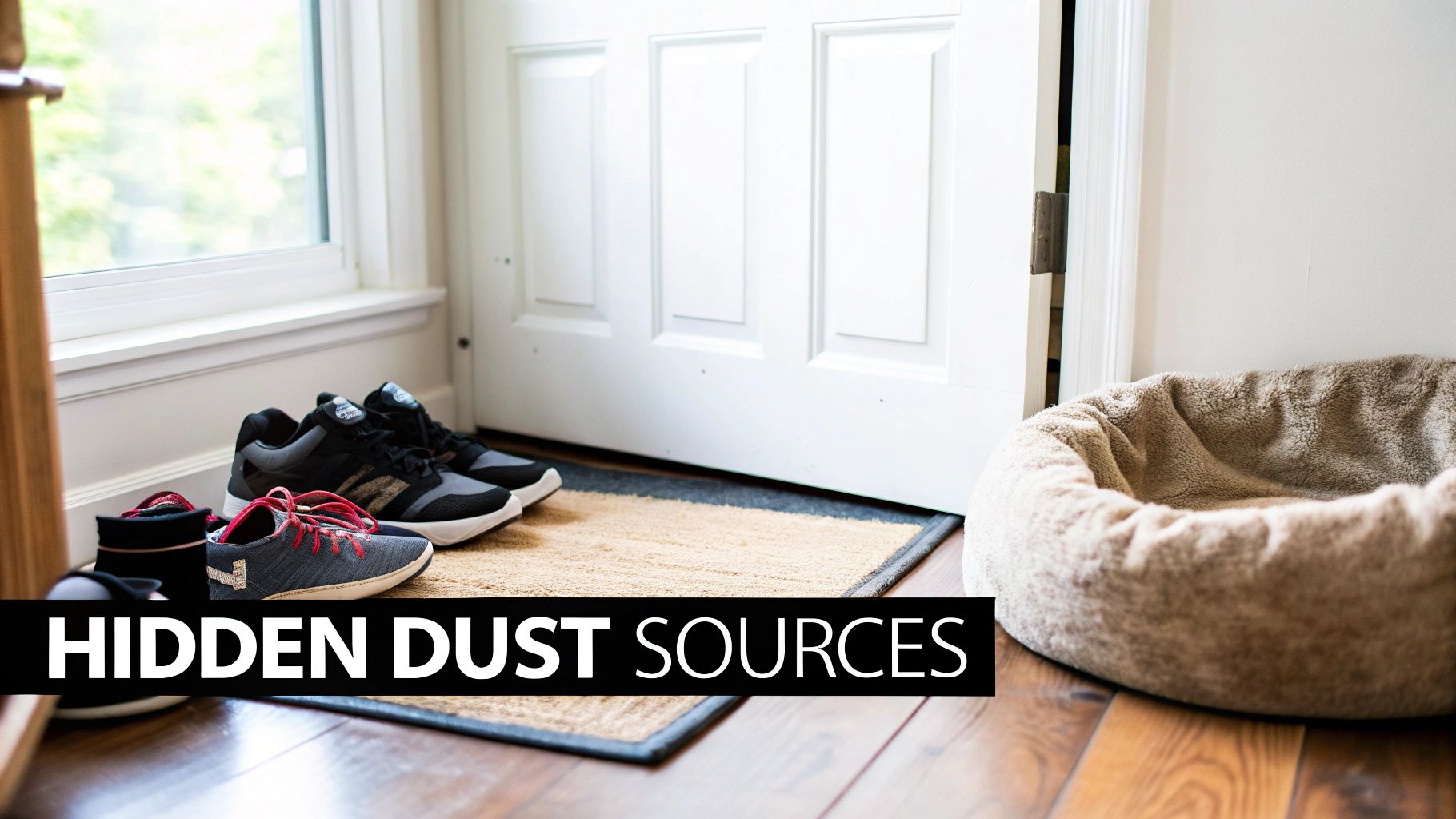
If you really want to get a handle on the dust in your house, you have to think like a detective. That thin layer you wipe off the coffee table is just the final clue; the real culprits are the hidden sources constantly pumping new particles into your home.
Understanding where the dust is coming from is half the battle. You might be surprised to learn that up to 80% of household dust actually originates from inside your own home. The main offenders are things we live with every day: shed skin cells from people and pets, plus tiny fibers from carpets, clothes, and upholstered furniture.
Investigating Indoor Dust Hotspots
Certain spots in your home are just natural dust magnets. They become breeding grounds for dust mites and allergens, so giving them extra attention will make a huge difference in your cleaning efforts.
Start by looking at all the soft surfaces. Your cozy sofa, plush carpets, and heavy curtains are constantly shedding microscopic fibers and trapping particles. Think of them as giant sponges for dust, holding onto it until someone plops down on the couch and sends it all airborne again.
Bedding is another massive contributor. We spend hours in bed every night, shedding skin cells that become a feast for dust mites. In fact, dust mites are one of the most common hidden dust sources, and they absolutely thrive in bedding. Getting a handle on this requires understanding dust mites and how to protect your sleep space.
It's a bit unsettling, but a single mattress can house millions of dust mites. This is why washing your sheets, pillowcases, and blankets weekly in hot water is one of the single most effective things you can do to control dust and allergens.
And of course, there are our furry friends. Pet dander, which is just tiny flecks of skin, is a powerful allergen and a major component of household dust. Regular grooming and maybe setting up a few pet-free zones (like the bedroom) can really help keep it under control.
Sealing Your Home from Outside Intruders
While most dust is homegrown, a good chunk of it still sneaks in from outside. Pollen, soil, and various pollutants find their way in through tiny, often-unnoticed gaps and cracks around your home.
Windows and doors are the primary gateways for this outside dust. Poorly sealed frames, worn-out weatherstripping, and even torn window screens create an easy path for airborne particles to invade your living space.
Here’s a quick checklist to fortify your home against these invaders:
Inspect and Seal Gaps: Do a walkthrough and check the perimeters of your windows and doors. See any light coming through? Seal small cracks with caulk and use foam weatherstripping to create a tighter seal on anything that opens and closes.
Implement a No-Shoes Policy: You'd be shocked at how much dirt gets tracked in on shoes. Placing a good doormat at every entrance and starting a "shoes off at the door" habit can drastically cut down on incoming dust.
Clean Your Window Screens: Screens are great for keeping bugs out, but they also trap a ton of dust and pollen. If you don't clean them regularly, all that buildup just blows inside whenever you open a window.
By tackling both the internal producers and the external entry points, your cleaning efforts will suddenly become far more effective. For a deeper look into this, check out our guide on the top causes and easy fixes for a dusty house. It’s all about shifting your strategy from constantly cleaning up a mess to creating a home where less dust can settle in the first place.
Mastering Your Cleaning Arsenal for Maximum Dust Removal
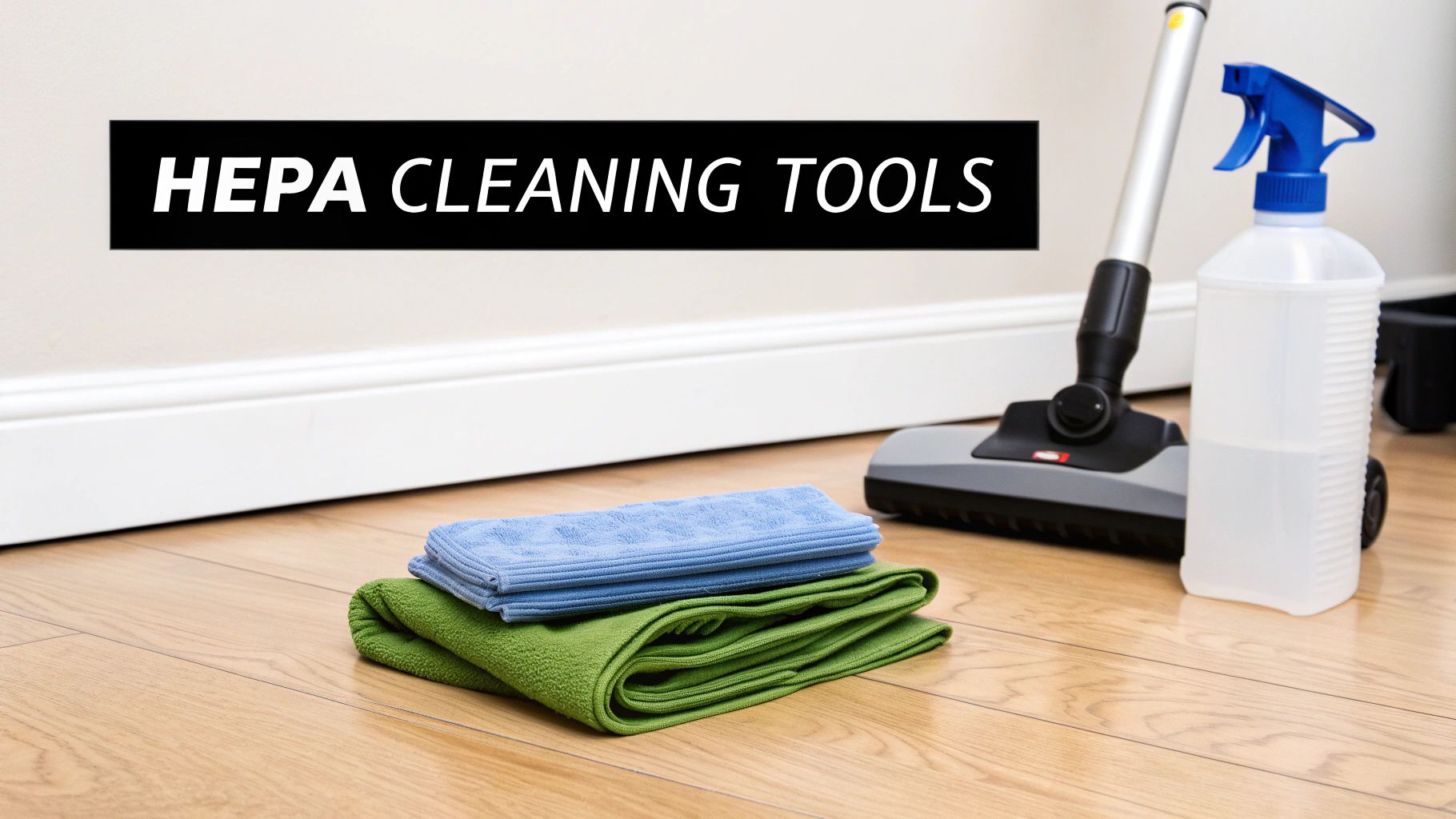
The real difference between a house that looks clean and one that is clean often comes down to your tools. If you’ve ever spent an afternoon cleaning only to see a fresh layer of dust settle an hour later, your equipment is likely the culprit. The wrong tools just push dust around, kicking it into the air where it happily finds a new home.
To actually win the war on dust, you need to shift your mindset from moving dust to trapping it.
It’s a simple change, but it makes all the difference. For instance, ditching that old feather duster for a damp microfiber cloth is a huge upgrade. The microscopic fibers grab onto dust particles with an electrostatic charge, and the dampness ensures they stay locked in, not floating away.
Choosing Your Dust-Trapping Tools
Effective dusting isn't about brute force; it’s about being smart and capturing the enemy. The best tools for the job are the ones that grab particles and don't let go.
Here’s what every anti-dust toolkit should have:
Microfiber Cloths: These are your go-to for just about every surface. Their split fibers are engineered to attract and hold onto dust like nothing else.
Extendable Dusters: Make sure you get one with a washable microfiber head. They’re perfect for reaching the high-up spots like ceiling fans, light fixtures, and the tops of cabinets without showering dust all over the room.
Electrostatic Dusters: For delicate electronics, blinds, or collectibles, these disposable dusters are fantastic. They use static electricity to attract dust like a magnet, no sprays required.
A quick pro tip: Always clean from top to bottom. Dust your ceiling fans and shelves first. That way, any particles that do escape will land on surfaces you haven't cleaned yet, and you'll get them when you tackle the furniture and floors. It saves you from having to do the same job twice.
The Critical Role of HEPA Filtration
Wiping down surfaces is only half the battle. The most powerful weapon you have against microscopic dust is high-quality filtration, and that means one thing: HEPA.
HEPA stands for High-Efficiency Particulate Air, and a true HEPA filter is certified to capture at least 99.97% of airborne particles as small as 0.3 microns. We're talking about the invisible stuff, dust, pollen, pet dander, and even mold spores.
Using a vacuum with a sealed HEPA filter is a total game-changer. Most standard vacuums just spit the finest dust particles right back into the air through their exhaust. A HEPA vacuum, on the other hand, traps those tiny irritants for good, effectively removing them from your home.
The numbers don't lie. The global market for dust removal filters is on track to hit $5 billion, and over 70% of households with allergy sufferers in North America and Europe now rely on HEPA devices. Studies show that homes using HEPA-filtered vacuums can see up to 60% less airborne dust. That’s a massive improvement for your indoor air quality.
The HEPA standard isn't just a fancy marketing term; it's a specific, measurable level of performance. When shopping for a vacuum or air purifier, always look for the "True HEPA" label to be sure you're getting the real deal.
Beyond vacuums, standalone air purifiers with HEPA filters are great for continuously cleaning the air in a single room. Putting one in your bedroom or living room can dramatically reduce how much dust settles on your furniture, which means less cleaning for you over time.
While a great vacuum is your workhorse for floors, some areas need special attention. Your dryer vent, for example, is a hidden dust magnet that can become a serious fire hazard if neglected. Knowing how to safely and effectively clean your dryer vent pipe is an essential but often overlooked part of any home dust-reduction plan.
Carpets are another major dust reservoir. Regular vacuuming helps, but learning how to deep clean carpets every so often is key to removing the deep-down dust and allergens that even the best vacuums can't reach. When you combine smart surface cleaning with powerful HEPA filtration, you create a complete system that truly makes a lasting impact.
Making Your Home's Airflow and Filtration Work for You
Your cleaning habits are a huge piece of the puzzle, but don't forget about the unsung hero in the fight against dust: your home's own air circulation system. Your HVAC (heating, ventilation, and air conditioning) system is already running for hours every day, pulling air from every single room. With a few smart tweaks, you can turn this system into a powerful, whole-house dust-capturing machine that works for you 24/7.
It all starts with the single most critical component for clean air, the HVAC filter. This simple screen is your first and best line of defense against all those airborne particles floating around.
Choose the Right HVAC Filter for Maximum Dust Capture
Let's be clear: not all air filters are the same. Those cheap, flimsy fiberglass filters you can buy in a 10-pack are really just there to protect your HVAC unit from big stuff like hair and lint. They do next to nothing for your indoor air quality. If you're serious about reducing dust, you need to upgrade to a filter with a higher MERV rating.
MERV, or Minimum Efficiency Reporting Value, is just a fancy way of measuring how well a filter grabs particles out of the air. A basic filter might have a MERV rating of 1-4, which won't catch microscopic dust.
For a real-world improvement, here’s what to look for:
MERV 8-11 Filters: This is the sweet spot for most homes. These are pleated filters that are fantastic at trapping smaller particles like pollen, dust mites, and pet dander. They do the job without choking off the airflow to your HVAC system, which could cause strain.
MERV 12-13 Filters: If allergies or asthma are a concern in your household, stepping up to this level is a great move. These filters are dense enough to capture bacteria and even some virus-carrying particles.
Before you buy, always double-check your HVAC system’s manual for the maximum MERV rating it can handle. Slapping in a filter that’s too restrictive is like trying to breathe through a thick blanket; it makes the system work way too hard, driving up your energy bills. For a deeper dive, check out our guide on the differences between an air purifier vs an air filter and how they can work together.
The Great Debate: Is Professional Duct Cleaning Worth It?
Over the years, your air ducts can become a hidden reservoir for dust, construction debris, and allergens. Every time your system kicks on, it can blow a little bit of that accumulated gunk right back into your rooms. This reality leads many homeowners to ask if professional duct cleaning is a worthwhile investment.
There are definitely good reasons to consider it. A proper, professional cleaning can clear out years of settled dust, which can make a noticeable difference in your home's air quality and reduce how often you have to dust your furniture. It can even help your HVAC system run a bit more efficiently.
But it’s not a silver bullet. If your ducts are well-sealed and you're diligent about using high-quality filters (and changing them on schedule), you might not have a significant buildup issue.
So, when is professional duct cleaning a smart move? Definitely think about it if you've just finished a messy home renovation, someone in the house has unexplained allergy flare-ups, you notice a weird musty smell coming from the vents, or you can literally see puffs of dust shoot out when the air turns on.
Use Humidity to Your Advantage Against Airborne Dust
Here’s a trick that often gets overlooked but is incredibly effective: controlling the moisture in your air. Dust particles are ridiculously lightweight, which is why they can hang out in the air for hours before finally settling. By managing your home's humidity, you can change the physics of the game.
The goal is to maintain an indoor humidity level between 40% and 60%. In this range, tiny water droplets in the air attach themselves to dust particles. This makes the dust heavier, causing it to fall out of the air much more quickly. Once it’s on a surface, you can just wipe it away.
The market for this kind of integrated solution is growing fast, the global dust control system market was valued at $17.11 billion and is expected to hit $22.21 billion. Research shows that homes kept within that optimal humidity range can have up to 45% less airborne dust. In fact, over 60% of households in North America are already using humidifiers or dehumidifiers to find that perfect balance. You can see more on this growing market from dust control systems from Coherent Market Insights.
To get started, grab a simple hygrometer to see where your levels are. If your air is too dry (a common problem in winter), a humidifier is your best friend. If it’s too damp and sticky (hello, summer), a dehumidifier will pull out that excess moisture, which not only helps with dust but also prevents mold.
Building a Sustainable Dust Reduction Routine
A deep clean feels amazing, but that victory is often short-lived. Without a consistent plan, that familiar layer of dust always seems to creep back in just a few days. The real secret to cutting down on household dust for good isn’t about marathon cleaning sessions; it’s about building a simple, sustainable routine that stops heavy buildup from happening in the first place.
When you turn these strategies into automatic habits, they start to feel less like a chore. The goal is to make these tasks a normal part of maintaining your home so you get consistent results without the overwhelm of a massive to-do list.
Crafting Your Weekly Dust Defense Plan
Your weekly routine should hit the high-traffic, high-impact areas that generate the most dust. These are the tasks that stop dust at its source before it has a chance to spread throughout your home and settle on every surface.
Think about the hotspots, your bed is a major one. We shed millions of skin cells every night, which is basically a buffet for dust mites. Washing your sheets, pillowcases, and blankets in hot water every week is a non-negotiable step for anyone serious about dust control.
This visual guide shows a simple but powerful process for keeping your home's air filtration system in top shape, which is a key part of any routine.
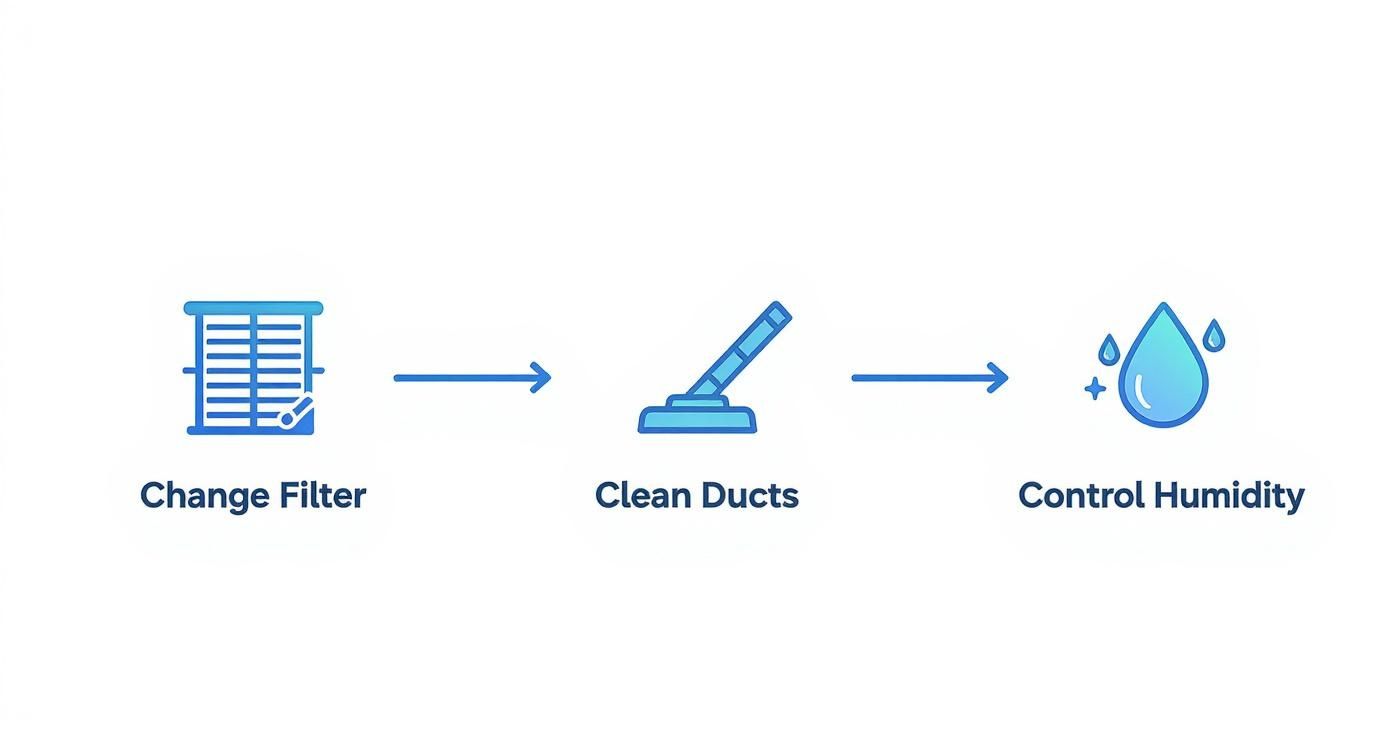
This process, changing filters, cleaning ducts, and controlling humidity, is your whole-home defense against airborne particles. It all works together.
Next up, floors and key surfaces. A thorough vacuuming with a HEPA filter vacuum and damp-mopping hard floors will capture the majority of settled particles. Don’t forget to give your main furniture pieces, like coffee tables and nightstands, a quick wipe-down with a damp microfiber cloth.
Establishing Your Monthly Deep-Clean Tactics
While weekly tasks handle the day-to-day buildup, a monthly schedule lets you tackle the less obvious dust traps. These are the spots where dust accumulates slowly, often getting missed during regular cleaning.
This is your chance to look up. Dust the tops of high furniture like bookcases and kitchen cabinets, clean those ceiling fan blades, and wipe down light fixtures. These high surfaces are notorious for collecting dust and then showering it down on the rest of the room.
Dedicating just a couple of hours once a month to these deeper tasks prevents the slow accumulation that makes a home feel perpetually dusty, no matter how often you clean the main surfaces.
It's also the perfect time to address textiles that don't get washed weekly. Think about cleaning curtains or blinds according to their care instructions, washing throw blankets, and giving your upholstered furniture and mattress a thorough vacuuming.
Routine Comparison: Standard vs. Allergy-Focused
Not everyone needs the same level of intensity in their cleaning routine. Your ideal plan really depends on your situation: do you have pets, live with allergy sufferers, or just want the absolute cleanest environment possible?
To help you decide, here’s a look at a solid standard maintenance plan versus a more intensive routine designed specifically for allergy reduction.
Weekly Dust Control Routine Comparison
Task | Standard Routine | Allergy-Focused Routine |
|---|---|---|
Washing Bedding | Wash sheets and pillowcases weekly in warm water. | Wash all bedding weekly in hot water (130°F) to kill dust mites. |
Vacuuming | Vacuum carpets and rugs once per week. | Vacuum carpets twice a week with a sealed HEPA-filter vacuum. |
Dusting High Surfaces | Dust ceiling fans and high shelves monthly. | Wipe down all high surfaces every two weeks with a damp cloth. |
Cleaning Window Treatments | Clean curtains or blinds every 3-6 months. | Vacuum curtains weekly and wash them monthly. |
Upholstery Cleaning | Vacuum furniture monthly as part of a deep clean. | Vacuum all upholstered furniture weekly with an upholstery tool. |
Pet Bed Maintenance | Wash pet beds monthly. | Wash pet beds weekly in hot water to remove dander and allergens. |
By choosing a routine and sticking with it, you transform dust management from a reactive battle into a proactive, low-stress habit. It’s that consistency that truly delivers a permanently cleaner and healthier home.
Answering Your Questions About Household Dust
Even with a great game plan, you're bound to have questions as you start your war on dust. Let's tackle some of the most common ones I hear from homeowners.
Are Some Homes Just Dustier Than Others?
Yes, without a doubt. It’s not always about your cleaning habits, either. A variety of factors can make one house a dust magnet while another stays relatively clean.
Your Location: Living in a dry, windy area? Near a construction site or a busy road? You're going to have more dust coming in from outside. It's just a fact of life.
Age of Your Home: Older homes have character, but they also have more gaps. Tiny cracks around windows, doors, and foundations are open invitations for dust to waltz right in. Plus, older building materials can break down and create their own dust.
Who Lives Inside: A bustling home with kids and pets will always generate more dust than a quiet one. We're talking more skin cells, more pet dander, more tracked-in dirt, it all adds up.
This doesn't mean you're doomed to a dusty existence. It just means you might need to be a bit more strategic with your cleaning and air filtration.
Do Certain Pets Make More Dust?
Absolutely. Any pet with fur or feathers is going to contribute to the dust situation through dander (those tiny, shed skin flakes), but some are definitely bigger offenders.
Heavy shedders like German Shepherds or Golden Retrievers will obviously add more hair and dander to the mix. But don't forget about birds! They produce a fine "feather dust" that can get everywhere.
Even so-called "hypoallergenic" pets still produce dander, just less of it. The bottom line is, if you have pets, you need to be grooming them regularly and washing their bedding every week. It's a non-negotiable part of keeping dust under control.
Key Insight: Pet dander is a huge part of household dust and a powerful allergen. Because it's so lightweight, it can hang around in the air for hours. This is why a high-quality air purifier with a HEPA filter is a game-changer for homes with furry or feathered family members.
Does Decluttering Really Help With Dust?
Decluttering is probably the most powerful, yet most overlooked, dust-busting strategy out there. Think about it: every single item sitting out is another landing pad for dust. That collection of trinkets, the stack of mail on the counter, the pile of books by your bed, they're all dust magnets.
Fewer items on your surfaces means there's simply less to clean, which makes your job faster and easier. More importantly, you get rid of all the little nooks and crannies where dust loves to hide and accumulate for weeks on end. Simplifying your space is a surprisingly effective way to tell dust it's not welcome.
How Long Before I See a Real Difference?
You’ll get some instant gratification, which is always nice. A really good cleaning session, wiping surfaces with a damp microfiber cloth and vacuuming with a HEPA filter, will make your home look and feel cleaner right away. You'll likely see less visible dust settling within the first 24 to 48 hours.
But the long-term, noticeable reduction in airborne dust takes a little more time. Once you've sealed up air leaks, upgraded your HVAC filter, and gotten into a consistent cleaning rhythm, you should feel a major difference within two to four weeks. The air will just feel cleaner, and you'll notice you aren't having to dust your furniture nearly as often.
What if I’ve Tried Everything and My House is Still a Dust Bowl?
If you've followed all the steps and are still losing the battle against dust, it’s probably time to look at the one thing you can't easily clean: your HVAC system. Over the years, your air ducts can become repositories for pounds of dust, dander, and other debris.
When this happens, even the best filter can't stop that gunk from being blown back into your home every time the system kicks on. This is where the professionals come in. If you're at your wit's end, it's worth learning about whether air duct cleaning helps with dust to see if it's the missing piece of your puzzle. A professional cleaning can reset the board and give you a fresh start.
Ready to stop fighting dust and start breathing cleaner air? The team at Purified Air Duct Cleaning has the professional-grade solutions to tackle dust at its source. Whether it's a thorough air duct cleaning or installing a cutting-edge ActivePure® air purification system, we have the expertise to make a dramatic difference in your home's air quality. Get your free quote today and feel the difference for yourself.