

10 Actionable Home Energy Efficiency Tips for Phoenix Residents in 2025
Rising energy costs, especially within the demanding Phoenix climate, make home efficiency more critical than ever. Many homeowners feel trapped by high utility bills, believing significant savings require a massive, expensive overhaul. The reality is quite different; a series of strategic, actionable upgrades can dramatically reduce your energy consumption and enhance your home's comfort. This guide provides 10 powerful home energy efficiency tips, breaking down each one with clear costs, benefits, and practical steps you can take today.
We will move beyond generic advice, offering specific insights tailored for Arizona residents who want tangible results. You will learn how to prioritize upgrades based on impact and budget, transforming your property into a smarter, more affordable living space. From simple DIY tasks like installing smart plugs to more impactful professional upgrades such as window replacements, you will find a clear path forward. Furthermore, we'll explain how foundational services like professional duct cleaning can amplify the benefits of these improvements, ensuring your system operates at peak performance. This comprehensive list is your roadmap to lower utility bills and superior home comfort.
1. Master Your Climate: The Power of a Programmable or Smart Thermostat
Think of a smart thermostat as the mission control center for your HVAC system. It elevates your home beyond simple temperature adjustments by learning your household's daily rhythms. By creating automated schedules based on when you are home, away, or sleeping, these intelligent devices can slash your heating and cooling energy consumption by an impressive 10-23% annually. This is one of the most impactful home energy efficiency tips for a direct, noticeable effect on your utility bills.
For Phoenix and Avondale residents, this translates into substantial savings during scorching summer months when air conditioners run constantly. A smart thermostat prevents wasted energy cooling an empty house, ensuring comfort is available precisely when you need it.
Smart Implementation Tips
Program Strategic Setbacks: Adjust the temperature by 7-10°F when you are asleep or away from home for several hours. This simple change maximizes savings without sacrificing comfort.
Use Geofencing: Many smart thermostats, like the Nest Learning Thermostat or Ecobee SmartThermostat, use your phone's location to automatically enter an "Away" mode when the house is empty and resume your preferred temperature as you return.
Analyze Energy Reports: Most smart models provide detailed monthly energy reports. Use this data to identify patterns and find new opportunities to refine your schedule for even greater efficiency.
Ensure Proper Placement: Install your thermostat on an interior wall, away from direct sunlight, drafts, doorways, or heat sources like lamps, to guarantee it gets an accurate temperature reading of your home.
By automating your climate control, you take the guesswork out of saving money. For more ways to integrate smart technology for lower bills, explore our guide on how smart home devices can reduce utility bills.
2. Improve Home Insulation and Air Sealing
Think of your home's outer shell, its "envelope," as a shield against the elements. Proper insulation acts as a thermal barrier, slowing heat transfer, while air sealing closes the gaps and cracks that let conditioned air escape and outside air infiltrate. Together, they create a robust defense against energy loss, capable of cutting heating and cooling costs by an impressive 15-20%. This two-pronged approach is one of the most fundamental home energy efficiency tips for creating a comfortable, cost-effective living space.
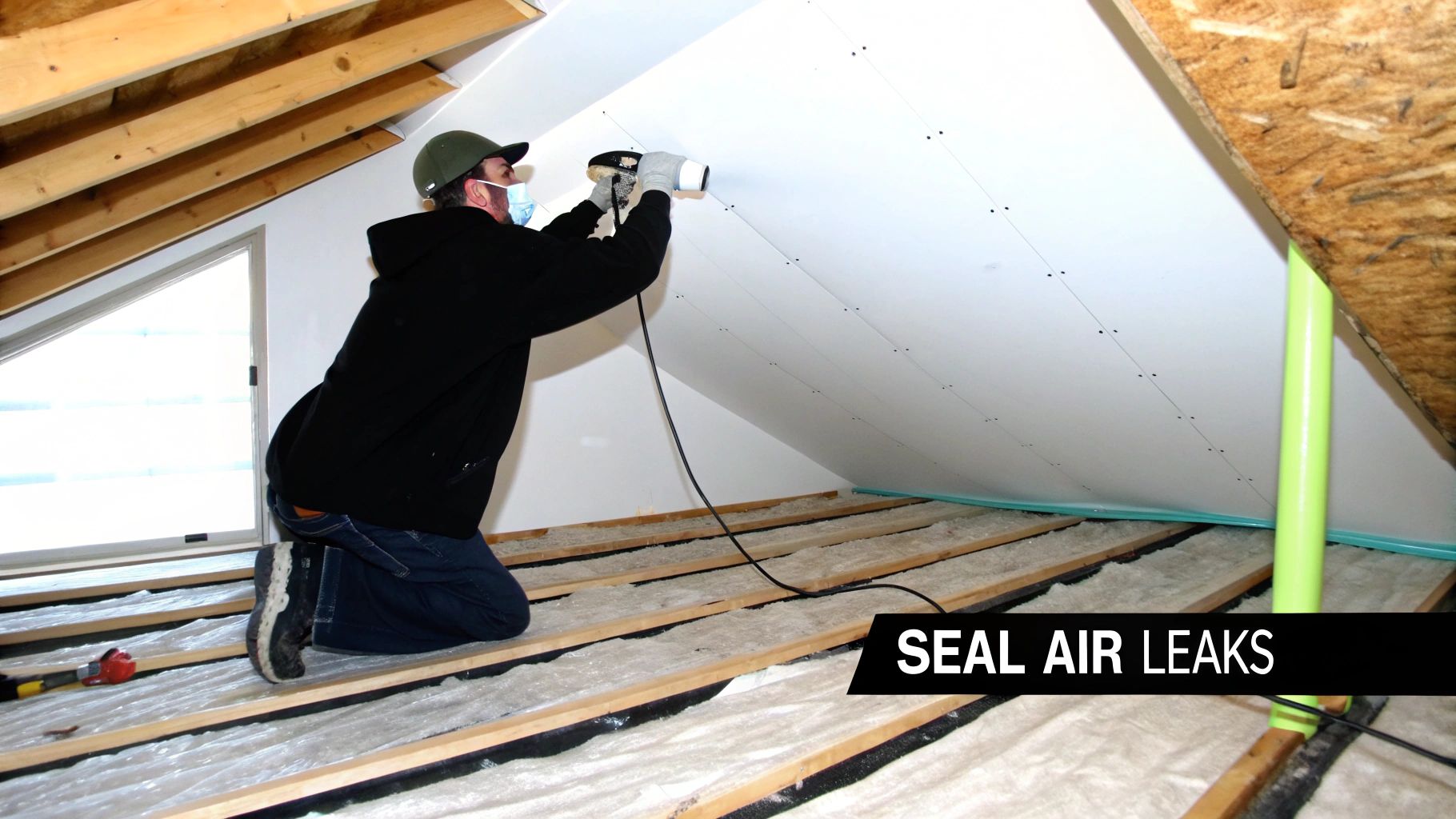
For homeowners in Phoenix and Avondale, this means keeping the intense summer heat out and the cool, conditioned air in. An uninsulated or poorly sealed attic can act like a giant radiator, forcing your AC to work overtime. By addressing these weak points, you significantly reduce the strain on your HVAC system, leading to lower bills and a longer equipment lifespan.
Smart Implementation Tips
Prioritize the Attic: Since up to 25% of a home's heat loss occurs through the attic, start there. Ensure insulation meets the recommended R-value for your climate zone, which is typically R-38 to R-60 for attics in most areas.
Seal Major Air Leaks: Use caulk, spray foam, or weatherstripping to seal common air leakage points. Focus on gaps around windows, doors, electrical outlets, recessed lighting, and plumbing or ductwork penetrations.
Conduct a Blower Door Test: For a comprehensive assessment, hire a professional to perform a blower door test. This diagnostic tool depressurizes your home, making it easy to pinpoint exactly where your most significant air leaks are located.
Don't Forget Ductwork: Leaky air ducts that run through unconditioned spaces like attics or crawlspaces can lose up to 30% of their conditioned air. Sealing these ducts is crucial for system efficiency and is a core service we provide.
A well-sealed and insulated home not only saves money but also improves comfort and indoor air quality by reducing drafts and pollen intrusion. To dive deeper into saving energy, explore our guide on how to reduce energy consumption in your home.
3. Install Energy-Efficient Windows and Doors
Your windows and doors are gateways to the outside world, but they can also be major culprits for energy loss. Upgrading to ENERGY STAR certified models with features like low-emissivity (Low-E) coatings, insulated frames, and multiple panes of glass minimizes unwanted heat transfer. This upgrade can reduce your heating and cooling costs by a significant 7-15% annually, making it one of the most effective home energy efficiency tips for long-term savings.
In the intense Phoenix and Avondale sun, energy-efficient windows act as a thermal shield, reflecting solar heat away from your home in the summer and retaining precious warmth during cooler winter nights. This creates a more stable, comfortable indoor environment year-round while easing the strain on your HVAC system.
Smart Implementation Tips
Prioritize Problem Areas: If a full replacement isn't feasible, start by replacing old, single-pane windows first, as they are the least efficient. Pay special attention to windows that receive direct, intense sunlight.
Check Climate Zone Ratings: Ensure any new windows or doors are ENERGY STAR certified for the Southwest climate zone. The National Fenestration Rating Council (NFRC) label provides detailed performance ratings to help you choose.
Seal Before You Replace: Before investing in new units, ensure your existing windows and doors are properly sealed with caulk and weatherstripping to eliminate drafts. This small step can yield immediate benefits.
Consider Alternatives: For homes with existing windows that are difficult or costly to replace, you might explore secondary glazing solutions to significantly improve thermal performance without a full overhaul.
4. Switch to LED Lighting Throughout the Home
Upgrading your light bulbs is a brilliantly simple yet powerful way to cut energy costs. Light-emitting diode (LED) bulbs are a game-changer, using up to 75% less energy and lasting 25 to 50 times longer than traditional incandescent bulbs. Making a full switch can reduce your home's lighting-related energy costs by a staggering 75-80%, making it one of the easiest home energy efficiency tips to implement.
This upgrade significantly lowers your electricity usage, which is especially beneficial for homeowners in sunny Phoenix and Avondale. Less energy consumed by lighting means a smaller overall electric bill and less heat emitted from bulbs, which helps your AC system work more efficiently.
Smart Implementation Tips
Prioritize High-Use Areas: Start by replacing bulbs in the most frequently used fixtures, such as those in the kitchen, living room, and main entryways, to see the quickest return on your investment.
Choose the Right Color Temperature: For a cozy, warm glow similar to incandescent bulbs, select LEDs with a 2700K color temperature. Higher temperatures (3000K-5000K) produce a cooler, whiter light suitable for task areas.
Look for ENERGY STAR Certification: Certified bulbs meet strict performance and efficiency standards, guaranteeing quality and long-term savings.
Buy in Bulk: Take advantage of lower prices by purchasing multi-packs from warehouse retailers like Costco or Sam's Club, making the upfront cost more manageable.
By systematically replacing old, inefficient bulbs, you create a lasting impact on your energy consumption. To discover other effective strategies, check out these 10 proven ways to lower your electric bill.
5. Install a High-Efficiency HVAC System
Upgrading your heating and cooling system is a powerful, long-term investment in your home's performance. Modern high-efficiency HVAC units, identified by high SEER (Seasonal Energy Efficiency Ratio) and AFUE (Annual Fuel Utilization Efficiency) ratings, are engineered to consume significantly less energy than their predecessors. Replacing an outdated system can reduce your heating and cooling costs by a remarkable 20-40%, making this one of the most impactful home energy efficiency tips for substantial, lasting savings.
For Phoenix and Avondale homeowners, a high-SEER air conditioner or heat pump is a game-changer, dramatically lowering electricity bills during the relentless summer heat. This upgrade not only enhances comfort with consistent, even cooling but also reduces your home's overall carbon footprint.
Smart Implementation Tips
Choose the Right Technology: Consider a heat pump, like the Lennox XC25 or Trane XV20i, which provides both highly efficient cooling and heating in a single unit, a perfect fit for Arizona's climate.
Insist on Proper Sizing: An oversized system will cycle on and off too frequently, wasting energy and failing to dehumidify your home properly. A professional load calculation is essential to match the unit to your home's specific needs.
Replace the Entire System: For maximum efficiency, always replace both the indoor air handler and the outdoor condenser unit simultaneously. A mismatched system will underperform and reduce its lifespan.
Prioritize Ductwork Integrity: A new, efficient HVAC system cannot perform optimally if it's connected to leaky or poorly insulated ducts. Ensure your ductwork is sealed and insulated to prevent conditioned air from escaping.
A new system represents a significant step towards peak efficiency. To maximize its performance from day one, explore our guide on how to improve HVAC efficiency.
6. Install Solar Panels (Photovoltaic System)
Harnessing the sun's power with a residential photovoltaic (PV) system is one of the most transformative home energy efficiency tips for long-term savings. Solar panels convert sunlight directly into electricity, which can power your entire home. Depending on the system's size, your roof's sun exposure, and local climate, a PV system can generate 50-100% of your household's electricity needs, drastically reducing or even eliminating your utility bills.
For homeowners in sun-drenched areas like Phoenix and Avondale, solar adoption is a game-changer. Models like the Tesla Solar Roof or systems from Sunrun and Vivint Solar make it more accessible than ever. With favorable net metering policies, you can even sell excess energy back to the grid, turning your home into a miniature power plant and accelerating your return on investment.
Smart Implementation Tips
Assess Your Home’s Potential: Before committing, get a professional solar assessment. This will determine your roof's suitability, calculate potential energy output, and estimate your savings.
Compare Purchase vs. Lease: Evaluate the financial pros and cons of purchasing your system outright (often with tax credits) versus leasing it for a lower upfront cost.
Understand Net Metering: Research your local utility's net metering policies. These rules dictate how you are credited for the surplus electricity your panels send back to the grid.
Maximize Your Investment: Combine your solar installation with other efficiency upgrades. Ensuring your HVAC system is clean and efficient means your new solar power goes further. Find out if your system could benefit from professional attention by exploring our guide on what a difference clean air ducts make.
Get Multiple Quotes: Always solicit bids from several certified, reputable installers to compare costs, equipment quality, and warranties.
By generating your own clean electricity, you gain energy independence and lock in predictable, lower energy costs for decades.
7. Insulate Water Heater and Hot Water Pipes
Your water heater works continuously to keep a large tank of water at a set temperature, leading to constant energy loss known as standby heat loss. By wrapping the tank and exposed pipes in insulation, you create a thermal barrier that dramatically slows this process. This simple, low-cost upgrade can reduce water heating costs by 7-15% annually, making it one of the most cost-effective home energy efficiency tips with a quick return on investment.
For homeowners in Phoenix and Avondale, this is particularly beneficial for water heaters located in unconditioned spaces like garages, which experience extreme temperature fluctuations. The insulation ensures your system doesn't have to work overtime to compensate for heat loss, saving energy year-round.
Smart Implementation Tips
Choose the Right Blanket: Before buying a pre-cut water heater blanket or insulation kit, measure your tank's dimensions. Ensure the blanket has an insulating value of at least R-8.
Focus on the First Few Feet: The most significant heat loss from pipes occurs close to the heater. Insulate at least the first six feet of both the hot and cold water pipes connected to the unit for maximum impact.
Maintain Safe Access: When installing the blanket, be careful not to cover the thermostat, pressure relief valve, or the burner access panel on gas models. Proper access is crucial for safety and maintenance.
Upgrade for Ultimate Efficiency: If your water heater is over ten years old, consider replacing it with a modern, high-efficiency tankless model. This eliminates standby heat loss entirely, offering even greater long-term savings.
This small project reduces the energy demand on your home, directly lowering your utility bills without affecting your hot water supply.
8. Upgrade to ENERGY STAR Certified Appliances
Your home's major appliances, like the refrigerator, dishwasher, and washing machine, are silent energy consumers that run daily. Upgrading to models with the blue ENERGY STAR label is a powerful strategy for reducing long-term utility costs, as these certified products use 10-50% less energy and water than their standard counterparts. This makes modernizing your appliances one of the most practical home energy efficiency tips for consistent, year-round savings.
For homeowners in the Phoenix area, an energy-efficient refrigerator is especially crucial. Older models work much harder to maintain cool temperatures in a hot garage or kitchen, leading to higher electricity bills. An ENERGY STAR certified model is engineered for superior performance in demanding conditions, keeping your food fresh without draining your wallet.
Smart Implementation Tips
Prioritize Replacements: Focus on replacing your oldest and most frequently used appliances first. The refrigerator and clothes washer typically offer the most significant and immediate return on investment.
Check for Rebates: Before buying, search for local utility or manufacturer rebates for ENERGY STAR products. These incentives can significantly lower the upfront cost of a new, efficient appliance.
Read the EnergyGuide Label: Compare the yellow EnergyGuide labels on different models. This label provides a clear estimate of the appliance’s annual operating cost, helping you make a financially sound decision.
Proper Sizing and Maintenance: Choose appliances that fit your household's needs to avoid wasted energy. Keep them running efficiently by regularly cleaning refrigerator coils, clearing the dryer's lint filter, and running full loads in the dishwasher and washing machine.
9. Use a Power Strip or Smart Plug to Eliminate Phantom Power Draw
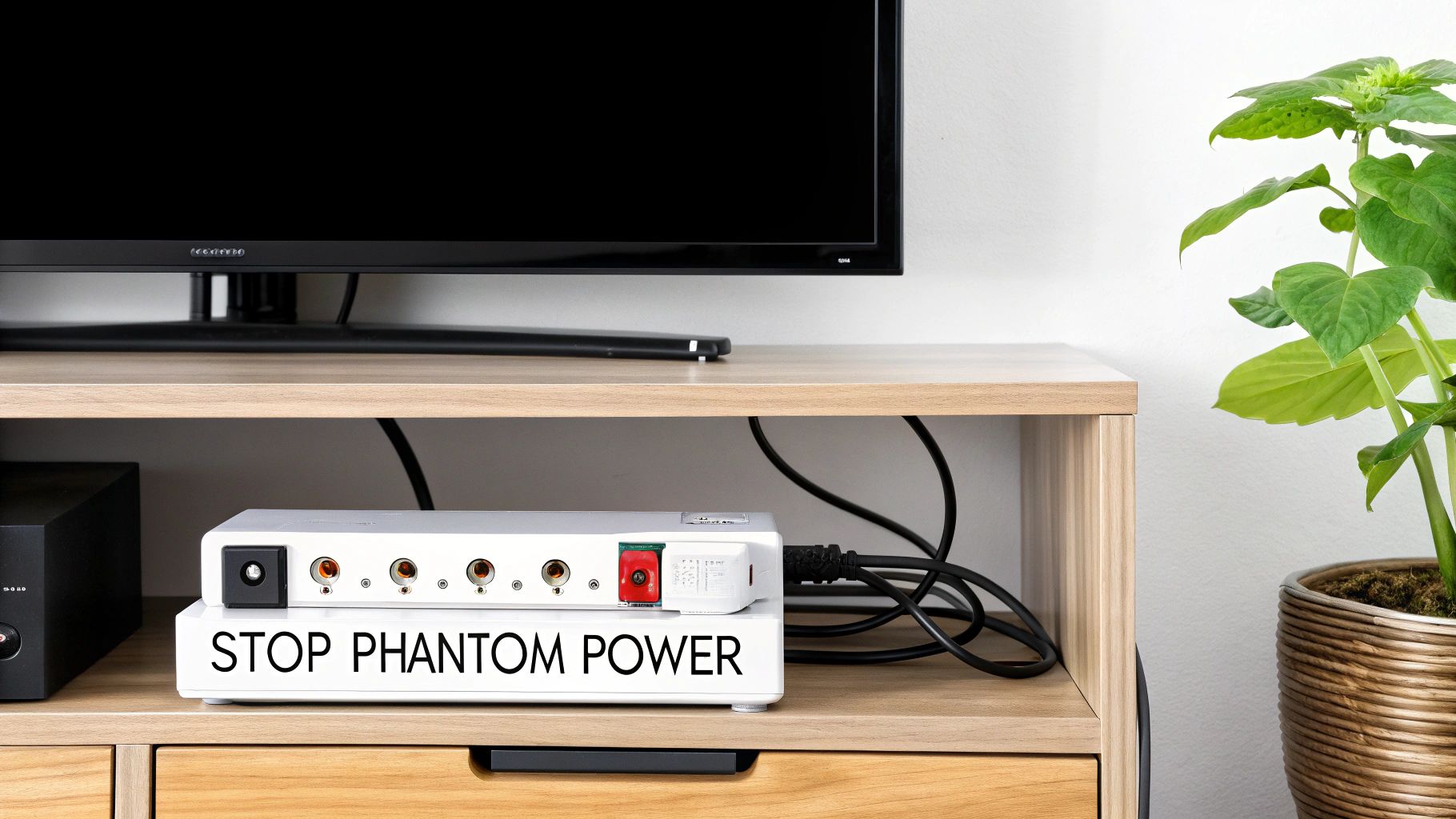
Did you know many of your electronics continue to draw power even when turned off? This "phantom load" or standby power can account for 5-10% of your total residential electricity use. Power strips and smart plugs offer a simple yet powerful solution to this energy drain, allowing you to completely cut power to multiple devices at once. This is one of the easiest home energy efficiency tips to implement for immediate, measurable savings.
For Phoenix and Avondale homeowners with multiple entertainment systems and home offices, tackling phantom power can add up to over $100 in annual savings. By grouping devices like your TV, gaming console, and sound system onto a single power strip, you can shut them all down with one flip of a switch, stopping energy waste in its tracks.
Smart Implementation Tips
Create Entertainment and Office Hubs: Use a power strip for your entire entertainment center or home office setup. This lets you disconnect all related peripherals, like monitors, printers, and chargers, simultaneously.
Leverage Smart Plug Timers: Use smart plugs, like the Kasa Smart Plug by TP-Link or GE Enbrighten models, to schedule automatic shutoffs. Set your office equipment to power down completely after work hours or your TV setup to turn off overnight.
Target "Always-On" Chargers: Phone, laptop, and tablet chargers are major culprits of phantom power draw. Plug them into a smart strip to ensure they stop consuming electricity once your devices are fully charged or when you're not using them.
Know What to Avoid: Never plug major appliances like refrigerators or freezers into a power strip. These devices are designed for a direct wall connection and need a constant power supply to function correctly.
10. Add Window Treatments for Passive Solar Control
Your windows are significant points of heat transfer, but the right treatments can turn them into powerful tools for passive climate control. Strategic use of options like cellular shades, thermal curtains, and specialized window films can reduce unwanted solar heat gain in the summer and minimize heat loss during the winter. This simple, non-mechanical approach is one of the most effective home energy efficiency tips, capable of reducing your heating and cooling costs by 7-10% annually.
For homeowners in sun-drenched areas like Phoenix and Avondale, managing solar heat is critical. High-performance window treatments act as a barrier, preventing intense sunlight from overheating your home and forcing your air conditioner to work overtime. This passive strategy significantly lessens the load on your HVAC system.
Smart Implementation Tips
Practice Seasonal Adjustments: In the summer, close shades and curtains on sun-facing windows during the day to block heat. In the winter, do the opposite: open them on south-facing windows to let in free solar warmth.
Invest in Insulating Shades: Cellular shades, often called honeycomb shades, are designed with air pockets that create a powerful insulating layer, providing year-round benefits.
Apply Solar Control Film: For a less visually intrusive option, consider applying high-quality window films from brands like 3M that reject a significant amount of solar heat without obscuring your view.
Prioritize Key Windows: Focus your initial investment on south and west-facing windows, as these receive the most direct and intense sunlight throughout the day.
When considering your options, understanding how to choose window furnishings wisely can significantly impact your home's energy performance. By mastering passive solar control, you create a more comfortable home while demanding less from your HVAC system.
10-Point Home Energy Efficiency Comparison
Item | 🔄 Implementation Complexity | ⚡ Resource / Cost & Speed | 📊 Expected Outcomes (Impact) | 💡 Ideal Use Cases | ⭐ Key Advantages |
|---|---|---|---|---|---|
Upgrade to a Programmable or Smart Thermostat | Low to Moderate; mostly DIY, pro sometimes needed | Moderate upfront ($200 to $400); requires Wi‑Fi | 10 to 23% energy reduction; ~$131 to $188/yr | Homes with compatible HVAC and Wi‑Fi; variable occupancy | ⭐⭐⭐ Remote control, learning schedules, energy reports |
Improve Home Insulation and Air Sealing | High; professional assessment and installation recommended | High upfront ($1,500 to $5,000+); long-term savings | 15 to 20% heating/cooling reduction; major comfort gains | Older/leaky homes, attics/basements, cold climates | ⭐⭐⭐⭐ Most impactful energy saver; lowers HVAC load |
Install Energy‑Efficient Windows and Doors | High; professional, potentially disruptive | Very high ($300 to $800+/window); long payback (15 to 20 yrs) | 7 to 15% energy savings; fewer drafts, less UV fading | Homes with single‑pane windows or aesthetic/comfort goals | ⭐⭐⭐ Improves comfort, light, and resale value |
Switch to LED Lighting Throughout the Home | Very low; simple bulb replacement (DIY) | Low cost ($1 to $5/bulb); fastest payback (3 to 6 months) | 75 to 80% lighting energy reduction; long lifespan | All homes; prioritize high‑use fixtures and common areas | ⭐⭐⭐⭐ High efficiency, low cost, immediate results |
Install a High‑Efficiency HVAC System | Very high; professional sizing, potential ductwork work | Very high ($4,000 to $8,000+); may qualify for rebates | 20 to 40% heating/cooling reduction; better humidity control | Replacing old systems or during major remodels | ⭐⭐⭐⭐ Large savings, improved comfort and control |
Install Solar Panels (Photovoltaic System) | High; site assessment, permits, installer coordination | Very high ($15,000 to $25,000+ before incentives); 30% tax credit | 50 to 100% electricity offset possible; 25+ year life | Sunny locations, high electric rates, long‑term owners | ⭐⭐⭐⭐ Potentially eliminates electricity bills; low upkeep |
Insulate Water Heater and Hot Water Pipes | Low; DIY-friendly with basic tools | Very low ($20 to $50); quick payback (3 to 12 months) | 7 to 15% water‑heating energy reduction; faster hot water | Homes with uninsulated tanks/pipes; quick efficiency wins | ⭐⭐⭐ Cheap, fast ROI, simple to implement |
Upgrade to ENERGY STAR Certified Appliances | Moderate; standard replacement & installation | Moderate to High ($500 to $2,500+); rebates may apply | 10 to 50% energy/water savings depending on appliance | Replacing oldest or most‑used appliances | ⭐⭐⭐ Long‑term operating savings and improved features |
Use a Power Strip or Smart Plug to Eliminate Phantom Draw | Very low; plug‑and‑play or basic app setup | Low ($10 to $50 each); immediate effect | 5 to 10% reduction from standby power; scheduling benefits | Entertainment centers, home offices, chargers | ⭐⭐ Quick, cheap, surge protection and automation |
Add Window Treatments for Passive Solar Control | Low to Moderate; DIY or professional motorization | Low to Moderate ($15 to $200/window); 2 to 5 year payback | 7 to 10% heating/cooling savings; improved comfort | South/west exposure windows; seasonal solar control | ⭐⭐ Improves comfort, privacy, and reduces solar gain |
Your Next Step: From Plan to Action
You now have a comprehensive roadmap to transforming your home into a bastion of energy efficiency. We have journeyed through ten powerful strategies, moving from simple behavioral changes like using smart plugs to significant investments like solar panel installation. The path to a lower energy bill and a smaller carbon footprint is not a single leap; it is a series of well-planned, incremental steps. By implementing these home energy efficiency tips, you are taking direct control over your monthly expenses and enhancing the comfort and health of your living environment.
Recapping Your Path to Savings
The core takeaway is that efficiency is a system, not a single product. Your home operates as an interconnected ecosystem where each component affects the others.
The Building Envelope: Improving insulation, air sealing, and upgrading windows and doors creates a strong thermal barrier. This is your first line of defense against the intense Phoenix heat, keeping conditioned air inside where it belongs.
Smart Technology: Upgrades like smart thermostats and ENERGY STAR appliances provide automated, intelligent control over your energy consumption. They work smarter, not harder, to deliver comfort without the high cost.
System Maintenance: The efficiency of your HVAC system is the engine driving your home's comfort. An unmaintained or dirty system can negate the benefits of all your other upgrades, forcing it to consume more power to heat and cool your home.
From Knowledge to Action: Your First Steps
Feeling overwhelmed by the options is natural, but progress is about starting somewhere. Begin by identifying your home's weakest points. Do you feel drafts near windows? Are your energy bills disproportionately high in the summer? Use the DIY checks mentioned throughout this article to perform a quick, no-cost audit of your own home.
A logical starting point for many homeowners is a low-cost, high-impact upgrade. Installing a smart thermostat, for example, can yield immediate returns with minimal effort. Sealing obvious air leaks around doors and electrical outlets with weatherstripping or caulk is another weekend project that pays dividends. From there, you can create a long-term plan for larger investments, such as new insulation or a high-efficiency HVAC unit, tackling them as your budget allows.
The most crucial concept to remember is that every watt saved contributes to a larger goal. These home energy efficiency tips are not just about saving money; they are about creating a more resilient, comfortable, and sustainable home for you and your family. Your efforts, whether small or large, compound over time to create significant, lasting change. You have the plan; now is the time for action.
Ready to make your HVAC system the cornerstone of your home's efficiency? For homeowners in Phoenix, Avondale, and the surrounding areas, ensuring your ductwork is clean and sealed is the most effective first step. Contact Purified Air Duct Cleaning for a professional assessment and see how our services can amplify every energy-saving upgrade you make. Learn more and schedule your service today.