

10 Proven Ways to Lower Electric Bill in 2025
With electricity rates steadily climbing, finding effective ways to lower your electric bill has transitioned from a savvy financial goal to an essential household strategy. Many homeowners feel trapped by rising costs, often receiving generic advice that fails to deliver tangible savings. This guide is designed to be different, offering a clear, actionable roadmap to reclaim control over your energy consumption and reduce your monthly expenses significantly. We will move beyond the obvious "turn off the lights" suggestions and delve into ten high-impact strategies that produce measurable results.
This comprehensive listicle breaks down each method with the practical details you need to make informed decisions. For every item, from smart thermostat installations to major insulation upgrades, we provide specific implementation steps, estimated upfront costs, and realistic savings projections. You will understand the difference between a DIY weekend project and a job requiring a certified professional, empowering you to choose the solutions that best fit your budget and home. For a comprehensive approach encompassing various strategies, consider these 10 simple steps to save now on your electric bill.
Whether you are a homeowner aiming for better energy efficiency, a property manager seeking to cut operational costs, or a family focused on creating a more sustainable living environment, this guide provides the specific insights necessary to achieve your goals. Prepare to discover powerful, proven techniques that will not only slash your energy costs but also enhance your home's overall comfort and value. The path to a smaller electric bill starts with practical knowledge, and this article delivers just that.
1. LED Lighting Conversion
Upgrading your home's lighting is one of the fastest and most impactful ways to lower your electric bill. An LED (Light Emitting Diode) conversion involves systematically replacing outdated, inefficient incandescent and CFL bulbs with modern LED technology. LEDs are vastly more efficient, converting approximately 95% of their energy into light and only 5% into heat. This is a stark contrast to traditional incandescent bulbs, which lose up to 90% of their energy as wasted heat.
This simple switch can reduce lighting-related energy consumption by up to 80%. For example, replacing a single 60-watt incandescent bulb with a 10-watt LED equivalent provides the same brightness while using significantly less power. This efficiency has led to massive savings nationwide; the ENERGY STAR program reports that certified LEDs have helped Americans save billions on their utility bills.

Actionable Steps for Implementation
The great news is that an LED conversion is a straightforward DIY project with no need for professional help unless you are replacing entire fixtures. You can start small or replace all your bulbs at once.
Prioritize High-Use Areas: To see the quickest return on your investment, start by replacing bulbs in the most frequently used fixtures, such as those in your kitchen, living room, and home office.
Choose the Right Color Temperature: Select "warm white" (around 2700K) for a cozy, inviting atmosphere in bedrooms and living spaces. Opt for "cool white" or "daylight" (4000K+) for task-oriented areas like kitchens, garages, and workspaces where brighter, more focused light is needed.
Look for Certifications: Always purchase bulbs with the ENERGY STAR and FTC Lighting Facts labels. These certifications guarantee the product has been tested for performance, quality, and energy efficiency.
Buy in Bulk: Retailers like Costco or Sam's Club often sell multi-packs of LED bulbs at a lower per-unit cost, making a whole-home conversion more affordable.
Consider Dimmers: If you have dimmer switches, ensure you buy dimmer-compatible LEDs to avoid flickering or buzzing issues and gain more control over both ambiance and energy use.
2. Smart Thermostat Installation
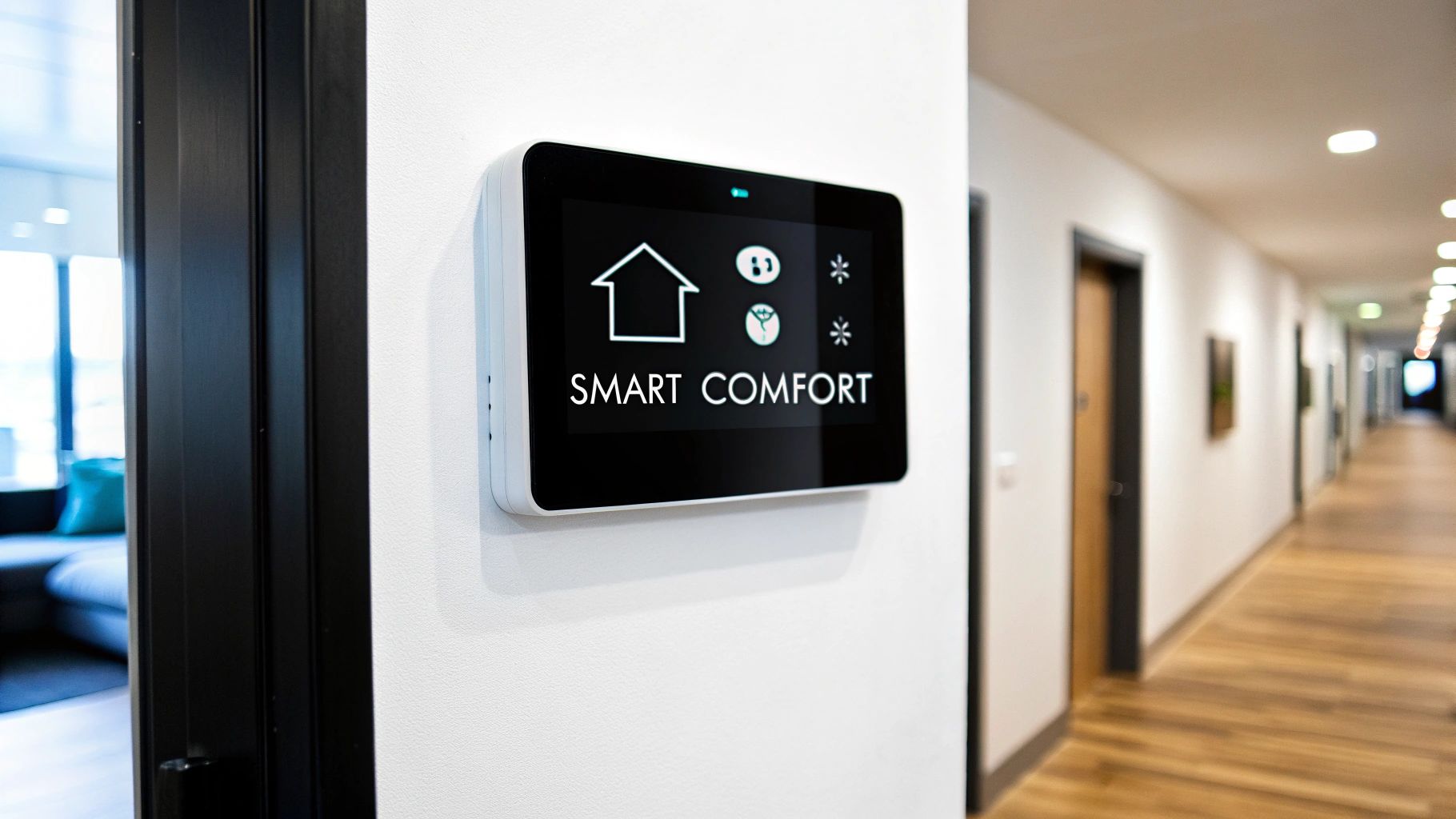
Upgrading to a smart thermostat is a powerful way to lower your electric bill by automating your home's heating and cooling, which often accounts for the largest portion of energy usage. These devices learn your daily routines and temperature preferences, automatically adjusting your HVAC system for maximum efficiency. Unlike programmable thermostats that require manual scheduling, smart thermostats use sensors, algorithms, and even weather data to optimize energy consumption without sacrificing comfort.
This intelligent temperature management can lead to significant savings. According to ENERGY STAR, homeowners can save about 8% on their heating and cooling bills, while brands like Nest report average annual savings of $131 to $145 for their users. By ensuring you aren't needlessly heating or cooling an empty house, a smart thermostat provides one of the best returns on investment for home energy efficiency.
Actionable Steps for Implementation
Installing a smart thermostat is a manageable DIY project for most homeowners, typically taking less than an hour. However, it's crucial to ensure your HVAC system is compatible before purchasing.
Check for Utility Rebates: Before buying, visit your local utility company's website. Many providers offer substantial rebates or even free smart thermostats, which can significantly reduce or eliminate the upfront cost.
Utilize Geofencing Features: Enable the geofencing function, which uses your phone's location to automatically set the temperature to an energy-saving "Away" mode when you leave and return it to your preferred setting as you approach home.
Program Temperature Setbacks: Manually program a 7-10 degree temperature setback for the eight hours you are typically asleep or away at work. This simple habit is a key strategy for maximizing savings.
Review Energy Reports: Most smart thermostats provide monthly energy usage reports. Take a few minutes to review these reports to identify patterns and find new opportunities to conserve energy.
Integrate with Other Smart Devices: For a fully optimized home, explore how smart home savings can reduce utility bills by connecting your thermostat to other devices.
3. HVAC System Maintenance and Optimization
Your heating, ventilation, and air conditioning (HVAC) system is one of the largest energy consumers in your home, and keeping it in peak condition is crucial for managing electricity costs. Regular maintenance and optimization ensure the system operates at maximum efficiency, preventing the energy waste that comes from strain and neglect. A well-maintained unit doesn't have to work as hard to heat or cool your home, directly translating into lower energy consumption and one of the most effective ways to lower your electric bill.
Failing to perform routine upkeep can cause a significant drain on your budget. The EPA reports that neglected systems can use up to 15% more energy to achieve the same level of comfort. Proactive care, from simple filter changes to professional tune-ups, ensures every component functions correctly, reducing wear and tear and preventing costly breakdowns. This approach not only saves money month-to-month but also extends the lifespan of your expensive equipment.
Actionable Steps for Implementation
A combination of simple DIY tasks and scheduled professional servicing will keep your HVAC system running smoothly. Consistent attention is key, especially before the peak heating and cooling seasons.
Change Air Filters Regularly: Clogged filters restrict airflow, forcing your system to work harder. Replace standard one-inch filters monthly or every three months for higher-quality pleated filters. This is the single most important maintenance task a homeowner can perform.
Schedule Professional Tune-Ups: Hire a qualified HVAC technician for a tune-up twice a year: once in the spring for your air conditioner and once in the fall for your furnace. They will clean coils, check refrigerant levels, and inspect electrical components for safety and efficiency. For a structured approach, you can refer to this ultimate HVAC maintenance checklist to know what to expect.
Keep the Outdoor Unit Clear: The outdoor condenser unit needs clear space for proper airflow. Trim back bushes, weeds, and other vegetation at least two feet in all directions. Regularly remove leaves, grass clippings, and other debris that can accumulate on the unit.
Seal Leaky Ducts: Leaky ductwork can account for up to 30% of energy loss in a home. Use mastic sealant or metal-backed tape to seal any visible gaps, cracks, or poor connections in the accessible ducts in your attic, basement, or crawlspace. For a deeper dive into system upkeep, you can find more tips on HVAC maintenance on purifiedairductcleaning.com.
Document All Maintenance: Keep a log of all filter changes, repairs, and professional service appointments. This documentation is often required to keep your manufacturer's warranty valid.
4. Window Upgrades and Weatherization
Your windows and doors can be major sources of energy loss, acting as thermal weak points in your home's envelope. Upgrading to energy-efficient windows and thoroughly sealing air leaks through weatherization are powerful ways to lower your electric bill, directly tackling heat gain in the summer and heat loss in the winter. This dual approach can reduce heating and cooling energy needs by 10-20%, stabilizing your home's indoor temperature and reducing the workload on your HVAC system.
High-performance windows, often featuring multiple panes and low-emissivity (Low-E) coatings, are designed to minimize heat transfer without sacrificing natural light. At the same time, simple weatherization techniques like applying caulk and weatherstripping seal the small gaps and cracks that let conditioned air escape. Case studies from programs like New York State's window replacement initiative have shown residents saving an average of 20% on heating costs, demonstrating the significant real-world impact of these upgrades.
Actionable Steps for Implementation
While full window replacement is a job for certified professionals, basic weatherization is an excellent, low-cost DIY project that delivers immediate results. Combining both strategies yields the best long-term savings.
Start with Weatherization: Before committing to new windows, seal leaks around existing frames. Use weatherstripping for moving parts like sashes and doors, and apply caulk to stationary gaps. This small investment can have a surprisingly large return.
Prioritize Problem Windows: Focus your upgrade efforts on south and west-facing windows first, as these are most exposed to direct sunlight and heat gain.
Look for ENERGY STAR Certification: When shopping for new windows, choose models with the ENERGY STAR or even the ENERGY STAR Most Efficient label. These products meet strict federal guidelines for energy performance in your specific climate zone.
Seek Financial Incentives: Research federal and state tax credits, which can significantly offset the cost of window replacement. As of 2024, substantial credits are available, making this a more accessible upgrade for many homeowners.
Get Multiple Professional Quotes: For new window installation, obtain at least three quotes from reputable, certified installers like those affiliated with Pella or Andersen. This ensures you get a competitive price and high-quality workmanship.
5. Insulation Improvement and Air Sealing
A significant portion of your home's energy usage goes toward heating and cooling. Improving your insulation and sealing air leaks are fundamental ways to lower your electric bill by preventing this conditioned air from escaping. Proper insulation acts as a thermal barrier, slowing heat transfer, while air sealing closes the gaps and cracks that allow air to move freely between the inside and outside of your home.
This powerful combination can reduce heating and cooling energy needs by 15-20% or more. The Department of Energy estimates that a well-insulated and sealed home can lead to substantial savings, with attic insulation retrofits alone saving homeowners hundreds of dollars annually depending on the climate. These improvements create a more stable indoor temperature, reducing the workload on your HVAC system and prolonging its lifespan.
Actionable Steps for Implementation
While some air sealing can be a DIY project, a comprehensive insulation upgrade often requires professional assistance. The key is to address both issues together for maximum impact.
Prioritize the Attic: Start with the attic, as it's typically the source of 25-30% of a home's heat loss. Ensure insulation levels meet or exceed the recommended R-value for your specific climate zone.
Air Seal First: Before adding new insulation, thoroughly seal any air leaks around plumbing vents, electrical wiring, attic hatches, and recessed lighting fixtures. Covering these gaps with insulation without sealing them first will not stop air leakage.
Get a Professional Energy Audit: Hire a certified technician to perform a blower door test and use a thermal imaging camera. This will pinpoint exactly where your home is losing the most energy, providing a clear roadmap for improvements.
Check for Rebates: Many local utility companies and state energy programs offer significant rebates or tax credits for insulation and air sealing projects. Check the ENERGY STAR rebate finder for programs in your area.
Ensure Proper Ventilation: When upgrading insulation, especially in the attic, it's crucial to maintain proper ventilation. This prevents moisture buildup, which can lead to mold, rot, and diminished insulation effectiveness.
6. Water Heating Optimization
Water heating is a major contributor to your household energy consumption, typically accounting for 15-25% of your total electric bill. Optimizing your water heating system involves a combination of simple adjustments and strategic upgrades to reduce this energy drain. By heating water more efficiently and using less of it, you can achieve significant and consistent savings without sacrificing comfort.
This multi-faceted approach can reduce water heating costs by 10-40%. For instance, the EPA's WaterSense program helps homeowners save billions of gallons of water and substantial energy annually through certified low-flow fixtures. Similarly, switching to a high-efficiency heat pump water heater can cut your water heating energy use by more than half, a key strategy for those looking for substantial ways to lower their electric bill.
Actionable Steps for Implementation
Many water heating optimizations are low-cost DIY tasks that provide an immediate return, while larger upgrades can be planned for when your current unit needs replacement.
Adjust the Thermostat: The simplest step is to lower your water heater's thermostat to 120°F (49°C). Most units are set to 140°F by default, and this single adjustment can instantly reduce your water heating costs by 3-5% and slow mineral buildup in the tank.
Insulate Your System: For about $20-30, you can purchase a pre-cut insulation blanket for your water heater tank. Also, insulate the first six feet of both the hot and cold water pipes to minimize standby heat loss. This is a highly effective, low-cost project.
Install Low-Flow Fixtures: Replace older showerheads and faucet aerators with EPA WaterSense-certified models. A low-flow showerhead (using 2.0 gallons per minute or less) can reduce your hot water consumption significantly.
Fix Leaks Immediately: A single hot water leak dripping at one drip per second can waste over 1,600 gallons per year, adding unnecessary costs to both your water and electric bills.
Plan for Upgrades: When it's time to replace your old water heater, consider a modern heat pump or tankless model. These units are far more efficient and often qualify for federal tax credits and local utility rebates, which can offset the higher initial cost.
7. Energy Audit and Monitoring Systems
To truly optimize your home's energy use, you must first understand where it's being wasted. A professional energy audit and modern monitoring systems provide the data-driven insights needed to make strategic, high-impact improvements. Audits use tools like blower door tests and thermal imaging to pinpoint air leaks and insulation gaps, while monitoring systems track real-time electricity consumption, revealing exactly which appliances are the biggest power hogs.
This targeted approach is one of the most effective ways to lower your electric bill because it replaces guesswork with a clear action plan. The Department of Energy estimates that homeowners can save 5% to 30% on their energy bills by implementing the recommendations from a thorough audit. For instance, behavioral science initiatives from companies like Opower have successfully helped millions of households reduce energy use by simply showing them how their consumption compares to their neighbors, proving the power of awareness.
Actionable Steps for Implementation
Gaining a clear picture of your home's energy performance is the first step toward significant savings. Combining a professional assessment with personal monitoring gives you a comprehensive strategy.
Schedule a Professional Audit: Many utility companies offer free or subsidized home energy audits. These professionals will provide a prioritized list of upgrades based on their return on investment, from sealing air leaks to improving insulation.
Install a Home Energy Monitor: For a one-time cost of $30 to $300, devices like the Sense Energy Monitor can be installed in your electrical panel to track appliance-level energy use in real time. This helps you identify and address "energy vampires" and inefficient habits.
Review Your Utility Bills: Look for seasonal spikes and long-term trends in your monthly statements. Understanding your baseline usage helps you set realistic reduction goals and measure your progress.
Use Audit Results for Contractor Bids: Share your audit report with contractors when getting quotes for upgrades like HVAC replacement or ductwork sealing. This ensures they are addressing the most critical issues identified by the assessment. You can discover the benefits of a professional duct inspection as part of this process.
Look for Certifications: When hiring a professional for an audit, look for certifications from organizations like the Building Performance Institute (BPI) to ensure a high-quality, comprehensive analysis.
8. Appliance Upgrade to ENERGY STAR Models
Your major home appliances, such as your refrigerator, dishwasher, and washing machine, are among the biggest energy consumers in your household. Upgrading these outdated machines to modern ENERGY STAR certified models is a powerful strategy for significantly lowering your electric bill. These certified appliances are engineered to meet strict energy efficiency guidelines set by the U.S. Environmental Protection Agency (EPA), often consuming 10% to 50% less energy and water than standard models.
This efficiency translates directly into substantial long-term savings. For instance, an ENERGY STAR certified refrigerator uses at least 15% less energy than non-certified models and about 40% less than a conventional model from 2001. A certified clothes washer uses about 25% less energy and 33% less water. These upgrades reduce your home's overall energy footprint and offer a clear return on investment through lower utility costs month after month.
Actionable Steps for Implementation
While replacing major appliances requires an initial investment, a strategic approach can maximize your savings and make the transition more affordable.
Prioritize High-Impact Appliances: Focus first on replacing the appliances that run most often and consume the most energy, like your refrigerator and clothes washer. These will deliver the fastest and most significant reduction in your electric bill.
Compare EnergyGuide Labels: When shopping, always examine the yellow EnergyGuide label. This label provides a clear estimate of the appliance's annual energy consumption and operating cost, allowing you to compare the long-term expense of different models.
Search for Rebates and Tax Credits: Many utility companies and state energy offices offer rebates, often ranging from $50 to $200, for purchasing ENERGY STAR models. Additionally, federal tax credits can provide substantial savings, so check for current incentives before you buy.
Choose the Right Size: Bigger is not always better. Select appliances that fit your family's actual needs. An oversized refrigerator, for example, will use more energy than necessary to cool empty space.
Time Your Purchase: Plan your purchase around major sales events, such as Black Friday, Labor Day, or Memorial Day, to combine retailer discounts with available rebates for maximum savings.
9. Solar Power Installation
Transitioning to solar power is one of the most significant long-term strategies for homeowners looking to drastically lower their electric bill. A solar power installation involves mounting photovoltaic (PV) panels on your roof or property to convert sunlight directly into electricity for your home. This renewable energy source can generate anywhere from 50% to 100% of your household's electricity needs, often reducing your utility bill to just a minimal connection fee or even eliminating it entirely.
The impact of solar is profound. According to the Solar Energy Industries Association (SEIA), residential solar now accounts for a growing portion of U.S. electricity generation, with installations increasing year over year. When combined with a battery storage system, solar power not only cuts costs but also provides energy independence and a reliable backup during grid outages, offering a powerful defense against unpredictable, rising electricity rates from utility companies.

Actionable Steps for Implementation
While installing solar is a major home improvement project requiring professional help, the process is streamlined by certified installers. Homeowners can take several key steps to ensure a successful and cost-effective transition.
Gather Multiple Quotes: Contact at least three to five reputable, certified solar installers like Sunrun or SunPower. Compare their equipment, warranties, and pricing to find the best value for your specific needs.
Understand Your Energy Needs: Before sizing a system, review your past 12 months of utility bills to determine your average electricity consumption. This data is crucial for designing a system that meets your household's demands.
Assess Your Roof's Condition: Solar panels have a lifespan of 25-30 years. If your roof is nearing the end of its life, it is far more cost-effective to replace it before the solar installation.
Explore Financial Incentives: Take full advantage of the 30% federal Residential Clean Energy Credit. Also, research and apply for any state, local, or utility rebates that can further reduce the upfront cost.
Verify Net Metering Policies: Check your local utility's net metering rules. These policies determine how you are credited for the excess electricity your system sends back to the grid, which significantly impacts your overall savings.
Consider Financing Options: If the upfront cost is a barrier, investigate solar leases or Power Purchase Agreements (PPAs). These options allow you to benefit from solar energy with little to no initial investment.
10. Behavioral Changes and Energy Awareness
Beyond technology and upgrades, the most powerful tool for lowering your electric bill is your own daily behavior. Cultivating energy awareness involves consciously modifying habits and making smarter energy choices every day. This approach costs nothing to implement but can yield significant savings, often reducing overall energy consumption by 5-15% simply by changing how you interact with your home's systems and appliances.
This strategy complements every other technological improvement you make. For instance, even with a smart thermostat, adjusting your clothing for the season instead of constantly changing the temperature setting provides additional savings. Studies from smart meter feedback programs and utility initiatives like Opower have consistently shown that when households are aware of their consumption, they naturally find ways to reduce it. These small, persistent changes add up to a substantial reduction in your monthly utility costs.
Actionable Steps for Implementation
Transforming your habits is a gradual process that can be made easier with a structured plan. The key is to make energy conservation a mindful and regular part of your household routine.
Track and Set Goals: Start by reviewing your utility bills each month to understand your usage patterns. Set a specific, measurable goal, such as reducing consumption by 10% over the next three months, to stay motivated.
Combat Phantom Load: Unplug electronics like chargers, televisions, and coffee makers when not in use. These devices draw "phantom" or "vampire" power even when turned off, accounting for 5-10% of household energy use.
Optimize Appliance Use: Only run your dishwasher and washing machine with full loads. Use cold water for laundry whenever possible, as this can save up to 90% of the energy your washer consumes. Air-dry clothes on a line or rack instead of using an energy-intensive dryer.
Rethink Your Thermostat: Instead of immediately adjusting the thermostat, add a layer of clothing or use a blanket in cooler months. In warmer months, use fans to feel cooler. Each degree you adjust can save 3-5% on heating and cooling costs. For more information, you can find a comprehensive guide on how to reduce energy consumption in your home.
Create a Family Plan: Involve everyone in the household. Assign responsibilities like turning off lights when leaving a room or unplugging devices. Making it a shared goal increases accountability and success.
Comparison of 10 Energy-Saving Strategies
Measure | Implementation Complexity 🔄 | Resource Requirements 💡 | Expected Outcomes 📊 | Effectiveness ⭐ |
|---|---|---|---|---|
LED Lighting Conversion | Low: DIY or quick swap; minimal wiring | Low–Medium upfront ($2–15/bulb); bulk buys reduce cost | Lighting energy ↓75–80%; 25k–50k+ hr lifespan | ⭐⭐⭐⭐ |
Smart Thermostat Installation | Medium: wiring/compatibility check; app setup | Medium ($150–300); possible rebates; smartphone | HVAC energy ↓10–23%; ~$131–145/yr; payback 1.5–3 yrs | ⭐⭐⭐⭐ |
HVAC System Maintenance & Optimization | Medium: recurring tasks + annual pro tune-ups | Low–Medium recurring ($100–300/yr); pro visits cost more | Energy ↓5–15%; longer equipment life; better IAQ | ⭐⭐⭐ |
Window Upgrades & Weatherization | High: professional install; possible structural work | High ($300–1,000/window; $5k–20k whole home) | Heating/cooling ↓10–20%; improved comfort; resale value ↑ | ⭐⭐⭐⭐ |
Insulation Improvement & Air Sealing | Medium–High: professional for best results | Medium ($1k–5k+ depending on scope) | Energy ↓15–20%; quicker comfort gains; payback 3–8 yrs | ⭐⭐⭐⭐ |
Water Heating Optimization | Low–High: simple fixes to full system replacement | Low ($20–100) to High ($3k–6k for advanced systems) | Water heating ↓10–40%; quick payback for low-cost measures | ⭐⭐⭐⭐ |
Energy Audit & Monitoring Systems | Medium: pro audit or DIY monitoring setup | Low–Medium audit $0–400; monitors $30–500 | Reveals $500–2,000/yr opportunities; data-driven prioritization | ⭐⭐⭐⭐ |
Appliance Upgrade to ENERGY STAR Models | Low–Medium: replace at end of life; plug-and-play | Medium–High (appliance cost); rebates often available | Appliance energy ↓10–50%; $50–200/yr per unit | ⭐⭐⭐⭐ |
Solar Power Installation | High: site assessment, permits, installer coordination | Very High ($15k–25k before incentives); financing options | Electric bills ↓50–100%; payback 6–12 yrs; long-term hedge | ⭐⭐⭐⭐⭐ |
Behavioral Changes & Energy Awareness | Low: immediate habits and tracking | Minimal ($0–30); monitoring aids optional | Energy ↓5–15%; complements tech upgrades; no/low cost | ⭐⭐⭐ |
Your Action Plan for Lasting Energy Savings
You have journeyed through a comprehensive collection of strategies, each a powerful tool in your mission to reclaim control over your home's energy consumption. From the simple, immediate impact of switching to LED bulbs to the long-term, transformative power of solar panel installation, the path to a lower electric bill is not a single leap but a series of deliberate, intelligent steps. The most empowering takeaway is this: you are in the driver's seat. You possess the knowledge to make impactful decisions, whether they involve a small budget and a free weekend or a significant investment in your home's future.
The true secret to success is not in attempting to implement all ten strategies at once, but in creating a personalized, phased approach. Think of these methods not as a checklist to be completed, but as a menu of options to be selected based on your specific needs, budget, and priorities. The journey towards energy efficiency is a marathon, not a sprint, and sustainable progress is built on consistent, manageable actions.
From Knowledge to Action: Your First Steps
The sheer volume of information can feel overwhelming, so let's distill it into a clear, actionable starting point. The most effective way to begin is by focusing on the low-cost, high-impact "quick wins" that build momentum and deliver immediate feedback in the form of a reduced utility bill.
Start Small, Win Big: Begin with the behavioral changes discussed. Adjust your thermostat by a few degrees, unplug electronics when not in use, and be mindful of your hot water usage. These no-cost adjustments can collectively trim 5-10% from your bill, providing instant gratification and motivation.
Schedule a Weekend Project: Dedicate a Saturday to air sealing. Arm yourself with caulk and weatherstripping and hunt down drafts around windows, doors, and electrical outlets. This single, affordable project directly supports the efficiency of your heating and cooling systems, which are the largest energy consumers in most homes.
Book a Professional Tune-Up: Your HVAC system is the heart of your home's energy use. Scheduling a professional maintenance visit is one of the most powerful initial steps you can take. An optimized system runs more efficiently, lasts longer, and provides better indoor air quality, making it a cornerstone of any serious effort to find ways to lower your electric bill.
The Synergy of a Whole-Home Approach
As you progress, remember that these strategies are interconnected. They create a powerful synergistic effect when combined. Improved insulation makes your smart thermostat's job easier and more effective. ENERGY STAR appliances consume less power, which is then delivered more efficiently by a well-maintained HVAC system. Weatherizing your windows means your heater or air conditioner doesn't have to work as hard to maintain a comfortable temperature.
This holistic view transforms your home from a collection of separate components into a single, high-performance system. Every improvement, from sealing a tiny crack to installing a new water heater, contributes to the overall efficiency and resilience of your living space. By taking these informed actions, you are not just cutting costs; you are investing in a more comfortable, sustainable, and financially sound future for your household. You are building a home that works for you, not against you, in the quest for energy independence and lasting savings.
A clean, efficient HVAC system is fundamental to lowering your energy costs, as unobstructed airflow allows your unit to operate with less strain. Ensure your system is performing at its peak by scheduling a professional duct cleaning with Purified Air Duct Cleaning. Visit Purified Air Duct Cleaning to see how our services can enhance your system's efficiency and contribute to your energy-saving goals.