

10 Facility Management Best Practices for 2025
In an era of smart buildings and evolving sustainability goals, facility management is advancing faster than ever. Staying ahead requires more than just keeping the lights on; it demands a strategic, data-driven approach. This guide outlines the essential facility management best practices that leading organizations are adopting to reduce costs, enhance occupant well-being, and future-proof their assets. These strategies are the cornerstones of modern, high-performing facilities.

This article provides a blueprint for next-generation facility operations. We will explore ten critical practices, each with a special focus on practical application and tangible results. You will find actionable steps to transform your facility's operational efficiency and overall value, with detailed insights on topics that directly impact building health and performance.
Our focus areas include:
Optimizing HVAC performance for comfort and energy savings.
Implementing effective air duct cleaning protocols.
Executing impactful energy management initiatives.
Strengthening safety protocols and compliance measures.
Creating superior indoor air quality for all occupants.
From predictive maintenance powered by IoT to integrated systems that streamline every workflow, this listicle is designed for property managers, homeowners, and facility operators seeking to implement proven strategies. We will cover vendor management, data analytics, technology integration, and more, providing you with a comprehensive toolkit. By adopting these facility management best practices, you can create environments that are safer, more efficient, and better aligned with the needs of everyone who uses them.
1. Preventive and Predictive Maintenance Programs
The foundation of modern facility management best practices lies in shifting from a reactive "fix-it-when-it-breaks" model to a proactive, data-driven strategy. This involves a powerful combination of preventive and predictive maintenance. Preventive maintenance is about scheduled upkeep, like filter changes and system inspections, performed at regular intervals to prevent common failures. Predictive maintenance takes this a step further, using IoT sensors, real-time data, and analytics to forecast equipment issues before they occur.
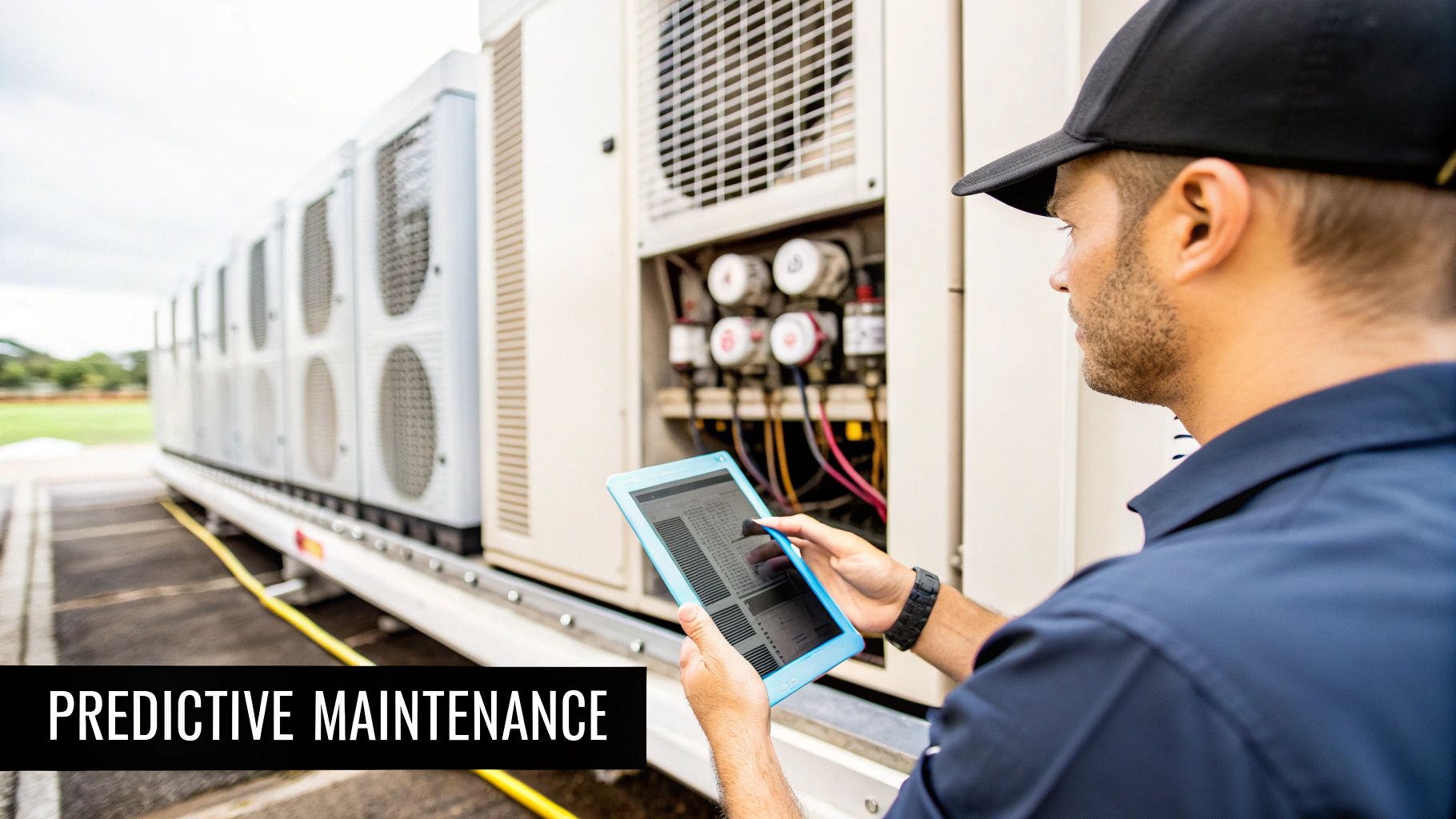
This dual approach minimizes unexpected downtime, extends asset lifespan, and optimizes resource allocation. Instead of reacting to a catastrophic HVAC failure during a heatwave, a predictive system might flag an air handler's motor for unusual vibrations, signaling a need for a minor bearing replacement before the entire unit fails. For a deeper understanding of these critical approaches, consult a comprehensive guide to predictive vs. preventive maintenance.
How to Implement This Practice
Successfully integrating these programs requires a structured approach. Start by prioritizing your most critical systems, such as HVAC, electrical, and plumbing, as their failure carries the highest operational and financial risk.
Implement a CMMS: A Computerized Maintenance Management System (CMMS) is essential for scheduling tasks, tracking work orders, and analyzing maintenance data.
Train Your Team: Equip your staff with the skills to install and monitor IoT sensors and interpret the data they generate.
Establish KPIs: Set clear Key Performance Indicators (KPIs) like Mean Time Between Failures (MTBF) and Planned Maintenance Percentage (PMP) to measure success.
Optimize Scheduling: Plan preventive tasks during periods of low occupancy to minimize disruption to building operations.
By adopting this strategy, facilities can significantly reduce emergency repair costs and improve overall system reliability. This is particularly crucial for complex systems; for instance, applying these principles with expert commercial HVAC system maintenance tips can prevent costly disruptions and ensure optimal indoor air quality and energy efficiency.
2. Energy Management and Sustainability Initiatives
Beyond just keeping systems running, a core tenet of modern facility management best practices is the strategic control of energy consumption. This involves a comprehensive approach to monitor, manage, and optimize energy use across a building’s portfolio, significantly reducing both operational costs and environmental impact. This practice moves facilities from being passive energy consumers to active participants in sustainability, leveraging smart technology, renewable resources, and data-driven conservation efforts.
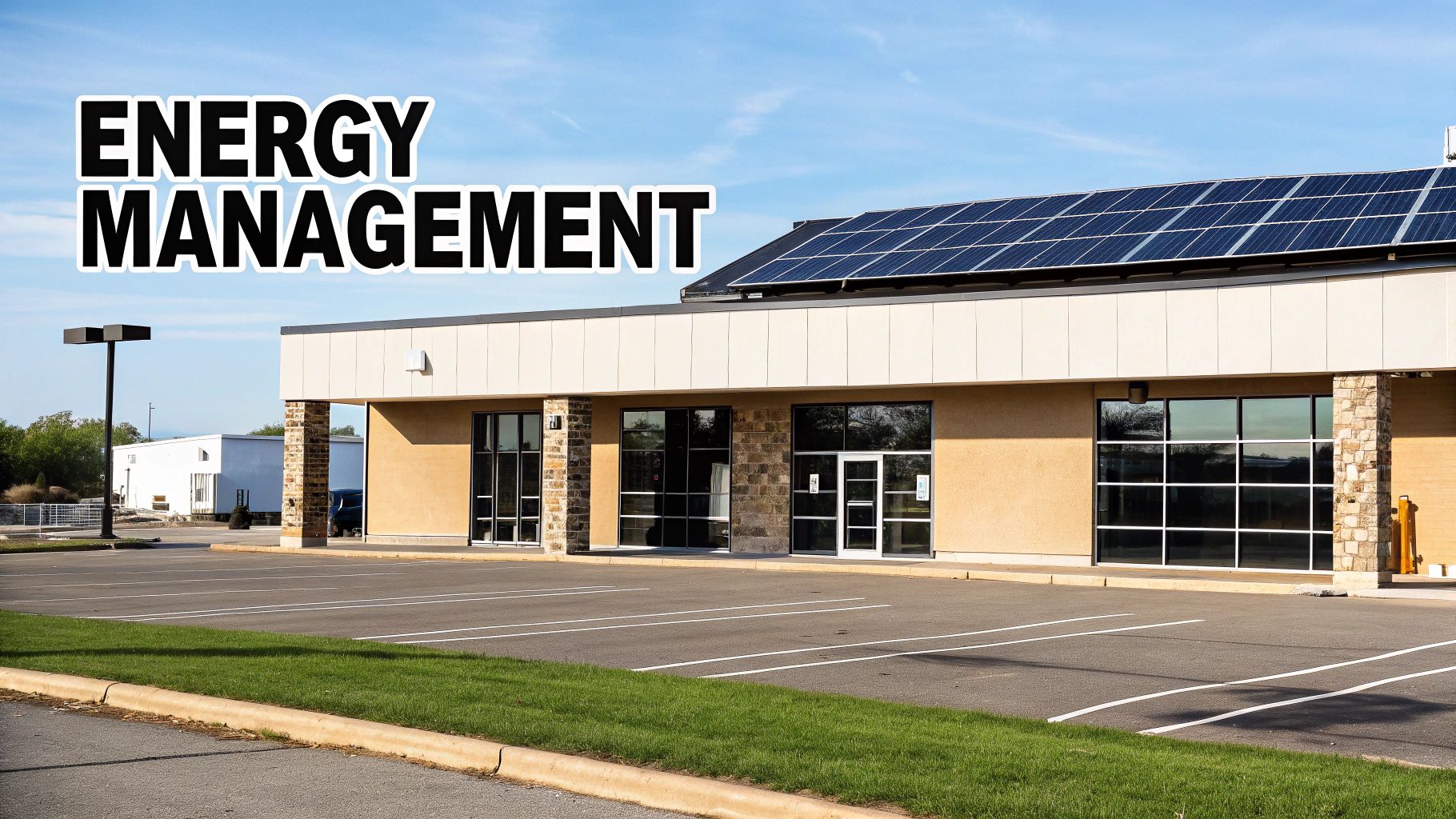
The goal is to create a high-performance building that operates at peak efficiency. For example, a corporate headquarters might achieve net-zero energy status by combining a high-efficiency HVAC system with on-site solar panel arrays and a sophisticated building management system that adjusts lighting and temperature based on real-time occupancy. This proactive stance not only cuts utility expenses but also enhances corporate reputation and helps meet regulatory requirements, such as local mandates for energy audits in large commercial buildings.
How to Implement This Practice
Integrating a successful energy management program requires a clear strategy that begins with understanding current consumption and setting achievable goals. The first step is often a comprehensive energy audit to identify the most significant areas of waste and opportunity.
Conduct a Professional Energy Audit: Hire experts to perform a thorough assessment of your facility's energy usage, including thermal imaging and system analysis, to create a baseline.
Leverage a BMS: Implement or optimize a Building Management System (BMS) to gain centralized, real-time control over lighting, HVAC, and other major energy consumers.
Install Smart Technology: Use occupancy sensors for lighting and thermostats, smart plugs for equipment, and automated window shades to reduce energy use dynamically.
Set and Track Targets: Establish realistic energy reduction goals, such as a 5-10% annual decrease, and use KPIs to monitor progress and calculate the ROI on efficiency projects.
Engage Occupants: Create awareness programs to encourage staff to participate in conservation efforts, like turning off lights and equipment when not in use.
By adopting these initiatives, facilities can achieve substantial long-term savings and operational resilience. Since HVAC systems are often the largest energy consumers, applying advanced HVAC energy-saving tips is a critical component for maximizing efficiency and driving down utility costs.
3. Integrated Facility Management (IFM) Systems
A truly strategic approach to facility management best practices involves breaking down departmental silos. Integrated Facility Management (IFM) systems achieve this by consolidating all core functions: maintenance, operations, security, space management, and vendor coordination, into a single, unified platform. This holistic model provides a comprehensive, real-time view of facility performance, costs, and resource allocation, enabling smarter decision-making.
Instead of the maintenance team using one system and the space planning team another, an IFM solution like the ServiceNow Facility Management platform or Archibus creates a single source of truth. This integration eliminates data discrepancies and streamlines complex workflows. For example, when an employee requests a new workspace, the system can automatically trigger work orders for IT setup, cleaning services, and security access updates, all coordinated without manual intervention.
How to Implement This Practice
Transitioning to an IFM system is a significant undertaking that requires careful planning and robust support. The goal is to create a seamless operational environment, which begins with a solid foundation.
Secure Executive Sponsorship: Gain buy-in from leadership to ensure the project receives the necessary resources and organizational priority.
Establish Strong Change Management: Prepare your teams for new workflows and processes with clear communication and a structured change management program.
Start with Core Modules: Begin by implementing essential functions like work order management and asset tracking before expanding to more complex modules.
Invest in Comprehensive Training: Ensure all staff are thoroughly trained on the new platform to maximize adoption and realize its full potential.
By centralizing operations, organizations can uncover hidden efficiencies and improve service delivery. This is particularly effective for managing vendor contracts and performance, as a unified system provides clear data on service level agreements, an area explored in depth by thought leaders like Deloitte Consulting when advising large enterprises.
4. Occupant-Centric Facility Management
Modern facility management best practices extend beyond machinery and infrastructure to focus on the most valuable asset within any building: its people. An occupant-centric approach shifts the priority from simply maintaining the physical space to actively enhancing the human experience. This means managing facilities with a direct focus on occupant comfort, health, safety, and productivity by creating environments that are not just functional but also supportive and engaging.
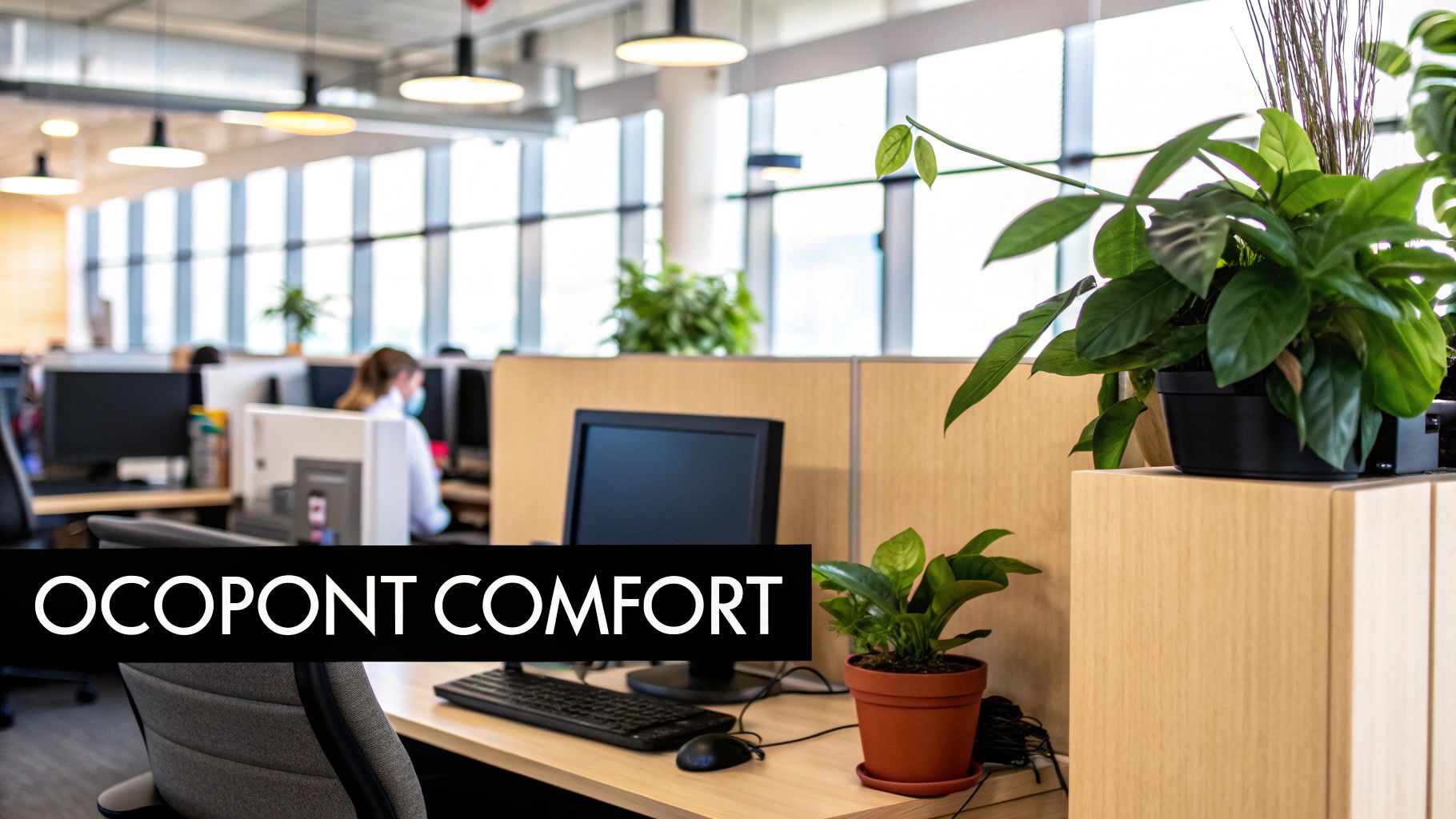
This human-focused strategy acknowledges that a building's performance is directly linked to the well-being of its inhabitants. For example, tech giants like Microsoft and Apple design their campuses not just for operational efficiency but to foster collaboration, wellness, and creativity through optimized lighting, superior air quality, and responsive amenities. This approach has been popularized by organizations like the WELL Building Institute, which provides standards for creating spaces that advance human health.
How to Implement This Practice
Integrating an occupant-centric model requires listening to and responding to the needs of building users. The goal is to create a continuous feedback loop where occupant input directly informs facility operations and improvements.
Gather Occupant Feedback: Regularly survey occupants on their satisfaction with temperature, lighting, noise levels, and cleanliness. Implement mobile apps or digital kiosks for real-time service requests and feedback.
Monitor Environmental Conditions: Use sensors to track key Indoor Air Quality (IAQ) metrics like CO2, VOCs, humidity, and particulate matter. Ensure these metrics align with recognized health benchmarks.
Establish Wellness Programs: Create wellness committees with occupant representatives to guide initiatives related to health, comfort, and amenities.
Provide Transparency: Share data on building performance, such as energy savings and IAQ levels, to demonstrate a commitment to occupant well-being and sustainability.
By prioritizing the human element, organizations can boost employee satisfaction, reduce absenteeism, and attract top talent. A crucial component of this is maintaining exceptional air quality, and you can explore a guide to indoor environmental quality standards to understand the specific metrics and goals for creating a healthier indoor space.
5. Mobile-First Operations and Technician Empowerment
A crucial step in modernizing facility management best practices involves moving away from clipboards and paper trails towards a dynamic, mobile-first operational model. This strategy equips technicians with mobile devices, like tablets and smartphones, giving them real-time access to work orders, asset histories, and technical manuals directly in the field. This digital empowerment streamlines workflows, enhances communication, and enables technicians to resolve issues faster and more autonomously.
By eliminating paper-based processes, facilities can drastically reduce administrative lag and data entry errors. A technician can receive a new work order, access the equipment's full maintenance history, order necessary parts, and close out the job with photo documentation, all from a single mobile application. Platforms like ServiceNow Field Service Management and Fiix have popularized this approach, demonstrating its power to improve data accuracy, boost technician productivity, and provide management with a real-time view of all field activities.
How to Implement This Practice
Transitioning to a mobile-first environment requires careful planning to ensure seamless adoption and maximum return on investment. The goal is to make technology a tool that simplifies tasks, not complicates them.
Select the Right Software: Choose a mobile CMMS or field service management solution with a user-friendly interface and offline capabilities, ensuring functionality even in areas with poor connectivity.
Provide Durable Hardware: Equip your team with rugged smartphones or tablets and protective cases designed to withstand the physical demands of a facility environment.
Establish Clear Protocols: Develop standardized procedures for data entry, task updates, and communication to ensure consistency and high-quality data collection.
Offer Comprehensive Training: Conduct regular training sessions and provide ongoing support to ensure technicians are comfortable and proficient with the new tools.
Starting with a pilot program in one department allows you to refine processes and demonstrate the benefits before a full-scale rollout. This measured approach helps build buy-in and ensures the technology is configured to meet the specific needs of your facility and team.
6. Comprehensive Health, Safety, and Compliance Management
A cornerstone of elite facility management best practices is the establishment of a structured framework for managing health, safety, and regulatory compliance. This goes beyond simply reacting to incidents; it involves proactively identifying, managing, and mitigating facility-related risks to protect occupants and ensure adherence to local, state, and federal laws. A comprehensive program encompasses everything from OSHA compliance and emergency preparedness to occupant safety protocols and regular audits.
This approach creates a culture of safety that permeates every operational level. For example, a hospital facility must rigorously maintain compliance with both OSHA and The Joint Commission to ensure patient and staff safety, while a manufacturing plant might pursue ISO 45001 certification to standardize its occupational health and safety systems. The goal is to prevent accidents, minimize liability, and create a secure environment for everyone who enters the building.
How to Implement This Practice
Building a robust safety and compliance program requires commitment and a systematic methodology. The focus should be on creating clear, repeatable processes that are easy for all team members to follow and document.
Establish Clear Policies: Develop and regularly communicate clear safety policies and procedures. To establish a robust framework for safeguarding your workforce and operations, delve into A Practical Guide to Health and Safety Management Systems.
Conduct Regular Audits: Perform quarterly safety audits and inspections to identify potential hazards before they cause an incident. A detailed guide like a commercial building inspection checklist for 2025 can provide a structured starting point for these reviews.
Promote an Incident Reporting Culture: Create a blame-free system where employees feel comfortable reporting near-misses and minor incidents, providing valuable data for future prevention.
Provide Ongoing Training: Equip your team with ongoing safety training and certifications relevant to their roles, from fire extinguisher use to hazardous material handling.
Maintain Meticulous Documentation: Keep accurate and accessible records of all incidents, training sessions, audits, and compliance checks for legal protection and continuous improvement.
7. Strategic Space Planning and Asset Optimization
One of the most impactful facility management best practices involves treating physical space not as a static cost center, but as a dynamic asset. Strategic space planning is a data-driven approach to analyzing and optimizing how every square foot is used to support core business objectives, enhance employee productivity, and reduce operational expenses. This moves beyond simple floor plans to encompass workplace strategy, portfolio analysis, and the intentional realignment of space to fit evolving work models.
This strategic view enables organizations to make informed decisions that have significant financial and cultural benefits. For example, by analyzing utilization data, a company might consolidate underused office floors, reallocating the savings to create high-demand collaborative zones. Similarly, a post-pandemic workplace redesign can transform a sea of assigned desks into a flexible "neighborhood" model, better supporting hybrid work while shrinking the overall real estate footprint. For an expert perspective on this evolution, major real estate services firms like JLL offer deep insights into workplace strategy.
How to Implement This Practice
A successful space optimization initiative is rooted in data and centered on the people who use the space. The goal is to create an environment that is both efficient and effective, aligning physical assets with organizational goals.
Conduct a Utilization Study: Begin by gathering data. Use IoT occupancy sensors, badge-in data, or employee surveys to understand how, when, and by whom different spaces are actually used.
Engage Stakeholders: Involve employees and department heads in the planning process to ensure the new layout supports their specific workflows and collaboration needs.
Benchmark and Pilot: Compare your space metrics, like square feet per employee, against industry benchmarks. Implement a pilot program in a single department to test new concepts before a full-scale rollout.
Align with Business Goals: Ensure your space plan directly supports key objectives, whether that's fostering innovation through more collaborative zones or reducing costs by consolidating the portfolio.
By strategically managing physical assets, facility managers can directly contribute to the bottom line, improve employee experience, and create a more agile, resilient workplace.
8. Vendor Management and Contract Optimization
Effective facility management extends beyond in-house teams to encompass the network of external vendors and contractors. A systematic approach to vendor management and contract optimization is a critical best practice that transforms these relationships from simple transactions into strategic partnerships. This involves a lifecycle approach: carefully selecting providers, negotiating favorable terms, continuously monitoring performance, and optimizing contracts to ensure maximum value, quality, and cost-effectiveness.
This strategic oversight prevents overspending and ensures service delivery meets established standards. For instance, a multi-site retail organization might consolidate its HVAC maintenance contracts under a single master vendor agreement. This not only secures volume discounts but also standardizes service levels, reporting, and emergency response protocols across all locations, ensuring consistency and simplifying oversight. This is a core component of modern facility management best practices.
How to Implement This Practice
Building a robust vendor management program requires clear processes and a commitment to partnership. The goal is to create a transparent, performance-driven ecosystem where vendors are incentivized to deliver their best work, benefiting both parties.
Establish Clear SLAs: Develop detailed Service Level Agreements (SLAs) and Key Performance Indicators (KPIs) upfront. Define metrics for response times, work quality, and safety compliance before signing any contract.
Centralize Procurement: Utilize procurement platforms like Coupa or SAP Ariba to centralize vendor information, manage contracts, and track spending for greater visibility and control.
Conduct Regular Reviews: Schedule quarterly performance reviews with key vendors to discuss successes, address challenges, and align on future goals. This fosters a collaborative rather than purely transactional relationship.
Maintain Vendor Redundancy: For critical services like emergency electrical or plumbing repairs, identify and pre-qualify backup vendors to ensure business continuity during unexpected events or primary vendor failures.
By optimizing vendor relationships and contracts, facility managers can significantly reduce operational costs, mitigate risks, and guarantee a higher, more consistent standard of service across their entire portfolio.
9. Data Analytics and Performance Benchmarking
Modern facility management best practices demand a shift from intuition-based decisions to a data-centric strategy. This involves leveraging advanced analytics, business intelligence (BI) tools, and Key Performance Indicators (KPIs) to measure facility performance accurately. By comparing this data against industry benchmarks, facility managers can identify operational trends, uncover inefficiencies, and make informed decisions that drive continuous improvement and optimize costs.
This analytical approach transforms raw operational data into actionable intelligence. For example, a corporate campus might use analytics to optimize space utilization based on real-time occupancy data, while a hospital system could benchmark its maintenance costs per square foot against industry averages to identify savings opportunities. The goal is to move beyond simply collecting data to actively using it to enhance building performance, occupant satisfaction, and financial outcomes.
How to Implement This Practice
Integrating data analytics requires a systematic approach to ensure the insights generated are relevant and actionable. The process begins with defining what success looks like and then building the infrastructure to measure it effectively.
Define Clear KPIs: Establish specific, measurable KPIs that align directly with broader business objectives, such as cost per square foot, energy usage intensity (EUI), or work order completion rates.
Automate Data Collection: Wherever possible, implement automated systems using IoT sensors and integrated software to gather real-time data on asset performance, energy consumption, and environmental conditions.
Utilize Benchmarking Reports: Leverage industry resources from organizations like IFMA and CoreNet Global to compare your facility's performance against established standards and identify areas for improvement.
Create Executive Dashboards: Use BI tools like Tableau or Power BI to create visual dashboards that provide stakeholders with a clear, at-a-glance view of key performance metrics and trends.
Invest in Training: Equip your team with the skills needed to use analytics tools and interpret data, empowering them to contribute to strategic decision-making.
By applying this practice, you can pinpoint specific issues, like an underperforming HVAC system driving up utility costs. Data analysis can even help quantify the ROI of specific maintenance tasks; for instance, understanding how professional duct cleaning impacts energy efficiency can be a powerful justification for the investment. You can find more details in this guide on whether cleaning air ducts makes a difference.
10. Technology Integration and Building Automation Systems
Modern facility management best practices increasingly rely on unifying disparate building systems into a cohesive, intelligent network. This is achieved through a Building Automation System (BAS) or Building Management System (BMS), a centralized platform that integrates and controls critical functions like HVAC, lighting, security, access control, and occupancy sensors. This interconnected ecosystem enables automated control, real-time monitoring, and data-driven optimization of the entire facility from a single dashboard.
This holistic approach moves beyond managing individual components to orchestrating the entire building environment for peak performance. For instance, in a smart office, occupancy sensors can communicate with the BAS to automatically dim lights and reduce HVAC output in an empty conference room, generating significant energy savings without human intervention. Major technology leaders like Google and forward-thinking healthcare facilities have implemented these systems to enhance operational efficiency, improve occupant comfort, and strengthen security protocols.
How to Implement This Practice
Integrating a BAS requires careful planning and a phased approach to ensure a successful and scalable deployment. The goal is to create an interoperable system that delivers a strong return on investment through energy savings and operational streamlining.
Prioritize for ROI: Begin by integrating systems with the highest potential for energy savings and operational impact, typically HVAC and lighting, to demonstrate value early.
Ensure Interoperability: Choose systems and platforms that use open protocols (like BACnet or Modbus) to ensure different vendors' equipment can communicate seamlessly.
Strengthen Cybersecurity: A connected building is a potential target. Implement robust cybersecurity protocols, including network segmentation and regular security audits, to protect your BAS from threats.
Invest in Training: A powerful system is only effective if your team can use it. Provide comprehensive training for facility staff on operating the new platform, interpreting data, and troubleshooting issues.
Plan for Scalability: Select a flexible BAS that can grow with your needs, allowing you to add more systems or properties over time without requiring a complete overhaul.
Top 10 Facility Management Best Practices Comparison
Solution | 🔄 Implementation Complexity | ⚡ Resource Requirements | 📊 Expected Outcomes | 💡 Ideal Use Cases | ⭐ Key Advantages |
|---|---|---|---|---|---|
Preventive and Predictive Maintenance Programs | Medium-High: sensor deployment, analytics integration, staff training | IoT sensors, CMMS, analytics platform, skilled technicians; moderate capital | Reduces unexpected downtime; extends equipment life 20-40%; maintenance costs −25-30% | Critical MEP systems, hospitals, data centers; start with high-risk assets | Proactive failure prevention; better budget forecasting; improved safety |
Energy Management and Sustainability Initiatives | High: capital projects and system upgrades; long payback (5-10 yrs) | Significant upfront capital, BMS, renewables, training | Energy cost savings 15-30%; lower carbon footprint; incentives/tax benefits | Large campuses, corporate HQs, data centers pursuing certifications | Lower operating costs; sustainability credentials; regulatory benefits |
Integrated Facility Management (IFM) Systems | High: complex software, data migration, change management (6-12+ months) | Enterprise software/licensing, integration services, training, executive sponsorship | Operational efficiency +20-25%; reduced redundancy; faster response times | Multi-site enterprises consolidating legacy systems | Holistic operations view; streamlined vendor & contract management |
Occupant-Centric Facility Management | Medium: sensor rollout and cultural change; ongoing refinement | IAQ sensors, occupant apps, amenities, wellness programs | Employee productivity +5-15%; lower absenteeism; higher retention | Offices, campuses focused on experience and wellness | Improves occupant satisfaction and talent retention; supports hybrid models |
Mobile-First Operations & Technician Empowerment | Low-Medium: app deployment and adoption pilots | Mobile devices, reliable connectivity, mobile work-order software, training | Response time −25-40%; productivity +20-30%; higher first-time fix rates | Field maintenance teams, service-intensive operations | Faster response, accurate field data, improved technician satisfaction |
Comprehensive Health, Safety & Compliance Management | Medium: policy, training, audits; continuous maintenance | Compliance staff, training programs, audit tools, documentation systems | Reduces injuries/liability; lowers insurance premiums (≈5-15%); fewer regulatory penalties | Healthcare, manufacturing, multi-site retailers with regulatory exposure | Mitigates legal risk; protects occupants; demonstrates responsibility |
Strategic Space Planning & Asset Optimization | Medium: sensor studies, analysis, change management (2-3 yrs) | Utilization sensors, analytics, workplace strategy consultants | Real estate cost −10-20%; utilization rates up to 70-80%; better lease decisions | Organizations reducing footprint or shifting to flexible work models | Cuts real estate costs; improves space use; informs portfolio strategy |
Vendor Management & Contract Optimization | Low-Medium: process redesign and platform adoption; time-intensive | Procurement platforms, contract specialists, performance scorecards | Service cost savings 10-20%; improved service quality and accountability | Multi-site organizations with many vendors and fragmented contracts | Cost control via consolidation; consistent service levels; clearer SLAs |
Data Analytics & Performance Benchmarking | Medium: data integration, BI tools, analyst skills | BI platforms, data engineers, dashboards, benchmarking data | Enables fact-based decisions; efficiency +15-20%; identifies improvement opportunities | Portfolio managers, facilities focused on continuous improvement | Objective KPIs; trend detection; demonstrated ROI on projects |
Technology Integration & Building Automation Systems | Very High: full BMS/IoT integration, commissioning (12-24 months) | BMS, IoT networks, cybersecurity measures, specialized integrators; high capital ($500K-$5M+) | Energy reduction 20-30%; centralized control; remote monitoring/optimization | Large buildings, campuses, healthcare facilities seeking automation | Automated optimization; centralized operations; significant energy savings |
Integrating Excellence for a Smarter Future
The journey through the cornerstones of modern facility management reveals a clear, overarching theme: integration is the key to unlocking true potential. The days of siloed operations and reactive problem-solving are rapidly receding, replaced by a holistic ecosystem where technology, data, and human-centric strategies converge. Implementing these facility management best practices is not about checking boxes on a list; it is about weaving a cohesive operational fabric that is resilient, efficient, and forward-thinking. From the foundational necessity of predictive HVAC maintenance to the sophisticated deployment of building automation systems, each practice builds upon the others, creating a powerful synergistic effect.
Synthesizing the Core Practices
The ten best practices detailed in this article represent the pillars of a world-class facility operation. We've explored how a proactive stance, embodied by preventive and predictive maintenance, serves as the bedrock, preventing costly failures and ensuring system reliability. This foundation is essential for supporting more advanced initiatives like energy management and occupant-centric design. After all, a building cannot be considered truly "smart" or sustainable if its core mechanical systems, like its HVAC units and ductwork, are neglected and inefficient.
Similarly, the strategic adoption of Integrated Facility Management (IFM) systems and mobile-first tools for technicians is not merely about technological advancement. It is about empowering your team with the data and mobility needed to execute their roles with greater precision and speed. When your team can instantly access asset histories, maintenance schedules, and real-time performance data, they transition from reactive responders to proactive guardians of the facility's health. This empowerment is directly linked to enhanced safety, optimized space utilization, and more effective vendor management.
The Human Element at the Center
A recurring insight across these practices is the profound impact on the human experience. Whether managing a commercial high-rise, a residential complex, or an industrial site, the ultimate goal is to create an environment that is safe, comfortable, and productive for its occupants. This is where concepts like occupant-centric facility management and comprehensive health and safety protocols shine.
Key Takeaway: A building's value is no longer measured by its physical structure alone, but by the quality of the experience it provides to the people within it. Excellent indoor air quality, thermal comfort, and a seamless operational experience are non-negotiable expectations in today's market.
Focusing on elements like pristine air quality is a fundamental starting point. Regular, professional air duct cleaning and diligent HVAC filter replacement are not just maintenance tasks; they are critical health interventions. For families concerned about allergens, property managers aiming to attract premium tenants, or businesses focused on employee wellness, clean air is the invisible thread that connects a facility's performance to occupant well-being. This tangible benefit serves as a powerful justification for investing in the broader spectrum of facility management best practices.
Actionable Next Steps Toward Optimization
Embarking on this journey can feel overwhelming, but progress is achieved through methodical, incremental steps. Rather than attempting a complete overhaul at once, select one or two practices that address your most pressing challenges.
Start with an Audit: Begin by benchmarking your current performance. Where are your biggest energy expenditures? What are the most common maintenance requests? Use data to identify the area with the greatest potential for immediate improvement.
Pilot a Technology: Choose one technology, such as a mobile work order system or a few IoT sensors for a critical piece of equipment, to pilot. Measure its impact on efficiency and response times before scaling the solution across the facility.
Focus on the Foundation: Prioritize the health of your building's core systems. Schedule a comprehensive HVAC inspection and professional air duct cleaning to establish a baseline of excellent indoor air quality. This single initiative delivers immediate benefits to occupants and improves the efficiency of your most critical energy-consuming asset.
By mastering and integrating these facility management best practices, you are not just maintaining a building; you are cultivating a high-performance environment. You are creating a space that is more sustainable, more cost-effective to operate, and fundamentally better for the people who use it every day. This strategic approach transforms facility management from a cost center into a powerful driver of value, satisfaction, and long-term success.
A cornerstone of any effective facility management strategy is ensuring the health and safety of your building's occupants, which starts with the air they breathe. For a foundational improvement that enhances HVAC efficiency and promotes superior indoor air quality, partner with the experts at Purified Air Duct Cleaning. Visit Purified Air Duct Cleaning to schedule a professional assessment and ensure your facility's air is clean, safe, and supporting your operational goals.