

Air Duct Cleaning Frequency And What Your Home Actually Needs
For most homes, a good rule of thumb for air duct cleaning frequency is every 3 to 5 years. Think of this as a solid baseline for keeping your indoor air fresh and your HVAC system happy. But, like most things in home maintenance, this isn't a one-size-fits-all rule.
Your specific situation might call for a different timeline.
Establishing Your Ideal Cleaning Schedule
Picture your air ducts as the lungs of your home, breathing conditioned air into every single room. Over the years, this network naturally collects dust, pet dander, pollen, and whatever else is floating around. Just like any other major system in your house, it needs a tune-up to work properly.
The standard 3-to-5-year cleaning is great for the average household, but certain factors can clog things up much faster. That’s why understanding your home’s unique environment is the key to setting a schedule that actually makes sense for you.
Do you have pets leaving a trail of fur and dander? Does anyone in the family suffer from allergies or asthma? If so, your system is working overtime to filter out extra particles, which means you should probably bump up your cleaning schedule to every 2 to 3 years. Getting a handle on your home's specific needs is a big part of determining the ideal cleaning frequency for home maintenance in general.
Visualizing Your Air Duct Cleaning Frequency
Not sure where you fall? This handy decision tree makes it easy to pinpoint a good cleaning interval for your home.
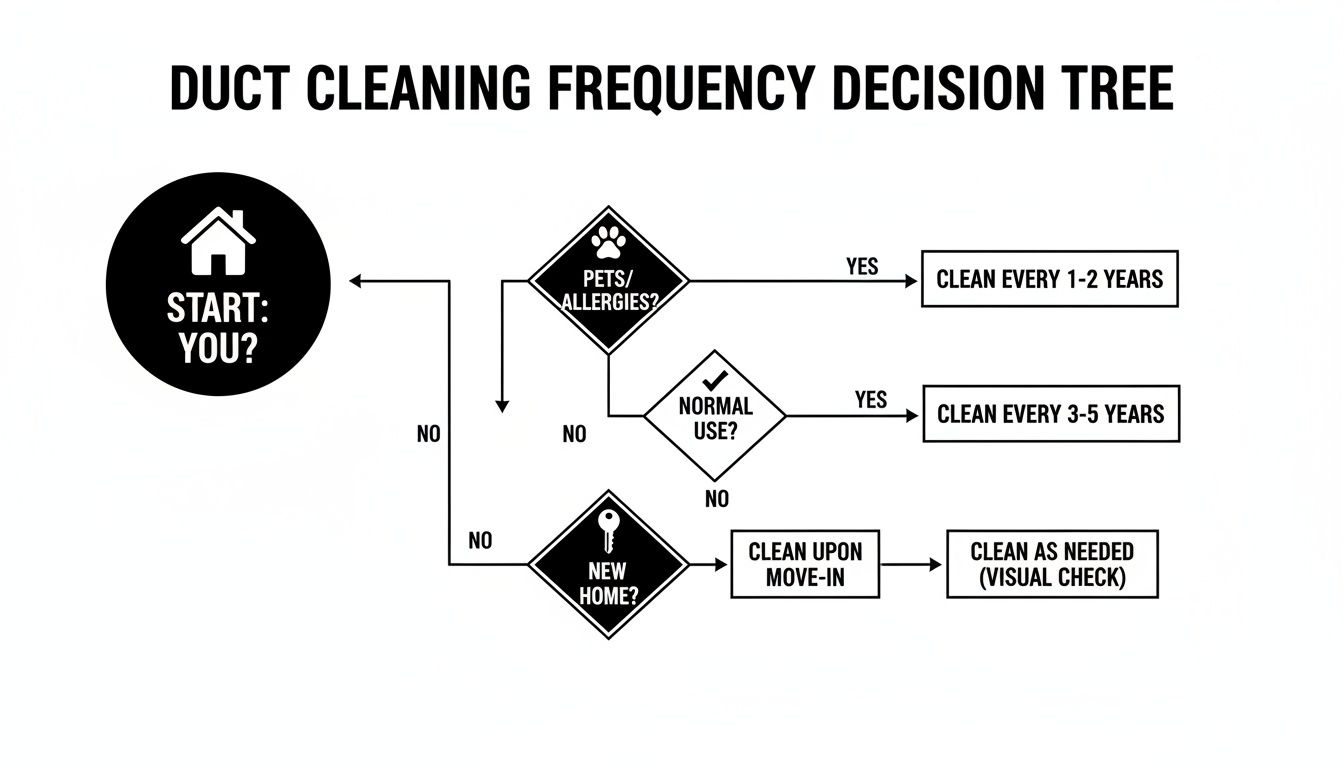
As you can see, things like pets and health concerns are the biggest reasons to schedule more frequent cleanings. If none of those apply, you can stick to that standard 3-to-5-year timeline with confidence.
Recommended Air Duct Cleaning Frequency At A Glance
To make it even simpler, here’s a quick-reference table summarizing our recommendations.
Situation or Property Type | Recommended Cleaning Frequency |
|---|---|
Average Household (no pets, no allergies) | Every 3 to 5 years |
Homes with Pets | Every 2 to 3 years |
Homes with Allergy/Asthma Sufferers | Every 2 to 3 years |
Homes with Smokers | Every 2 to 3 years |
After Major Renovations or Construction | Immediately after work is complete |
Newly Purchased Home | Immediately upon moving in |
Commercial Properties | Annually or as needed per industry |
This table helps you quickly find the right schedule for your property, ensuring you're not waiting too long or cleaning unnecessarily.
Ultimately, being aware of what's going on inside your home is what matters most. If you're not sure about the state of your ducts or the air you're breathing, a little investigation can go a long way. You can learn more about how to test air quality in your home with our practical guide. This will give you the knowledge you need to make the best call for your home and family.
Factors That Shorten Your Cleaning Schedule
The standard 3-to-5-year guideline for air duct cleaning is a solid starting point, but it's not a universal rule. Think of it like the suggested oil change interval for a car; it’s based on ideal driving conditions. Real life, however, is rarely ideal. Certain factors can dramatically speed up how quickly contaminants build up inside your ductwork.
These situations hit the fast-forward button on your cleaning schedule, making a personalized approach much more effective than a generic one. Knowing what they are helps you stay proactive about your home's air quality.
Households with Pets
We love our furry friends, but they are little factories for dander, fur, and allergens they track in from outside. Every time your HVAC system turns on, it sucks up these microscopic particles and pulls them deep into the ductwork, where they don't just disappear.
Over time, this debris mats together, restricting airflow and creating a buffet for other contaminants like mold and bacteria. For homes with one or more pets, especially heavy shedders, bumping up your cleaning schedule to every 2 to 3 years is a smart move. It keeps the air clearer for everyone and helps your system breathe easier.
For pet owners, more frequent duct cleaning isn't just about cleanliness; it's about actively managing the constant influx of airborne allergens that can impact both human and animal respiratory health.
Managing Allergies and Asthma
If anyone in your house deals with allergies, asthma, or other respiratory issues, your air ducts can be either a friend or a foe. Without regular cleaning, they become a hidden reservoir for common triggers like dust mites, pollen, and mold spores.
When your HVAC system circulates these irritants 24/7, it creates a tough environment for anyone with a sensitive respiratory system. A thorough duct cleaning removes these triggers right at the source.
Dust Mites: These tiny pests love to feast on the dead skin cells and dust that settle in your ducts.
Pollen: Pollen from outside easily gets pulled into your home’s HVAC system and gets stuck.
Mold Spores: Any lingering moisture in your ducts can lead to mold growth, which then releases spores into the air you breathe. If this is a concern, it pays to know the signs of mold in air ducts and how to remove it to keep your family safe.
For households managing these health concerns, shortening the cleaning interval to every 2 to 3 years is a crucial step toward better indoor air quality and real respiratory relief.
Smoking and Recent Renovations
Two other culprits can contaminate your ductwork in a hurry, demanding a much more aggressive cleaning schedule. Both introduce a massive volume of fine particles that your HVAC system simply isn't built to handle.
Indoor smoking, for instance, lines your ducts with a sticky residue of tar and nicotine. This coating not only creates stubborn odors but also acts like flypaper for dust and other debris. Likewise, home renovations, even small ones, unleash a huge amount of fine dust from drywall, wood, and insulation. This construction debris can overwhelm your system in a matter of days.
Here's the bottom line:
Factor | Contaminant Type | Recommended Action |
|---|---|---|
Indoor Smoking | Sticky residue, tar, fine particles | Clean every 2 to 3 years |
Major Renovations | Drywall dust, sawdust, debris | Clean immediately after project completion |
Warning Signs Your Air Ducts Are Overdue for Cleaning
While a 3-to-5-year schedule is a great rule of thumb, sometimes your home sends up a flare, signaling it's time for a cleaning much sooner. Learning to spot these warning signs is key to maintaining healthy air and heading off bigger problems. Ignoring them is a bit like ignoring your car's check-engine light: the issue isn't going to fix itself.
Your home has its own way of communicating HVAC troubles, sometimes through clues you can see and smell, and other times through things you can only feel. Paying attention lets you adjust your air duct cleaning frequency based on what's actually happening, not just what the calendar says.
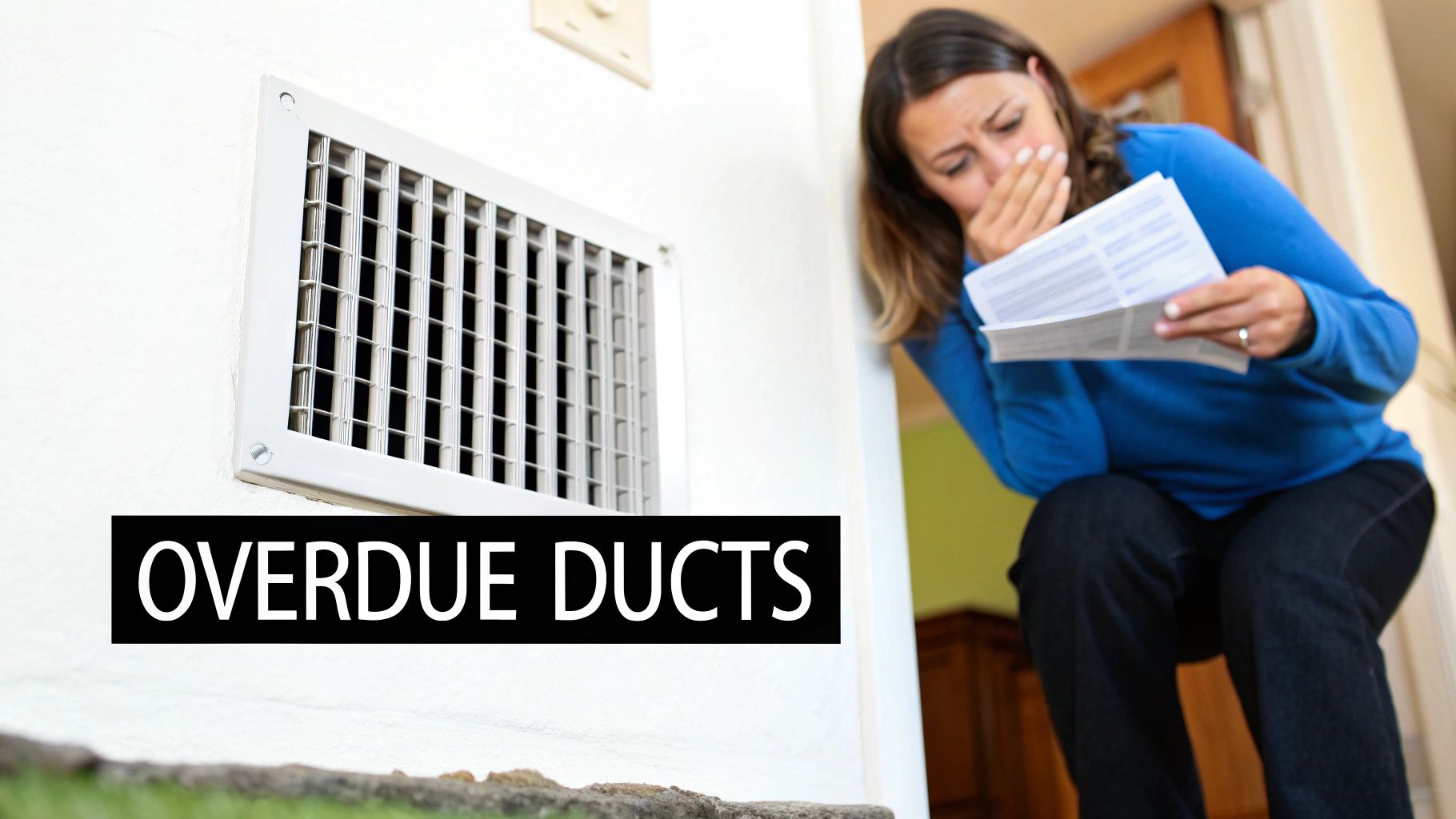
Visible and Sensory Clues
The most straightforward signs are the ones you can see, smell, or feel. These are your ductwork's direct SOS calls, telling you they're overloaded with contaminants and it's time to take action.
Excessive Dust: Do you feel like you're in a never-ending battle with the dust rag? If surfaces are dusty again just a day or two after cleaning, your ducts might be the culprit. When they get too full, the HVAC system simply blows all that buildup right back into your living space.
Visible Debris from Vents: This one's a dead giveaway. If you see little puffs of dust or debris shooting out of your vents when the air kicks on, you can be sure they're packed. You might also notice a layer of grime caked onto the vent covers themselves.
Persistent Musty Odors: A stale, musty smell that seems to have no source is a classic sign of trouble. This often points to mold or mildew growth thriving in the dark, damp environment of your ductwork.
These sensory warnings are your home’s way of saying its airways are clogged. The link between dirty air ducts and health problems is well-documented, so it's smart to address these signs right away. You can learn more about how dirty air ducts cause health problems you can't ignore in our detailed guide.
Invisible and Financial Indicators
Sometimes, the most compelling evidence isn't something you can see at all; it shows up in your family's health and your wallet. These subtle clues often point straight to a dirty, inefficient HVAC system.
An unexplained spike in your monthly energy costs can be one of the earliest warnings of clogged ducts. When airflow is restricted by dirt and debris, your HVAC system has to work much harder to heat or cool your home, consuming more energy in the process.
Another hidden but serious sign is a sudden uptick in allergy or respiratory issues. If your family is sneezing, coughing, or congested more than usual, and those symptoms seem to magically disappear when you leave the house, your ducts could be circulating a constant stream of allergens.
Finally, any evidence of pests like rodents or insects in your ductwork is a major red flag. Their droppings and nesting materials don't just block airflow; they pump hazardous contaminants directly into the air you breathe. If you see any sign of pests, a professional cleaning isn't just a good idea, it's essential for your family's health and safety.
The True Value of Regular Duct Maintenance
It’s easy to look at duct cleaning as just another line item on your home maintenance budget, but that’s a common mistake. Think of it less as an expense and more as an investment, one that pays you back in your home's health, efficiency, and safety. The real value isn’t just about getting rid of dust; it’s about the tangible returns you get from a healthier, better-functioning home.
When you clear out the buildup of trapped allergens, bacteria, and dust from your ducts, you're directly improving the air your family breathes. And this isn't a small thing. Studies have shown that indoor air can be two to five times more polluted than the air outside, which is a key factor influencing air duct cleaning frequency. For anyone in your home with asthma or allergies, this can mean fewer flare-ups and much easier breathing.
Boosting Efficiency and Longevity
Beyond the health perks, the financial benefits of clean air ducts are hard to ignore. Your HVAC system is like an athlete: if its airways are clogged, it can't perform at its peak. It has to work much harder to force air through a maze of ducts congested with debris.
That extra strain leads directly to higher energy use and bigger utility bills. By clearing those pathways, you let the system breathe easy and operate the way it was designed to, often leading to noticeable savings. This reduced workload also means less wear and tear on expensive parts like the blower motor and coils, which can extend the lifespan of your entire HVAC unit.
Regular duct maintenance is a direct investment in your HVAC system’s longevity. A clean system runs cooler, more efficiently, and under less stress, which can delay costly repairs and premature replacements.
Protecting Your Home and Family
Here’s a benefit that doesn’t get enough attention: fire safety. Over time, flammable materials like lint, dust, and pet fur can pile up inside your ductwork, especially near the furnace's heat exchanger.
This hidden buildup creates a serious fire hazard that could be ignited by a single spark. Having a professional clean out these combustible materials is a simple but incredibly effective way to reduce that risk. This sense of a healthier, safer home is tied into the broader benefits of regular home cleaning, including improved indoor air quality and allergy prevention.
These advantages add up to make a powerful case for being proactive. If you want to dive deeper, you can explore the 7 key air duct cleaning benefits for 2025 in our detailed article. At the end of the day, keeping your ducts clean is one of the smartest investments you can make for a healthy, efficient, and safe home.
Professional Cleaning Vs A DIY Approach
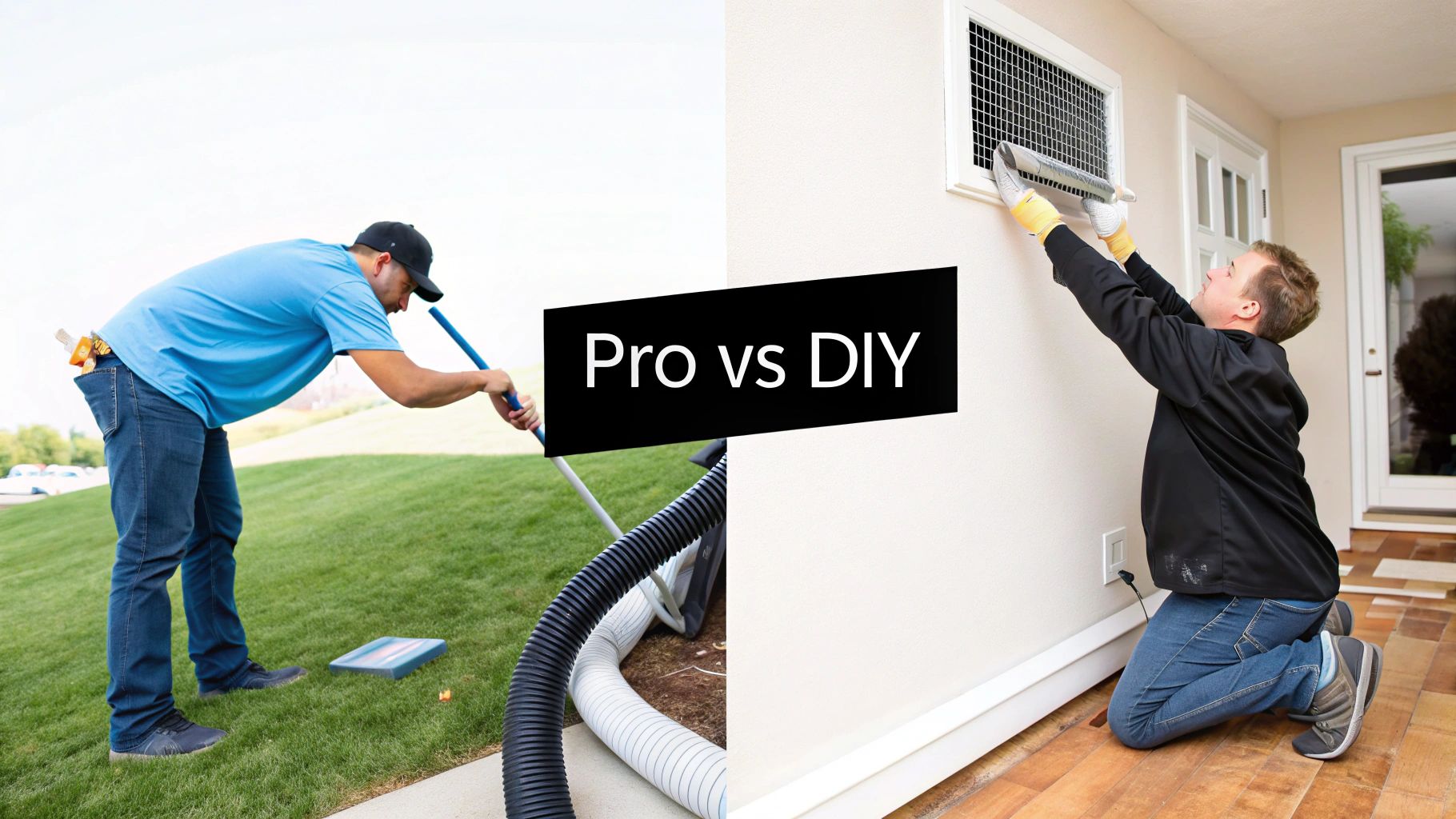
So, you're looking at your vents and thinking, "Can't I just do this myself and save a few bucks?" It's a fair question. While we admire the DIY spirit, it's crucial to understand that what a professional does and what you can do with a shop vac are worlds apart. The results aren't just a little different; they're completely different, and it directly impacts the air you breathe.
A professional service is a total system overhaul. Technicians show up with heavy-duty, often truck-mounted, vacuums that create powerful negative pressure. This is the key. It means that every speck of dust, dander, and gunk they break loose gets sucked straight out of your house, not just kicked up into the air.
They snake specialized tools, like long, rotating brushes and high-pressure air whips, through the entire maze of your ductwork. These tools scrub every nook and cranny, from the main arteries of the system down to the individual vents in each room, ensuring a deep and thorough clean.
What a DIY Cleaning Can Realistically Accomplish
A DIY attempt, in contrast, is really just surface cleaning. With your home vacuum and a brush, you can definitely clean your vent covers and maybe the first few inches of the duct. Think of it as good routine maintenance, like dusting your furniture. It helps, but it doesn't solve the core problem.
The issue is that this approach can't touch the yards and yards of hidden ductwork where the real gunk has been accumulating for years. Trying to poke and prod deeper without the right equipment can actually backfire. You might dislodge contaminants that were settled deep inside, pushing them further into the system or, worse, sending a cloud of allergens into your living space.
A critical word of caution for any DIYer: An incomplete cleaning can make your home's air quality worse. Loosening up years of debris without a powerful extraction system is like stirring up a hornet's nest. You could end up breathing in more allergens than before you started.
If you're still keen on handling the basic surface cleaning that homeowners can safely do, there are some steps to follow. To see what's involved and understand the limitations, check out our guide on How to Clean Air Ducts A DIY Homeowner's Guide.
A Clear Comparison of Both Paths
When you're deciding what's best for your home and family, you have to weigh the effectiveness, risks, and costs of each option. The differences become crystal clear when you see them side-by-side.
Here’s a simple table to break it all down.
Professional vs. DIY Air Duct Cleaning Comparison
Factor | Professional Service | DIY Attempt |
|---|---|---|
Effectiveness | High. Cleans the entire system, removing deep-seated contaminants from all ductwork. | Low. Limited to cleaning vent covers and easily reachable areas. |
Equipment | Specialized. Uses commercial-grade vacuums, air whips, and rotary brushes. | Basic. Relies on household vacuums and standard brushes. |
Air Quality Impact | Improves. Removes allergens, dust, and debris from your home’s air circulation. | Risky. Can worsen air quality by dislodging contaminants without removing them. |
Time Investment | Low. Typically 2 to 4 hours of your time while professionals handle the work. | High. Can take several hours or a full weekend for minimal results. |
Cost | Higher initial cost. An investment in comprehensive cleaning and health. | Low initial cost. Requires only basic cleaning supplies or a shop vacuum. |
Ultimately, while a DIY touch-up has its place for light maintenance, a professional service is the only way to truly reset your HVAC system and ensure the air circulating through your home is as clean as possible.
How to Choose a Trustworthy Duct Cleaning Service
Picking the right company to clean your air ducts is a bigger deal than you might think. It’s not just about dust; it's about the quality of the service and who you let into your home. The air duct cleaning market is booming, expected to hit USD 5.6 billion by 2031, and with that growth comes a mix of seasoned pros and opportunistic scammers.
This boom is happening for a good reason. We’re all more aware of our health, and the fact that indoor air pollution can be 2 to 5 times worse than outside is a serious wake-up call. If you're curious about the industry's expansion, you can discover more insights about the air duct cleaning industry.
So, how do you spot the good guys? A trustworthy company is always transparent and professional from the get-go.
The gold standard in our industry is certification from the National Air Duct Cleaners Association (NADCA). This isn't just a piece of paper; it means their technicians are properly trained on the latest safety protocols and cleaning methods.
When you're calling around for quotes, always ask for proof of their NADCA certification and general liability insurance. Be wary of anyone offering a rock-bottom price over the phone, as it’s a classic bait-and-switch tactic. Once they're in your house, the price mysteriously skyrockets with aggressive upselling.
Also, don't hesitate to ask for references or to see pictures of their equipment. A true professional has nothing to hide and will be happy to provide whatever you need to feel comfortable. After all, they want to earn your trust just as much as your business.
Frequently Asked Questions About Air Duct Cleaning
Even when you're ready to book a cleaning, it's natural to have a few last-minute questions about how it all works. Let's clear up some of the most common things homeowners ask so you feel completely confident on cleaning day.
How Long Does a Professional Air Duct Cleaning Take?
For a typical home around 2,000 square feet, you can expect a thorough, professional air duct cleaning to take anywhere from 2 to 4 hours. The final time depends on things like the size of your house, how many vents you have, and the layout of your HVAC system. Any trustworthy company will give you a solid time estimate right along with their price quote.
This timeframe gives the technicians enough breathing room to properly set up their gear, meticulously clean every supply and return duct, and give the system a final inspection without cutting corners.
Remember, the goal of a professional service isn’t speed, it's thoroughness. Doing the job right means taking the time to ensure every nook and cranny of your ductwork is free of contaminants, which is how you get the biggest bang for your buck when it comes to air quality.
Will Air Duct Cleaning Really Help My Allergies?
For a lot of people, the answer is a resounding yes. It can make a huge difference in taming indoor allergies. Think of your ductwork as a hidden reservoir for all the things that make you sneeze and sniffle: dust mites, pollen, pet dander, and even mold spores.
Every single time your heat or AC kicks on, it blasts those microscopic irritants all over your home. By getting them cleaned out directly from the source, you can achieve noticeably fresher indoor air and finally get some relief from those nagging allergy symptoms.
Is the Air Duct Cleaning Process Messy?
Not if it's done right by a team that knows what they're doing. A professional crew uses powerful, truck-mounted vacuum systems to create negative pressure in your ductwork before they even start cleaning.
This setup essentially turns your duct system into a one-way street for debris. All the dust, dirt, and gunk they loosen up gets sucked directly into a sealed containment unit outside your home. Nothing escapes into your living space, so there's no cleanup for you to worry about afterward.
Ready to breathe cleaner air and improve your home's efficiency? The certified experts at Purified Air Duct Cleaning are here to help. Schedule your professional air duct cleaning service today by visiting us at https://www.purifiedairductcleaning.com.