

Does Cleaning Ductwork Really work? An Honest Guide
So, does cleaning your ductwork really work?

The short answer is a definitive yes. But the real value all comes down to what you're trying to accomplish. If your goal is to boost your HVAC system's mechanical health and maybe even lower your energy bills, it's an incredibly effective service. However, if you're hoping for a dramatic improvement in day-to-day indoor air quality for an already healthy family, the benefits are often much more subtle.
The Real Verdict on Duct Cleaning Effectiveness
When you ask if duct cleaning works, you're really asking two different questions: one about your HVAC system's performance and another about the air you breathe.
Think of your HVAC system like a car's engine. If you let sludge and gunk build up, it's not going to run smoothly, it won't last as long, and it'll burn through more fuel. This is where professional duct cleaning delivers its biggest and most measurable return on investment.
By clearing out years of accumulated dust, debris, and other junk, the cleaning process allows air to flow freely again. Your HVAC system no longer has to strain to force air through clogged-up passages, which directly translates to better performance and lower energy use.
This infographic breaks down the main outcomes you can expect from a professional duct cleaning service.
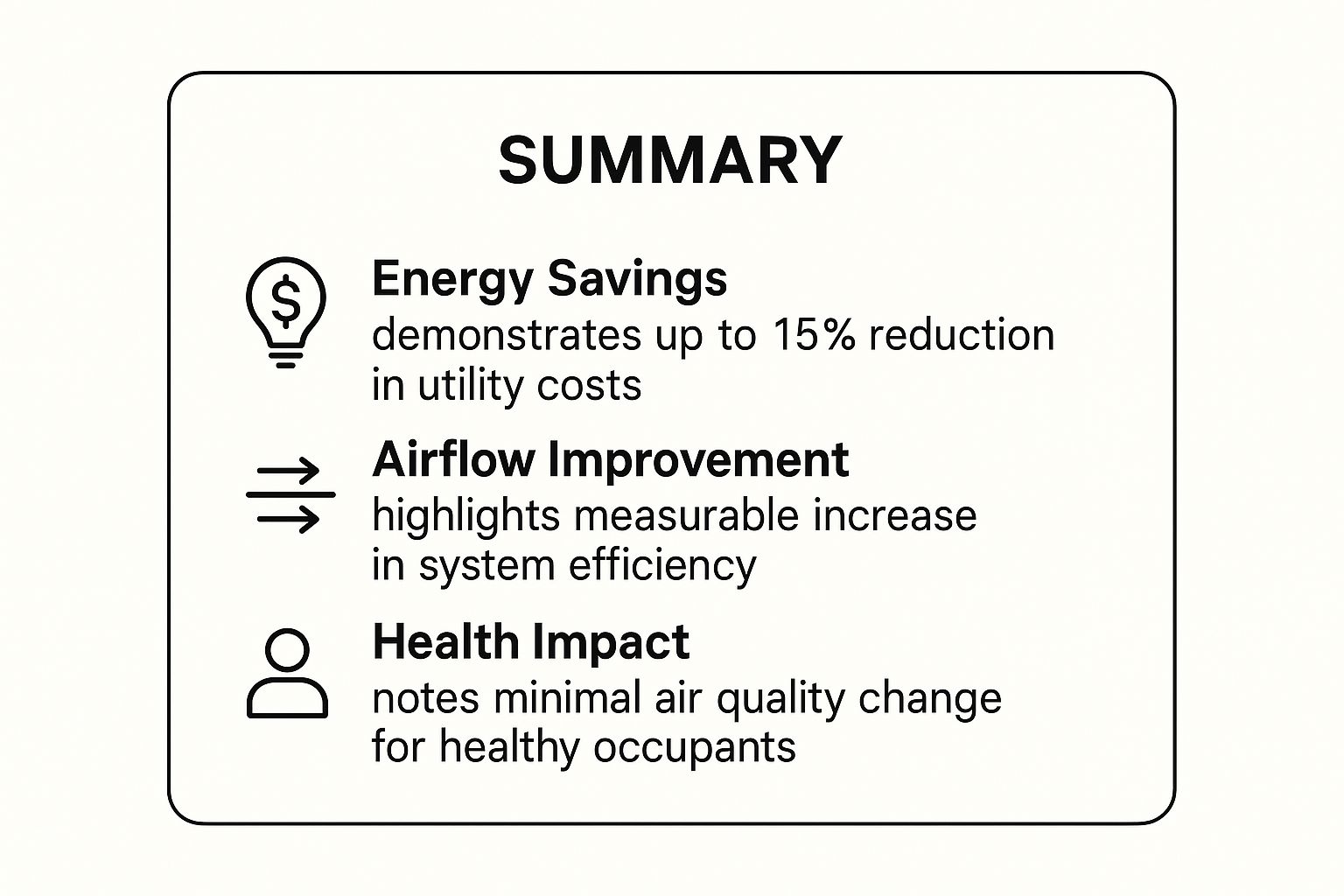
As you can see, the most proven benefits are tied directly to your system's efficiency and airflow. The impact on general health is often a secondary benefit, most noticeable for people with specific sensitivities.
Where Cleaning Delivers Real Value
At its core, duct cleaning is a maintenance task designed to restore your HVAC system to peak operational health. It gets right to the source of mechanical inefficiency.
Professional cleaning is less about making the air "healthier" for everyone and more about ensuring the system that moves your air is operating as efficiently and cleanly as possible.
Recent research really drives this point home. A comprehensive study found that a professional cleaning of an HVAC system's ducts and coils could slash fan energy consumption by an impressive 41% to 60%. At the same time, it boosted supply airflow by up to 46%. That's a huge difference you can feel, both in comfort and on your utility bill.
To help you get a quick overview, here’s a table summarizing the most common outcomes.
Duct Cleaning At a Glance
Area of Impact | Potential Outcome | When It Matters Most |
|---|---|---|
HVAC Efficiency | Lower energy bills, reduced strain on the system. | When you notice rising energy costs or the system runs constantly. |
System Longevity | A cleaner system works less hard, potentially extending its lifespan. | For older systems or as part of a regular maintenance schedule. |
Airflow | Improved circulation, more even heating/cooling. | If some rooms are stuffy or you notice weak airflow from vents. |
Air Quality | Reduced circulation of dust, debris, and potential allergens. | After renovations, if you have pets, or for household members with allergies/asthma. |
While a valuable service, it’s also smart to be aware of the potential downsides and what to watch out for. To make a fully informed decision, check out our guide on the drawbacks of duct cleaning.
What’s Actually Lurking Inside Your Air Ducts?

To really get a handle on whether duct cleaning is worth it, we first need to pull back the curtain on what's collecting in there. It helps to think of your ductwork as your home's lungs: they breathe air in and push it back out, day after day. Over the years, that constant circulation sucks in a surprising amount of gunk that settles and piles up.
And we're not just talking about a light dusting. In many homes, we find thick, matted layers of debris creating a hidden, grimy environment completely out of sight and mind.
The Usual Suspects
While the exact cocktail of contaminants varies from one house to the next, a professional scope usually turns up a few repeat offenders. Each one plays a part in clogging up the works and putting a strain on your entire HVAC system.
Here's what we typically find:
Dust and Dust Mites: This is the big one. It's a lovely mix of dead skin cells, clothing fibers, and microscopic dust mites that just love to set up shop in dark, quiet places like your vents.
Pet Dander and Hair: If you have furry family members, their hair and dander are major players. They can quickly form dense clumps that act like roadblocks for airflow.
Construction Debris: This is especially common in newer homes or after a renovation project. It's not unusual to find drywall dust, sawdust, and even small bits of leftover building materials.
Pollen and Outdoor Allergens: Your HVAC system is constantly pulling in outside air, and that brings pollen, mold spores, and other allergens right along with it. They get trapped and build up over time.
This stuff doesn't just sit there quietly. These blockages force your HVAC fan to work overtime just to push air through the choked-off pathways. It’s like trying to breathe through a clogged-up straw: the effort goes way up, and so does your energy bill and the wear-and-tear on your equipment.
You can think of this buildup like cholesterol in an artery. It gradually narrows the passage, suffocating the system and tanking its efficiency. The whole point of a professional duct cleaning is to clear out those obstructions.
Beyond Just Dust and Debris
Sometimes, what we find is a bit more serious than just dust bunnies and pet hair. Certain contaminants can cause more direct trouble for your home's mechanics and the people living inside it.
For instance, any moisture from high humidity or a hidden leak can easily lead to mold and mildew growth inside the ductwork. If that goes unchecked, your HVAC system becomes a perfect delivery service, spreading spores into every room.
Likewise, finding signs of rodents or insects means there's an infestation that needs immediate attention. Their droppings and nesting materials are not things you want mixed into the air you breathe. Understanding the link between dirty air ducts and health problems really puts into perspective why tackling these issues is so critical.
How Clean Ducts Translate to Energy Savings
One of the most powerful arguments for cleaning your ductwork is the direct hit it can make on your monthly energy bills. The logic is simple: when your HVAC system can breathe, it uses less energy to do its job. Over the years, thick layers of dust, pet hair, and other junk build up inside, creating friction and blockages that force your system's motor to work overtime just to push air through.
It’s a bit like trying to breathe through a clogged straw. You have to suck way harder to get the same amount of air. Your HVAC system faces the exact same struggle, and all that extra effort burns more electricity, which shows up right on your utility bill. This strain doesn't just cost you money; it also puts a ton of stress on expensive parts like the blower motor, potentially cutting their lifespan short.
Understanding Static Pressure and Airflow
In the HVAC world, we call this resistance static pressure. When ducts are clean and clear, air flows easily with low static pressure, letting your system run like a well-oiled machine. But as debris piles up, static pressure skyrockets, and your system's performance tanks.
A professional duct cleaning tackles this problem head-on by physically removing the gunk that's choking your system. Once those pathways are clear, the fan can move the air it's supposed to with far less effort. This isn't just a theory; it delivers real, measurable results. One key study on residential duct cleaning showed a significant improvement in airflow, with supply air rates jumping by 4% to 32% in homes after a cleaning.
This brings us right back to your wallet. When your system runs more efficiently, it doesn't need to run as long or as hard to keep your home comfortable, and that means it's using less power.
So, does cleaning ductwork really work for energy savings? The answer is a clear yes. By reducing the physical burden on your HVAC system, you're letting it do its job using less electricity, which translates directly to lower utility bills.
The Long-Term Financial Impact
The savings go beyond just your monthly bill. Think of clean ducts as a form of preventative maintenance. An overworked HVAC system is just like an overworked car engine; it’s far more likely to break down. Replacing a blower motor or an entire furnace unit can be a massive expense, often costing thousands of dollars.
By investing in duct cleaning, you're also investing in the long-term health of your equipment. For homeowners who want to squeeze every bit of performance out of their system, checking out tips on how to improve HVAC efficiency can unlock even greater savings. This service isn't just about getting rid of dust; it's about protecting one of the most critical and expensive assets in your home.
The Truth About Duct Cleaning and Air Quality
One of the biggest claims you’ll hear is that duct cleaning can totally transform your home's air quality and, in turn, your health. It sounds great, but the reality is a bit more complicated. The key is realizing that your home’s air is a complex system, and duct cleaning is just one piece of a much larger puzzle.
For an average, healthy household, the direct impact of a duct cleaning on overall air quality is often smaller than the marketing hype suggests. Why? Most of the dust in your home actually settles on surfaces like floors, counters, and furniture, not deep inside the ductwork. So, just cleaning the ducts without tackling other areas won't magically give you pristine air.
When Duct Cleaning Directly Impacts Health
But that doesn't mean the service is without its health benefits. The story changes completely when specific health concerns are in the picture. For homes with people who have certain conditions, a targeted duct cleaning can make a world of difference.
This is especially true if someone in your house suffers from:
Allergies: Pulling out concentrated pockets of dust, pet dander, and pollen from the vents can stop these triggers from circulating, potentially easing those frustrating symptoms.
Asthma: For anyone with sensitive airways, a significant drop in airborne particles can mean fewer irritants and more comfortable breathing.
Respiratory Sensitivities: People who are particularly sensitive to dust or mold often find real relief when the source is eliminated from the HVAC system.
In these specific cases, asking does cleaning ductwork really work for health gets a much clearer "yes." It becomes less of a routine chore and more of a strategic move to improve well-being.
The greatest health benefits from duct cleaning are realized when it removes a significant buildup of specific contaminants that are actively aggravating a known sensitivity or respiratory condition within the home.
A Piece of a Broader Air Quality Strategy
Ultimately, you should think of duct cleaning as just one tool in a complete indoor air quality toolkit, not a fix-all solution. Your home's air is constantly influenced by everything from filtration and ventilation to indoor pollution sources like cooking fumes or cleaning sprays. Honestly, a high-quality HVAC filter that you change regularly often does more to capture everyday airborne particles than a one-time duct cleaning.
For those who want to take things a step further, combining duct cleaning with other solutions is incredibly effective. After a professional gets the ducts spotless, adding sanitizing agents can help tackle microbial issues like mold and bacteria. Our air duct cleaning and sanitizing guide for homeowners dives deep into how these services work together for a healthier home. True air quality improvement comes from a balanced approach, where duct cleaning plays a targeted, and important, role when the situation calls for it.
Clear Signs Your Air Ducts Need Cleaning
While we can talk about system efficiency all day, the real question for most homeowners is, "When should I actually get my ducts cleaned?" It's not always an easy call. But instead of just guessing, you can look for some pretty clear signals that your ductwork has gone from a "maybe someday" task to something you need to address now.
Think of these signs as your HVAC system's way of waving a red flag.
One of the most in-your-face indicators is a sudden increase in dust all over your home. If you're wiping down tables and shelves only to see a new layer of dust settle a day later, your system is likely the culprit, blowing debris around. Another dead giveaway? A weird, musty smell that seems to pop up only when the heat or AC kicks on.
If you spot what looks like mold on or around your vent covers, that’s not a sign: it's an alarm. Stop what you’re doing and call a professional. Mold in the ducts means spores are getting a free ride to every room in your house whenever the system is running.
When Cleaning Becomes Essential
Beyond the daily annoyances, certain life events and discoveries turn duct cleaning from an optional tune-up into a necessary fix. These are the moments when the answer to "does cleaning ductwork really work?" is a resounding yes because you're tackling a specific, identifiable problem.
You should give professional cleaning some serious thought if you've gone through any of these situations:
Recent Home Renovations: Any project involving drywall, sanding, or major construction kicks up a staggering amount of fine dust. That dust gets sucked right into your HVAC system, and without a cleaning, it'll just keep circulating for years.
Evidence of Pest Infestations: Found droppings or other signs of rodents or insects? It's a safe bet they've explored your ductwork, too. A thorough cleaning is the only way to remove the nests, droppings, and other nasty contaminants they leave behind.
Worsening Allergies or Respiratory Issues: If someone in your home with asthma or allergies is suddenly having a tougher time, your air could be to blame. Your ducts can become a reservoir for triggers like pollen, pet dander, and dust mites, and a cleaning can offer some much-needed relief.
Knowing what to look for puts you in the driver's seat. For a deeper dive, check out our guide on the expert tips and signs that air ducts need cleaning. This is about more than just maintenance; it’s about hitting the reset button on your home's air when it clearly needs it.
What to Expect During a Professional Duct Cleaning
Knowing what a real, professional duct cleaning looks like is your best defense against getting ripped off. This isn't a 30-minute job with a shop vac. A legitimate service is a methodical process designed to pull contaminants completely out of your home, not just stir them up.
The whole thing should kick off with a thorough inspection. A good technician won't just start cleaning; they'll want to get the lay of the land first. They'll assess your ductwork to understand the layout, spot any potential problem areas like heavy buildup, and check for red flags like mold. This first step dictates the entire game plan.
Once they've got a handle on your system, the real work begins. The absolute cornerstone of a professional job is creating negative pressure.
Technicians hook up a massive, powerful vacuum collection unit to your HVAC system. This machine creates a strong suction that pulls air inward, ensuring every last bit of dust, dander, and debris they knock loose gets sucked directly out of your home, not blown into your living room.
The Agitation and Removal Process
With your system sealed and under constant suction, it's time to get things moving. The technicians will feed specialized tools into the ductwork to physically break all the gunk free from the interior surfaces.
They have a few different tools in their arsenal for this part of the job:
Rotating Brushes: These are sent deep into the ducts to scrub the walls, breaking loose any stubborn, caked-on grime that's been there for years.
High-Powered Air Whips: Think of a flexible rod with multiple little whips on the end. They blast compressed air through it, causing it to thrash around and dislodge debris from every nook and cranny.
Compressed Air Nozzles: These tools shoot concentrated blasts of air to push all the now-loosened particles down the line toward the main vacuum unit.
After everything is scrubbed and cleared, the technicians will properly seal any access holes they made and put your system back together just as they found it. Seeing this process in action is a pretty clear answer to the question, "does cleaning ductwork really work?" It's a physical removal of the problem at its source.
Once homeowners see what's involved, the next logical step is often finding reliable duct cleaning services that follow these professional standards.
Common Questions About Duct Cleaning
Even with a good grasp of the process, you probably still have a few questions rattling around. That's perfectly normal. Let's dig into some of the most common ones we hear from homeowners to give you the clear, straightforward answers you're looking for.
How Often Should I Clean My Air Ducts?
This is usually the first question people ask, and the honest answer is: it depends. There’s no magic number or rigid schedule that fits every home. Instead of a fixed timeline, most experts, including the National Air Duct Cleaners Association (NADCA), recommend cleaning them on an as-needed basis.
A good rule of thumb is to have your system inspected every 3 to 5 years. But that's just a baseline. Your lifestyle and home environment can change that timeline significantly.
It's probably a good idea to schedule a cleaning sooner if any of these situations sound familiar:
You've got furry family members. Pets that shed are a major source of the dander and hair that builds up inside your ductwork.
Someone in your house battles allergies or asthma. Pulling concentrated allergens out of the HVAC system can bring some real, noticeable relief.
You just finished a big renovation project. All that construction and sanding kicks up an incredible amount of fine dust, and a lot of it gets sucked right into your vents.
Can I Just Do This Myself?
We get it; the DIY spirit is strong. And for regular upkeep, it’s a great idea! Wiping down your vent covers and vacuuming as far as you can reach is fantastic maintenance.
But a full, deep cleaning? That’s a different story.
Professionals bring in serious equipment you just can't rent at the local hardware store. We're talking about powerful negative air pressure machines and high-powered agitation tools. This gear is critical for safely containing and completely removing contaminants. Trying to do it yourself without this equipment can actually stir up debris and make your indoor air quality worse than when you started.
What Should Duct Cleaning Cost?
Price is always a big factor. The cost can vary quite a bit depending on your home's size, the complexity of your HVAC system, and where you live. For a legitimate, thorough job, you can generally expect to pay somewhere between $450 and $1,000.
A word of caution: be very wary of companies advertising deals that sound too good to be true. Those "$99 whole-house special" flyers are almost always a bait-and-switch. You'll either get a superficial, ineffective cleaning or a final bill loaded with hidden fees.
Finally, people often ask if cleaning will put an end to dusting. It definitely helps, a lot. When you remove all the built-up dust from inside the ducts, you stop your HVAC system from blowing it all over the house. However, it won't eliminate dusting completely. Dust still comes from other sources, like clothing fibers, skin cells, and particles that drift in from outside.
Ready to see what a professional cleaning can do for your home’s air and efficiency? The certified technicians at Purified Air Duct Cleaning use the best equipment in the industry to get the job done right. Get your free quote today and start breathing easier.