

How Often Should HVAC Be Serviced in Phoenix Arizona
For most homes, the standard answer to "how often should I get my HVAC serviced?" is once a year. But if you live in a place with a demanding climate like Phoenix, the real gold standard is twice a year. Think of it like getting your system ready for battle: once in the spring to prepare for the brutal cooling season, and again in the fall to gear up for those chilly nights.
Your Quick Answer to HVAC Service Frequency
Preventive maintenance isn't just another chore on your to-do list; it's a smart strategy to head off expensive, frustrating breakdowns right when you need your system most. It’s a lot like getting regular oil changes for your car. You wouldn't drive it until the engine seizes, and you shouldn't run your HVAC until it quits in the middle of a heatwave. That's a gamble that almost never pays off.
Regular service ensures every part of your system, from the coils to the electrical connections, is clean, tight, and working as it should. This proactive care keeps your unit from overworking, which directly translates into lower energy bills and a much longer life for your equipment.
Why Consistency Matters
Sticking to a schedule is everything. The numbers don't lie: while only 42% of U.S. homeowners get annual professional maintenance, those who do see their units last up to 40% longer. That can stretch an average 10-15 year system lifespan into a solid 15-20 years. Even better, consistent tune-ups can slash your total ownership costs by up to 50% compared to just fixing things when they break.
Skipping service feels like a short-term saving, but it almost always leads to bigger long-term costs. A well-maintained system doesn't just save you money on utilities and surprise repairs; it gives you the peace of mind that your home will stay comfortable all year long.
Knowing the right service frequency for your specific setup is the first step toward a reliable, efficient system. For a deeper dive into organizing all your home maintenance tasks, take a look at our guide on creating your own preventive maintenance schedule template.
Recommended HVAC Service Schedule At a Glance
Every home and building is a little different. To help you figure out what's best for you, here’s a quick-glance table breaking down the most common scenarios.
Scenario | Recommended Frequency | Primary Focus |
|---|---|---|
Mild Climate Home | Annually (Spring) | General tune-up and cooling prep |
Phoenix Area Home | Twice a Year (Spring & Fall) | Intensive cooling and heating prep |
Home with Pets/Allergies | Twice a Year | Air quality and filter efficiency |
Commercial Property | Quarterly | High-demand reliability and safety |
This table gives you a solid starting point, but always consider your unique circumstances, like the age of your system and how hard you run it, when deciding on a final schedule.
Why Regular HVAC Maintenance Is a Smart Investment
It's a common mistake to see routine HVAC service as just another optional expense. The reality? It's one of the most critical investments you can make in your home's health and your own financial well-being. Think of it less as a cost and more as a strategy for optimizing performance in three key areas.

This proactive approach pays you back in spades through better energy efficiency, a longer-lasting system, and cleaner air to breathe every single day. For property owners and managers trying to get a handle on maintenance schedules, exploring tools like the best property management apps can be a real game-changer.
Maximize Your Energy Efficiency
An unserviced HVAC system is like a car engine that's desperately low on oil and has a filthy, clogged air filter. It has to fight against itself to do its job, burning through way more energy just to keep up. When vital parts like coils, filters, and blowers get caked with a year's worth of dust and grime, airflow is choked off, forcing the unit to run longer and harder to cool your home.
A professional tune-up is the solution. Cleaning these components allows your system to breathe freely and operate at peak efficiency. This straightforward act of cleaning and calibration can lead to a noticeable drop in your monthly utility bills, all because the system can finally work smarter, not harder.
Extend Your System’s Lifespan
Your HVAC system is a complex machine with a lot of moving parts that wear down over time, just like your car. You wouldn't dream of skipping oil changes for five years and expecting your car to run reliably, right? The same logic applies directly to your heating and cooling equipment.
Regular tune-ups are the best defense against premature system failure. A technician can spot and fix small issues, like a frayed wire or a worn-out capacitor, before they cascade into a catastrophic breakdown that requires a full system replacement.
This kind of preventive care is the secret to getting the most out of your unit's functional life, saving you thousands in unexpected replacement costs down the road. For more tips you can tackle yourself, check out our guide on how to maintain your HVAC system.
Improve Your Indoor Air Quality
Your HVAC system does more than just control the temperature; it's literally the lungs of your home, circulating all the air you and your family breathe. So, when it’s dirty, it’s actively circulating dust, pollen, pet dander, and other allergens throughout every room in your house. This has a direct impact on your family's health, especially for anyone with allergies or asthma.
Data from NIST warns that poor maintenance can jack up a home’s energy use by 30% or more, and dirty systems are a major contributor to poor air quality. Here in the Phoenix area, where we're always battling dust, the experts at Purified Air Duct Cleaning emphasize that professional coil and duct cleaning as part of your annual service is absolutely crucial for a healthier home.
Adjusting Your Service Schedule for the Phoenix Climate
That old "once a year" advice for HVAC service? Toss it out the window. It simply doesn't apply under the intense Arizona sun. In milder parts of the country, an annual check-up might cut it, but here in Phoenix, your air conditioner works like a marathon runner, not a weekend jogger. The relentless summer heat and our infamous dust storms put an unbelievable strain on your system.
This isn't your average wear and tear. The constant onslaught of dust and debris means critical components like filters and coils get clogged up much faster. Think of it like a car that's driven through the desert every single day versus one that only sees clean suburban streets; the desert car is going to need far more frequent oil and filter changes to keep its engine from seizing. Your AC is no different, and it needs that diligent care to avoid a catastrophic failure during a 115-degree heatwave.
The Case for Semi-Annual Service
For any Phoenix homeowner, the smartest and safest strategy is a semi-annual service schedule. This isn't about spending extra money; it's about prepping your system for two distinct, demanding seasons and protecting your investment.
Spring Cooling Tune-Up: This is your pre-season training camp for the AC. Getting a technician out in March or April lets them clean the coils, verify refrigerant levels, and make sure every part is ready to handle peak summer demand.
Fall Heating Check-Up: Before those surprisingly chilly nights arrive in October or November, a fall service ensures your heating system is safe and ready to go. This visit focuses on the furnace, its safety controls, and making sure the switch from cooling to heating is seamless.
A twice-a-year schedule is the gold standard for how often an HVAC should be serviced in a tough climate like ours. It’s proactive protection that stops mid-season breakdowns before they happen and keeps your system running as efficiently as possible, which directly saves you money on those sky-high summer utility bills.
Key Components Under Strain in Arizona
Our climate is especially brutal on specific parts of your HVAC system. The combination of fine dust and extreme heat creates a perfect storm for accelerated wear, making professional attention absolutely critical.
The most vulnerable parts are the condenser coils (in your outdoor unit) and the evaporator coils (inside). Once they get caked with a layer of dust and grime, they can't transfer heat properly. This forces your compressor, the heart of the system, to work much harder, driving up energy use and dramatically increasing the risk of a complete burnout. Regular, professional cleaning of these coils isn't just a suggestion; it's essential for keeping your system efficient and reliable. You can find even more ways to boost performance by checking out our home energy efficiency tips for Phoenix residents.
Warning Signs Your HVAC System Needs Service Now
Even if you’re perfectly on top of your twice-a-year maintenance schedule, your HVAC system can still hit a rough patch. Think of those check-ups like your annual physicals; they catch most big problems, but you still need to listen to your body between visits. Learning to spot the early signals of HVAC distress is the key to stopping a minor headache from turning into a major, expensive catastrophe.
Your own senses are the best diagnostic tools you have. An HVAC system in trouble will often try to tell you something is wrong through weird sounds, funky smells, or just plain poor performance. Ignoring these clues is a gamble that rarely pays off, especially when you’re counting on your AC to get you through a Phoenix summer.
This decision tree gives you a quick visual guide for when to schedule service based on the season here in Phoenix.
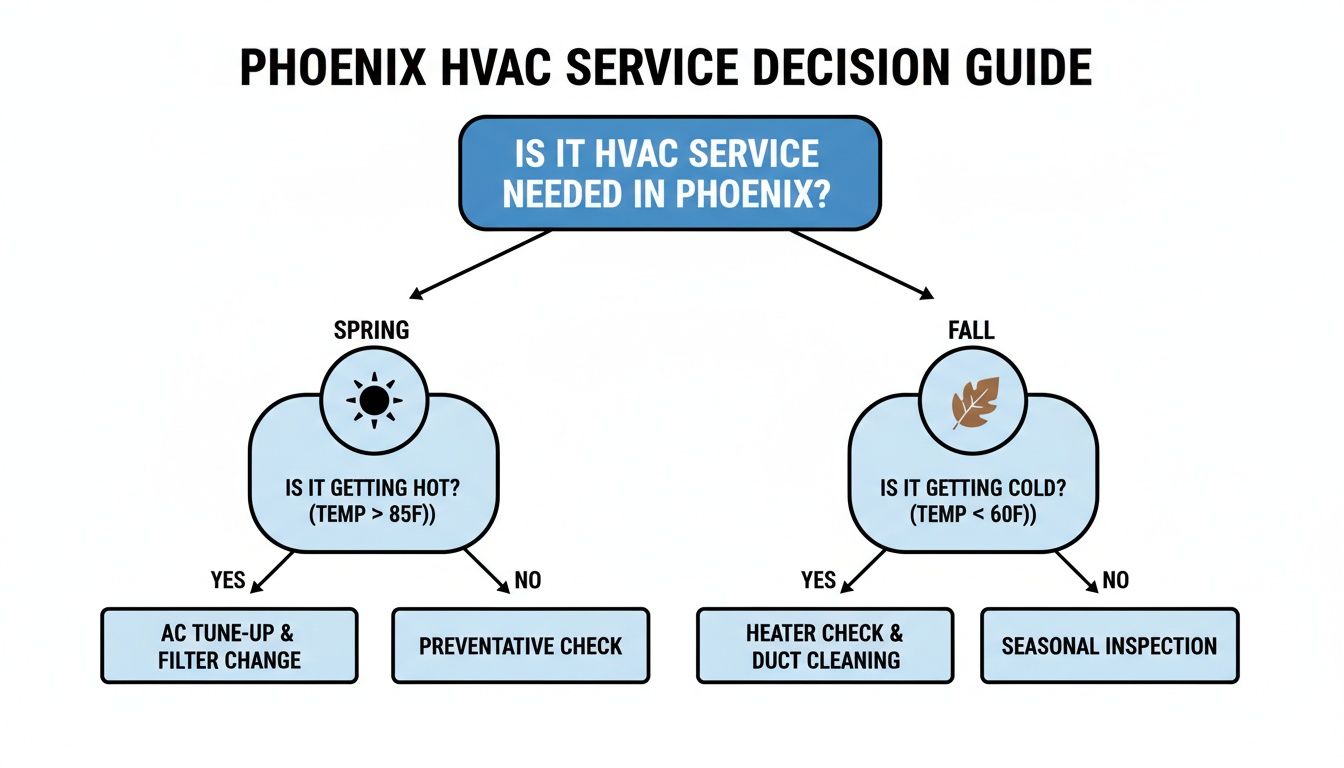
The main takeaway here is that both spring and fall are critical windows for a tune-up. It's all about making sure your system is ready for the extreme temperatures Arizona is famous for.
Sensory and Performance Clues
Your system communicates problems in ways you can see, hear, and even smell. Keep an eye (and ear, and nose) out for these clear signs that it’s time to call a pro right away, no matter when your last tune-up was.
Strange Noises: Your unit should fade into the background with a consistent, low hum. If you start hearing grinding, squealing, or rattling, it could be anything from a failing motor to a loose part or a worn-out belt. These are mechanical cries for help that you absolutely shouldn't ignore.
Unusual Odors: A musty or moldy smell often points to moisture buildup and potential mold growth somewhere inside your ducts or on the evaporator coil. A burning smell is even more urgent, signaling an electrical issue that could be a serious fire hazard.
Weak Airflow: Does the air trickling from your vents feel weak or anemic? You could be dealing with a badly clogged filter, a dying blower motor, or even leaky ductwork. This symptom means your system is working overtime but failing to actually deliver the cool air you need.
Don't just dismiss a weird sound or a faint smell as a minor quirk. These are often the first and only warnings you'll get before a component fails completely, leading to an emergency repair call on the hottest day of the year.
Visible and Operational Red Flags
Sometimes the evidence of a problem is right there for you to see. If you spot any of these issues, it's time to get a service call on the books immediately.
One of the most alarming visible signs is ice forming on your evaporator coils. This isn't normal. It often points to a refrigerant leak or a severe airflow blockage. You can get the full story on this issue in our detailed guide explaining what causes AC coils to freeze.
Other critical red flags include:
Water Leaks: Finding a puddle of water around your indoor unit is a clear sign of a clogged condensate drain line. If you don't address it, that water can cause some serious damage to your home.
Frequent Cycling: Is your AC turning on and off constantly? That’s a symptom called short cycling, and it puts a massive amount of strain on the compressor, which can drastically shorten your system's lifespan.
Thermostat Struggles: A system that runs nonstop but just can't seem to reach the temperature you set on the thermostat is waving a giant red flag. It's burning energy without results, a sure sign of a serious underlying problem.
What a Professional HVAC Maintenance Checklist Includes
Knowing how often to service your HVAC is one thing, but understanding what a technician actually does during a tune-up shows you the real value of the investment. A professional service call is so much more than just swapping out a filter. It's a deep-dive inspection and cleaning process designed to boost efficiency, guarantee safety, and catch small issues before they become catastrophic failures.
Think of it as a comprehensive health check-up for the mechanical heart of your home. The technician isn't just giving it a quick once-over; they're connecting gauges, testing electrical components, and cleaning parts that are either too difficult or dangerous for a homeowner to access. This is a thorough investigation into your system's operational health.
Core Mechanical and Electrical Checks
A certified technician's first job is to make sure the system is running safely and not wasting energy. This means getting hands-on with the mechanical and electrical components that have to work in perfect harmony to cool and heat your home.
Here are a few key tasks you'll see on this part of the checklist:
Inspecting Electrical Connections: The tech will tighten every electrical connection and measure the voltage and current being drawn by the motors. A single loose connection can create a fire hazard or drastically shorten the life of expensive parts.
Lubricating Moving Parts: Any part that moves creates friction, and friction creates resistance. That resistance forces your system to use more electricity. A lack of proper lubrication is a fast track to burned-out motors and premature breakdowns.
Checking Refrigerant Levels: If your system is undercharged or overcharged with refrigerant, it can't cool efficiently and puts immense strain on the compressor, the most expensive component. A technician will measure the charge to ensure it's exactly where the manufacturer says it should be.
A thorough tune-up is proactive, not reactive. It’s designed to find and fix the small issues, like a loose wire or a dirty coil, that inevitably lead to major system failures if left unchecked.
Focus on Airflow and Indoor Air Quality
Beyond the nuts and bolts, a quality tune-up puts a heavy emphasis on airflow and the quality of the air you breathe. This is where the service directly impacts your comfort, your health, and your monthly energy bills.
It's shocking how many businesses fall into a reactive "run-to-fail" maintenance model, a habit that plagues 52% of industrial operations. But proactive care pays off. The Department of Energy confirms that proper operational maintenance can slash energy bills by up to 20%, a huge relief for both family budgets and commercial bottom lines. You can discover insights from industry statistics on Worktrek.com to learn more.
Key air quality and airflow tasks include:
Cleaning Coils: A technician will clean both the indoor evaporator and outdoor condenser coils. When these are caked in dirt and dust, your system simply can't transfer heat effectively. It runs longer and works harder, driving up your energy costs.
Checking the Condensate Drain: That little pipe that drips water outside? If it gets clogged with algae and sludge, the water backs up, potentially causing serious water damage and creating a perfect environment for mold to grow.
Verifying Thermostat Accuracy: They'll also calibrate your thermostat to make sure it's reading the room temperature correctly. An inaccurate thermostat can cause your system to short-cycle or run constantly, wasting energy and wearing out components.
For a complete, step-by-step breakdown of every single task you should expect during a professional visit, check out our guide on the ultimate HVAC preventative maintenance checklist.
Answering Your Top HVAC Service Questions
Let's clear the air on some of the most common questions we hear from homeowners about HVAC maintenance. Getting these straight will help you feel more confident about how and when to care for your system.
How Often Should I Change My HVAC Air Filter in Arizona?
Living in Arizona means dealing with a lot of dust, so your air filter is on the front lines, working much harder than in other parts of the country. For the standard 1-inch filters most systems use, you should be checking them monthly and planning to replace them every 1 to 3 months.
But that's just a baseline. If you've got pets leaving dander everywhere, smokers in the house, or family members with allergies, you’ll want to be more aggressive. In those cases, swap the filter out every 30 to 45 days to keep your air quality high. Some folks have thicker, high-efficiency filters that can last 6 to 12 months, but even then, it's smart to give them a look every few months, especially after a big haboob rolls through.
Is HVAC Maintenance Different for Commercial Properties?
Absolutely. Commercial HVAC is a whole different ballgame. These systems are beasts, often running non-stop to keep employees and customers comfortable, which means they experience far more wear and tear.
Because of this constant demand, most businesses need professional HVAC service on a quarterly basis. Sticking to this schedule is key to preventing unexpected breakdowns that could shut down operations.
A commercial tune-up is also much more involved. A technician will inspect components you don't typically find in a residential unit, like belts and pulleys, and ensure complex ventilation and exhaust systems are working as they should.
Can I Perform HVAC Maintenance Myself?
While some tasks are perfect for a DIY weekend, most HVAC work requires specialized tools and the kind of know-how that only comes with certified training. You can, and should, handle a few key things yourself.
Here's what's safe to tackle on your own:
Changing your air filter. This is the single most important and effective thing you can do for your system's health and your wallet.
Keeping the outdoor unit clear. Walk outside and make sure there are at least two feet of clearance around your condenser. Trim back any bushes and clear away leaves or grass clippings that could choke off airflow.
When it comes to the heavy lifting, like checking refrigerant levels, cleaning the internal coils, or inspecting electrical connections, always call a pro. Trying to do it yourself isn't just dangerous; you could cause thousands in damage and even void your system's warranty.
Does a New HVAC System Still Need Annual Service?
Yes, 100%. In fact, you could argue it's even more critical for a new system. Most manufacturer warranties are very clear: you must have proof of annual professional maintenance to keep the warranty valid. If a major part fails and you can't produce those service records, the manufacturer has every right to deny your claim, leaving you with a massive bill.
Warranty aside, annual service ensures your new unit runs at the peak efficiency you paid for. It gives a technician the chance to spot and correct any minor issues from the factory or installation, setting your system up for a long, trouble-free life.
Your HVAC system is the heart of your home, quietly working to keep you comfortable and your air clean. Protecting that investment with professional care is one of the smartest things a homeowner can do. The certified technicians at Purified Air Duct Cleaning are here to provide the expert maintenance your system needs to run efficiently all year long. Schedule your service today by visiting https://www.purifiedairductcleaning.com.