

What Causes AC Coils to Freeze and How to Fix It
It's a shocking sight for any homeowner: a solid block of ice entombed around your air conditioner. While it looks alarming, the answer to what causes AC coils to freeze is almost always a straightforward system imbalance, usually boiling down to either poor airflow or low refrigerant levels. This imbalance throws off the delicate heat exchange process, causing the coil's surface temperature to plummet below freezing.
Why Your AC Coils Are Covered in Ice
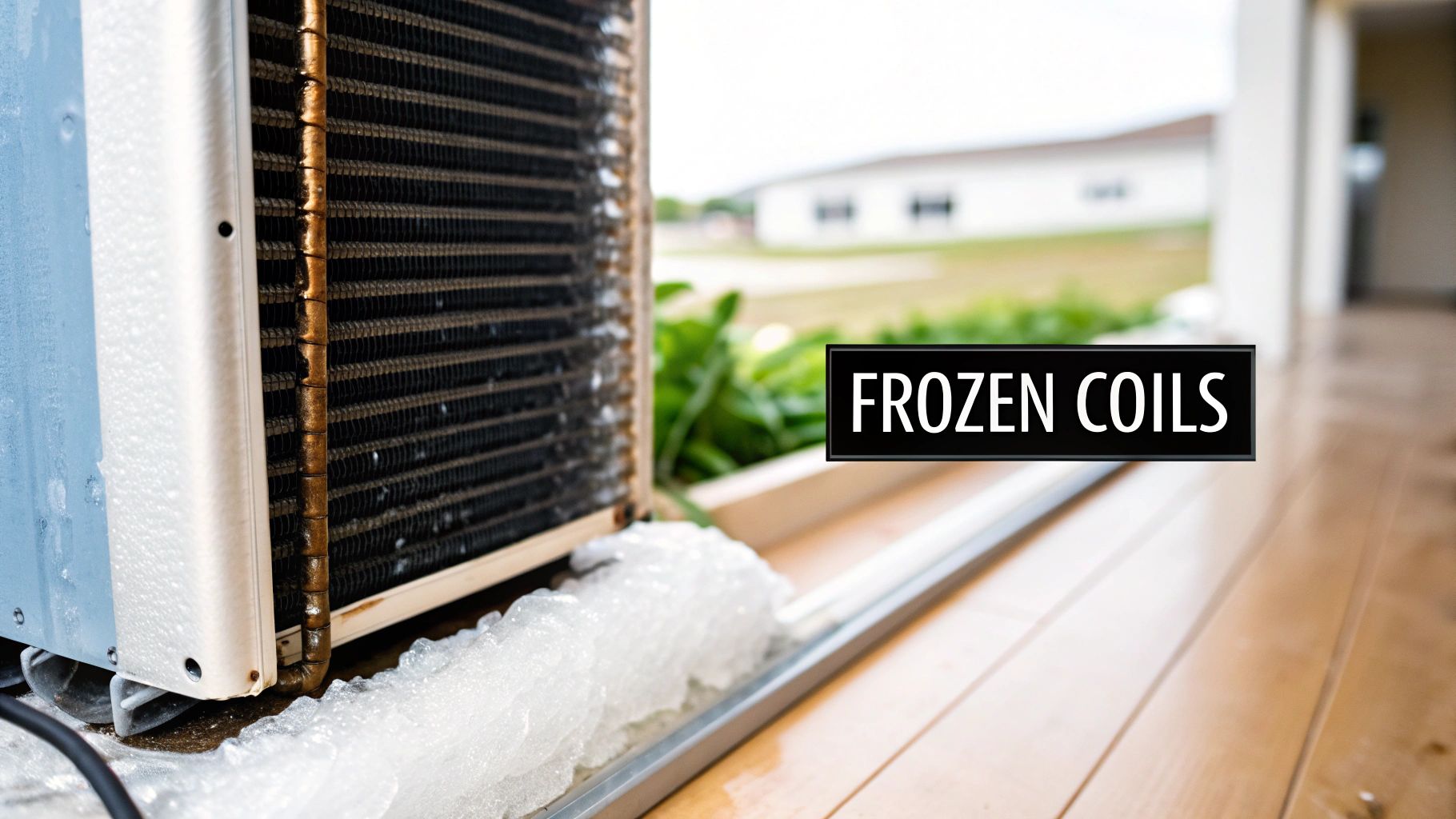
To really get why your AC coils freeze, picture a glass of ice water on a hot, humid day. You know how condensation beads up on the outside? Your AC's indoor evaporator coil works on a similar principle, just in a more controlled way. A super-cold substance called refrigerant circulates through the coil, and as your system's blower fan pushes your home's warm, humid air across it, two things happen: the air cools down, and the moisture in that air condenses onto the coil.
This is all part of the normal plan. In fact, it's how your air conditioner dehumidifies your home. That water is supposed to drip off the coil and flow harmlessly out a drain line. The trouble starts when that coil gets too cold.
The Science of a Frozen Coil
The moment the surface of that evaporator coil dips below 32°F (0°C), the game changes. Instead of forming liquid condensation, the moisture from your air flash-freezes into a thin layer of frost. If the root problem isn't addressed, that frost just keeps building on itself, layer after icy layer, until the entire coil is encased in ice. This ice acts like a thick winter coat, insulating the coil and completely stopping it from absorbing heat from your air.
At its heart, a frozen coil is a heat transfer problem. The coil relies on a steady stream of warm indoor air to keep its surface temperature just above freezing as the frigid refrigerant cycles through. Take away that warmth, and ice is inevitable.
This isn't just an inconvenience that makes your house warm. A frozen coil puts tremendous stress on your entire system, leading to a cascade of problems:
Weak or no cooling: An iced-over coil can't do its job, leaving you with warm air coming from your vents.
Skyrocketing energy bills: Your AC will run constantly, struggling to reach the temperature you've set on the thermostat.
Catastrophic damage: The strain can destroy your compressor, which is the heart of your AC system and one of the most expensive parts to replace.
Grasping this core concept is the first step toward figuring out exactly what's gone wrong with your system.
The Hidden Impact of Poor Airflow
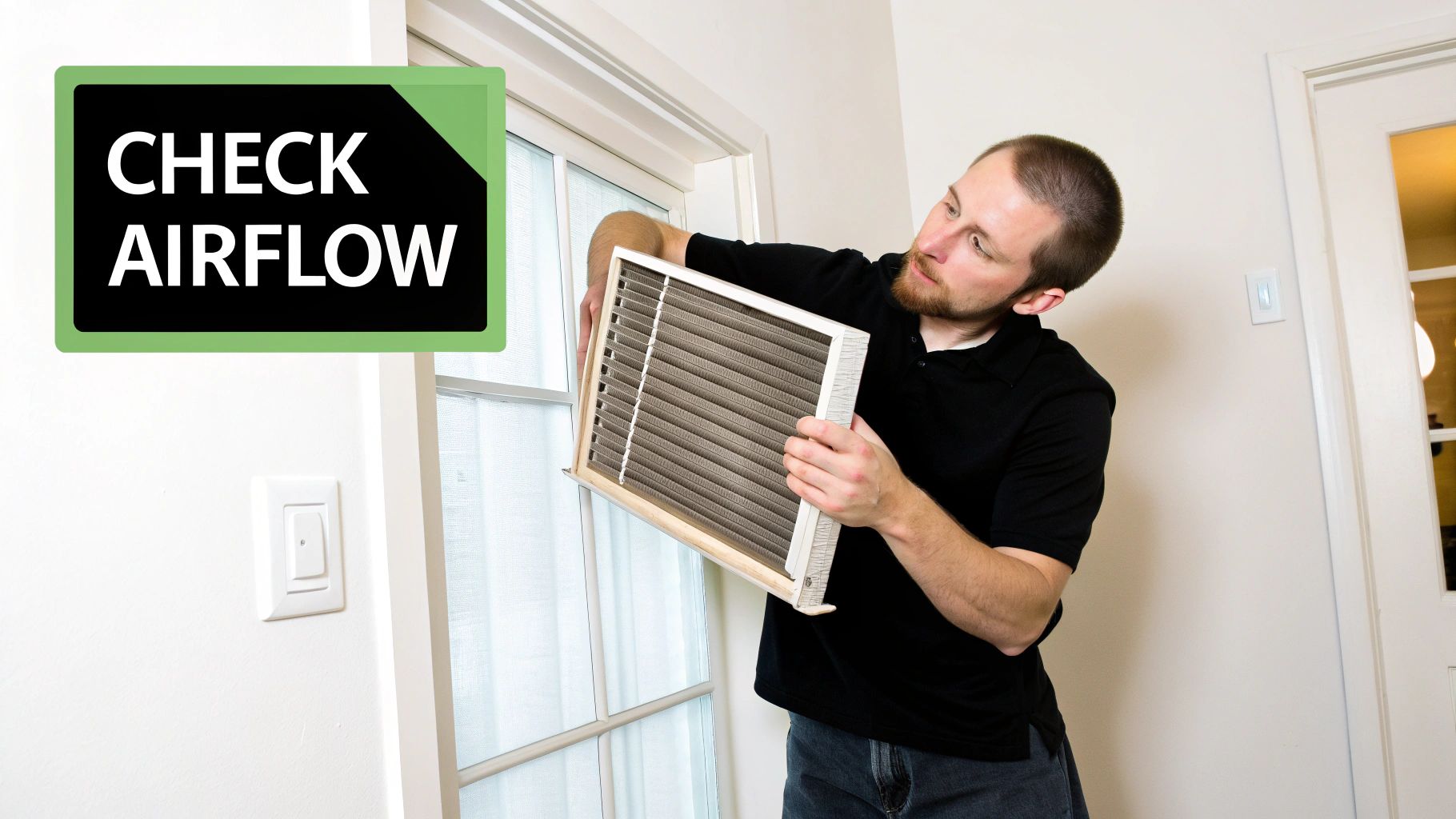
Far and away, the most common reason we see for a frozen evaporator coil is surprisingly simple: restricted airflow. Your AC system is designed for a constant, predictable flow of warm indoor air passing over the coil. This moving air is what keeps the super-cold coil just warm enough to stop ice from taking hold.
Think about a car's radiator trying to cool the engine without a fan. It would overheat in no time. Your AC has the opposite problem. Without that steady stream of warm air to absorb heat from, the evaporator coil's temperature drops below freezing, and the condensation on it quickly turns into a solid block of ice.
When this happens, the system is starved of the heat it needs to function correctly, leading directly to a freeze-up. And more often than not, a few common household issues are to blame.
The Clogged Air Filter Problem
Nine times out of ten, the primary culprit is a dirty, clogged air filter. This simple piece is your first line of defense, trapping dust and debris. But once it gets saturated, it starts suffocating your entire HVAC system, drastically cutting down the volume of air that can reach the evaporator coil.
In fact, dirty air filters are the number one preventable cause of frozen coils. We’ve seen estimates showing that 40% to 50% of frozen coil incidents are a direct result of clogged filters, which can slash airflow by up to a staggering 70%. This is why checking your filter is the single most important maintenance task you can do.
When an air filter is clogged, it forces your system's blower fan to work overtime just to pull air through. This not only spikes your energy bill but puts a huge strain on the motor. Ignoring it doesn't just risk a frozen coil; it can lead to a much more expensive component failure down the road.
Other Common Airflow Blockages
While filters are usually the main offender, they aren't the only thing that can choke your system's airflow. It pays to be aware of these other potential blockages.
Blocked Vents and Registers: It’s easy to do. Furniture gets pushed up against a vent, or a new rug covers a return. But blocking even one of these can significantly reduce the total airflow your system is counting on.
Dirty Ductwork: Over the years, dust, debris, and other gunk can build up inside your ductwork, narrowing the passages. If you’ve got a clean filter but the air coming out of your vents feels weak, the problem might be hiding deep inside the ducts. If this sounds familiar, you might find our guide on preventing damage with expert solutions for clogged air ducts helpful.
Ailing Blower Fan: The blower fan is the heart of your system, pushing air everywhere it needs to go. If the fan motor is failing, or the fan cage itself is caked with dirt, it simply can't move enough air. The result is the same as any other physical blockage: a frozen coil.
At the end of the day, ensuring clear and abundant airflow is the key to a healthy air conditioner. Regularly checking for these common roadblocks is your best defense against the frustrating and damaging problem of a frozen coil.
Understanding Refrigerant Leks and System Pressure
While poor airflow is a huge culprit, another major reason an AC coil freezes has to do with the system's refrigerant. It’s a common myth that an air conditioner "uses up" refrigerant over time, like gas in a car. This is completely wrong; your AC is a sealed, closed-loop system. The refrigerant level should stay the same for the entire life of the unit.
So, if your system is low on refrigerant, it means only one thing: you have a leak somewhere. This isn't just a small problem; it's a direct route to a frozen evaporator coil. The refrigerant is the lifeblood of your cooling system, and its pressure is precisely calibrated to absorb heat from your home. When that balance is off, things go wrong fast.
How Low Refrigerant Causes a Freeze
When refrigerant leaks, the pressure inside the system drops. A lot. This pressure drop causes the remaining refrigerant to expand too much as it enters the evaporator coil, making the coil get intensely cold, far below its normal operating temperature, which is usually just above freezing. This sudden, extreme cold instantly freezes any condensation on the coil's surface.
Industry data backs this up, showing that low refrigerant charges are behind roughly 30-40% of all coil freezing incidents. It doesn’t take much of a leak to cause problems, either. A loss of just 10-15% is enough to hurt performance and start the freezing process. If you lose 20-25%, a frozen coil is practically a guarantee.
Why "Topping Off" Refrigerant Is a Mistake
A common but misguided "fix" is to just add more refrigerant, a service often called a "recharge" or "top-off." While this might get your AC running again for a little while, it's like putting air in a tire that has a nail in it. The new refrigerant is just going to leak right back out, and you’ll be calling for service again in a few weeks or months.
The only real solution is to have a certified technician perform a professional leak detection. They have specialized tools to find the exact source of the leak, repair it correctly, and then charge the system with the precise amount of refrigerant your unit needs.
Fixing the leak is non-negotiable for a few key reasons:
It's a permanent solution: Repairing the leak solves the actual problem instead of just masking the symptom.
It protects your compressor: Running an AC with low refrigerant puts a massive strain on the compressor, the most expensive part of your system, which can lead to a catastrophic failure.
It’s better for the environment: Many refrigerants are harmful to the ozone layer, so federal regulations require leaks to be sealed.
Staying on top of maintenance is the best way to prevent these kinds of problems. You can learn more about how to keep your system in prime condition by checking out our guide on how to maintain your HVAC system for peak performance. Understanding that low refrigerant always means there’s a leak will help you have a more informed conversation with your technician and insist on a proper repair, not just a temporary patch.
When Mechanical Parts Are to Blame
Sometimes, the culprit behind a frozen coil isn't about airflow or refrigerant at all; it's the hardware. Mechanical and electrical failures can create the perfect storm for a freeze-up, even if your filters are spotless and your refrigerant levels are perfect. These issues often creep up on you, showing subtle signs before turning into a full-blown icy mess.
A failing blower motor is a classic example. The blower is the workhorse pushing air across your evaporator coil and through the ducts. If that motor is weak or on its last legs, it just can't move enough air to stop the coil from getting too cold. You might start to hear strange humming, buzzing, or even grinding sounds coming from your vents, which are usually the first cries for help from a struggling motor.
It's not just the moving parts, either. Electrical components are just as critical. A stuck contactor, an electrical relay in your outdoor unit, can lock the compressor into running nonstop. This means the cooling cycle never gets a break, giving the evaporator coil zero chance to warm up and eventually leading to a thick coat of ice.
The Brains of the Operation
Your thermostat is the command center for your entire HVAC system. If it goes haywire, the whole operation falls apart. A faulty thermostat might not sense the indoor temperature correctly, tricking the air conditioner into running constantly without ever cycling off. This relentless operation is another surefire path to a frozen coil.
Ultimately, problems with any of these components circle back to the same core issue: insufficient airflow over the coil.
Mechanical and electrical failures are a huge piece of the puzzle. In fact, when you look at all the reasons for a freeze-up, insufficient airflow from component failures accounts for a staggering 35-50% of service calls. A faulty blower fan is a major culprit, especially since motor failures become much more common in systems over 15 years old. On top of that, about 15-20% of those early morning freeze-up calls can be traced right back to a thermostat that failed to shut the system off overnight.
Knowing what to look and listen for is the key to catching these problems before they cause major damage.
Recognizing the Red Flags
While you probably can't fix a busted motor or a stuck contactor yourself, recognizing the symptoms tells you when it's time to pick up the phone and call a pro. Keep an eye (and an ear) out for these specific signs:
Unusual Noises: Squealing, grinding, or a loud, angry hum coming from your vents or indoor unit often points directly to a blower motor problem.
System Never Shuts Off: If your AC runs and runs, even when the house feels like an icebox, the problem could be your thermostat or a stuck contactor.
Weak Airflow from Vents: Assuming your filter is clean and all your vents are open, weak and wimpy airflow can be a dead giveaway of a dying blower fan.
Catching these issues early is just part of being a responsible homeowner. To get ahead of these problems, check out our guide on 8 essential HVAC maintenance tips for 2025 to learn what to look for. When you spot these symptoms, it’s time to stop the DIY troubleshooting and call for a safe, professional diagnosis.
Your Step-by-Step Troubleshooting Plan
Walking in to find your AC coil has turned into a solid block of ice can be pretty alarming, but don't panic just yet. There’s a safe troubleshooting process you can follow before you need to pick up the phone and call a pro. The most important thing right now is to prevent any further damage, which can get severe and expensive in a hurry.
Your absolute first move is to turn your air conditioning system completely OFF at the thermostat. Go ahead and switch the mode to "Off," but it's a good idea to leave the fan setting on "Auto" or "On." This immediately stops the cooling cycle, which is critical for preventing catastrophic damage to the compressor. Meanwhile, the fan will keep circulating room-temperature air across the coil, helping that block of ice melt naturally.
Safety First: Whatever you do, don't try to chip, scrape, or blast the ice with a hairdryer or any other heat source. The aluminum fins on the evaporator coil are incredibly delicate, and you can easily damage them, leading to some seriously expensive repairs. Patience is your best friend here; just let the system thaw out on its own.
Safe DIY Checks You Can Perform
While the ice is melting, which can take several hours, by the way, there are a few simple things you can check that might just reveal the root cause of the problem.
Inspect the Air Filter: A clogged air filter is the number one culprit behind frozen coils. Pull out your filter and hold it up to a light. If you can't see the light shining through it, it's choked with dirt and needs to be replaced immediately.
Check All Vents and Registers: Take a quick walk through your house and make sure all the supply and return air vents are open and aren't blocked by furniture, rugs, curtains, or anything else. Your AC system needs to breathe freely, and blocked vents are like trying to run a marathon while breathing through a straw.
Look at the Condensate Drain Pan: As all that ice melts, it’s going to create a lot of water. Find the drain pan underneath your indoor unit and check to make sure it's draining properly and not overflowing into your home.
This decision tree gives you a good visual of how different symptoms can point you toward specific mechanical failures.
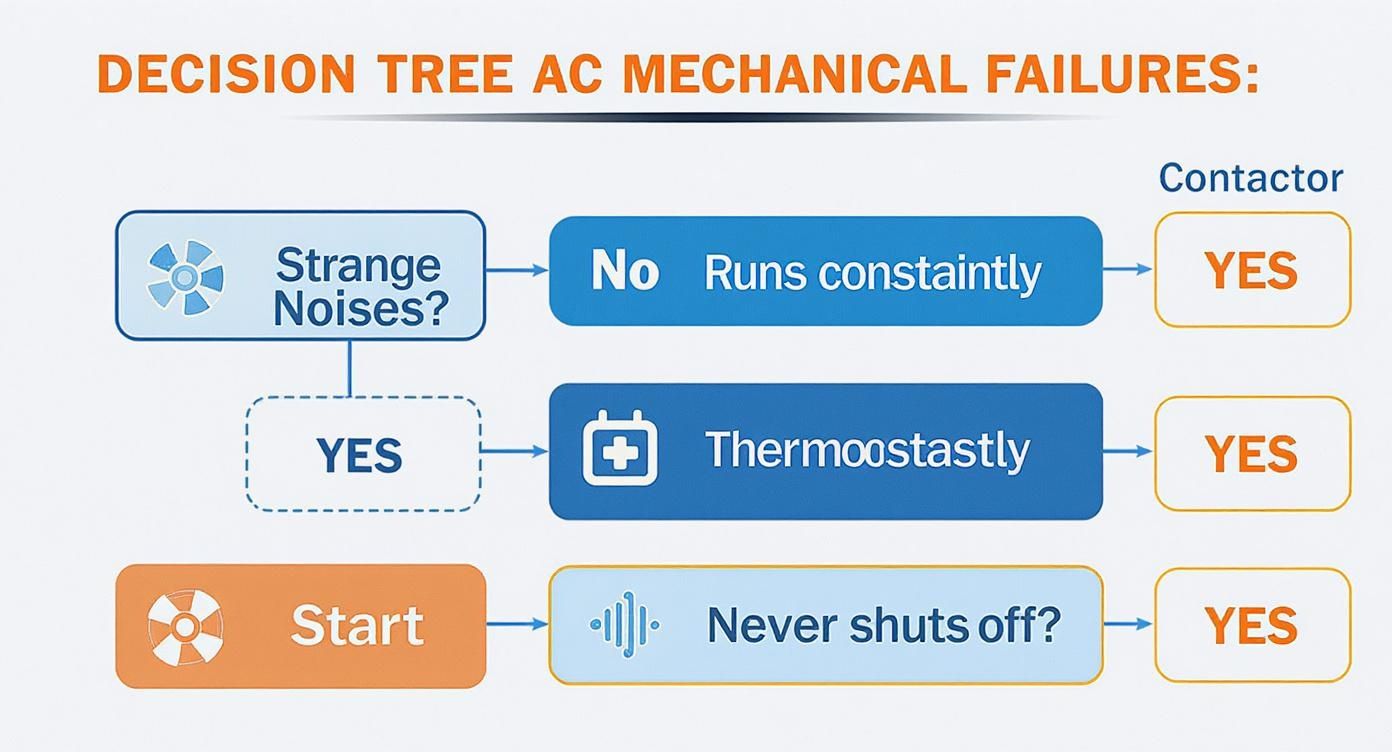
As the flowchart shows, strange noises often point to a problem with the blower fan, whereas a unit that won't shut off could signal a faulty thermostat or contactor. If the melting ice from your AC coils creates a bigger mess than you can handle, it's good to know about emergency water cleanup services.
After you've tried these simple checks and the ice has completely melted, you can try restarting the AC. If it just freezes up again, it's time to call in a professional. And for a deeper dive into keeping your coils in top shape, check out our guide on how to clean evaporator coils for better AC performance.
How to Prevent Your AC Coils from Freezing Again
So you’ve dealt with a frozen AC coil, and your first thought is probably, "How do I make sure that never happens again?" The answer isn't a quick fix; it's about shifting to proactive, professional maintenance. A one-time repair just treats the symptom, but a smart, long-term strategy gets to the root causes to keep your system humming along efficiently.
The absolute cornerstone of prevention is an annual professional tune-up. This is way more than just a quick look-over. A skilled technician will perform a deep inspection, verifying refrigerant levels are correct, testing critical electrical components like capacitors and contactors, and inspecting the blower motor and fan for any signs of wear. This kind of comprehensive checkup is designed to catch small issues long before they have a chance to snowball into a full system freeze-up.
Invest in Professional Cleaning
One of the most valuable things a technician does during a tune-up is a thorough cleaning. Over the course of a year, a sticky film of dust, pollen, and other gunk builds up on the evaporator coil. This layer acts like an insulator, smothering the coil and preventing it from properly absorbing heat, a classic recipe for a freeze. Our expert coil cleaning services safely strip away all that grime, restoring your coil's performance.
In the same way, your ducts need to be clear. Our professional duct cleaning services get rid of years of accumulated debris, guaranteeing air can flow freely from your vents all the way back to the return registers. When your system can breathe, it’s far less likely to freeze. To help you build a solid routine, check out our preventive maintenance schedule template.
An investment in professional maintenance really does pay for itself. A clean, well-maintained system can be up to 15% more energy-efficient, which saves you real money on your monthly utility bills and extends the life of your equipment.
Upgrade Your System's Defenses
If you want to take protection to the next level, consider adding advanced air purification. The ActivePure Technology we install, which was originally developed in partnership with NASA, goes on the offensive to actively reduce particles in your air.
This system helps keep your coils and other internal components much cleaner between professional services by neutralizing contaminants before they ever get a chance to build up and cause clogs. It’s a true game-changer that shifts your maintenance from a reactive chore to a proactive strategy, protecting both your comfort and your HVAC investment.
Common Questions About Frozen AC Coils
Even after going through the common culprits, you might still have a few questions rattling around. It's completely normal. Here are some quick, clear answers to the questions we hear most often, helping you feel more confident about what's happening with your AC.
How Long Does It Take for AC Coils to Thaw?
Once you've shut down the AC, the great melt can begin. How long it takes really depends on how thick that block of ice is and the general temperature inside your home. A good rule of thumb is to plan for anywhere from four to twelve hours for it to thaw out completely. You can speed things along by switching your thermostat to "Fan On," which circulates room-temperature air over the coils.
Whatever you do, it is absolutely critical to wait until every last speck of ice has melted before you restart your air conditioner. Turning it on too soon will just cause it to freeze right back up, and you’ll be stuck at square one.
Is It Safe to Run My AC If the Coils Are Frozen?
Absolutely not. You should never, ever run your air conditioner if the coils are iced over. When you do, you're forcing the compressor to work against a solid blockage, which can make it overheat and burn out. A compressor replacement is one of the most eye-wateringly expensive HVAC repairs you can face, so shutting the system down immediately is the smartest and most wallet-friendly thing you can do.
Can a Dirty Outdoor Unit Cause the Indoor Coil to Freeze?
Yes, it sure can. Your AC is a single, connected system. The job of that big outdoor condenser unit is to release all the heat the indoor evaporator coil just absorbed from your house. But if the outdoor unit is caked in dirt, choked by leaves, or clogged with grass clippings, it can't get rid of that heat effectively. This makes the whole system work longer and harder, which can easily drop the indoor coil's temperature below freezing and start the icing process all over again.
Knowing these details can help you protect your HVAC system from some pretty serious damage. For professional coil cleaning and advanced air quality solutions that help prevent freezing in the first place, you can always trust the experts at Purified Air Duct Cleaning. Visit us at https://www.purifiedairductcleaning.com to schedule your service.