

10 Proven Natural Ways to Purify Air in Your Home for 2026
The air inside our homes can be significantly more polluted than the air outside, a surprising fact confirmed by the Environmental Protection Agency. Given that we spend the majority of our lives indoors, the quality of the air we breathe directly impacts our health, cognitive function, and overall well-being. Poor indoor air can trigger allergies, worsen asthma, and contribute to long-term respiratory issues. Addressing this hidden environmental challenge is not a luxury; it is a fundamental aspect of creating a healthy living space. To truly achieve a healthy living environment, it's essential to start by understanding overall indoor air quality and its various contributing factors.
This comprehensive guide moves beyond generic advice to offer a practical, evidence-backed roundup of the most effective natural ways to purify air. We will explore ten distinct methods, ranging from the botanical power of houseplants to the simple physics of proper ventilation and the advanced science behind modern filtration. You will learn not just what to do but how and why each technique works, with actionable steps for implementation in any home or business. Our goal is to empower you to build a layered defense against indoor pollutants, creating a cleaner, healthier sanctuary one breath at a time.
1. Indoor Plants and Living Walls
Harnessing the power of biophilic design is one of the most aesthetically pleasing and natural ways to purify air. Houseplants work as living air filters, absorbing carbon dioxide and releasing fresh oxygen through photosynthesis. More importantly, their leaves, roots, and the microorganisms in their soil actively metabolize harmful volatile organic compounds (VOCs) like formaldehyde, benzene, and trichloroethylene, common pollutants emitted from furniture, paint, and cleaning products.
The concept was famously validated by the 1989 NASA Clean Air Study, which identified specific plants as highly effective at removing toxins. This principle is now being scaled up with living walls, or vertical gardens, which amplify the air-purifying effect for larger areas. These are increasingly found in commercial offices, hospitals, and open-concept homes where maximizing air quality is a priority. For instance, some clinics strategically place peace lilies and pothos in patient areas to create a healthier, more calming environment.
Actionable Tips for Using Plants
To make this method effective, strategic placement and care are key:
Choose High-Impact Varieties: Opt for low-maintenance, high-performance plants like snake plants, spider plants, peace lilies, and pothos. These are resilient and known for their air-cleaning capabilities.
Maximize Coverage: A single plant won't purify an entire house. Aim for at least one plant per 100 square feet of living space, placing them in high-traffic areas and rooms where you spend the most time, such as bedrooms and home offices.
Ensure Proper Care: Healthy plants are effective purifiers. Rotate them monthly for even light exposure and water them appropriately. Healthy roots and soil are crucial for metabolizing toxins.
2. HEPA Filtration Systems and Air Filters
While not a product of nature itself, leveraging advanced mechanical filtration is one of the most effective natural ways to purify air by physically trapping contaminants without chemicals. High-Efficiency Particulate Air (HEPA) filters are engineered to capture at least 99.97% of airborne particles 0.3 microns in size. This includes common allergens like dust mites, pollen, pet dander, mold spores, and even some bacteria, providing a powerful, non-chemical barrier against indoor pollution.
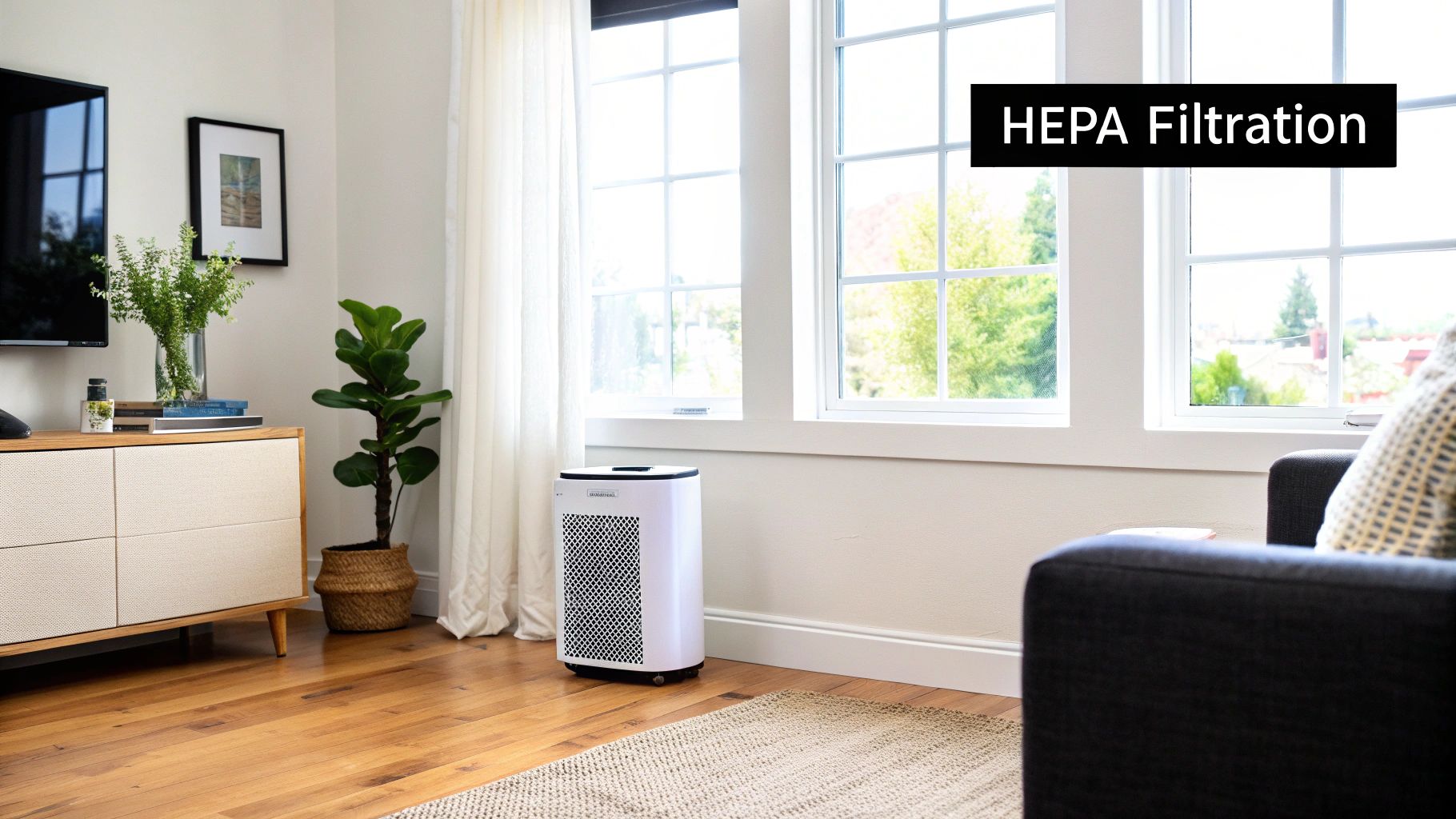
This technology, governed by strict EPA and ASHRAE standards, is a cornerstone of air quality management in sensitive environments. Hospitals rely on HEPA filtration in their HVAC systems to protect patients, and it's commonly recommended for homes of immunocompromised individuals. In areas like Phoenix, homeowners often upgrade to HEPA filters after professional duct cleaning to maintain a pristine indoor environment. Whether used in a standalone unit or integrated into a central HVAC system, HEPA filters provide a proven method for mechanically scrubbing the air clean. If you're unsure whether a whole-home filter or a portable unit is better for your needs, you can explore the differences between an air purifier vs. an air filter to make an informed decision.
Actionable Tips for Using HEPA Filtration
To maximize the benefits of HEPA filters, proper selection and maintenance are non-negotiable:
Check MERV and HEPA Ratings: For residential HVAC systems, look for filters with a MERV rating of 13 or higher. For portable units, ensure it is a True HEPA filter, which meets the 99.97% capture standard.
Prepare Your System: Before installing a new high-efficiency filter, schedule professional duct and HVAC coil cleaning. This prevents trapped dust from being dislodged and ensures your system operates efficiently without unnecessary strain.
Replace Filters Regularly: A clogged filter is an ineffective one. Set a reminder to replace HVAC filters every 3-6 months and portable purifier filters every 6-12 months, depending on manufacturer guidelines and household usage.
3. Activated Carbon Filtration
While many filters target airborne particles, activated carbon (or charcoal) excels at trapping gases, odors, and chemical vapors that other methods miss. Activated carbon is treated with oxygen to open up millions of tiny pores, creating an incredibly large surface area. This allows it to work through a process called adsorption, where pollutants like volatile organic compounds (VOCs), smoke, and cooking odors chemically bond to the carbon's surface, effectively removing them from the air.
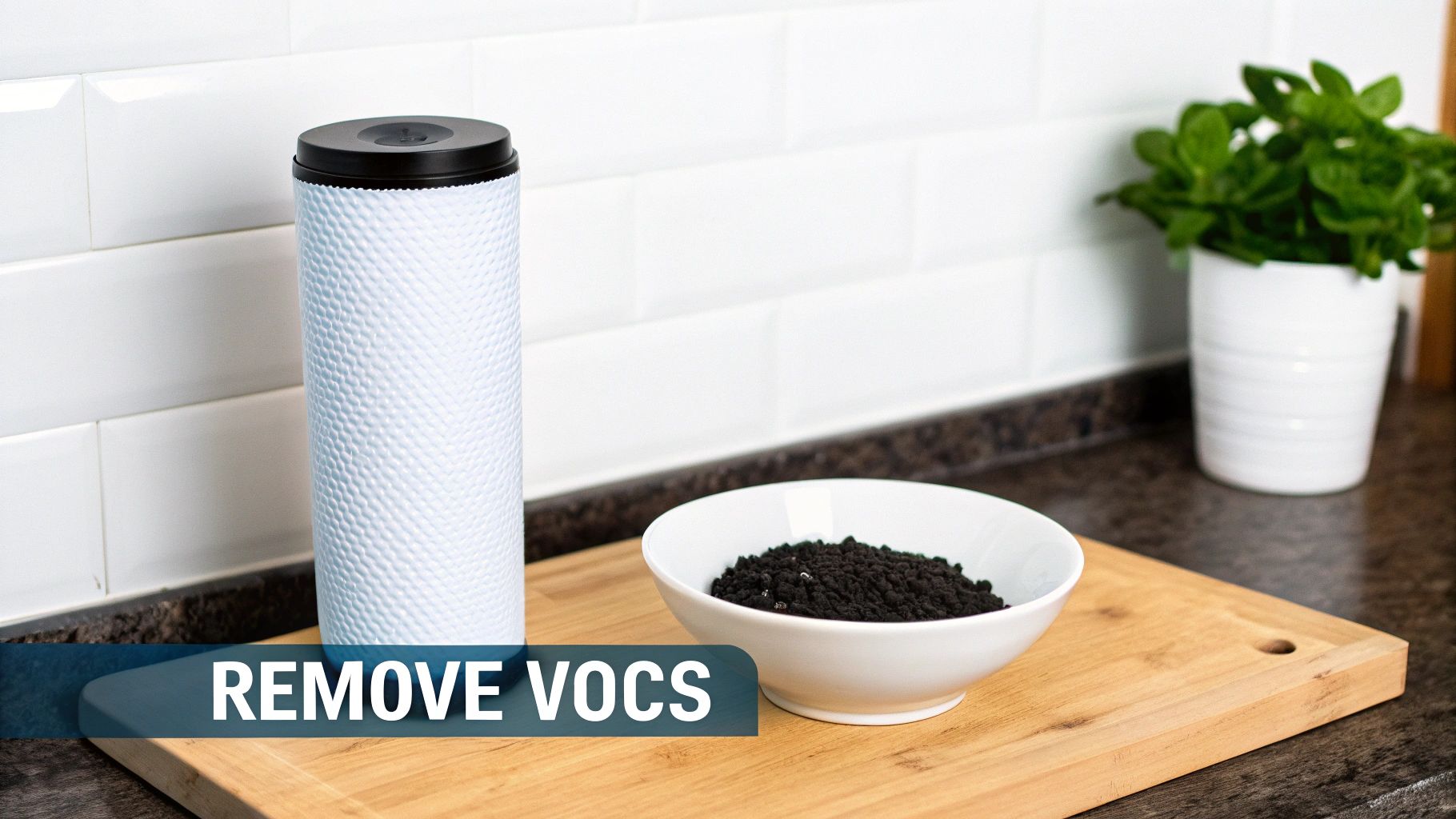
This method is critical for addressing gaseous pollutants that plants or standard filters cannot manage. For instance, homeowners in areas affected by wildfire smoke often rely on HVAC systems with activated carbon filters to neutralize the pervasive smell and harmful compounds. Similarly, it's used in new construction to absorb the off-gassing from fresh paint, carpeting, and furniture, or in commercial kitchens to control strong cooking odors. Combining a carbon filter with a basement dehumidifier also helps eliminate musty smells caused by mold and mildew.
Actionable Tips for Using Activated Carbon
To effectively use this natural way to purify air, follow these best practices:
Combine with Particulate Filters: Activated carbon does not trap dust or pollen. For comprehensive air cleaning, use it alongside a HEPA filter that captures fine particulate matter. Many modern air purifiers contain both.
Replace Filters Regularly: The carbon’s surface eventually becomes saturated and loses its effectiveness. Replace filters every 3 to 6 months, or more frequently during periods of high pollution like wildfire season.
Use for Spot Treatment: Place standalone activated carbon bags or boxes in problem areas like closets, kitchens, basements, or near new furniture to absorb localized odors and VOCs.
Ensure Proper Airflow: For carbon filters in an HVAC system or air purifier to work, air must actively pass through them. Ensure your system is running and that the filter fits snugly to prevent air from bypassing it.
4. Proper Ventilation and Air Circulation
One of the most fundamental natural ways to purify air is simply to exchange stale indoor air with fresh outdoor air. Proper ventilation and circulation work to dilute and remove airborne pollutants that build up inside, from cooking fumes and cleaning chemicals to dust and dander. Without consistent airflow, contaminants become concentrated, leading to poor indoor air quality and potential health issues. This principle is a cornerstone of modern building science, promoted heavily by organizations like ASHRAE and the EPA.
Effective ventilation systems are designed to manage this exchange intelligently. For instance, in Arizona's unique climate, many newer homes in areas like Avondale are built with Energy Recovery Ventilators (ERVs). These systems bring in fresh air while transferring heat and humidity to the outgoing stale air, maintaining indoor comfort and efficiency. Similarly, commercial buildings in Phoenix often rely on balanced ventilation systems to protect indoor air quality during dust storms, preventing particulate matter from infiltrating the space.
Actionable Tips for Better Ventilation
Implementing strategic ventilation doesn't have to be complex. A few consistent habits can make a significant difference:
Use Exhaust Fans: Run the exhaust fan in your bathroom during and for at least 20 minutes after a shower to expel moisture. Use your kitchen range hood fan every time you cook to remove smoke, steam, and odors.
Embrace Natural Ventilation: When outdoor air quality is good, crack open windows on opposite sides of your home to create a cross-breeze. Even 15 minutes a day can significantly reduce indoor pollutant levels.
Maintain Your HVAC System: Ensure your home's ventilation pathways are clear. You can learn more about how to improve air circulation in your house by keeping vents unobstructed and scheduling professional duct inspections.
Consider an ERV: If you live in a climate with extreme temperatures or humidity like Arizona, an ERV is an excellent investment for providing continuous fresh air without compromising your energy bills.
5. Natural Decorative Purifiers: Beeswax & Soy Candles and Salt Lamps
Combining ambiance with potential air quality benefits, decorative purifiers like beeswax candles and Himalayan salt lamps are popular natural ways to purify air. Unlike paraffin candles, which release soot and VOCs, 100% pure beeswax candles are believed to produce negative ions when burned. These ions can attach to positively charged airborne particles like dust, pollen, and dander, causing them to become heavier and fall out of the air. Similarly, Himalayan salt lamps are said to release negative ions when heated and attract moisture from the air through a process called hygroscopy.
While their direct purifying power is modest compared to ventilation or filtration, these items excel at enhancing a space's atmosphere and replacing harmful conventional products. For instance, many wellness centers and yoga studios use salt lamps to create a calming environment, while homeowners often choose beeswax or soy candles scented with pure essential oils as a non-toxic alternative to chemical air fresheners. They serve a dual purpose: improving ambiance while subtly contributing to a cleaner indoor ecosystem.
Actionable Tips for Using Decorative Purifiers
To maximize benefits and ensure safety, proper selection and use are essential:
Choose Pure Materials: Opt for 100% pure beeswax or all-natural soy candles with cotton wicks and pure essential oils. Avoid fragrance oils, which can release VOCs. Ensure salt lamps are genuine Himalayan salt.
Practice Candle Safety: Always trim wicks to 1/4 inch before lighting to prevent soot and excessive smoke. Never leave a burning candle unattended, and ensure the room has adequate, but not drafty, ventilation.
Position Strategically: Place salt lamps in low-humidity areas like bedrooms or living rooms to avoid excessive "sweating". Use candles to create a relaxing atmosphere where you spend downtime, but remember they are a supplemental tool, not a primary air purifier.
6. Zeolite and Mineral-Based Air Purification
Tapping into the earth’s natural filtration capabilities, zeolite offers a powerful, mineral-based method for improving air quality. Zeolites are microporous minerals with a unique, honeycomb-like structure that makes them incredibly effective at adsorption: the process of trapping molecules on a surface. This structure allows them to capture and hold onto volatile organic compounds (VOCs), ammonia, and other odorous chemicals, making them one of the best natural ways to purify air, particularly for stubborn smells and humidity control.
Unlike methods that mask odors, zeolite physically removes the offending particles from the air. Its porous nature also allows it to absorb excess moisture, helping to manage humidity and prevent mold growth. For instance, pet owners often place zeolite rock sachets near litter boxes for superior odor control, while homeowners in damp climates might use them in basements or closets. This passive, non-electric approach makes it a sustainable and cost-effective solution for targeted air purification needs.
Actionable Tips for Using Zeolite
To effectively use this mineral purifier, consider these practical steps:
Strategic Placement: Place zeolite bags or containers in problem areas like closets, bathrooms, near pet beds, or in basements. These are ideal locations to tackle moisture and persistent odors.
Recharge and Reuse: One of the biggest advantages of zeolite is its reusability. To regenerate its absorptive properties, simply place the mineral rocks in direct sunlight for four to six hours every few months. This process releases the trapped pollutants and moisture, making them ready to use again.
Combine with Other Methods: For comprehensive air cleaning, use zeolite in conjunction with other purifiers. Placing it near an air intake for a HEPA filter system can help remove gaseous pollutants and odors that particulate filters might miss, creating a more complete purification system.
7. Photocatalytic Air Purification (ActivePure Technology)
Moving beyond traditional filtration, photocatalytic purification is an advanced, active method for neutralizing contaminants. Technology like ActivePure, originally developed for the NASA space program, utilizes a process called advanced oxidation. It combines UV-C light with a catalyst, often titanium dioxide, to create powerful oxidizing molecules that actively seek out and destroy airborne and surface pathogens, VOCs, and odors at a molecular level.
Unlike passive filters that trap particles, this system proactively sanitizes the entire space, deactivating over 99.9% of harmful contaminants, including bacteria, viruses, and mold spores. This makes it one of the most effective natural ways to purify air without producing harmful chemical byproducts. Its efficacy is why healthcare facilities, such as hospitals in Phoenix, and commercial offices in Avondale have integrated in-duct ActivePure systems to ensure the highest standards of air and surface safety for patients and employees. You can learn more about how an ActivePure air purifier works and its origins with NASA.
Actionable Tips for Using ActivePure Technology
To maximize the benefits of this advanced purification system, proper implementation is crucial:
Prepare Your Ductwork: Before installing a whole-home system, have a professional inspect and clean your air ducts. Clean ducts ensure the technology can operate at peak efficiency without being hindered by existing dust and debris.
Combine with HEPA Filtration: For comprehensive air quality control, pair an in-duct ActivePure system with high-quality HEPA filtration. This combination removes particulates while the ActivePure technology neutralizes microscopic pathogens and VOCs.
Ensure Proper Installation: Opt for an in-duct system installed by certified technicians for seamless, whole-home protection. For targeted areas, portable units can supplement coverage in high-traffic rooms or commercial spaces.
Schedule Regular Maintenance: Like any HVAC component, ActivePure systems require periodic checks. Schedule maintenance with a certified professional to ensure the UV lamps and catalyst are functioning correctly for optimal performance.
8. Moisture Control and Dehumidification
Controlling indoor humidity is a fundamental, natural way to purify air by preventing the growth of biological contaminants. Mold, mildew, and dust mites thrive in damp environments, releasing allergens and mycotoxins that degrade air quality. Maintaining an optimal humidity level between 30% and 50%, as recommended by the EPA, inhibits their proliferation and creates a healthier indoor ecosystem. This strategy is not about adding chemicals; it is about creating an environment where pollutants cannot survive.
In humid regions or specific areas like basements and bathrooms, excess moisture is a common problem. For instance, a properly ventilated bathroom in Phoenix prevents mildew buildup after showers, while a dehumidifier in a basement during Arizona's monsoon season can stop mold growth before it starts. Managing humidity also protects the structural integrity of your home and improves the efficiency of your HVAC system. To significantly improve indoor air quality and prevent mold, especially from contaminants rising from below, consider effective crawl space dehumidification.
Actionable Tips for Moisture Control
Effectively managing humidity requires a multi-pronged approach:
Monitor Humidity Levels: Use an inexpensive hygrometer (humidity meter) to keep track of indoor humidity. Aim to keep levels consistently below 50% to prevent allergen growth.
Ventilate High-Moisture Areas: Always use exhaust fans in kitchens and bathrooms to vent moisture outside. Run them during and for at least 15-20 minutes after activities like cooking or showering.
Address Leaks Promptly: Immediately fix any plumbing leaks, roof leaks, or foundation issues that allow water intrusion. Ensure the ground around your home is graded to direct water away.
Use a Dehumidifier: In naturally damp areas like basements, crawl spaces, or laundry rooms, a dehumidifier is essential for removing excess airborne moisture. Discover more simple steps for a healthier home.
9. Natural Air-Purifying Charcoal and Bamboo Filters
Using materials like activated charcoal and bamboo offers a sustainable, chemical-free method for improving indoor air quality. These natural filters work through adsorption, a process where pollutants like volatile organic compounds (VOCs), odors, and allergens chemically bind to the surface of the porous material. Unlike synthetic filters, these options are renewable and biodegradable, making them an excellent choice for eco-conscious households looking for natural ways to purify air.
This approach is gaining traction in various settings. For example, wellness centers and eco-conscious homes in Arizona are increasingly specifying HVAC filters made with coconut shell activated charcoal to reduce airborne chemicals without relying on synthetic materials. Similarly, many modern portable air purifiers now include a carbon or bamboo pre-filter layer to tackle odors and gases, complementing their primary HEPA filters. This dual-filter strategy combines the best of natural adsorption with high-efficiency particle capture.
Actionable Tips for Using Natural Filters
To effectively incorporate charcoal and bamboo filters, consider these practical steps:
Choose High-Performance Options: When selecting HVAC filters, look for products that pair natural charcoal with a high MERV rating or HEPA-equivalent performance to ensure both gas and particle filtration.
Verify Sustainable Sourcing: Opt for brands that certify their bamboo and charcoal are sustainably harvested. Look for certifications that guarantee responsible environmental practices.
Replace Filters Regularly: Natural adsorption filters become saturated over time. Plan to replace them every 3 to 6 months, or more frequently in homes with higher pollutant levels, to maintain their effectiveness.
Monitor System Airflow: A clogged filter restricts airflow and strains your HVAC system. If you notice reduced airflow from your vents, it's a clear sign your filter needs to be replaced.
10. Professional Air Duct Cleaning and HVAC Maintenance
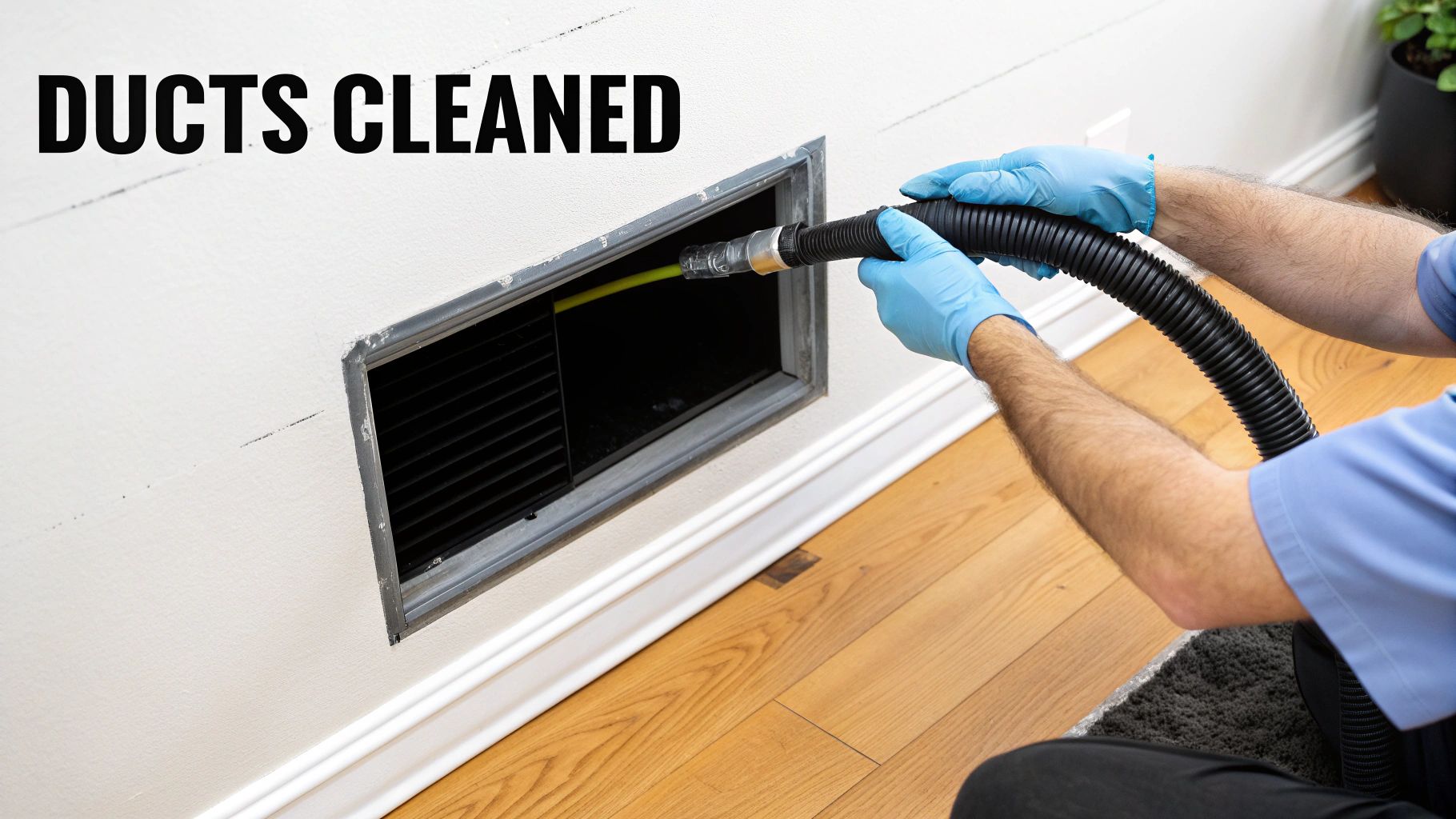
While many natural ways to purify air focus on filtering what is already in your rooms, professional HVAC maintenance targets the source of many pollutants. Over time, your air ducts accumulate dust, pet dander, mold spores, and other debris. Your HVAC system then circulates these contaminants throughout your home every time it runs, undermining other purification efforts. Professional cleaning removes this buildup directly from the source.
This process involves powerful, specialized vacuums and brushes that dislodge and extract buildup from ductwork, vents, and HVAC components. For instance, many families report a dramatic reduction in allergy symptoms after a thorough cleaning, as the primary network for spreading allergens is neutralized. It's a foundational step that enhances the effectiveness of all other air quality improvements.
Actionable Tips for HVAC Maintenance
To maximize the benefits of professional services, a proactive and scheduled approach is crucial:
Schedule Cleanings Every 3-5 Years: The National Air Duct Cleaners Association (NADCA) recommends a professional cleaning every three to five years, or more frequently if you have pets or residents with respiratory issues.
Clean Dryer Vents Annually: A clogged dryer vent is not only an air quality issue but a significant fire hazard. An annual professional cleaning is a critical safety measure.
Time it Strategically: Have your ducts cleaned before installing new, high-quality filters or an advanced whole-home purification system. This ensures the new system starts with a clean slate for optimal performance.
Replace Filters Post-Cleaning: Always install a fresh HVAC filter immediately after the service to capture any lingering particles and maintain the newly cleaned system. You can learn more about the health problems dirty air ducts can cause to understand why this is so important.
Top 10 Natural Air Purification Methods Comparison
Item | 🔄 Implementation Complexity | ⚡ Resource Requirements | ⭐ Expected Outcomes | 📊 Ideal Use Cases | 💡 Key Advantages / Tips |
|---|---|---|---|---|---|
Indoor Plants and Living Walls | Low → Medium (basic care; living walls need installation) | Low ongoing (water, light, space) | ⭐⭐ Moderate: reduces CO2 & some VOCs; limited particulate removal | Homes, offices, biophilic design, small-area VOC reduction | Aesthetic + mental health benefits; use multiple low-maintenance species; rotate for light |
HEPA Filtration Systems and Air Filters | Medium → High (standalone easy; in-duct needs pro install) | Medium (electricity, regular filter replacements) | ⭐⭐⭐⭐ High: captures 99.97% of ≥0.3 µm particulates | Allergy sufferers, hospitals, homes with pets, dusty environments | Best for particulates; replace filters 6–12 months; check MERV 13+ |
Activated Carbon Filtration | Low → Medium (integrates into units or HVAC) | Medium (periodic replacement every 3–6 months) | ⭐⭐⭐ Moderate: very effective for odors and VOCs; not for particles | Smoke, cooking odors, new-construction off-gassing, VOC hotspots | Combine with HEPA for particles; replace when saturated |
Proper Ventilation and Air Circulation | Medium → High (simple vents low; ERV/DOAS requires pro) | Variable (ERV energy, maintenance, filter changes) | ⭐⭐⭐⭐ High: dilutes pollutants, controls humidity when outdoor air is clean | Whole-home ventilation, humidity control, new builds, dusty periods | Use exhaust fans, crack windows on mild days; consider ERV for energy recovery |
Natural Decorative Purifiers (Beeswax/Soy Candles, Salt Lamps) | Low (plug-and-play / burn) | Low (purchase, replacement candles/lamps) | ⭐ Low: mainly ambiance; negligible measurable purification | Aromatherapy, ambiance, supplemental scenting in small areas | Use as supplement only; trim wicks; never rely for allergen/pathogen removal |
Zeolite and Mineral-Based Purifiers | Low → Medium (sachets easy; HVAC integration needs install) | Low (regenerable by sun/heat; periodic refresh) | ⭐⭐⭐ Moderate: effective for odors, ammonia, moisture; not particulates | Pet odor control, closets, basements, moisture-prone spots | Regenerate in sun/heat monthly; pair with HEPA for particles |
Photocatalytic Air Purification (ActivePure) | High (professional installation; HVAC compatibility required) | Medium (continuous power; low maintenance, no filters) | ⭐⭐⭐⭐⭐ Very High: deactivates ~99.98% pathogens; breaks down VOCs | Hospitals, immunocompromised homes, high-traffic commercial spaces | Pre-clean ducts before install; pair with HEPA for particulate capture; certified installers |
Moisture Control and Dehumidification | Low → Medium (portable units easy; whole-home systems more complex) | Medium (electricity, maintenance, monitoring) | ⭐⭐⭐⭐ High: prevents mold, dust mites; reduces allergen source | Basements, bathrooms, post-water damage, high-humidity areas | Maintain 30–50% RH (seasonal ranges suggested); fix leaks; monitor with hygrometer |
Natural Charcoal & Bamboo Filters | Low → Medium (replaceable filter media; some HVAC integration) | Low → Medium (regular replacement; variable durability) | ⭐⭐⭐ Moderate: good for odors/VOCs; limited fine particulate removal vs HEPA | Eco-conscious homes, combined-filter purifiers, portable units | Look for HEPA-composite options; replace every 3–6 months; verify sustainable sourcing |
Professional Air Duct Cleaning & HVAC Maintenance | High (requires certified technicians & equipment) | Medium (periodic service cost; depends on system size) | ⭐⭐⭐⭐ High: removes dust, mold, improves efficiency 15–40% | All homes/buildings, before installing advanced systems, post-renovation/water damage | Schedule every 3–5 years (or annually if high-risk); use NADCA/EPA-certified pros; replace filters after cleaning |
Creating Your Complete Air Purification Strategy
Breathing clean, fresh air indoors is not a luxury, it is a fundamental component of a healthy lifestyle. Throughout this guide, we have explored a wide spectrum of methods, from the gentle, aesthetic power of houseplants to the robust, technological prowess of advanced filtration. The journey to pristine indoor air is not about selecting a single solution but about strategically layering multiple approaches to create a comprehensive, multi-faceted defense against pollutants. You now have a powerful toolkit of natural ways to purify air, empowering you to take control of your indoor environment.
The key takeaway is that true air purification is an integrated system. Simple, accessible methods form the essential foundation of this system. Placing snake plants or peace lilies in your living spaces, using activated charcoal bags to absorb odors, and ensuring regular ventilation by opening windows are all powerful first steps. These baseline strategies work in harmony to reduce common toxins and improve air circulation, creating an immediate, noticeable difference in your home's atmosphere.
Building on the Foundation with Technology
While natural methods are foundational, a complete strategy often requires reinforcing them with proven technology. This is especially true for households with allergy sufferers, young children, or anyone sensitive to airborne particulates. Think of it as a tiered approach:
Tier 1: The Natural Baseline. This includes houseplants, ventilation, non-toxic cleaning, and moisture control. These are your daily, ongoing efforts that manage the source of many pollutants.
Tier 2: Enhanced Filtration. Upgrading your HVAC system with high-quality HEPA or high-MERV filters is a crucial next step. This mechanically traps fine particles like dust, pollen, and pet dander that natural methods might miss.
Tier 3: Proactive Purification. For the highest level of protection, incorporating technologies like ActivePure moves beyond passive filtering. These systems actively seek out and neutralize pathogens like viruses and bacteria in the air and on surfaces, providing a sanitized environment.
Your Action Plan for Cleaner Air
To move from knowledge to action, start with a simple assessment of your home. Identify your primary concerns: is it lingering cooking odors, seasonal allergies, or a general feeling of stuffiness? Your priorities will guide your strategy.
Begin by implementing two or three of the easiest natural methods, such as adding a few air-purifying plants and committing to a weekly dusting and vacuuming schedule. From there, create a plan to enhance your system. Check your current HVAC filter and schedule a professional air duct cleaning to ensure your home's respiratory system is not circulating contaminants. By combining these deliberate, thoughtful actions, you transform your home from a simple shelter into a sanctuary of clean, life-giving air.
Ready to build the ultimate foundation for your clean air strategy? A professionally cleaned HVAC system ensures that every other method you implement is more effective. For expert service in the Avondale and Phoenix area, contact Purified Air Duct Cleaning to schedule a comprehensive assessment and receive a free quote for duct cleaning or ActivePure system installation.