

How to Reduce Humidity in House: Simple Steps for a Healthier Home
To get humidity under control in your house, you can start with some simple fixes like improving ventilation with fans, taking cooler showers, and running a dehumidifier in those notoriously damp areas. These quick actions tackle the most common sources of indoor moisture and bring immediate relief from that stuffy, clammy feeling.
Understanding Why Your House Feels So Humid
If you've ever walked into a room and felt that heavy, sticky air, you know exactly what high humidity feels like. While muggy weather outside is an obvious culprit, it's often our daily routines that contribute the most moisture to our indoor air.
It's surprising how much water vapor we release just by living our lives. Cooking, especially boiling a big pot of pasta, sends plumes of steam into the kitchen. Long, hot showers can basically turn a bathroom into a tropical rainforest. Even seemingly harmless things, like hanging laundry inside to dry, add a significant amount of moisture to the air.
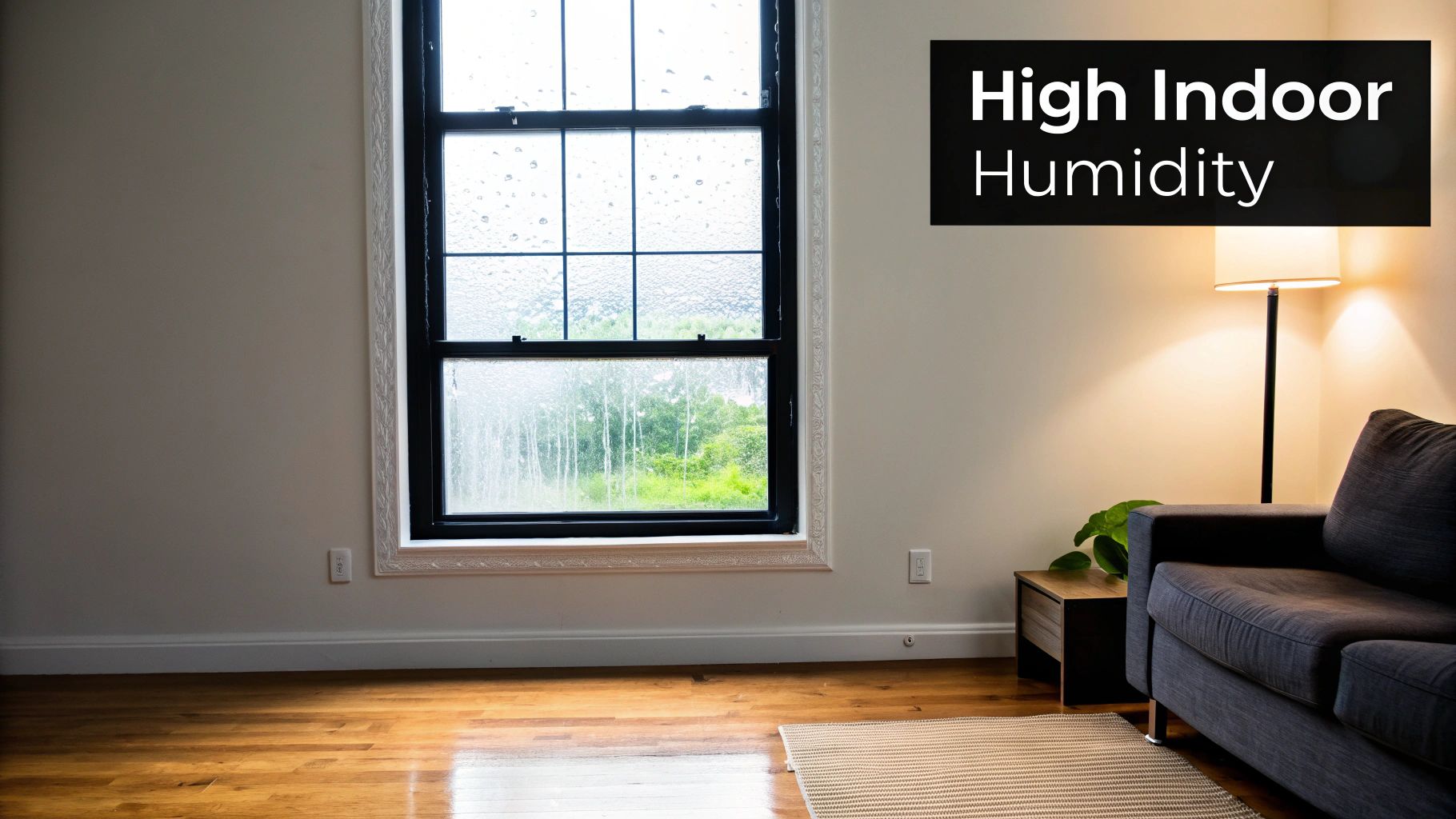
Common Signs of High Indoor Humidity
Spotting the signs of excess humidity is the first step to fixing the problem. Keep an eye out for these tell-tale clues that your home's moisture levels are creeping up:
Condensation on Windows: Fog or water droplets forming on the inside of your windows is a classic sign of too much moisture in the air.
A Persistent Musty Smell: That damp, earthy odor often means there's hidden moisture somewhere, and it could be the start of a mold problem.
Peeling Paint or Wallpaper: When walls hold too much moisture, it can cause paint and wallpaper to bubble, crack, or peel right off.
Damp Spots on Walls or Ceilings: Discolored patches are a major red flag for a water leak or persistent condensation issues.
High humidity isn't just about feeling uncomfortable; it's about the health of your home. The EPA recommends keeping indoor humidity between 30% and 50%. This sweet spot helps prevent the growth of mold and mildew, which absolutely thrive in damp conditions.
The Health and Structural Risks
Let's be clear: consistently high humidity is an open invitation for mold. It’s a startling fact, but 47% of U.S. homes have reported issues with mold, and excess moisture is almost always the root cause. This is more than just an ugly spot on the wall; mold exposure is tied to some serious health concerns.
For example, studies have shown that approximately 21% of asthma cases in the U.S. can be traced back to dampness and mold in the home. It’s worth taking the time to understand the health risks and prevention tips for mold contamination to better protect your family.
Beyond your health, that trapped moisture is also bad news for your house itself. Over time, it can lead to wood rot, damage drywall, and even compromise the structural integrity of your foundation. Taking proactive steps to control humidity isn't just a comfort issue, it protects your family and your biggest investment. Knowing https://www.purifiedairductcleaning.com/post/how-to-avoid-mold-in-your-home-and-damp-buildings is a critical part of smart home maintenance.
Practical Ways to Lower Indoor Humidity Today
Dealing with high indoor humidity doesn't have to be a massive overhaul. You can make a huge difference in your home's comfort and air quality with just a few smart adjustments to your daily habits and by using the right tools. The game plan really boils down to two key strategies: getting the air moving and actively pulling moisture out of it.
These are the kinds of practical steps you can take right now to see an immediate impact. You'd be surprised how much these small changes can improve that sticky, damp feeling in your home.
Enhance Your Home's Ventilation
Good air circulation is your number one weapon against damp, stagnant air. When that moisture-heavy air has nowhere to go, it just hangs around, creating that classic clammy atmosphere. Luckily, boosting your home's airflow is often as simple as flipping a switch.
Think of it this way: your house needs to breathe. Sealing it up too tight traps moisture and pollutants inside. Encouraging a consistent exchange of stale indoor air for fresh outdoor air is vital. If you're curious about the science behind it, our guide explains how to calculate air changes per hour for the best results.
A fantastic place to start is by becoming best friends with your exhaust fans. After you shower, let that bathroom fan run for a good 15-20 minutes. This simple habit pulls all that steam out before it can condense on your walls, mirrors, and ceiling.
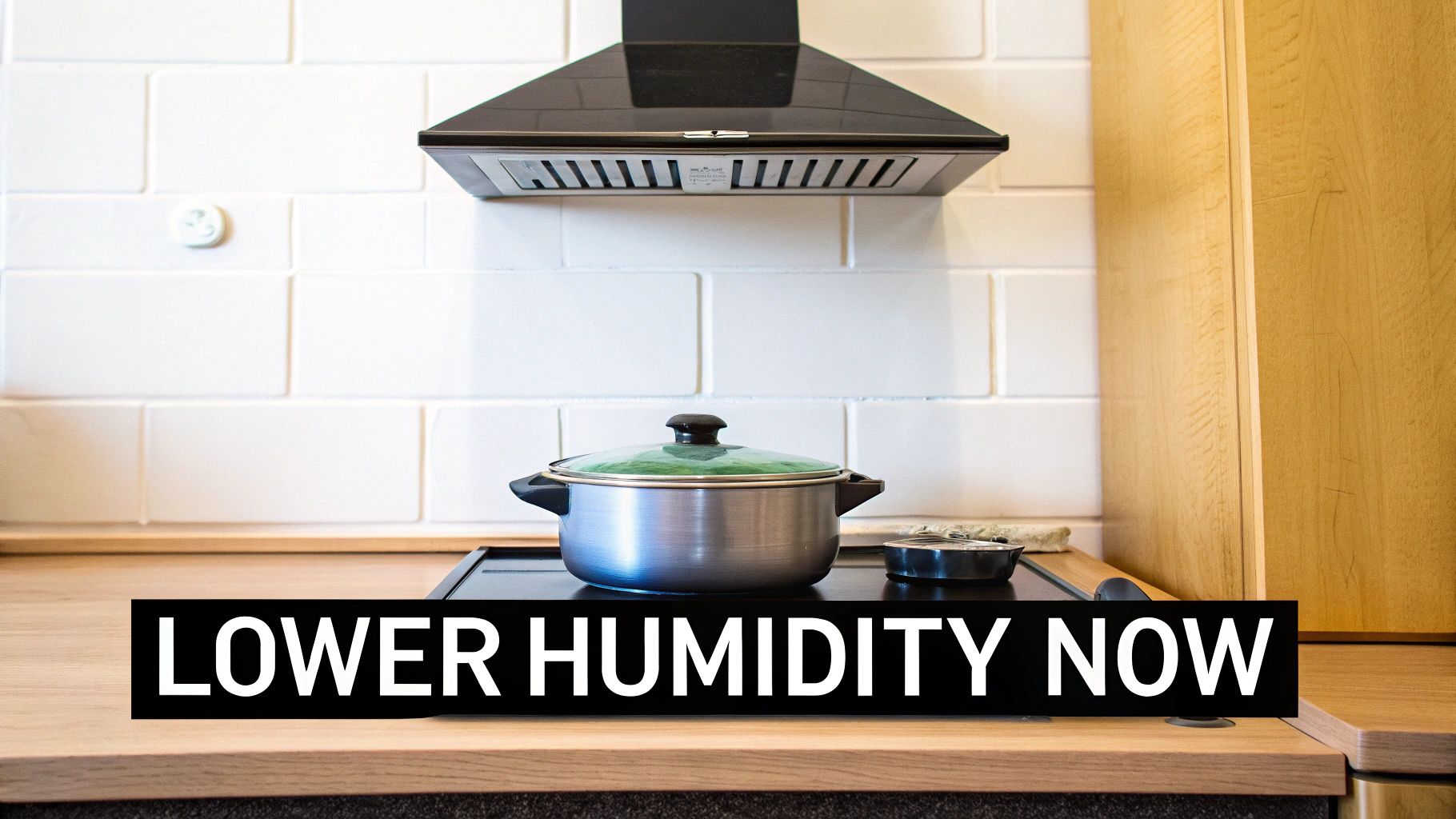
The same logic applies in the kitchen. Any time you're cooking, especially boiling pasta or simmering soup, get that range hood fan going. It captures steam right at the source, stopping it from spreading through the rest of your home.
Make Small Changes to Daily Routines
Beyond just fans, a few tweaks to your daily life can pack a surprising punch. These are all about cutting down on the amount of moisture you’re creating in the first place.
Give these simple but powerful habits a try:
Take Cooler, Shorter Showers: We all love a long, hot shower, but they pump an incredible amount of steam into the air. By dialing back the temperature and cutting your shower time, you can slash the amount of humidity released into your bathroom.
Cover Pots and Pans When Cooking: It’s such an easy thing to do. Popping a lid on a boiling pot traps a massive amount of steam, keeping it out of your kitchen air.
Dry Clothes Outdoors: Whenever you can, hang your laundry outside. An indoor drying rack acts like a giant, slow-motion humidifier, releasing all that water from your clothes directly into your living space.
It's wild to think about, but a single load of laundry hung up to dry inside can release over a gallon of water into your home's air. This makes it a major, and often overlooked, culprit behind high humidity, especially in smaller homes or apartments with limited airflow.
And when accidents happen, knowing how to dry wet carpet fast and prevent mould is a crucial skill. Acting quickly after a spill or leak prevents a small issue from becoming a persistent source of humidity.
Choose the Right Dehumidifier
When better ventilation and new habits still aren't cutting it, a dehumidifier becomes your go-to tool for actively ripping moisture out of the air. These machines are lifesavers in chronically damp spots like basements, laundry rooms, and musty crawl spaces.
You'll generally find two main types, each designed for different situations.
Portable Dehumidifiers: These are the standalone units you can plug in and move wherever you need them. They’re perfect for targeting specific problem zones, like a damp basement corner or a bathroom that lacks an exhaust fan.
Whole-House Dehumidifiers: These are the heavy hitters. They integrate directly into your HVAC system to manage humidity levels across your entire home automatically. It's a "set it and forget it" solution for homes with widespread humidity problems.
Getting the size right is absolutely critical. A unit that’s too small will run nonstop without making a dent, just wasting energy. One that's too big will cycle on and off too quickly, which is also inefficient. Always check the manufacturer's specs against the square footage of the room you're treating to find the perfect match.
The Overlooked Link Between Your HVAC and Humidity
Think your HVAC system is just for heating and cooling? Think again. It's actually one of your most powerful tools for wrangling indoor humidity. Most people don't realize that an air conditioner's cooling process naturally pulls moisture right out of the air. But here’s the catch: this only works if the system is running correctly. A neglected HVAC can quickly flip from a humidity-fighting hero to a moisture-trapping villain.
Here's how it's supposed to work. When your AC is on, it pulls warm, sticky air from your home across a set of ice-cold evaporator coils. This forces the moisture in the air to condense into water, just like the droplets that form on a cold glass of sweet tea on a summer day. That water gets collected and funneled away, leaving you with cooler, drier air.
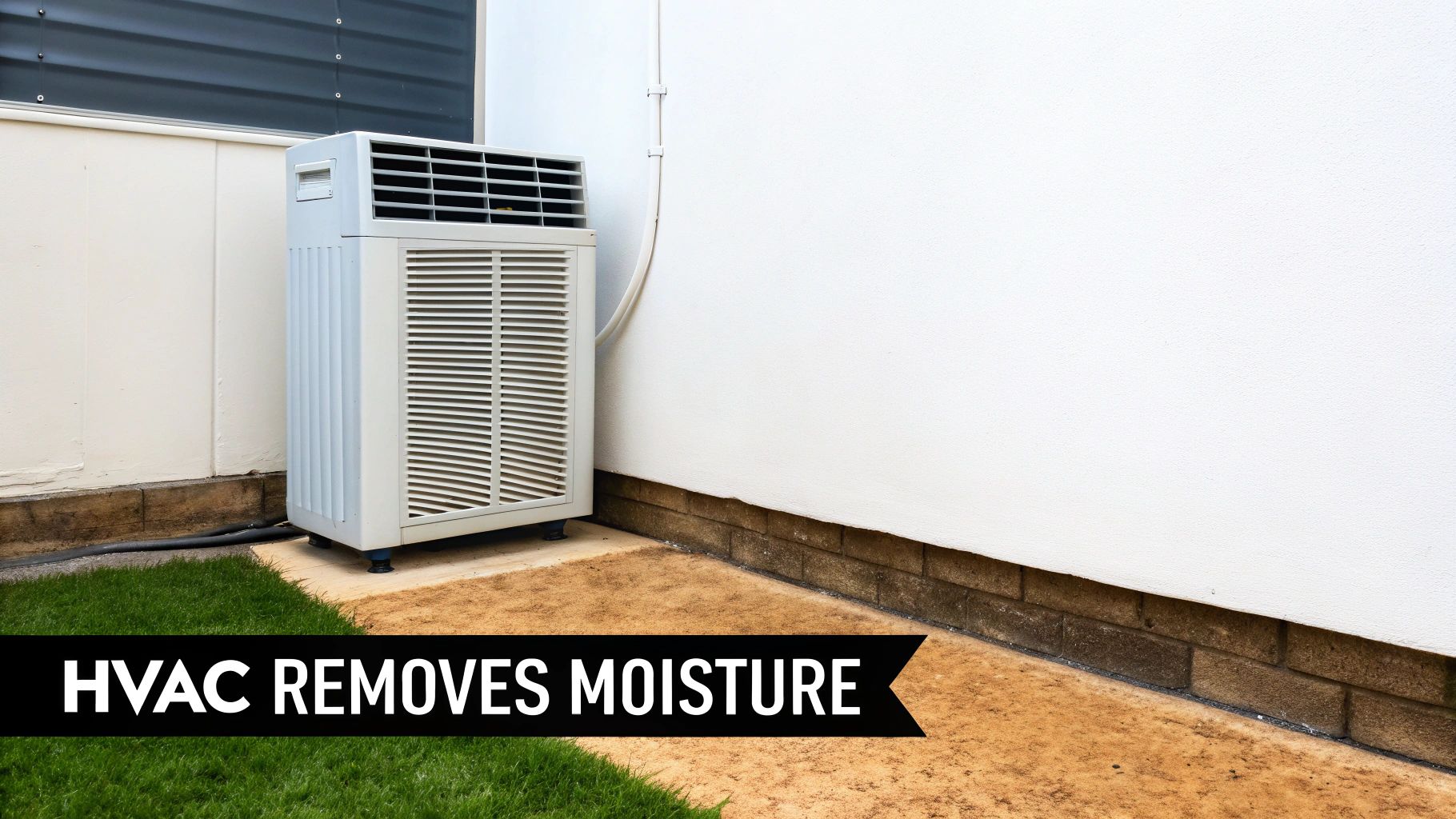
But if key parts like the coils or air ducts are caked with dust and grime, the whole process grinds to a halt. A dirty system can't pull in enough air, forcing it to work overtime while doing a poor job of both cooling and dehumidifying.
How Dirty Ducts Worsen Humidity
It's easy to forget about your air ducts since they're hidden away, but they can become a secret reservoir for moisture. All the dust, pet dander, and other gunk that builds up in there acts like a sponge, absorbing and holding onto moisture that should be on its way out of your house. This creates a perpetually damp environment tucked away inside your walls and ceilings.
And that trapped moisture doesn't just stay put. It gets re-released back into your home, working against all your other efforts to lower the humidity. It's not just a little bit of dust, either. One eye-opening study found that before a professional cleaning, the average dust load in ductwork was a whopping 8.4 g/m². After cleaning? It dropped to just 1.9 g/m², a 77% reduction in moisture-holding buildup. You can dig into the duct dust accumulation research yourself to see the numbers.
Think of your air ducts as the lungs of your home. When they get clogged, the whole system struggles to breathe. This doesn't just trap humidity; it creates the perfect dark, damp breeding ground for mold and bacteria to thrive.
The Role of Professional HVAC Maintenance
Getting your HVAC back in the humidity-fighting game often takes more than just swapping out the air filter. Professional maintenance and cleaning are designed to tackle the deep-seated issues that are probably making your home feel so clammy.
Here’s what a pro service brings to the table to get your humidity under control:
Comprehensive Duct Cleaning: Technicians don't just sweep things out. They use powerful vacuums and specialized tools to knock loose and suck out years of caked-on debris from every nook and cranny of your ductwork, getting rid of that primary source of trapped moisture.
HVAC Coil Cleaning: The evaporator and condenser coils are where the dehumidifying magic happens. A thorough cleaning strips away the insulating layer of grime, letting them get back to efficiently pulling moisture from the air. If you're curious about the details, we've put together a guide on how to clean HVAC coils for peak system performance.
System Performance Check: A real pro will give the entire system a once-over. They’ll check for proper airflow, make sure refrigerant levels are correct, and ensure the condensate drain line isn't clogged and backing up.
When you restore your HVAC system to its prime condition, you're not just getting better humidity control. You're also making it more energy-efficient, which means lower utility bills and a much more comfortable home.
Long-Term Solutions for a Permanently Drier Home
If you're tired of the constant battle with temporary fixes, it's time to get serious about the root causes of moisture. The most effective way to lower the humidity in your house for good is to fortify its defenses against the outside world. This isn't about running a dehumidifier 24/7; it's about stopping humid air and water from ever sneaking inside in the first place.
These strategies are about the structural integrity of your home. By sealing up your home's "envelope" and properly managing water around the foundation, you can make a permanent, noticeable difference in your indoor comfort.
Hunt Down and Seal Air Leaks
Humid outdoor air is a master infiltrator. It finds its way into your home through countless tiny, often invisible, gaps around windows, door frames, and any spot where pipes or wires penetrate your walls. Individually, these leaks seem minor, but together, they're like leaving a window cracked open all day long.
Your first job is to become a leak detective. A simple trick is to wait for a breezy day and carefully move a lit incense stick around these common problem areas. If you see the smoke get disturbed and pulled inward or pushed away, you've found an air leak.
Here's a quick hit list for sealing up your home:
Windows and Doors: Apply fresh weatherstripping to the frames and use a quality caulk to seal any gaps between the frame and the wall.
Pipes and Vents: For larger gaps where pipes, vents, or electrical conduits pass through walls, a can of expanding foam sealant is your best friend.
Outlets and Switch Plates: This is a sneaky one. Placing inexpensive foam gaskets behind the faceplates of outlets and switches on your exterior walls can stop a surprising amount of air infiltration.
This process doesn't just help with humidity, it has a major impact on your HVAC system's performance. For a deeper dive, our guide explains more about what duct sealing is and how it can save you money.
Upgrade Your Insulation
Never underestimate the power of good insulation for humidity control. It acts as a crucial thermal barrier, keeping your interior walls and ceilings from getting cold enough to reach the dew point. When warm, humid indoor air makes contact with a cold, poorly insulated surface, condensation happens, literally creating water droplets inside your home.
The attic is often the most impactful place to start. A well-insulated attic stops your roof from getting too cold in the winter or blazing hot in the summer, which helps stabilize the temperature of your ceilings below. This simple upgrade dramatically reduces the chances of condensation forming overhead.
Ensuring your home is properly insulated isn't just about staying warm; it's a crucial defense against moisture. Homes with inadequate insulation are far more susceptible to condensation issues, which can lead to structural damage and mold growth over time.
Manage Water Around Your Foundation
The ground surrounding your home can be a massive source of moisture, especially after a heavy downpour. If water is allowed to pool against your foundation, hydrostatic pressure will eventually push that water right into your basement or crawl space.
You can make a huge difference with some smart landscaping. First, check the grading of your yard. The ground should always slope gently away from your house, not towards it. Also, take a look at your gutter downspouts; they need to extend at least four to six feet away from the foundation to be effective.
Finally, keep those gutters clean! When gutters get clogged with leaves and debris, water overflows and saturates the ground right next to your home. This simple maintenance task is one of the most powerful things you can do to keep your basement and crawl space dry.
When DIY Fixes Aren't Enough
You’ve done everything right. You sealed the windows, you're running the exhaust fans, and you even invested in a brand-new dehumidifier. Yet, your home still feels like a swamp.
Sometimes, despite all your hard work, a stubborn humidity problem is a sign of a deeper issue that simple fixes just can’t touch. Knowing when to throw in the towel and call in a professional is the key to protecting your home, and your family’s health.
If you're stuck in a cycle of dampness, a good first step is to trace the problem back to its source. This flowchart can help you diagnose some of the common moisture culprits that often require a professional touch.
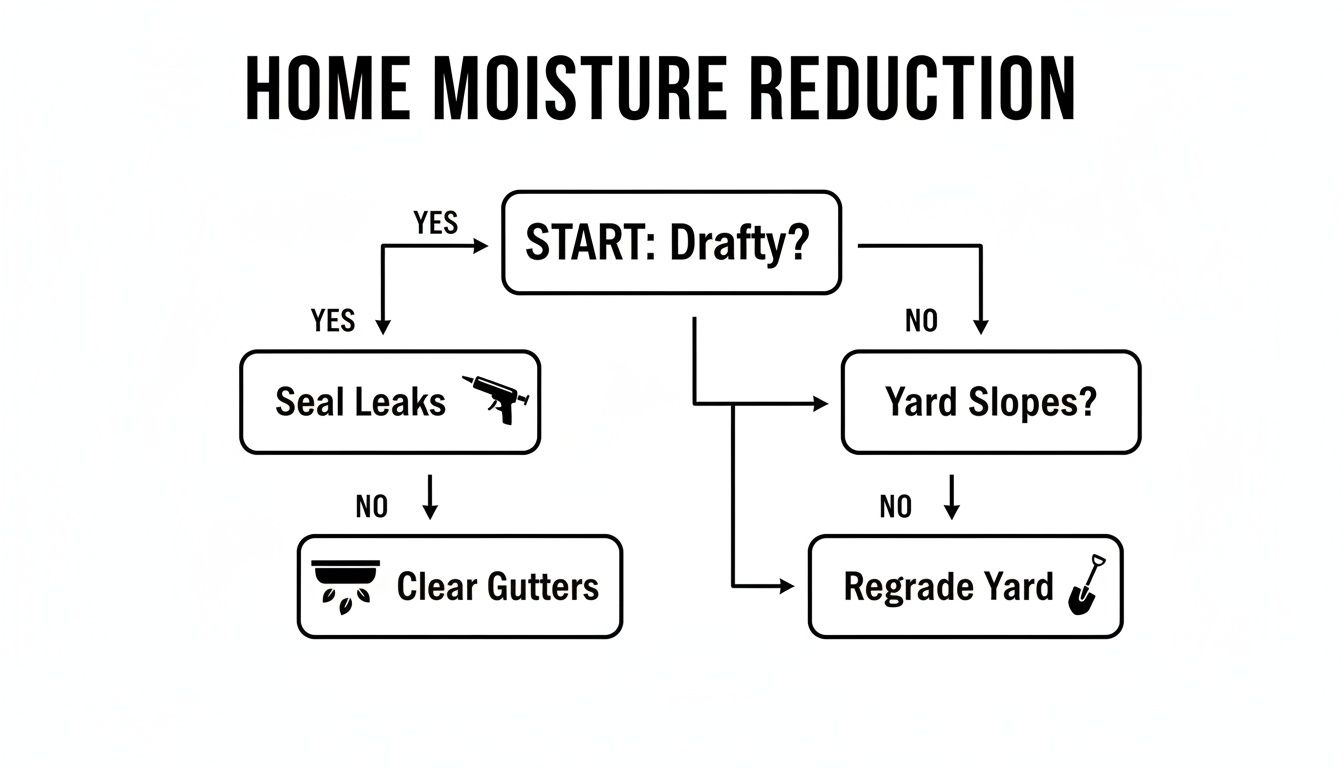
This guide helps you figure out if you're dealing with humid air sneaking in through leaks or if ground moisture is seeping in from poor drainage, pointing you toward the right kind of help.
Red Flags That Signal It's Time for a Pro
Some symptoms are dead giveaways that your humidity issue is more than a weekend project. These red flags point to bigger, often hidden, problems that require specialized tools and real expertise to diagnose and fix for good.
Keep a sharp eye out for these warning signs:
Visible Mold That Keeps Returning: You scrub away a patch of mold, and a few weeks later, it’s back in the exact same spot. This means you’re only cleaning the symptom, not the cause. A pro can find and eliminate the moisture source fueling the growth.
A Persistent Musty Odor: That damp, earthy smell that never seems to air out is a classic sign of hidden moisture and mold growth, likely inside your walls, under the flooring, or deep within your HVAC system.
Unwavering High Humidity Levels: If your hygrometer is consistently reading above 50-60% no matter what you do or what the weather is like outside, it's a clear sign of a major moisture source that needs professional investigation.
Knowing Who to Call for Humidity Problems
Okay, you've decided to call for backup. But who? A standard HVAC technician is your go-to for routine maintenance, but for deep-seated humidity issues tied to your ductwork, you need a specialist.
This is where professional air duct cleaning becomes a game-changer. The EPA has found that a thorough cleaning of ducts and coils can improve HVAC efficiency by as much as 20%, which directly impacts its ability to pull moisture from the air. A dirty system just can't dehumidify properly.
A critical part of solving humidity issues is ensuring your HVAC system can breathe. Dirty, clogged ducts restrict airflow, forcing your AC to work harder without effectively removing moisture from the air. This is why a specialized duct cleaning service is often the missing piece of the puzzle.
Understanding who does what helps you make the right call. Our guide on finding the right pro for cleaning air ducts can walk you through the process. For the most stubborn problems, advanced solutions like ActivePure® technology can actively decontaminate the air and surfaces, targeting the mold and pathogens that thrive in damp environments.
Common Questions About Home Humidity Control
Even with a solid game plan, you're bound to run into a few head-scratchers when trying to get your home's humidity under control. Getting straight answers helps you move forward with confidence.
Why Does My House Feel Humid Even With the AC On?
This is probably the number one question we hear. You've got the air conditioning running, but the air still feels thick and sticky. What gives?
More often than not, this points to a problem with your HVAC system itself. If an AC unit is too big for the space it's trying to cool, it will blast the room with cold air and shut off almost immediately. This is called short-cycling. The problem is, your AC needs to run for a sustained period to actually pull moisture out of the air. When it short-cycles, it cools the house down without ever getting a chance to dehumidify.
Sometimes, a good maintenance tune-up can help. But if the unit is fundamentally the wrong size, you'll need a professional to diagnose the real issue.
What About Basements and Crawl Spaces?
Another common trouble spot. Basements and crawl spaces are notorious for feeling damp, and people often wonder if just plugging in a small dehumidifier will do the trick.
While a portable unit is better than nothing, it's often just a band-aid on a bigger problem. Persistent dampness in these below-grade areas usually seeps in from the surrounding soil. For a solution that actually lasts, you'll likely need a combination of tactics: a powerful dehumidifier paired with better foundation sealing or even improved drainage outside your home.
How Much Can Clean Ducts Really Help?
This is a big one. Homeowners want to know if cleaning their air ducts is just another chore or if it makes a real difference. The answer? It's huge.
Think of your ducts as the lungs of your home. When they get clogged with dust and debris, your entire HVAC system struggles to breathe. This restricted airflow makes it much harder for your AC to do its job, which includes pulling moisture from the air. Clogged ducts can even trap moisture, creating a perfect breeding ground for other issues.
According to World Health Organization guidelines, keeping relative humidity over 50% creates a welcoming environment for dust mites and microbes. Professional duct cleaning gives your system the airflow it needs to extract humidity effectively; some studies show it can slash surface dust by an average of 77%.
When your system can finally move air properly, it becomes much more efficient at dehumidifying your home. You can learn more about how air duct cleanliness impacts your HVAC system and its ability to fight humidity.
Ready to get your HVAC system back to peak performance and win the battle against humidity? Contact Purified Air Duct Cleaning today for a free quote. Let our certified pros help you create a healthier, more comfortable home. https://www.purifiedairductcleaning.com