

Can Allergies Cause Asthma? a Practical Guide
Yes, allergies can cause or strongly trigger asthma, and between 60% and 80% of adults and children with asthma have at least one positive immediate skin-test response to an environmental allergen. But allergies aren't the only cause of asthma, and a positive allergy test by itself does not prove that someone has asthma.
If you've ever wondered why one person sneezes around a cat while another starts wheezing at night, you're asking a better question than most articles answer. The issue isn't just whether dust, pollen, or pets are "bad." It's whether a person's immune system has become sensitized, whether the symptoms are happening in the nose or the lungs, and whether home changes are enough, or whether a clinician needs to confirm asthma and start treatment.
That confusion shows up in ordinary family life all the time. A child wakes up stuffy and coughs after playing with the dog. An adult feels chest tightness only when cleaning a dusty closet. Someone gets a positive allergy panel and assumes that explains every breathing symptom. Sometimes it does. Sometimes it doesn't.
The Short Answer and What This Guide Will Help You Sort Out
Can allergies cause asthma? Yes, they can, and they often do play a major role, but the relationship is more precise than “dust causes asthma.” The strongest explanation is that some people become IgE-sensitized to a specific allergen, then their airways react when they breathe that trigger in. The CDC explains that in genetically predisposed people, inhaled allergens such as dust-mite proteins, cockroach particles, animal dander, pollen, and mold can activate a type 2 immune response, with IL-4, IL-5, and IL-13 promoting allergen-specific IgE production, eosinophilic airway inflammation, mucus overproduction, and airway hyperresponsiveness. Repeated exposure can contribute to persistent airway remodeling over time, but asthma can also arise or worsen from viral infections, pollution, occupational irritants, exercise, and cold air, not only allergy (CDC environmental triggers of asthma).
That distinction matters at home. A runny nose after making the bed points in one direction. Wheezing after making the bed points in another. A child with itchy eyes during spring may have seasonal allergies. A child who also coughs at night or gets short of breath while running needs a closer asthma evaluation.
Three distinctions that clear up most confusion
Nasal symptoms versus lower-airway symptoms: Sneezing, congestion, and itchy eyes usually point to upper-airway allergy. Wheezing, chest tightness, shortness of breath, and a lingering cough raise concern for asthma.
Sensitization versus disease: A positive test may show the immune system recognizes an allergen. It doesn't automatically mean that allergen is causing symptoms, and it doesn't diagnose asthma by itself.
Home improvement versus medical care: Reducing exposure can help. It cannot replace inhaled anti-inflammatory treatment when a clinician has prescribed it.
Practical rule: If breathing symptoms involve the chest, not just the nose, think beyond “allergies” and consider asthma until a clinician helps sort it out.
If you're trying to understand your own cough, this guide will help you match symptoms to likely patterns. If you're caring for a child or family member with wheezy breathing, focus closely on the symptom section, the trigger section, and the medical care section. Either way, use this article as a map, not a diagnosis.
How Allergies Set the Stage for Asthma
Why can one person make the bed and only start sneezing, while another ends up coughing or wheezing later that night? The answer usually starts earlier than the symptoms. The immune system has already learned to treat a harmless substance, such as dust mite particles or cat dander, like a threat. That learning step is called sensitization.
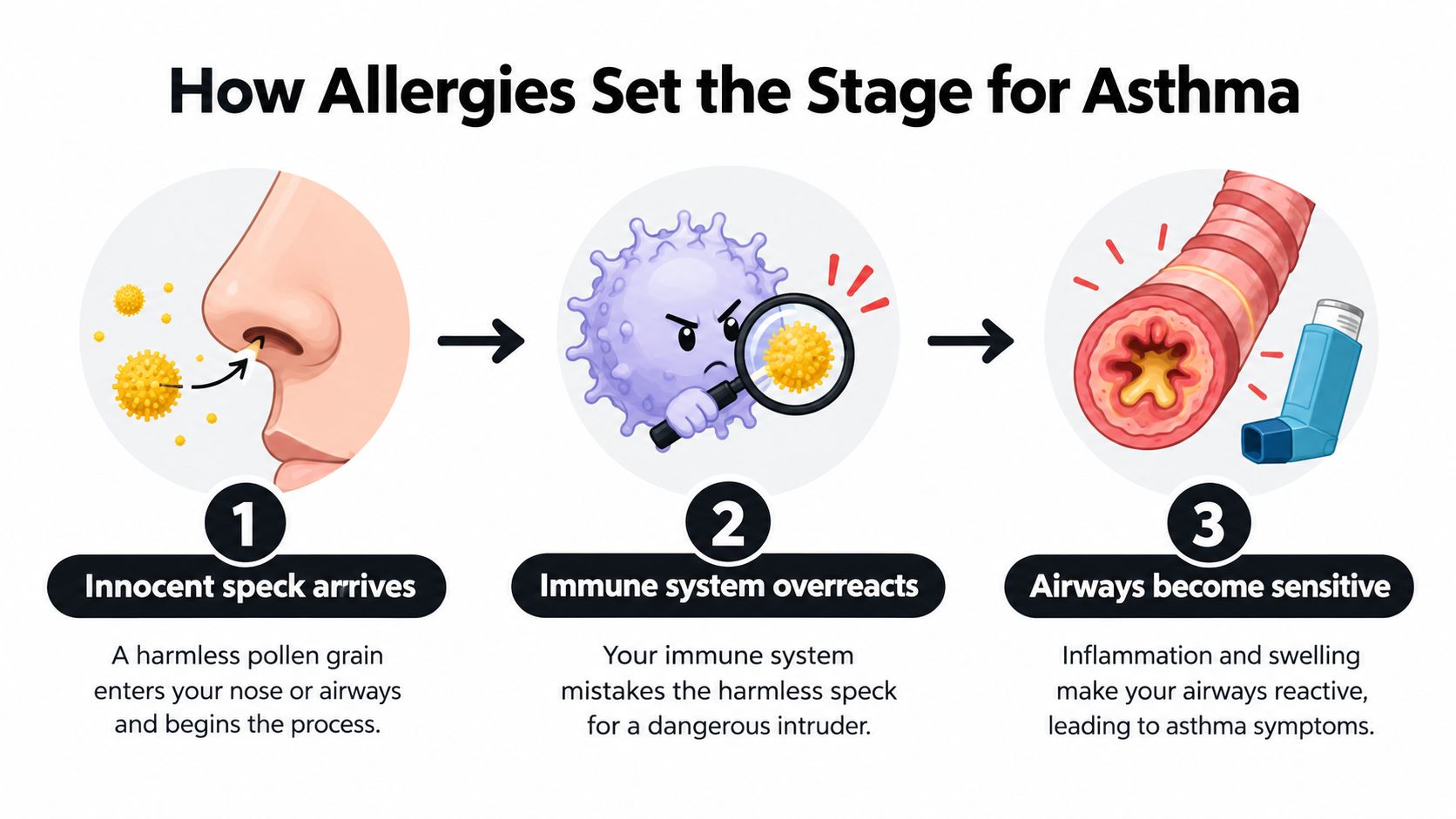
The first act, the immune system sets the alarm
In allergic asthma, the body makes IgE antibodies to a specific allergen. The AAAAI notes that between 60% and 80% of adults and children with asthma have at least one positive immediate skin-test response to an environmental allergen, which helps explain why allergy and asthma so often travel together (AAAAI environmental allergen avoidance parameter).
IgE works like the wrong key placed into a very touchy alarm system. After sensitization happens, the allergen binds to IgE sitting on mast cells and basophils. Those cells release inflammatory chemicals such as histamine, cysteinyl leukotrienes, prostaglandin D2, and proteases. The result is the early-phase asthmatic response, where the airway muscles tighten and the breathing tubes narrow, leading to wheeze, cough, or chest tightness (NCBI overview of allergic asthma mechanisms).
This is the part many families miss. The allergen did not create asthma out of nowhere in that moment. It triggered an airway reaction in someone whose immune system had already been primed to overreact.
A home example helps. A child pets the family cat after school and seems fine through dinner. Later, at bedtime, the child starts coughing and says it feels hard to pull in a full breath. The contact happened earlier, but the airway alarm was already switched on.
The second act, inflammation keeps going
Several hours later, the reaction can continue. Eosinophils and T cells move into the airway tissue, and airway lining cells release signals including thymic stromal lymphopoietin, interleukin-33, and interleukin-25. The same NCBI overview notes that these signals help keep type 2 inflammation going.
That delayed wave is one reason symptoms can linger after the room looks clean or the pet is out of sight. It also helps explain patterns at home, especially in bedrooms. If morning symptoms leave you unsure whether the issue is dryness, dust, or allergy, this guide on waking up congested can help you sort through common home causes.
For a practical home-focused explanation of how allergens can worsen chest symptoms, see can allergies make asthma worse.
Allergic sensitization can set the stage for asthma symptoms, but it is not the only path into asthma. Two people can share the same air and still react very differently.
Symptoms That Overlap and the Red Flags You Should Not Ignore
Many families get stuck here. The nose, skin, throat, and lungs can all react to the same environment, and the symptoms blur together. The key is to ask where the reaction is happening.
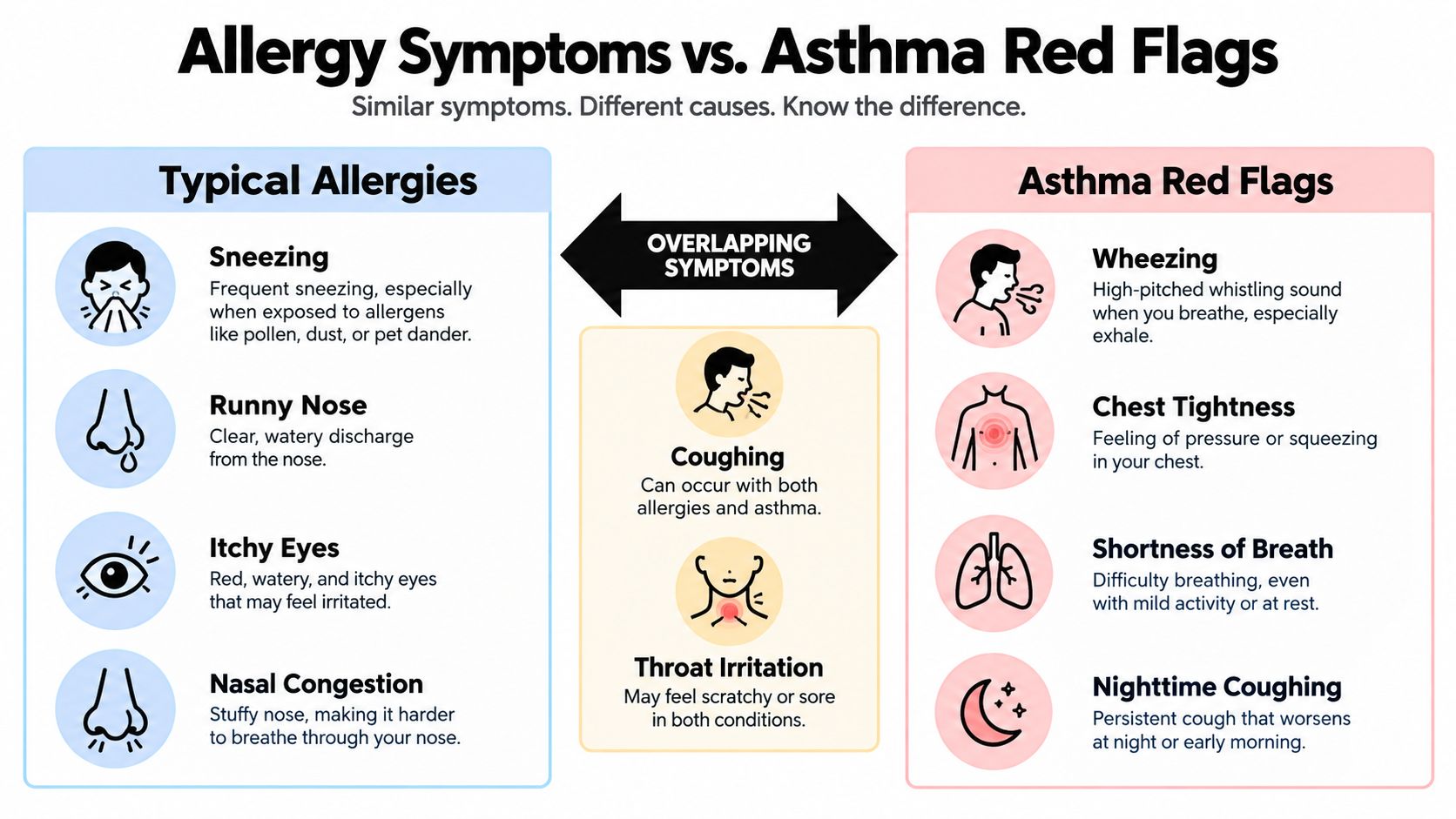
What usually points to allergy and what points to asthma
Symptom pattern | More typical of | What it can feel like at home |
|---|---|---|
Sneezing, itchy or runny nose, nasal congestion, itchy eyes | Allergic rhinitis | Morning stuffiness, constant tissues, rubbing eyes after being outside |
Hives or eczema flares | Skin allergy | Itchy rash after contact or flare-prone dry skin |
Wheezing, chest tightness, shortness of breath, persistent cough | Lower-airway symptoms | Noisy breathing at bedtime, cough after running, tight chest during a cold |
A child who sniffles during spring might only have hay fever. A child who coughs after recess, wakes at night coughing, or wheezes during a cold may have asthma layered on top of allergy. An adult may describe it as “allergies in my chest,” but that phrase usually means the lungs need attention, not just the sinuses.
A useful way to think about it is this: allergy often irritates the upper airway, while asthma affects the lower airway. If you're sorting out how indoor air can affect both, this article on indoor air quality effects on health is a helpful companion.
Red flags that shouldn't wait
Call a clinician promptly if breathing symptoms are recurring, especially if they show up in patterns like these:
Night cough: Coughing that wakes a child or adult from sleep.
Exercise symptoms: Wheezing or chest tightness after running or active play.
Cold-triggered chest symptoms: A “simple cold” that repeatedly turns into chest tightness or prolonged coughing.
Repeated lower-airway symptoms: Ongoing shortness of breath, chest pressure, or noisy breathing.
Seek urgent care right away if someone has trouble speaking in full sentences, lips or fingernails look bluish, ribs pull in while breathing, or a rescue inhaler isn't helping.
When symptoms move below the nose and into the chest, don't assume it's “just allergies.”
A simple symptom log can make the next medical visit far more useful. Write down the time, place, likely trigger, and whether symptoms stayed in the nose or moved into the lungs.
Common Triggers at Home, Outside, and in the Air You Share
Once you know what symptoms you're tracking, the next question is what keeps setting them off. The answer usually isn't “everything.” It's usually a smaller set of triggers that matter because the person is sensitized to them, exposed often, or both.
The AAAAI identifies dust-mite droppings, animal dander, cockroach droppings, and mold as major indoor allergen sources. It also reports that more than 50% of homes have at least six detectable allergens, which helps explain why ordinary houses can bother sensitive airways even when they look tidy (AAAAI managing indoor allergens).
Three buckets that make trigger-hunting easier
Indoor sources are the exposures you live with day after day. Dust mites concentrate where people shed skin and sleep, such as bedding, upholstered furniture, and carpet. Pets shed dander into soft surfaces and clothing. Cockroach debris can linger in kitchens and wall spaces. Mold often shows up where leaks, dampness, or persistently high humidity give it a foothold.
Outdoor sources that travel indoors cause more confusion than people expect. Pollen can ride in on shoes, jackets, hair, pet coats, and open windows. That means a bedroom can feel like an “indoor” problem even when the trigger started outside.
Irritant amplifiers don't have to be allergens to worsen asthma. Tobacco smoke, strong fragrances, cleaning fumes, wildfire smoke, and cold dry air can aggravate already sensitive airways.
For many households, simplifying surfaces and reducing dust reservoirs makes the rest of the plan easier to maintain. These organizing tips for a greener home are useful because clutter control often supports allergy control too.
Where Common Allergens Hide and How to Cut Exposure
Trigger | Where it concentrates | Most effective reduction step |
|---|---|---|
Dust mites | Mattresses, pillows, bedding, carpet, upholstered furniture | Focus first on the bedroom, especially bedding and mattress protection |
Pet dander | Upholstery, rugs, bedding, pet sleeping areas, clothing | Keep pets out of sleeping spaces and clean soft surfaces regularly |
Cockroach debris | Kitchens, pantries, under sinks, wall voids | Remove food sources, seal containers, and address infestation promptly |
Mold | Bathrooms, around leaks, damp closets, HVAC moisture areas | Fix moisture problems and dry affected areas quickly |
Pollen tracked indoors | Entryways, clothing, pet fur, windowsills, bedding | Change clothes after outdoor exposure and limit open-window entry during peak periods |
If dust mites are high on your list, this practical guide on how to remove dust mites from home can help you turn that table into action.
Why Asthma Can Flare Even When the House Feels Spotless
A clean-looking house can still be a hard place to breathe. That's one reason the question can allergies cause asthma often stays confusing. People mop, vacuum, and wash bedding, yet the cough, wheeze, or chest tightness keeps returning.
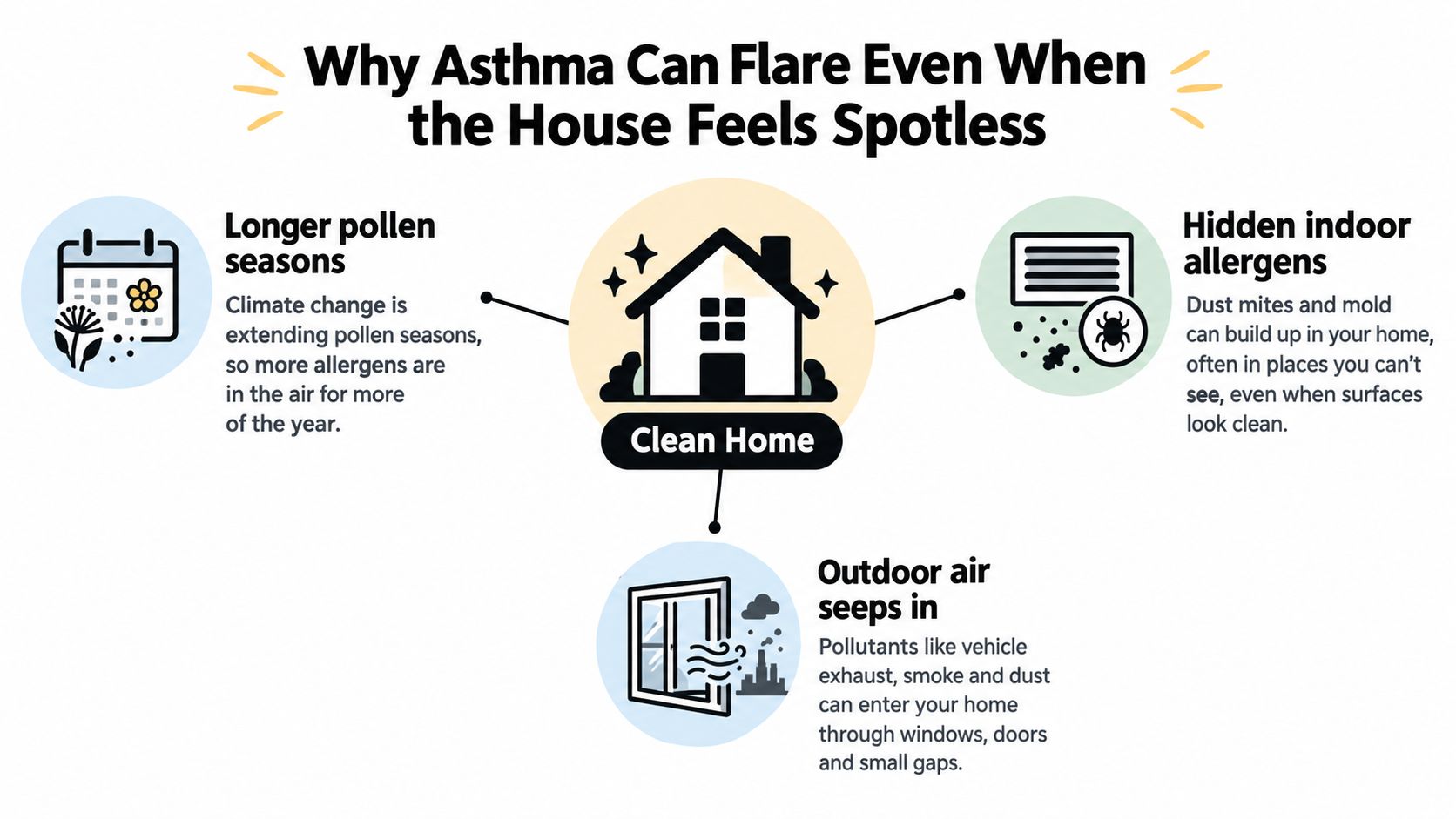
The missing piece is often outdoor allergen load. The European Climate and Health Observatory reports that pollen affects about 40% of Europeans and that climate change is extending pollen seasons, raising pollen concentrations, and intensifying allergenicity, with air pollution amplifying those effects (European Climate and Health Observatory on pollen). In plain terms, a person can do many things right indoors and still get hit by a longer, stronger outdoor pollen season.
How outside air keeps following you in
Outdoor triggers don't need an open front door to enter. Pollen comes in on hair, jackets, backpacks, and pet fur. It can move through ventilation and fresh-air cycles. A child may play soccer in the afternoon, shower too late, then spend the night sleeping in pollen that came home on clothes and skin.
That also means home fixes have limits. Air cleaning and dust reduction matter, but they don't erase what the region's pollen and pollution are doing to sensitive lungs. If outdoor air quality is part of the picture where you live, this article on outdoor air pollution adds useful context.
The practical takeaway
Indoor work is still worth doing. It reduces the background burden on the airway. But during heavy pollen periods, the smarter plan is combined: follow pollen conditions locally, keep windows closed during peak times, change clothes after outdoor exposure, and ask a clinician whether seasonal treatment changes make sense.
A spotless coffee table doesn't mean the airways are safe. The trigger may be regional, seasonal, and already riding in on daily life.
A Practical Plan to Reduce Triggers at Home
Good asthma prevention at home isn't about doing everything. It's about doing the few things that lower the biggest exposures in the rooms where breathing problems show up most often.
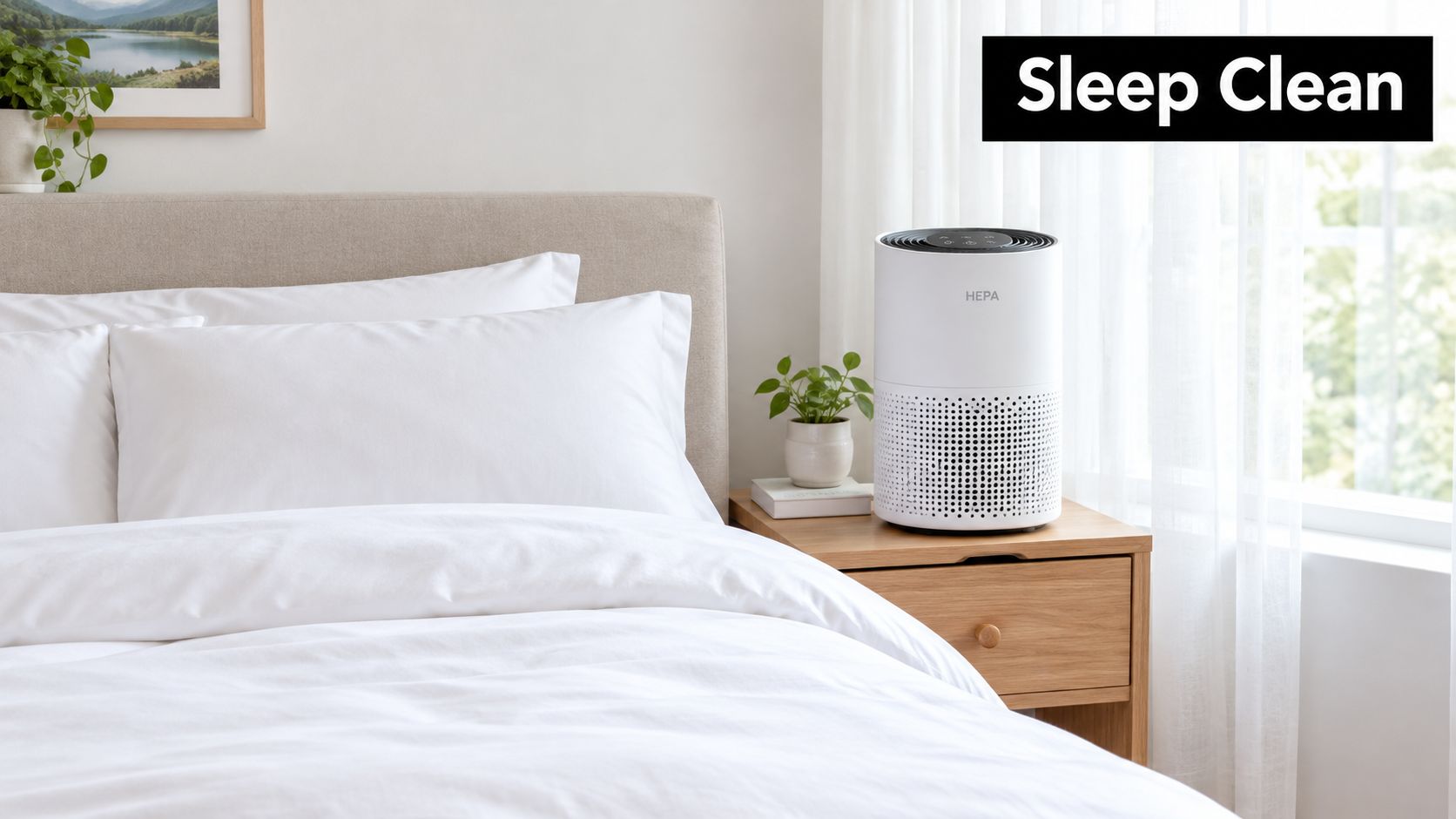
Start with the bedroom
The bedroom matters because it's where people spend long, repeated stretches of time. If dust mites or pet dander are part of the problem, the bed can become a steady exposure point.
Cover the bed: Use allergen-proof covers on the mattress and pillows.
Wash bedding regularly: Hot-water laundering helps reduce dust-mite burden over time.
Control moisture: Keep bedroom humidity under 50% to make life harder for dust mites and mold.
Protect sleep space: If pets trigger symptoms, keep them out of the bedroom, even if that change is unpopular at first.
If you want a practical, non-gimmicky overview of habits that can reduce dust mite symptoms naturally, that resource complements the bedroom plan well.
Clean living spaces with a targeted mindset
The point isn't to sterilize the home. It's to cut the surfaces that hold and recirculate allergens.
Hard flooring can be easier to manage than thick carpet in high-symptom rooms. Vacuuming helps most when the machine has a sealed HEPA system, because you don't want the vacuum to blow fine particles back into the room. Soft furniture, throw blankets, and pet sleeping spots deserve attention if symptoms worsen after time spent there.
For HVAC filtration, a MERV-11 or higher filter can be useful if the system is designed to handle it. Filter choice should match the equipment's capacity, because overly restrictive filters can reduce airflow in some systems. This guide to the best HVAC filter for allergies can help you think through that balance.
A short visual walkthrough can make these steps easier to picture in a real house:
Use duct cleaning realistically, not as a miracle cure
Ductwork can collect dust and debris, and cleaning it may help as part of a broader indoor air quality plan, especially when visible buildup or contamination is present. It shouldn't be treated as a stand-alone asthma treatment. Purified Air Duct Cleaning is one example of a company that provides duct cleaning and HVAC-related indoor air services, which can fit into a trigger-reduction strategy alongside filtration, moisture control, and source reduction.
Two habits make all these home steps more useful:
Keep a symptom and exposure diary: Write down what happened, where, and how the breathing symptoms felt.
Bring a short checklist to the appointment: Note bedrooms, pets, visible moisture, recent pollen-heavy days, and whether exercise or nighttime triggers symptoms.
These steps support prescribed treatment. They don't replace it.
Working With a Clinician and Knowing When to Seek Care
Home changes can lower exposure. They cannot confirm a diagnosis, measure lung function, or decide whether someone needs controller medication. That's why medical care is the foundation when asthma is suspected.
The NHLBI states that a positive allergy test demonstrates sensitization rather than disease. It recommends interpreting skin-prick or allergen-specific IgE results alongside symptom timing, exposure history, and seasonality, and suspected asthma usually requires medical assessment and lung-function testing (NHLBI asthma causes).
What clinicians are trying to sort out
A clinician usually wants to answer several practical questions. Are symptoms coming from the lower airway? Do they fit asthma, another breathing problem, or a mix of allergy and irritation? Does the person need a rescue inhaler, a controller inhaler, or both?
A rescue inhaler gives quick relief when the airway suddenly tightens. A controller inhaler is meant to calm airway inflammation over time and prevent symptoms from starting so easily. Families often understand the rescue inhaler right away because they can see it work. The controller matters just as much, because inflammation can continue even on “good” days.
When to call today and when to schedule soon
Call for urgent medical help if any of these happen:
Trouble speaking normally: The person can't finish full sentences comfortably.
Color change: Lips or fingernails look bluish.
Visible breathing struggle: Ribs pull in during breathing.
Rescue medicine isn't helping: Symptoms remain significant after using the prescribed quick-relief inhaler.
Schedule an evaluation soon if these patterns are showing up:
Nighttime cough: Symptoms interrupt sleep.
Exercise symptoms: Running or active play repeatedly causes cough, wheeze, or chest tightness.
Frequent rescue use: A rescue inhaler is needed regularly rather than occasionally.
A positive allergy test answers, “Is the immune system sensitized?” It doesn't answer, “Does this person definitely have asthma?”
That distinction is where many families finally get unstuck.
Bringing It All Together and Your Next Steps
The clearest answer to can allergies cause asthma is yes, but with an important qualifier. Allergies can cause or strongly trigger asthma through sensitization and airway inflammation, yet they are not the only cause of asthma. And because asthma is a mixed, heterogeneous condition, a positive allergy test alone doesn't settle the diagnosis.
That broader picture fits what clinicians see every day. Cleveland Clinic reports that approximately 25 million people in the United States have asthma, and about 60% of that group has allergies, which shows that allergic asthma is common, but not the only asthma pattern people live with (Cleveland Clinic allergic asthma overview).
Five things to do this week
Keep a one-week diary: Write down symptoms, timing, likely triggers, and whether the reaction stayed in the nose or moved into the chest.
Book a visit if lower-airway symptoms have appeared: Wheezing, chest tightness, shortness of breath, or recurrent night cough deserve a medical assessment.
Set a bedroom humidity target: Keep it under 50% if possible.
Review your HVAC filter: Consider MERV-11 or higher if your system can handle it.
Change pollen habits: Keep windows closed during peak pollen periods in your area and change clothes after outdoor exposure.
The good news is that allergic asthma is manageable. People usually breathe easier when they stop chasing every possible trigger, focus on the relevant ones, and pair home changes with proper medical care.
If you're trying to reduce indoor triggers that may aggravate allergy and asthma symptoms, Purified Air Duct Cleaning offers residential and commercial services such as air duct cleaning, HVAC coil cleaning, dryer vent cleaning, and air purification support that can fit into a broader home air-quality plan. To see what they provide and decide whether it makes sense as one part of your trigger-reduction strategy, visit Purified Air Duct Cleaning.