

Can Allergies Make Asthma Worse and How to Breathe Easier
You wake with a blocked nose, itchy eyes, and a cough that feels deeper than your usual seasonal irritation. By midday, your chest feels tight, you're wheezing more often, and you're reaching for your rescue inhaler sooner than expected. It's natural to wonder: can allergies make asthma worse, or is something else driving the change?
Yes, allergies can worsen asthma, especially when you're exposed to an allergen your immune system recognizes. The connection involves more than a runny nose. Allergic inflammation can make the airways swollen and unusually reactive, so pollen, dust mites, pet allergens, mold, or cockroach particles may provoke stronger symptoms.
This guide follows that connection from immune response to practical home decisions. You'll learn why allergic inflammation affects the lungs, how to recognize a worsening pattern, what indoor exposures deserve attention, and which allergy treatments help the nose without directly replacing asthma treatment. You can also review broader our respiratory health advice for general breathing support.
Indoor air matters because your home is where you spend much of your time, and allergens can settle in bedding, carpets, upholstery, HVAC systems, and poorly ventilated areas. A useful overview of allergies in air can help you think about exposure as an environmental issue, not only a medication issue.
Introduction Why Allergy Season Feels Harder When You Have Asthma
Opening a window on a high-pollen day can leave one person sneezing, while another starts coughing or wheezing. The difference may be an allergen adding inflammation to airways that are already sensitive. That is why the same pet, dusty room, or damp area can affect people so differently.
Allergies and asthma often occur together. A 2021 U.S. analysis found that 82.1% of people with current asthma had comorbid allergy symptoms. Adults with asthma who reported allergy symptoms also had a higher likelihood of asthma attacks, with an adjusted prevalence ratio of 1.23, 95% CI 1.04–1.46. These findings do not mean allergies will trigger a flare for everyone. They show why changes in breathing deserve attention rather than being dismissed as nasal symptoms alone.
Watch for a pattern after opening windows during pollen season, cleaning a dusty room, visiting a home with pets, or spending time near damp materials. Exposure may increase airway reactivity without causing an immediate, dramatic reaction. You may then be more sensitive to a virus, smoke, exercise, or another irritant.
Practical rule: Treat a new pattern of worsening breathing as useful information, not as something to dismiss as “just allergies.”
Start with symptom awareness, a clinician-directed asthma plan, and practical exposure control. Allergy treatment may ease nose and eye symptoms, but it does not replace asthma treatment. Homeowners can also review allergies in air and our respiratory health advice when considering indoor air decisions and broader breathing support.
How Allergies Trigger Asthma Inside Your Airways
Think of your airways as flexible tubes that carry air to the lungs. In asthma, those tubes can respond too strongly to threats. An allergen that causes only sneezing in one person may activate a much larger inflammatory response in someone with allergic asthma.
The immune alarm
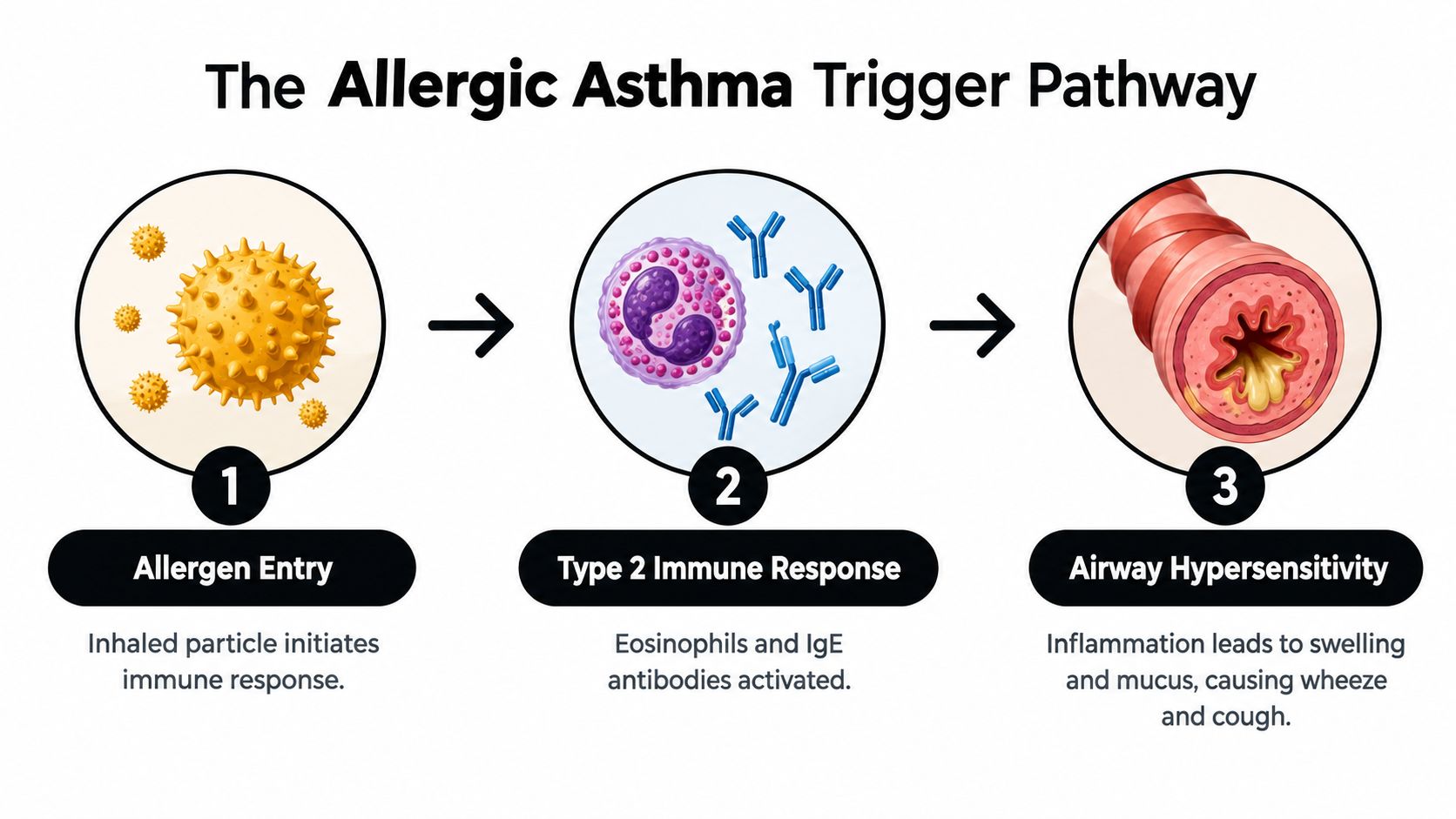
Allergic asthma is associated with a type 2 T-helper cell immune response and eosinophilic airway inflammation. In plain language, the immune system treats a normally harmless particle, such as pollen or dust-mite allergen, as a serious danger. Immune signals then recruit cells and chemicals that irritate and narrow the breathing tubes.
Allergen exposure can release mediators such as histamine and leukotrienes. These substances can tighten airway muscles, increase swelling, and contribute to mucus production. The result may be coughing, wheezing, chest tightness, or shortness of breath.
Why small exposures can feel substantial
Airway hyperresponsiveness, often abbreviated as AHR, means the lungs constrict more readily than expected. The exposure doesn't need to produce a dramatic allergic reaction to matter. It may lower the threshold at which cold air, activity, smoke, infection, or another trigger causes symptoms.
Chronic exposure can also contribute to structural changes in the airway wall. Research summarized in the European Respiratory Journal describes how allergen-induced AHR can persist even after much of the cellular inflammation has subsided. That finding helps explain why symptoms or sensitivity may continue after the original exposure seems to have passed.
The process often follows this sequence:
The allergen enters: You inhale or contact a substance your immune system recognizes.
The immune response activates: Type 2 signaling promotes eosinophilic inflammation and related allergic activity.
The airway reacts: Muscle tightening, swelling, mucus, and heightened sensitivity restrict airflow.
A runny nose can add another problem. Nasal congestion may encourage mouth breathing, which lets colder and drier air reach the lower airways. Postnasal drainage can also prolong coughing, although not every cough during allergy season comes from the nose.
For a home-focused way to identify possible sources, use this practical guide to asthma triggers in the home. A short educational video can also reinforce the difference between airway inflammation and bronchial narrowing.
How Common Is Allergic Asthma and Why Overlap Matters
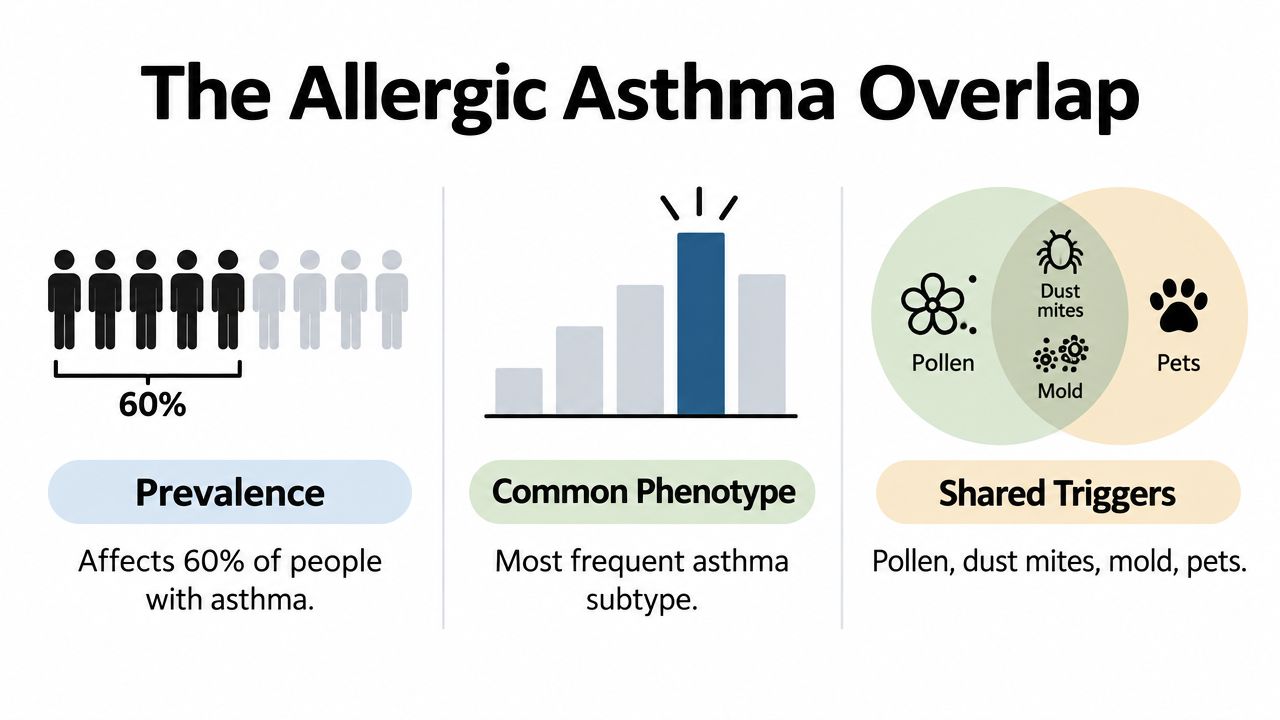
Allergic asthma affects a large share of people with asthma. A major medical reference reports that about 262 million people worldwide had asthma in 2019, while U.S. asthma prevalence was about 27.5 million people, or 8.4% of the population (global and U.S. asthma statistics). The same reference describes allergic asthma as the most common form and cites NIH-based estimates placing it at roughly 60% of U.S. asthma cases.
Other allergy sources estimate that allergic triggers may be present in up to 80–90% of children and about 50% of adults with persistent asthma. These figures describe different asthma populations, so they are not interchangeable. Together, they show why allergies deserve attention in asthma care: for many people, the immune response to allergens is part of the airway problem.
The 2021 U.S. analysis provides additional population context. It reported that 7.8% of the U.S. population had current asthma in 2021, including 7.1% of children and adolescents and 8.0% of adults, while 52.3% of the population had at least one allergy symptom (2021 analysis of asthma and allergy symptoms).
Why overlap changes the conversation
If you have asthma and recurring congestion, itchy eyes, or seasonal symptoms, those problems may belong to the same inflammatory pattern rather than being separate annoyances. The connection matters at home because reducing an allergen source can lower exposure, while allergy treatment does not replace asthma treatment or directly relax narrowed airways.
Adults also deserve close attention when allergy symptoms and asthma occur together. The 2021 analysis found that adults with asthma and any allergy symptoms had a higher likelihood of asthma attacks. That association does not prove that an allergen caused every attack, but a change in allergy symptoms and asthma control warrants attention.
A positive allergy test needs context. Sensitization means the immune system reacts to an allergen. Symptoms still depend on whether exposure occurs, how much reaches you, when it happens, and what other conditions are present. The practical question is: Do symptoms repeatedly worsen after a specific exposure?
That pattern can guide focused choices about cleaning, ventilation, allergy treatment, and asthma care. It is usually more useful than trying to avoid every possible allergen, and it gives you clearer information to discuss with a healthcare professional.
Common Indoor and Outdoor Triggers That Worsen Asthma
Asthma guidelines identify house dust mites, pets, pollens, and cockroach particles as important aeroallergens for sensitized patients (GINA 2024 summary guide). Other indoor concerns include mold and mouse allergen. The key word is sensitized. Exposure doesn't affect everyone in the same way.
An allergen can increase airway reactivity without causing a full, obvious attack. You may experience more frequent cough, easier wheezing, or a tighter chest later in the day, particularly when another trigger is present.
Allergen | Where It Collects Indoors | Evidence of Asthma Link |
|---|---|---|
House dust mites | Bedding, mattresses, carpets, upholstered furniture | Archived CDC material reported an association between dust-mite allergen and dust-mite sensitization and asthma, with an odds ratio of 2.55, 95% CI 1.3–5.1 (archived CDC and EPA material). |
Pet allergens | Upholstery, carpets, bedding, clothing, and settled household dust | Pet allergens can worsen symptoms in people who are sensitized, even when the animal isn't in the room. |
Cockroach particles | Kitchens, bathrooms, wall gaps, cabinets, and other areas with food or moisture | EPA reporting links cockroach allergen with asthma exacerbations, including increased emergency room visits and hospitalizations (EPA asthma disparities report). |
Mold | Damp rooms, leaks, bathrooms, basements, HVAC components, and water-damaged materials | Mold is recognized as an indoor asthma trigger, particularly for people with relevant sensitization. |
Mouse allergen | Droppings, nesting areas, wall voids, and settled dust | An NIEHS summary notes that elevated mouse allergen levels increased the likelihood of asthma symptoms in allergic individuals (NIEHS-related review). |
Pollen | Open windows, entryways, clothing, pets, and tracked-in dust | Outdoor pollen can enter the home and affect sensitized people, especially during active pollen periods. |
Exposure is personal
A dusty room isn't automatically an asthma trigger for every resident. Guidelines caution that allergen avoidance isn't universally helpful, which is why testing and symptom patterns matter.
Indoor air decisions should also include the HVAC system. If dust and allergens accumulate in accessible ductwork or return areas, homeowners may want to learn how to minimize allergens in HVAC ducts. Outdoor pollution can add a separate burden, so this overview of outdoor air pollution may help you distinguish allergens from nonallergic irritants.
Signs Your Allergies Are Making Asthma Worse
A worsening pattern usually shows up as a change from your baseline. You may wake with a cough during a high-pollen period, wheeze after cleaning a dusty room, or notice chest tightness after visiting a home with a cat. The timing doesn't prove the cause, but repeated timing gives you a useful clue.
Watch for changes in breathing
Common signs include:
More frequent coughing: A cough that appears more often, especially at night or after exposure, may signal rising airway sensitivity.
Wheezing: A whistling sound during breathing can indicate narrowed airways.
Chest tightness: A band-like or heavy feeling in the chest deserves attention when it accompanies allergy symptoms.
Nighttime disruption: Waking because of coughing, wheezing, or breathlessness suggests asthma isn't as settled as usual.
More rescue inhaler use: Needing your quick-relief medicine more often than directed in your asthma plan is a reason to review control with your clinician.
Breathing trouble after exposure: Symptoms that follow dust, pets, pollen, mold, or cockroach exposure may point toward an allergic contribution.
Use a simple pattern log
Record the date, location, suspected exposure, nasal symptoms, chest symptoms, activity, sleep disruption, and medication use. Include other possible triggers, such as a cold, smoke, strong odors, or exercise. A symptom diary won't diagnose allergic asthma, but it can make a clinical appointment more productive.
Pay attention to severe warning signs. If you're struggling to speak normally because of breathlessness, your breathing is rapidly worsening, your prescribed rescue medicine isn't helping as directed, or you feel seriously unwell, seek urgent medical help. Follow your personal asthma action plan rather than waiting for symptoms to settle.
You can also use this guide to signs of poor indoor air quality when several household members notice irritation or symptoms increase at home.
Proven Ways to Prevent Allergy Driven Asthma Flare Ups
Prevention works best as a layered plan, not as a promise to remove every particle from your environment. Start with the allergen most strongly connected to your symptoms, then combine exposure reduction with appropriate medical treatment.
Begin with confirmed or suspected sensitization
If testing identifies dust mites, focus on bedding and upholstered surfaces. If pets are the issue, keep them out of the bedroom and reduce settled allergen where practical. Cockroach control requires sanitation, sealing entry points, and professional pest management when needed. Visible moisture or mold calls for correcting the water source, not masking the smell.
For pollen, keeping windows closed during high-exposure periods may help, while changing clothes and washing after outdoor activity can reduce what you carry into bedding and furniture. In dry, dusty places such as the Phoenix area, cleaning routines should account for both outdoor dust and indoor reservoirs.
Improve the air without confusing the tools
A suitable HVAC filter, regular replacement, and correct installation can support cleaner air, but a filter can't solve every source problem. A portable purifier may help in a bedroom or other occupied area, while duct, vent, and HVAC coil cleaning may be appropriate when inspection finds substantial dust or debris.
Homeowners comparing equipment can review this guide to the best HVAC filter for allergies. If you're trying to lower indoor allergens naturally, focus on consistent dust removal, washable bedding routines, moisture control, and keeping clutter from creating hidden reservoirs.
A cleaner room is useful, but targeted control is better than expensive changes based on guesswork.
Understand what allergy medicine can and cannot do
Antihistamines and nasal corticosteroids primarily treat allergic rhinitis. They may reduce nasal inflammation and improve quality of life, but they aren't substitutes for asthma controller medication or a clinician-directed asthma plan. Leukotriene receptor antagonists can have specific roles, yet guidance distinguishes treatment of rhinitis from direct treatment of asthma.
A 2015 survey found knowledge gaps across specialties, with many non-pulmonologists incorrectly viewing antihistamines, intranasal corticosteroids, or leukotriene receptor antagonists as direct asthma treatments (survey on medication understanding). More recent ARIA-EAACI recommendations continue to separate allergic-rhinitis treatment from asthma treatment. Ask your clinician how each medication fits your own diagnosis instead of changing asthma medicines independently.
Taking Control and When to Get Professional Help
Allergies can make asthma worse when a sensitized person encounters a relevant allergen. The exposure activates inflammation, the airways become more reactive, and symptoms may become easier to trigger. That connection is meaningful, but it also gives you practical places to intervene.
Track patterns rather than guessing. Note where symptoms begin, what was in the environment, whether nasal symptoms appeared first, and whether your prescribed treatment worked as expected. Bring that record to your clinician, especially if nighttime symptoms, activity limits, or rescue inhaler use are changing.
Professional help makes sense when symptoms persist, suspected triggers are unclear, or your home has signs of moisture, mold, pest allergen, or substantial HVAC contamination. An allergy evaluation can help identify sensitization, while an asthma review can confirm whether your controller plan needs adjustment. An indoor air quality assessment can identify environmental problems that medication alone won't correct.
Purified air technology may be one part of a broader plan. Purified Air Duct Cleaning provides residential and commercial duct cleaning, dryer vent cleaning, HVAC coil cleaning, and installation of in-duct or portable ActivePure air purification systems across the Phoenix metropolitan area. These services don't replace asthma care, but they can address specific indoor air concerns alongside medical guidance and targeted allergen control.
The goal isn't a perfectly allergen-free home. It's a home and treatment plan that reduce meaningful exposures while keeping asthma care on track.
If dust, allergens, HVAC buildup, or persistent indoor breathing concerns are affecting your household, Purified Air Duct Cleaning can evaluate ductwork, vents, coils, and purification options for your property. Request a quote, describe the symptoms and indoor patterns you've noticed, and take the next practical step toward cleaner air.