

What Happens When Dryer Vent Is Blocked? Find Out Now
Updated: Sep 15, 2025
So, what exactly happens when a dryer vent gets blocked? It’s not just some minor inconvenience; it's a serious household hazard waiting to happen. A clog traps super-heated air right next to highly flammable lint, creating a dangerous cocktail that can lead to fires, wreck your appliance, and even release toxic gases into your home.
The Hidden Dangers of a Clogged Dryer Vent
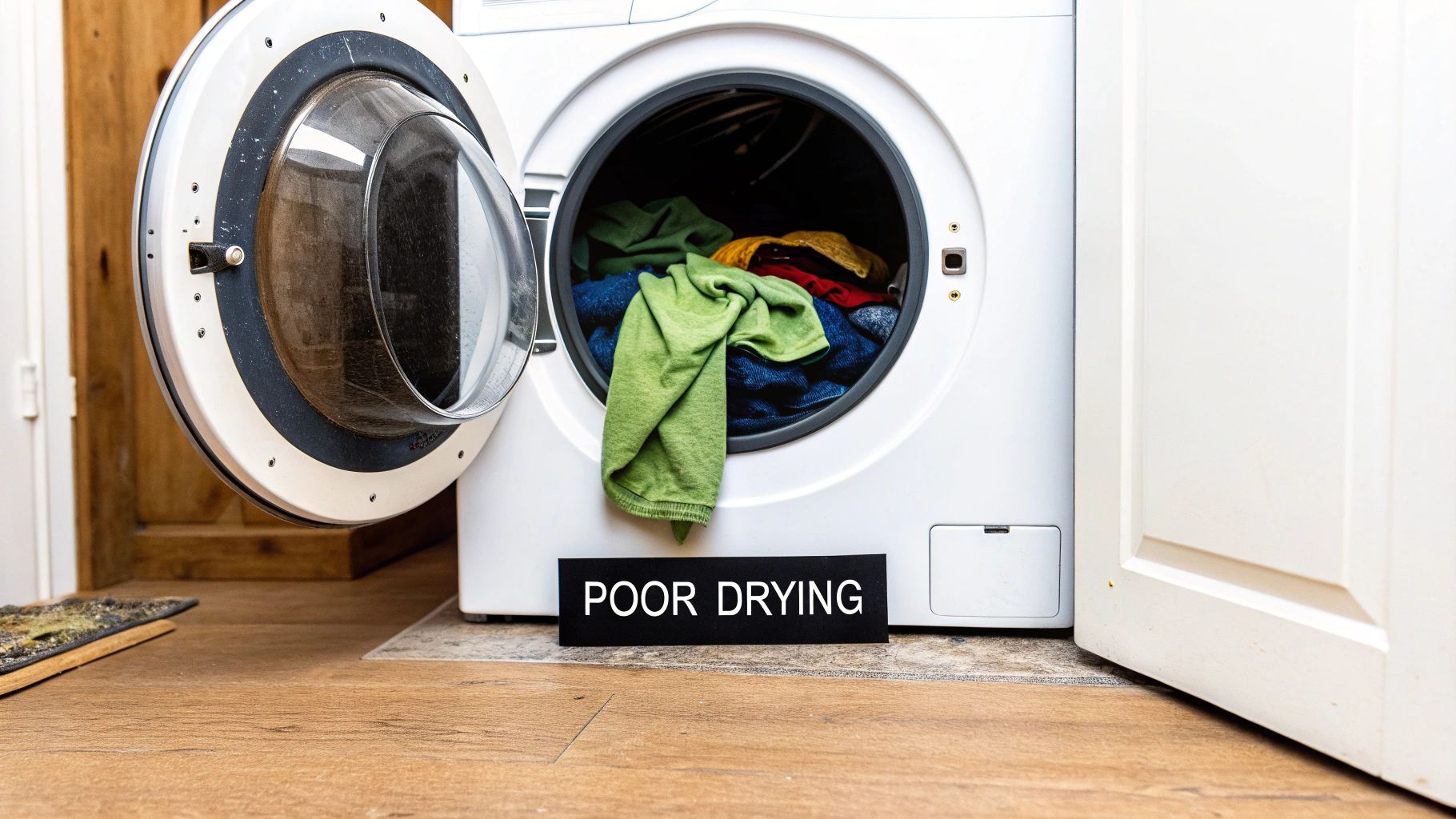
Think of your dryer vent like the exhaust pipe on your car. If you plugged it up, dangerous fumes would build up, the engine would overheat, and eventually, it would just die. It’s the same idea with your dryer. A blocked vent forces the machine to work against itself, leading to a whole host of serious, and often expensive, problems. The entire system is designed for one simple job: to push hot, moist, lint-filled air safely outside.
When that pathway is obstructed, the whole process grinds to a halt. Your dryer, which absolutely depends on good airflow to work properly, suddenly has nowhere to send all the intense heat it’s generating. This trapped heat and moisture kick off a domino effect of issues that go way beyond just having damp clothes.
More Than Just a Nuisance
A clogged vent is so much more than an annoyance. It’s a critical safety issue that quietly builds up behind your walls. Over time, lint, debris, and sometimes even birds’ nests can pack into the ductwork, slowly choking off the airflow until the system just can't breathe anymore. This build-up turns a helpful appliance into a genuine threat.
Ignoring a blocked vent has real consequences that impact everything from your family's safety to your monthly utility bills. The primary risks include:
Increased Fire Hazard: Trapped lint is incredibly flammable. When it's exposed to the dryer's extreme heat, it can easily ignite, making it the number one cause of dryer-related house fires.
Appliance Damage: Overheating puts a massive strain on the dryer’s motor, heating element, and other critical parts. This leads to premature breakdowns and costly repair bills.
Health Risks: If you have a gas dryer, a blockage can cause deadly carbon monoxide to back up into your home. On top of that, all the trapped moisture creates a perfect breeding ground for mold and mildew.
To give you a clearer picture, here's a quick breakdown of what you're up against.
Key Risks of a Blocked Dryer Vent at a Glance
Risk Type | Description | Severity Level |
|---|---|---|
Fire Hazard | Highly flammable lint buildup ignites from the dryer's heating element. | Critical |
Carbon Monoxide | For gas dryers, toxic fumes can back up into the home instead of venting outside. | Critical |
Appliance Failure | Overheating causes severe strain on motors and components, leading to burnout. | High |
Mold & Mildew | Trapped moisture and heat create ideal conditions for mold growth in the vent and walls. | Medium to High |
Energy Waste | The dryer runs longer and works harder, significantly increasing utility bills. | Medium |
Ultimately, understanding what happens when a dryer vent is blocked is the first step toward preventing a disaster.
A blocked dryer vent is a silent hazard. The problems start small, like clothes taking longer to dry, but they can quickly escalate into life-threatening situations like a house fire or carbon monoxide poisoning if left unchecked.
This guide will walk you through the specific risks in more detail and show you how to spot the early warning signs, so you can keep your home, family, and appliances safe from these hidden dangers.
Understanding the Number One Risk: Fire Hazard
Of all the problems a blocked dryer vent can cause, one danger towers above the rest: the risk of a devastating fire. This isn't just a remote possibility; it's the single most critical hazard tied to poor dryer maintenance. That fluffy lint you clean from the trap might seem harmless, but it's incredibly flammable stuff.
When the vent gets clogged, all that superheated air from the dryer has nowhere to escape. This backup forces the internal temperature of the appliance to skyrocket to dangerous levels. Your dryer does have a built-in safety switch, called a high-limit thermostat, but under the constant stress of overheating, this crucial component can fail.
Once that safety fails, the heating element can get hot enough to ignite the trapped lint. Just picture it: the lint buildup acts like dry kindling packed tightly into a tiny space. It only needs a single spark or extreme heat to burst into flames. What starts as a simple efficiency problem can quickly escalate into a full-blown emergency.
The Science of a Dryer Fire
The process is frighteningly simple and dangerously fast. A clog, usually made of lint, blocks the airflow. The dryer has to work harder and gets hotter until, eventually, the trapped lint hits its ignition point.
From there, the flames can snake through the vent system, spreading rapidly inside the walls of your home. This is what makes these fires so destructive, they can cause massive structural damage before you even know there's a problem.
This infographic breaks down what's usually behind that initial blockage.
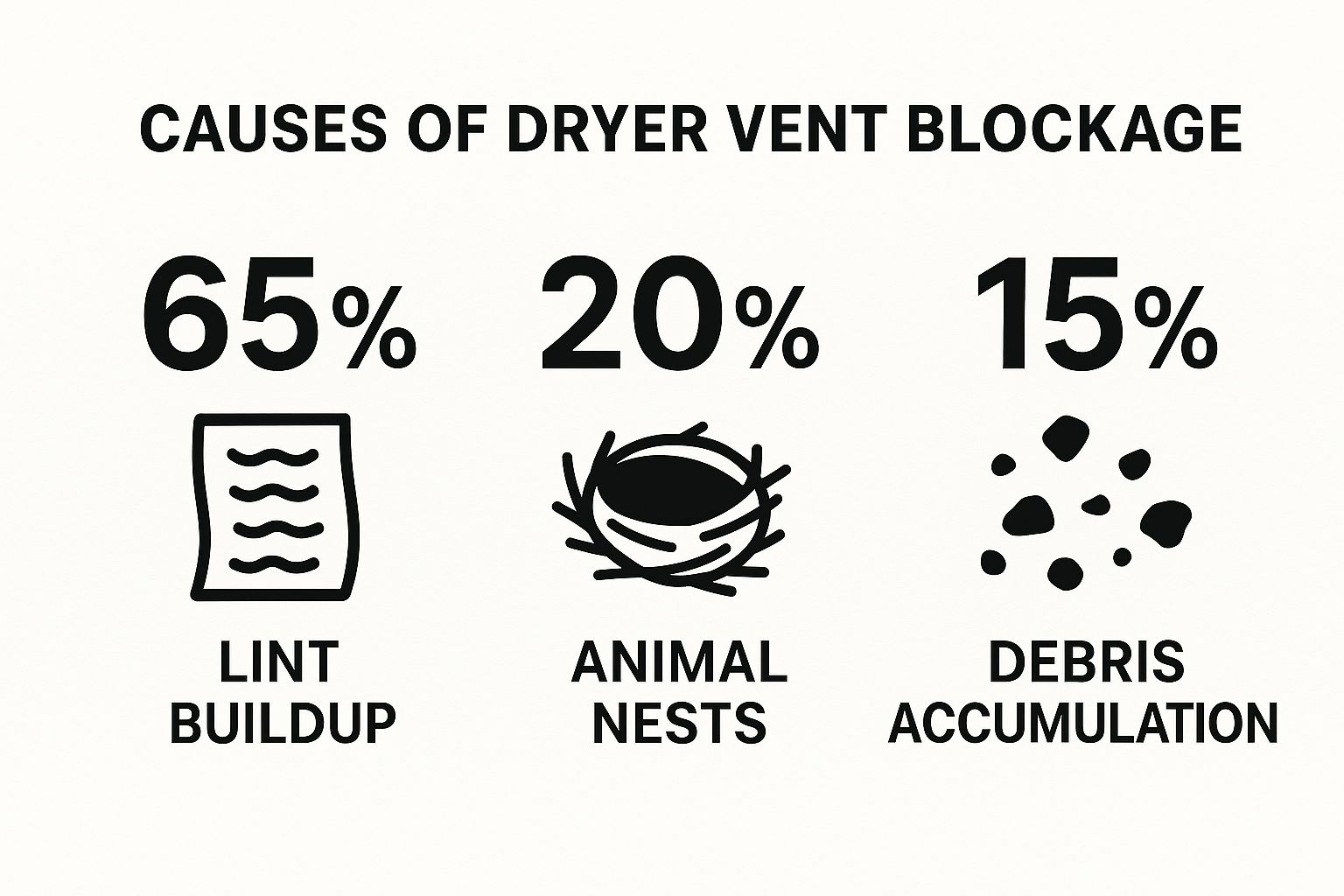
As you can see, simple lint buildup is responsible for the vast majority of clogs. This makes regular cleaning an absolute non-negotiable for home safety. Of course, animal nests and other debris can also create serious blockages that lead to the same fiery outcome.
A Preventable Disaster
The statistics on dryer fires are pretty sobering and really drive home the need for awareness. In the United States, clothes dryers are linked to around 15,600 structure fires each year, often with tragic results. A staggering 80% of these fires start with clogged dryer vents, making this the number one cause of what is ultimately a preventable disaster.
The leading factor contributing to clothes dryer fires is a "failure to clean," which accounts for one-third of all incidents. This simple act of maintenance is the most effective defense against a potential catastrophe.
At the end of the day, the fire risk from a blocked dryer vent is not something to gamble on. The combination of intense heat and highly flammable lint creates a perfect storm for a house fire. Understanding this link is the first step, and you can learn more about what to do in our guide to preventing a dryer lint fire hazard. Proper, routine maintenance is your best defense against this silent but serious threat.
Silent Threats: Carbon Monoxide and Mold
While a fire is the most dramatic risk of a blocked dryer vent, other dangers can quietly creep into your home, creating serious health issues. These silent threats, carbon monoxide and mold, can turn a simple laundry appliance into a source of toxic contamination.
If you have a gas dryer, the stakes are much higher. Gas dryers naturally produce carbon monoxide (CO) during their normal operation. This dangerous, odorless gas is supposed to be safely channeled outside through the vent.
But when that vent gets clogged, the fumes have nowhere to go. They get forced back into your laundry room and can spread throughout your entire home. Since you can't see or smell CO, a blocked vent can lead to a slow, life-threatening buildup right under your nose.
The Dangers of Carbon Monoxide
Carbon monoxide poisoning is a serious medical emergency. Even low-level exposure can trigger headaches, dizziness, and nausea, while higher concentrations can be fatal. This makes a clear, functioning vent an absolutely critical safety feature for any home with a gas dryer.
Beyond preventing fires, keeping your dryer vent clear is crucial for stopping silent threats like CO from entering your home. If your alarm ever goes off, you need to know [what to do if your carbon monoxide alarm goes off](https://www.harrlieplumbing.co.uk/post/what-to-do-if-carbon-monoxide-alarm-goes-off-essential-safety-tips) to protect your family. Proper ventilation is always your first and best line of defense.
A Breeding Ground for Mold
The threat isn't just limited to gas dryers, either. All dryers, both electric and gas, push hot, moist air through the vent. When lint clogs the line and traps that air, it creates the perfect breeding ground for mold and mildew.
The dark, damp interior of your dryer duct quickly becomes an incubator. Condensation from the trapped humid air provides the water, and the lint itself offers a steady food source.
The result is a hidden mold colony growing undetected inside your walls. This contamination tanks your home's indoor air quality, releasing spores into your living space every single time you run the dryer.
These spores can set off a whole range of health problems, hitting vulnerable individuals the hardest. The fallout from this hidden growth can include:
Allergic Reactions: Chronic issues like sneezing, coughing, itchy eyes, and skin rashes often have a hidden cause.
Respiratory Problems: For anyone with asthma or other breathing conditions, mold exposure can lead to more frequent and severe attacks.
Musty Odors: That persistent, musty smell in your laundry room that never seems to go away? That's a classic sign of mold in your vent system.
This airborne problem can spread well beyond the laundry room. To see how this issue can impact your entire house, check out our guide on the [signs of mold in air ducts](https://www.purifiedairductcleaning.com/post/signs-of-mold-in-air-ducts-how-to-remove-it). Ultimately, a blocked dryer vent is about more than just your appliance; it's about the health and safety of your home.
How a Blocked Vent Impacts Your Wallet

Beyond the alarming safety risks we've covered, a blocked dryer vent hits you right where it hurts: your wallet. It's a direct drain on your finances.
A clogged vent basically suffocates your dryer, crippling its efficiency. Instead of easily pushing hot, moist air outside, the machine is forced to work overtime, running much longer just to dry a single load of laundry. This isn't just a minor inconvenience; it's a problem that shows up clearly on your monthly utility bills.
Your dryer becomes a serious energy hog. Think of it like trying to run a marathon while breathing through a thin coffee straw. You'd get exhausted fast and burn way more energy than you should. That's exactly what your dryer is doing, causing a noticeable spike in your electricity or gas costs.
But the financial pain doesn't stop there. This constant strain also puts premature wear and tear on the dryer's most critical, and expensive, components.
The Hidden Costs of Overheating
When your dryer is constantly fighting to push air through a blockage, it overheats. This forces its internal parts to operate under extreme conditions they were never built for. We're talking about the heating element, the motor, and the thermostats. This relentless stress makes them break down much faster.
And these aren't simple, cheap fixes.
Replacing a burned-out heating element can be a costly repair.
A failed motor can set you back hundreds of dollars.
Constant overheating leads to frequent breakdowns that always seem to happen at the worst possible time.
Over time, these repair bills can add up to far more than routine maintenance ever would. Eventually, the appliance will just give up, forcing you to buy a brand-new one long before you should have to.
A dryer vent clog is a direct path to appliance failure. The constant overheating cycle is the primary cause of mechanical breakdowns, shortening the life of your dryer and leading to unexpected replacement costs.
To put this in perspective, let's look at how those extra run times add up over a year.
Estimated Cost of an Inefficient Dryer Per Year
This table breaks down the potential financial hit from a clogged dryer vent, based on how much longer your machine has to run to get the job done.
Blockage Level | Extra Run Time Per Load | Estimated Annual Cost Increase (Electric) | Estimated Annual Cost Increase (Gas) |
|---|---|---|---|
Minor | 10-15 minutes | $40 - $65 | $15 - $25 |
Moderate | 20-30 minutes | $85 - $130 | $30 - $50 |
Severe | 45+ minutes | $200+ | $75+ |
Note: These are estimates based on average utility rates and running 5 loads per week. Your actual costs could be higher.
As you can see, even a minor blockage is like throwing money away every month. A severe one can cost you as much as a new appliance over just a few years.
The financial fallout can even extend beyond your appliance and utility bills. In a worst-case scenario, a dryer fire could impact your insurance premiums. Understanding the average cost of homeowners insurance can help put the importance of preventative maintenance into context.
Investing in a professional cleaning is a small price to pay compared to the cascade of expenses a blockage can unleash. If you're curious about what to budget, our guide on the average cost of dryer vent cleaning has you covered. It’s a proactive step that saves you money, protects your dryer, and keeps your home safe.
Telltale Signs Your Dryer Vent Is Blocked
Spotting a blocked dryer vent early is crucial, and thankfully, your dryer will give you several clear warning signs. These aren't just quirks of an aging machine; they are direct symptoms of restricted airflow, signaling a problem that needs your immediate attention. Honestly, ignoring them is a gamble with both your home's safety and your wallet.
One of the first things you'll probably notice is that your clothes are still damp after a full drying cycle. If you find yourself constantly running the dryer a second or even a third time for a single load, a clog is the most likely culprit. The machine simply can't push the moist air out, so all that humidity gets trapped right there with your laundry.
Physical Clues from the Appliance and Vent
Beyond just damp clothes, you need to pay close attention to the dryer itself. An appliance that feels excessively hot to the touch during operation is a major red flag. This intense heat means the dryer is overheating because the hot air has nowhere to escape, creating a genuinely dangerous situation.
You might also notice a faint burning smell while the dryer is running. This distinct odor is often caused by the heating element scorching the trapped lint, the very first step toward ignition. This is a critical warning sign of what happens when a dryer vent is blocked and a fire hazard is building. For a complete rundown, you can explore our article on the top dryer vent clogged symptoms.
Lint build-up inside blocked vents is a primary cause of dangerous overheating. This single issue is responsible for around 34% of all dryer-related fires, which cause over $35 million in property damage annually in the U.S. alone. Discover more insights about these dryer fire statistics on pureairllc.com.
Simple Visual and Airflow Checks
A few quick visual inspections can easily confirm your suspicions. Go outside and take a look at the exterior vent opening. If you see visible lint and debris collecting around the vent cover or scattered on the ground below, it’s a clear sign the system is choked and spitting out what little it can.
Finally, there's a simple airflow test you can do yourself. While the dryer is running, just step outside and check the vent flap.
Proper Airflow: The vent flap should be pushed wide open, with a strong, steady stream of hot, humid air coming out.
Blocked Airflow: If the flap is barely moving, or worse, stays closed, it’s a dead giveaway that air isn't escaping like it should.
Each of these signs points to the same underlying problem: a blockage that is choking your dryer and creating a serious hazard in your home.
Your Guide to Proper Dryer Vent Maintenance
Knowing the risks of a blocked dryer vent is one thing; doing something about it is another. Proper maintenance is your single best defense against fires, a worn-out dryer, and even health issues. The best approach is a simple one: combine a few daily habits with a deeper, periodic cleaning to keep everything running safely and efficiently.
The absolute easiest and most important habit? Clean the lint trap after every single load. It’s a tiny action that stops the small buildups that turn into major clogs down the line. Beyond that, make a point to regularly check the exterior vent cap outside. You want to see that flap opening and closing freely, so clear away any lint, leaves, or snow that could be blocking the exit.
Combining DIY Habits with Professional Care
These quick checks are great, but they don't cover the whole picture. Over time, lint is going to find its way deep into the ductwork, no matter how diligent you are. This is especially true for longer vents or ones with a lot of twists and turns. That’s where you hit the limits of DIY and need to call in the pros.
For total peace of mind, experts strongly recommend a professional cleaning at least once a year. The numbers don't lie. Between 2010 and 2014, clothes dryers were linked to an average of 15,970 home fires each year, with lint buildup being the number one culprit. Those fires caused a staggering $238 million in property damage annually, which really drives home the importance of thorough maintenance. You can dig deeper into these dryer fire statistics on dryerventwizard.com.
A balanced maintenance plan is the secret. Your consistent DIY habits handle the day-to-day lint, while an annual professional cleaning tackles the hidden, deep-seated clogs that pose the greatest fire risk.
Knowing when to do it yourself and when to bring in an expert is what keeps your home safe. For a detailed walkthrough of what you can handle on your own, take a look at our guide on [how to safely and effectively clean your dryer vent pipe](https://www.purifiedairductcleaning.com/post/how-to-safely-effectively-clean-your-dryer-vent-pipe). This mix of regular upkeep and expert service is the most powerful way to prevent the serious problems that come with a blocked dryer vent.
Frequently Asked Questions
Knowing the ins and outs of dryer vent safety is one of the best things you can do to protect your home. Let's tackle some of the most common questions we hear from homeowners about keeping things running smoothly and safely.
How Often Should I Get My Dryer Vent Cleaned?
As a rule of thumb, we recommend a professional dryer vent cleaning at least once a year. That said, not every household is the same. You might need to call us in every six to nine months if your situation involves:
A big family that keeps the laundry machine running constantly.
Pets that leave a trail of fur everywhere they go.
A particularly long or complicated vent path with a lot of twists and turns.
These factors can cause lint to build up much faster, putting you at risk sooner than you might think.
What Kind of Vent Duct Should I Be Using?
This one is non-negotiable: you should never use those flimsy, flexible foil or plastic ducts. They're a serious fire hazard for a couple of key reasons. First, their accordion-like ridges are perfect for trapping lint, and second, they can get crushed easily, choking off the airflow.
The only safe choice is a rigid or semi-rigid metal duct. The smooth interior allows air and lint to move freely, drastically cutting down on the buildup that leads to a dangerous blockage.
Is Just Cleaning the Lint Screen Good Enough?
No, not even close. Wiping the lint screen clean after every load is an essential habit, but it's only the first line of defense. The screen catches a good chunk of lint, but plenty of it still gets forced into the vent system.
Over time, that escaped lint settles and builds up deep inside the ductwork, forming a stubborn clog that only a professional cleaning can truly remove.
Don't wait for a clogged vent to become a catastrophe hiding in your walls. Purified Air Duct Cleaning delivers expert dryer vent cleaning services to make sure your system is safe, efficient, and fire-free. Head over to https://www.purifiedairductcleaning.com to grab your free quote and give your family peace of mind today.