

Clean Dryer Vents Service: What to Know Before You Book
You notice the dryer needs longer to finish a load, and the laundry room feels warmer than usual. The lint screen looks clean, but that screen only catches some of what travels through the machine. A clean dryer vents service should check the whole exhaust route, because a clean filter can't tell you whether air is moving freely through the duct and out of the home.
The right time to book depends on how often the dryer runs, how the vent is routed, and whether warning signs have appeared. A useful visit doesn't just remove lint. It checks airflow, looks for damage or blockage, and tells you what cleaning can fix and what may need repair.
How a Dryer Vent Works and Why It Clogs
A conventional dryer's exhaust duct works a little like a chimney. It carries warm, moist air away from the dryer and out of the home, with some lint moving along in that airflow. The route starts inside the dryer, passes through the rear connection and a short flexible or rigid duct, then continues through the building to an exterior hood.
A vented dryer uses that outdoor exhaust route. A ventless dryer works differently: it uses a closed-loop system and an internal condenser to collect or drain moisture, rather than sending humid air through an exterior duct. That distinction matters because there may be no outdoor vent to clean on a ventless model. If you're unsure which type you have, check the appliance manual or identify where its moisture goes before booking a service. ENERGY STAR's dryer details explain the difference between these configurations.
What slows the exhaust
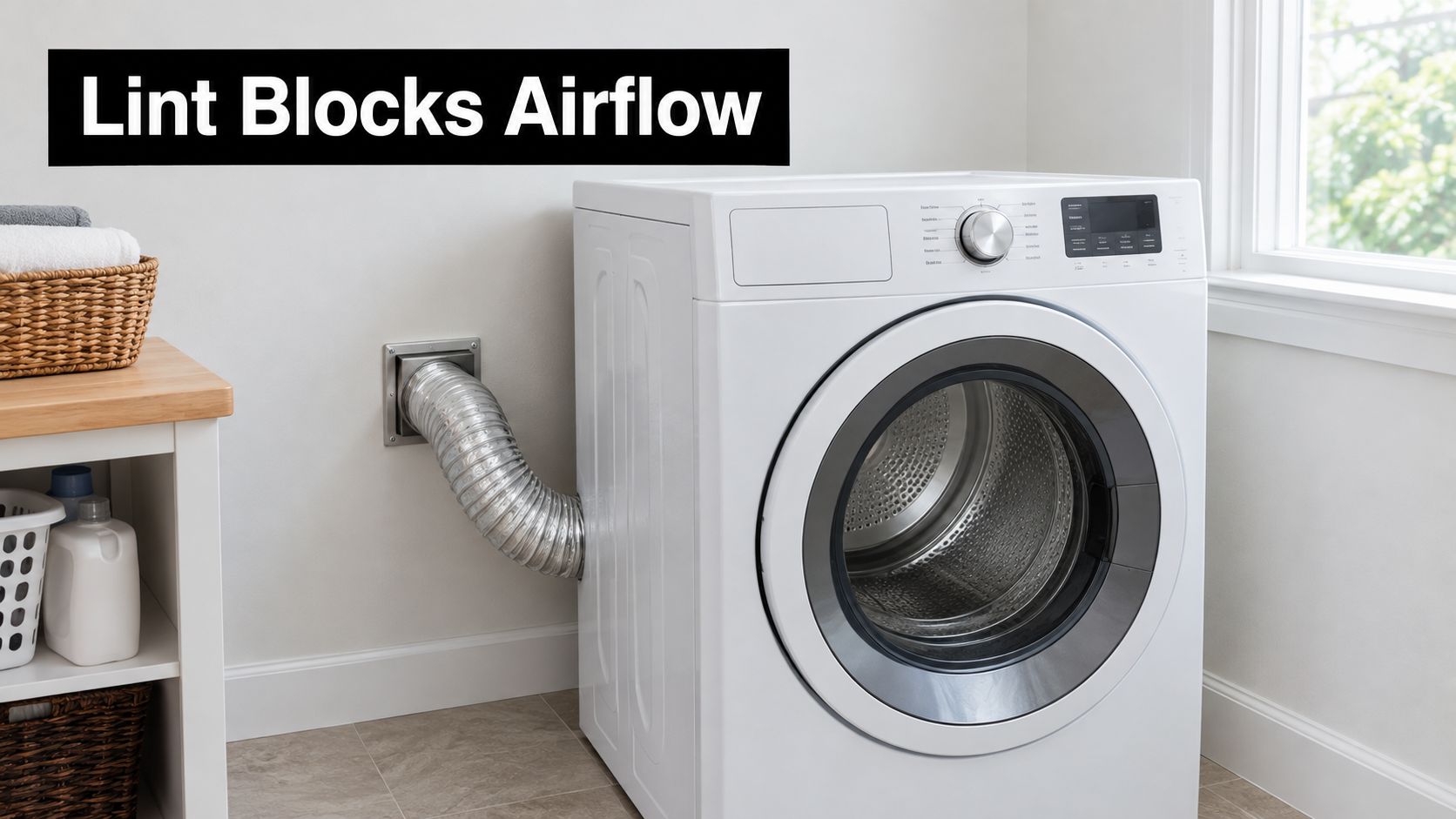
Lint can slip past the lint screen and build up in the duct. Moist exhaust carries that material along, and bends or a long route can give lint more places to collect. A crushed or pinched section narrows the passage, while a nest or blocked exterior hood can restrict the outlet. These problems add resistance, much as a kink in a garden hose limits the water that can pass through.
The result isn't just a dirty duct. When airflow slows, the dryer has a harder time carrying moisture out. That can leave clothes damp and keep the machine running longer. If lint and heat accumulate together, the restricted airflow can also contribute to a fire hazard.
A complete service should identify the path from the appliance to the outdoor termination, not stop at the lint screen or the short hose behind the dryer. The provider may need to inspect visible duct sections, bends, the connection at the appliance, and the outside hood. For a clearer look at how the connection and route fit together, see this guide to venting clothes dryers.
A clean lint screen is useful, but it isn't proof that the exhaust duct is clear.
Before any work begins, confirm whether your machine vents outdoors. Then ask whether the service covers the full exhaust path and checks for airflow problems as well as lint. That's the part of the system the lint screen can't show you.
Warning Signs Your Dryer Vent Needs Cleaning
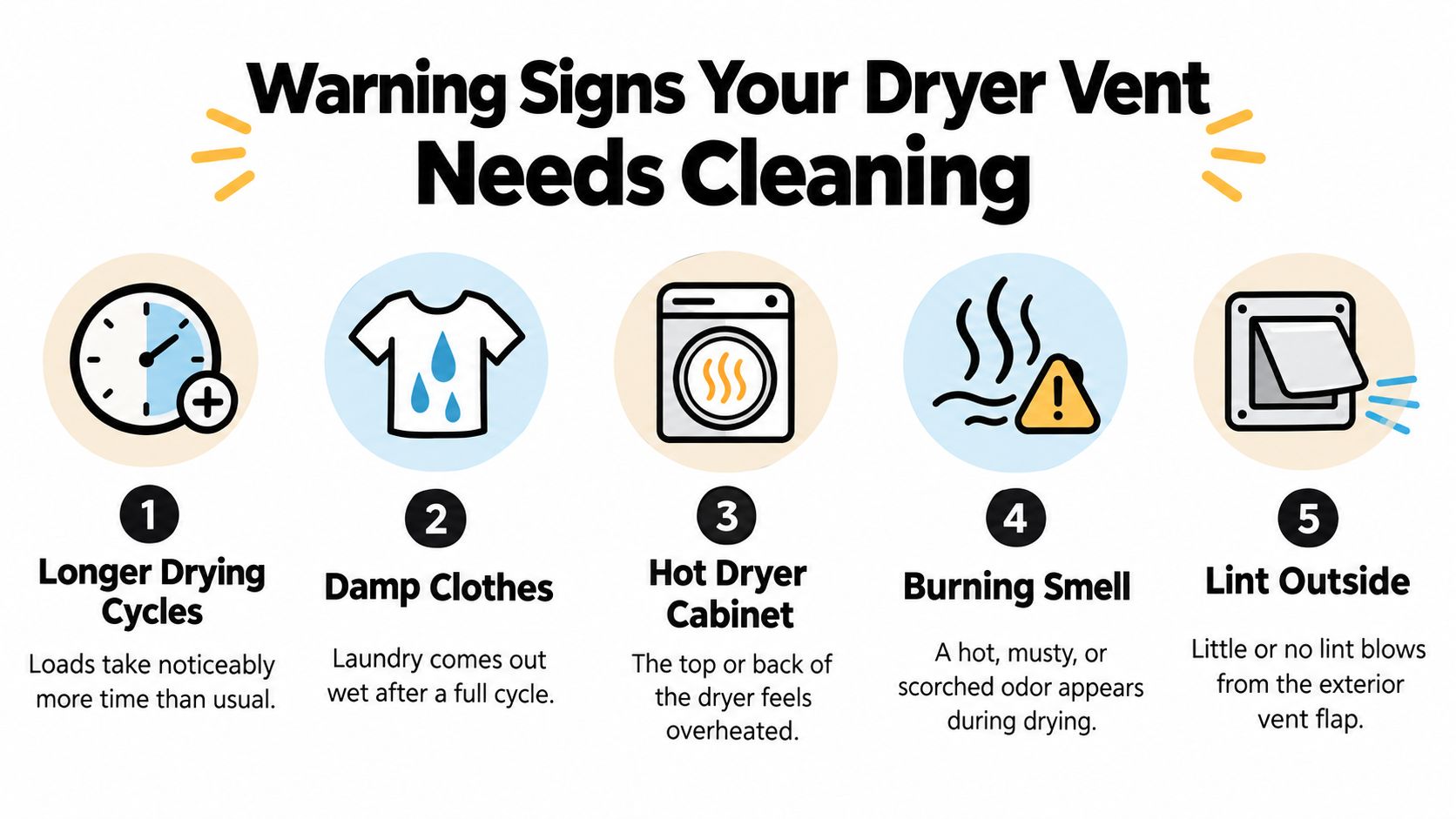
At first, the change may seem minor. A load that used to finish normally now needs more time, or clothes feel damp when the cycle ends. You might notice the dryer cabinet or laundry room feels hotter than usual, or the air coming from the outdoor hood seems weak.
Those symptoms can point to restricted exhaust, but they don't prove lint is the only cause. A damaged duct, a blocked hood, or another appliance problem can also affect drying. That's why the next step should be inspection, not guesswork or repeated cycles.
Read the signs together
Use these checks as a prompt to look more closely:
Longer cycles: Loads take noticeably more time than they used to.
Damp laundry: Clothes stay damp after a full cycle.
Excess heat: The dryer cabinet or room feels unusually hot.
Weak outdoor airflow: Little air seems to come through the exterior hood while the dryer runs.
Visible lint or damage: Lint gathers around the rear connection, or the flexible duct looks crushed or pinched.
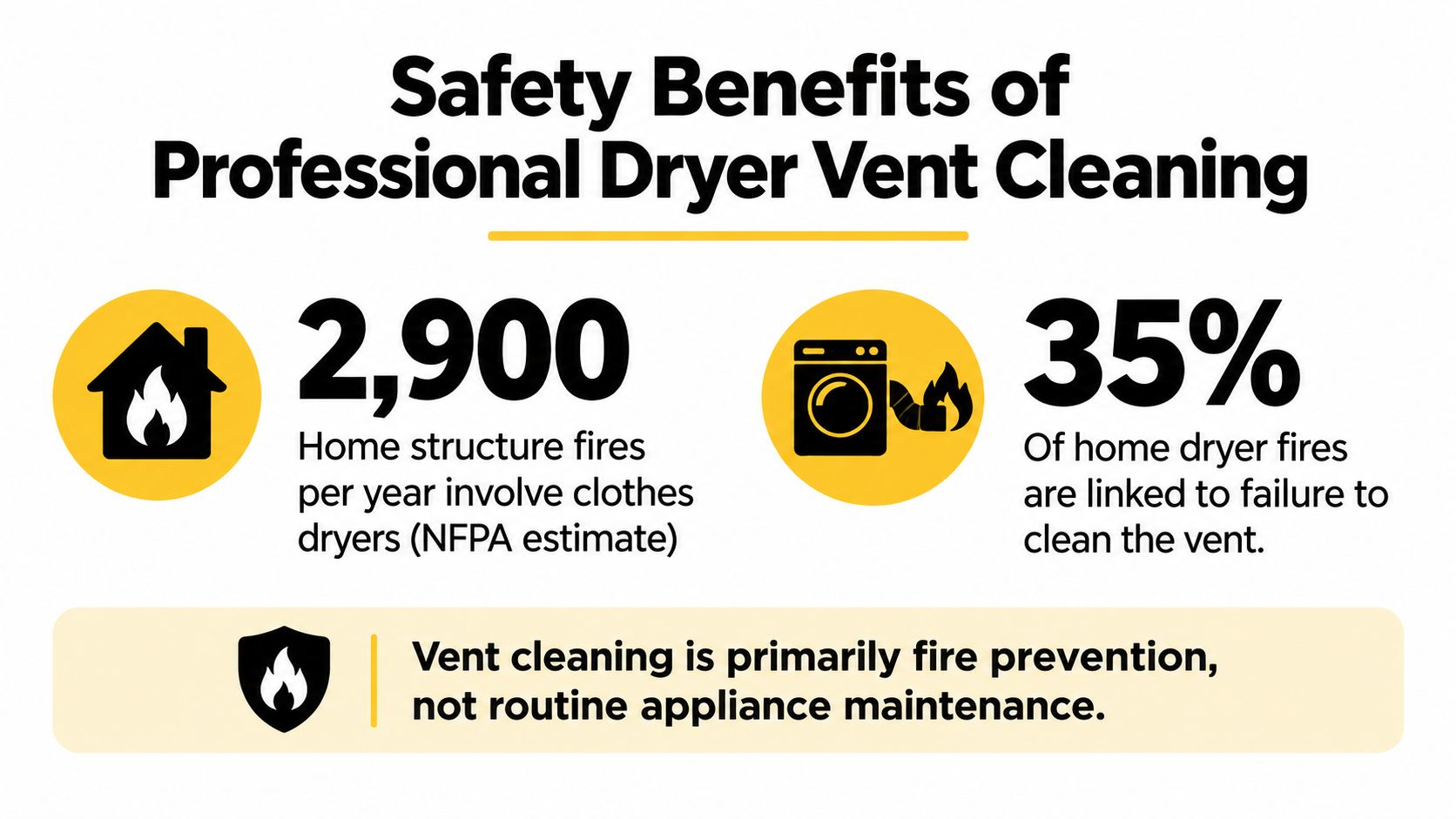
Government guidance advises having the vent inspected when drying times increase, clothes remain damp, the dryer runs unusually hot, or airflow at the exterior is weak. A U.S. Fire Administration analysis identified failure to clean as the leading contributing factor in 34% of reported residential clothes-dryer fires. The government's dryer fire guidance connects maintenance and inspection with these practical warning signs.
When to stop and arrange a prompt check
If several signs appear together, don't keep running extra cycles and hope the problem clears. Arrange an inspection soon, especially if the dryer is unusually hot or airflow at the exterior hood is weak. If you notice a burning odor, stop using the dryer and seek professional advice before running it again.
A single damp load may have another explanation, but a pattern of longer cycles, heat, and poor exterior airflow deserves attention. Tell the technician when the symptoms started and whether they're getting worse. That simple history can help them focus on the right parts of the system.
Safety Benefits of Professional Dryer Vent Cleaning
Dryer-vent cleaning is a fire-prevention measure, not just a way to help laundry dry faster. Lint is combustible. When lint builds up in the exhaust route and airflow is restricted, heat has a harder time escaping. That combination creates a safety concern that a quick wipe of the lint screen can't address.
The scale of the risk is clear in national estimates. In the United States, clothes-dryer and washing-machine fires caused an estimated average of 15,970 home structure fires each year during 2010 to 2014, with about 13 civilian deaths, 444 civilian injuries, and $238 million in direct property damage annually. Clothes dryers accounted for 92% of those incidents, according to the NFPA's analysis of home fires involving clothes dryers and washing machines.
What the service can and can't do
A professional can remove lint and debris from the accessible exhaust path, check whether the exterior outlet is blocked, and look for visible duct damage or restrictions. Clearing the route can help restore exhaust flow and reduce the heat and moisture that remain inside a restricted system. It can also reveal issues that cleaning alone won't solve, such as a crushed section or a problem with how the duct is routed.
But cleaning isn't a guarantee against every dryer fire, and it can't repair a faulty appliance or replace damaged ductwork by itself. Ask the provider to explain any conditions they find and whether a repair or further assessment is needed. If the route is concealed, a visual check of the accessible sections may not show every part of it.
The lint screen remains important. Clean it before and after each cycle, and keep lint from accumulating around the dryer and its rear connection. That routine helps, but it doesn't remove lint from the hidden duct. For more context on the figures and how they're interpreted, see this overview of dryer vent fire statistics.
The goal is to check the path that carries heat and lint outdoors, not just the parts you can see at the machine.
For homeowners, families, property managers, and facility operators, that full-path inspection makes vent service a practical part of fire prevention. It's more useful than treating cleaning as a convenience upgrade or assuming that a dryer is safe just because it still runs.
What a Professional Dryer Vent Cleaning Visit Includes
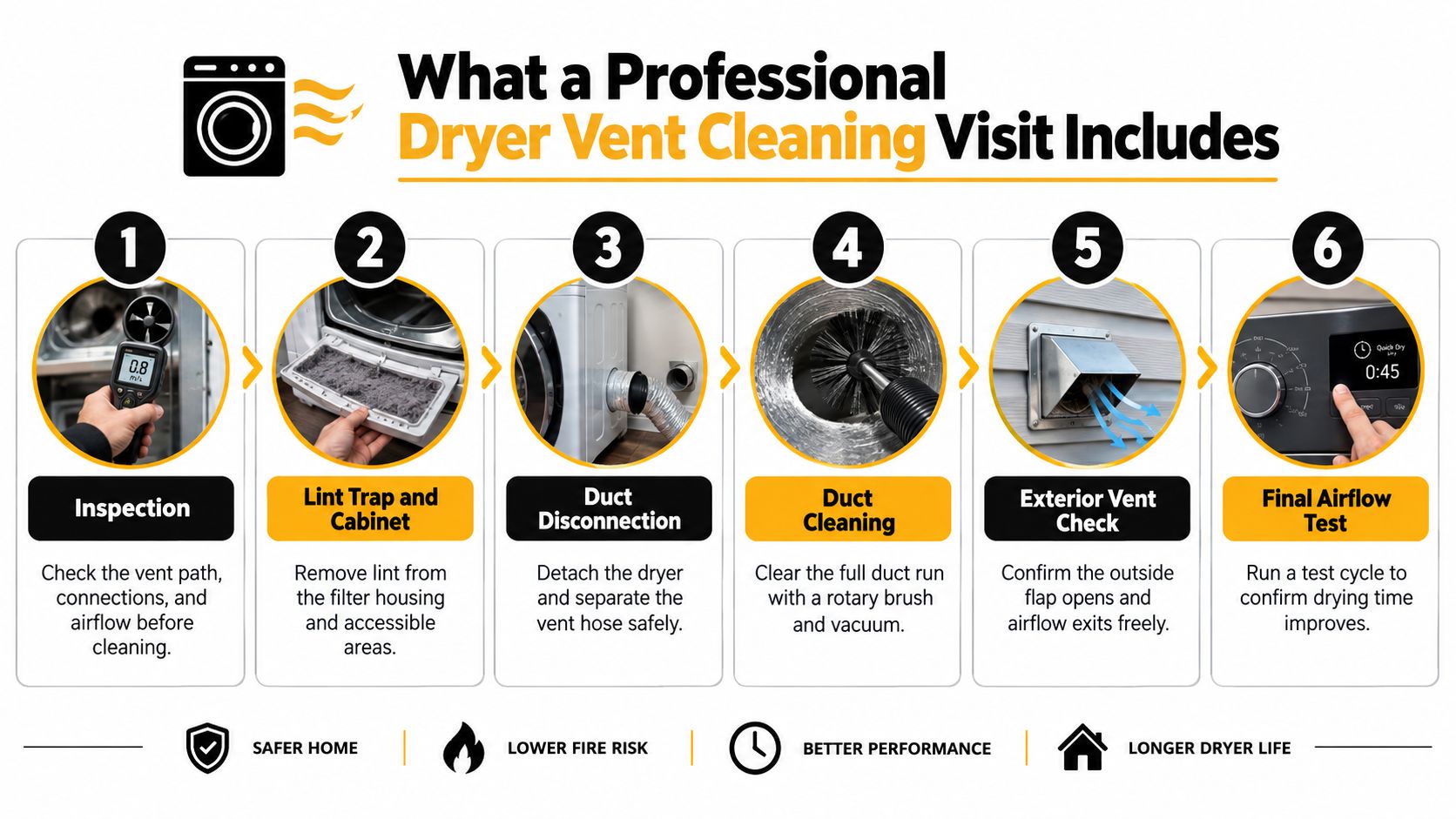
If clothes take longer to dry, a technician's visit should examine the dryer's exhaust route, from the connection behind the machine to the outdoor outlet. The aim is to identify what needs cleaning and whether access or visible damage limits what can be checked.
The visit, from intake to final check
First, inspect the setup. The technician should ask about the dryer type, whether it vents outdoors, and any changes in drying time or heat. Then they can check the rear connection, lint-screen area, visible duct, and exterior termination. A loose connection, crushed hose, or blocked hood may need attention.
Next, clean the areas included in the service. This may cover lint around the filter housing, accessible parts of the dryer, and the exhaust duct. Service packages differ, so ask which areas the appointment covers before work begins.
The technician should trace the vent route as far as access allows. Long runs, tight bends, crushed sections, or animal nests can impede airflow. The exterior hood and damper should also be checked to confirm the outlet can open and release exhaust.
After cleaning, ask how the technician checked the result. A visual inspection can show whether lint has been removed from accessible areas, but it cannot measure airflow. Before-and-after airflow or pressure measurements can provide a clearer performance check, especially when the visit was prompted by poor drying or weak airflow. The ENERGY STAR technical document discusses field measurements and a laboratory comparison. Those results offer context, but they do not establish how any one home's vent will perform.
Questions to ask before the technician leaves
Ask which parts of the route were inspected, what was cleaned, and whether any blockage or damage remains. If the technician measured airflow or pressure, request the results and a plain explanation. Find out whether a repair is recommended, who should handle it, and what follow-up is appropriate.
A visit that skips the rear connection or outdoor outlet may leave parts of the exhaust path unchecked. Request a clear description of the work and a short written record. That makes it easier to compare findings if the drying problem returns. For a visual summary of typical inspection and cleaning steps, see what a dryer vent cleaning visit involves.
How Often Your Dryer Vent Should Be Cleaned
A dryer that takes longer than usual to finish a load is giving you a reason to check the exhaust path, even if its last service was recent. For a typical household, an annual inspection is a practical starting point. Arrange one sooner if drying time increases, clothes stay damp, the dryer feels unusually hot, or airflow at the outdoor outlet weakens. Cleaning can remove lint buildup, but it cannot fix a crushed duct, poor installation, or a damaged vent.
The right interval depends on use and the route's condition. A short, accessible vent serving one lightly used dryer may need less frequent cleaning than a long or complex route. Guidance on how often to clean a dryer vent can help you weigh those conditions, but symptoms and inspection findings should guide the next visit.
Match the schedule to the setting
Commercial laundries, multifamily buildings, hotels, and care facilities may have many machines connected to shared exhausts, vertical risers, access panels, or rooftop outlets. A shared route works like a road used by several machines: lint from multiple dryers can affect airflow through the same passage. Commercial vent guidance also discusses combustible-clearance concerns and local fire-code obligations. Commercial dryer-vent guidance recommends documenting actual system conditions rather than relying only on a general statement that cleaning took place.
For a facility, begin with a baseline inspection after an acquisition or renovation. Then set the next inspection based on operating hours, machine count, lint buildup, and airflow findings. Repeated overheating or longer drying cycles call for an immediate review, not a wait for the calendar.
Light use: Start with an annual inspection, then adjust if the route stays clear and performance remains steady.
Heavy use: Inspect after any repeated slowdown, overheating, or visible lint buildup; use operating hours and airflow findings to set the next visit.
Shared systems: Check the common route after a change to equipment or ductwork, and inspect sooner if several connected dryers show weaker airflow or longer cycles.
After changes: Arrange an inspection after renovation, a new appliance, or any alteration to the duct route.
A yearly visit may not be enough for a busy operation, while a lightly used dryer with a clear route may not need frequent cleaning. Keep a service log of findings and completed work so the next interval reflects the system's actual condition.
How to Choose a Dryer Vent Cleaning Provider
Compare providers by what they inspect and document, not only by the word “cleaning” in the service description. A useful visit should cover the exhaust path, record any visible problems, and explain whether airflow was checked. If a company can't say what the service includes, ask for the scope before booking.
Record | What It Shows |
|---|---|
Inspection notes | Which parts of the exhaust route and exterior termination were checked |
Photos, where available | Visible lint, damage, blockage, or duct conditions |
Airflow results, where available | Whether the system's airflow was measured and how it changed after service |
Deficiencies and actions | What remains to be repaired or corrected, and what work was completed |
Next inspection recommendation | When to review the system again based on use and observed condition |
These details help a homeowner understand what was done and give a property manager a record to share with tenants, insurers, or fire inspectors. If a provider offers no findings beyond “the vent is clean,” ask what evidence supports that conclusion. A clear service record is more useful than a generic certification.
Compare scope and transparency
Ask whether the technician checks the rear connection, visible duct route, and exterior hood. Find out whether cleaning includes accessible areas near the lint screen and whether the provider can explain obstacles or concealed sections they couldn't reach. A responsible provider should be clear about limitations and should not present cleaning as a repair for damaged or improperly routed ductwork.
Purified Air Duct Cleaning is based in Avondale, Arizona, and offers residential and commercial dryer vent cleaning across the Phoenix metropolitan area, including Glendale and Mesa. Its certified technicians also provide air duct cleaning and HVAC coil cleaning, with free quotes and flexible payment options. As with any provider, confirm which inspection and airflow checks are included in the visit.
If you're comparing estimates, ask for the scope in writing and review how to recognize dryer vent cleaning scams. A clear answer about what the technician will inspect, clean, measure, and report helps you compare services on something more meaningful than the appointment label.
Booking Your Next Dryer Vent Cleaning Visit
A little preparation can help the technician arrive ready to inspect the right parts of the system. Before calling, note what kind of dryer you have and whether it vents outdoors or uses a ventless design. If you don't know, say so rather than guessing.
Gather these details
Symptoms and timing: Write down what changed, such as longer cycles, damp clothes, unusual heat, or weak airflow, and when you first noticed it.
Vent location: Note where you think the outdoor hood is, such as a wall or roof, if you can identify it safely.
Recent changes: Mention a move-in, new appliance, renovation, or any work on the laundry-room duct.
Access needs: Let the provider know if the dryer sits in a tight space or if the building has shared laundry equipment.
This information helps with scheduling and gives the technician a starting point. If you manage a property, have any existing service notes ready so the provider can compare findings with earlier work. You can also ask about the scope, documentation, and possible additional charges before the appointment. If you're trying to plan a budget, this guide to dryer vent cleaning costs can help you prepare questions.
The decision is straightforward: if your dryer vents outdoors, the whole exhaust route deserves attention, and symptoms call for an inspection rather than a wait-and-see approach. A single well-documented visit can establish a clear baseline for the next check, with timing adjusted to how the system is used and what the technician finds.
Purified Air Duct Cleaning offers residential and commercial dryer vent cleaning in Avondale and the Phoenix metropolitan area, including airflow checks and inspection for vent restrictions. Gather your dryer details and symptoms, then request a free quote from Purified Air Duct Cleaning to discuss the service that fits your system.