

Are in Duct Air Purifiers Worth It for Your Home
Are in duct air purifiers worth it if your HVAC system can't move enough air through the added filter? That question exposes the gap in most whole-home air-cleaner comparisons. A central purifier can treat air throughout a ducted home, but it can also restrict airflow, operate only when the fan runs, and address the wrong pollutant if you're mainly concerned about odors or volatile organic compounds.
The right decision depends on airflow, filter resistance, fan runtime, duct condition, and the specific contaminant you want to reduce. A portable HEPA unit may provide stronger treatment in one bedroom, while a properly designed in-duct system may offer broader coverage across a home or commercial property.
Feature | In-Duct Central Systems | Portable HEPA Units |
|---|---|---|
Coverage | Treats air moving through the ducted HVAC system | Treats air in a specific room or nearby area |
Operating condition | Works when the HVAC fan is running | Can run independently of the HVAC system |
Best suited to | Whole-home particle reduction and central air treatment | Bedrooms, offices, nurseries, and other priority rooms |
Main limitation | Performance depends on airflow, duct design, and static pressure | Coverage is localized and requires placement |
Common measurement issue | CADR doesn't apply directly | CADR helps compare particle-cleaning performance |
Maintenance | Filter or component service inside the HVAC system | Replacement filters and regular cleaning |
Key decision | Can the HVAC system safely support the added resistance? | Is the unit sized and positioned for the room? |
Evaluating the Promise of Whole-Home Air Purification
The appeal of an in-duct purifier is straightforward. Instead of placing a cleaner in one room, you install a filtration or purification component in the return or supply side of the HVAC system. Every time the blower moves air through the ductwork, the system has an opportunity to treat air from multiple rooms.
That sounds automatically superior, but central coverage doesn't guarantee effective cleaning. The HVAC system has to run, the ductwork has to move air properly, and the purifier has to remove the type of pollutant causing the problem. A dense particle filter may help with smoke and allergens, while a carbon-based component targets some gases and odors. A UV or active device follows a different mechanism altogether.
Homeowners should also separate technical capability from measurable whole-home benefit. A technical overview of indoor air quality can help define the broader problem, but the installation decision still requires an HVAC assessment. A purifier doesn't repair leaking ducts, increase ventilation automatically, or remove moisture from a damp building.
What the evidence actually supports
The independent evidence base for central in-duct cleaners is more limited than advertising often suggests. A major review summarized by the U.S. Environmental Protection Agency's technical discussion of HVAC air purifiers found that only three studies had examined central in-duct air cleaners, and reductions in particulate matter exposure weren't consistently large.
That doesn't mean in-duct purification is ineffective. It means the result depends heavily on system conditions, and broad promises deserve scrutiny. A central unit may be a useful add-on where the HVAC fan runs regularly and the equipment can handle the pressure. It may be a poor investment where the fan stays off for long periods or where the installation adds resistance that reduces total airflow.
A review of residential air-cleaning research also describes how airflow, duct sealing, and building design influence whole-home results, while noting that short real-world clinical evidence remains limited. The review of residential air cleaners and indoor air quality supports a practical conclusion: assess the system before choosing the purifier, not after buying one.
Practical rule: A whole-home purifier is worth considering only when it improves the air problem without compromising the HVAC system that distributes and conditions that air.
Understanding In-Duct Filtration and Purification Technologies
“In-duct purifier” describes a location, not one specific technology. The device may be a high-efficiency media filter, a UV-C module, an adsorbent filter, an ionizing system, or an active purification product. Each option interacts with HVAC airflow differently and targets different pollutants.
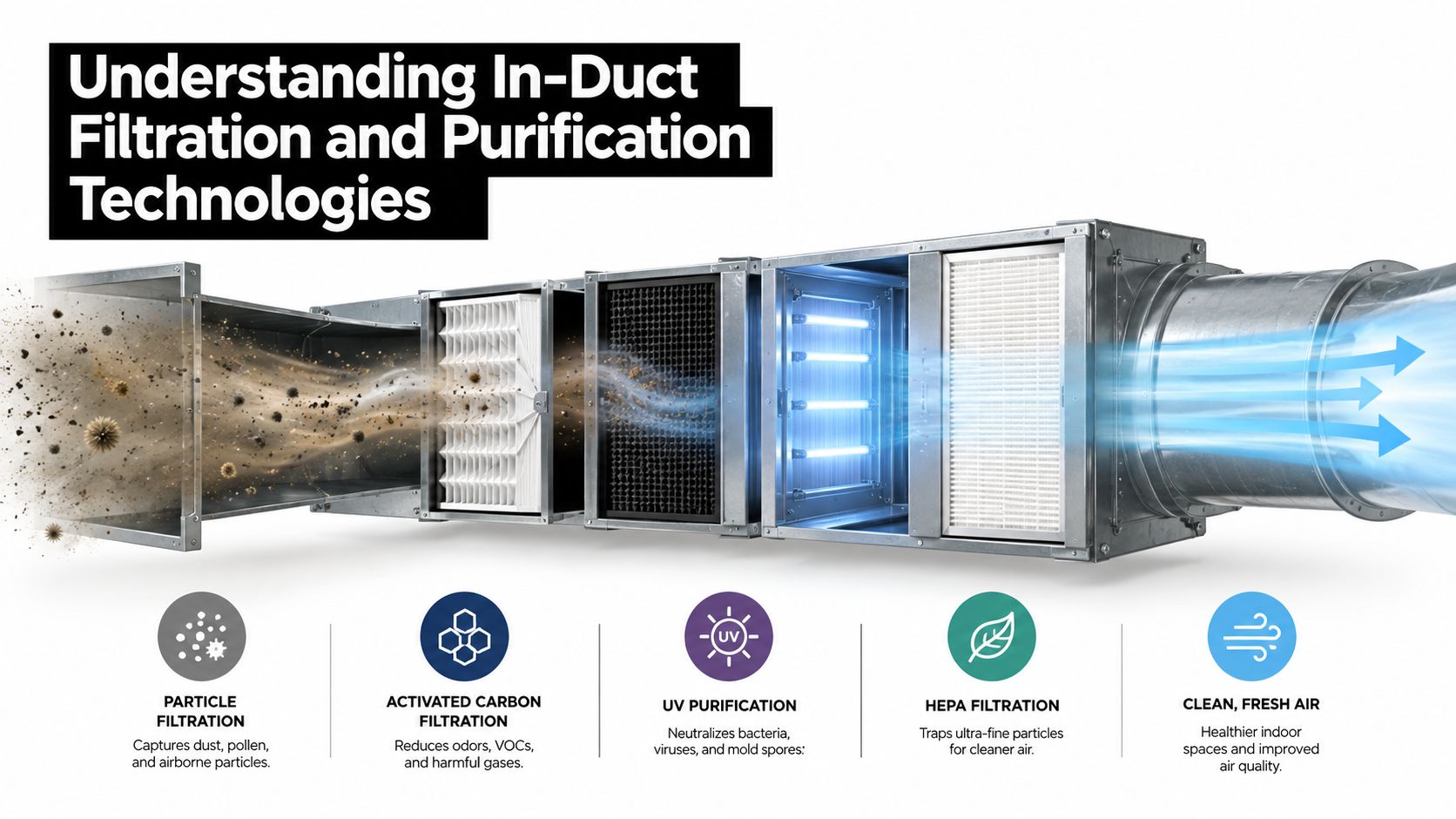
Media filtration handles particles
A media filter physically captures airborne particles as air passes through its fibers. The filter's MERV rating provides a standardized way to compare particle-capture performance, but it doesn't tell you whether the HVAC system can safely accommodate the filter.
EPA guidance identifies ASHRAE Standard 52.2 as the main U.S. test for duct-mounted particle filters. The standard covers particles from 0.3 to 10 micrometers and reports performance through MERV 1 to MERV 16, as explained in the EPA residential air-cleaner technical summary.
A higher MERV filter generally offers finer particle capture, but the filter's dimensions matter. A thick media cabinet can provide more surface area and lower resistance than a thin filter slot using the same general efficiency target. That distinction is important because particle capture and airflow resistance rise together in many installations.
UV and active technologies work differently
Ultraviolet germicidal irradiation exposes moving air or internal HVAC surfaces to UV energy. Its performance depends on exposure time, lamp output, surface cleanliness, air velocity, and placement. A fast-moving airstream may give the device limited contact time, so a properly designed in-duct UV air purifier installation matters more than the presence of a lamp alone.
Active purification systems, including products marketed under names such as ActivePure, don't operate as simple particle screens. They may introduce reactive or energized effects into the air path or occupied environment, depending on the product design. Those systems require closer attention to safety documentation, byproducts, installation location, and the exact pollutant claim.
Carbon or other adsorbent media can help with certain gases and odors. It won't replace particle filtration, and a small carbon layer may have limited capacity. If the primary complaint is cooking odor, pet odor, solvents, or VOCs, ask what gas-phase material the unit contains and what testing supports the claim.
Match the technology to the pollutant
Start with the problem rather than the product category:
Dust, pollen, smoke, and other particles: Begin with a compatible high-efficiency media filter.
Biological concerns: Evaluate UV or other validated technologies alongside ordinary filtration.
Odors and gases: Consider substantial adsorbent media and source control.
Mixed concerns: Use staged treatment, but verify that each stage won't create excessive resistance or unwanted byproducts.
A purifier that claims to address everything may not perform each function equally well. The most useful specification is the one tied directly to the pollutant you need to reduce.
Comparing Central In-Duct Systems to Portable Air Cleaners
Central and portable systems solve different coverage problems. An in-duct purifier uses the existing HVAC blower and duct network, so it can reach multiple rooms without placing a separate machine in each space. A portable HEPA unit has its own fan and filter, which gives it independent runtime and predictable treatment in the room where it sits.
The central advantage appears in homes with a well-designed ducted system that runs regularly. A portable advantage appears in a bedroom, nursery, home office, or other room where occupants need continuous particle removal even while the heating or cooling system is idle.
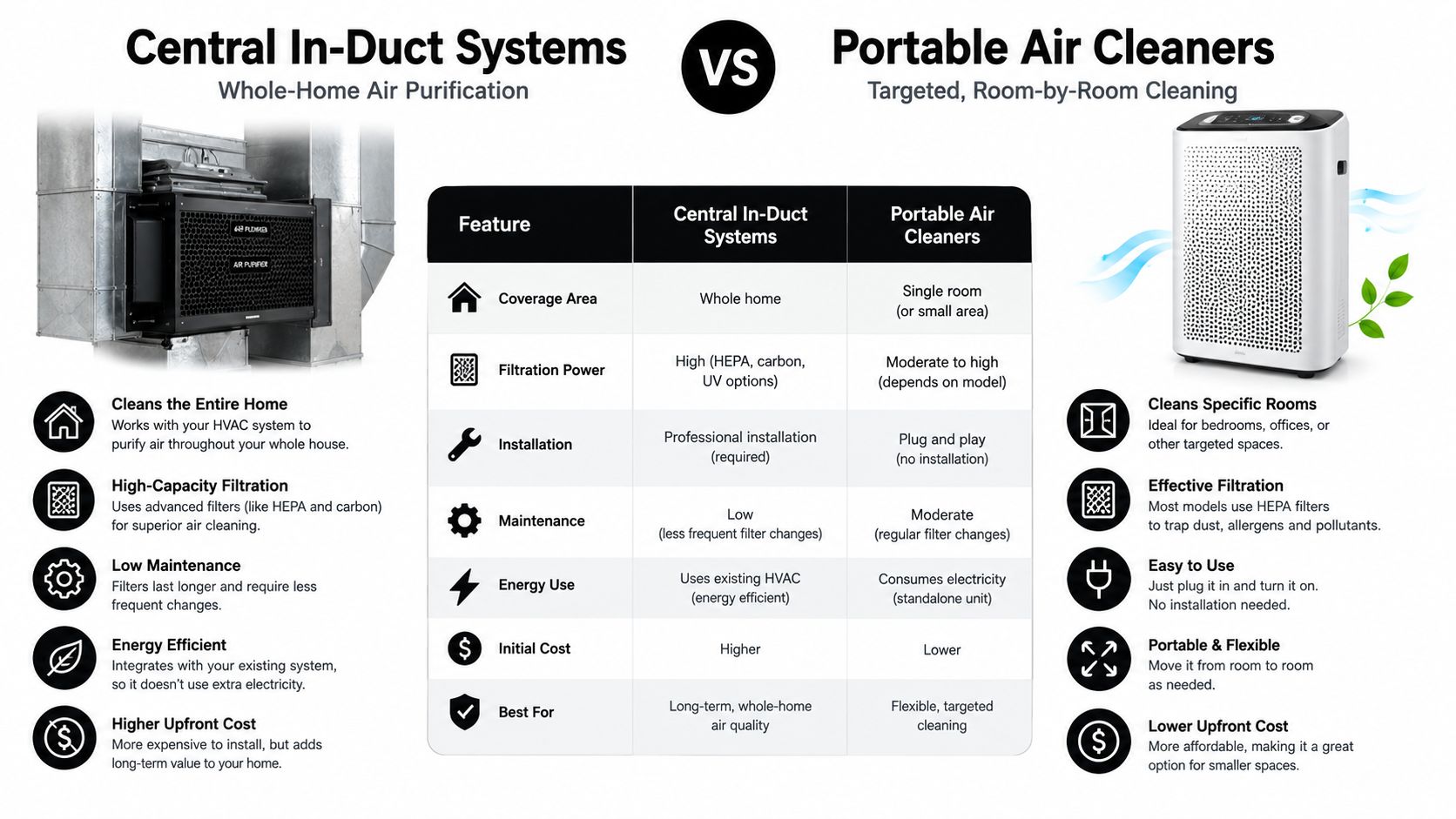
Whole-home reach versus room-level control
A portable unit gives you direct control over placement, fan speed, and operating schedule. You can move it closer to a source, run it continuously, and focus cleaning on the room where an allergy or asthma sufferer spends the most time. Its weakness is coverage. A unit in one bedroom won't clean the air in a closed office or on another floor with the same consistency.
An in-duct unit can distribute treatment through the central system, but only through the air that enters and moves through the ducts. Closed doors, weak return grilles, unbalanced branches, and long fan-off periods all reduce the practical reach.
A 2010 Canadian review found that in-duct filtration could outperform portable units for whole-house pollutant reduction under some conditions. The review estimated lower cat allergen levels of 30 to 55 percent and lower environmental tobacco smoke levels of 90 to 98 percent compared with other filtration configurations, including two portable HEPA filters, as reported in the Canadian review of residential air cleaners. Those results describe specific conditions, not a guarantee for every home.
The same review associated performance with air-exchange conditions. Lower air exchange can give filtration more opportunity to reduce indoor pollutant concentrations, but the result still depends on fan operation and how well the building and duct system control airflow.
Why CADR doesn't settle the comparison
CADR, or clean air delivery rate, is useful for comparing portable air cleaners because it combines particle removal with the volume of air the appliance moves. It isn't a direct comparison tool for an in-duct system. ASHRAE explains that CADR doesn't apply to whole-house or in-duct air cleaners because those systems rely on HVAC airflow rather than a fan built into the purifier, and the metric addresses particle removal rather than biological inactivation or gas-phase VOC control.
Use different questions for a central installation:
How often does the HVAC fan run?
How much air does the system move at the added resistance?
Are the return and supply ducts balanced?
Does the system address particles, gases, biological contaminants, or a combination?
Will occupants keep up with filter and lamp maintenance?
A portable unit remains easier to evaluate in one room because its airflow and filter are contained in a single appliance. A central system requires a more complete look at the air-distribution network.
Practical operating differences
Central systems are usually quieter in living spaces because the purification equipment sits inside the mechanical system. They can also avoid the visual clutter and floor-space demands of portable machines. However, service may require access to a filter cabinet, electrical controls, UV components, or duct-mounted equipment.
Portable units offer a different maintenance pattern. You can see the filter, adjust the fan, and replace the cartridge without opening the HVAC cabinet. The trade-off is that several rooms may need separate units, and occupants must keep them positioned correctly with adequate clearance.
Decision factor | In-Duct Central Systems | Portable HEPA Units |
|---|---|---|
Whole-home treatment | Stronger fit when the duct system is balanced and the fan runs often | Requires multiple strategically placed units |
Continuous operation | Limited by HVAC fan runtime unless the system is configured for extended circulation | Independent of heating and cooling cycles |
Localized protection | Less precise for one closed room | Strong fit for bedrooms and priority spaces |
Airflow risk | Added filter resistance can affect blower performance | Doesn't add resistance to the central HVAC system |
Installation | May require electrical, duct, or cabinet work | Usually simpler placement and connection |
Pollutant flexibility | Can combine filtration with UV, carbon, or active treatment | Often combines HEPA-style filtration with optional carbon |
Evaluation method | Requires HVAC measurements and design review | Requires room sizing and product performance review |
For a closer look at room units and whole-home options, compare home air cleaner reviews, but don't choose from ratings alone. The correct option depends on whether the priority is broad background reduction or concentrated cleaning where someone sleeps or works.
The Hidden Costs and HVAC Compatibility Realities
The most serious in-duct mistake is treating filter efficiency as an isolated specification. A filter captures particles by presenting resistance to moving air. If that resistance exceeds what the blower, ductwork, coil, and furnace can tolerate, the purifier may reduce system performance while it cleans the air.
Static pressure is the measurement that reveals this problem. A technician measures pressure across the system and evaluates the blower's operating point, rather than guessing from the filter's MERV label. A filter that performs well in a laboratory may become a poor choice when installed in a narrow cabinet, a dusty return, or a system with undersized ductwork.
Pressure drop can erase the gain
Independent technical sources report that higher-efficiency filters may add about 0.2 to 0.4 in. w.c. of pressure drop, while many residential blowers are designed around roughly 0.5 to 0.8 in. w.c. of total external static pressure. These figures come from the technical discussion of filter pressure drop and blower limits.
That relationship leaves little room for assumptions. A new filter or purification module can consume a substantial portion of the available pressure budget, especially if the existing system already has restrictive ducts, a dirty coil, a crowded return, or a small filter face.
Possible consequences include:
Reduced delivered airflow: Rooms may receive less conditioned air, even though the thermostat still calls for heating or cooling.
Longer equipment cycles: The system may run longer to reach the setpoint.
Cooling coil problems: Insufficient airflow can contribute to coil icing.
Heating stress: Restricted airflow can raise temperatures inside the heating section.
Blower wear: The motor may work harder to maintain airflow against resistance.
The installation cost isn't limited to the purifier. A suitable project may require a larger media cabinet, duct modifications, electrical work, control changes, or correction of an existing return-air restriction.
Runtime matters as much as the device
A central purifier doesn't clean air while the HVAC fan is off. Independent guidance on whole-house air purifier operation summarizes the limitation plainly: central systems work when the HVAC fan is running and do nothing when the fan is off.
Mild weather creates the clearest example. The home may need little heating or cooling, so the fan can remain off for long periods. A portable unit continues circulating air in its room during that time. Some central systems can be configured for longer fan operation, but that choice has implications for energy use, comfort, filter loading, and equipment control.
Before installing anything, ask for measurements and operating details:
Current total static pressure
Pressure before and after the proposed purifier
Filter cabinet dimensions and available media area
Blower motor capacity and control type
Expected fan runtime
Access for filter or component replacement
Duct leakage and return-air restrictions
A professional whole-house air purifier installation should include compatibility checks, not just mounting the device in the nearest accessible duct section.
A filter that is neglected also becomes more restrictive as dust accumulates. Maintenance isn't an administrative detail. It directly affects airflow, pressure, and the amount of treated air the HVAC system can deliver.
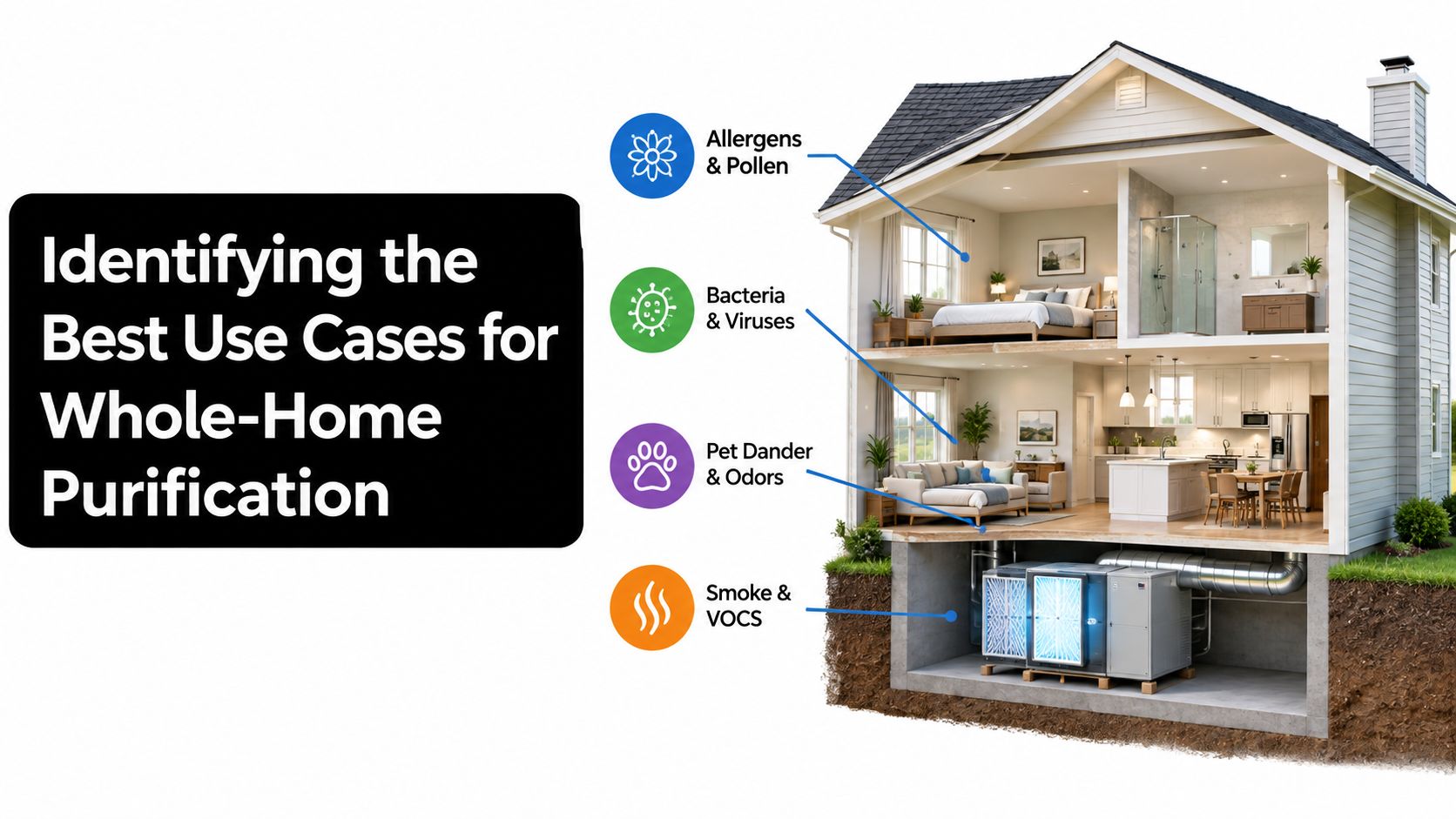
Identifying the Best Use Cases for Whole-Home Purification
An in-duct purifier makes the most sense when the problem is distributed across the building and the HVAC system is capable of supporting the treatment. It becomes less attractive when the concern is confined to one room, when the duct system rarely operates, or when the proposed technology has no credible connection to the pollutant involved.
Homes focused on airborne particles
Households dealing with recurring pollen, pet dander, dust, or wildfire smoke may benefit from central particle filtration when the system can handle the filter resistance. Whole-home treatment is useful when pollutants move between rooms and occupants don't want to manage separate portable units.
A portable HEPA cleaner may still be the better tool for a bedroom or office. It can run independently and concentrate airflow where the person with allergies or asthma spends time. Many homes use both approaches, with central filtration providing background treatment and a portable unit supporting a priority room.
Pet owners should also distinguish between visible hair and airborne dander. A purifier won't remove settled material from flooring, furniture, or bedding. Source control, cleaning, grooming, and ventilation remain necessary, while filtration addresses particles that remain suspended. Guidance on choosing a purifier for pet dander can help frame the room-level decision.
Homes affected by smoke and outdoor pollution
Smoke events create a strong case for particle-focused filtration, provided the HVAC system can move air through the selected filter without excessive restriction. A central system can help across multiple rooms, but occupants may still need to limit outdoor air entry, manage doors and windows, and address gaps in the building envelope.
A portable unit offers a useful fallback when the central fan runs infrequently or when one room needs a cleaner-air refuge. It doesn't depend on the home's heating or cooling demand, so it provides more consistent local control.
Odors and VOCs require a different evaluation
Particle filters aren't designed to remove every gas. Adsorbent media can help with gases and odors, but performance varies widely depending on the material, amount of media, airflow, and contaminant. A thin carbon layer shouldn't be treated as equivalent to a substantial gas-phase filter.
The REHVA review of gas-phase air cleaners also highlights an important safety issue. Some technologies can generate ozone or nitrogen oxides above health guidelines under certain conditions. That makes byproduct testing and certification important, particularly in occupied homes.
For persistent odors, find and control the source first. Moisture, combustion, stored chemicals, tobacco smoke, and contaminated materials can overwhelm a purifier. A device may reduce what circulates, but it won't correct the source or replace ventilation and remediation.
Commercial facilities face a broader planning problem. Operators may need coverage across multiple zones, predictable maintenance, and documented equipment performance. A central system can fit that model, but facility managers should verify airflow, access, controls, and the intended pollutant target before specifying equipment.
Final Recommendations for Homeowners and Property Managers
The answer to “are in duct air purifiers worth it” is conditional, but it isn't vague. Choose an in-duct system when whole-building coverage solves a real problem and the HVAC system can support the added load. Choose a portable unit when the need is concentrated in one room or when the central fan doesn't run often enough.
Start with the least complicated effective intervention. If the goal is particle reduction, ask whether the existing system can safely use a higher-efficiency filter. ASHRAE currently recommends a minimum MERV 13 where possible and states that MERV 13 is at least 85 percent efficient at capturing particles in the 1 to 3 micron range, as detailed in its filtration and disinfection FAQ.
Use this decision sequence
If the HVAC system supports it: Consider a compatible MERV 13 filter and confirm airflow after installation.
If the system is restrictive: Improve the filter cabinet or return-air path before adding a dense purification module.
If one room is the priority: Use a portable HEPA unit with independent runtime.
If biological treatment is the priority: Evaluate UV or active technology based on verified performance and byproduct information.
If odors or VOCs dominate: Investigate source control, ventilation, and substantial adsorbent media.
If the home has mixed needs: Combine central particle filtration with targeted room treatment rather than expecting one device to solve every problem.
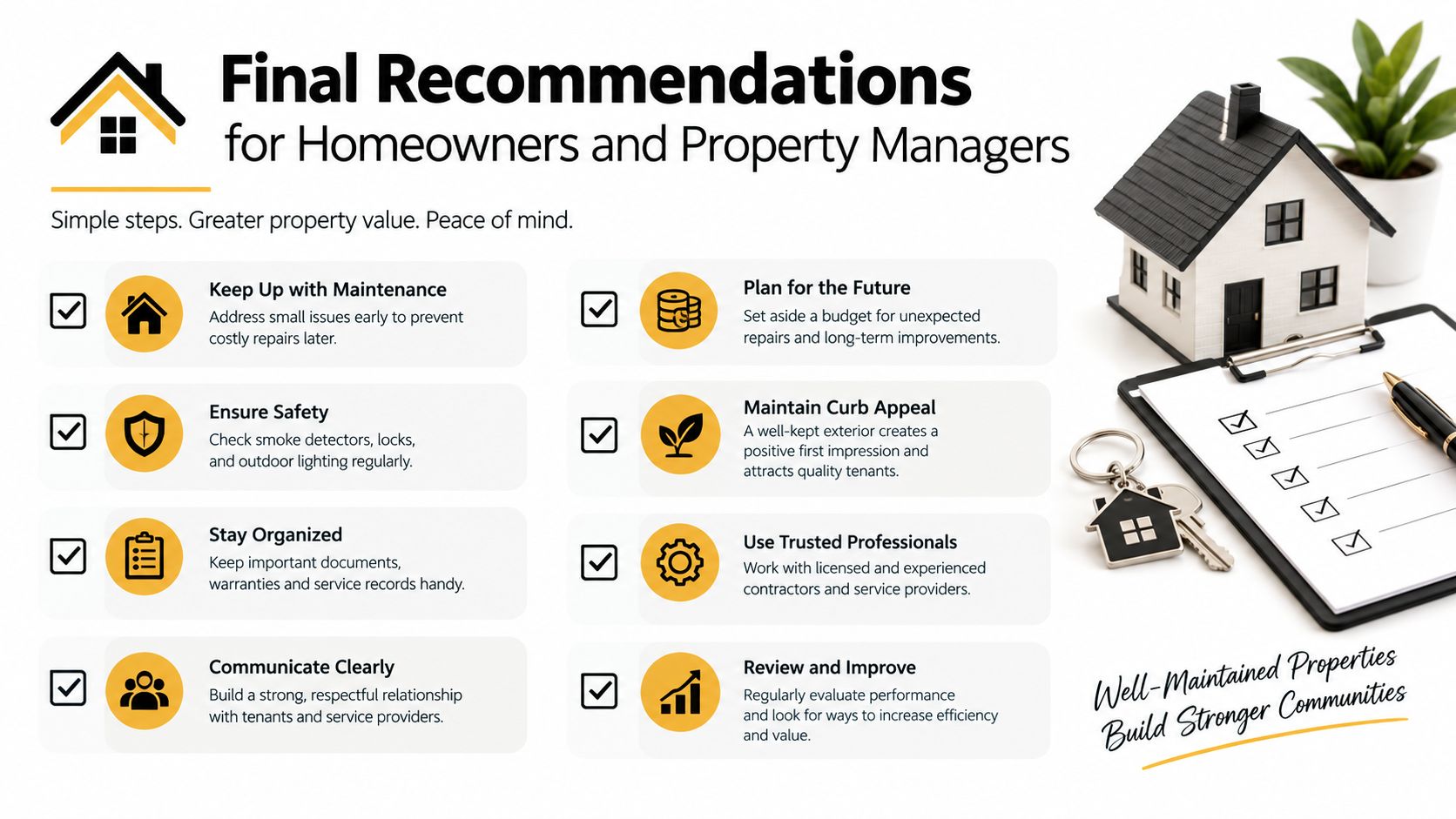
Before approving an installation, request a static-pressure assessment, a filter compatibility review, and a clear explanation of fan runtime. Confirm where the unit will sit, how replacement access works, what the maintenance schedule involves, and which pollutant the equipment is designed to address. Ask the contractor to inspect return ducts, supply balance, coil condition, and duct sealing rather than evaluating the purifier in isolation.
Property managers should also document responsibility for filter changes, lamp replacement, electrical checks, and tenant communication. A purification system delivers inconsistent value when nobody knows who maintains it.
The most defensible purchase is the one that connects a measured building problem to a compatible treatment method. Sometimes that's a MERV 13 upgrade. Sometimes it's a hybrid of central filtration and portable HEPA units. Advanced active purification can have a place, but it shouldn't be selected until the basic airflow and pollutant questions are settled.
Purified Air Duct Cleaning evaluates ductwork and HVAC conditions before installing in-duct ActivePure air purification systems, and also provides air duct, dryer vent, and HVAC coil cleaning across the Phoenix metropolitan area. Visit Purified Air Duct Cleaning to request a quote and discuss whether your system can support whole-home purification safely.